

Note: This article contains affiliate links. If you click on these links and make a purchase, I may earn a small commission at no extra cost to you. This helps support my research and content. Read my full affiliate disclosure here.
Tomato plants respond strongly to soil and foliar feeds that supply both soluble nutrients and living microbes. Picking the right compost tea for tomatoes matters because some formulas focus on fast-release fertilizer while others prioritize a diverse microbial inoculant that improves soil structure and disease resistance. This guide covers seven top compost tea options shortlisted for tomato use and explains the practical tradeoffs gardeners face. We evaluate mixes for nutrient profile, microbial activity, extraction method, and ease of application so you can match a tea to your garden goals.
Top Picks at a Glance
| Best Overall The best all-around choice for most situations | Bloom City Organic Earthworm Tea Concentrate, 8 oz |  |
| Best Quality Built to a higher standard if you want something more solid | Plant Success King Crab Instant Compost Tea — Ultra‑Concentrated Root Booster (32 fl oz) |  |
| Best Value The sweet spot between price and what you get | Mighty Plant Instant Compost Tea (1 lb) — Probiotic Bloom Booster |  |
| Best Budget The cheapest option that still gets the job done reliably | Xtreme Gardening Xtreme Tea Brews Compost Tea Kit, 2-Pack |  |
| Highest Rated A top-rated pick with lots of positive feedback | Gardenersbud Enriched Super Compost Tea (64 oz) |  |
| Most Popular A crowd favorite that many people choose with confidence | Mighty Plant Instant Compost Tea (5 oz) |  |
| Best Seller A high-volume bestseller chosen again and again | Gardenersbud Super Compost Tea P (64 oz) |  |
Bloom City Organic Earthworm Tea Concentrate, 8 oz

| Item Form | Liquid |
|---|---|
| Application Method | Apply to soil |
| Specific Uses For Product | Plant Growth |
| Mixing Ratio | 1:100 |
Bloom City Organic Earthworm Tea Concentrate is a small-bottle liquid soil supplement designed to increase microbial activity and support strong roots in compost, pots, and garden beds. It is mixed into water (typical dilution 1:100 for routine watering or 1:325 for hose-end application) and applied to soil or added to compost or compost tea to feed beneficial microbes. The formula highlights earthworm-derived microbes plus humic acids and organic inputs intended to improve nutrient uptake and soil structure. For tomato growers it offers a straightforward way to introduce living biology and organic nutrition during the growing season, particularly when used every few weeks or incorporated into compost. Trade-offs are the small 8 oz size, which means frequent repurchase for larger plots, and the need to follow dilution guidance closely to avoid overapplication. The product is most useful to gardeners who prefer organic, microbe-focused soil care and who already compost or use targeted soil amendments.
Best for: Home gardeners growing tomatoes who want an organic, microbe-focused supplement to strengthen roots and enrich compost and potting mixes without synthetic fertilizers.
Less Ideal for: Large-scale growers or anyone needing a bulk, ready-to-use fertilizer for many beds should consider higher-volume or concentrated alternatives designed for acreage.
- Specifically formulated from earthworm castings to boost soil microbial life
- Flexible application options for watering cans, hose-end sprayers, or adding to compost
- Organic ingredients including humic acids and natural fish/kelp derivatives
- Clear dilution guidance for routine and larger-area use
- Small 8 oz bottle limits coverage for larger vegetable plots
- Requires regular reapplication and attention to dilution ratios for best results
Verdict: A compact, organic earthworm tea concentrate that adds living microbes and root-friendly nutrition to tomato beds and compost for gardeners focused on soil health.
Plant Success King Crab Instant Compost Tea — Ultra‑Concentrated Root Booster (32 fl oz)

| Item Form | Liquid |
|---|---|
| Specific Uses For Product | Root Development, Soil Conditioning |
| Coverage | Makes 1,900 Gallons |
| Target Species | Roses, Tomatoes, Houseplants, Trees, Succulents |
| Mixing Ratio | 5 ml to 10 gallons |
This King Crab Instant Compost Tea is a liquid microbial root booster designed to introduce beneficial bacteria into potting mixes and garden soil. You mix a small dose (5 ml per 10 gallons) to make a large volume of working solution, which the listing says yields about 1,900 gallons from the bottle. It contains 11 strains of beneficial bacteria at a very high count and is OMRI certified for organic use, so it is suitable for organic tomato production. Typical use is as a soil drench at transplanting, root dips, or periodic feedings to strengthen root systems and improve nutrient uptake. Practical benefits include easy dilution, broad compatibility with other fertilizers, and a formulation focused on root development and soil vitality. Limitations are that the product is a bacterial inoculant rather than a complete fertilizer so it will not supply macronutrients by itself, and results depend on correct application and existing soil conditions. Performance-focused gardeners should expect faster root establishment and improved soil biology when used as part of a regular feeding program for tomatoes.
Best for: Gardeners focused on improving tomato performance through stronger root systems and healthier soil biology who plan to use a microbial inoculant alongside a feeding schedule.
Less Ideal for: Growers who need an all‑in‑one fertilizer or immediate nutrient correction for deficiencies should look for combined fertilizer formulations instead.
- Ultra‑concentrated formula that dilutes to a large coverage volume
- Contains multiple beneficial bacterial strains to boost root zone biology
- OMRI organic certification suitable for organic gardens
- Simple mixing ratio for soil drenches, transplant dips, and general conditioning
- Does not provide macronutrients or replace regular fertilization
- Effectiveness depends on soil environment and correct application
Verdict: A concentrated, OMRI‑certified microbial tea that reliably boosts root health and soil biology to improve tomato performance when used as part of a feeding program.
Mighty Plant Instant Compost Tea (1 lb) — Probiotic Bloom Booster

| Item Form | Liquid (instant powder activated in water) |
|---|---|
| Specific Uses For Product | Organic |
| Application Method | root drench or foliar spray |
| Target Species | All plants |
| Mixing Ratio | 1 tsp/gal indoor, 2 tsp/gal outdoor |
Mighty Plant Instant Compost Tea is a concentrated probiotic plant food designed to be mixed into water and applied as a root drench or foliar spray for vegetables including tomatoes. The powder claims to release beneficial biologicals that convert amino acids into usable organic molecules, and the formula also includes kelp and yeast extracts to support root health and flowering. Use is simple: follow the recommended mixing ratio (1 teaspoon per gallon for indoor, 2 teaspoons per gallon for outdoor) and apply through watering or as a spray; it is described as compatible with hydroponics and irrigation systems. The main practical benefits are consistent, ready-to-use compost tea without lengthy brewing, good coverage for full garden use, and the ability to stretch one pound into many gallons for economical feeding. Important limitations are that specifics about microbial strains and exact nutrient analysis are not provided, so users seeking precise N-P-K or strain information will need alternatives; also results depend on overall soil health and regular feeding rather than being a one-time fix.
Best for: Gardeners who want a straightforward, no-brew compost tea to regularly boost tomato vigor and blooms without lengthy preparation and who prioritize consistent, repeatable feedings.
Less Ideal for: Users who need a fertilizer with exact N-P-K numbers or verified microbial strain data, or those who prefer DIY brewed compost tea with fully documented inputs.
- Concentrated formula yields many gallons for economical repeated feedings
- Ready-to-mix powder eliminates the need for extended compost tea brewing
- Suitable for both soil and hydroponic systems and safe for foliar or root application
- Includes amino acids, kelp and yeast extracts to support flowering and root vigor
- No detailed nutrient analysis or specific microbial strains listed
- Claims about biological activity are broad and dependent on proper use and existing soil biology
Verdict: A practical, no-brew compost tea concentrate for gardeners who want an easy, repeatable way to boost tomato root health and flowering.
Xtreme Gardening Xtreme Tea Brews Compost Tea Kit, 2-Pack

| Item Form | Powder |
|---|---|
| Specific Uses For Product | Vegetable Gardens, Fruit Trees, Herbs, Houseplants, Flowers |
| Liquid Volume | 10 gallons |
| Unit Count | 6.8 Fluid Ounces |
Xtreme Tea Brews is a simple, two-part powdered kit that lets home gardeners brew compost tea quickly for use on tomatoes and other edibles. You mix the pouches with water to produce probiotic-rich tea that supplies organic compost material and microbe food intended to boost beneficial soil biology and improve nutrient availability around roots. It is typically used as a weekly root-zone drench or foliar boost alongside an existing fertilizer program and is compatible with soil, soilless mixes, and hydroponics. Notable features are the pre-measured two-part packaging for repeatable brews and the stated coverage per pouch that yields usable volumes of tea. Practical benefits for tomato growers include easier nutrient release from organic matter and potential improved bloom and fruit set from healthier microbial activity. Limitations are that exact application rates are not provided on the label and results depend on existing soil conditions and practices, so you should expect variability and pair it with a basic feeding plan for best results.
Best for: Budget-minded tomato growers who want an easy, repeatable way to introduce beneficial microbes and organic compost material into their root zone without mixing complex recipes.
Less Ideal for: Gardeners seeking precise, lab-verified microbial blends or detailed dosing instructions should consider products with explicit application charts and measured nutrient analyses.
- Pre-measured two-part formula makes brewing consistent and simple
- Designed to increase beneficial soil microbes that aid nutrient availability
- Works with soil, soilless mixes, and hydroponic systems
- Produces multiple gallons per pouch for broad coverage
- No specific application rates provided on the packaging
- Effectiveness depends on existing soil biology and gardener practices
Verdict: A low-cost, ready-to-brew compost tea kit that makes introducing beneficial microbes to tomato root zones quick and repeatable.
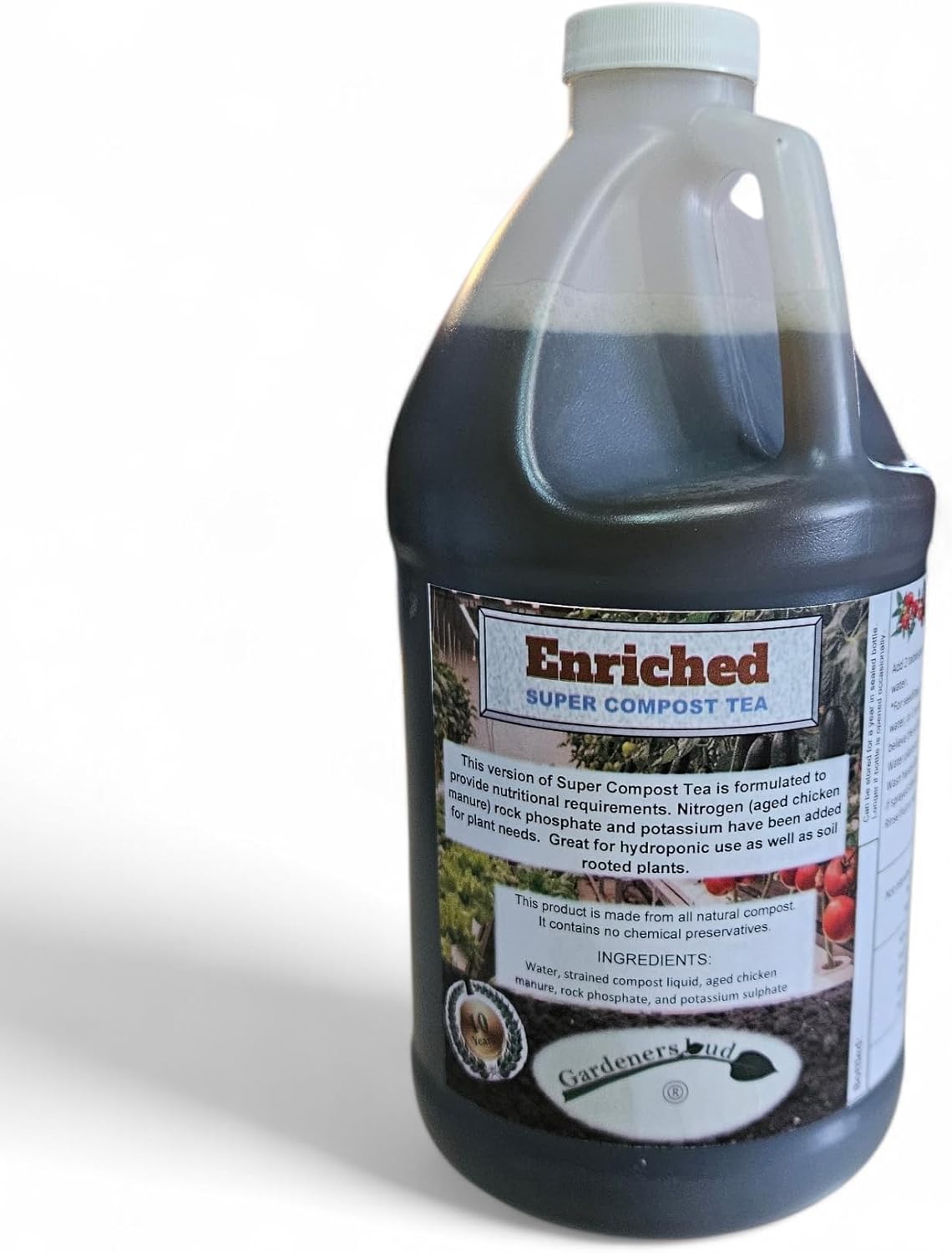
Gardenersbud Enriched Super Compost Tea (64 oz)
| Item Form | Liquid |
|---|---|
| Specific Uses For Product | Organic,Plant Food |
| Target Species | plants, flowers |
| Liquid Volume | 64 fluid ounces |
| Mixing Ratio | 3:4:4 |
Gardenersbud Enriched Super Compost Tea is a ready-made liquid fertilizer designed to supply organic nutrients and beneficial microbes to tomatoes and other garden plants. It is intended to be diluted and applied as a weekly feed during the growth stage or used more lightly for regular watering with the unamended brew. The formula adds aged chicken and horse manure for nitrogen plus rock phosphate, potassium sulfate, and pulverized eggshells to deliver an NPK of 3:4:4, so it supports leaf and fruit development. Practical benefits include easy dosing from a bottle, suitability for soil and hydroponic systems, and the potential to reduce synthetic fertilizer use while improving soil biology. Important limitations are its strong odor before dilution, the need to mix outside, and the product contains live microbes so it is explicitly not for human or pet consumption. For reliable weekly feeding, follow the labeled mixing ratio and storage guidance to keep the microbial balance effective.
Best for: Gardeners who prioritize dependable, organic weekly feeding routines for tomatoes and want a product that supports both nutrition and soil biology without frequent mixing or sourcing multiple amendments.
Less Ideal for: Those who need an odorless indoor fertilizer or who prefer sterile, soluble synthetic feeds for precise nutrient control in highly managed systems.
- Amended formula provides NPK 3:4:4 targeted for growth and fruiting
- Contains organic sources plus minerals to support plant nutrition and soil biology
- Ready-to-use liquid form simplifies dosing and application
- Suitable for soil and hydroponic use to reduce reliance on chemical fertilizers
- Strong natural odor prior to dilution requires outdoor mixing
- Contains live microbes and manure derivatives so it must be handled carefully and is not for consumption
Verdict: A practical, ready-to-use organic feed that reliably supplies NPK and beneficial microbes for weekly tomato growth.
Mighty Plant Instant Compost Tea (5 oz)

| Item Form | Powder |
|---|---|
| Application Method | root drench or foliar spray |
| Target Species | All plants |
| Mixing Ratio | 1:64 (Indoor), 1:32 (Outdoor) |
Mighty Plant Instant Compost Tea is a concentrated powder you dissolve in unchlorinated water to make a compost tea for root drench or foliar spray. It is aimed at gardeners who want the microbial benefits of compost tea without the time and variability of brewing. Typical use is simple: mix 1 teaspoon per gallon for indoor plants or 2 teaspoons per gallon for outdoor plants, then drench the root zone or spray foliage. The formula lists amino acids, kelp, yeast extracts, and biologicals that the brand says convert amino acids into growth-ready molecules, which can support stronger root zones and bloom development. A 5 ounce pack claims up to 50 gallons of finished tea, so a small package covers several feedings. Practical limitations are that the product is a prepared powder rather than live brewed compost, so results depend on following mix and application directions and on existing soil biology. Also it does not list a guaranteed microbial count or specific strains, so gardeners seeking detailed lab-verified microbial profiles may want different products.
Best for: Tomato growers who want the benefits of compost tea without spending time brewing and who value straightforward, repeatable feeding steps backed by many user reviews.
Less Ideal for: Growers who need verified microbial counts or specific strain information for scientific trials or for precisely controlled microbiome programs.
- No brewing required—fully water soluble for quick preparation
- Versatile application as a root drench or foliar spray
- Concentrated pack yields up to 50 gallons from 5 ounces, economical for multiple feedings
- Includes amino acids, kelp and yeast extracts to support nutrient uptake and bloom development
- Does not specify microbial strains or colony counts
- Effectiveness depends on correct mixing and on the existing soil microbiome
Verdict: If you want a quick, no-brew compost tea to boost tomato root health and flowering with minimal fuss, this concentrated powder is an easy, economical choice.
Gardenersbud Super Compost Tea P (64 oz)

| Item Form | Liquid |
|---|---|
| Specific Uses For Product | Organic,Plant Food |
| Application Method | Spray |
| Coverage | Full |
| Liquid Volume | 64 fluid ounces |
Gardenersbud Super Compost Tea P is a concentrated liquid brewed throughout the composting process and designed to be diluted and applied as a soil drench or foliar spray. For tomato growers it supplies organic matter, micro and macronutrients, and a boost of beneficial microorganisms that help nutrient delivery to roots and improve soil structure. The bottle is sold as a 64-ounce concentrate so it will cover many applications once mixed to the recommended dilution. You can spray it on leaves to feed microbes directly or water it into the root zone to reduce reliance on synthetic fertilizers. Important practical points are that it contains phosphorus and should be used according to local regulations, and because it is an organic concentrate results build over time rather than producing an instant jump in plant size. Risk-averse gardeners will appreciate the familiar, natural approach but should follow dilution and application guidance carefully to avoid overapplication.
Best for: Tomato growers who prefer an organic, microbe-focused feeding program and value steadily improving soil biology over immediate quick fixes.
Less Ideal for: Gardeners who need rapid, predictable nutrient spikes for immediate growth or those who must avoid any phosphorus inputs due to local rules.
- Brewed for the full composting cycle to concentrate organic compounds and microbes
- Works as both a foliar spray and soil drench for flexible application
- Provides micro and macronutrients that support soil microbial activity
- Concentrated 64 fl oz bottle stretches across multiple tomato-feeding sessions
- Contains phosphorus which may be restricted in some jurisdictions
- Benefits accrue gradually and are not an immediate synthetic fertilizer replacement
Verdict: A concentrated, organically brewed compost tea that improves soil biology and supports tomato health when used as a diluted foliar spray or soil drench.
Choosing the Right Compost Tea for Tomatoes: Key Factors to Consider
Nutrient Profile and Tomato Needs
Tomatoes need a mix of macronutrients and specific micronutrients during different growth stages. Early growth benefits from a slightly higher nitrogen level to build foliage, while flowering and fruiting require more phosphorus and potassium. Calcium availability is especially important to prevent blossom-end rot. When evaluating compost teas, consider whether the tea is primarily a microbial inoculant with low soluble nutrients or a nutrient-rich extract. A nutrient-heavy tea can provide a quick feed but may mask underlying soil imbalances, while a microbe-focused tea improves nutrient cycling and long-term availability.
Also think about soluble versus organic-bound nutrients. Soluble nutrients act fast and are useful for foliar feeding, but they can leach quickly from beds and containers. Organic-bound nutrients released by microbial activity contribute to sustained fertility. For tomatoes grown in containers or in heavy feeding programs, blend both approaches: use a microbe-rich tea periodically and apply a balanced nutrient tea when rapid correction is needed.
Microbial Diversity and Viability
The benefits of compost tea depend on living organisms surviving the brew and application. Aerated brewing that maintains oxygen favors beneficial aerobic bacteria and fungi which compete with pathogens and aid nutrient mineralization. Look for teas or brewing methods that promote a diversity of organisms rather than a single dominant strain. A diverse microbiome helps suppress soil-borne diseases and improves root colonization on tomato plants.
Viability also depends on timing and handling. Apply the tea soon after brewing or use a stabilized product with viability information. Sunlight and heat reduce microbe survival during foliar sprays, so apply in the cooler parts of the day. For gardeners wanting predictable results, choose teas with clear brewing times and storage recommendations to preserve microbial life.
Brewing Method and Equipment Needs
Different compost tea options require different levels of effort and gear. Basic steeping methods use a bucket and aerator and can produce effective brews for small gardens. More elaborate rigs with pumps and diffusers can scale production but require maintenance and electricity. Ready-to-use bottled teas eliminate brewing but may have shorter microbe lifespans and different nutrient characteristics.
Consider how much tea you need and how often you will brew. For backyard tomato rows or containers, small aeration setups are often sufficient. If you plan to treat many plants or a large vegetable patch, look for methods that scale without adding undue time. Also factor in cleaning and sanitizing equipment between brews to avoid cross-contamination.
Application Method and Timing
Compost tea can be applied as a soil drench, root dip, or foliar spray, and the timing affects effectiveness. Root drenches place microbes and nutrients where roots can access them and are especially useful at transplant and during active root growth. Foliar sprays can supply fast-acting soluble nutrients and may help control certain foliar pathogens when beneficial microbes reach leaf surfaces.
Apply teas when plants are actively growing and avoid spraying in the heat of midday to prevent leaf burn and microbe die-off. For flowering and fruit set, schedule applications that support pollination and early fruit development. Frequency depends on tea strength and garden conditions; light, regular applications maintain activity without overloading the plants.
Safety, Contamination Risk, and Source Materials
Compost tea can introduce both beneficial organisms and potential contaminants. Using fully finished, well-made compost and clean water reduces risk. Avoid fresh manures, uncomposted kitchen waste, or materials that could harbor human pathogens unless you have a method to ensure safety. Gardeners should follow food-safety practices when applying teas to edible crops: avoid spraying fruit directly close to harvest and wash produce thoroughly.
Suppliers and recipes that document source materials and compost maturity give better confidence. Also consider whether a product recommends tests or safety steps, such as maintaining aeration to limit anaerobic pockets that may favor unwanted organisms. Risk management becomes more important when tea is used on dense plantings or in community gardens with multiple people handling produce.
Compatibility With Soil Type and Container Culture
Tomatoes grow in a wide range of planting contexts from raised beds and in-ground rows to containers and grow bags. Soil texture and organic matter levels influence how a compost tea performs. In sandy soils, teas that boost microbial activity can improve water retention and nutrient-holding capacity. In heavy clay, microbial teas that encourage aggregation help aeration and root penetration.
Container-grown tomatoes respond differently because containers have limited buffering capacity. A tea that leaches quickly might require more frequent, lighter applications. Also check that the tea does not clog drip emitters if you use irrigation systems. Matching the tea type and application schedule to your soil or container situation will help avoid nutrient spikes or drainage problems.
When to Use Compost Tea in the Tomato Growing Cycle
Apply a microbe-rich compost tea at transplant to give seedlings a strong root zone and help beneficial organisms establish before pathogen pressure rises. During vegetative growth, a balanced tea with modest nitrogen supports leaf development without pushing excessive lushness that can reduce airflow.
Switch to a bloom-and-fruit phase approach as flowers set: use teas higher in phosphorus and potassium or those that improve nutrient mobilization to support fruit development. Reduce or avoid foliar feeding close to harvest to minimize direct residue on fruit surfaces.
- Transplant: root drench to inoculate roots and improve establishment
- Vegetative stage: light, balanced applications to maintain steady growth
- Flowering/fruiting: focus on nutrient mobilization and calcium availability
- Pre-harvest: avoid foliar sprays in the days immediately before harvest
Practical Brewing Tips for Backyard Gardeners
Keep brews small and fresh. A single 24- to 48-hour aerated batch covers many home gardens and ensures a high proportion of living organisms. Use clean, chlorine-free water when possible and add a simple sugar source sparingly to feed microbes if the recipe calls for it.
Maintain steady aeration and avoid sediment build-up that can create anaerobic pockets. After brewing, apply the tea within a few hours for best viability. Clean equipment between batches and store any unused brewed tea only briefly and in cool, shaded conditions.
- Use a battery or plug-in aquarium-style aerator for small batches
- Filter large particulates if planning a foliar spray to prevent nozzle clogging
- Record brew time and ingredients so you can replicate what's effective
Combining Compost Tea With Other Fertility Practices
Compost tea complements solid amendments, mulches, and mineral fertilizers rather than replacing them. Use teas to boost microbial activity and improve nutrient cycling while maintaining a baseline fertility program suited to your soil test results. Teas are especially useful for mobilizing nutrients already in the soil and for helping roots access bound minerals.
When using soluble fertilizers, adjust tea frequency to avoid nutrient overload. If you use organic granular fertilizers, time tea applications to coincide with active nutrient mineralization for best results.
- Pair teas with regular soil testing to track long-term effects
- Use organic mulch to feed the soil food web that teas help activate
- Reduce high-rate synthetic feeds when using frequent nutrient-rich tea applications
Foliar Application Best Practices
Foliar spraying can deliver quick nutrient corrections and deposit beneficial microbes on leaf surfaces where they can outcompete pathogens. Spray in the early morning or late afternoon when temperatures are cooler and stomata are more open. Use fine nozzles and dilute the tea to a strength that avoids leaf burn.
Avoid applying foliar tea during rain forecasts since rain will wash away microbes and nutrients. Reapply after heavy rain or irrigation as needed to maintain coverage during critical growth phases.
- Test spray on a few leaves and wait 24 hours to check for sensitivity
- Avoid spraying during hot, sunny periods to reduce stress and microbe die-off
- Combine foliar tea use with good airflow and pruning for disease management
Managing Risks and Food Safety
Treat compost tea like any garden input that touches edible plants. Use fully matured, well-made compost and clean water. Avoid materials that can introduce human pathogens and follow recommended aeration and brewing times to decrease risks tied to anaerobic conditions.
Rinse fruit before eating and avoid heavy foliar tea applications in the days immediately before harvest. If you garden for vulnerable consumers, consider restricting foliar sprays and relying on soil drench applications instead.
- Keep brewing equipment dedicated to garden use and sanitize periodically
- Avoid using fresh manures in compost intended for tea unless thoroughly composted
- Document source materials and brewing conditions for traceability
How We Chose the Best Compost Tea for Tomatoes
We prioritized criteria that actually influence tomato performance when using compost tea. Nutrient content was measured for presence of the key macro and micronutrients tomatoes use most, such as nitrogen, phosphorus, potassium, calcium, and magnesium. Microbial activity assessed the diversity and likely viability of beneficial bacteria and fungi produced by the brewing method and source materials. Extraction method and oxygenation were weighed because aerated brews tend to favor beneficial organisms while anaerobic teas can be unpredictable. Application practicality covered instructions clarity, dilution requirements, sprayability for foliar use, and compatibility with drip irrigation. Safety and contamination control looked for guidance on preventing pathogens and on materials that avoid introducing weed seeds or unwanted organisms. We excluded teas that had no clear ingredient list or brewing instructions, products that required specialized equipment beyond basic backyard kits, and sources with unverifiable claims about microbes. The resulting shortlist balances readily reproducible brewing approaches and ready-to-use formulations that demonstrate the core benefits tomato gardeners seek: improved fruit set, healthier foliage, and fewer nutrient-related disorders.
FAQ
How often should I apply compost tea to tomatoes?
Frequency depends on tea strength and garden conditions. Many gardeners use a light application every 1 to 3 weeks during active growth, with more targeted applications at transplant and flowering. Reduce frequency if plants show nutrient overload or if you use other regular fertilizers.
Can I use compost tea on tomato seedlings?
Yes, but use a diluted, gentle brew for seedlings and apply as a root drench rather than a foliar spray to avoid stressing delicate leaves. Seedlings benefit from microbial support at transplant and early root development.
Is aerated compost tea better than non-aerated for tomatoes?
Aerated brews generally favor beneficial aerobic microbes and are less likely to produce undesirable anaerobic byproducts. For tomatoes, aerated methods are usually preferred because they support organisms that improve nutrient cycling and disease suppression.
Will compost tea prevent blossom-end rot?
Compost tea can help by improving calcium availability through enhanced soil biology, but it is not a guaranteed fix. Blossom-end rot often stems from inconsistent watering and calcium uptake issues, so address irrigation and soil calcium levels alongside tea applications.
Can I use compost tea with drip irrigation systems?
Yes, but filter the tea to remove large particulates and use a system-compatible injector or reservoir to avoid clogging emitters. Test the mix on a small section before full-scale use and clean filters regularly.
How long can I store brewed compost tea?
Brewed tea is best used within a few hours to 48 hours depending on aeration and temperature. Microbial populations decline over time, so store any unused tea in a cool, shaded place and re-aerate briefly before applying if possible.
Final Verdict
Choosing the right compost tea for tomatoes means balancing immediate nutrient needs with long-term soil biology goals. Prioritize teas that provide either the soluble nutrients needed at specific growth stages or a diverse, viable microbial inoculant that improves nutrient cycling and disease resilience. Consider your planting context, brewing capacity, and food-safety comfort level when deciding between ready-to-use products and home-brewed aerated options. Focus on consistent application timing, clean brewing practices, and matching tea type to the tomato growth phase. That approach reduces risks while maximizing the benefits of compost tea for stronger plants and better yields.
