

Note: This article contains affiliate links. If you click on these links and make a purchase, I may earn a small commission at no extra cost to you. This helps support my research and content. Read my full affiliate disclosure here.
If you want a low-toxicity way to reduce crawling pests and improve surface drainage, picking the right diatomaceous earth for garden use matters. Different formulations vary in purity, particle size, and recommended applications, and those differences change how effective and safe a product will be around vegetables, ornamentals, or lawns. This guide covers seven carefully shortlisted options that suit common garden situations, from treating perimeter borders to mixing into potting mixes. We evaluated each candidate on the factors that matter most to gardeners: how pure the material is, how easy it is to apply, and whether the particle size and packaging fit specific outdoor uses. Read on for practical guidance that leads into the product summaries below.
Top Picks at a Glance
| Best Overall The best all-around choice for most situations | HARRIS Food Grade Diatomaceous Earth, 10 lb with Powder Duster |  |
| Best Quality Built to a higher standard if you want something more solid | Permaguard Fresh Water Food Grade Diatomaceous Earth, 50 lb |  |
| Best Value The sweet spot between price and what you get | Diatomaceous Earth Food Grade Powder, 10 lb |  |
| Best Budget The cheapest option that still gets the job done reliably | HARRIS Diatomaceous Earth Food Grade, 8 oz with Puffer Tip |  |
| Highest Rated A top-rated pick with lots of positive feedback | Natures Wisdom Food Grade Diatomaceous Earth, 5 lb |  |
| Most Popular A crowd favorite that many people choose with confidence | Diatomaceous Earth Food Grade Powder, 10 lb |  |
| Best Seller A high-volume bestseller chosen again and again | Harris Food-Grade Diatomaceous Earth, 5 lb (with Powder Duster) |  |
HARRIS Food Grade Diatomaceous Earth, 10 lb with Powder Duster

| Net weight | 10 lb |
|---|---|
| Grade | Food grade |
| Organic listing | OMRI listed |
| Includes | Powder duster |
This 10 lb bag of HARRIS food-grade diatomaceous earth is a straightforward, chemical-free pest control and drying agent for indoor and outdoor use. The powder is OMRI listed for organic use and comes with a powder duster packed inside the bag, which makes applying the fine dust into cracks, baseboards, and garden beds much easier and less messy. It is sourced and packaged in the U.S., which supports consistent quality, and the pure formulation means it can be used around pets and children when directions are followed. Practical benefits include long shelf life, multiple uses from insect control to moisture absorption, and the included duster saves you from buying separate applicators. Limitations are inherent to diatomaceous earth: it works by physical contact so applications must be dry and re-applied after heavy rain or watering, and it requires careful dust control during application to avoid inhalation. For someone wanting a simple, organic option for routine pest management and moisture control, this is a usable, no-frills choice.
Best for: Buyers who want a simple, organic, low-chemical pest control solution for routine indoor and outdoor use and value an included applicator for easy spot treatments.
Less Ideal for: People who need a fast-acting chemical pesticide for immediate knockdown or those unwilling to take precautions to avoid inhaling fine dust.
- Food-grade, chemical-free formulation suitable for organic use
- Included powder duster allows precise application into tight spaces
- Packaged in the U.S. with consistent sourcing and quality control
- Multi-purpose for insect control and moisture absorption around home and garden
- Effectiveness depends on direct contact and dry conditions so it must be reapplied after wetting or rain
- Fine dust can be irritating if inhaled during application
Verdict: A dependable, food-grade diatomaceous earth bag with an included duster that makes organic, contact-based pest control and moisture absorption easy for routine home and garden use.
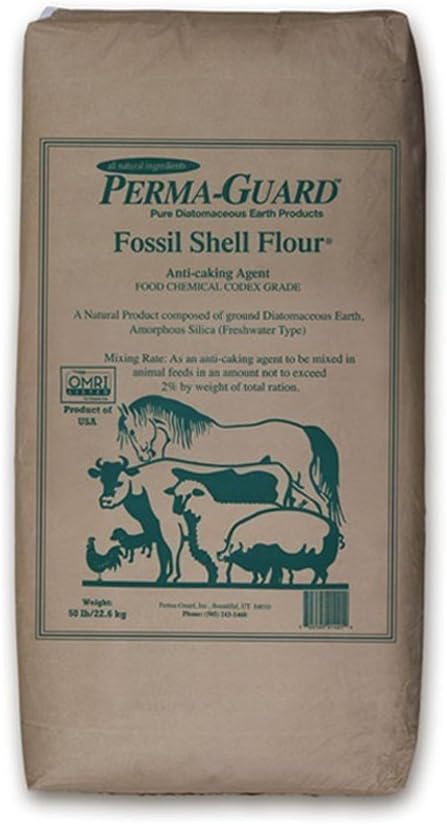
Permaguard Fresh Water Food Grade Diatomaceous Earth, 50 lb
| Special Ingredients | diatomaceous earth |
|---|---|
| Specific Uses For Product | Aquarium Maintenance, Parasite Control, Water Clarification |
| Additional Features | organic |
| Unit Count | 800 Ounce |
Permaguard Fresh Water Food Grade Diatomaceous Earth is a large 50-pound supply of food-grade silica powder intended for freshwater and animal-health uses. It is typically used as a nonchemical option for parasite control in poultry and water systems, and for clarifying aquarium or pond water by binding fine particles. In practice you apply it sparingly where insects or parasites are present or add according to guidance for water treatment; the organic, inert mineral works mechanically rather than chemically, so it is low-toxicity when used as directed. The bagged bulk size makes this convenient for farms, co-ops, or gardeners who need regular, repeated applications, and the food-grade designation gives flexibility for use around animals. Important limitations are the large single-bag size, which can be heavy to handle and is more than most home users need, and that dust can irritate eyes and lungs so a mask and careful application are recommended. There are no added insecticides so efficacy depends on correct application and dry contact for pest control.
Best for: Buyers who prioritize practical, low-chemical pest control and water clarification for poultry, ponds, or aquaria and who need a bulk supply for regular use.
Less Ideal for: Casual gardeners or buyers who need a small, easy-to-handle package for occasional home use or those unwilling to use protective equipment during application.
- Food-grade diatomaceous earth suitable for use around animals and in freshwater systems.
- Large 50-pound bag provides long-term supply for farms, co-ops, or heavy users.
- Organic, inert mineral works mechanically so no chemical pesticides are added.
- Large 50-pound bag can be difficult to lift and control for single-person use.
- Fine dust can irritate eyes and respiratory system without protective gear.
- Effectiveness requires dry contact and correct application so it is not an instant or broad-spectrum kill for all pests.
Verdict: Choose this 50 lb food-grade diatomaceous earth when you need an economical, chemical-free bulk supply for routine parasite control and freshwater clarification.
Diatomaceous Earth Food Grade Powder, 10 lb

| Unit Count | 1 Count |
|---|---|
| Item Type Name | bark collar |
| Manufacturer | DiatomaceousEarth |
| Ingredients | 100% Diatomaceous Earth |
| OMRI Listed | for Organic Use |
This 10 lb bag of food-grade diatomaceous earth is a straightforward supply for gardeners who want an OMRI-listed, additive-free silica source for organic use. In the garden it is typically dusted onto container soil, mixed into potting mixes to improve drainage and porosity, or applied as a dry barrier against crawling pests. The product is presented as 100% pure freshwater diatomaceous earth with no fillers and is packaged professionally for storage and handling. Practical benefits include a large quantity that covers multiple beds or seasons, organic certification that fits a certified-organic plan, and a low-risk profile when used as directed around plants. Important limitations are that it must be kept dry to work effectively, it controls pests by physical abrasion rather than chemicals so results are gradual, and the powder can be dusty to apply so a mask and eye protection are advisable. For gardeners focused on incremental soil texture improvement and a nonchemical pest option, this is a utilitarian choice.
Best for: Gardeners who prioritize practical, low-cost organic inputs and want a multi-use product to improve soil texture and provide a nonchemical option for crawling pests.
Less Ideal for: Growers who need fast-acting chemical pest control or who cannot manage dusty powder applications safely indoors or in windy conditions.
- OMRI listed for organic use so it fits certified-organic gardening plans
- 100% pure freshwater diatomaceous earth with no additives or fillers
- Large 10 lb quantity suitable for multiple beds, containers, or seasons
- Versatile for soil conditioning, pest control, and other garden uses
- Must remain dry to be effective and loses efficacy when wet
- Powdery and dusty to apply, requiring protective gear during use
Verdict: A practical, OMRI-listed 10 lb supply of pure diatomaceous earth for gardeners who want an inexpensive, nonchemical way to improve soil texture and manage crawling pests.
HARRIS Diatomaceous Earth Food Grade, 8 oz with Puffer Tip

| Unit Count | 8 Ounce |
|---|---|
| Item Form | Powder |
| Specific Uses For Product | Soil Conditioning |
| Application Method | puffer tip |
This 8 oz bag of HARRIS food-grade diatomaceous earth is a straightforward, no-frills option for gardeners and homeowners who want a chemical-free insect control and soil conditioner. The powder is OMRI listed for organic use and sourced in the USA, so it suits organic gardening and safe use around pets and kids when applied as directed. The included puffer tip makes it easy to apply small, controlled amounts into cracks, crevices, or along garden rows without clouding the area. In practical use it works best as a spot treatment for crawling insects, for light soil amendment, or as a preventative barrier; it is not a broadcast solution for large acreage because the package is small. Directions note light, uniform application and recommend testing surfaces first to avoid visible deposits. If you want a compact, certified food-grade product for targeted home and garden tasks, this is a sensible choice, but plan to buy multiple bags for regular use over bigger gardens.
Best for: Gardeners and homeowners who want an affordable, certified food-grade diatomaceous earth for spot treatments, organic gardens, and pet-safe use around the yard.
Less Ideal for: People needing a bulk supply for large beds, lawns, or commercial use should choose a larger quantity or a product designed for heavy broadcast application.
- Food-grade, OMRI listed so suitable for organic gardening
- Puffer tip allows precise application into cracks and tight spaces
- Sourced and packaged in the USA for consistent quality
- Simple powder form works for both insect control and light soil conditioning
- Small 8 ounce unit is not ideal for large-area or frequent broadcast applications
- Requires careful, light application to avoid dust and visible residues
Verdict: A budget-friendly, certified food-grade diatomaceous earth in a handy puffer-tip package for precise, organic-friendly spot treatments.
Natures Wisdom Food Grade Diatomaceous Earth, 5 lb

| Item Form | Powder |
|---|---|
| Unit Count | 80 Ounce |
| Target Species | plants |
| Item Weight | 5.3 pounds |
Natures Wisdom Food Grade Diatomaceous Earth is a finely milled, freshwater DE powder sold as a pure, additive-free product for garden and pest control. It is typically dusted onto soil, around plant bases, or along entry points to control crawling insects and can be lightly mixed into potting mixes for moisture management. The product emphasizes a consistent tubular diatom shape from a single freshwater deposit, which the manufacturer says improves effectiveness and reduces sediment. Packaged in sealed bags and processed on dedicated equipment, it is presented as a refill-size supply for small-plot gardeners or repeated seasonal use. Practical benefits include long shelf life, inert chemistry safe for exterior use when applied as directed, and easy application with a shaker or duster. Important limitations are that DE works by physical abrasion and requires dry conditions to be effective, it does not provide residual chemical control, and users should avoid inhaling the fine powder and avoid applying when plants or soil are wet for best results.
Best for: Buyers who prioritize a high-purity, physical pest-control option for garden beds, potted plants, or organic gardening and who plan seasonal, hands-on applications.
Less Ideal for: People seeking fast-acting chemical control, systemic pest solutions, or a product for continuous wet or humid conditions should consider other options.
- Food-grade freshwater DE with no added fillers according to the manufacturer
- Fine powdered form suitable for shaker or duster application
- Sealed packaging processed on dedicated lines to reduce cross-contamination
- Long shelf life and inert chemistry safe for outdoor use when used as directed
- Effectiveness depends on dry conditions and physical contact with pests rather than chemical action
- Fine powder can be inhaled if applied without a mask, requiring basic PPE
Verdict: Choose this DE if you want a high-purity, food-grade freshwater powder for seasonal, nonchemical pest control and soil management.
Diatomaceous Earth Food Grade Powder, 10 lb

| Unit Count | 160 Ounce |
|---|---|
| Included Components | Diamateous Earth Powder |
| Item Type Name | food grade diatomaceous earth |
| Manufacturer | DiatomaceousEarth |
| Ingredients | 100% Diatomaceous Earth |
This 10 lb bag of food-grade diatomaceous earth is a straightforward, all-natural powder for gardeners and homeowners who want an inert, silicon-rich soil amendment and pest control option. It is OMRI listed, meaning it meets organic standards for use around edible plants, and the product is labeled 100 percent pure with no additives. Use it dry as a soil conditioner by lightly working it into topsoil or sprinkling around plant bases to deter crawling insects; the manufacturer also notes a powder duster is included for targeted application. Practical benefits include a large enough quantity for several garden beds and a multipurpose role across soil health and pest management tasks. Important limitations are the safety precautions: avoid inhaling the fine dust and keep it away from children's and pets' airways during application, and it works by physical contact so it is less effective when wet. Buyers should plan for careful, dust-controlled application and not expect an immediate chemical-style knockdown of pests.
Best for: Gardeners and homesteaders who prioritize certified organic inputs and want a multipurpose, nonchemical option for soil conditioning and crawling-pest control.
Less Ideal for: People who need fast-acting chemical pest control or who cannot manage dusty applications around children, pets, or dusty indoor areas.
- OMRI listed for organic use so acceptable for edible gardens
- Sold as 100% pure diatomaceous earth with no additives
- Large 10 lb bag covers multiple beds or repeated treatments
- Includes powder duster for controlled application
- Fine powder can be hazardous if inhaled and requires caution during application
- Effectiveness diminishes when wet and needs reapplication after rain
Verdict: Choose this OMRI-listed, 100% pure 10 lb diatomaceous earth if you want a certified organic, multipurpose powder for soil conditioning and nonchemical pest control.
Harris Food-Grade Diatomaceous Earth, 5 lb (with Powder Duster)

| Net weight | 5 pounds |
|---|---|
| OMRI status | OMRI listed |
| Grade | Food grade |
| Includes | Powder duster |
Harris Food-Grade Diatomaceous Earth is a fine, chemical-free powder mined from freshwater deposits and packaged in a 5 lb resealable bag with a small powder duster included for application. Typical uses include dry pest control around foundations and garden beds, mixing a small amount into animal feed as an anti-caking agent, or dusting in cracks and crevices where insects travel. The product is OMRI listed which supports use in organic gardening, and the included duster makes targeted, low-waste application easier than pouring from the bag. Because it is a physical desiccant rather than a chemical insecticide, it is safe to use around people and pets when applied as directed and kept dry. Limitations are that DE must remain dry to be effective, it works slowly compared with chemical sprays, and repeated applications are necessary after rain or irrigation. Users should also avoid inhaling the fine dust during application.
Best for: Buyers who prioritize low-toxicity, organic-approved pest control and want a straightforward, physical option for dusting garden areas or mixing small amounts into feed.
Less Ideal for: Those who need fast knockdown of heavy infestations or require a rainproof solution should consider other pest-control methods.
- OMRI listed for organic use, suitable for organic gardening and farming practices
- 100% food-grade, chemical-free formulation safe for use around people and pets when used as directed
- Includes a powder duster in the bag for precise, low-waste application
- Sourced and packaged in the USA, supporting consistent quality control
- Ineffective when wet and requires reapplication after rain or watering
- Works by physical contact and is slower to control active infestations compared with chemical insecticides
Verdict: A safe, OMRI-listed food-grade diatomaceous earth that gives risk-averse gardeners a low-toxicity, easy-to-apply option for organic pest control.
Choosing the Right Diatomaceous Earth for Garden: Key Factors to Consider
Purity and Intended Use
Purity directly affects whether you can safely use diatomaceous earth around vegetables, herbs, and pets. Food-grade diatomaceous earth contains amorphous silica and is not heat-treated, making it appropriate for contact with edible crops when used correctly. Industrial or pool-filter grades undergo calcination and can contain crystalline silica, which is hazardous to breathe and not suitable for garden use.
Look for clear labeling about composition and intended uses. If the product description does not state food-grade or amorphous silica content, assume it is not intended for edible gardens. Choosing the right grade reduces inhalation risk during application and prevents accidental contamination of harvestable produce.
Particle Size and Texture
Particle size affects both efficacy against crawling insects and handling safety. Very fine powders adhere better to small-bodied insects and can be more effective for direct contact control, while coarser granules are easier to sweep or broadcast and are less likely to become airborne.
Consider the application method you plan to use. If you want to dust plant foliage or work in tight spaces, a finer texture may be necessary but requires extra care to avoid inhalation. For mixing into potting soil or treating perimeter bands, coarser granules minimize drift and mess.
Application Format and Packaging
How diatomaceous earth is packaged and dispensed changes how precise and safe your applications will be. Shaker-top bottles and hand duster-style dispensers allow targeted treatment with minimal waste, while larger sacks are best for soil incorporation or large-area broadcasts.
Packaging that seals well prevents moisture uptake and clumping during storage. Refillable or resealable containers reduce accidental spills and make it easier to measure consistent application rates, which is especially important when treating edible beds or when working near pets.
Weather Resistance and Persistence
Diatomaceous earth works by physical abrasion and dehydration of insects, so exposure to rain or irrigation reduces effectiveness. Some formulations and application strategies increase persistence: placing material in dry sheltered zones, using slightly coarser grades, or reapplying after significant watering events.
Plan for reapplication timing and method based on your local climate and irrigation schedule. For damp climates or frequent overhead watering, expect shorter effective windows and choose formats that are quick to reapply without disturbing plants.
Safety and Handling
Even food-grade diatomaceous earth can irritate lungs and eyes if inhaled or if dust contacts mucous membranes. Use a dust mask and eye protection during application, apply on calm days, and avoid working in enclosed spaces without ventilation.
Consider the proximity of children and pets when deciding where to apply material. For accessible surfaces, use barrier methods such as placing the product under edging or in crevices rather than dusting broad plant foliage. Good handling reduces exposure while keeping the product effective.
Intended Garden Application
Different garden tasks call for different formulations. Spot-treating an aphid-invaded indoor potted plant requires a different approach than creating a perimeter barrier around a vegetable bed. Think about whether you need a product for foliar dusting, soil amendment, seed treatment, or broad perimeter control.
Match the product format and granularity to that task to avoid unnecessary mess and ensure the diatomaceous earth reaches target insects. If you plan to use it as a soil amendment, look for information on particle size and how it integrates with potting mixes without creating compaction or poor drainage.
How Diatomaceous Earth Works in the Garden
Diatomaceous earth is a naturally occurring sedimentary rock composed of fossilized aquatic microorganisms. In gardens it acts as a mechanical insect control by abrading insect exoskeletons and absorbing lipids, which leads to dehydration. This means it works best on soft-bodied and crawling pests that contact the powder directly.
Because the action is physical rather than chemical, diatomaceous earth does not have systemic activity and will not control pests that feed inside stems or soil unless they come into direct contact. Expect an effective zone around applied areas rather than full-plant protection.
- Effective against slugs, beetles, ants, and other crawling insects with direct contact
- Non-systemic; requires direct contact to be effective
- Performance drops after rain or irrigation and requires reapplication
Best Application Methods for Common Garden Tasks
Different garden jobs benefit from different application methods. For perimeter protection, apply a continuous thin band at ground level using a shaker or duster. For potting mixes, blend small amounts thoroughly to reduce pest establishment in containers. For spot treatments on foliage, apply lightly and avoid windy conditions to reduce inhalation risk.
Timing matters. Apply in the morning after dew dries but before afternoon irrigation. Reinspect treated areas after watering or rain and reapply if the powder has washed away.
- Perimeter band: continuous thin line at soil level
- Soil incorporation: mix thoroughly into the top inch or two of potting soil
- Foliage dusting: apply lightly when plants are dry and winds are calm
Combining Diatomaceous Earth with Other Garden Practices
Diatomaceous earth is most useful as one part of an integrated pest management strategy. Combine its use with good cultural practices such as removing debris that shelters pests, rotating crops, and encouraging beneficial predators. Physical barriers and traps can reduce reliance on repeated powder applications.
If you use other granular amendments or conditioners, consider application timing so the powders do not simply mix and lose efficacy. Avoid combining with wettable treatments; moisture will negate the powder until it dries and is reapplied.
- Use with sanitation and habitat modification for best results
- Coordinate with irrigation schedules to maintain effectiveness
- Avoid mixing with liquid sprays that create a pasty residue
Storage and Long-Term Care
Store diatomaceous earth in a dry, cool place in a resealable container to prevent moisture uptake and clumping. Keep it out of reach of children and pets and label containers clearly to avoid accidental misuse. If the product gets damp, let it dry thoroughly before reuse or replace it.
For larger quantities, consider decanting into smaller, more manageable dispensers for routine applications. Proper storage preserves particle texture and prevents loss of effectiveness over seasons.
- Keep sealed and dry to avoid clumping
- Use smaller dispensers for frequent treatments
- Label containers and store away from food prep areas
Environmental and Non-Target Considerations
Diatomaceous earth is non-systemic and has low toxicity to vertebrates when used properly, but it can harm beneficial insects like ground beetles and predatory mites if applied broadly. Apply targeted treatments rather than blanket dusting to preserve beneficial populations.
Avoid applying in bloom when pollinators are active on flowers. Use perimeter and soil-level placements to reduce contact with non-target invertebrates that forage on plant surfaces.
- Targeted placements reduce impact on beneficial insects
- Avoid using on open flowers to protect pollinators
- Consider timing and placement to preserve natural predators
How We Chose the Best Diatomaceous Earth for Garden
We focused on attributes that directly affect performance and safety in real garden settings. Purity and composition determine whether a product is food-grade or contains added fillers, which affects suitability around edible plants and pets. Particle size and granularity affect how well the product sticks to insects and whether it can be mixed into soil or potting media without creating dust problems. Application format and packaging matter for accuracy and waste reduction. Gardeners need options that allow targeted dusting, broad broadcast, or soil incorporation without soggy clumping or excessive airborne dust. Long-term persistence and weather resistance are important because rain and irrigation reduce effectiveness; formulations with coarser granules or delivery systems that minimize loss were preferred. We checked manufacturer specifications for composition and intended use, prioritized food-grade silica where edible gardens are concerned, and looked for clear guidance on particle size. We excluded industrial-grade or pool-filter grades that list calcined or high-heat treatments and any products lacking clear composition details. Final selections balance efficacy against common garden safety and handling concerns.
FAQ
Is diatomaceous earth safe to use around edible plants?
Food-grade diatomaceous earth is commonly used around edible gardens, but it must be labeled food-grade and used carefully. Avoid dusting leafy vegetables right before harvest, rinse produce if visible dust is present, and follow safe-handling practices to minimize inhalation.
How often should I reapply diatomaceous earth after rain or watering?
Reapplication frequency depends on how much the material was disturbed or washed away. In many cases you will need to reapply after heavy rain or overhead irrigation. For dry climates or sheltered placements, reapplications may be several weeks apart.
Will diatomaceous earth harm my pets or family?
When used as directed, food-grade diatomaceous earth has low toxicity to mammals, but the fine dust can irritate lungs and eyes. Keep people and pets away during application, use a dust mask, and avoid applying in areas where inhalation risk is high.
Can I mix diatomaceous earth into potting mix as a soil amendment?
You can blend small amounts into potting mixes to reduce pest establishment in containers, but avoid overuse. Excessive powder can affect water retention and create dusty mixes that are harder to handle. Mix thoroughly and test on a small batch first.
Does diatomaceous earth work on slugs and snails?
Diatomaceous earth has limited effectiveness on slugs and snails because these pests produce mucus that reduces abrasive action. It can help in dry conditions or as part of a barrier combined with other controls, but do not rely on it as the sole method for slugs.
Final Verdict
Prioritize purity, particle size, and appropriate application format when choosing diatomaceous earth for garden use. Food-grade material and packaging that supports precise, low-dust applications will be most useful around edible beds and high-traffic areas. Balance the need for effective contact control with safety for people, pets, and beneficial insects. Use targeted placements, coordinate with irrigation, and plan for reapplication as needed so you can rely on diatomaceous earth as a practical tool in an integrated pest management plan.
