

Note: This article contains affiliate links. If you click on these links and make a purchase, I may earn a small commission at no extra cost to you. This helps support my research and content. Read my full affiliate disclosure here.
Picking the right drainage plant pot matters for plant health more than many gardeners realize. A pot with poor drainage encourages waterlogged soil, root rot, and stunted growth, while the right pot helps you control moisture, oxygenation, and repotting frequency. This guide covers seven shortlisted options that excel at moving excess water away from roots and holding up outdoors or indoors. We evaluated each pot for how well it drains, how durable the material is in real garden conditions, and how easy it is to maintain. Use the quick overview and the buying guidance below to match a drainage plant pot to your planting style and growing situation.
Top Picks at a Glance
| Best Overall The best all-around choice for most situations | YNNICO 6‑Piece Self‑Watering Planter Set (5–8 inch) |  |
| Best Quality Built to a higher standard if you want something more solid | LE TAUCI 10" Ceramic Planter with Drainage Saucer |  |
| Best Value The sweet spot between price and what you get | Fielda 8 Inch Self-Watering Plastic Planter — 2‑Pack with Tray and Saucer |  |
| Best Budget The cheapest option that still gets the job done reliably | Amazon Basics 6-inch Plant Pot with Saucer, Matte White |  |
| Highest Rated A top-rated pick with lots of positive feedback | D'vine Dev Beaded Ceramic Planter with Saucer, 4 in |  |
| Most Popular A crowd favorite that many people choose with confidence | Utopia Home Indoor Plant Pots with Drainage, 5‑Pack |  |
| Best Seller A high-volume bestseller chosen again and again | Fielda 8/10/12 Inch Self-Watering Planter Set |  |
YNNICO 6‑Piece Self‑Watering Planter Set (5–8 inch)
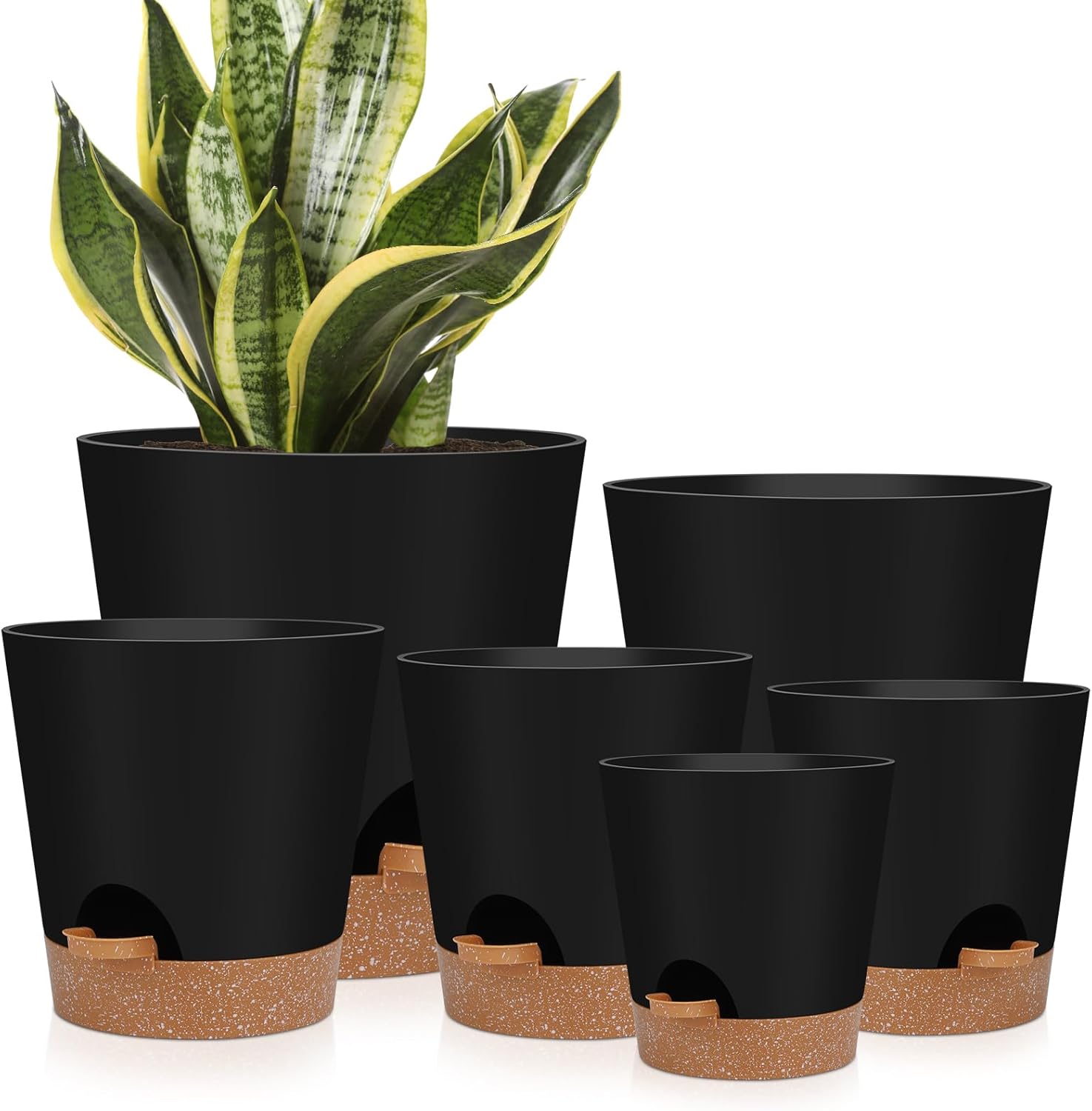
| Included Components | Tray |
|---|---|
| Unit Count | 6 Count |
| Other Special Features of the Product | Drainage Hole, Self Watering |
| Material Type | Plastic |
| Finish Types | Matte |
These YNNICO planters are a practical set for people who want low‑maintenance container gardening. The kit includes six nested sizes (8, 7, 6.5, 6, 5.5 and 5 inches) made from durable polypropylene with a matte finish. Each pot has multi drainage holes, a large bottom tray and a wick for bottom watering so you can use the separate reservoir for self watering or remove the tray for conventional drainage. The lightweight construction makes them easy to move between a windowsill, desk or small balcony, and the simple modern look fits most interiors. Because they are plastic they tolerate temperature swings and are less likely to crack than thin ceramic, but they are not decorative focal pieces and the finish can scratch if handled roughly. The set is best for small to medium houseplants, starting cuttings or creating a coordinated group of pots where consistent watering control matters.
Best for: Buyers who prioritize reliable, low‑maintenance watering and want a matched set of pots for multiple indoor plants or a coordinated display.
Less Ideal for: If you need heavy decorative planters or large outdoor containers for big plants, choose thicker ceramic or large garden pots instead.
- Includes six common planter sizes for a range of small to medium plants
- Built‑in drainage holes plus separate reservoir and wick for bottom self watering
- Durable, lightweight polypropylene construction suitable for indoor and sheltered outdoor use
- Plastic finish is utilitarian and can show scratches or scuffs over time
- Not intended as a decorative statement pot for high‑end styling
Verdict: A practical, matched six‑pot set that makes bottom self‑watering simple for small to medium indoor plants.
LE TAUCI 10" Ceramic Planter with Drainage Saucer

| Material Type | Ceramic |
|---|---|
| Finish Types | Satin Glaze; Unglazed Interior |
| Other Special Features of the Product | Drainage Hole and Saucer, Weather Resistant |
| Included Components | Drainage Hole Meshes, Mesh Pad, Saucer, Silicone Base Pad |
| Indoor Outdoor Usage | Indoor |
This LE TAUCI 10-inch ceramic planter is a sturdy, attractive pot designed for indoor houseplants such as spider plants. It has an 8-inch opening and a wider 10-inch body that gives room for roots to spread, and the built-in drainage hole plus included mesh pad and saucer let you water thoroughly without risking root rot. The satin reactive glaze on the exterior offers a clean modern look while the unglazed interior helps moderate moisture. Included silicone base pad protects furniture from scratches and minor leaks. It is fired at high temperature so the ceramic feels solid and resists fading or cracking under normal indoor conditions. Limitations to note are that the planter is intended for indoor use only and the saucer is integrated rather than fully detachable, which can make heavy cleaning or repotting a bit more fiddly. Also the internal depth is moderate, so very deep-rooted plants will eventually need a larger container.
Best for: A plant owner who prioritizes reliable watering management and a durable, attractive pot for medium houseplants like spider plants and wants a tidy indoor display.
Less Ideal for: People needing a weatherproof outdoor planter or those who need a very deep container for large, deep-rooted species.
- Built-in drainage hole with mesh pad and matching saucer for safer watering
- Durable high-fired ceramic construction that resists fading and cracking
- Satin reactive glaze exterior for a modern, low-maintenance finish
- Silicone base pad included to protect surfaces from scratches and minor moisture
- Labeled for indoor use only so not intended for prolonged outdoor exposure
- Saucer and planter are not fully detachable which can complicate deep cleaning or repotting
Verdict: A solid, attractive indoor ceramic pot that keeps spider plants healthy by combining good drainage, protective accessories, and durable construction.
Fielda 8 Inch Self-Watering Plastic Planter — 2‑Pack with Tray and Saucer

| Capacity | 6.6 liters |
|---|---|
| Material Type | Plastic |
| Other Special Features of the Product | Breathable, Drainage Hole, Portable, Self Watering |
| Included Components | Tray, Saucer |
| Indoor Outdoor Usage | Indoor, Outdoor |
These Fielda 8-inch planters are designed to simplify everyday plant care with a built-in self-watering system and a clear water-level window that shows when the reservoir needs topping up. Typical use is potting houseplants, small patio specimens, or moving nursery pots into a slightly larger container; the included saucers make them easy to place on furniture or a balcony. Notable features are the cotton-wick feed that can sustain plants for several days, multiple drainage holes and a breathable mesh that help prevent waterlogging, and a thick, UV-resistant plastic body that withstands light outdoor exposure. In practice the clear indicator and removable tray save time and reduce guesswork about watering frequency, which is helpful for busy or cautious plant owners. Important limitations are that these are plastic planters so they retain heat in full sun and they suit small to medium plants rather than large specimens. Also the self-watering reservoir requires occasional cleaning to avoid algae buildup.
Best for: Buyers who want a low-effort, reliable planter that prevents over- and underwatering and suits everyday houseplants or small balcony containers with minimal fuss.
Less Ideal for: Gardeners seeking heavy-duty decorative pots for large outdoor plants or those who prefer porous materials like terra cotta for moisture-sensitive species should consider other options.
- Self-watering reservoir with cotton-wick feed reduces daily watering tasks
- Visible water level window makes hydration status easy to monitor
- Multiple drainage holes and breathable design help prevent root rot
- Durable thick plastic with UV resistance for indoor or light outdoor use
- Removable saucer tray simplifies mess-free placement and cleaning
- Plastic construction can heat up in strong direct sun and is less insulating than ceramic or clay
- Reservoir and wick need occasional cleaning to prevent algae or blockages
Verdict: If you want a fuss‑free, visible self‑watering system for everyday houseplants or small balcony containers, these 8‑inch Fielda planters make plant care much simpler.
Amazon Basics 6-inch Plant Pot with Saucer, Matte White

| Brand Name | Amazon Basics |
|---|---|
| Size | 6 inch |
| Other Special Features of the Product | Drainage Hole, Lightweight |
| Indoor Outdoor Usage | Indoor |
This Amazon Basics 6-inch plant pot is a no-frills indoor planter that covers the essentials: a lightweight recyclable polypropylene construction, built-in drainage holes, and a matching saucer with ridges to improve airflow around the roots. It is typically used for small houseplants, herbs, and succulents on windowsills, tabletops, or shelves where a compact footprint matters. The pot’s matte white finish is neutral and can be painted if you want a customized look. Practical benefits include reliable drainage to reduce overwatering risk and the included saucer to protect surfaces from spills. The plastic build keeps it inexpensive and easy to move, but it is not as sturdy or decorative as ceramic or heavier planters and may fade with long sun exposure. Sizes are small, so larger or fast-growing plants will need repotting sooner. For basic indoor container gardening on a budget this pot is functional and convenient, but it is not a decorative centerpiece or long-term solution for big plants.
Best for: Buyers looking for an affordable, functional indoor pot for small houseplants, starters, or herb windowsill gardens who prioritize value and practicality over style.
Less Ideal for: People seeking a decorative statement planter or a long-term container for large or fast-growing plants should consider heavier ceramic or larger pots instead.
- Includes saucer with ridges to protect surfaces and promote root aeration
- Drainage holes built into the pot to help prevent overwatering
- Lightweight recyclable polypropylene makes it easy to move and inexpensive
- Plastic construction is less decorative and less durable than ceramic or terracotta options
Verdict: A budget-friendly, practical indoor pot that delivers reliable drainage and a matching saucer for everyday small-plant and windowsill use.
D'vine Dev Beaded Ceramic Planter with Saucer, 4 in

| Material Type | Ceramic |
|---|---|
| Finish Types | Glazed |
| Capacity | 0.2 gallons |
| Mounting Type | Tabletop |
| Included Components | Mesh, Saucer, Scratch Pad |
This 4-inch D'vine Dev beaded ceramic planter is a compact, well-made pot intended for indoor use. It has a glazed stoneware finish with a decorative beaded texture and includes a drainage hole, a perfectly fitted saucer, and a stainless-steel drainage mesh to keep soil in while allowing excess water to escape. That combination makes routine watering safer for shallow-rooted houseplants like a Christmas cactus because you can avoid standing water yet still retain enough moisture. The pot is tabletop-mounted and easy to move for seasonal placement or to adjust light. Because it is ceramic and high-fired, it feels sturdy and has a finished look that suits living rooms and shelves. The main limitations are its small capacity and tabletop focus, so it will need more frequent watering and is not suitable for larger or fast-growing plants. Also ceramic is breakable if dropped and the shallow volume limits root growth, so expect to repot a healthy cactus after a season or two.
Best for: Buyers who prioritize a dependable, attractive indoor pot that helps prevent overwatering and keeps soil contained for small houseplants such as a Christmas cactus.
Less Ideal for: Gardeners who need a deep or large container for fast-growing plants or outdoor use should choose a bigger, heavier duty planter instead.
- Built-in drainage hole plus matching saucer protects surfaces from overwatering
- Included stainless-steel mesh prevents soil loss while improving drainage
- High-fired glazed ceramic offers a sturdy, attractive finish suitable for indoor display
- Compact tabletop size fits shelves, windowsills, and small groupings of houseplants
- Small 0.2 gallon capacity and shallow volume require more frequent watering and repotting
- Fragile ceramic construction can chip or crack if knocked or dropped
Verdict: A reliable small indoor planter that combines drainage, a soil-retaining mesh, and a fitted saucer to protect surfaces and help prevent overwatering for a Christmas cactus.
Utopia Home Indoor Plant Pots with Drainage, 5‑Pack

| Material Type | Plastic |
|---|---|
| Included Components | Saucers Tray |
| Unit Count | 5 Count |
| Other Special Features of the Product | Frost Resistant, Lightweight, Portable, Rot Resistant |
| Mounting Type | Tabletop |
These Utopia Home planters are a practical starter set for indoor potted trees and other houseplants. The pack includes five nested sizes and matching saucers so you can pot seedlings, small citrus or ficus cuttings and move them around a sunny windowsill or tabletop. Made from reinforced PP plastic, the pots are frost and rot resistant and feel light enough to reposition without strain. Each pot features drainage provisions and removable plugs that help prevent overwatering while the saucers protect furniture from runoff. The minimalist polished finish is unobtrusive with most décor, and the multiple sizes make it easy to repot a sapling as it grows. Limitations are that these are basic plastic planters so they offer less insulation and long-term durability than ceramic or thick fiberstone, and the listed specs emphasize indoor use rather than outdoor longevity in harsh weather. For buyers who prioritize fuss-free, lightweight containers with simple drainage, this set covers common needs for small potted trees and starter transplants.
Best for: Buyers who want a low-risk, practical set of indoor planters for starting or styling small potted trees and other houseplants and who value ease of use and social proof from a popular, well-reviewed product.
Less Ideal for: Gardners seeking heavyweight, display-grade planters for mature large trees or outdoor year-round exposure should consider ceramic, concrete, or fiberstone alternatives.
- Multiple pot sizes in one set for potting and repotting as a tree seedling grows
- Included saucers protect surfaces from drainage and allow indoor placement
- Drainage plugs and design to reduce risk of overwatering
- Lightweight, frost and rot resistant plastic that is easy to move
- Plastic construction provides less thermal insulation and premium appearance than heavier ceramic or stone pots
Verdict: A convenient, well-reviewed five-piece indoor planter set that makes starting and repotting small potted trees simple and low effort.
Fielda 8/10/12 Inch Self-Watering Planter Set

| Included Components | Saucer, Water Level Indicator Window |
|---|---|
| Capacity | 2.5 gallons |
| Material Type | Plastic |
| Indoor Outdoor Usage | Indoor, Outdoor |
These Fielda planters are a practical self-watering set for anyone who wants lower-maintenance container gardening. Each pot has a deep reservoir and an absorbent cotton wick that draws water up to the root zone, while a transparent water-level window lets you check reservoir volume without disturbing the plant. Detachable saucers and multiple drainage holes simplify cleaning and prevent overwatering, and the thicker plastic walls make the pots durable for both indoor and outdoor placement. In real use they keep soil evenly moist for roughly a week for typical houseplants, which is convenient for busy schedules or short trips. Limitations to note are the reduced usable planting depth because of the reservoir and the lightweight plastic construction, which can tip with very top-heavy plants in windy outdoor spots. The design is straightforward to set up and maintain, and the visible indicator and removable tray make it easy to avoid waterlogging while reducing daily watering chores.
Best for: Buyers who want a low-maintenance, reliable self-watering solution that visibly shows reservoir status and simplifies weekly care for common houseplants and balcony pots.
Less Ideal for: Growers needing maximum root depth for large specimen plants or those who prefer heavy, terracotta-style pots for stability and aesthetic weight.
- Self-watering reservoir with cotton wick delivers consistent moisture to roots for up to 7–10 days
- Transparent water-level window provides easy visual monitoring without moving the pot
- Removable saucer tray and multiple drainage holes simplify cleaning and prevent waterlogging
- Durable, high-temperature-resistant plastic resists fading and cracking for indoor or outdoor use
- Reservoir reduces usable planting depth compared with a regular pot of the same outer size
- Lightweight plastic can be prone to tipping with large, top-heavy plants in windy conditions
Verdict: A convenient, visible self-watering planter set that cuts down weekly watering while working reliably for typical houseplants and balcony containers.
Choosing the Right Drainage Plant Pot: Key Factors to Consider
Drainage Design and Exit Paths
How a pot moves excess water away from the root zone determines how quickly soil dries between waterings. Look for clearly defined drainage holes, sloped bases that guide water out, or integrated channels that prevent standing water. Some pots include saucer-compatible outlets or removable plugs that let you temporarily retain water when needed.
Drainage placement also matters. Holes clustered in the center can leave saturated pockets near the center of the root ball, while multiple evenly spaced holes encourage uniform drainage. For outdoor containers, consider pots with multiple exits combined with a raised foot or pedestal that allows water to flow freely under the pot and away from decking or hardscape.
Potting Material and Weather Resistance
Material affects heat retention, breakage risk, and longevity. Terracotta breathes well but can crack in freeze-thaw cycles unless frost-resistant. Plastic is lightweight and resists impact but may degrade under prolonged UV exposure unless stabilized. Glazed ceramics offer attractive finishes and some moisture protection but can be heavy and brittle.
Think about the climate where the pot will live. In sunny, hot conditions, darker materials absorb more heat and can stress roots. For cold climates, choose materials engineered to tolerate freezing or plan to insulatingly store pots over winter. Durability also includes resistance to rot or corrosion for pots with metal inserts or hardware.
Root Health and Air Pruning
Good drainage paired with the right internal geometry supports healthy root architecture. Some pots use porous materials or slotted walls to encourage air pruning, which prevents circling roots and creates a healthier, more fibrous root mass. Others rely on deep, tapered shapes that let roots extend downward and avoid tangling.
Consider the plants you grow. Vegetables and annuals often do well in quick-draining, shallow containers, while larger perennials and shrubs benefit from deeper pots that allow a strong central root. If you repot frequently, choose a design that eases root inspection and trimming without excessive disturbance.
Weight, Handling, and Placement
A pot's weight when empty and filled determines how easily you can move it for watering, sunlight adjustments, or overwintering. Lightweight resin or plastic pots make relocation and rearranging simple, but large filled pots can still be heavy. Heavier materials like ceramic and concrete offer stability in windy sites but are hard to reposition once planted.
Also think about how the pot will sit on your intended surface. Narrow bases can tip when top-heavy plants grow, while wide, stable pots reduce blow-over risk. If you plan to place pots on balconies or indoor trays, consider maximum safe weight and how drainage water will be managed to avoid damage to surfaces.
Ease of Cleaning and Maintenance
Pots that are easy to clean reduce disease transmission between seasons and make repotting less messy. Smooth interiors and removable drainage inserts speed debris removal and sterilization. Textured or porous interiors trap salts and organic matter, which may require more effort to scrub out.
Maintenance also includes accessibility for root checks and adjusting drainage plugs or saucers. Removable feet, modular inner pots, and wide rims simplify cleaning and repotting. Consider whether the pot design allows you to flip or lift plants without damaging stems or root balls.
Compatibility With Soil Mixes and Watering Routines
Different pot designs interact with potting mixes in distinct ways. Fast-draining mixes that include grit or perlite pair well with pots that have larger exit holes, while finer mixes can be held in by mesh screens or liners to prevent loss of media. The combination of pot design and soil influences how frequently you water and the risk of nutrient leaching.
If you use automated watering or self-watering inserts, ensure the pot accepts those systems without interfering with drainage. Some pots have inner reservoirs or trays designed to be used with capillary mats and wick systems. Match the pot to your watering habit so you maintain consistent moisture without drowning roots.
When to Choose Porous Versus Nonporous Pots
Porous pots, like traditional clay, allow moisture and air exchange through the walls and can help moderate overwatering in humid climates. They dry from the sides as well as the top, which can prevent the root ball from staying sodden for long periods. For plants that prefer drier conditions between waterings, porous materials are a sensible choice.
Nonporous pots, such as glazed ceramics or high-density plastics, retain moisture longer and suit growers who want to reduce watering frequency or use internal reservoirs. They are also easier to clean and often lighter for a given volume. Balance these traits against your plant species and local climate when choosing material.
- Porous pots improve oxygen access but may require more frequent watering
- Nonporous pots conserve moisture and simplify cleaning
- Consider local humidity and sun exposure when selecting material
Adjusting Drainage for Different Plant Types
Succulents and cacti need very fast drainage and shallow soil depths. Use pots with multiple holes or elevated footed designs so water exits quickly. Add coarse substrate and avoid dense mixes that retain moisture.
Houseplants like palms or ferns often prefer consistent but not saturated moisture. A pot with a central drain plus a removable plug gives flexibility to retain small amounts of water when necessary and let it out between waterings.
- Use more holes and coarser mix for drought-tolerant plants
- Use adjustable drainage or internal reservoirs for moisture-loving houseplants
- Match pot depth to root habit to avoid needless water retention
Preventing Drainage Blockage
Drainage holes can clog with compacted soil or roots over time. To prevent blockage, line the hole with coarse gravel, a piece of broken shard, or a short length of mesh screen that keeps media in while letting water pass. Re-potting and surface cultivation every season also helps maintain free flow.
Regularly check saucers and trays for accumulated water and debris. If you notice slow drainage, gently probe the outlet with a stick to clear compacted material or lift and refresh the top layer of potting mix.
- Use coarse material under the soil to keep holes clear
- Inspect and clean saucers to avoid standing water
- Repot periodically to reduce root clogging
Sizing Pots for Drainage Performance
Oversizing a pot can cause soil to stay wet for much longer between waterings because excess volume holds moisture. Match pot size to the plant's root spread and growth rate. When you do upsize, consider adding drainage-friendly fill near the hole so water moves out more readily.
For seedlings and small plants, choose smaller pots to promote quicker drying and stronger root development. For long-term containerized shrubs, select a size that allows root growth without creating excessive dead volume of soil.
- Avoid unnecessarily large pots for small plants
- Use internal fill or channels to speed drainage in large pots
- Think ahead about how fast the plant will fill the container
Managing Drainage on Balconies and Indoors
When drainage water could damage flooring or stain surfaces, use drip trays, saucers, or pot feet that create an air gap. Elevated feet let water escape the pot while keeping the base dry, but you must empty trays promptly to avoid re-soaking the pot base.
Consider lined pots or double-potting where the inner pot drains into an outer decorative container that you can remove to empty. This approach preserves interior decor while giving you visible control over drainage water.
- Use trays and feet to protect surfaces
- Empty saucers regularly to prevent re-soaking
- Double-pot where aesthetics and drainage control are both important
How We Chose the Best Drainage Plant Pot
We narrowed contenders by focusing on practical, garden-centered criteria that directly affect plant health and long-term use. Primary evaluation dimensions included drainage effectiveness, material durability in outdoor and indoor settings, weight and handling for repotting or moving, and compatibility with common potting mixes. We also looked at ease of cleaning and maintenance, and whether the pot design supports root pruning or air pruning when applicable. Products that lacked visible drainage provision or used fragile materials that fail quickly in sun or frost were excluded. We filtered out containers with unclear manufacturing details or those that relied solely on shallow saucers for drainage rather than dedicated exit paths. The final list prioritizes pots that strike a balance between reliable water flow, structural longevity, and practical handling for gardeners of all skill levels.
FAQ
Do all plant pots need drainage holes?
Most plants benefit from drainage because it prevents standing water and root rot. Some decorative or self-watering containers lack holes by design and work only with careful watering or an internal reservoir. For general use, a pot with reliable drainage is safer for healthy root systems.
How many drainage holes are enough?
Multiple small holes or a few larger holes both work if they allow water to exit freely. The right number depends on pot size and soil texture. Larger pots benefit from several outlets to avoid saturated pockets, while small pots can drain well with a single properly sized hole.
Can I add drainage to a pot that has none?
Yes. Many craftsmen drill holes in ceramic and plastic pots, and you can create exit paths by lifting the pot on feet or adding a layer of coarse material at the base. Take care with brittle materials to avoid cracking and use the correct drill bit and technique.
Should I use gravel in the bottom of my pot?
A layer of coarse material can help keep the actual drainage holes from clogging, but adding gravel does not improve drainage by itself and can create a perched water table if used incorrectly. Better options are coarse substrate, screen-lined holes, or pots with built-in drainage channels.
How often should I inspect drainage performance?
Check drainage whenever you water and during routine care. A periodic deep inspection during repotting or seasonal maintenance will catch blockages or compaction before they harm roots. If water pools on the surface long after watering, investigate the outlet path.
Are lightweight pots worse for drainage than heavy ones?
Weight alone does not determine drainage. Lightweight pots can be designed with effective drainage holes and internal channels. The key is the pot geometry and hole placement rather than material weight, though heavy pots offer more stability for top-heavy plants.
Final Verdict
Choose a drainage plant pot by prioritizing how quickly it moves excess water away from roots and how well the material will hold up where you will use it. Balance drainage design with material durability, weight, and the pot's compatibility with your soil and watering routine. Accept tradeoffs: porous materials dry faster but may need more frequent watering, while nonporous pots conserve moisture and simplify cleaning. Focus on the drainage features that match your plant types and growing conditions to select a pot that keeps roots healthy and reduces maintenance.
