

Note: This article contains affiliate links. If you click on these links and make a purchase, I may earn a small commission at no extra cost to you. This helps support my research and content. Read my full affiliate disclosure here.
If your lawn has low spots, compacted sections, or patchy growth, the right dressing soil can level the surface, improve drainage, and create a better seedbed for overseeding. This guide focuses on dressing soil for lawns and explains how different mixes behave in established turf versus newly seeded areas. We shortlisted seven top dressing soils that suit common lawn tasks from light topdressing after aeration to deeper repairs. Below you will find practical advice on texture, organic content, and application rates, plus the evaluation criteria used to pick these soil options. Use this guide to match a dressing soil to your lawn's condition and seasonal needs.
Top Picks at a Glance
| Best Overall The best all-around choice for most situations | Coast of Maine Monhegan Blend Organic Topsoil (1 cu ft) |  |
| Best Quality Built to a higher standard if you want something more solid | Front Porch Farms Fertigrow Top Soil Plus (1 cu ft) |  |
| Best Value The sweet spot between price and what you get | PlantBest Coco Lawn Soil Coconut Coir Block for Grass Seeding |  |
| Best Budget The cheapest option that still gets the job done reliably | Premium Topsoil 0.75 cu. ft. Lawn and Garden Top Soil with Peat Moss |  |
| Highest Rated A top-rated pick with lots of positive feedback | The Andersons HumiChar Organic Soil Amendment with Humic Acid and Biochar (40 lb) |  |
| Most Popular A crowd favorite that many people choose with confidence | Garden Magic Michigan Peat Organic Potting Top Soil Blend, 40 lb |  |
| Best Seller A high-volume bestseller chosen again and again | Scotts Turf Builder LawnSoil, 1 cu. ft. |  |
Coast of Maine Monhegan Blend Organic Topsoil (1 cu ft)
| Unit Count | 1 Count |
|---|---|
| Volume | 1 cubic feet |
| Main Ingredients | Composted farm manures, sphagnum peat moss, aged bark |
| Made in | United States |
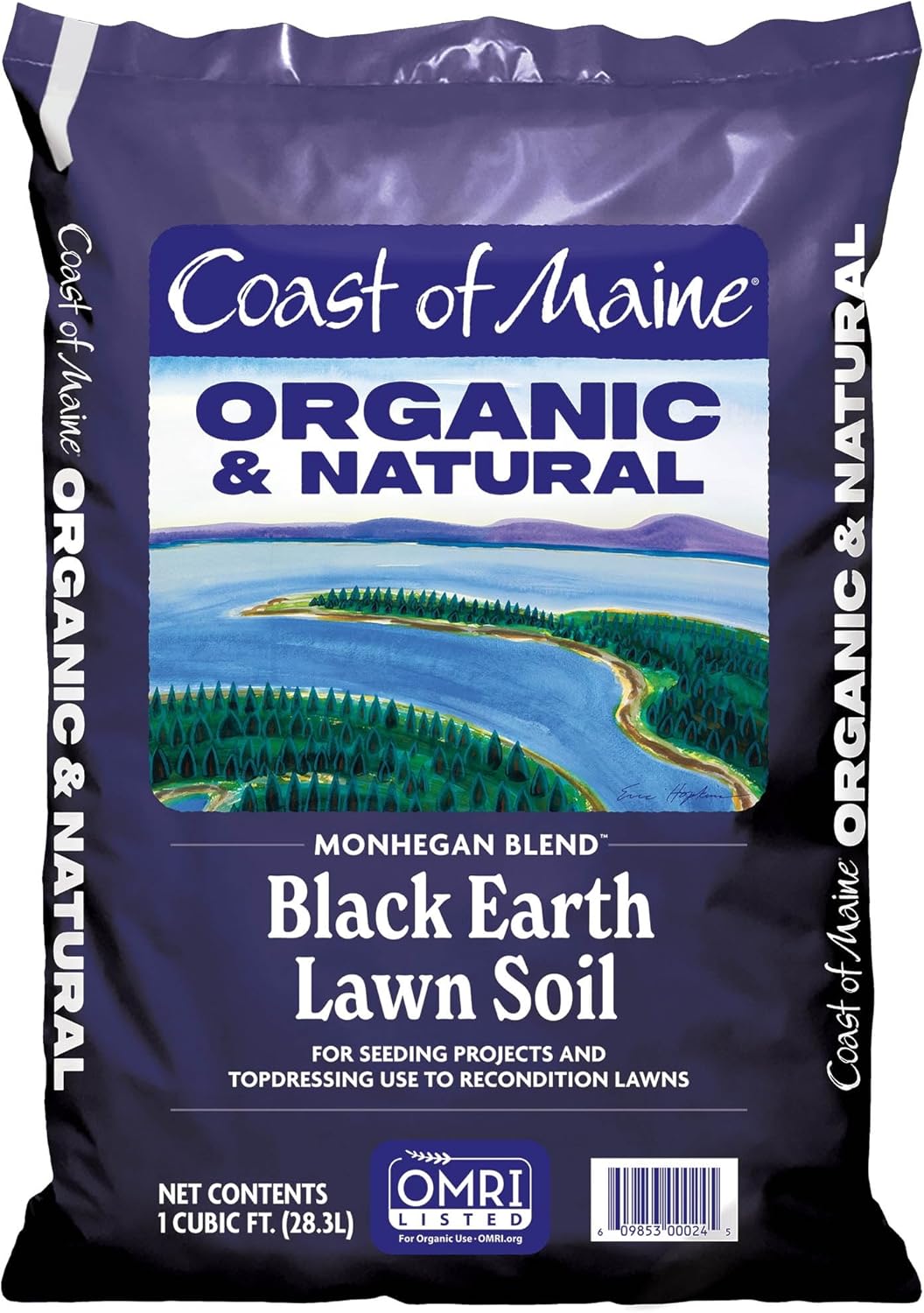
Coast of Maine Monhegan Blend is an organic topsoil formulated from composted farm manures, sphagnum peat moss, and aged bark that works well for reconditioning lawns and filling thin or bare patches. Typical use is as a topdressing or spot repair material: spread a thin layer over the turf or bare area, water it in, and allow grass to grow through. Notable features include OMRI listing for organic gardening, a fine texture that makes it easy to spread by hand or with a rake, and ingredients that improve moisture retention and soil structure to support root development and beneficial microbes. In practice this means fewer amendments are needed to establish seed or strengthen weakened turf and it is light enough to use in raised beds and containers as well. Limitations to note are the small 1 cu ft bag size, which requires many bags for large lawns, and the peat content, which some gardeners avoid for sustainability reasons. Also handle with care to avoid inhaling fine particles.
Best for: Gardeners who prioritize a reliable, organic soil amendment for repairing lawns and improving thin turf and who prefer ready-to-use topdressing that supports soil biology.
Less Ideal for: People who need to cover large lawn areas with a single purchase or who want a peat-free or bulk delivery soil option.
- OMRI-listed organic formula suitable for organic lawns
- Fine, easy-to-spread texture ideal for topdressing and patching
- Blend of composted manures, peat moss, and aged bark improves moisture retention and soil structure
- Supports beneficial microorganisms that aid turf recovery
- Small 1 cubic foot bag means multiple bags are needed for larger lawns
- Contains peat moss, which some gardeners avoid for environmental reasons
Verdict: Choose this OMRI-listed topsoil when you want a dependable organic blend for reliable lawn patching and topdressing.
Front Porch Farms Fertigrow Top Soil Plus (1 cu ft)

| Brand Name | Front Porch Farms |
|---|---|
| Item Highlight | Sandy loam with composted steer manure, peat & pumice |
| Number of Packs | 1 |
| Volume | 1 cubic feet |
Fertigrow Top Soil Plus is a ready-to-use sandy loam topsoil blended with composted steer manure, composted forest products, peat, gro fiber and pumice to improve soil structure and support grass establishment. It is typically used for leveling low spots, filling holes, top dressing lawns with a thin 1/4 to 1/2 inch layer before light raking and watering, or as a 1 to 3 inch amendment worked into garden beds. The composted ingredients add organic matter to feed seedlings and retain moisture while the pumice and sandy loam keep the mix loose so seed-to-soil contact is easier. Because it comes in 1 cubic foot bags it is convenient for spot repairs and small lawns, and spreads cleanly for quick seeding jobs. The main limitation is bag size for larger projects since many bags are needed for full lawn renovations, and this product is a blended topsoil rather than a heavy fertilizer so additional seed-specific nutrients may be required for rapid green-up.
Best for: Gardeners and homeowners who need a performance-oriented topsoil for targeted lawn repairs, overseeding patches, or improving small garden beds and who value a balanced, ready-mixed product.
Less Ideal for: People tackling large-scale lawn renovations or commercial turf projects where bulk soil delivery or a specialized seed-start fertilizer would be more economical and efficient.
- Ready-to-spread sandy loam blend that improves seed-to-soil contact for overseeding and patching
- Contains composted steer manure and composted forest products to add organic matter
- Peat and pumice in the mix help retain moisture while keeping the soil friable
- Clear usage guidance for top dressing and for mixing into beds makes application straightforward
- Sold in 1 cubic foot bags which can be inefficient for large-area projects
Verdict: Choose this bagged sandy loam when you want a ready-mixed topsoil that improves seed contact and moisture retention for fast, reliable spot repairs and overseeding.
PlantBest Coco Lawn Soil Coconut Coir Block for Grass Seeding

| Material | 100% Coconut Coir |
|---|---|
| Volume (expanded) | 19.8 gallons |
| Coverage | Up to 125 sq. ft. at 1/4-inch depth |
| Unit count | 383 Ounce |
This compressed coconut coir block is intended as a lightweight, easy-to-handle alternative to traditional topsoil for lawn seeding and patch repairs. One compact block soaks up water and expands into roughly 19.8 gallons of planting medium that the manufacturer says can cover about 125 sq ft at a quarter-inch depth, making it convenient for overseeding, filling thin spots, and small new-lawn jobs. The coir retains moisture far better than ordinary soil, which helps keep grass seed consistently damp and encourages faster germination while also improving aeration and drainage to reduce compaction. Its compact packaging and low lifting weight mean less hassle moving material around the yard and simpler storage between uses. Important limitations are coverage depth and scale: the block is aimed at small areas rather than large lawn renovation, and you will still need to mix or topdress to match surrounding soil texture and fertility. For a practical homeowner who wants a cleaner, lower-effort option for seeding and patching, this product simplifies preparation and helps seeds establish reliably.
Best for: Homeowners who want a low-lift, low-mess solution for overseeding, patching bare spots, or establishing small lawns and who prioritize ease of handling and reliable seed moisture.
Less Ideal for: Those planning large-scale lawn renovation or needing a finished, nutrient-rich topsoil to match existing turf on broad areas should consider bulk topsoil or blended mixes instead.
- Expands with water to produce usable topsoil volume from a compact, easy-to-carry block
- Made from coconut coir that retains moisture longer than standard soil, supporting seed germination
- Improves aeration and drainage to reduce compaction around new grass roots
- Designed for small-area work and overseeding rather than large-scale lawn replacement
- Does not include nutrients or fertilizer information, so additional soil amendments may be needed
Verdict: A compact, easy-to-handle coconut coir block that expands into moisture-retentive topsoil ideal for overseeding and small lawn patching.
Premium Topsoil 0.75 cu. ft. Lawn and Garden Top Soil with Peat Moss

| Unit Count | 1 Ounce |
|---|---|
| Number of Packs | 1 |
| Brand Name | Generic |
| Manufacturer | Scotts |
This topsoil bag is a straightforward lawn and garden soil conditioner blended with peat moss to improve texture and water retention. It is typically used to topdress thin areas of lawn, fill small low spots, or refresh planting beds before seeding or transplanting. The peat moss content helps the soil hold moisture and makes it easier to work with when spreading by hand or with a rake. Because the bag is a smaller 0.75 cubic foot unit, it is convenient for spot repairs and small projects where hauling bulk soil would be impractical. Important limitations are its small volume per bag, which means larger lawn restorations will require many bags and extra handling, and the product details do not include nutrient analysis or pH so buyers wanting a tailored fertilization plan will need to test soil separately. Safety notes recommend avoiding dust inhalation and keeping the product away from children and pets during use.
Best for: Homeowners doing small repairs, spot topdressing, or single-bed refreshes who want an easy-to-handle soil option without buying bulk loads.
Less Ideal for: People restoring or resodding large lawns or contractors who need bulk quantities and detailed soil specifications should choose bulk topsoil or tested mixes instead.
- Contains peat moss to improve moisture retention and soil texture
- Smaller 0.75 cu ft bag is easy to carry and suitable for spot repairs
- Works as a general soil conditioner for topdressing and bed refreshes
- Small bag size makes it inefficient for large lawn projects
- No nutrient analysis or pH information provided
Verdict: A convenient small-bag topsoil with peat moss that makes quick spot repairs and bed touch-ups easy for budget-minded homeowners.
The Andersons HumiChar Organic Soil Amendment with Humic Acid and Biochar (40 lb)

| Unit Count | 640 Ounce |
|---|---|
| Brand Name | The Andersons |
| Ingredients | Humic Acid, Wood Biochar, Leonardite, Proprietry Binding Agent, Water |
| OMRI Listed | Yes |
HumiChar is a granular organic soil amendment designed to boost soil structure and long-term health by combining high-concentration humic acid with granulated biochar. It is typically applied as a topdressing or blended into existing soil when dressing lawns, mixed into planting holes, or used alongside a regular fertilizer program. The dispersible granule formulation reduces dust and breaks down more quickly than raw biochar, so you get some immediate benefits from humic acids while the biochar contributes lasting carbon and improved soil porosity. The product is OMRI listed and formulated to be blended with fertilizers or used on its own, which makes it practical for routine lawn maintenance. Important limitations are regulatory: it is not for sale in California or Oregon, and the label warns of inhalation and skin contact risks so you should wear a mask and gloves during application. For someone who prioritizes steady, science-backed soil improvement, this product offers a low-maintenance way to strengthen soil over multiple seasons.
Best for: Homeowners and lawn care pros who want a reliable, low-maintenance amendment to strengthen soil biology and structure as part of a regular lawn dressing program.
Less Ideal for: Buyers who need an immediate fertilizer-style nutrient boost or who cannot comply with regional sale restrictions should consider other products or local alternatives.
- Contains 30% humic acid for more immediate soil nutrient mobilization
- 43% granulated biochar provides long-term carbon and improved soil structure
- Dispersible granule formulation reduces dust and breaks down efficiently
- OMRI listed so it fits organic lawn and garden programs
- Not available for sale in California or Oregon due to regulatory restrictions
- Contains fine particles that require protective equipment during application
Verdict: Choose HumiChar when you want a dependable organic amendment that delivers immediate humic benefits and durable biochar-driven soil improvement for lawn topdressing.
Garden Magic Michigan Peat Organic Potting Top Soil Blend, 40 lb

| Volume | 40 liters |
|---|---|
| Unit Count | 1 Count |
| Included Components | Michigan Peat – 5540 – 40lb |
| Item Highlight | Dark Reed Sedge Peat and Sand – Moisture Retaining Mix |
This 40 lb Garden Magic topsoil blend is a straightforward, multipurpose soil for patching lawns, filling raised beds, and routine potting tasks. It combines dark reed sedge peat with sand to hold moisture while allowing excess water to drain, so seedlings and established plants avoid both drought stress and waterlogging. Because it is sold ready-to-use, you can apply it straight from the bag to fill holes, refresh container mixes, or amend heavy clay and light soils to improve structure. Practical gardeners will appreciate its useful volume in a manageable bag and its suitability for indoor and outdoor projects. Limitations are that it is a general-purpose mix rather than a specialty fertilizer or heavily amended planting mix, so heavy-feeding crops or long-term container plantings may still need extra compost or nutrients. For larger landscaping jobs you will need multiple bags or bulk quantities since the product comes in 40 lb units.
Best for: Buyers who want a dependable, easy-to-use topsoil for routine garden maintenance, patching lawns, and general bed or container refreshes without special soil preparation.
Less Ideal for: Gardeners seeking a high-nutrient, specialty potting mix for heavy-feeding vegetables or long-term container specimens should consider amended or fertilized blends instead.
- Ready-to-use out of the bag for indoor and outdoor planting
- Blend of reed sedge peat and sand balances moisture retention and drainage
- Useful for improving heavy clay or light soils as a top dressing
- Versatile for lawns, raised beds, containers, and general garden repair
- Not formulated as a nutrient-rich or fertilized potting mix for long-term container culture
- Sold in 40 lb bags, so larger projects require multiple bags or bulk sourcing
Verdict: A practical, ready-to-use topsoil blend that reliably improves drainage and moisture retention for everyday garden patching and bed refreshes.
Scotts Turf Builder LawnSoil, 1 cu. ft.

| Brand | Scotts |
|---|---|
| Volume | 1 cubic feet |
| Item Weight | 32.7 pounds |
Scotts Turf Builder LawnSoil is a ready-to-use topsoil blend formulated to help new grass establish faster and thicker. It combines premium soil ingredients with starter fertilizer so you can spread it over seed, sod or plugs to improve germination and early root growth. In practice it is easy to use: rake a thin layer over bare patches or rototill into the topsoil before overseeding, then water as directed. The product emphasizes moisture retention, which helps seedlings through dry periods, and the built-in nutrients remove the need to apply a separate starter feed right away. Limitations are its single-cubic-foot bag size, which means many bags are needed for larger yards, and it is a surface/establishment product rather than a long-term soil amendment for structural problems. Also follow the handling instructions for fertilizer-containing soils and use gloves when spreading.
Best for: Buyers who want a simple, low-risk way to thicken or repair a lawn with minimal extra products and hands-on soil mixing.
Less Ideal for: People managing large lawns who need bulk topsoil for wide coverage or gardeners needing to amend subsoil or resolve drainage and compaction problems.
- Contains starter fertilizer to support early root and shoot development
- Formulated to improve moisture retention for better seed germination
- Suitable for use with seed, sod and grass plugs
- Ready-to-use blend that removes the need for immediate separate fertilizing
- Sold in 1 cu ft bags which is inefficient for large-area projects
- Not designed to fix deep soil structure or drainage issues
Verdict: A convenient, fertilizer-enhanced topsoil ideal for homeowners who want an easy, reliable product to establish thicker grass in small to moderate lawn repairs.
Choosing the Right Dressing Soil for Lawns: Key Factors to Consider
Texture and Particle Size Distribution
Texture controls how the dressing integrates with existing turf and affects surface level and drainage. A dominant fine sand fraction helps open compacted soils and improves surface drainage, while a noticeable silt or clay fraction increases water retention but can cause crusting if excessive.
Look for a grading that allows the dressing to settle into crowns and seed without forming a layer that impedes root contact. Too many coarse particles can leave the surface looking gritty and inhibit seed-to-soil contact; too many fines can compact and create a hard layer after drying. Particle size also affects how well the material spreads evenly with rakes or spreaders.
Organic Matter Content and Nutrient Balance
Organic matter improves moisture retention and supplies nutrients as it breaks down, but too much organic content in a dressing mix can cause settling and uneven decomposition, creating depressions over time. For established lawns, modest organic content blended with mineral sand or loam gives structure without excessive shrinkage.
Consider whether you need a nutrient boost for overseeding. Many dressing soils include a light starter nutrient load, but they are not substitutes for a planned fertilization program. Choose a mix with stable, well-composted organic matter to reduce nitrogen drawdown and avoid fresh, high-carbon materials that may temporarily immobilize nutrients.
Bulk Density, Compaction Tendencies, and Long-Term Stability
Bulk density influences how much the dressing will settle after application and whether repeated topdressings will create a denser layer. Lower bulk density mixes with more open pore space resist compaction better, aiding root growth and water infiltration.
When planning multiple light dressings over seasons, select materials that maintain porosity and do not compact into a hard pan. Consider the existing lawn soil type: heavy native clay may need a higher sand fraction to offset compaction, while sandy soils benefit from a bit more loam and organic matter to hold moisture.
Weed Seed Cleanliness and Contaminants
Dressing soil should not introduce weed seeds, roots, or pathogens. High-quality dressing materials are screened and, if composted, heat-treated to reduce viable weed seed. Materials sourced from unmanaged compost or recycled green waste can carry seeds and persistent weed fragments.
For overseeding and fine fescue or ryegrass lawns where seed purity matters, choose mixes with documented screening and low weed counts. Also consider the potential for chemical residues or large debris in low-grade mixes, which can harm seedling establishment and lawn appearance.
Application Ease and Material Handling
How you will apply the dressing affects the choice of product. Very coarse or heavy mixes are harder to spread by hand and may require mechanical help, while very fine dusty mixes can clog spreaders and create a messy work site.
Check moisture content at delivery and whether the product crumbles easily for raking. Consider bagged options for small repairs and bulk loads for larger areas. The ideal dressing balances spreadability, minimal tracking of soil onto walkways, and compatibility with the tools you own or rent.
When to Use Dressing Soil on a Lawn
Topdressing is appropriate after aeration, to repair footprints and pet-damaged spots, to level minor depressions, or to create a better surface for overseeding. Light, frequent applications are useful for smoothing over time without burying crowns.
Avoid deep single applications over crowns; dressings are most effective when applied in thin layers and brushed into the turf so grass shoots are not smothered. Timing in the growing season matters: apply when grass is actively growing so it can fill back in quickly.
- Best after aeration or light raking
- Ideal for minor leveling and seedbed improvement
- Avoid heavy application on dormant grass
How to Apply Dressing Soil Correctly
Spread dressing material in thin passes, aiming for layers no thicker than about 1/4 inch over grass leaves if overseeding, or up to 1/2 inch in isolated depressions. Use a garden rake, stiff broom, or drag mat to work the material into the turf canopy so seed and crowns maintain contact with the planting surface.
For larger jobs, combine raking with light rolling or tamping on repaired depressions to promote contact, but avoid compacting the entire lawn. Water lightly after application to settle particles and encourage seed germination without creating puddles.
- Apply in thin layers and work material into canopy
- Combine raking with light watering to settle the dressing
- Target problem areas first, then blend across the lawn
Matching Dressing Mix to Lawn Type and Soil
Cool-season turf with fine-textured grasses typically benefits from dressings that match the native soil texture. High-sand dressings suit lawns with compacted clay by improving drainage, whereas lawns on sandy sites may need more loam and organic fraction to retain moisture and nutrients.
If you have unknown native soil, do a small test area: apply a thin layer of the dressing and observe settling and turf response over a season before committing to bulk applications. This helps prevent unwanted texture contrasts or drainage changes.
- Higher sand content for heavy clay soils
- More loam or organic matter for sandy soils
- Test small areas before large-scale use
Storing and Preparing Dressing Soil
Store bagged dressing soil in a dry, covered area to prevent it getting waterlogged or contaminated with weed seed. For bulk deliveries, keep material on a tarp or raised pallet and cover if rain is expected to avoid compaction and breakdown prior to use.
If a dressing arrives moist and clumped, spread it thinly to dry and break up clods before application. For mixes that require minor amendment, blend small batches on a tarp so you can maintain consistent texture across the lawn.
- Keep materials dry and covered when possible
- Break up clumps before spreading
- Blend small batches on a tarp to adjust texture
Seasonal Timing and Follow-Up Care
Apply dressings during periods of active growth so turf can recover. In cool-season lawns, early fall is often ideal for overseeding and topdressing because soil temperatures still support germination while weeds are less competitive. Spring applications can work but may require more watering and vigilant weed control.
After application and germination, maintain a regular mowing and watering schedule that promotes upward growth and root development. Avoid heavy foot traffic on newly dressed areas until the turf has re-established.
- Prefer active growth periods for best recovery
- Early fall is prime time for cool-season lawns
- Limit traffic until turf has recovered
How We Chose the Best Dressing Soil for Lawns
We evaluated candidates using criteria that matter when topdressing or repairing lawn turf. Texture and particle size determine how well the material blends with existing soil and how it affects drainage and root contact. Organic content and nutrient balance influence short-term grass response and ongoing fertility. Bulk density and compaction tendency predict whether repeated applications will create a hard layer or settle into the surface. Weed seed and contamination screening ensures the material will not introduce unwanted plants or disease organisms. Ease of application and handling covers how the product spreads by hand, with push spreaders, or by machine, plus dust and moisture behavior during work. We excluded mixtures that were formulated primarily for potted plants, flower beds, or heavy garden beds rather than turf dressing uses. Blends that required extensive on-site mixing or additives were also set aside unless the base mix met turf performance needs. The final list balances workable texture, low weed content, appropriate organic fraction, and straightforward handling for typical homeowner and small-property projects.
FAQ
How thick should I apply dressing soil when overseeding?
Apply very thin layers for overseeding, generally no more than about 1/4 inch over the seed. Thinner layers maximize seed-to-soil contact and allow seedlings to reach the surface. If you need to fill deeper depressions, do so in multiple thin lifts rather than one deep layer.
Can I use ordinary garden soil as a lawn dressing?
Ordinary garden soil can work for small repairs if its texture and weed content are appropriate, but many garden soils contain higher clay or organic fractions that may settle or compact differently than existing turf soil. Screen and test a small area first and avoid fresh uncomposted materials that can cause settling.
Will dressing soil change my lawn's drainage?
Yes, the dressing's particle size affects drainage. Sand-dominant dressings will improve surface drainage and reduce pooling on compacted clay, while high-silt or clay dressings can hold more water and potentially cause drainage issues. Match the dressing to your soil type to avoid unwanted changes.
How often should I topdress my lawn?
Light topdressing can be done annually or every few seasons depending on turf condition and goals. For gradual leveling, apply thin layers after aeration over several seasons. Avoid frequent heavy applications that could smother grass crowns or create an anaerobic layer.
Does dressing soil need fertilizer added?
Some dressing soils include a modest nutrient content, but they are not a substitute for a tailored fertilizer program. If you are overseeding, a starter fertilizer timed with seeding helps seedling development. Avoid adding high-nitrogen amendments that can burn young shoots without adequate moisture.
Final Verdict
Choosing the right dressing soil for lawns means balancing texture, organic content, and handling needs against your lawn's soil type and the repair task. Prioritize mixes that match or complement native soil texture, have screened, stable organic matter, and spread easily with your available tools. For leveling and overseeding, thin, repeated dressings and careful follow-up watering and mowing produce the most reliable results. Focus on materials that improve root contact and drainage without introducing weed seed, and plan applications during active growth for best recovery.
