

Note: This article contains affiliate links. If you click on these links and make a purchase, I may earn a small commission at no extra cost to you. This helps support my research and content. Read my full affiliate disclosure here.
When you need a tool that can handle frequent cutting, large limbs, and demanding seasonal workloads, choosing a durable chainsaw matters. A more durable unit reduces downtime, keeps maintenance predictable, and stands up to tougher jobs in the yard, on the farm, or at a job site. This guide covers five shortlisted durable chainsaws selected for real-world longevity and consistent cutting performance. We focus on the factors that matter in everyday use: how well the engine or motor holds up, chain and bar longevity, user safety features, and serviceability. Read on for a practical look at what makes a chainsaw durable and which attributes you should prioritize for long-term ownership.
Top Picks at a Glance
| Best Overall The best all-around choice for most situations | EGO POWER+ CS1611 16" Cordless Chainsaw with 56V 2.5Ah Battery and Charger |  |
| Best Quality Built to a higher standard if you want something more solid | Stihl MS 151 TC-E Chainsaw, 30 cm Bar |  |
| Best Value The sweet spot between price and what you get | DEWALT 20V MAX 12" Brushless Cordless Chainsaw Kit (DCCS621P1) |  |
| Best Budget The cheapest option that still gets the job done reliably | Akynjtbca 58cc 20" Gas-Powered Chainsaw (3.6 HP) with Accessory Kit |  |
| Highest Rated A top-rated pick with lots of positive feedback | NEO-TEC NS872 72cc Gas Chainsaw with 24-inch Bar |  |
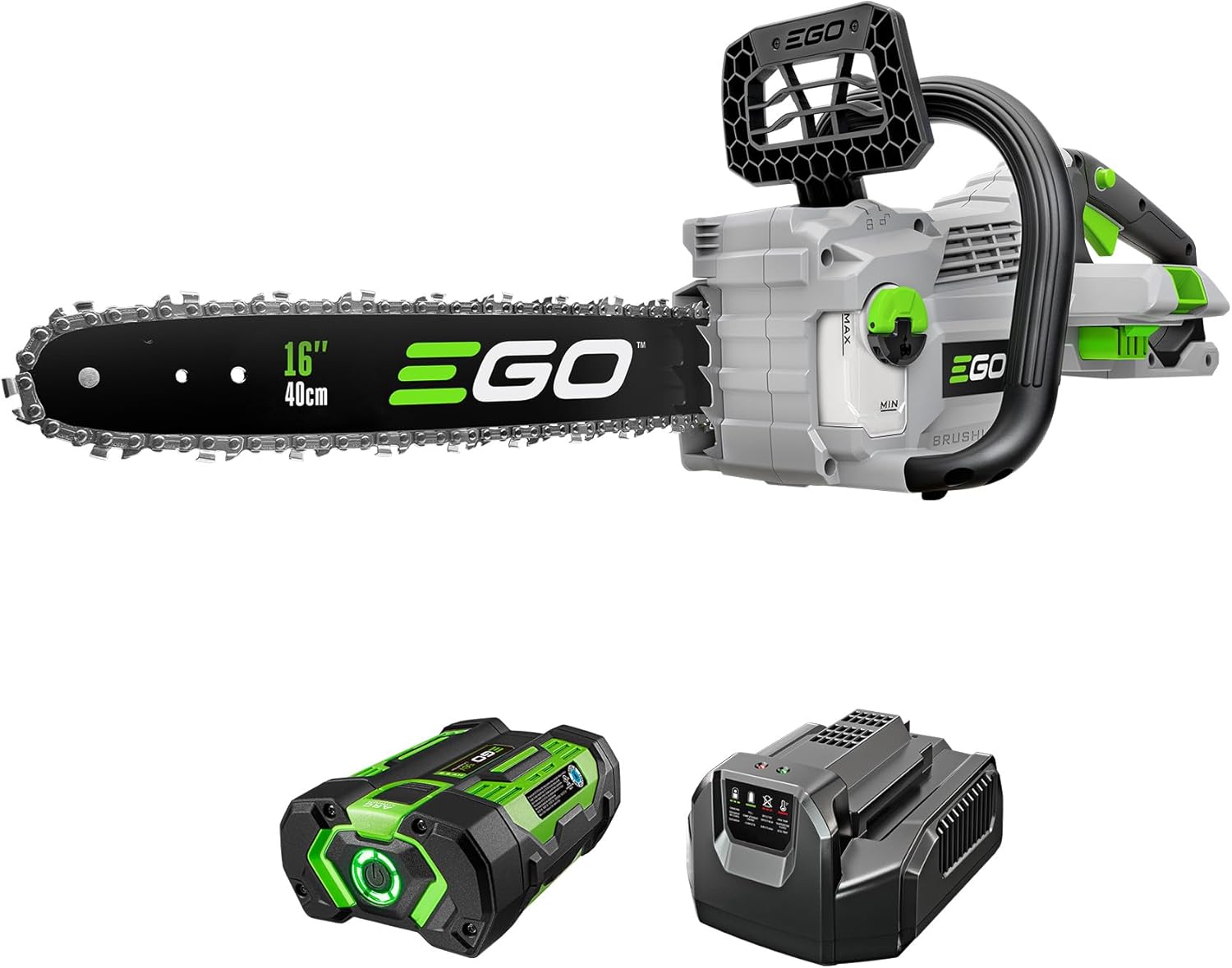
EGO POWER+ CS1611 16" Cordless Chainsaw with 56V 2.5Ah Battery and Charger
| Power Source | Battery Powered |
|---|---|
| Horsepower | 2.3 |
| Chain Length | 16 inches |
| Included Components | 2.5Ah Battery and Standard Charger |
| Chain Speed | 20 m/s |
The EGO POWER+ CS1611 is a battery-powered 16-inch chainsaw built to give prosumer-level cutting performance without gas. It uses a high-efficiency brushless motor rated as a 40CC equivalent and runs on the included 56V 2.5Ah ARC Lithium battery, which the manufacturer says delivers up to about 130 cuts through a 4×4 on a single charge. Notable features include a 20 m/s chain speed for efficient cuts, a tool-free chain-tensioning dial for quick on-the-job adjustments, automatic oiling with a spill-free reservoir, metal bucking spikes for secure cutting, and an IPX4 weather resistance rating. In real use this means quieter, low-maintenance operation compared with gas saws, fast setup between cuts, and enough runtime for routine property work like limb removal, small tree felling, and firewood prep. Limitations are battery runtime for very heavy or continuous commercial use and the saw’s 16-inch bar, which restricts maximum cut diameter compared with larger pro gas models.
Best for: Buyers wanting a low-maintenance, gas-free alternative that still delivers near-gas power for regular property maintenance, pruning, and medium-duty cutting tasks.
Less Ideal for: Users who need long uninterrupted runtime for commercial logging or must cut very large-diameter timber should consider larger gas or higher-capacity battery systems.
- Brushless motor with 40CC gas-equivalent power for strong cutting performance
- Includes 56V 2.5Ah battery and charger so it is ready to use out of the box
- Tool-free chain tensioning lets you adjust the chain quickly on site
- Automatic oiling with a spill-free reservoir keeps the chain lubricated during work
- IPX4 weather resistance and metal bucking spikes add durability and control in outdoor conditions
- 16-inch bar limits maximum cut diameter compared with larger pro chainsaws
- Runtime depends on battery capacity and may be insufficient for long, continuous heavy-duty jobs
Verdict: A ready-to-use cordless chainsaw that gives near-gas power and easy on-the-job adjustments, ideal for homeowners and pros doing regular medium-duty cutting.
Stihl MS 151 TC-E Chainsaw, 30 cm Bar

| Power Source | gasoline-powered |
|---|---|
| Horsepower | 1 KW |
| Chain Length | 30 centimeters |
The Stihl MS 151 TC-E is a compact, performance-focused petrol chainsaw built for professional tree care and demanding yard work. It uses a 2-MIX motor and delivers roughly 1 kW (about 1.5 hp) through a 30 cm chain, making it suited to pruning, limbing, and cutting small to medium timber. Notable features include the Stihl ErgoStart and a manual fuel pump to simplify cold starts, a 1/4-PM3 chain for smoother cutting, and low vibration values for reduced operator fatigue during extended use. Its light weight improves maneuverability in trees and tight spaces while the separate oil and fuel tanks let you control chain lubrication and runtime. Important limitations are the short bar length and relatively small fuel tank, which mean it is not intended for heavy felling or long continuous shifts without refueling, and noise and vibration levels remain significant compared with electric alternatives. For buyers who prioritize a durable, easy-to-start petrol saw for professional pruning and tree work, this model balances power and portability.
Best for: Skilled homeowners and professional arborists who need a durable, easy-to-start petrol saw for pruning, limbing, and routine tree care where maneuverability and reliable starts matter most.
Less Ideal for: Users who frequently fell large trees or run long continuous shifts should choose a larger bar and higher-capacity model designed for heavy-duty cutting.
- ErgoStart and manual fuel pump for easier, more reliable starting
- Lightweight design improves maneuverability for tree work and pruning
- 2-MIX motor with 1 kW power and 1/4-PM3 chain for efficient cutting
- Low vibration values that reduce operator fatigue during longer use
- Short 30 cm bar limits capacity for large-diameter felling
- Small fuel tank and oil capacities require more frequent refilling during extended jobs
Verdict: Choose the Stihl MS 151 TC-E if you want a lightweight, easy-to-start petrol chainsaw built for reliable pruning and tree-care performance.
DEWALT 20V MAX 12" Brushless Cordless Chainsaw Kit (DCCS621P1)

| Power Source | Battery Powered |
|---|---|
| Horsepower | 0.7 hp |
| Chain Length | 12 inches |
| Included Components | (1) DCCS621 | (1) Sheath | (1) DCB205 Battery and Charger |
The DEWALT 20V MAX 12" cordless chainsaw kit is a compact, battery-powered saw intended for cutting tree limbs, small logs, and light construction tasks. It uses a brushless motor for improved efficiency and claims up to 100 cuts per charge with the included 20V battery and charger, which makes it useful for weekend yard work or jobsite trimming without the fuss of gas maintenance. The low-kickback 12" bar and chain improve safety and make controlled cuts easier for less experienced users, while the lightweight design helps reduce fatigue during extended use. Being battery powered eliminates fumes, cold starts, and carburetor upkeep common to gas saws, but it is not aimed at heavy felling or large-diameter logs where longer runtime and more power are required. For buyers who want a tidy, lower-maintenance alternative to small gas saws, this kit balances portability, runtime, and practical cutting power in a familiar DEWALT platform.
Best for: Buyers who want a low-maintenance, portable chainsaw for routine yard work, limb trimming, and light construction cutting and who prioritize convenience and predictable runtime over maximum power.
Less Ideal for: Users who regularly need to fell large trees or process thick firewood should consider higher-power gas or larger battery saws designed for heavy-duty cutting.
- Brushless motor for better efficiency and longer runtime
- Includes battery and charger so it is ready to use out of the box
- Low-kickback 12" bar and chain for safer, more controlled cutting
- Compact, lightweight design reduces user fatigue and improves maneuverability
- 0.7 hp and a 12" chain limit suitability for heavy felling or very large logs
- Runtime depends on included battery capacity so extended work may require spare batteries
Verdict: A convenient, low-maintenance cordless option that delivers solid performance for routine yard and light construction cutting tasks.
Akynjtbca 58cc 20" Gas-Powered Chainsaw (3.6 HP) with Accessory Kit

| Power Source | Gas Powered |
|---|---|
| Horsepower | 3.6 hp |
| Chain Length | 20 inches |
This Akynjtbca 58cc gas chainsaw is built for heavy yard work and small-farm tasks where power and a full kit matter more than premium fit-and-finish. The 3.6 HP two-stroke engine drives a hardened 20-inch manganese steel guide bar and chain capable of felling medium trees, cutting rounds for firewood, and clearing large limbs. Practical features include an automatic lubrication system for the bar and chain, dense cooling vents to help prevent overheating during long cuts, and a dual-switch safety plus brake baffle for quicker stops. The package includes a fuel mixing bottle, oil hopper, spare chain and guide bar cover, basic tools, gloves and a tool bag so you can start using and maintaining the saw right away. Trade-offs are typical for budget gas saws: assembly and initial tuning are required, vibration and noise are noticeable, and long-term durability and dealer support may not match premium brands. For buyers who need raw cutting power and a ready-to-use kit on a tight budget, this delivers a lot of capability for the price.
Best for: Buyers who need strong, ready-to-use cutting power for yard work or small-farm chores and are prioritizing value over brand prestige or refined ergonomics.
Less Ideal for: People who want low-noise, low-vibration electric models or those who prefer extensive dealer support and manufacturer backing for long-term maintenance.
- High power output with a 3.6 HP 2-stroke engine for demanding cutting tasks
- 20-inch hardened manganese steel guide bar and chain suitable for felling and firewood
- Automatic lubrication and air-cooling features reduce wear and help sustained operation
- Includes a comprehensive accessory kit (fuel bottle, tools, spare chain, gloves, tool bag) for immediate use
- Requires assembly, fuel mixing and tuning before first use
- Heavier and likely louder with more vibration than high-end or modern low-vibration models
- Long-term service network and parts quality may be limited compared with established brands
Verdict: If you want maximum cutting power and a complete starter kit on a tight budget, this 58cc 20" gas chainsaw gives the most practical capability for the price.
NEO-TEC NS872 72cc Gas Chainsaw with 24-inch Bar

| Power Source | Gas Powered |
|---|---|
| Horsepower | 4.9 hp |
| Chain Length | 24 inches |
| Included Components | Chainsaw head with 24'' bar and chain |
The NEO-TEC NS872 is a purpose-built 72cc gas chainsaw aimed at heavy cutting tasks like felling large trees and clearing dense hardwood. It pairs a 2-cycle, air-cooled engine rated at 3.6 kW (4.9 hp) with a 24-inch bar and 3/8 pitch chain to deliver the bite and reach needed for sizable logs. Practical features include an inertia-activated chain brake for safety, an easy-start system and a carburetor/spark plug combination intended to improve cold starts, plus LowVib damping to reduce operator fatigue during prolonged use. The magnesium alloy body helps with heat dissipation and durability during sustained work. Expect strong cutting performance and a build focused on dependable operation, but also the usual gas-saw considerations: regular fuel and oil maintenance, noise, vibration despite mitigation, and a heavier unit to manage during long sessions. For owners prioritizing reliability, the NS872 emphasizes robust components and serviceable systems that keep it running through demanding jobs.
Best for: Buyers who need a dependable, heavy-duty saw for regular felling, land clearing, or professional property work and who prioritize durable, serviceable components over light weight.
Less Ideal for: Casual gardeners, occasional users, or those who need a lightweight, low-noise option for small-yard tasks should consider smaller electric or lighter gas models instead.
- High-displacement 72cc engine for strong continuous cutting power
- 24-inch bar suited to felling and large-diameter logs
- Inertia-activated chain brake for immediate safety shutdown
- LowVib damping and extended grip for reduced fatigue during long jobs
- Magnesium alloy body for improved heat dissipation and durability
- Heavier typical weight requiring more effort for prolonged handheld use
- Requires routine gas and 2-cycle maintenance and tuning
Verdict: Choose the NS872 when you want a robust, serviceable 24-inch gas chainsaw built to deliver reliable power and durability for heavy-duty cutting jobs.
Choosing the Right Durable Chainsaw: Key Factors to Consider
Power Source and Duty Cycle
Whether the saw is gas, corded electric, or battery-powered affects both durability and what jobs it can handle. Gas engines tolerate longer continuous loads but require more maintenance such as fuel system care and regular tune-ups. Corded electric motors are simple and can run indefinitely on mains power but lack portability. Battery saws have fewer moving parts and lower vibration, but their useful runtime depends on battery capacity and how well the motor tolerates repeated heavy loads.
Think about how often you will use the saw and for how long in a single session. For frequent, long-duration cutting on large trees or lots of firewood, a design intended for continuous duty or with robust cooling will usually outlast lighter-duty options.
Bar, Chain, and Drive-Train Robustness
The bar and chain are the parts that see the most wear, so material quality and replaceability matter. Look for bars with reinforced tips, corrosion-resistant coatings, and compatible replacement chain sizes. The drive sprocket and clutch assembly should be accessible and constructed from durable materials to avoid premature failure under heavy loads.
A saw that allows easy chain sharpening, tensioning, and replacement will stay productive longer. Consider whether common replacement parts are widely available and whether the design uses standard chain pitches and gauges you can service yourself.
Cooling, Heat Management, and Engine Protection
Cutting for extended periods generates heat that accelerates wear on engines, motors, and drive components. Durable saws manage heat with adequate cooling fins, airflow paths, and materials that resist heat-related degradation. Some designs include thermal cutoffs or recommended duty cycles to protect the motor or engine.
If you expect to do heavy cutting, prioritize saws with proven cooling designs and clear maintenance steps to prevent overheating. Proper air filter access and cleaning instructions also extend service life by reducing abrasive contaminants entering the engine or motor.
Ergonomics and Vibration Control
Long jobs require a saw you can hold and control without excessive fatigue. Vibration isolation between handles and the cutting head reduces operator strain and helps protect fasteners and internal mounts from loosening over time. Comfortable handle geometry and reasonable weight distribution make it easier to keep better cutting technique, which reduces binding and stress on the chain and bar.
A saw that minimizes vibration will usually experience fewer mechanical faults related to loosened parts and will be easier to maintain accurately.
Maintenance Accessibility and Common-Service Design
Durable machines are also serviceable machines. Look for designs with tool-free or simple-access panels for air filters, spark plugs, brushes, and chain tensioners. Clear adjustment points for carburetor or motor settings and widely used fastener types make field repairs easier. A saw that requires specialized tools or extensive disassembly for routine tasks is less likely to remain in peak condition over the long term.
Consider whether replacement components and consumables are common sizes and whether local repair shops can service the saw if needed.
Safety Systems and Protective Features
Safety features protect both the operator and the saw. A reliable chain brake mitigates kickback events that can otherwise damage the bar nose and chain assembly. Overload protection, throttle interlocks, comfortable guard geometry, and clear safety labeling help prevent misuse that leads to premature wear or catastrophic failures.
A saw with thoughtful safety engineering reduces the risk of accidents that could ruin a tool or lead to costly repairs, making safety a practical part of durability planning.
When a Durable Chainsaw Is Worth the Investment
A durable chainsaw pays off when you regularly tackle large trees, split a lot of firewood, or maintain acreage. If you only prune small branches occasionally, a heavy-duty design may be unnecessary. But for property maintenance where downtime creates backlog, durability reduces interruptions and repair costs.
Consider the frequency of heavy cuts, storage conditions, and whether you can do routine maintenance yourself. A more durable machine will often be heavier and require occasional servicing, but it will also retain consistent cutting performance through multiple seasons.
- Best for regular heavy cutting, long sessions, and professional use
- Worthwhile when parts and service are accessible in your area
- Not always the best choice for occasional light pruning tasks
Routine Maintenance That Extends Service Life
Simple, regular maintenance keeps a chainsaw running longer. Clean or replace air filters, keep chains sharp and properly tensioned, maintain chain lubrication, and follow recommended intervals for spark plug or brush checks. Good fuel management for gas engines prevents gumming and extended down-time.
Documenting maintenance tasks and using common consumables helps you catch small issues before they become major repairs. A proactive approach to upkeep reduces heat and wear on moving parts.
- Sharpen chain after heavy use and before cutting particularly abrasive wood
- Check chain tension and bar condition before each use
- Keep cooling passages and air filters free of debris
Transport, Storage, and Seasonal Care
How you store and transport a chainsaw affects durability. Keep the saw dry, clean off sap and sawdust after use, and store it in a ventilated area away from extreme temperatures. For gas engines, use fuel stabilizer or drain fuel for long-term storage to avoid carburetor problems.
Protect the bar and chain with a cover during transport and avoid tossing the saw in the back of a truck where it can kneel against other tools. Proper storage reduces corrosion and mechanical wear over time.
- Use a case or cover to protect the bar tip and chain
- Drain or stabilize fuel for winter storage
- Store on a shelf or hook to avoid moisture exposure
Choosing Replacement Parts and Consumables
Opt for designs that use widely available chain pitches, gauges, and common bar sizes so replacement parts are easier to source. Consumables like chains, sprockets, and air filters should be standard sizes rather than proprietary pieces.
Consider stocking essential consumables if you rely on the saw heavily. Being able to swap a chain or replace a filter quickly keeps the saw productive and reduces wear caused by running a damaged chain or clogged filter.
- Prioritize common chain pitch and gauge compatibility
- Keep backup chains and basic maintenance tools on hand
- Confirm local availability of drive-sprocket and clutch parts
Safe Cutting Techniques That Protect the Saw
Using correct cutting techniques reduces strain on the saw and prolongs component life. Avoid binding the bar, use wedges for larger cuts, and let the saw do the cutting without forcing it. Maintaining proper chain sharpness and depth gauge settings reduces motor load and keeps cutting smooth.
Training in basic felling and limb removal techniques reduces the chance of kickback and bar-nose damage. Safe habits benefit both operator and tool longevity.
- Avoid cutting with the tip of the bar to prevent kickback
- Use appropriate cutting angles and avoid twisting the bar
- Let the chain reach full speed before engaging into a thick cut
How We Chose the Best Durable Chainsaw
We selected durable chainsaws by applying practical, garden-focused filters that reflect long-term ownership. Our evaluation emphasized engine or motor longevity and consistent power delivery under load, because sustained torque and heat management determine whether a saw lasts through heavy use. We inspected expected chain and bar durability, including compatibility with replacement bars and chains and the availability of robust sprockets and drive components. Ergonomics and vibration control were included because reduced vibration lowers operator fatigue and minimizes wear on mounts and fasteners. Serviceability and parts availability were weighed so that routine maintenance like chain tensioning, air filter cleaning, and spark plug or brush replacement is straightforward. Safety systems such as reliable chain brakes and throttle cutoffs were required to make the shortlist. We excluded lightweight hobby-grade or purely ornamental models that lack durable internals or limited-service designs. The result is a set of five durable chainsaws chosen for long-term, heavy-duty yard and property work.
FAQ
How often should I sharpen the chain on a durable chainsaw?
Sharpen the chain whenever cutting performance drops or you notice increased vibration and burning on cut edges. For heavy use, that may be every few hours of cutting; for lighter use, every few sessions. Sharp chains reduce strain on the motor and extend component life.
Is a heavier saw always more durable?
Heavier saws often use more substantial components and larger engines that tolerate long work, but weight alone does not guarantee durability. Design, materials, cooling, and serviceability are equally important. Balance durability with user comfort to avoid fatigue-related problems.
Can electric chainsaws be as durable as gas models?
Electric chainsaws can be highly durable because they have fewer moving parts and lower vibration. Their durability depends on motor construction, cooling, and duty cycle. Battery saws are limited by battery life, while corded electric saws need reliable cooling for continuous work.
What maintenance extends a chainsaw's useful life the most?
Regular cleaning of cooling fins and air filters, consistent chain sharpening and correct tension, routine lubrication, and timely replacement of worn sprockets or bars have the biggest impact. Preventive upkeep avoids the accelerated wear that leads to major repairs.
How important is parts availability for long-term ownership?
Parts availability is critical. A durable saw that uses obscure or proprietary components can become costly to maintain. Choosing a design with standard chain sizes and easy access to filters, sprockets, and common service parts simplifies repairs and keeps the tool in service longer.
Final Verdict
Prioritize the durability features that match the kind of cutting you do most. For frequent heavy work, focus on engine or motor durability, bar and chain robustness, cooling, and serviceability. For less intense use, a lower-weight option with good parts access may be more practical. Tradeoffs are inevitable: the most durable designs can be heavier and require routine maintenance, but they minimize downtime and long-term repair costs. Use the evaluation criteria in this guide to balance power, maintenance needs, and ergonomics so you end up with a durable chainsaw suited to your yard or property.
