

Note: This article contains affiliate links. If you click on these links and make a purchase, I may earn a small commission at no extra cost to you. This helps support my research and content. Read my full affiliate disclosure here.
Working in dense, sticky clay changes everything about digging post holes and planting holes. You need an auger that resists clogging, keeps a steady bite, and survives repeated hits against compacted soil and gravel. This guide looks at six top earth augers for clay and explains which features reduce effort and speed work in heavy ground. We shortlisted durable bits, power and torque characteristics, and ease-of-clearing as core evaluation points. Below you will find an explanation of those criteria, practical advice for using augers in clay, and answers to common questions to help you pick the right tool for your yard or jobsite.
Top Picks at a Glance
| Best Overall The best all-around choice for most situations | NEO-TEC 72CC Gas Post Hole Digger with 6", 10" & 12" Auger Bits and 16" Extension Kit |  |
| Best Quality Built to a higher standard if you want something more solid | WORKIT 72CC Gas Post Hole Digger with 4/6/12" Auger Bits and 20"/30" Extensions |  |
| Best Value The sweet spot between price and what you get | VEVOR 43CC Gas-Powered Post Hole Digger with 8" Auger |  |
| Highest Rated A top-rated pick with lots of positive feedback | THUNDERBAY 10-inch Earth Auger Bit, 36-inch Shaft |  |
| Most Popular A crowd favorite that many people choose with confidence | Power Planter Extended Length 3" x 24" Garden Auger Drill Bit |  |
| Best Seller A high-volume bestseller chosen again and again | K-Brands 2‑Piece Garden Auger Drill Bit Set (1.6" × 16" & 3.5" × 16") | 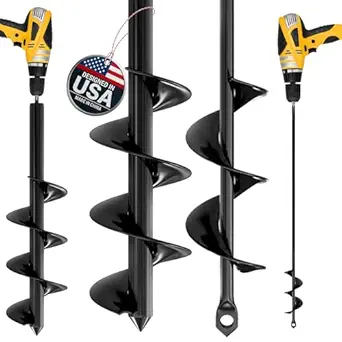 |
NEO-TEC 72CC Gas Post Hole Digger with 6", 10" & 12" Auger Bits and 16" Extension Kit

| Engine | 72cc 2-stroke air-cooled |
|---|---|
| Included bits | 6", 10", 12" steel augers |
| Extensions | Two 8" extension rods (16" total) |
| Fuel mix | 25:1 gas/oil |
The NEO-TEC 72CC gas auger is a heavyweight, dual-purpose powerhead that handles compacted clay, frozen ground, and typical fence- and deck-post digging tasks. It pairs a high-torque 72cc two-stroke engine with three heavy-duty steel bits (6", 10", 12") and two 8" extensions so you can match bit size and depth to the job without buying separate tools. The machine uses an easy-pull recoil starter, a translucent fuel tank for quick checks, and anti-vibration handles that make repeated holes less fatiguing. In practice it punches through dense clay and gravel more effectively than small electric augers and also converts to ice augering for winter work. Expect typical gas-maintenance chores such as mixing 2-stroke fuel and basic tune-ups, and note the unit’s substantial mass which requires proper lifting and handling. The package is practical for fencing, landscaping, and tree planting where strong low-end torque and included bits reduce the need for aftermarket accessories.
Best for: Buyers who need a powerful, portable auger for heavy clay and seasonal ice work and who accept routine gas-engine upkeep in exchange for stronger low-end torque and faster drilling.
Less Ideal for: Users wanting a lightweight, maintenance-free solution for occasional small holes or those restricted from using gas engines in their area should consider electric or manual alternatives.
- High-torque 72cc two-stroke engine able to break compacted clay and frozen ground
- Includes three steel auger bits (6", 10", 12") and two 8" extensions for versatile hole sizes and depths
- Anti-vibration grips and balanced design reduce operator fatigue during multiple holes
- Dual-purpose for earth and ice drilling, eliminating the need for a separate ice auger
- Requires 2-stroke fuel mixing and routine gas-engine maintenance
- Heavier and bulkier than electric augers, so it is less convenient for casual users to lift and store
Verdict: If you need a robust auger that can reliably drill through hardpan clay and frozen ground, this 72cc gas unit delivers the torque and included bits to get the job done.
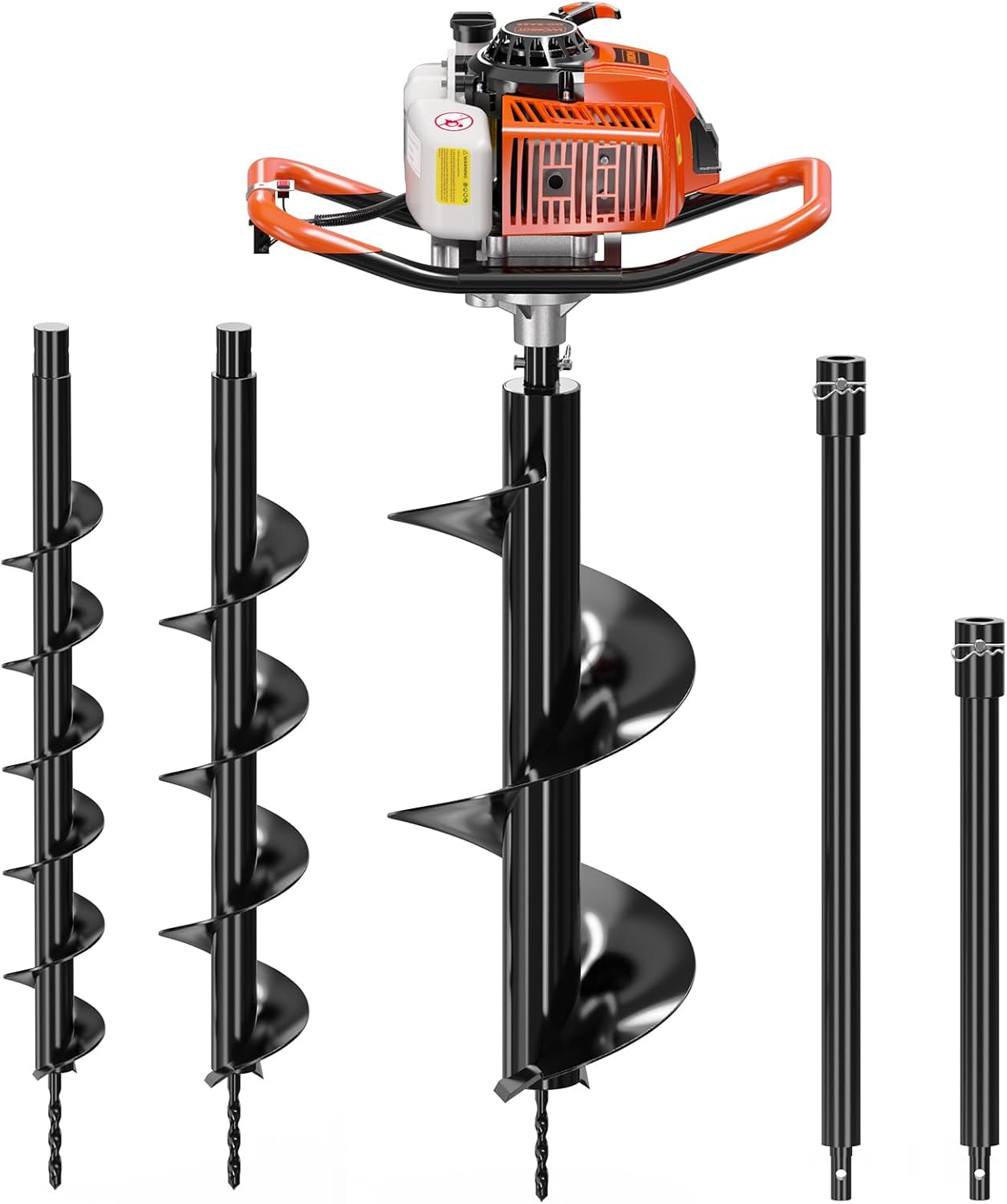
WORKIT 72CC Gas Post Hole Digger with 4/6/12" Auger Bits and 20"/30" Extensions
| Engine | 72CC 2-cycle Xtreme Engine |
|---|---|
| Fuel mixture | 50:1 gasoline-to-oil |
| Fuel tank capacity | 1.4L |
| Included auger bits | 4", 6", 12" |
| Included extensions | 20" and 30" |
The WORKIT 72CC post hole digger is a gas-powered earth auger built for demanding backyard and light commercial digging tasks. It pairs a 72cc two-cycle Xtreme engine with three auger bit sizes (4, 6 and 12 inches) and two extension rods so you can drill shallow fence posts or deeper holes for posts and small trees. Practical features include OptiSpark ignition and an easy-start design that reduces pull-start frustration, an ergonomic anti-vibration handle with an emergency stop switch for safer control, and a reinforced body with powder-coated alloy steel bits for corrosion resistance. The unit comes with a premix jug, spare spark plug and basic tools so it is ready to assemble and use. Expect strong digging performance in typical garden soils and quicker job completion compared with manual digging, but plan for the usual gas-engine maintenance and noise. The machine is heavy and robust, so it suits users comfortable handling a two-stroke power tool rather than those needing an ultra-light or electric alternative.
Best for: Buyers who want a robust, gas-powered auger to speed up fence, post, or small-tree hole digging and who prioritize power and durability over lightweight or electric options.
Less Ideal for: People who need a quiet, low-maintenance electric solution or who prefer a very lightweight tool for occasional, one-person use should consider other options.
- Powerful 72cc two-cycle engine for fast digging in typical garden and fence-post soils
- Includes three auger diameters (4", 6", 12") plus 20" and 30" extension rods for flexible hole depth and width
- OptiSpark ignition and easy-start design improve starting reliability
- Reinforced body and powder-coated alloy steel bits for durability and corrosion resistance
- Gas engine requires regular maintenance and produces noise and exhaust
- Heavy unit may be cumbersome for a single operator during extended use
Verdict: A heavy-duty, gas-powered auger kit that delivers strong digging performance and flexibility for serious fence and post installation jobs.
VEVOR 43CC Gas-Powered Post Hole Digger with 8" Auger

| Maximum Power | 1250 watts |
|---|---|
| Maximum Rotational Speed | 9350 rpm |
| Drill Type | Earth Drill |
| Included Components | 8" Auger, Oil Mixing Bottle, Spark Plug, Tool Kit |
| Material Type | Aluminum |
The VEVOR 43CC post hole digger is a petrol-powered auger built to speed up fence posts, planting, and small farm digging tasks. It pairs a 43cc engine and ball-bearing gearbox with a 30-inch alloy steel auger so you can drill deeper holes without stooping. Typical use is straightforward: fill the 1.2L fuel tank with the recommended gas-oil mix, prime and pull the thicker 1.2m cord, then guide the unit by its foam-wrapped handles while the auger bores into soil. Notable features include a shock-absorbing handle, emergency stop switch on the grip, and a corrosion-resistant powder-coated drill bit. Practical benefits are faster hole completion versus manual digging and fewer interruptions thanks to the large fuel tank and included basic tool kit and spare spark plug. Important limitations are that it is a gas engine tool so it requires fuel mixing, periodic maintenance, and suitable outdoor ventilation; it will also be heavier and louder than electric alternatives and may struggle in extremely rocky ground. For routine post and planting jobs in typical garden and small-acreage soils it delivers solid, reliable performance.
Best for: Buyers who prioritize reliable, gas-powered digging for routine fence posts, planting, or small farm work and want a turnkey tool that handles common garden soils with minimal fuss.
Less Ideal for: People needing a low-noise, zero-emission tool for confined or city yards or those who prefer electric convenience and minimal maintenance.
- Powerful 43cc engine with ball-bearing gearbox for steady drilling in compact and loamy soils
- Includes 8" alloy steel auger (30-inch length) that allows deeper holes without bending
- 1.2L fuel tank and longer 1.2m pull cord reduce interruptions and make starting easier
- Safety and comfort features such as an emergency stop switch and foam anti-vibration handle
- Ships with a basic tool kit, spare spark plug, and oil mixing bottle for first-use readiness
- Gas engine requires fuel-oil mixing and routine maintenance
- Heavier and louder than electric or manual options, and not ideal for indoor or low-noise needs
Verdict: A robust gas-powered auger that reliably speeds up post and planting work for gardeners and small-acreage owners who want proven engine power and ready-to-use accessories.
THUNDERBAY 10-inch Earth Auger Bit, 36-inch Shaft

| Cutting Diameter | 25.4 centimeters |
|---|---|
| Tool Flute Type | Spiral |
| Finish Types | Powder Coat |
| Included Components | 10 Inch Earth Auger Bit |
The THUNDERBAY 10-inch earth auger bit is built for demanding digging tasks in tough soils such as clay. It attaches to compatible auger drives and gives you a 36-inch shaft so you can start holes standing up or reach deeper without bending over. Key design elements include a fishtail point to help penetrate compacted ground, replaceable cutting blades for maintenance, a spiral flute for efficient spoil removal, and a shock spring absorber to reduce jarring when the bit hits roots or rocks. The powder coat finish and heavy welds improve durability for frequent use. In practice this auger is best for fence posts, deck footings, mailboxes, and planting where reliable penetration and long service life matter. It will handle sticky clay better than thinner, cheaper bits because of the robust blade and flute geometry, but very large rocks or extremely dense subsurface layers may still require progressive drilling or a pilot hole. You should expect a sturdy, serviceable tool that minimizes downtime thanks to replaceable blades and the shock feature that protects the operator and equipment.
Best for: A buyer who prioritizes a dependable, long-lasting auger for frequent post holes, planting, and landscaping in compacted or clay soils and wants low-maintenance serviceability.
Less Ideal for: Casual users who only need occasional small holes or those who lack a compatible power drive should consider simpler hand tools or a complete powered auger kit instead.
- 36-inch shaft lets you start holes standing up and reach deeper without kneeling
- Fishtail point and spiral flute help penetrate compacted or clay-heavy soil
- Replaceable cutting blades extend service life and simplify maintenance
- Shock spring absorber reduces impact to the operator and auger drive
- Powder coat finish and heavy-duty welds improve corrosion resistance and durability
- Not designed to remove very large buried rocks or concrete obstructions
- Requires a compatible auger drive or power unit; not a standalone drill
Verdict: If you need a rugged, serviceable auger bit that reliably penetrates clay and heavy soil, this 10-inch THUNDERBAY bit is built for long-term field use.
Power Planter Extended Length 3" x 24" Garden Auger Drill Bit

| Cutting Diameter | 7.6 centimeters |
|---|---|
| Material Type | Alloy Steel |
| Shank Type | Hex |
| Tool Flute Type | Spiral |
The Power Planter 3 x 24-inch extended-length auger is a contractor-grade drill attachment that turns a compatible 1/2-inch drill into a powerful soil auger for planting bulbs, potted plants, aerating, and light post-hole work. It uses a spiral two-flute design and thick 10-gauge flighting to move soil efficiently, and the alloy steel shaft with black oxide finish and abrasion-resistant tip is built to handle clay and rocky ground better than thin hobby bits. In use you clamp the hex shank into an 18V (or higher) cordless or corded drill, lower the bit to the spot, and let the spiral flighting pull soil up and out — which speeds planting and reduces back strain compared with digging by hand. Practical benefits include faster hole making for repeated planting, easier aeration around trees, and the ability to reach deeper without kneeling thanks to the extended shaft. Important limitations are that it requires a sufficiently powerful drill and steady control to avoid binding in very heavy clay or hitting large rocks, and it is not intended for use with impact drivers or as a standalone handheld tool.
Best for: Gardeners and property owners who want a durable drill-mounted auger to speed planting and aeration in heavier soils and who prefer proven, workmanlike tools backed by user feedback.
Less Ideal for: Casual gardeners who only need occasional shallow holes or those without a sufficiently powerful drill should consider manual bulb planters or simpler tools instead.
- Thick 10-gauge spiral flighting and two-flute design moves clay and compacted soil effectively
- Alloy steel construction with abrasion-resistant tip increases durability in abrasive soils
- Extended 24-inch shaft reduces bending and lets you reach deeper holes without extensions
- 1/2-inch non-slip hex shank fits common drills for quick attachment and use
- Requires a powerful drill (recommended 18V or higher) and firm control to avoid binding
- Not compatible with impact drivers and not designed for standalone handheld use
Verdict: A robust extended-length steel auger that reliably speeds planting and aeration in clay soils when paired with a sufficiently powerful drill.
K-Brands 2‑Piece Garden Auger Drill Bit Set (1.6" × 16" & 3.5" × 16")

| Material Type | Alloy Steel |
|---|---|
| Shank Type | Straight |
| Cutting Diameter | 1.6 inches |
| Number of Pieces | 2 |
| Tool Flute Type | Spiral |
These K-Brands auger drill bits convert a standard 3/8" hex-drive drill into a fast hole-digging tool for bulbs, bedding plants, fence posts, ground lights and umbrella holes. The set includes 1.6" and 3.5" cutting diameters in 16" lengths and uses a two-flute spiral design with a 135 degree cutting angle to pull soil up and out as you drill. In practice they cut planting time dramatically compared with hand digging and work across clay, sand, hard and soft soils; moistening very hard ground first improves performance. Made from alloy steel and supplied uncoated, they are durable for general garden tasks but will need cleaning and drying after use to avoid corrosion. The bits fit most drills with a 3/8" hex drive and are straightforward to swap and operate, though they do not include an extension or the drill itself. If you frequently plant bulbs or set small posts in clay soil and prefer a low-effort solution, these bits make the job much quicker, but expect to maintain them if you drill in abrasive or rocky ground.
Best for: A homeowner who wants a low-effort, reliable way to dig planting and small post holes in clay and other common garden soils and values tools that reduce physical strain.
Less Ideal for: Landscapers or contractors who need heavy-duty, rock-resistant augers for constant professional use should choose a purpose-built commercial auger system instead.
- Works with any drill that accepts a 3/8" hex drive, so it fits common consumer drills
- Two sizes (1.6" and 3.5") cover small planting holes and larger holes for posts or umbrellas
- Spiral two-flute design and 135° cutting angle evacuate soil efficiently for faster digging
- Alloy steel construction provides good durability for regular garden use
- Uncoated steel requires cleaning and dry storage to prevent rust after use
- Not intended for heavy rocky strike or continuous commercial use without accelerated wear
- Drill and extension are not included, so an appropriate hex-drive drill is required
Verdict: If you want a simple way to speed up planting and small post holes in clay without buying specialized equipment, this two-piece alloy auger set paired with a 3/8" hex drill is an effective choice.
Choosing the Right Earth Auger for Clay: Key Factors to Consider
Bit Geometry and Edge Strength
The helix shape, angle of the cutting lip, and thickness of the leading edge determine how effectively an auger will penetrate and slice through sticky clay. A narrower, more aggressive tip helps start the hole, while a robust cutting edge reduces deformation when the bit meets compacted layers or small stones.
Thicker leading edges resist dulling and bending but may require more torque to turn. Heat-treated steel or reinforced welds at stress points extend service life when drilling dozens of holes in heavy soil.
Torque and Power Compatibility
Clay creates consistent resistance, so an auger must be paired with a power source capable of maintaining RPM under load. Gas engines or heavy-duty electric motors that deliver steady torque prevent stalls and reduce the risk of binding in sticky material.
Check the torque curve and whether the auger is designed for higher-torque drivers. Overly lightweight drills will labor and increase operator fatigue, while matching a robust drive to the bit lets you bore more holes per session with fewer interruptions.
Clay Shedding and Clog Resistance
Wet clay clings to metal surfaces and can quickly pack the helix, stopping progress. A helix with a clean spiral profile and sufficient pitch helps eject material as the bit rises from the hole. Coatings and smooth welds reduce adhesion, while open flute designs allow for easier self-cleaning.
Consider bits with features that let you knock out or pry clear packed clay without disassembling the auger. Ease of clearing reduces downtime and prevents overstraining the drive when the bit is bogged down.
Shaft, Coupling, and Connection Robustness
Stress concentrates where the bit attaches to the drive shaft. Strong splines, thick-walled shafts, and secure couplings reduce the chance of twisting, shearing, or widening under shock loads when the bit hits compacted seams or gravel layers.
A replaceable adapter or reinforced collar extends life and simplifies repairs in the field. Rigid connections also improve control and reduce wobble that can enlarge holes or cause uneven drilling.
Material Quality and Corrosion Resistance
High-carbon steels and heat-treated alloys stand up better to abrasion and impact in stony, clayey soils. Surface treatments, such as powder coatings or rust-inhibiting finishes, slow corrosion from wet soil contact and help prevent clay from bonding tightly to the metal.
Better materials add upfront cost but cut downtime for sharpening or replacement. For frequent use, prioritize hardened edges and corrosion-resistant finishes.
Maintenance and Ease of Repair
Augers that let you access the cutting edge and replace worn parts reduce long-term ownership hassles. Simple weld repairs, replaceable cutting teeth, and readily available adapters mean you can keep working rather than waiting for service.
Routine maintenance like cleaning clay from the helix, checking coupling bolts, and sharpening edges should be straightforward. Consider how much time the tool will spend in maintenance relative to actual digging.
Preparing the Site and Starting Holes
Before you start drilling in clay, loosen the immediate surface with a spade or digging bar where possible. This helps the auger bite cleanly rather than ride on a hard crust. For larger holes, begin with a narrow pilot hole to establish alignment and reduce side loading on the bit.
When powering up, allow the auger to settle into the soil under low speed to find its center. Increase torque gradually rather than forcing high RPM instantly, which can cause the bit to jam or tear out of position.
- Clear surface debris and vegetation first to avoid snagging the helix.
- Mark hole locations and check for buried utilities before drilling.
- Use a slower, steady feed rate in heavy clay to let the cutting edge work efficiently.
Techniques to Prevent Clogging in Sticky Soil
If clay begins to pack on the helix, lift the auger periodically to allow material to shed. Tapping the bit against a hard surface or pulling a few inches of earth out and using a stick to clear the helix helps avoid long stalls.
Wet clay is the hardest to work. If conditions allow, let the soil dry slightly or add coarse, dry material into the hole to improve drainage and reduce adhesion during drilling.
- Work in short bursts and clear the helix frequently.
- Rotate the bit back a small amount to break suction before lifting.
- Carry a small pry bar or cleaning tool to remove packed clay quickly.
Matching Auger Diameter to Task
Choose a bit diameter that matches the post, planting root ball, or anchor you plan to install. Wider diameters require more torque and are harder to keep centered in clay. For heavy clay, smaller multiple holes are often easier to manage than one very large hole.
If you need a large hole, consider drilling a smaller starter hole then widening gradually with a larger bit rather than attempting a single deep pass with a very large auger.
- Use narrower bits for fence posts and larger bits for deep planting pits only when torque capacity allows.
- Stagger hole sizes rather than forcing a single oversized cut in compacted ground.
Safety and Ergonomics When Using Heavy-Duty Augers
Heavy augers and high-torque drivers can create strong reactive forces. Use two-handed operation and maintain a firm stance. If available, use harnesses or support arms to reduce operator strain during extended work.
Always shut off the motor before attempting to clear a jammed bit and follow lockout practices to prevent accidental start-up. Keep bystanders at a safe distance, and wear eye and hearing protection to guard against flying debris and noise.
- Avoid sudden twisting motions; let the tool do the work.
- Inspect fuel lines, cords, and couplings before each session.
- Have a plan to safely release the bit if it binds deeply in the soil.
Storing and Caring for Augers After Use
Clean wet clay off the helix and cutting edge as soon as possible to prevent rust and caking. Lightly oil metal surfaces after drying to protect finishes. Check welds and bolts for fatigue and tighten or repair as needed.
Store augers in a dry place off the ground and, if possible, hang them to avoid bending the shaft. Periodic sharpening and checking alignment keeps performance steady over many seasons.
- Remove caked soil and dry the bit before applying a rust inhibitor.
- Store with protective covers over sharp edges to prevent injuries.
- Perform a quick inspection before each job to catch early wear.
How We Chose the Best Earth Auger for Clay
We focused selection on the attributes that matter when drilling into dense, cohesive clay rather than loose topsoil. Primary evaluation criteria included bit geometry and cutting edge strength, because a sharper, reinforced helix clears sticky soil and resists deformation. Torque delivery and engine or motor compatibility were weighted heavily to ensure the auger can maintain rotation under heavy load. Build materials and heat treatment were checked to predict long-term wear and resistance to bending when hitting compact layers or small rocks. We also considered ease of clearing and maintenance, including how the helix shed wet clay and how simple it is to remove clogged material. Another filter was shaft and coupling robustness to lower the chance of damage under sudden stalls. We excluded lightweight garden drills and devices designed only for loose soil or transplanting. We did not include multi-tool accessories that are not purpose-built for deep holes in compacted ground. The final list reflects tools that combine aggressive bit design, sustained torque capability, and practical features that reduce downtime when working in clay.
FAQ
Can I use a standard auger designed for soft soil in clay?
Often those augers will struggle. Bits made for soft soil have shallow flutes and thinner cutting edges that can pack with clay and deform. For clay, choose a bit with a stronger cutting edge and a helix profile designed to shed sticky material.
How deep can I safely drill in compacted clay?
Depth depends on bit length and the torque capacity of your drive. Many handheld systems work best in shorter increments, so drill in stages rather than trying an excessively deep single pass. Deeper holes may require a heavier-duty drive or extension shafts rated for the load.
What maintenance prevents premature wear when digging in clay?
Clean the helix after each use, inspect edges for nicks, and touch up or replace cutting teeth when they dull. Keep connections tight and check for shaft straightness. Proper drying and light oiling after cleaning will reduce corrosion from wet soil contact.
How do I handle small rocks or gravel layers encountered while drilling?
Slow the feed and let the cutting edge take occasional lighter passes to avoid sudden shock loads. If you hit a stubborn rock, stop and extract the bit to clear debris. Using a more robust, thicker leading edge helps resist bending from brief impacts.
Is gas power better than electric for clay conditions?
Gas engines often offer higher sustained torque and run time, which helps in heavy clay; however, heavy-duty electric motors with high torque ratings can also perform well, especially on smaller-diameter bits and where emissions or noise are concerns. The right choice depends on job scale and access to power.
Final Verdict
When working in clay, prioritize aggressive bit geometry and sustained torque over lightweight convenience. Choose a bit with a reinforced cutting edge and a helix profile that resists packing, and match it to a drive that maintains rotation under load. Expect tradeoffs between ease of use and durability: heavier, tougher designs demand more power but cut downtime. Focus on maintenance and clog-clearing practices to get the most life from your equipment. With the right combination of bit design, torque capacity, and sensible technique, you can bore clean holes in clay with fewer interruptions and more consistent results.
