

Note: This article contains affiliate links. If you click on these links and make a purchase, I may earn a small commission at no extra cost to you. This helps support my research and content. Read my full affiliate disclosure here.
An Earth Auger can turn a backbreaking task into a quick job whether you are setting fence posts, planting trees, or installing deck footings. Choosing the right auger affects how fast you dig, how much effort you expend, and how clean the hole and surrounding soil will be. This guide covers the top short list of Earth Augers for different uses and capacities and explains the tradeoffs that matter in the garden and yard. We evaluated power delivery, bit construction, handling, and durability so you can match an auger to your soil type and job size. Read on for what to expect from the picks and which features should drive your decision.
Top Picks at a Glance
| Best Overall The best all-around choice for most situations | WORKIT 72CC Gas Post Hole Digger with 4/6/12" Auger Bits and 20"/30" Extensions |  |
| Best Quality Built to a higher standard if you want something more solid | Earthquake E43 1‑Person Earth Auger Powerhead with 8" Auger Bit |  |
| Best Value The sweet spot between price and what you get | Prowoo 72CC Gas-Powered Post Hole Digger with 6" and 8" Auger Bits |  |
| Best Budget The cheapest option that still gets the job done reliably | VEVOR 43CC Gas-Powered Post Hole Digger with 8" Auger |  |
| Highest Rated A top-rated pick with lots of positive feedback | OYOWINGO 72cc Gas-Powered Earth Auger with 6" and 8" Bits |  |
| Most Popular A crowd favorite that many people choose with confidence | XtremepowerUS 1500W Electric Post Hole Digger with 6" Auger Bit |  |
WORKIT 72CC Gas Post Hole Digger with 4/6/12" Auger Bits and 20"/30" Extensions
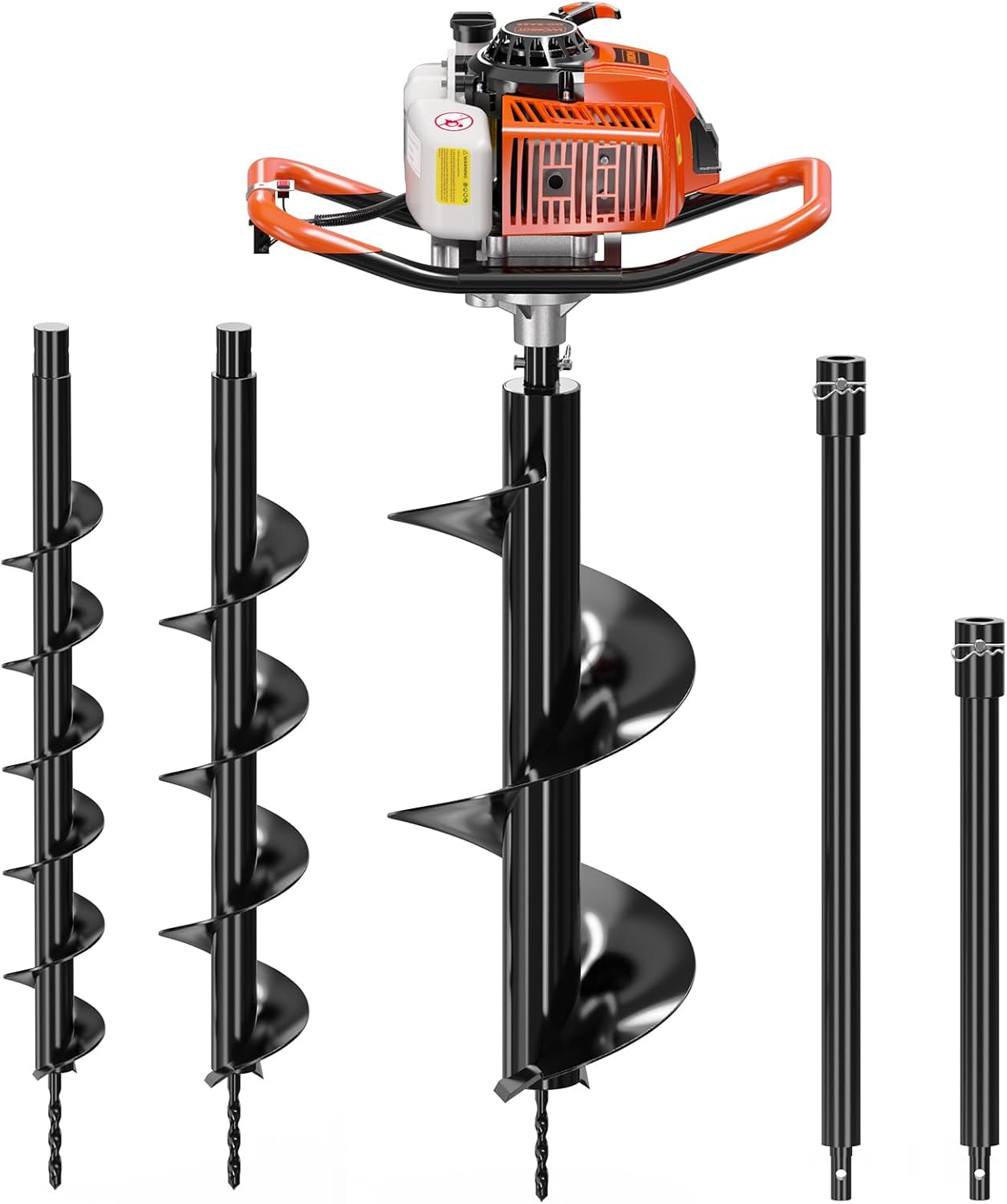
| Engine | 72CC 2-cycle Xtreme Engine |
|---|---|
| Fuel mixture | 50:1 gasoline-to-oil |
| Fuel tank capacity | 1.4L |
| Included auger bits | 4", 6", 12" |
| Included extensions | 20" and 30" |
The WORKIT 72CC post hole digger is a gas-powered earth auger built for demanding backyard and light commercial digging tasks. It pairs a 72cc two-cycle Xtreme engine with three auger bit sizes (4, 6 and 12 inches) and two extension rods so you can drill shallow fence posts or deeper holes for posts and small trees. Practical features include OptiSpark ignition and an easy-start design that reduces pull-start frustration, an ergonomic anti-vibration handle with an emergency stop switch for safer control, and a reinforced body with powder-coated alloy steel bits for corrosion resistance. The unit comes with a premix jug, spare spark plug and basic tools so it is ready to assemble and use. Expect strong digging performance in typical garden soils and quicker job completion compared with manual digging, but plan for the usual gas-engine maintenance and noise. The machine is heavy and robust, so it suits users comfortable handling a two-stroke power tool rather than those needing an ultra-light or electric alternative.
Best for: Buyers who want a robust, gas-powered auger to speed up fence, post, or small-tree hole digging and who prioritize power and durability over lightweight or electric options.
Less Ideal for: People who need a quiet, low-maintenance electric solution or who prefer a very lightweight tool for occasional, one-person use should consider other options.
- Powerful 72cc two-cycle engine for fast digging in typical garden and fence-post soils
- Includes three auger diameters (4", 6", 12") plus 20" and 30" extension rods for flexible hole depth and width
- OptiSpark ignition and easy-start design improve starting reliability
- Reinforced body and powder-coated alloy steel bits for durability and corrosion resistance
- Gas engine requires regular maintenance and produces noise and exhaust
- Heavy unit may be cumbersome for a single operator during extended use
Verdict: A heavy-duty, gas-powered auger kit that delivers strong digging performance and flexibility for serious fence and post installation jobs.
Earthquake E43 1‑Person Earth Auger Powerhead with 8" Auger Bit

| Engine | 43cc 2-Cycle Viper Engine |
|---|---|
| Transmission Ratio | 30:1 |
| Included Auger | 8 inch steel auger with fishtail point |
| Handle Type | Steel handlebars with anti-vibration foam grips |
The Earthquake E43 is a gas-powered, one-person earth auger combo built for demanding digging tasks like fence posts, deck footings, and tree planting. Its 43cc two-cycle Viper engine and 30:1 transmission deliver strong torque so a single operator can bore through compacted soil quickly. The unit pairs a compact powerhead with an 8-inch steel auger that includes a fishtail point, flex-coil shock absorber and replaceable blades for longevity. Industrial-style air filtration and ball-bearing transmission gears improve reliability during repeated use, while anti-vibration foam-grip handles and fingertip throttle make control more comfortable. Because it is a gasoline machine, expect typical needs for fuel mixing, periodic spark plug and air filter service, and louder operation compared with electric models. The combo is aimed at performance and durability rather than ultra-lightweight portability, so it works best when you need consistent, powerful drilling for multiple holes across a property.
Best for: Buyers who prioritize drilling performance and durability for regular landscaping or farm tasks and want a one-person gas auger that handles compacted soil without assistance.
Less Ideal for: Casual gardeners with only a few shallow holes, or users who need a quieter, low-maintenance electric or battery-powered option.
- Powerful 43cc two-cycle Viper engine for strong torque in tough soil
- Includes durable 8-inch steel auger with fishtail point and replaceable blades
- Industrial air filtration and ball-bearing transmission for improved reliability
- Anti-vibration foam-grip handles and fingertip throttle for better operator comfort
- Requires gasoline maintenance and is louder than electric or battery options
Verdict: If you need a rugged, single-operator auger that delivers strong torque and durability for repeated posthole and planting work, the Earthquake E43 is a top performance choice.
Prowoo 72CC Gas-Powered Post Hole Digger with 6" and 8" Auger Bits

| Manufacturer | Prowoo |
|---|---|
| Item model number | 72 CC |
| Size | 72CC+2 auger(6"8")+1 Ext |
| Material | Metal, Plastic |
The Prowoo 72CC gas-powered post hole digger is a compact earth auger designed for routine fence, pole, and planting-hole work. It pairs a 72cc two-stroke engine with ergonomic handlebars, a finger throttle, and a manual recoil start so one person can quickly position and dig holes without electric cords. The kit includes 6" and 8" double-sheet auger bits, a 60cm extension rod, a fuel mixing bottle, and basic assembly tools, which makes it ready to use on arrival. In practice the heavier powerhead and metal augers cut through typical garden and farmland soils efficiently and the interchangeable blades let you sharpen or swap bits for different ground conditions. Expect vibration and noise typical of small gas engines and occasional maintenance such as spark plug, air filter, and fuel-mix care. The unit is well suited to repetitive post-hole jobs where mobility and continuous run time matter, though it requires safe handling and basic engine maintenance compared with electric alternatives.
Best for: Buyers who need a mobile, gas-powered auger for regular post-hole or planting tasks and who value quick setup and continuous run time over electric convenience.
Less Ideal for: People who want near-silent, low-maintenance operation or who prefer battery or electric tools for very small, infrequent jobs.
- Powerful 72cc gasoline engine for strong digging performance in compact package
- Includes 6" and 8" double-sheet auger bits plus a 60cm extension for versatility
- Ergonomic handlebars with finger throttle give good control during operation
- Comes as a complete kit with fuel-mixing bottle and basic assembly tools for quick start
- Requires routine two-stroke engine maintenance and correct fuel mixing
- Produces typical gas-engine noise and vibration during use
Verdict: A ready-to-use, petrol-powered auger kit that delivers strong, mobile digging performance for frequent post-hole and planting work.
VEVOR 43CC Gas-Powered Post Hole Digger with 8" Auger

| Displacement | 43CC |
|---|---|
| Maximum Power | 1250 watts |
| Maximum Rotational Speed | 9350 rpm |
| Drill Type | Earth Drill |
| Included Components | 8" Auger, Oil Mixing Bottle, Spark Plug, Tool Kit |
This VEVOR 43CC post hole digger is a straightforward gas-powered auger for digging fence posts, planting holes, and small farm or garden excavation. It pairs a 43CC engine and a gearbox with ball bearings and alloy gears to deliver up to 9350 rpm rotational speed and drive the included 8-inch, 30-inch-long alloy steel auger into compact or mixed soils. The unit ships with an auger, spark plug, oil-mixing bottle, and basic tool kit so you can start jobs right away. Practical touches include a larger 1.2L fuel tank to reduce refills, a longer pull cord for easier starting, an emergency stop on the handle, and foam anti-vibration grips for steadier control. Expect solid durability from the powder-coated alloy bit and steel-welded handle, but remember this is a single-speed, lightweight consumer model that may struggle in heavy rock or extremely dense clay and will need regular fuel mixing and maintenance. For budget-focused buyers who need a capable, ready-to-use gas auger for routine post and planting work, it provides a lot of value for the features offered.
Best for: Buyers on a tight budget who need a reliable, ready-to-run gas auger for occasional to frequent fence post holes, tree planting, and general garden or small-farm digging tasks.
Less Ideal for: Professional contractors who require heavy-duty continuous operation or users who need a unit designed specifically for drilling through rock or very dense clay should consider more powerful, multi-speed commercial models.
- Powerful 43CC engine and 1250W maximum power for effective digging in mixed soils
- Includes an 8" alloy steel auger and basic accessories so it is ready to use out of the box
- 1.2L fuel tank and longer pull cord reduce downtime and make repeated holes more efficient
- Durable construction with powder-coated auger and steel-welded handle for typical outdoor use
- Handle-mounted emergency stop and foam anti-vibration grips improve control and comfort
- Single-speed design limits control in extremely dense soils or precision digging
- Not suited for rocky ground or professional heavy-duty continuous commercial use
Verdict: A budget-friendly gas auger that gives DIYers and small-farm owners a ready-to-use, durable option for digging post and planting holes without paying for pro-grade equipment.
OYOWINGO 72cc Gas-Powered Earth Auger with 6" and 8" Bits

| Engine | 72CC two-stroke |
|---|---|
| Included bits | 6" and 8" steel auger bits |
| Extension rod | 60 cm |
| Shaft size | 3/4" |
This OYOWINGO 72cc earth auger is a purpose-built gas-powered post hole digger for quickly drilling holes for fence posts, trees, shrubs, and other landscape needs. The 72cc two-stroke engine provides strong rotational power so one or two people can bore through typical garden and fence-line soils without needing electric hookups. The kit includes both 6" and 8" double-sheet steel bits plus a 60 cm extension rod so you can adapt hole diameter and reach for different jobs. Ergonomic handlebars with finger throttle and an easy recoil start system make it straightforward to operate, and the included fuel mixing bottle and tool kit simplify setup. Practical benefits are faster hole digging than manual tools and flexibility across tasks thanks to the extra bit and extension. Important limitations are typical for small gas augers: it requires fuel mixing and basic maintenance, it can be loud and produce exhaust, and performance will drop in very rocky ground where a specialized contractor unit would be better.
Best for: Buyers who prioritize a reliable, standalone gas auger to handle regular post and planting holes without relying on electricity and who value a ready-to-use kit for property maintenance.
Less Ideal for: Those who need an electric or ultra-quiet solution for small urban yards or users who frequently encounter large buried rocks or concrete who should consider a contractor-grade or specialized drilling service.
- Powerful 72cc two-stroke engine suitable for digging fence posts and planting holes
- Comes with 6" and 8" steel auger bits plus a 60 cm extension rod for versatility
- Ergonomic handle with finger throttle and easy recoil start for user control
- Includes fuel mixing bottle and assembly tool kit so you can be operational quickly
- Requires mixed fuel and routine maintenance typical of two-stroke engines
- Not recommended for frequent drilling in heavily rocky or frozen ground
Verdict: A robust, ready-to-use 72cc gas auger kit that delivers dependable power and useful bit options for routine fence and planting holes.
XtremepowerUS 1500W Electric Post Hole Digger with 6" Auger Bit

| Rated Watt | 1500W |
|---|---|
| Voltage | 110V/60Hz |
| Max Torque | 90ft/lb |
| No Load Speed | 200RPM |
| Cutting Diameter | 15.2 centimeters |
The XtremepowerUS 1500W electric post hole digger is a single-operator earth auger designed to speed up tasks like setting fence posts, planting trees, and other landscaping jobs. It pairs a 1500 watt motor rated to deliver up to 90 ft-lb torque with a 6-inch diameter auger bit that drills to roughly 28 inches, so you can bore consistent holes without the physical strain of manual digging. The powerhead includes an anti-vibration handle and two anti-skid grips for better control during use and a safety lock to prevent accidental starts. The included auger is made of manganese steel with a protective coating for durability in abrasive soil. Expect faster, more uniform holes compared with manual tools and easier one-person operation on typical yard soil. Important limitations are that it is an electric unit intended for standard soil conditions and household power, so it may struggle in heavy rock, very compacted clay, or remote sites without 110V power; purchasers should also plan for some weight and leverage when handling the tool during deep digs.
Best for: Someone who wants to replace manual post-hole digging with a faster, one-person electric solution and values practical safety features and proven customer feedback.
Less Ideal for: Users who need to dig in remote locations without AC power or who frequently encounter heavy rock and bedrock should consider a petrol-powered auger or professional excavation services instead.
- Powerful 1500W motor providing up to 90 ft-lb torque for efficient digging
- Includes a 6-inch manganese steel auger bit rated to reach about 28 inches deep
- Anti-vibration, anti-skid handles and a safety lock for safer one-person operation
- Durable finish on the auger bit to resist rust and wear in typical soil conditions
- Designed for use with 110V household power so it is not suitable for remote sites without electricity
- May be less effective in very rocky or extremely compacted clay soils
Verdict: If you want a reliable, one-person electric auger for routine fence and planting holes, this 1500W XtremepowerUS unit delivers the power and durability to get the job done quickly.
Choosing the Right Earth Auger: Key Factors to Consider
Motor Power and Torque
Motor power and the torque curve are the core factors that determine how quickly an auger can penetrate different soil types. Higher torque helps in compacted clay, gravelly mixes, or when roots are present, while peak horsepower affects how fast the bit will rotate once engaged. For gardeners, steady, controllable torque is often more useful than raw top-end rpm because it prevents stalling and reduces the need for repeated starts and stops.
Consider how long you plan to run the auger at a time. Light-duty post holes for small projects can use lower power, but tasks like repeated fence post installation or large planting holes will demand sustained torque and a cooling-friendly motor design.
Bit Construction and Cutting Geometry
The bit's material, thickness, and cutting-edge shape affect penetration, soil removal, and long-term wear. Hardened steel or heat-treated edges stay sharp longer and resist chipping when encountering small stones or roots. The flute design drives how efficiently soil is moved out of the hole; a wide, well-angled flute clears cuttings faster and reduces binding.
Also check whether bits are welded or bolted, and whether replacement bits are available in different diameters. A modular bit system lets you switch diameters for different tasks and extends tool life because you can replace the cutting edge rather than the whole shaft.
Shaft Rigidity and Coupler Design
A rigid shaft and a secure coupler reduce wobble, which improves hole accuracy and reduces operator fatigue. Flexible or poorly fitted couplers can cause vibration that amplifies through the handles and makes the auger harder to control. For deeper holes, shaft straightness matters more because small bends are magnified down the length of the bit.
Pay attention to how the drive connects to the bit. Tapered or keyed shafts with robust locking hardware will stay aligned under load. For powered augers, grease access or sealed bearings at the coupler extend life and maintain smooth rotation.
Ergonomics and Weight Distribution
How an auger feels in your hands affects how long you can work and how safely you can control the tool. Well-placed handles, vibration-dampening grips, and balanced weight distribution reduce strain when starting a hole and when you need to clear stuck material. Lighter augers are easier to maneuver but may transfer more vibration to your body; heavier units give stability but tire you faster when moving between sites.
Consider handle width for two-handed control and whether the grips allow a natural wrist position. If you expect to use the tool for long sessions, look for features that cut down on repeated bending and awkward postures.
Serviceability and Replacement Parts
Augers are mechanical tools that see impact, wear, and occasional binding. Easy access to replacement shear pins, teeth, and whole bits keeps downtime low. Designs that allow the user to swap bits or sharpen edges without specialist tools are more practical for gardeners who maintain their own equipment.
Also check availability of common spare parts and whether the manufacturer publishes part numbers or diagrams. A design that isolates wear parts from the main drive means cheaper maintenance and longer service life for the motor and gearbox.
Safety Features and Control
Safety elements such as automatic shutoff clutches, dead-man throttle controls, and clear handling instructions reduce the risk of kickback and injury. A slip-clutch or torque-limiting system can prevent sudden violent reactions if the bit binds on a root or rock. Clear, reachable throttle controls let you reduce speed instantly to regain control when necessary.
Good safety design also includes guard placement and the ability to quickly disconnect power or fuel sources. For shared or occasional users, intuitive controls and built-in protection are more valuable than marginal performance gains.
Matching Auger Diameter to the Task
Choose the bit diameter based on the purpose of the hole. Narrow diameters are fine for light fence posts and planting small shrubs, while wider bits are better for tree root balls, large posts, and concrete footings. If you need multiple sizes, look for models that accept interchangeable bits so you do not own multiple whole tools.
Also consider depth capability. Some augers pair short bits for shallow holes with extension shafts for deeper work. Extensions add flexibility but require a rigid coupler and careful alignment to avoid excessive vibration.
- Small diameters: faster holes, less soil removed
- Large diameters: more soil removal, slower but necessary for big plantings
- Extensions: add depth but require stable shaft and couplings
Hand-Operated Versus Powered Options
Hand-operated augers are quiet, low-cost, and fine for a few holes in soft soil. They let you feel resistance directly, which can be useful when avoiding roots or buried utilities. However, they demand more physical effort and are slow in compacted soils.
Powered models offer speed and consistent torque. Gas and cordless units both reduce labor, but they differ in maintenance and run time. For intermittent home projects, a battery-powered auger can be convenient, while frequent heavy use favors higher torque systems that manage heat better.
- Hand augers: low cost, low speed, good for soft soils
- Powered augers: faster, require fuel or batteries and more maintenance
Working in Rocky or Rooted Soil
If you expect frequent hits on small stones or roots, choose a thicker bit with reinforced edges and a design that prevents clogging. Consider a bit with replaceable cutting teeth so you can swap worn components without replacing the entire shaft. Slow, steady feeding into the ground reduces shock to the motor or your arms and helps avoid binding.
In very rocky ground, pre-drilling with a narrower pilot bit or using a digging bar to remove obstructions before augering can save wear and tear. For large roots, a separate root-cutting tool or pruning after exposing the root may be faster than trying to force the auger through.
- Reinforced edge bits resist chipping
- Replaceable teeth reduce long-term cost
- Pilot drilling or manual clearing protects the motor and bit
Transporting and Storing Your Auger
Proper transport and storage extend component life. Keep bits clean and dry to avoid rust; lightly oil exposed cutting edges if the tool will sit between seasons. When carrying a powered auger, secure the shaft and cover the bit to prevent accidental contact.
For storage, hang or rest the tool so the bit does not bear weight that could bend the shaft. Remove fuel or battery packs for long-term storage and follow manufacturer guidance for winterizing the motor.
- Clean and dry bits after use
- Protect cutting edges during transport
- Store with drive components supported to avoid shaft bending
Maintenance Basics to Keep an Auger Ready
Regular checks preserve performance: inspect cutting edges before each use, tighten coupler hardware, and replace shear pins when deformed. Lubricate moving parts as recommended and keep air intakes free from debris on powered units. A quick post-job cleanout of the flute and teeth prevents packed soil that accelerates wear.
Schedule deeper inspections seasonally, checking for hairline cracks in the shaft, gear play, or excessive vibration. Addressing small issues early prevents major failures and expensive repairs.
- Inspect edges and hardware after each job
- Lubricate couplers and gearbox per guidelines
- Perform seasonal deep inspections for cracks and wear
How We Chose the Best Earth Auger
We focused on real-world digging performance and durability because those traits determine whether an auger will save time and effort in a garden or job site. Evaluation criteria included motor torque and throttle responsiveness for actual digging power; auger bit material and edge geometry for penetration and long-term sharpness; shaft and coupler design for wobble-free operation and reduced vibration; overall ergonomics and weight distribution to minimize fatigue during repeated holes; and serviceability such as replaceable bits and accessible drive components. Products were excluded if they lacked clear specifications on torque or bit metallurgy, if replacement parts were not available, or if the design limited use to a single narrow task. We emphasized tools that handle common conditions gardeners face: compacted clay, loamy garden soils, shallow rock, and gravelly fill. The final shortlist balances immediate digging efficiency, longevity of cutting components, and ease of control for gardeners who will use their auger for posts, trees, and planting projects.
FAQ
What bit diameter do I need for planting trees?
Tree root balls and large shrubs generally need wider diameters to accommodate the root mass. A larger diameter bit removes more soil and creates a hole you can backfill evenly. For young trees, mid-range diameters can be enough if you loosen the surrounding soil by hand before planting.
Can I use an auger in clay or compacted soils?
Yes, but dense clay requires higher torque and a robust bit. Slow, steady pressure and letting the tool power through gradually reduces stalling. For extreme compaction you may need a high-torque powered unit or to pre-loosen the soil with a digging bar.
How do I prevent the auger bit from getting stuck?
Use a bit with efficient flute geometry and withdraw periodically to clear cuttings. If the bit binds, reduce throttle to ease removal and clear obstructions manually if needed. For persistent clogging, a slightly smaller pilot hole or pre-clearing debris can help.
Are interchangeable bits worth it?
Interchangeable bits add versatility, letting you swap diameters without buying another whole tool. They are particularly useful if you do varied work like fence posts and planting. Ensure the coupler system is rigid so the joint does not introduce wobble.
How often should I sharpen or replace auger teeth?
Sharpening frequency depends on soil abrasiveness and frequency of use. In gritty or rocky soils you may need to dress edges more often. If teeth are replaceable, swapping worn teeth is quicker and often more cost-effective than repeated sharpening.
Is a gas or battery model better for home use?
Battery models are quieter and lower maintenance for occasional home projects and smaller holes. Gas or higher-capacity powered models deliver greater continuous torque for frequent or heavy-duty jobs, though they require more upkeep and have higher initial effort to start.
Final Verdict
Match auger choice to the work you actually do. Prioritize torque and bit construction for compacted or rocky soils, and favor lighter, better-handling units for quick planting and occasional holes. Serviceability and good vibration control multiply the usefulness of any tool because they reduce downtime and operator fatigue. Think in terms of tradeoffs: more power and heavier weight versus maneuverability and comfort. Use the decision criteria above to pick the auger size and design that fits your routine and soil conditions so you end up with faster, safer, and more consistent holes.
