

Note: This article contains affiliate links. If you click on these links and make a purchase, I may earn a small commission at no extra cost to you. This helps support my research and content. Read my full affiliate disclosure here.
Picking the right easy plants for a planter box matters because container environments are drier, root-confined, and more exposed than in-ground beds. You want plants that tolerate limited soil volume, have predictable watering needs, and still deliver color or foliage interest on a porch, balcony, or narrow garden ledge. This guide shortlists six top options that perform well in typical planter boxes and explains how we evaluated them for light tolerance, water requirements, growth habit, and maintenance. Read on for practical notes that will help you choose plants that match your site and how much time you want to spend caring for containers.
Top Picks at a Glance
| Best Overall The best all-around choice for most situations | The Three Company Live Herb Assortment (6-Pack) |  |
| Best Quality Built to a higher standard if you want something more solid | Bonnie Plants Rosemary 4-Pack with Miracle-Gro Pour & Feed Singles |  |
| Best Value The sweet spot between price and what you get | The Three Company Creeping Jenny (Lysimachia nummularia) 2-Pack Live Trailing Groundcover |  |
| Best Budget The cheapest option that still gets the job done reliably | Groundio Coleus Rainbow Mix Seeds (Heirloom, Non-GMO) |  |
| Highest Rated A top-rated pick with lots of positive feedback | Cerca Cultivation Farmers Bundle — 12 Ready-to-Plant Seedlings (Seasonal Mix) |  |
| Most Popular A crowd favorite that many people choose with confidence | HOME GROWN Rainbow Mix Coleus Seeds (approx. 400) |  |
The Three Company Live Herb Assortment (6-Pack)

| Indoor Outdoor Usage | Indoor, Outdoor |
|---|---|
| USDA Hardiness Zone | 3-11 |
| Moisture Needs | Moderate Watering |
| Sunlight Exposure | Full Sun to Partial Shade |
| Unit Count | 6 Count |
This six-pack of live herbs delivers a hand-selected assortment of perennial culinary plants intended for container gardens, balcony planters, and kitchen beds. Plants arrive as small potted starts and are typically used to fill multiple pots or a single long planter; growers can transplant them into well-draining potting mix, place the planter in full sun to partial shade, and water regularly while they establish. Notable features include suitability for indoor or outdoor use across USDA zones 3 to 11 and modest moisture needs, which makes them adaptable to different balcony exposures. The assortment approach means you get variety and immediate usable herbs for cooking or for attracting pollinators, but you cannot choose specific varieties since the selection is the seller's grower choice. Because plants are live, initial condition and vigor may vary, so expect some variation in size and leaf count at delivery. For balcony gardeners this pack is a convenient way to start or expand an herb planter with minimal fuss.
Best for: Balcony gardeners who want an easy, low-effort way to establish a small edible herb collection and prioritize usable variety over picking specific cultivars.
Less Ideal for: Gardeners who need guaranteed specific herb varieties or those who prefer uniform, mature plants for immediate harvest.
- Ready-to-plant live herbs suitable for containers and balcony planters
- Adaptable to full sun or partial shade, widening placement options on balconies
- Perennial varieties cover cooking, tea, and pollinator uses
- Works across a wide USDA zone range (3-11) for broad climate compatibility
- Grower-selected assortment means you cannot choose exact herb varieties
- Live plants may arrive with variable size or vigor depending on shipment and handling
Verdict: An easy starter pack for balcony planters that delivers a mixed set of live culinary herbs ready to transplant and use.
Bonnie Plants Rosemary 4-Pack with Miracle-Gro Pour & Feed Singles

| Sunlight Exposure | Full Sun |
|---|---|
| Item Type Name | Live Plant |
| Unit Count | 8 Count |
This bundle delivers four fragrant, ready-to-plant rosemary plants plus convenient single-dose Miracle-Gro feed packets to keep them growing strong. The plants are intended for full sun and well-drained soil, which makes them well suited to planter boxes, containers, raised beds, or in-ground herb gardens. Rosemary is drought-tolerant once established and rewards frequent snipping with vigorous new growth, so it performs well when used regularly for cooking. The included pour-and-feed singles remove the guesswork of fertilizing by snapping and pouring onto the soil every 10 to 14 days, which helps maintain steady growth without mixing or measuring. Practical benefits include fast integration into a kitchen-garden rotation, attractive evergreen foliage that attracts pollinators, and a perennial habit in warm climates. Limitations to note are its perennial range—plants are reliably perennial only in USDA zones 8 to 10—and the need for full sun and good drainage for best results, which may require site selection or soil adjustment in cooler, wetter locations.
Best for: Gardeners who want a low-fuss, productive herb for planter boxes or containers and prefer ready-to-plant transplants with simple feeding instructions to maximize growth and harvest frequency.
Less Ideal for: Growers in cool, low-light, or poorly drained sites who cannot provide full sun or who need hardy perennials for colder USDA zones should consider hardier herbs or annuals instead.
- Comes as a 4-pack ready for transplanting into containers or planter boxes
- Includes single-dose Miracle-Gro Pour & Feed packets for no-mess fertilizing every 10 to 14 days
- Drought-tolerant once established, reducing watering needs
- Fragrant foliage that is useful in the kitchen and attractive in the landscape
- Perennial performance limited to USDA zones 8 to 10
- Requires full sun and well-drained soil to thrive
Verdict: A convenient, performance-focused rosemary kit that gets productive, fragrant plants into planter boxes quickly with easy single-dose feeding.
The Three Company Creeping Jenny (Lysimachia nummularia) 2-Pack Live Trailing Groundcover

| USDA Hardiness Zone | 4-9 |
|---|---|
| Sunlight Exposure | Full Sun |
| Expected Blooming Period | Summer |
| Soil Type | Well-draining Soil |
| Moisture Needs | Regular Watering |
Creeping Jenny (Lysimachia nummularia) is a vigorous trailing perennial valued for rapid coverage and bright chartreuse leaves. It is typically used in containers, hanging baskets, as an edging plant, or to form a low mat in shady containers where quick visual impact is wanted. The plants arrive live and establish quickly in well‑draining soil with regular watering and tolerate full sun to partial shade, making them flexible for many shade container spots. Notable features include fast spreading habit for erosion control or weed suppression and suitability for USDA zones 4–9 so it returns in many temperate climates. Practical benefits are immediate color, low long‑term maintenance once established, and usefulness in mixed shade containers to contrast darker foliage. Important limitations are that it can become aggressive in favorable conditions and will need periodic pruning or containment to prevent it overtaking small pots or nearby plants, and it prefers consistent moisture so may need more frequent watering in shallower containers.
Best for: Gardeners who want a fast‑establishing, colorful trailing plant for shaded or partially shaded containers and hanging baskets and who prioritize quick visual impact and easy seasonal color.
Less Ideal for: People who prefer strictly non‑invasive, slow‑growing plants for tightly packed mixed containers or who want truly drought‑tolerant species for infrequently watered pots.
- Fast spreading habit provides quick coverage in containers and hanging baskets
- Bright chartreuse foliage adds season‑long color in shade or partial shade
- Hardy across USDA zones 4–9 for reliable perennial return in many climates
- Low maintenance once established, tolerates a range of soils with regular watering
- Can be invasive in favorable conditions and requires trimming or barriers in small containers
- Needs consistent moisture so shallow pots may require frequent watering
Verdict: Choose this fast‑spreading Creeping Jenny 2‑pack when you need an easy, high‑impact trailing groundcover for shaded containers and hanging baskets.
Groundio Coleus Rainbow Mix Seeds (Heirloom, Non-GMO)

| Indoor Outdoor Usage | Indoor, Outdoor |
|---|---|
| Expected Blooming Period | Spring to Summer |
| Sunlight Exposure | Full Sun |
| USDA Hardiness Zone | 4-10 |
| Moisture Needs | Moderate Watering |
These Groundio Coleus Rainbow Mix seeds supply a high number of non-GMO heirloom seeds for gardeners who want bold foliage in small or shaded containers. The mix is focused on leaf color rather than flowers, producing yellow, green, pink, red and maroon tones that deepen as plants mature. Seeds are described as easy to grow with a high germination rate and come with basic growing guidance, so they work well for first-time planters sowing indoors for transplanting or direct sowing in shaded pots and borders. Coleus performs best in part sun to part shade, making this packet a practical choice for balconies, patios and indoor spots with scattered light. Limitations include that coleus is grown for foliage not blooms and the packet warns the seeds and plants are not edible and may be harmful to pets, so placement matters in homes with animals. Also the listing emphasizes quantity over cultivar detail, so exact leaf patterns and sizes will vary across seedlings.
Best for: Budget-conscious gardeners who need an affordable way to add dramatic foliage to shaded pots, small balconies and container borders and who prefer easy-to-grow plants that establish from seed.
Less Ideal for: People seeking specific named coleus cultivars, detailed leaf patterns, or edible/child-and-pet-safe plantings should look at alternatives or nursery-grown plants.
- Large seed count suitable for filling multiple pots or repeating plantings
- Heirloom non-GMO seeds with a stated high germination rate
- Designed for shade or part-sun locations common for container gardening
- Vivid mixed foliage colors that add instant interest without relying on flowers
- Packet lists mixed varieties with limited detail on specific cultivars or mature plant size
- Not edible and may be harmful to pets, requiring cautious placement indoors or around animals
Verdict: An economical choice to fill shaded pots and small containers with vibrant, easy-to-grow coleus foliage from seed.
Cerca Cultivation Farmers Bundle — 12 Ready-to-Plant Seedlings (Seasonal Mix)

| Sunlight Exposure | Full Sun |
|---|---|
| Other Special Features of the Product | For soil gardens |
| Unit Count | 12 Ounce |
| Item Weight | 12 ounces |
This Farmers Bundle provides a mixed selection of 12 edible seedlings and transplants grown for direct planting in soil gardens and raised beds. Typical contents are seasonal lettuces, herbs, greens, flowers, and small vegetables such as arugula, baby lettuce mixes, cilantro, parsley, green onion, and annual flowers like marigold and sweet alyssum. The plants arrive as live starts, ready to be transplanted into prepared raised beds, which saves weeks of indoor seed starting and helps establish a quicker harvest. Because the selection is dealer's choice, you get variety and seasonal picks that are suited to the current planting window for full-sun locations. Practical benefits include faster establishment compared with seeds, immediate bed coverage, and mixed companion planting for pest deterrence and continuous harvest. Limitations are that exact varieties are not selectable and availability is seasonal so you may not receive specific cultivars listed; transplant care at delivery still matters to ensure survival. For gardeners who want reliable, garden-ready starts for raised beds, this bundle streamlines planting and reduces early-stage failures.
Best for: Gardeners who prioritize dependable, garden-ready transplants for raised beds and want to skip indoor seed starting; ideal for those who value quick establishment and a practical mix of edible and companion plants.
Less Ideal for: Gardeners who require specific cultivars or exact counts of each plant, or those aiming to grow rare or out-of-season varieties from seed.
- Live, ready-to-plant seedlings speed up establishment compared with starting seed indoors
- Seasonal mix offers useful diversity of herbs, lettuces, greens, small vegetables and flowers for companion planting
- Specifically grown for soil gardens and suitable for raised beds in full sun
- Provides immediate edible and flowering plants without seed germination wait time
- Contents are dealer-selected so exact varieties and quantities of each species are not guaranteed
- Seasonal availability means the same mix may not be offered year-round
Verdict: A convenient, reliability-focused bundle of 12 garden-ready seedlings that gets raised beds producing faster without indoor seed starting.
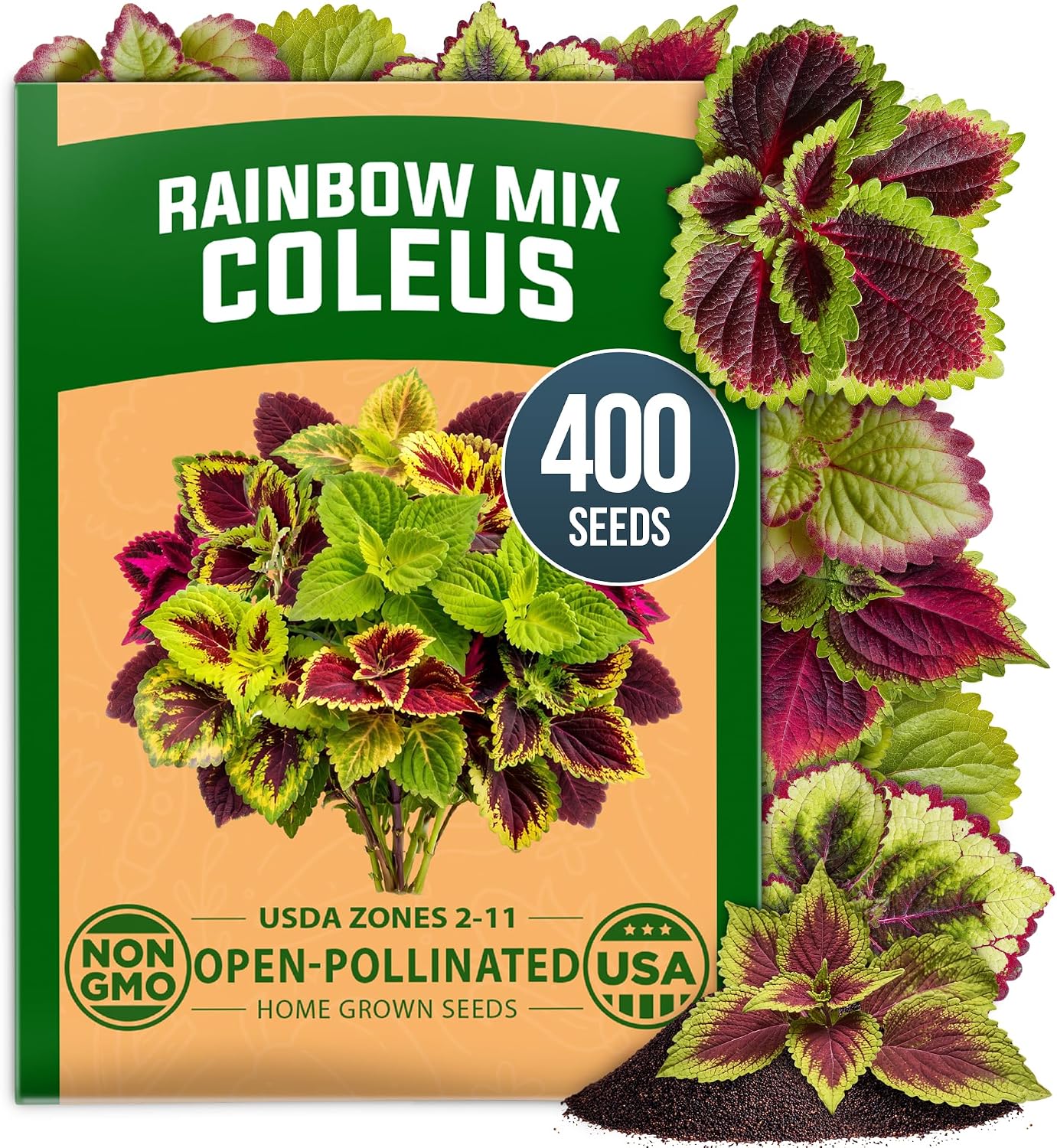
HOME GROWN Rainbow Mix Coleus Seeds (approx. 400)
| Sunlight Exposure | Part Shade to Shade |
|---|---|
| USDA Hardiness Zone | 2-11 |
| Expected Blooming Period | Spring through Frost |
| Material Features | GMO Free, Heirloom |
| Unit Count | 1 Count |
These Rainbow Mix coleus seeds produce compact, colorful foliage plants that are well suited to containers and shaded patio spots. Surface-sow the tiny seeds (do not cover), keep the medium warm and consistently moist, and seedlings typically appear in 10–14 days; pinch growing tips to encourage bushy, mounded plants. The mix is valued for season-long leaf color in shades of rose, green, bronze, cream, and scarlet, so you get visual impact without relying on flowers. Coleus grows indoors near bright north or east windows and outdoors in part shade to shade, making it a flexible choice for window boxes, mixed planters, and small pots. Important limitations are that coleus is a tender annual in most regions and needs protection from frost and prolonged drought, and it prefers warm temperatures for best germination and growth. For container gardeners who want low-maintenance, high-impact foliage, this seed mix is an easy way to produce many plants from one packet.
Best for: Gardeners who want easy-to-grow, high-impact foliage for containers and shaded patios and prefer predictable, low-fuss plants they can start from seed.
Less Ideal for: People seeking long-lived perennial landscaping or plants that tolerate full sun and drought without extra care.
- High seed count (about 400) gives many starts for containers or massing
- Open-pollinated non-GMO seeds from a mix that yields varied, colorful foliage
- Specifically suited to part shade and shade where many flowering plants struggle
- Compact, mounded habit that performs well in pots, window boxes, and mixed planters
- Tender annual in most zones and requires frost protection or indoor overwintering
- Requires consistent moisture and will suffer if soil dries out or remains waterlogged
Verdict: A high-count, non-GMO coleus seed mix that reliably produces compact, colorful foliage perfect for containers and shaded patios.
Choosing the Right Easy Plants for Planter Box: Key Factors to Consider
Light Requirements
Planter boxes sit in many microclimates: a balcony may be shaded most of the day while a railing box receives full sun. Understanding a plant's light needs is critical because light affects flowering, leaf color, and overall vigor. Choose species or varieties that match the brightest and shadiest conditions your box will see. If you have mixed exposures along a run of boxes, group plants by sun requirement so each receives the right amount of light.
Also consider morning versus afternoon sun. Some plants tolerate bright morning sun and light afternoon shade better than steady afternoon heat. When in doubt, pick options described as tolerant of a range of light levels rather than strict full-sun specialists.
Soil Volume and Root Space
Planter boxes limit root development, which affects water and nutrient availability. Plants that naturally stay compact or have shallow root systems cope better than those that require deep anchoring. Look for plants noted as suitable for containers or boxes and check mature spread and height to avoid early overcrowding.
You can improve performance by choosing deeper boxes when possible, adding quality potting mix with good moisture retention, and limiting the number of plants per box so roots have adequate space. Regularly check for signs of root bound growth and repot or thin plantings when necessary.
Water Needs and Drainage
Container soil dries faster than garden soil, so water management is the single biggest day-to-day concern for planter boxes. Pick plants whose watering frequency fits your schedule. Drought-tolerant species are forgiving if you travel or forget a day, while moisture-loving plants require consistent attention.
Good drainage in the box is essential: standing water causes root rot, especially in cooler weather. Use potting mixes designed for containers, ensure drainage holes are unobstructed, and consider adding a layer of coarse material at the bottom only if it improves outlet flow. Mulch the surface to reduce evaporation in hot months.
Growth Habit and Spacing
A plant's growth habit-upright, mounding, trailing, or clumping-determines how it fills a planter box and interacts with neighbors. Trailing plants are useful for softening edges and creating a fuller look without increasing height. Upright varieties save horizontal space in narrow boxes but can appear top-heavy if the root ball is shallow.
Plan your layout so taller specimens do not shade smaller ones and leave room for air circulation to reduce disease pressure. Consider the plant's mature size rather than its nursery appearance to avoid overcrowding later in the season.
Maintenance and Seasonal Care
Maintenance needs vary widely. Some easy plants flower profusely with minimal deadheading and occasional feeding. Others may require regular pruning, pinching back, or overwintering. Select plants whose maintenance demands fit the time you will realistically spend on care.
Also think about winter protection. In cold zones, many planter box plants will need to be moved, mulched, or cut back. Decide whether you want a perennial that returns each year with protection or an annual approach where you refresh the box each season.
Pest and Disease Susceptibility
Containers can concentrate pests and diseases because plants share a small root and leaf environment. Choose species known for resistance to common container problems or that tolerate occasional insect pressure without collapse. Monitor regularly for signs of aphids, whiteflies, fungal leaf spots, and root issues.
Cultural controls help: avoid overhead watering when leaves remain wet for long periods, keep boxes clean of debris, and rotate plant families seasonally to reduce pathogen build-up in the potting mix.
Matching Plants to Box Depth
Planter box depth dictates which plants will be comfortable long term. Shallow boxes of 4 to 6 inches suit small herbs, succulents, and low-growing annuals. Boxes 8 to 12 inches deep expand choices to include many bedding plants, compact perennials, and small ornamental grasses. Deeper boxes over 12 inches allow for larger perennials and small shrubs but require more soil and water management.
When depth is limited, prioritize shallow-rooted plants and reduce the number of specimens to prevent competition for water. If you need taller plants in shallow boxes, choose ones with compact root systems or pair them with trailing groundcovers rather than other upright plants.
- 4-6 in boxes: low-growing herbs, sedums, small succulents
- 8-12 in boxes: most annuals, compact perennials, small grasses
- 12+ in boxes: larger perennials, small shrubs, mixed combinations
Creating Visual Interest with Mixed Textures
A balanced planter box often combines three roles: a thriller for vertical interest, a spiller to cascade over edges, and a filler to occupy the center. Even with easy plants, this design principle creates depth and keeps the box attractive through the season.
Select hardy, low-maintenance performers for each role. For thriller choices, pick compact but upright specimens; for spillers choose trailing varieties that do not demand constant pruning; for fillers use mounding plants that retain form without constant attention.
- Thriller: adds height and focal point
- Filler: provides body and color in the middle
- Spiller: softens edges and increases perceived fullness
Season-Long Color Strategies
Plan for staggered interest so the box is not all peak or all decline at once. Use combinations of early-flowering, midseason, and late-season bloomers to extend visual appeal. For truly low-maintenance displays, choose species that either rebloom or have long bloom periods with minimal deadheading.
Foliage color and texture can also carry a planter through quieter times. Plants with persistent colored leaves or attractive variegation maintain interest even when flowers are finished.
- Mix bloom times for continuous color
- Include foliage interest to bridge gaps between flowering
- Remove spent blooms occasionally to encourage more flowers
Watering Systems and Practical Tips
Regular hand-watering works for many gardeners, but using water-retentive potting mixes and surface mulch can reduce frequency. For longer absences, consider passive solutions like capillary mats, self-watering inserts, or a simple reservoir system integrated into the box. Any system should preserve adequate drainage to avoid waterlogging.
Water early in the day when possible to reduce evaporation and allow foliage to dry. Check moisture a few inches down rather than relying only on surface dryness, because surface soil can be misleading after a recent watering.
- Use quality container potting mix with moisture retention
- Mulch the surface to slow evaporation
- Consider self-watering inserts for hands-off care
Overwintering and Seasonal Refresh
Decide whether you want perennial plants to overwinter in boxes or prefer to replace annuals each spring. Perennials in containers often need extra insulation around roots, deeper soil, or relocation to a protected area for winter. If you plan to leave boxes outside, reduce watering in cold months and add mulch for insulation.
For seasonal refreshes, remove spent annuals and replace with cool-season choices in early fall or spring as appropriate. Refreshing potting mix every couple of years prevents nutrient depletion and reduces disease carryover.
- Insulate or move containers in cold zones for overwintering perennials
- Refresh soil every 1-2 years to maintain fertility
- Switch plant types seasonally for continuous interest
How We Chose the Best Easy Plants for Planter Box
We prioritized plants that reliably thrive in confined planter box conditions rather than specimens that need full garden soil or frequent repotting. Important evaluation criteria included tolerance of restricted root volume, predictable water needs, and compact or controlled growth habit so plants do not quickly outgrow shallow boxes. Light flexibility was another filter: we favored selections that perform across a range of exposures from full sun to part shade depending on the variety. Pest and disease resistance in container culture mattered because problems escalate quickly in small soils. Finally, we looked at seasonal interest and maintenance demands, favoring options that provide color or texture with minimal deadheading, pruning, or fertilizing. We excluded plants that require deep soil, aggressive root space, specialized greenhouse conditions, or frequent chemical treatments. Also omitted were highly tender tropicals that need winter protection unless a gardener has a heated indoor space. The result is a practical list of easy, container-friendly plants suited to most planter boxes and typical outdoor living situations.
FAQ
How deep should a planter box be for most easy plants?
Most compact annuals and herbs do well in 6 to 8 inches of soil, while a depth of 8 to 12 inches accommodates a wider range including small perennials. Deeper boxes give more flexibility but need more soil and water attention.
Can I mix plants with different water needs in the same box?
Mixing plants with very different water needs is usually problematic because container soil provides a single moisture regime. Pair plants with similar watering requirements or use separate compartments with different mixes to satisfy divergent needs.
What is the easiest way to keep planter boxes watered when I travel?
Self-watering inserts, capillary mats, or a simple reservoir system reduce the need for daily watering. Grouping boxes together also helps them retain humidity, and mulching the surface slows evaporation.
How often should I fertilize plants in a planter box?
Container plants use nutrients faster than in-ground plants. A light feed every four to six weeks during the growing season is common, or use a slow-release fertilizer mixed into fresh potting mix when planting. Adjust frequency based on growth and flowering.
Will planter boxes dry out faster in hot weather?
Yes, higher temperatures and direct sun accelerate evaporation, so boxes in hot exposures typically need more frequent watering and benefit from mulching or using mixes with better moisture retention.
Can I overwinter perennial plants in a planter box?
You can, but perennials in containers are more susceptible to freezing because roots are exposed. Insulate the box, move it to a protected location, or sink the container into the ground to reduce freeze-thaw stress.
Final Verdict
Choose easy plants for a planter box by matching light exposure, box depth, and watering regime to the plants' basic needs. Prioritize compact growth habits and species with tolerant water needs if you prefer low maintenance, and plan combinations that balance height, filler mass, and spilling forms for visual impact. Tradeoffs are inevitable: deeper boxes allow more variety but demand more soil and care, while shallow boxes limit choices but simplify watering. Focus on the criteria covered here to make a confident selection that fits your site and schedule.
