

Note: This article contains affiliate links. If you click on these links and make a purchase, I may earn a small commission at no extra cost to you. This helps support my research and content. Read my full affiliate disclosure here.
If you spend time gardening, hiking, or relaxing on the patio, picking the right eco friendly bug spray matters for both comfort and environmental impact. You want a product that repels biting insects reliably while minimizing harm to pollinators, beneficial insects, and soil life near treated areas. This guide covers six shortlisted eco friendly bug sprays that performed well across real-world repellent tests and ingredient transparency. We evaluated formulations for repellency duration, ingredient safety, and suitability for different outdoor uses, plus application methods and scent. Read on to see the types of sprays that work best in yards, around vegetable beds, and for family outdoor time, and to understand the tradeoffs to consider when choosing among natural options.
Top Picks at a Glance
| Best Overall The best all-around choice for most situations | Repel Plant-Based Lemon Eucalyptus Insect Repellent, 4 oz (4-Pack) |  |
| Best Quality Built to a higher standard if you want something more solid | Badger Bug Spray DEET-Free Citronella — Family Size 8 fl oz |  |
| Best Value The sweet spot between price and what you get | Murphy's Naturals Lemon Eucalyptus Insect Repellent Spray, 2 fl oz (3-pack) |  |
| Best Budget The cheapest option that still gets the job done reliably | STEM Plant-Based Bug Spray for Flies, Mosquitoes & Gnats, 10 oz |  |
| Highest Rated A top-rated pick with lots of positive feedback | Kufonsung Peppermint Oil Pest & Insect Control Spray (10.15 fl oz) |  |
| Most Popular A crowd favorite that many people choose with confidence | Mighty Mint Peppermint Oil Insect Repellent Spray, 16 oz |  |
Repel Plant-Based Lemon Eucalyptus Insect Repellent, 4 oz (4-Pack)

| Item Volume | 16 fluid ounces |
|---|---|
| Number of Items | 4 |
| Scent Name | Lemon |
| Item Form | Aerosol |
| Target Species | Mosquito |
Repel Plant-Based Lemon Eucalyptus is a pump-spray insect repellent that uses oil of lemon eucalyptus to protect against mosquitoes for up to six hours. It is intended for outdoor use and is applied by shaking and spraying over exposed skin and clothing, then spreading with your hand for even coverage. The formula is DEET-free and leaves a light lemon scent rather than the heavier odor common to some repellents, and it is formulated to avoid a greasy or sticky feel, which makes it convenient for active outdoor use. The product is CDC-recommended for its active ingredient and is suitable for family use on children aged three and older. Limitations to note are that it is sold as an aerosol pump rather than a continuous spray and performance can vary with heavy sweating or after swimming, so reapplication may be needed in those situations. For buyers focused on effective, plant-based protection during typical outdoor activities, this offers a practical, easy-to-use option.
Best for: Buyers who prioritize effective, DEET-free mosquito protection and prefer a plant-based repellent that is easy to apply for outdoor activities and family use.
Less Ideal for: People who need water-resistant or long-duration protection during intense activity or frequent swimming should consider specialized water-resistant formulations instead.
- Plant-based active ingredient (oil of lemon eucalyptus) recommended by health authorities
- Provides up to six hours of mosquito protection per application
- Non-greasy, non-sticky pump-spray formula with a light lemon scent
- Suitable for family use and cleared for children 3 years and older
- Protection may be reduced by heavy sweating or swimming, requiring reapplication
- Pump aerosol format may deliver shorter bursts compared with continuous spray dispensers
Verdict: Choose this if you want a DEET-free, plant-based mosquito repellent that delivers up to six hours of protection in a non-greasy, easy-to-use pump spray.
Badger Bug Spray DEET-Free Citronella — Family Size 8 fl oz

| Net volume | 8 fl oz |
|---|---|
| Active ingredients | Citronella, Lemongrass, Rosemary, Cedar, Geranium, Peppermint (plant oils) |
| Protection duration | About 3 hours |
| Bottle type | Pump spray in recyclable aluminum |
Badger Bug Spray is a family-friendly, DEET-free insect repellent formulated from cold-pressed plant oils and essential oils such as citronella, lemongrass, rosemary, and cedar. It is sold in a recyclable aluminum pump bottle and is meant to be sprayed on exposed skin or clothing; the manufacturer recommends shaking and reapplying approximately every three hours for continued protection. The product is lab tested to provide at least three hours of mosquito protection and is designed to be gentle on sensitive skin, which makes it suitable for use on children when applied carefully to hands first for facial application. Because it separates naturally, the bottle must be shaken before use and the mist pump requires periodic priming. The scent is woody-citrus rather than chemically medicinal, which many users prefer, but being an all-natural formula it is only tested for mosquitoes so effectiveness against ticks and other pests may be more variable. The aluminum bottle is travel friendly and less likely to leak than some aerosols, but this is a pump spray rather than an aerosol can so coverage is a finer mist and may require more frequent reapplication in heavy insect pressure.
Best for: Buyers who prioritize natural, low‑chemical repellents and want a family‑friendly spray that smells pleasant and is easy to carry for hikes, backyard use, and travel.
Less Ideal for: People who need long‑duration protection against ticks or heavy insect pressure, or who prefer aerosol sprays for broader, faster coverage, should consider different products.
- Plant-based, DEET-free formula made with recognizable essential oils
- Lab-tested to provide about three hours of mosquito protection
- Recyclable aluminum pump bottle that is travel friendly and less prone to leaking
- Gentle formulation suitable for family use and sensitive skin when used as directed
- Efficacy claims are tested primarily on mosquitoes so protection against ticks and other biting insects is less certain
- Natural formula separates and requires shaking before each use and occasional pump priming
Verdict: A pleasant-smelling, family-safe natural bug spray that delivers about three hours of DEET-free mosquito protection in a travel‑friendly aluminum pump bottle.
Murphy's Naturals Lemon Eucalyptus Insect Repellent Spray, 2 fl oz (3-pack)

| Active ingredient | Oil of Lemon Eucalyptus (30%) |
|---|---|
| Protection duration | Up to 6 hours (mosquitoes); up to 4 hours (ticks) |
| Formulation | Spray, non-greasy; water and corn ethanol base |
This Murphy's Naturals spray is a compact, plant-based insect repellent formulated with 30% oil of lemon eucalyptus to deliver multi-hour protection against mosquitoes and shorter protection for ticks. It is applied as a light mist to exposed skin, clothing, or gear and absorbs without greasy residue while leaving a mild lemon scent. Practical features include an EPA-registered active ingredient, a formula that is safe to use on fabrics and gear, and clear directions for family use. The 2 fl oz travel-friendly bottles in a three-pack make it easy to stash one in a daypack, car, or first-aid kit for outdoor activities like hiking, backyard play, or camping. Limitations are that protection times are shorter for ticks than for mosquitoes and you must reapply for extended exposure; the bottle size means frequent reapplication or carrying spares for long outings. Also it is not DEET or picaridin based, so users who need the longest possible single-application protection in high-risk tick areas may prefer a different active ingredient.
Best for: Buyers who prioritize a DEET-free, practical repellent that fits into a compact everyday outdoor kit for family outings, hikes, and backyard use.
Less Ideal for: People who need the maximum single-application duration for prolonged exposure in heavy tick or high-mosquito zones should consider longer-lasting alternatives.
- Plant-based active ingredient (30% oil of lemon eucalyptus) with EPA registration
- Non-greasy, light lemon scent that absorbs quickly
- Safe to spray on clothing and outdoor gear without damaging fabrics or plastics
- Travel-friendly 2 fl oz bottles sold in a multi-pack for easy stashing
- Shorter protection window against ticks compared with its mosquito protection time
- Small bottle size requires carrying extras or more frequent reapplication for long trips
Verdict: A compact, DEET-free spray that gives reliable multi-hour mosquito protection and is easy to carry for everyday outdoor use.
STEM Plant-Based Bug Spray for Flies, Mosquitoes & Gnats, 10 oz

| Net volume | 10 oz |
|---|---|
| Active ingredients | Geraniol 1.47%, Lemongrass oil 0.10% |
| Intended use | Indoor and outdoor spot treatment |
STEM's 10 oz aerosol bug spray is a plant-based insecticide formulated to kill flies, mosquitoes and gnats around the home and patio. You use it like most aerosols: shake well, hold the nozzle 6–12 inches from target areas or visible insects, and mist surfaces or airspace where flying pests congregate. Notable features include geraniol and lemongrass oil as the active ingredients, no added dyes or harsh chemical odors, and directions that allow both indoor and outdoor spot treatments. In practice it is convenient for quick spot kills and temporary control around doorways, windowsills, potted areas and patios. Because it is formulated for people- and pet-occupied spaces when used as directed, it is a reasonable option for households that prefer botanical actives. Limitations are typical for short‑acting aerosols: protection is not long lasting so repeat applications are needed after rain or cleaning, and it is not for direct application to people, pets or edible plants.
Best for: Buyers who want an affordable, plant-based aerosol for quick spot control of gnats and other flying pests around living spaces and patios.
Less Ideal for: People seeking season-long residual protection or professional-grade control should consider products with longer-lasting actives or different application formats.
- Uses plant-based active ingredients (geraniol and lemongrass oil) rather than harsh synthetic chemicals
- Formulated for both indoor and outdoor spot treatments when used as directed
- No added dye or strong chemical fragrance, making indoor use less obtrusive
- Entomologist-tested formulation and clear directions for application
- Effect is short lived compared with long‑lasting residual insecticides
- Not intended for direct use on people, pets or edible plants
Verdict: A budget-friendly, plant-based aerosol that delivers fast, convenient knockdown of gnats and other flying pests for short-term control.
Kufonsung Peppermint Oil Pest & Insect Control Spray (10.15 fl oz)

| Unit Count | 10.15 Fluid Ounces |
|---|---|
| Item Form | Spray |
| Target Species | Rodent,Roach,Spiders, Ants |
| Ingredients | Peppermint Oil, Cedarwood oil, Cinnamon oil, Rosemary oil |
This Kufonsung spray uses a concentrated peppermint oil blend with cedarwood and cinnamon extracts to repel and contact‑kill ants, cockroaches, spiders and other common pests. Packaged in a ready‑to‑use 300 ml spray bottle, it is meant for routine spot treatments around kitchens, living areas, garages and thresholds where pests appear. The natural essential oil formula gives a long‑lasting peppermint scent and avoids synthetic pesticides, so it is a reasonable choice for households prioritizing gentler, plant‑based control. In practice it works best when applied directly to visible insects, entry points and small nests rather than as a preventative perimeter barrier over large yards. Expect pleasant smell and quick visible results on contact, but heavier infestations may need repeat applications or a supplemental approach. The bottle is easy to handle for regular maintenance, though users seeking a fast professional‑strength residual may find this milder than conventional chemical sprays.
Best for: Buyers who prioritize eco‑friendly, family‑safe pest control for routine spot treatments and who value low‑odor, plant‑based solutions for indoor living spaces.
Less Ideal for: People facing large scale or concealed infestations who need high‑residual, professional‑grade insecticides should consider stronger alternatives.
- Plant‑based formula using peppermint oil and other essential oils
- Ready‑to‑use spray bottle suited for spot treatments and indoor use
- Pleasant, long‑lasting peppermint scent compared with synthetic fragrances
- Works on a range of common household pests on contact
- Less residual strength than conventional synthetic insecticides for large or hidden infestations
- Not formulated or labeled for professional structural pest control
Verdict: A family‑friendly, plant‑based peppermint spray that gives convenient, low‑odor spot control for everyday indoor pest problems.
Mighty Mint Peppermint Oil Insect Repellent Spray, 16 oz
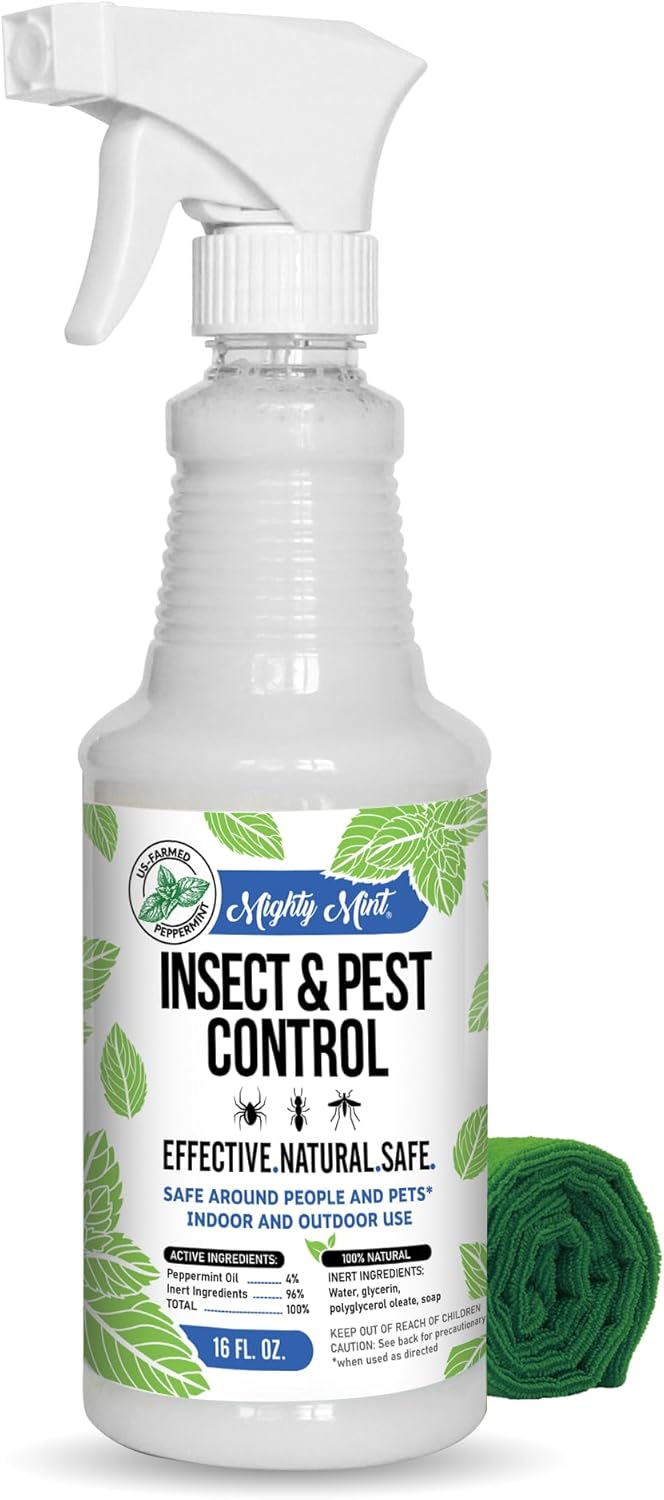
| Ingredients | Water, Glycerine, Polyglycerol oleate, Soap, Peppermint oil |
|---|---|
| Use Areas | Indoor / Outdoor |
| Size | 16 oz |
Mighty Mint is a plant-based, ready-to-use spray that uses concentrated peppermint oil to repel a broad range of household and patio pests. You apply it directly to problem areas such as baseboards, entryways, patios and around outdoor seating; the manufacturer recommends shaking and spraying until surfaces are covered and repeating applications two or more times per week for best results. Notable features include a peppermint-only scent profile, a formulation that avoids synthetic fragrances and the convenience of a 16 oz spray bottle for targeted spot treatments. Practical benefits are that it is safe to use around people and pets when dry and does not leave obvious stains on most surfaces, and the scent can make treated areas smell fresher than chemical alternatives. Important limitations are that it is a repellent rather than a pesticide so it works by discouraging pests rather than killing them, effectiveness depends on regular reapplication and it should not be applied when pollinators are present or to skin or food-contact surfaces.
Best for: Buyers who prioritize natural, low-toxicity solutions and want a targeted spray to reduce insects around patios and entryways while keeping family and pets in mind.
Less Ideal for: Anyone needing a one-time extermination or long-term residual pesticide for severe infestations should consider professional treatments or products formulated to kill pests rather than repel them.
- Plant-based peppermint formula that avoids synthetic fragrances
- Ready-to-use spray for quick, targeted indoor and outdoor applications
- Safe for people and pets when used as directed and allowed to dry
- Nonstaining on most surfaces and leaves a fresh mint scent
- Repels rather than kills insects so regular reapplication is needed to maintain protection
- Strong peppermint concentration may bother scent-sensitive individuals and requires keeping children and pets away until dry
Verdict: Choose Mighty Mint when you want a pet-friendly, plant-based spray to reduce patio and entryway insects with a fresh peppermint scent.
Choosing the Right Eco Friendly Bug Spray: Key Factors to Consider
Repellency Duration and Target Pests
How long a spray keeps biting insects away is the single most practical factor when you are outdoors. Longer-lasting formulations reduce the need for reapplication during a gardening session or a family outing, but natural formulations vary widely in protection time depending on active ingredients and concentration.
Also consider which pests you need protection from. Some eco friendly sprays work well against mosquitoes but are less effective on ticks or biting flies. Match the spray's documented repellency to the insects common in your area and the season you will use it most.
Ingredient Safety and Transparency
Check the active ingredients and the full ingredient list. True eco friendly options use low-toxicity botanicals, mineral actives, or EPA-designated safer actives, and they provide clear labeling so you know what you are applying to skin, clothing, or near plants.
Transparency matters for gardeners who will use sprays around vegetable beds, pollinator habitat, or water features. An ingredient list that names concentrations and provides safety guidance helps you avoid unintended effects on beneficial insects and household members.
Impact on Pollinators and Beneficial Insects
Gardeners often apply sprays where pollinators forage or where predatory insects help control pests. Choose products formulated or labeled to minimize harm to bees and other beneficials, such as sprays intended for application only to skin or clothing rather than flowering plants.
Timing of application is also part of this factor. Even an environmentally minded spray can harm pollinators if applied during peak foraging times. Consider application method and timing to reduce non-target exposure.
Application Method and Ease
The way a product is applied affects convenience and safety. Pump sprays, trigger bottles, aerosol-free mists, and wipes each have pros and cons in the garden. A fine mist is easy for full-body coverage, while targeted sprays reduce drift near plants.
Also think about portability and refill options. For gardeners who move between beds, a lightweight spray bottle that fits in a tool belt or a refillable concentrate can be more practical than bulky single-use containers.
Residue, Scent, and Skin Compatibility
Natural sprays range from nearly odorless to strongly aromatic. Scent can be pleasant or overpowering when you are working close to plants. Residue on skin and clothing matters for comfort during long garden sessions and for the safety of pets and children.
If you or household members have sensitive skin, prioritize formulations tested for skin irritation or labeled hypoallergenic. Consider how easily the spray washes off and whether it leaves oily or sticky traces that attract dust to plants or tools.
Environmental Persistence and Water Safety
How a product behaves after application is important in a garden setting. Some actives break down quickly and pose little long-term risk, while others can persist on surfaces or wash into soil and waterways.
If you have rain-prone seasons, ponds, or irrigation runoff, choose sprays with documented low aquatic toxicity and short environmental persistence to reduce risk to fish and other aquatic organisms.
How Natural Actives Work
Natural repellents use a range of active strategies, from plant-derived oils that mask human scent to mineral actives that create a protective barrier. Understanding the mechanism helps set expectations for effectiveness and reapplication frequency.
Botanical actives like citronella, lemongrass, and geraniol often deter mosquitoes by interfering with host detection but can volatilize faster than synthetic actives. Mineral-based options may provide longer surface persistence but can feel different on skin and clothing.
- Volatile botanicals: faster evaporation, shorter protection window
- Mineral actives: longer lasting, may leave visible residue
- Combination formulas: aim to extend protection while staying low-toxicity
Using Sprays Safely Around Vegetables and Flowers
Avoid spraying directly on open flowers or during high pollinator activity. Instead, apply sprays to exposed skin and clothing or to non-flowering foliage where insects rest. Allow sprays to dry before handling plants or harvesting produce.
When working in vegetable beds, consider clothing barriers such as long sleeves and hat along with a topical spray to minimize the amount of product that contacts soil and crops.
- Apply in early morning or late evening when pollinators are less active
- Spot-spray pathways and seating areas rather than entire beds
- Rinse hands before harvesting or handling produce
Mixing Personal Protection with Garden Pest Strategies
Eco friendly repellents are focused on personal protection and should not be used as broad garden pest control. For garden pests that harm plants, rely on integrated pest management such as physical barriers, handpicking, beneficial insects, and targeted organic treatments.
Use personal sprays to protect yourself while working, not as a substitute for plant-safe controls. That minimizes chemical load in the garden and preserves helpful predator and pollinator populations.
- Wear protective clothing to reduce frequency of sprays
- Use traps or barriers for plant pests, reserving sprays for personal protection
- Coordinate application timing to avoid harming beneficials
Storing and Disposing Eco Friendly Sprays
Store sprays in a cool, dry place away from direct sunlight and out of reach of children and pets. Label containers clearly if you transfer liquids to refillable bottles so you know what is inside and when it was purchased or mixed.
Dispose of empty containers according to local guidance. Even low-toxicity products can cause issues if poured down storm drains or left where wildlife can access residual liquid.
- Keep original labels or note active ingredients on refill containers
- Do not pour leftover product into garden soil or waterways
- Recycle containers when allowed by local programs
Application Tips for Long Garden Sessions
To maintain protection over long tasks, apply spray to clothing first and to exposed skin second. Clothing treatments often provide longer barrier effect and avoid repeated skin exposure. Reapply according to the product's stated duration and after heavy sweating or toweling off.
For tick-prone areas, focus on lower legs, sock tops, and trouser cuffs. For mosquitoes, cover exposed limbs and use a head net or hat in dense vegetation if needed.
- Apply at least 15 minutes before going into thick vegetation
- Carry a small refill bottle for multi-hour gardening sessions
- Reapply after rain or heavy perspiration as recommended
How We Chose the Best Eco Friendly Bug Spray
We prioritized products that demonstrate practical protection without relying on conventional synthetic insecticides. Key evaluation criteria included proven repellency time against common biting insects, transparency and safety of active and inert ingredients, application versatility for garden and personal use, and minimal impact on pollinators and aquatic life. We also assessed scent profiles, residue behavior on skin and clothing, and packaging that supports safe handling and refills. Excluded from consideration were products that rely solely on unproven scent claims with no repellency data, formulations with high-risk synthetic actives, and sprays not intended for typical outdoor personal or garden use. Our shortlist reflects items that combine realistic insect deterrence with lower environmental risk and practical usability for gardeners and families.
FAQ
Are eco friendly bug sprays effective against ticks?
Effectiveness varies. Some natural formulations reduce tick encounters for short periods, but many botanicals provide shorter protection than certain synthetic options. For tick-heavy areas, combine topical sprays with clothing barriers and regular tick checks.
Can I use eco friendly sprays on children and pets?
Often you can, but it depends on the formulation and concentration. Choose products labeled for skin use on children and follow age recommendations. Keep pets from licking treated skin and avoid applying directly to animals unless the product is explicitly intended for them.
Will eco friendly sprays harm bees and other pollinators?
They can if applied directly to flowers or during peak foraging. Many eco minded sprays are safer when used on skin and clothing rather than on plants. Apply in early morning or late evening and avoid spraying bloom surfaces to reduce pollinator exposure.
How often should I reapply a natural bug spray while gardening?
Reapplication depends on activity level and the product's stated duration. Expect to reapply more frequently than with some synthetic repellents, especially after sweating or heavy rain. Follow label guidance for timing between applications.
Are there garden-safe ways to reduce insect pressure without sprays?
Yes. Use physical barriers, remove standing water, install fans in sitting areas, and encourage beneficial predators with habitat plantings. These cultural practices reduce reliance on sprays and improve long-term garden resilience.
Final Verdict
When selecting an eco friendly bug spray for garden and outdoor use, prioritize documented repellency for the pests you face and clear ingredient transparency that aligns with your environmental priorities. Balance protection time with skin compatibility and application method so the spray fits how you work outdoors. Accept tradeoffs between scent, duration, and residue: longer-lasting natural options may feel different on skin, while lighter botanicals need more frequent reapplication. Choose the product that best matches your typical outing length, sensitivity concerns, and proximity to pollinator habitat for safe, effective protection.
