

Note: This article contains affiliate links. If you click on these links and make a purchase, I may earn a small commission at no extra cost to you. This helps support my research and content. Read my full affiliate disclosure here.
Picking the right eco friendly mulch makes a real difference in how your beds look, how water and nutrients behave, and how much time you spend on maintenance. Whether you care for vegetable plots, ornamental borders, or container plantings, an eco minded mulch can improve soil life, reduce runoff, and cut down on synthetic inputs. This guide shortlists the top options for environmentally conscious gardeners and explains how each was judged. We evaluate durability, effect on soil biology, weed suppression, and ease of application to help you choose the best mulch for your situation.
Top Picks at a Glance
| Best Overall The best all-around choice for most situations | Back to the Roots Organic Coconut Husk Mulch Block (Expands to 2 cu ft) |  |
| Best Quality Built to a higher standard if you want something more solid | Mid-Atlantic Shredded Longleaf Pine Straw Mulch, 2 bags (2 cu ft each) |  |
| Best Value The sweet spot between price and what you get | Plantonix Coco Chips Mulch Brick (10 lb) – Compressed Coconut Husk Chips |  |
| Best Budget The cheapest option that still gets the job done reliably | Miuwauer Compressed Coco Coir Brick (1-Pack) |  |
| Highest Rated A top-rated pick with lots of positive feedback | SuperMoss Orchid Potting Bark (Natural White Fir), 4 quarts |  |
| Most Popular A crowd favorite that many people choose with confidence | Riare Organic Coco Coir Chips, 2-Pack Compressed Coconut Husk Bricks |  |
| Best Seller A high-volume bestseller chosen again and again | Legigo 2-Quart Organic Pine Orchid Bark Potting Mix |  |
Back to the Roots Organic Coconut Husk Mulch Block (Expands to 2 cu ft)

| Item Highlight | Compressed 10 lb coco husk mulch expands to 58 qt; peat-free; OMRI Listed |
|---|---|
| Item Type Name | Mulch |
| Brand Name | Back to the Roots |
| Volume | 2 cubic feet |
This compressed coconut husk mulch block arrives as a compact 10 lb brick that expands to roughly 2 cubic feet after adding water, making it easy to store and handle compared with bulky bags. It is OMRI listed and peat free, so gardeners can use it in vegetable beds, flower borders, and raised planters without adding peat-based material. The coarse husk chips improve surface moisture retention and aeration on the soil, which helps reduce watering frequency and supports root health. Setup is simple: break the block apart, soak, let it fluff, then spread a shallow layer around plants. Because it is lightweight when dry and made from an upcycled byproduct of coconut processing, it is a sustainable alternative to some other mulches. Limitations to note are that coconut husk mulch can float or wash away on steep slopes and may need occasional top-ups as it slowly breaks down, and its coarser texture may not form as uniform a surface as shredded bark for ornamental beds.
Best for: Gardeners who want a compact, easy-to-store organic mulch that improves moisture retention and soil aeration in vegetable beds and raised planters while prioritizing sustainable materials.
Less Ideal for: People needing a heavy, erosion-resistant mulch for steep slopes or those who want a very fine, decorative mulch finish for formal ornamental beds.
- Expands from a compact 10 lb block to about 2 cubic feet, saving storage space
- OMRI listed and peat free for organic gardening use
- Improves moisture retention and soil aeration when applied to beds and raised planters
- Made from upcycled coconut husk, offering a more sustainable option than peat
- Coarse chips can be prone to washing away on steep or exposed slopes
- Breaks down over time and requires periodic replenishing in high-traffic beds
Verdict: A space-saving, OMRI-listed coconut husk mulch block that delivers sustainable moisture retention and aeration for productive garden beds.
Mid-Atlantic Shredded Longleaf Pine Straw Mulch, 2 bags (2 cu ft each)
| Number of Packs | 2 |
|---|---|
| Unit Count | 2 Count |
| Volume | 6 cubic feet |
| Item Weight | 15 pounds |
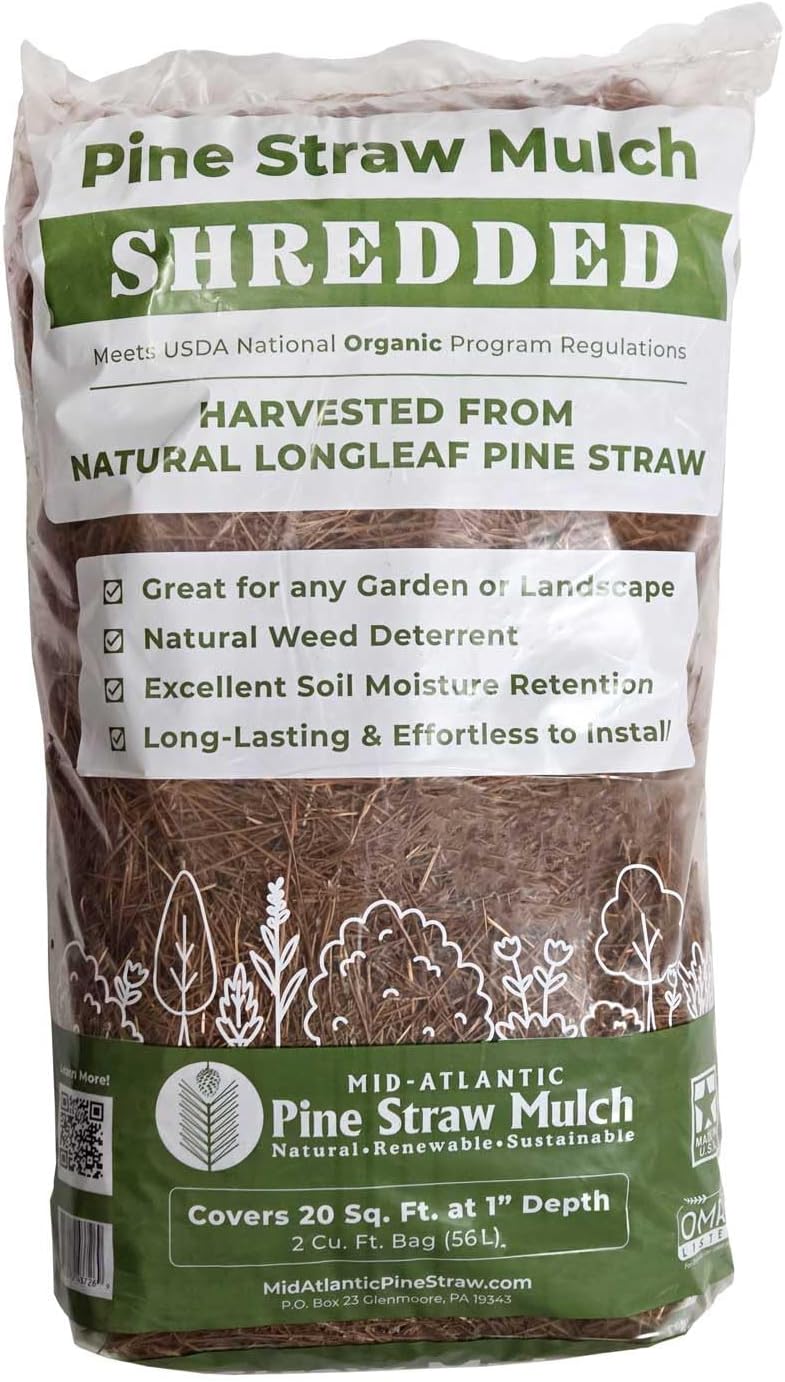
This shredded longleaf pine straw is a lightweight, bagged mulch designed for easy handling and straightforward application. Gardeners spread it around beds and shrubs to form a dense mat that suppresses weeds, conserves soil moisture, and insulates roots against temperature swings. The product is OMRI listed for organic gardening and is described as clean and free of weed seeds and common hardwood debris, which makes it suitable for use around fruit bushes. Because the needles are shredded to 3–4 inches, the mulch lays flatter immediately and is easier to distribute evenly than full-length straw. It breaks down slowly to add organic matter over time, reducing how often you need to replace it. Limitations are that pine straw does not provide the same decorative look as bark in some landscapes and can shift on steep slopes if not anchored, so occasional top-ups or light anchoring may be needed in exposed sites.
Best for: Gardeners who want a low-maintenance, organic mulch that is easy to spread and supports plant health, especially those planting edible shrubs who prioritize soil moisture retention and weed suppression.
Less Ideal for: Homeowners seeking a formal, bark-style aesthetic or who need a heavy, erosion-resistant mulch for steep slopes should consider other mulch types.
- OMRI listed organic material suitable for organic gardens
- Lightweight, shredded form for easy carrying and faster laying
- Helps retain soil moisture and suppress weeds by forming a dense mat
- Slow decomposition adds organic matter and reduces replacement frequency
- Less formal decorative appearance compared with hardwood bark mulch
- Can shift on steep or very windy sites without anchoring
Verdict: Choose this shredded longleaf pine straw if you want an easy-to-spread, OMRI-listed organic mulch that conserves moisture and suppresses weeds for blueberry beds.
Plantonix Coco Chips Mulch Brick (10 lb) – Compressed Coconut Husk Chips

| Unit Count | 160 Ounce |
|---|---|
| Item Type Name | Soil and Soil Amendments |
| Brand Name | plantonix |
| Volume | 15 gallons |
Plantonix Coco Chips arrive as a compact 10 pound brick that hydrates and expands into lightweight coconut husk chips for use as mulch, soil amendment, or terrarium bedding. You soak or wet the block to break it apart, then spread the chips over garden beds, containers, orchid pots, or raised beds to reduce evaporation and moderate soil temperature. The product is pre-screened, washed, and aged to remove dirt and rocks, and the low electrical conductivity and near-neutral pH make it safe to mix with potting mixes. Practical benefits include improved drainage and aeration compared with heavy wood mulches, long-lasting moisture retention that can reduce watering frequency, and an attractive tropical look. Important limitations are that you must rehydrate and break up the compressed brick before use which adds prep time, and coco chips do not supply nutrients so you will still need to fertilize regularly. Also note the safety warning about dust and keeping it away from children and pets during handling.
Best for: Buyers who prioritize reliable, consistent mulch performance and want a sustainable, low-maintenance material that retains moisture and improves soil structure for beds and containers.
Less Ideal for: Gardeners who need a nutrient-rich soil amendment or who prefer a no-prep, ready-to-spread loose mulch should consider alternatives.
- Made from 100% recycled coconut husks, a renewable alternative to peat and wood mulches
- Pre-screened and washed to remove dirt, rocks, and excess fiber
- Excellent at retaining moisture while maintaining airflow and drainage
- Lightweight and long-lasting so it does not compact like some organic mulches
- Requires soaking and manual breakup of the compressed brick before use
- Does not provide plant nutrients and should be used with a fertilizer plan
Verdict: A dependable, renewable mulch solution that holds moisture and improves aeration without compacting, ideal for gardeners who want consistent performance.
Miuwauer Compressed Coco Coir Brick (1-Pack)

| Brand Name | Miuwauer |
|---|---|
| Number of Packs | 1 |
| Unit Count | 1 Count |
| Style Name | Brick,Coco Coir |
This 1-pack compressed coco coir brick is a compact, budget-friendly way to get organic mulch and a reusable growing medium for seed starting, potting mixes, and garden beds. The brick hydrates quickly and expands into a fluffy, water-retentive substrate that improves aeration around roots and reduces the need for frequent watering. It is pH neutral and contains naturally occurring minerals that support plant growth, making it suitable for flowers, vegetables, succulents, and foliage. Practical benefits include easy storage and transport while compressed, low mess when hydrated, and versatility as a soil amendment or top dressing. Important limitations are the single small brick size and the need to premix or combine with compost or potting soil for long-term container plants, since coco coir lacks substantial nutrient content on its own. Also take care to add water slowly to avoid dust and to rehydrate fully before use to reach the advertised volume.
Best for: Gardeners on a tight budget who want an affordable, organic mulch alternative or a lightweight seed-starting and potting substrate; good for small beds, containers, and starting transplants.
Less Ideal for: Large-scale landscapers or gardeners who need ready-to-use, nutrient-rich potting mixes for many containers without additional amendments.
- Expands rapidly with water into a lightweight, easy-to-handle growing medium
- Good water retention while maintaining aeration to reduce root rot risk
- pH neutral and contains natural minerals useful for a range of plants
- Compact compressed form saves storage space and shipping bulk
- Sold as a single small brick so you may need multiple packs for larger projects
- Not a complete fertilizer and should be mixed with compost or feed for long-term nutrient needs
Verdict: A low-cost, space-saving organic coco coir brick that expands into a versatile mulch and seed-starting medium ideal for budget-focused small-scale gardeners.
SuperMoss Orchid Potting Bark (Natural White Fir), 4 quarts
| Item Type Name | 100% Natural White Fir Bark |
|---|---|
| Unit Count | 128 Ounce |
| Volume | 4 quarts |
| Manufacturer | Supermoss |
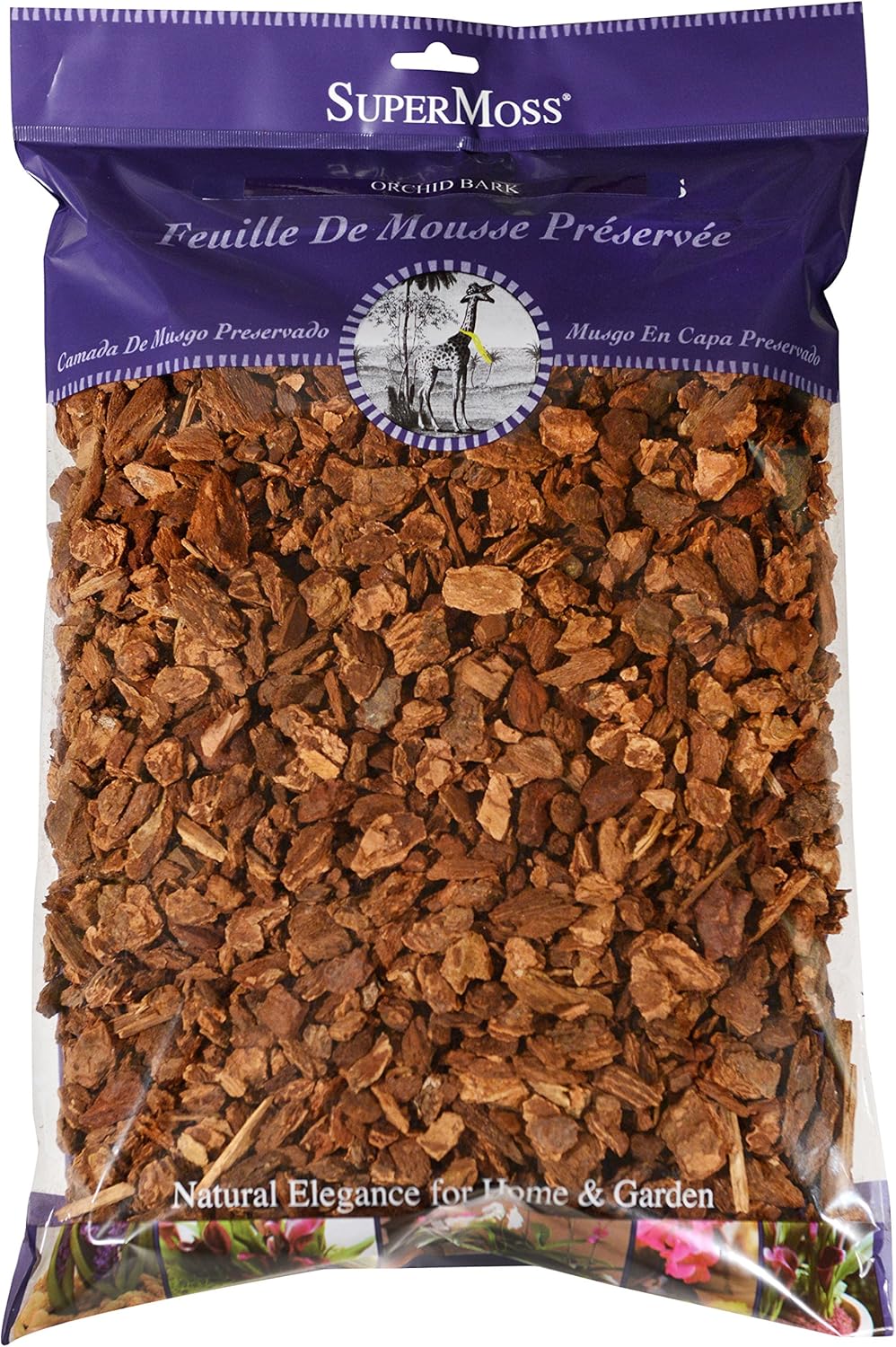
SuperMoss Orchid Potting Bark is a natural Douglas-fir bark sold in a 4-quart retail bag and intended as a potting medium for orchids and other epiphytes. You use it as the main substrate or mixed with other media to recreate the loose, well-aerated conditions orchid roots prefer; its coarse pieces promote fast drainage and good oxygen flow around roots. The product is pH-suited for orchids and marketed as sustainably sourced natural fir bark with no heat treatment mentioned. Practical benefits include easier repotting without compacted soil, reduced risk of root rot from overwatering, and suitability for air plants and decorative uses like floral arrangements. Limitations are that bark breaks down over time and will need replacement or mixing with fresh media as it decomposes, and it does not retain much water so frequent watering or combining with moisture-retentive components may be needed for some growers. Handle with gloves when repotting to avoid splinters and dust.
Best for: Growers who want a natural, easy-to-use medium to recreate the airy, fast-draining conditions orchids prefer and who repot or maintain a few plants regularly.
Less Ideal for: People who need a long-term, high-moisture substrate for heavy-handed watering routines or those who prefer a ready-made, low-maintenance potting mix for many houseplants.
- Coarse Douglas-fir bark structure improves aeration and drainage for orchid roots
- pH appropriate for orchids, supporting their natural growing conditions
- Sustainably sourced natural material suitable for epiphytic species and decorative uses
- Retail 4-quart packaging is convenient for small-scale repotting and hobby growers
- Bark decomposes over time and requires periodic replacement or topping up
- Low water retention means more frequent watering or blending with moisture-holding media may be necessary
Verdict: Choose this natural fir bark if you want a simple, well-aerating potting medium that closely mimics the conditions orchids need to thrive.
Riare Organic Coco Coir Chips, 2-Pack Compressed Coconut Husk Bricks

| Number of Packs | 2 |
|---|---|
| Item Type Name | Garden Soil |
| Material | Coco Chips |
| Volume | 7 gallons |
These Riare coco coir chips come as two compressed bricks that expand when soaked to create a loose, airy coconut-husk substrate used for potting mixes, orchid media, and surface mulch. Typical use is rehydrating a brick in water, squeezing excess, then mixing with soil, perlite, or using as a top mulch to protect roots and conserve moisture through colder months. Notable features include low electrical conductivity and a near-neutral pH that reduce fertilizer burn risk, high water retention combined with good drainage, and a porous structure that improves root aeration. Practically, the product reduces watering frequency and helps prevent waterlogging that can cause winter root rot while also improving soil structure when blended into beds. Limitations are that each brick must be hydrated and fluffed before use and the material provides little nutrient content on its own so feeding is still required for longer-term plant growth. For winter mulch applications it works well as an insulating, breathable layer but will slowly break down over seasons and may need reapplication.
Best for: Buyers who want a natural, low-risk winter mulch or soil amendment that conserves moisture and improves aeration without adding salts or harsh chemicals, especially for potted plants, orchids, and raised beds.
Less Ideal for: Gardeners who need an all-in-one fertilizing soil or a long-lasting decorative mulch that does not decompose for years should consider alternatives.
- Low EC and pH-balanced for safe contact with roots and seed germination
- High water retention while still providing good drainage to reduce root saturation
- Lightweight, highly porous structure that improves aeration and root development
- Compressed bricks are easy to store and expand to usable volume when needed
- Compressed bricks require soaking and manual breaking apart before use
- Offers minimal nutrients by itself so regular fertilization is still necessary
Verdict: A breathable, moisture-retaining organic coco coir brick that makes a low-salt, low-risk winter mulch and potting amendment when rehydrated and mixed into soil.
Legigo 2-Quart Organic Pine Orchid Bark Potting Mix

| Unit Count | 64 Ounce |
|---|---|
| Material | Pine bark |
| pH | 5.0-6.5 |
| Application | Soil mix & planting media |
Legigo's orchid bark is a simple, single‑ingredient potting medium made from screened pine bark chips intended for orchids and other epiphytic houseplants. Use it alone for plants that need excellent air circulation around roots or mix it with coir, perlite, or potting soil to create a freer‑draining custom mix. The chips are sized to stay chunky in pots so they reduce compaction, speed drainage and help prevent root rot while still holding some moisture to slow evaporation. For gardeners, that means fewer repots and lower watering frequency for tropical potted plants. Packaging is practical for storage and the product is described as slow to decompose, making it suitable as a longer‑lasting mulch or top dressing. Important limits: the 2‑quart bag is small for large collections or outdoor beds, and bark alone does not provide nutrients so regular feeding or mixing with a more complete potting medium is necessary for long‑term growth.
Best for: Buyers who prefer low‑risk, no‑fuss growing media that reduce overwatering problems and mimic natural orchid conditions, especially those with a small indoor collection or who mix their own potting blends.
Less Ideal for: Gardeners needing large volumes for beds, those who want a nutrient‑complete potting soil out of the bag, or growers who prefer finer, moisture‑retentive media for seedlings.
- 100% natural pine bark that mimics orchids' natural growing medium
- Chunky chips maintain aeration and reduce potting mix compaction
- Drains quickly to help prevent root rot in epiphytic plants
- Slow decomposition makes it useful as a longer‑lasting mulch or top dressing
- Small 2‑quart volume which is insufficient for many pots or garden beds
Verdict: A compact, natural pine bark mix that reliably improves aeration and drainage for orchids and indoor tropicals, ideal for gardeners who want a low‑maintenance substrate.
Choosing the Right Eco Friendly Mulch: Key Factors to Consider
Material Composition
What the mulch is made from determines both its immediate behavior on the surface and how it affects soil over time. Organic mulches like wood chips, leaves, straw, and composted yard waste gradually release carbon and nutrients as microbes break them down, improving soil structure and water retention.
In contrast, inorganic but eco-minded options such as gravel or crushed oyster shell do not add organic matter but can reduce erosion and moderate soil temperature without decomposing. Understand whether you want a mulch that feeds the soil or one that remains stable for years when deciding composition.
Decomposition Rate
Decomposition rate affects maintenance and nutrient dynamics. Fast-breaking mulches such as fresh leaves or grass clippings will supply organic matter quickly but require more frequent top-ups and can temporarily tie up nitrogen in the soil as microbes digest high-carbon materials.
Slow-decomposing materials like hardwood chips provide longer-lasting cover and reduce refill frequency, but they contribute organic matter more slowly. Choose a decomposition profile that matches how often you want to top dress and whether you are layering compost or planting annuals that need readily available nutrients.
Weed Control and Light Blocking
Effective weed suppression depends on mulch thickness, particle size, and color. Finer mulches and compost layers compress and exclude light well but may be more prone to compaction or wash in heavy rain. Coarser chips create a breathable surface that allows water infiltration while shading weed seedlings.
Consider expected weed pressure in the bed and how often you can physically pull new seedlings. Mulch that resists displacement from wind and rain will maintain weed control longer between maintenance visits.
Water Management
Mulch alters evaporation, infiltration, and runoff. Organic mulches increase soil moisture retention by reducing surface evaporation and encouraging slow percolation. However, excessively thick or fine mulches can inhibit water reaching the root zone in heavy rains if they repel water before it soaks through.
Porous, well-structured mulches improve infiltration and reduce surface runoff, which is important on slopes or compacted soils. Match mulch type and installation depth to your irrigation habits and soil texture to avoid water stress.
Source and Chemical Safety
Knowing where mulch feedstock comes from helps avoid introducing contaminants to your garden. Avoid materials that contain treated wood, recycled construction debris, or dyed chips with unknown colorants. Composted municipal green waste and certified clean wood products are preferable when available.
Chemical residues, weed seeds, or invasive plant fragments can hitchhike in poorly processed mulch. Choose suppliers who disclose feedstock and processing methods to minimize unwanted impacts on soil and plant health.
Practical Handling and Installation
How easy the mulch is to move, spread, and maintain affects whether you, or helpers, will actually use it correctly. Lightweight loose materials like straw are easy to handle but may blow away on exposed sites; heavier chips stay put but need more effort to position.
Also consider how the mulch interacts with tools and plants: coarse chips can be hard on small trowels, while fine compost can cake around stems. Think about the labor involved for your bed sizes and the seasonal tasks of top dressing and composting.
Best Mulch Types by Garden Use
Different garden situations benefit from different mulch types. Vegetable beds often gain from compost and straw that integrate nutrients quickly and are easy to turn into the soil at season end. Ornamental beds tolerate coarser wood chips that last through seasons and improve aesthetics while adding carbon to the soil slowly. High-traffic paths and perennial borders may benefit from durable, inert covers such as gravel or crushed stone that reduce compaction and provide long-term stability without frequent topping.
- Vegetable plots: compost, straw, shredded leaves
- Ornamental beds: hardwood chips, bark nuggets
- Paths and high-traffic areas: gravel or crushed stone
How to Apply Eco Friendly Mulch Correctly
Prepare the bed by removing persistent weeds and watering deeply before application. Apply organic mulches in a layer appropriate to the material: typically 2 to 4 inches for compost or shredded leaves, and 3 to 4 inches for wood chips. Avoid piling mulch directly against plant stems or trunk flares to prevent rot. For slopes or exposed areas, anchor mulch with a light rake or incorporate a thin layer of compost beneath to help hold finer materials. For annual vegetable rows, leave a small planting strip uncovered if you plan to cultivate between plants.
- Water before mulching to settle soil moisture.
- Keep mulch 2-4 inches deep depending on material.
- Avoid mulch volcanoes around trunks and stems.
Managing Mulch Over the Season
Monitor mulch condition each season and add or refresh materials as they break down. Organic mulches will settle and shrink; a fall top dressing can protect roots over winter and supply composting material for spring incorporation. For slow-decomposing chips, a top-up every two to three years is usually enough. Inspect for mold, odors, or signs of pests if mulch remains damp for long periods. In those cases, improve airflow or thin layers to allow drying and reduce conditions that favor disease.
- Add thin top-ups rather than replacing whole layers.
- Turn or mix compostable mulch into beds annually if you want an active soil amendment.
Sourcing Local and Sustainable Mulch
Buying or obtaining mulch locally reduces transport impacts and often ensures fresher feedstock that was processed for the regional climate. Municipal composting programs, tree-care companies, and local landscapers can be sources of clean wood chips and composted material when they provide feedstock transparency. Ask about whether wood was treated, whether municipal waste was screened, and whether material was composted to a temperature that kills weed seeds. When in doubt, opt for certified compost or clearly labeled recycled yard waste.
- Prefer locally produced compost or chips
- Ask suppliers about feedstock and processing
Eco Friendly Mulch and Soil pH Considerations
Some mulches can affect soil pH over time. For example, pine needles and some bark products can slowly acidify the surface layer as they decompose. Most garden soils buffer changes, but acid-loving plantings may benefit from those materials while neutral or alkaline soils may not. If pH is a concern, test soil before committing to a large application and select mulch materials that align with the needs of your plants or plan to monitor and adjust pH through amendments.
- Test soil pH before large-scale mulching
- Match mulch to plant pH preferences when possible
How We Chose the Best Eco Friendly Mulch
Our selection focused on materials and mixes that demonstrate eco minded sourcing, measurable benefits to soil, and practical durability in gardens. We prioritized products that rely primarily on renewable or recycled organic inputs and that either break down into beneficial organic matter or remain inert without polluting soil or waterways. Key evaluation criteria included longevity in the bed, influence on soil biology and nutrient cycling, weed suppression and light-blocking performance, ease and safety of application, and sourcing transparency including whether materials are composted or certified as reclaimed. We excluded products made from virgin plastic, chemically treated colorants, or materials known to leach contaminants. Also excluded were mulches with unclear feedstock or that require frequent replacement making them impractical for sustainable maintenance. The resulting shortlist reflects items that balance low environmental impact with real garden performance across different planting situations.
FAQ
Will organic mulch attract pests or rodents?
Organic mulch can provide habitat for small animals if laid too thick or placed against building foundations. Using coarser materials near structures, maintaining a clear space around foundations, and avoiding excessive piles will reduce pest attraction.
Can I use grass clippings as eco friendly mulch in vegetable beds?
Grass clippings can work when applied in thin layers and allowed to dry first to prevent matting. Fresh, wet clippings can compact and create anaerobic conditions, so use dried clippings or mix them with coarser material.
How deep should I lay mulch around established perennials?
A 2 to 3 inch layer is usually sufficient for perennials. Thicker layers can be used for weed control but avoid piling mulch against crowns, which can cause rot and stress plants.
Is dyed woodchip mulch an eco friendly option?
Dyed woodchips often contain colorants that may not be suitable for sensitive plantings or organic systems. Choose undyed, processed chips with clear feedstock information if environmental impact is a priority.
How does mulch affect watering frequency?
Mulch reduces surface evaporation and usually lets you water less often. Monitor soil moisture at root depth because surface appearance can be deceiving; mulch keeps surface layers cool while the root zone may need scheduled irrigation.
Final Verdict
Choose an Eco Friendly Mulch by matching material behavior to your garden goals. Prioritize materials that either contribute beneficial organic matter without contaminants or inert covers that reduce erosion and maintenance. Balance decomposition rate against how often you want to top dress, and favor sources that disclose feedstock and processing. Ultimately, consider water management, weed pressure, and labor when selecting mulch. A thoughtful choice will improve soil health, reduce inputs, and make seasonal maintenance simpler for years to come.
