

Note: This article contains affiliate links. If you click on these links and make a purchase, I may earn a small commission at no extra cost to you. This helps support my research and content. Read my full affiliate disclosure here.
Choosing the right evergreen plants for containers makes a big difference in how your patio or balcony looks across seasons. Container evergreens provide winter structure, privacy and consistent color when perennials and annuals die back. They behave differently in pots than in the ground because of root restriction, fluctuating moisture and temperature extremes, so picking varieties suited to containers matters. This guide shortlists seven top container-friendly evergreens and explains why they work in pots. We evaluated options for winter hardiness, root behavior in confined soil, drought tolerance, and maintenance needs to help you pick plants that thrive in your outdoor containers. Read on to see which types fit your light, size and seasonal objectives.
Top Picks at a Glance
| Best Overall The best all-around choice for most situations | Green Promise Farms Picea abies 'Nidiformis' (Birds Nest Spruce) – 3 Gallon |  |
| Best Quality Built to a higher standard if you want something more solid | Green Promise Farms Picea glauca 'Conica' (Dwarf Alberta Spruce) #3 Live Evergreen |  |
| Best Value The sweet spot between price and what you get | Plants by Mail Japanese Holly Compacta (2.5 Quart) – Evergreen Shrub |  |
| Best Budget The cheapest option that still gets the job done reliably | Plants by Mail Procumbens Nana Dwarf Juniper (2.5 Quart) |  |
| Highest Rated A top-rated pick with lots of positive feedback | Ilex glabra 'Gem Box' (Inkberry Holly) Evergreen Shrub, 2‑Size Container |  |
| Most Popular A crowd favorite that many people choose with confidence | Costa Farms Chinese Evergreen (Aglaonema) Live Indoor Plant in Decorative Planter |  |
| Best Seller A high-volume bestseller chosen again and again | Dwarf Alberta Spruce (1 Gallon) — Conical Evergreen Shrub |  |
Green Promise Farms Picea abies 'Nidiformis' (Birds Nest Spruce) – 3 Gallon

| Expected Blooming Period | Winter |
|---|---|
| Sunlight Exposure | Full Sun, Partial Shade |
| USDA Hardiness Zone | 3 |
| Soil Type | Sandy Soil |
| Moisture Needs | Moderate Watering |
The Picea abies 'Nidiformis' (Birds Nest Spruce) is a compact, spreading evergreen typically sold in a 3‑gallon container ready to plant. It is valued for its low, nest-like habit and green needle foliage that performs well in full sun to partial shade. Plant it in sandy, well-drained soil and provide moderate watering; the species tolerates cold down to USDA zone 3, so it is a reliable choice for cooler climates. In containers the plant stays manageable and provides year-round structure on patios or entryways, and its slow growth reduces frequent pruning. Limitations are that it prefers not to be forced into planting during extreme winter freeze or drought and that the mature spread (several feet) means it needs a wide enough container or occasional relocation if used as a tight specimen. Expect a hardy, low-maintenance evergreen that fills low-ground or container spaces with dense foliage rather than rapid height gain.
Best for: Gardeners seeking a hardy, low-maintenance evergreen for containers or low landscape accents who prioritize year-round structure and reliability in cool climates.
Less Ideal for: Buyers who need a fast-growing screen or tall specimen or who want a drought-tolerant plant for hot, dry containers.
- Compact, spreading habit works well as a low container specimen or ground cover
- Cold tolerant to USDA zone 3, suitable for cool climates
- Performs in full sun to partial shade offering flexible placement on patios
- Slow growth reduces pruning and maintenance
- Delivered in a 3-gallon container ready to plant
- Not drought-tolerant during establishment so needs moderate watering
- Spreading mature habit requires a wider container or occasional relocation
Verdict: Choose this bird's nest spruce when you want a compact, cold-hardy evergreen that reliably adds low, year-round structure to containers or small landscapes.
Green Promise Farms Picea glauca 'Conica' (Dwarf Alberta Spruce) #3 Live Evergreen

| Indoor Outdoor Usage | Outdoor |
|---|---|
| USDA Hardiness Zone | 3 |
| Sunlight Exposure | Partial Shade |
| Moisture Needs | Moderate Watering |
| Expected Planting Period | Spring |
This Dwarf Alberta Spruce arrives potted and ready to plant and is valued for its dense, pyramidal form and slow, predictable growth. It is typically used as a small evergreen focal point in containers, foundation plantings, or tight hedging where a narrow vertical habit is desired. Notable features include its year-round evergreen foliage, tolerance of partial shade through full sun, and suitability for USDA Zones 3–8. In container use it offers a classic mini Christmas-tree silhouette and low maintenance needs compared with faster-growing landscape conifers. Practical benefits are easy establishment from the 3-gallon pot, dependable winter hardiness, and a mature, manageable height that keeps long-term pruning minimal. Limitations are that it will ultimately reach several feet tall so container growers should plan for eventual root space or repotting, and the slow growth means it will not provide rapid screening or instant size changes for a seasonal display.
Best for: Gardeners who want a low-maintenance, long-lived evergreen for containers or small landscapes and value predictable, compact vertical form over fast growth.
Less Ideal for: Buyers who need quick screening or very fast visual change in a container planting should consider faster-growing species instead.
- Pyramidal, dense habit ideal for narrow container placement or small ornamental accents
- Cold hardy across USDA Zones 3–8 for wide climate compatibility
- Arrives in a 3-gallon pot and is ready to plant with established roots
- Tolerates partial shade to full sun and requires only moderate watering
- Slow growth means it will take years to reach mature height
- Eventually needs larger root volume or repotting if kept long-term in a container
Verdict: A hardy, low-maintenance evergreen choice for container gardens when you want a compact, upright specimen that holds its shape year-round.
Plants by Mail Japanese Holly Compacta (2.5 Quart) – Evergreen Shrub

| Indoor Outdoor Usage | Outdoor |
|---|---|
| Sunlight Exposure | Full Sun |
| USDA Hardiness Zone | 8 |
| Moisture Needs | Moderate Watering |
| Expected Plant Height | 6 feet |
The Compacta Japanese Holly (Ilex compacta) is a slow‑growing evergreen with small, densely packed leaves that create a neat, rounded silhouette well suited to formal plantings or container specimens. Sold as a 2.5‑quart potted plant, it prefers full sun to partial shade and moderate watering, and once established it tolerates regular trimming for tight hedges or topiary shapes. Practical features include resilient, dense foliage that provides year‑round structure and suitability for foundation beds, small hedge rows, or larger patio containers where you want evergreen presence. It attracts pollinators and is hardy in about USDA zones 6–9, though planting in loam soil and consistent moisture will speed establishment. Expect gradual size gain toward the advertised mature height rather than instant coverage, and plan to water regularly until established and during hot, dry spells. For container use, choose a large, well‑draining pot and be prepared to prune to keep a compact form and manage root space over time.
Best for: Gardeners who want a tidy, low‑maintenance evergreen for containers or small hedges and value easy shaping and year‑round structure in a compact plant.
Less Ideal for: Buyers seeking very fast screening or drought‑tolerant specimens for dry site containers should consider faster‑growing or xeric alternatives.
- Dense evergreen foliage gives year‑round structure and works well for formal shapes or hedging
- Responds well to trimming and shaping for topiary or tight hedge lines
- Attracts pollinators while remaining low‑maintenance once established
- Hardy across a broad range of temperate zones (approximately USDA 6–9)
- Slow to reach mature size so it will not provide instant large coverage
- Requires consistent moisture and does not tolerate drought once established
Verdict: A compact, easily shaped evergreen that gives reliable year‑round structure for containers and small hedges when kept consistently watered.
Plants by Mail Procumbens Nana Dwarf Juniper (2.5 Quart)

| Indoor Outdoor Usage | Outdoor |
|---|---|
| Sunlight Exposure | Full Sun |
| USDA Hardiness Zone | 6 |
| Moisture Needs | Little To No Watering |
| Other Special Features of the Product | Compact, Deer Resistant, Drought Tolerant, Groundcover, Rabbit Resistant |
The Procumbens Nana dwarf juniper is a low-maintenance evergreen valued for its dense, blue-green needle foliage and spreading, carpet-like habit. Typically used as a groundcover in rock gardens, edging, or planted in containers and bonsai-style displays, it stays around 1 foot tall and spreads broadly. It prefers full sun and well-drained soils and is drought and wind tolerant after the first growing season. Notable features from the listing include deer and rabbit resistance, low water needs once established, and suitability across USDA zones 4 through 9. For container use, it works well in shallow wide pots or bonsai-style planters where the compact form is visible. Important limitations are that it needs regular watering during the first season to establish and that it is non-flowering so it offers texture and color rather than blooms. Expect slow growth and occasional light pruning if you want a formal shape rather than its natural spreading habit.
Best for: Budget-minded gardeners who want an evergreen container specimen or low-maintenance groundcover that provides year-round foliage with minimal care after establishment.
Less Ideal for: Buyers seeking flowering or showy seasonal color or those who want a fast-growing privacy screen.
- Drought tolerant once established, reducing long-term watering needs
- Compact, low-growing habit suitable for containers and rock gardens
- Resists deer and rabbits, useful in areas with wildlife pressure
- Cold-hardy across USDA zones 4 through 9 for wide climate suitability
- Requires more frequent watering during the first growing season to establish
Verdict: A low-cost, cold-hardy evergreen that makes an attractive, drought-tolerant container or groundcover choice for frugal gardeners.
Ilex glabra 'Gem Box' (Inkberry Holly) Evergreen Shrub, 2‑Size Container

| Indoor Outdoor Usage | Outdoor |
|---|---|
| Sunlight Exposure | Partial Shade |
| USDA Hardiness Zone | z5-9 |
| Soil Type | Sandy Soil |
| Moisture Needs | Average Water |
The Gem Box Ilex glabra is a compact, dense evergreen that looks and performs like a boxwood alternative for containers or small hedges. It ships in a ready-to-plant nursery container and keeps a tidy ball-shaped habit with branching to the ground, which reduces early pruning and maintenance for a planted specimen. It tolerates partial shade, prefers moist acidic soils, and benefits from an evergreen fertilizer in spring; pruning to shape is best done in late winter. Notable features include small dark green leaves with red-tipped new growth and good shade tolerance, making it useful on patios or in partly shaded containers. Because it is a female selection, berry production is unlikely unless a compatible male is nearby. Expect modest mature size appropriate for container culture, and plan for acidic soil or ericaceous potting mix for best health. This is a straightforward, low-drama evergreen for gardeners who want a long-lived, neat container specimen rather than a high-maintenance ornamental.
Best for: Gardeners seeking a reliable, low-maintenance evergreen for containers or small hedges who prefer a neat, boxwood-like appearance and want a plant that establishes quickly when planted.
Less Ideal for: Buyers looking for a male-pollinated berry-producing holly or those needing a large fast-growing specimen for instant screening should consider other selections.
- Dwarf, dense habit stays ball-shaped and needs minimal formative pruning
- Ready-to-plant container stock arrives fully rooted for immediate use
- Good shade tolerance suits partly shaded patios and containers
- Small, attractive dark green leaves with red-tipped new growth add seasonal interest
- Female variety may not set berries without a compatible male nearby
Verdict: A dependable, compact evergreen that arrives ready for containers and delivers a tidy, low-maintenance boxwood-like look for patios and small hedges.
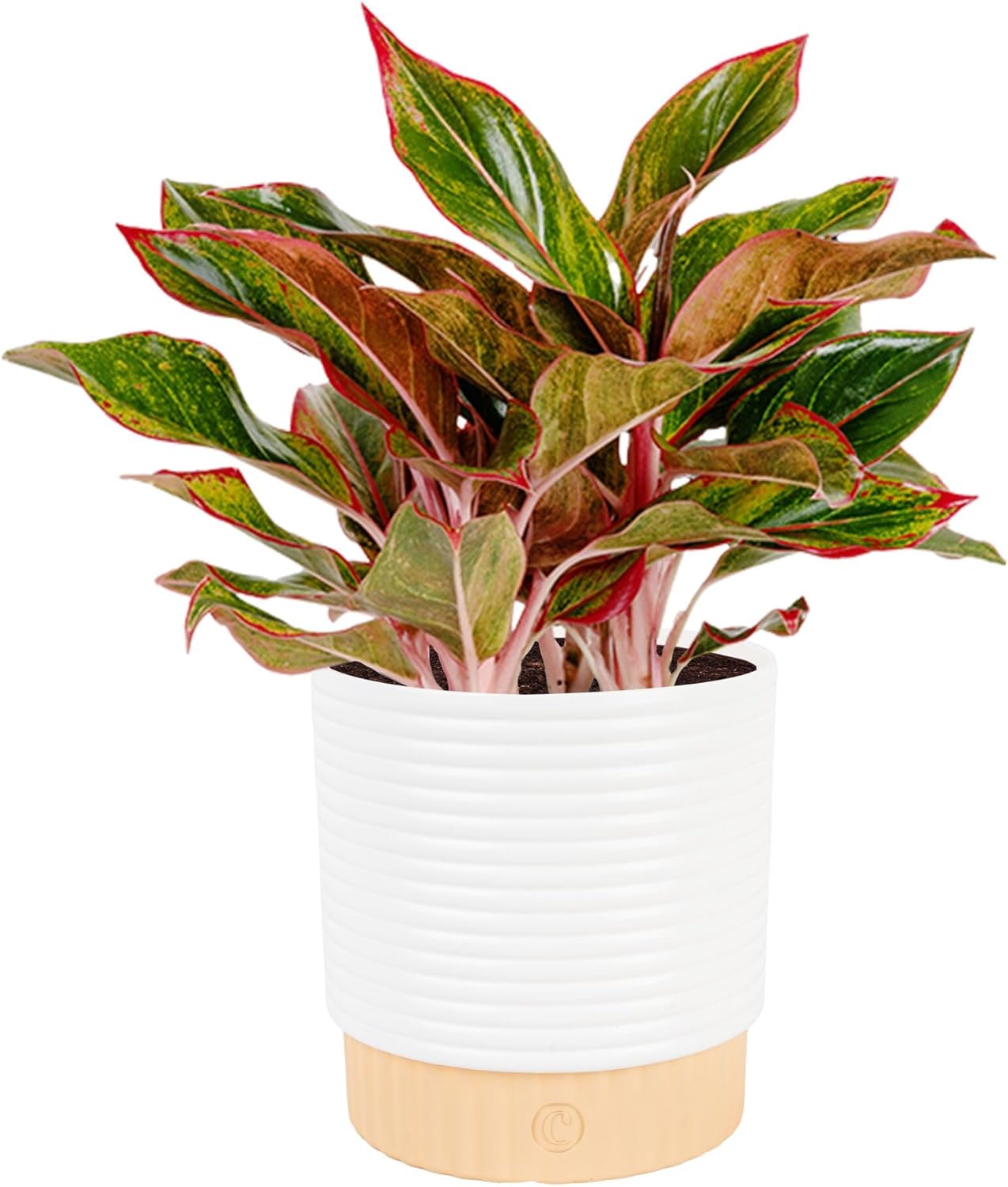
Costa Farms Chinese Evergreen (Aglaonema) Live Indoor Plant in Decorative Planter
| Indoor Outdoor Usage | Indoor |
|---|---|
| Sunlight Exposure | Partial Sun |
| Moisture Needs | Moderate Watering |
| Plant or Animal Product Type | Aglaonema |
| Container Material | Plastic |
The Costa Farms Chinese Evergreen is a beginner-friendly variegated Aglaonema sold ready-to-display in a decorative plastic planter. It is typically used as a tabletop or shelf accent in low- to moderate-light indoor spots where its two-tone leaves add color without demanding bright sun. Care directions emphasize moderate watering — water when the top couple inches of soil dry and avoid letting the plant sit in water — and occasional fertilizer in spring and summer. Notable features include its tolerance for a range of light levels, compact slow growth that keeps it suitable for desks, and farm-fresh packaging intended to arrive ready for placement. Practical benefits are ease of care for busy owners, decorative impact without extra styling, and suitability for shaded rooms. Limitations are that it is hardy only in warm USDA zones and will need repotting as it slowly outgrows the container; the included plastic pot may have limited drainage so you may need to check for holes or repot sooner depending on your watering routine.
Best for: A practical buyer who wants an attractive, low-effort houseplant for shaded rooms, desks, or shelves and values ease of care and immediate decorative impact.
Less Ideal for: Plant owners seeking rapid growth, outdoor shade plants for cool climates, or those who prefer premium ceramic pots and root-ready specimens.
- Tolerant of low to moderate light so it works well in shaded indoor spots
- Variegated, decorative foliage provides strong visual impact without extra styling
- Easy, low-maintenance watering schedule suitable for busy or new plant owners
- Arrives packaged from growers and ready to display in its decorative planter
- Not cold-hardy outside warm indoor environments and unsuitable for outdoor shade in cooler zones
- Sold in a plastic planter that may require repotting for improved drainage or long-term growth
Verdict: Choose this Aglaonema if you want a low-maintenance, decorative houseplant that thrives in shaded indoor spots and looks great with minimal care.
Dwarf Alberta Spruce (1 Gallon) — Conical Evergreen Shrub

| Sunlight Exposure | Full sun to partial shade |
|---|---|
| USDA Hardiness Zone | 2, 3, 4, 5, 6, 7, 8 |
| Moisture Needs | Moderate Watering |
| Indoor Outdoor Usage | Outdoor |
The Dwarf Alberta Spruce is a slow-growing, conical evergreen commonly used as a container specimen or small landscape accent. In practice it is planted in pots or garden beds where its dense, soft needles form a tidy, formal shape without frequent pruning. It prefers full sun to partial shade and tolerates a wide range of USDA zones, giving reliable year-round interest. Notable features are its dwarf habit that keeps mature height manageable and its suitability for containers or topiary work. Care is straightforward: water moderately, plant slightly above pot soil level with mulch, and fertilize in early spring. Expect 4 to 8 feet of height at maturity over several years, so plan pot size and placement accordingly. Limitations are its slow growth if you need immediate screening and the need to monitor watering in containers because moderate moisture needs can mean more frequent watering than permanent in-ground plantings. For gardeners wanting a low-maintenance evergreen focal point in a pot, it performs well; those needing rapid privacy hedging should look elsewhere.
Best for: Practical gardeners who want a low-maintenance evergreen focal point for pots or small landscapes and value year-round structure over fast growth.
Less Ideal for: People who need fast privacy hedging or instant tall screening or those unwilling to water containers regularly during dry periods.
- Compact conical form that works well as a container specimen or topiary
- Evergreen year-round interest suitable for seasonal décor
- Wide USDA zone tolerance (zones 2–8) for many climates
- Low maintenance once established with simple watering and spring fertilizing
- Slow to reach mature size, so it does not provide quick screening
- Container plantings require frequent monitoring of soil moisture
Verdict: A compact, low-maintenance evergreen that delivers year-round container interest and formal shape for gardeners who prioritize reliable structure over rapid growth.
Choosing the Right Evergreen Plants for Containers: Key Factors to Consider
Hardiness and Local Climate
Cold tolerance determines whether an evergreen will keep foliage and survive seasonal freezes in a container. Pots expose roots to colder air than in-ground planting, so choose plants rated a zone or two colder than your minimum winter temperature when possible.
Think about summer heat as well. Containers heat up faster than garden soil and can stress evergreens in hot, sunny locations. Match a plant's temperature tolerance to the microclimate of your balcony, porch or patio rather than relying solely on regional averages.
Root Behavior in Containers
Some evergreens adapt to root restriction better than others. Plants with naturally compact root systems or slow, clump-forming habits are easier to maintain in pots and require less frequent repotting.
Avoid species that quickly become rootbound or that need deep soil to thrive. Consider root-pruning tolerant plants if you plan to keep the specimen in the same pot for multiple years.
Watering Needs and Drought Tolerance
Container soil dries out faster than ground soil, so drought tolerance is especially important. A plant that tolerates occasional drying will survive on less frequent watering and reduce the risk of root rot from overwatering.
Also consider how leaf type influences water use. Broadleaf evergreens often transpire more and need steadier moisture, while needle-leaf evergreens usually cope with drier, wind-exposed container sites.
Mature Size and Growth Rate
Pick plants whose mature height and spread fit the container and the space where it will live. Fast-growing evergreens can quickly outgrow pots and require aggressive pruning or annual repotting.
For long-term container displays choose slower growers or varieties with naturally compact forms. If you want a taller focal point, select a plant with a predictable, manageable growth rate so you can plan pruning and root care.
Maintenance, Pruning, and Feeding
Containers concentrate nutrient cycling, so potted evergreens often need regular feeding and periodic root refreshes. Choose plants that respond well to light pruning and shape maintenance if you prefer low-effort containers.
Consider how often you can fertilize, repot, or divide specimens. Low-maintenance options reduce labor, but routine tasks like winter protection and mulching still affect plant survival in exposed container sites.
Light Requirements and Placement
Light availability on a porch, balcony, or patio determines which evergreens will keep good foliage color and density. Some evergreens maintain compact, attractive growth in part shade, while others need full sun for best form.
Assess exposure at different seasons because sun angles change. Placement also affects wind exposure and evaporation rates, so match light needs with shelter and moisture management strategies.
Container Selection and Soil Mix
Choosing the right pot and soil mix matters as much as the plant. Use a container deep and wide enough to accommodate the expected root ball plus a few years of growth. Avoid pots that are too large relative to the root mass because excess soil holds moisture and raises rot risk.
A free-draining potting mix formulated for shrubs or containers is best. Blend in materials that improve drainage and aeration, such as bark fines or perlite, and include a controlled-release fertilizer so nutrients are available through the growing season.
- Ensure at least one drainage hole and lift the pot slightly to avoid waterlogging.
- Use insulating pots or add mulch to protect roots from temperature swings in winter.
Positioning for Winter Protection
Container evergreens need protection from freezing winds and rapid temperature swings. Move vulnerable containers against a sheltered wall or into a garage for extreme cold. For large or immovable containers, wrap the pot with insulating material and add a mulch layer to the root zone.
Avoid placing pots directly on ice or cold concrete where possible. Elevating containers slightly improves drainage and reduces the risk of roots sitting in freezing water that can damage tissues.
- Group pots to create a microclimate that reduces wind exposure.
- Use burlap screens or temporary covers during extended cold snaps.
Watering Strategy Through the Year
Adjust watering by season. In active growth, containers need more frequent watering. In cold months, reduce frequency to prevent saturated soil that invites root damage. Always check soil moisture rather than following a strict schedule.
Use a moisture meter or finger test to decide when to water. When you do water, soak thoroughly until water runs from the drainage holes so the entire root mass is rehydrated.
- Top-dress with mulch in winter to stabilize moisture and temperature.
- Increase watering during heat waves and reduce it during cool, wet periods.
Pruning and Long-Term Container Care
Regular light pruning keeps shape and prevents overgrowth that stresses the container root mass. Remove dead or weak growth in spring and trim to maintain size after peak growth periods.
Plan for repotting every few years depending on growth rate. When repotting, inspect roots, remove circling roots, and refresh the potting mix. Root pruning can be used to keep larger specimens in place without moving to a larger container.
- Fertilize lightly in spring and mid-summer with a balanced, slow-release formula.
- Divide or replace plants that show persistent decline even after soil and root care.
Design Ideas Using Evergreen Containers
Use a mix of upright and mounded evergreens to create layered winter interest. Pair a taller evergreen with lower-texture plants or seasonal pots of bulbs and annuals for seasonal color.
Repeat a single evergreen species across a patio or entry to create a cohesive, low-maintenance look. Contrast foliage color and texture by combining needle-leaf and broadleaf evergreens in adjacent pots.
- Add seasonal accents like bulbs or small perennials in the same pot if the evergreen has a loose rootball.
- Use matching pot colors or textures to unify diverse plant shapes.
How We Chose the Best Evergreen Plants for Containers
We selected plants that reliably perform in containers rather than just in garden beds. Primary evaluation criteria included cold hardiness for your region, container root tolerance, and seasonal foliage retention so the plants actually act as year-round structure. We also weighed drought tolerance and watering frequency because potted soil dries faster and that affects survival and maintenance. Size control and pruning response were included to ensure plants stay proportionate to typical container dimensions. We excluded species that require grafting, specialist greenhouse care, or very large root volumes infeasible in most containers. We filtered out plants known to be short-lived in pots or that demand frequent repotting to survive. Final picks prioritize plants with documented container performance, predictable size ranges, and manageable pruning requirements.
FAQ
Can I overwinter container evergreens outdoors in a cold climate?
Often yes, depending on hardiness and pot protection. Many container evergreens can survive winter outdoors if the plant is hardy in your zone and the container is insulated or sheltered from wind. Extra mulch around the root ball and moving pots to a protected area reduces winter stress.
How often should I repot an evergreen in a container?
It depends on growth rate and root health, usually every two to five years. Slower growers may need less frequent repotting, while vigorous plants might require annual attention. Inspect roots at repotting time and trim circling roots to prolong container life.
What pot size is best for long-term evergreen health?
Choose a pot that accommodates the current root ball with room for one to two years of growth. Too-small pots dry out quickly and limit growth; oversize pots can keep soil too wet. Balance size with the plant's expected growth rate and the available space.
Do evergreen container plants need different fertilizer than in-ground plants?
They need regular feeding but not necessarily a different formula. Use a balanced slow-release fertilizer or routine liquid feeds during the growing season because potted soil has limited nutrient reserves. Reduce feeding in late fall when growth slows.
How do I prevent my container evergreen from becoming rootbound?
Prevent rootbound conditions by selecting appropriately sized pots, repotting periodically, and root-pruning when necessary. Using a root-tolerant species helps, and gently teasing or pruning roots during repotting encourages a healthy root system that does not circle and choke the plant.
Final Verdict
Container evergreens give year-round structure and are a reliable way to add winter interest to small outdoor spaces when you choose plants that tolerate root restriction and the microclimate of pots. Prioritize hardiness, container root tolerance, and manageable size so your specimen stays healthy without constant repotting. Balance drought tolerance and watering needs with the potting mix and placement decisions. With the right pot, soil and seasonal care, container evergreens provide low-maintenance greenery that performs across seasons and supports confident long-term container gardening.
