

Note: This article contains affiliate links. If you click on these links and make a purchase, I may earn a small commission at no extra cost to you. This helps support my research and content. Read my full affiliate disclosure here.
If you regularly maintain trees, tall shrubs, or espaliered fruit, an extendable pruning saw can keep you working safely from the ground while handling larger-diameter limbs. The right model gives you the reach you need without sacrificing cut quality, control, or packing weight. This guide covers seven shortlisted extendable pruning saws chosen for a range of garden tasks, from seasonal limb removal to pruning fruit trees and clearing storm damage. We evaluated reach, blade construction, pole stability, and user handling so you can pick a tool that fits your yard and physical comfort. Read on for the factors that matter and practical notes for using these tools in a real garden.
Top Picks at a Glance
| Best Overall The best all-around choice for most situations | SEESII P6 Plus 2-in-1 Cordless Pole Saw and Mini Chainsaw (6" Bar) |  |
| Best Quality Built to a higher standard if you want something more solid | Jameson LS-Series 18-Foot Extendable Pole Saw with 16" Barracuda Blade |  |
| Best Value The sweet spot between price and what you get | LAANPOLE 26ft Telescoping Manual Pole Saw with 5–20ft Extension Pole |  |
| Best Budget The cheapest option that still gets the job done reliably | YIYSENIL 12 ft Adjustable Manual Pole Saw with Mn Steel Blade |  |
| Highest Rated A top-rated pick with lots of positive feedback | yardenX 2-in-1 Cordless Pole Saw and Mini Chainsaw, 8" Cutting Bar |  |
| Most Popular A crowd favorite that many people choose with confidence | SEESII 2-in-1 Electric Pole Saw with Brushless Motor and 6" Mini Chainsaw | 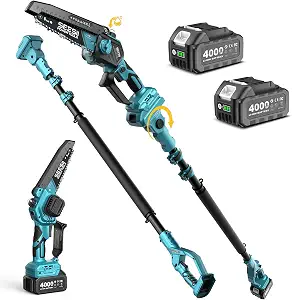 |
| Best Seller A high-volume bestseller chosen again and again | BlumeTrec 14.5 ft Manual Pole Saw with Mn Steel Blade and Adjustable Sections |  |
SEESII P6 Plus 2-in-1 Cordless Pole Saw and Mini Chainsaw (6" Bar)

| Power Source | Battery Powered |
|---|---|
| Horsepower | 600 watts |
| Chain Speed | 26.2ft/s |
| Chain Length | 6 inches |
The SEESII P6 Plus is a 2-in-1 cordless tool that works as a handheld 6-inch mini chainsaw and quickly converts to an extension pole saw for trimming overhead branches. It is typically used for routine pruning, storm cleanup, and shaping small to medium trees without climbing. Notable features include a tool-free snap-and-lock pole attachment, a 120 degree adjustable cutting head for awkward angles, automatic chain oiling, and two 21V 2000mAh batteries that provide roughly 40 to 60 minutes of combined runtime. In practice the brush motor and 26.2 ft/s chain speed handle branches in the advertised 3/4 inch to 6 inch range cleanly, and the lightweight, ergonomic body helps reduce fatigue during extended sessions. Important limitations are that the kit is intended for residential pruning rather than heavy-duty felling and each battery run time is modest if you face many thick cuts. Buyers should also follow basic chainsaw safety and expect periodic chain maintenance despite the oiler system.
Best for: Homeowners and DIY gardeners who want a single, easy-to-use tool to handle routine pruning and reach low-to-mid height branches from the ground without using a ladder.
Less Ideal for: Professional arborists or anyone needing a high-capacity saw for frequent heavy felling or very large diameter trunks should look for a more powerful, commercial-grade option.
- 2-in-1 design converts quickly between handheld mini chainsaw and pole saw without tools
- 120° adjustable head improves access to awkward or overhead branches
- Automatic chain oiler reduces manual lubrication and wear
- Includes two batteries for immediate swap-and-go runtime
- Lightweight, ergonomic build reduces user fatigue during extended pruning
- Battery capacity (2×2000mAh) gives limited single-battery runtime for large jobs
- Designed for pruning and small branches rather than heavy tree felling
Verdict: An adaptable, homeowner-friendly cordless pole saw that turns a compact 6-inch chainsaw into a 10-foot reach pruning tool for most residential trimming tasks.
Jameson LS-Series 18-Foot Extendable Pole Saw with 16" Barracuda Blade

| Reach | 18 feet |
|---|---|
| Poles | Three 6-foot fiberglass poles |
| Blade length | 16 inches |
| Power source | Manual |
| Special features | Aluminum ferrules with leaf spring locking buttons |
The Jameson LS-Series pole saw is a manual trimming kit built for extended reach work without a ladder. It comes as three 6-foot hollow-core fiberglass poles that lock together with aluminum ferrules and external leaf-spring buttons to create an 18-foot reach, plus a low-profile saw head fitted with a 16-inch Barracuda blade. In practice this setup is used for pruning higher limbs, clearing overgrown branches, and general landscape maintenance where precision cuts and access are needed. The tri-cut Barracuda tooth pattern produces cleaner cuts and cuts efficiently for a manual saw, while the low-profile head helps maneuver through dense foliage. The hollow fiberglass poles keep the weight down and offer some flexibility that reduces fatigue during extended use. Expect reasonable durability for homeowner and light professional use, though the manual operation limits cutting speed and very large limbs will require a chainsaw or pole saw with mechanical power. Assembly and sectional locking are straightforward but depend on keeping the spring buttons clean and functional.
Best for: Buyers who prioritize reach and reliable manual cutting for routine pruning and landscape maintenance and who prefer a ladder-free solution for mid-height tree work.
Less Ideal for: Not a good fit for users who need fast mechanical cutting or who regularly tackle very thick trunks and heavy commercial arborist work.
- 18-foot maximum reach from three 6-foot poles for high branches without a ladder
- 16-inch Barracuda blade with tri-cut teeth for cleaner, more efficient manual cuts
- Aluminum ferrules and external leaf-spring locking buttons for secure pole connections
- Low-profile saw head that maneuvers well through dense foliage
- Hollow fiberglass poles keep the tool relatively light and reduce user fatigue during extended use
- Manual power limits speed and effort on large-diameter limbs
- Hollow pole construction offers some flex that may reduce control on very precise cuts
Verdict: Choose this pole saw when you need long, ladder-free reach and a sharp manual blade for cleaner, controlled pruning on trees and shrubs.
LAANPOLE 26ft Telescoping Manual Pole Saw with 5–20ft Extension Pole

| Power Source | Manual |
|---|---|
| Blade Material | Carbon Steel |
| Handle Material | Aluminum |
| Other Special Features of the Product | Lightweight |
The LAANPOLE telescoping pole saw is a manual tree pruner built to reach high branches without a ladder. It telescopes from a short working length up through a 5–20 foot adjustable extension and claims a 26 foot reach, so you can use it for trimming higher limbs, pruning lower shrubs and light trunk work while standing on the ground. The aluminum pole and safety locking joint keep the sections steady during use and the insulated anti-slip grip improves control in damp conditions. The blade is carbon steel and coated for corrosion resistance, and the hooked blade profile helps hold and pull cut branches for faster pruning. Because it is manual and lightweight, it is easy to carry and reduces fatigue during extended jobs. The main limitation is that it is hand-operated, so it requires physical effort and is best for small to medium branches rather than heavy, thick limbs; heavier professional cutting will need a powered saw or pole saw with a powered cutting head.
Best for: Buyers who want an affordable, easy-to-handle pole saw to do routine pruning and reach high branches from the ground without renting power equipment. It suits homeowners and gardeners doing intermittent trimming and light maintenance.
Less Ideal for: Landscapers or property owners who need to remove large, thick limbs or who prefer powered cutting tools for heavy daily use should look at motorized pole saws instead.
- Telescoping aluminum pole extends reach without ladders and locks securely for stability
- Carbon steel coated blade offers sharpness and corrosion resistance
- Lightweight construction reduces user fatigue during prolonged use
- Anti-slip insulated grip improves handling in wet conditions
- Manual operation limits cutting to small and medium branches and requires physical effort
- Not suitable for heavy professional pruning or very thick limbs
Verdict: A budget-friendly, lightweight telescoping manual pole saw that lets homeowners safely reach and trim higher branches from the ground without power tools.
YIYSENIL 12 ft Adjustable Manual Pole Saw with Mn Steel Blade

| Blade Material | Mn steel |
|---|---|
| Blade Length | 17 inches |
| Other Special Features of the Product | Lightweight |
| Surface Recommendation | Wood |
This YIYSENIL pole saw is a budget-friendly extendable pruning tool aimed at basic yard and garden trimming without a ladder. It uses detachable stainless steel pole sections to reach up to 12 feet and converts to a shorter handheld saw by removing sections. The 17-inch Mn steel blade has precision-ground, three-sided teeth and a double-sided barb design to cut through small to medium branches while shedding sawdust to reduce clogging. The pole is powder-coated and includes an extra reinforcement screw at the head for added stability, and an anti-slip grip improves control during longer jobs. Practical benefits include safer ground-level pruning, lighter weight for easier handling, and a compact modular design that stores in the included bag. Limitations are typical of manual pole saws: cutting larger or very hard branches takes more effort than a powered tool, and extension joints can be less rigid than a one-piece pole for heavy-duty work. For routine pruning of palms, pines, oaks, and similar trees this delivers good value for the price.
Best for: Shoppers who want an inexpensive, no-frills extendable pruning saw for regular light-to-moderate tree trimming and safer ground-level work without power tools.
Less Ideal for: If you regularly need to remove large diameter limbs, perform commercial landscaping, or want the speed of a motorized tool, a powered pole saw would be a better fit.
- Extends up to 12 feet via modular stainless steel poles for ground-level access to high branches
- 17-inch manganese steel blade with precision-ground teeth for cleaner cuts and reduced clogging
- Lightweight design with anti-slip grip makes it easier to handle for longer periods
- Powder-coated poles and reinforcement screw at the head improve corrosion resistance and head stability
- Includes a storage bag for compact transport and storage
- Manual operation requires significant physical effort on larger or very thick branches
Verdict: A low-cost, lightweight extendable pole saw that gives safe ground-level reach and decent cutting performance for routine pruning tasks.
yardenX 2-in-1 Cordless Pole Saw and Mini Chainsaw, 8" Cutting Bar

| Power Source | Battery Powered |
|---|---|
| Cutting Bar | 8 inches |
| Reach | 15.5 FT (telescoping pole) |
| Batteries | 2 × 20V 4.0Ah lithium-ion |
The yardenX 2-in-1 pole saw converts quickly between a handheld mini chainsaw and an extended pole saw, letting you prune low limbs or trim high branches from the ground without ladder work. Its brushless motor delivers smoother, quieter cutting and is rated to handle up to 8-inch diameter branches, while the included pair of 20V 4.0Ah batteries claims extended runtime—useful for larger yards or longer sessions. The telescoping pole reaches up to about 15.5 feet for a typical operator, and the built-in automatic oiling system keeps the chain lubricated during operation to reduce wear and maintenance. Tool-free chain adjustment simplifies on-the-job tensioning, and the cordless design improves maneuverability around trees and shrubs. Limits to expect are typical for cordless saws: heavier cutting tasks will drain batteries faster and motor torque will be lower than gas models, so very large hardwood limbs may require smaller cuts or multiple passes. For buyers who prioritize a reliable, low-maintenance electric pole saw for routine pruning and seasonal cleanup, this model provides a strong, practical package.
Best for: A homeowner or property manager who wants a dependable, low-maintenance electric pole saw for regular pruning, trimming, and seasonal cleanup without climbing ladders.
Less Ideal for: Not the best choice for professionals or users who need sustained high-torque cutting of very large diameter hardwoods where a gas chainsaw is preferable.
- Two-in-one design switches between handheld mini chainsaw and pole saw for versatile pruning tasks
- Brushless motor for smoother performance, lower noise, and longer motor life
- Includes two 20V 4.0Ah batteries to extend continuous runtime
- Automatic chain oiler reduces downtime and chain maintenance
- Tool-free chain adjustment simplifies tensioning in the field
- Cordless power limits torque compared with gas saws for very large or dense hardwoods
Verdict: A reliable, low-maintenance cordless pole saw that combines handheld and extended reach cutting with brushless performance and generous battery runtime.
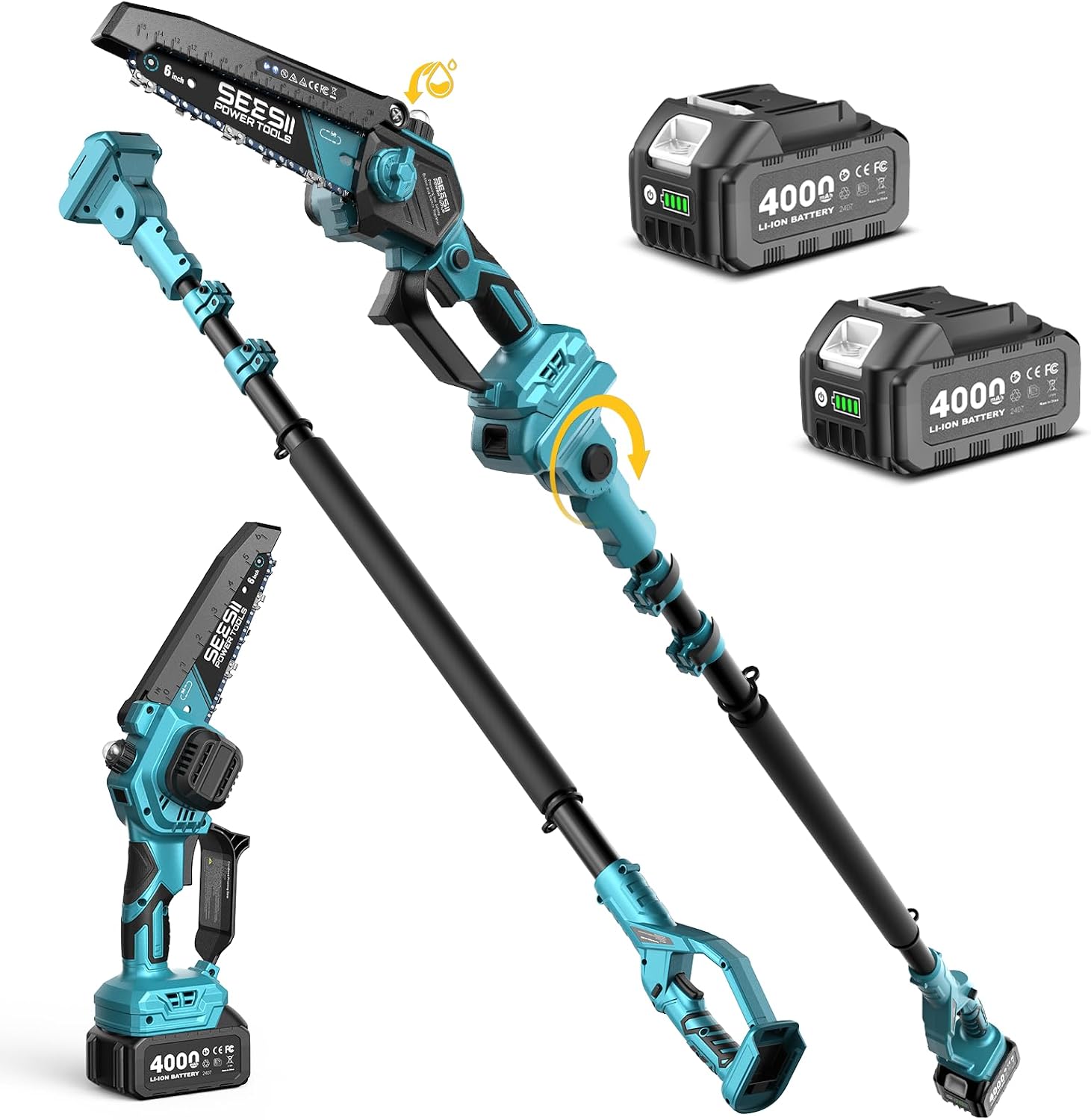
SEESII 2-in-1 Electric Pole Saw with Brushless Motor and 6" Mini Chainsaw
| Power Source | Battery Powered |
|---|---|
| Horsepower | 600 watts |
| Chain Speed | 26ft/S |
| Batteries Included | 2 × 4000mAh |
| Chain Length | 6 inches |
The SEESII 2-in-1 electric pole saw combines a 6-inch mini chainsaw and a telescoping pole saw into one cordless kit designed for routine yard maintenance. It is used either as a compact handheld saw for near-ground cuts or extended up to about 15.5–16 feet total reach to trim high limbs without a ladder. Notable features include a brushless motor for quieter, cooler operation, two 4000mAh batteries that claim up to 120 minutes of run time, quick tool-free chain tensioning and automatic lubrication for smoother cutting, and an adjustable-angle head for getting at awkward branches. Practical benefits are easy maintenance, included safety accessories, and the convenience of switching between handheld and pole modes for most pruning tasks. Limitations to expect are a 6-inch chain that restricts single-pass cuts to modest branch diameters despite the product claiming up to 6 inches, and the pole saw weight is heavier when assembled which can fatigue users during long jobs. For reliability-focused buyers this model offers durable brushless drive and redundant battery power, but heavy professional workloads may demand a larger saw.
Best for: Homeowners who want a dependable, low-maintenance electric pole saw for regular pruning and medium-duty limb trimming and who value quieter brushless performance and battery redundancy.
Less Ideal for: People who need a professional-grade saw for frequent heavy cutting or contractors who require larger bar lengths and higher continuous power.
- Brushless motor for more efficient, quieter operation and longer motor life
- Includes two 4000mAh batteries and fast charger for extended uninterrupted runtime
- Telescoping pole with adjustable head lets you trim high branches from the ground
- Tool-free chain tensioning and easy oil refill simplify maintenance
- Comes with replacement chain and basic safety accessories for immediate use
- 6-inch chain limits the maximum single-cut thickness and heavy-duty cutting
- Assembled pole saw is noticeably heavier than the handheld mode and can cause fatigue
Verdict: A reliable, easy-to-maintain cordless pole saw with brushless motor and dual batteries that makes routine pruning and reaching high limbs safe and fuss-free.
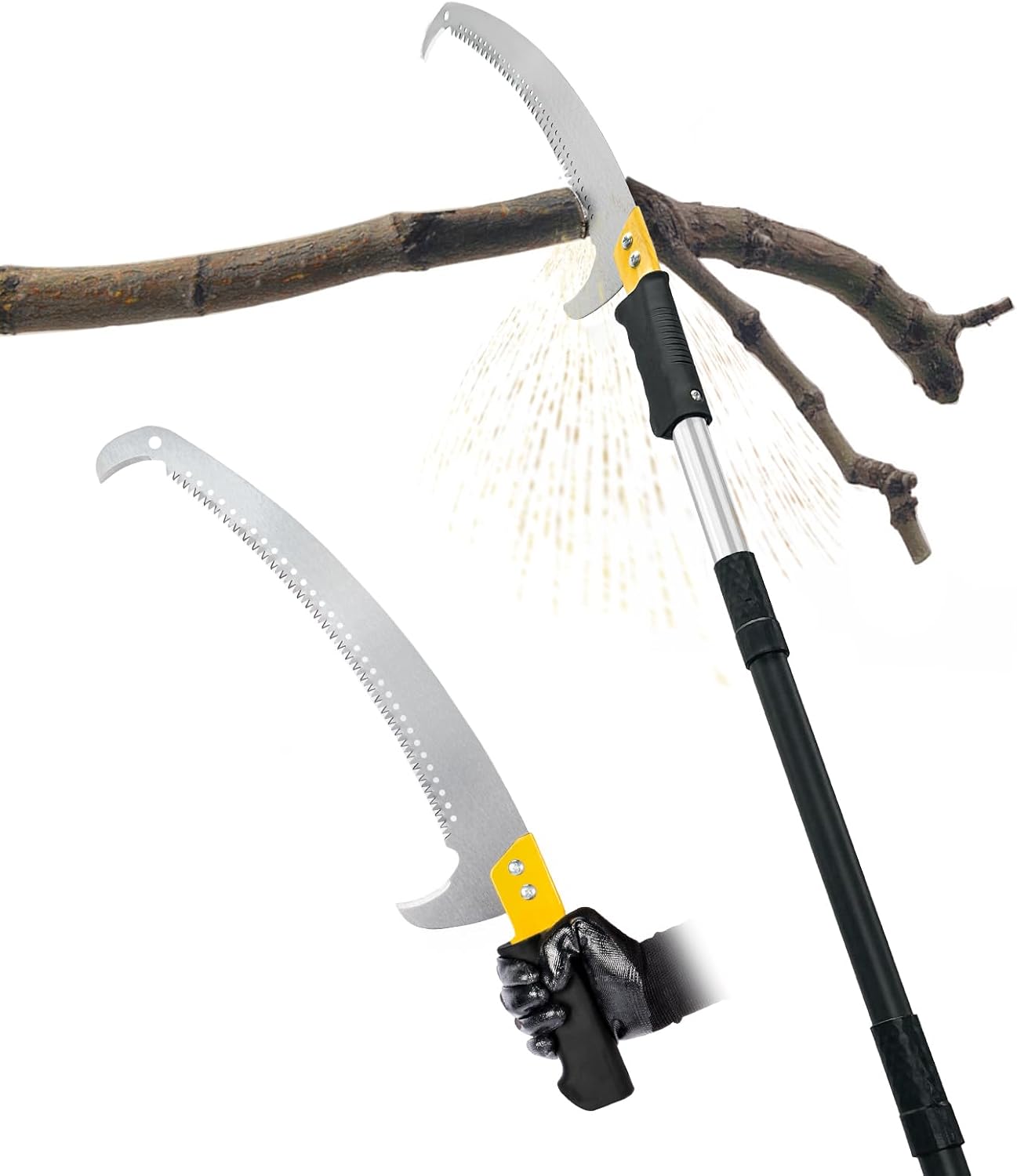
BlumeTrec 14.5 ft Manual Pole Saw with Mn Steel Blade and Adjustable Sections
| Power Source | Manual |
|---|---|
| Blade Material | Alloy Steel |
| Blade Length | 16.7 inches |
| Included Components | Wrench |
This BlumeTrec pole saw is a manual, multi-section pruning saw designed to let you trim high branches safely from the ground. The pole breaks down into sections so you can assemble it to three fixed lengths (8.5 ft, 11 ft, 14.5 ft) to match the task, and a manganese steel blade with a three-sided edge and double-sided barbs grips and slices branches for cleaner cuts. The stainless steel poles are powder-coated to resist rust and a tightening screw secures the saw head so it stays steady during use. In practice this is a basic, no-power tool that is quiet, low-maintenance, and lighter to carry than most motorized alternatives, making it easier for less experienced users to avoid ladders. Expect quicker work on small to medium branches but slower progress on very thick wood since it is manual. The plastic handle and anti-slip grip improve control but the modular pole means assembly time and storage space should be considered. Overall it is a straightforward, safety-minded option for everyday yard pruning when you want a simple, reliable tool rather than powered equipment.
Best for: Buyers who prioritize safety and simplicity and want to prune high branches from the ground without using power tools or climbing ladders; good for homeowners doing routine yard maintenance.
Less Ideal for: Professional arborists or anyone who needs to cut very large or numerous thick hardwood branches frequently should choose a powered pole saw or chainsaw instead.
- Adjustable multi-section pole offers three fixed reach lengths for flexible use.
- Mn steel blade with three-sided edge and barbs provides secure, clean cuts on small to medium branches.
- Powder-coated stainless poles resist rust for outdoor durability.
- Lightweight manual design reduces noise and maintenance compared with motorized saws.
- Anti-slip grip and extra screw to secure the saw head improve handling and safety.
- Manual cutting limits speed and effectiveness on very thick or hardwood branches.
- Plastic handle may feel less durable under heavy professional use.
Verdict: A simple, rust-resistant extendable manual pole saw that lets risk-conscious homeowners prune high branches from the ground without ladders.
Choosing the Right Extendable Pruning Saw: Key Factors to Consider
Reach and Extension Range
How far a pole extends determines what tasks you can tackle from the ground. Longer reach reduces ladder use for pruning high branches, but every extra foot adds leverage stress and can amplify wobble. Consider both the maximum extended length and the usable working length; some poles extend long on paper but become unstable at full extension.
Also think about the collapsed length for storage and transport. If you need to reach very tall trees occasionally, choose a model with more extension stages and a robust locking system. For regular patio or small-tree pruning, a shorter but stiffer extension range can be faster and less fatiguing.
Blade Cutting Performance and Tooth Design
Blade geometry and tooth pattern determine how cleanly the saw cuts living wood versus dead wood. Aggressive, large teeth remove material faster and are good for pruning bigger limbs, while finer teeth give smoother cuts that heal quicker on live branches. Look for blades with a mix of tooth sizes or a rip/ crosscut design suited to the species you prune most often.
Also evaluate whether the blade is hardened or easily sharpened and if replacement blades are available. A hard-steel blade that holds an edge longer reduces maintenance, while a replaceable blade simplifies long-term ownership if sharpening is difficult for you.
Pole Material and Stability
Poles are typically aluminum, fiberglass, or composite. Aluminum offers light weight and affordability but may vibrate more and dent. Fiberglass and composite poles often dampen vibration better and resist bending, providing steadier cutting at height. Whatever the material, the pole must have a solid joint and lock system; a loose head connection or slipping extension is both inefficient and unsafe.
Check how the head attaches and whether the top section resists rotational play. Stiffer poles are easier to control when sawing across the grain or cutting on an angle, which yields cleaner cuts and reduces user fatigue.
Locking Mechanism and Ease of Adjustment
A secure, easy-to-use locking mechanism lets you set extension length quickly and keeps the pole rigid while you saw. Twist locks, cam locks, and lever clamps are common. Twist locks can be compact and lightweight but may loosen with vibration. Cam or lever locks often deliver faster adjustments and more positive clamping but add some weight.
Beyond reliability, consider how easily you can operate the locks wearing gloves and whether they require periodic tightening or lubrication. A lock that fails or slips during a cut is a safety hazard and will make precise cuts difficult.
Weight, Ergonomics, and Handling
Working with an extended pole is physically different from hand pruning. The tool should balance in your hands so the head does not feel heavy when reaching overhead. Lighter poles reduce arm strain during long sessions, but extreme lightness can come with compromised stiffness. Handle shape, grip material, and overall balance affect comfort and control.
Consider how often you will use the saw and whether you will do longer pruning sessions. If you have limited upper-body strength or plan to prune frequently, prioritize ergonomics and lower weight. Padded or non-slip grips improve control in wet conditions.
Maintenance, Replacement Parts, and Long-Term Service
A saw that is easy to maintain will last longer and cut better over time. Check whether blades are replaceable, how easy they are to remove, and if replacement blades are commonly available. Consider whether the pole requires special tools for maintenance or if standard household tools will do.
Materials that resist corrosion and wear reduce long-term upkeep. Also think about warranty coverage and whether the manufacturer provides spare parts for moving components like locks and head attachments. A design that allows field sharpening or quick blade swaps keeps the tool useful season after season.
Choosing the Right Extension Length for Your Yard
Match extension length to the typical heights in your landscape. For low patios and espaliered fruit, a moderate extension is easier to control and store. For taller shade trees, prioritize greater reach but accept tradeoffs in weight and stability.
Think in terms of working reach rather than absolute pole length. Working reach includes your height, arm extension, and the angle you will hold the saw. Measure the highest limbs you expect to service and add a margin so you do not need to overreach.
- Measure the highest pruning point from the ground to estimate needed reach.
- Account for the angle you will cut; vertical overhead cuts reduce effective reach.
- Prefer a slightly shorter, stiffer pole if you mostly prune mid-height branches.
Safe Techniques for Sawing at Height
Adopt a stable stance before you begin and avoid overreaching. Keep your feet planted shoulder-width apart and use a step stool rather than a tall ladder if you must gain a little extra height. Let the saw do the cutting; apply steady, controlled strokes and use the pole's angle to let gravity and tooth design assist the cut.
When cutting larger limbs, support the branch where possible or make relief cuts to prevent binding. Be aware of where the cut branch will fall and clear people and breakables from the drop zone. Wear eye protection, gloves, and a hard hat when working under potential fall zones.
- Make small starter cuts to control the direction of fall on larger limbs.
- Avoid cutting above shoulder height without additional support or a spotter.
- Inspect the pole and locks before each use for wear or looseness.
Blade Care and Sharpening Tips
Keep blades clean and free of sap and resin to maintain cutting efficiency. Wipe blades after use with a solvent or soapy water and dry thoroughly to limit corrosion. Lightly oiling the blade before storage helps prevent rust.
For sharpening, follow the tooth geometry rather than trying to reshape teeth. A small round file or triangular file works for most tooth patterns. If sharpening is unfamiliar, practice on an old blade first or use replaceable blades to avoid accidental damage.
- Remove resin with a mild solvent or household cleaner before sharpening.
- Maintain the original tooth angle when filing to preserve cutting action.
- Replace blades if teeth are chipped or warped beyond simple sharpening.
Transport, Storage, and Seasonal Care
Collapsed length and how the pole packs matter if you store tools in a garage or need to transport them on a car rack. Poles that telescope into a compact size are easier to stow. Protect the blade during transport with a sheath and secure the pole to avoid rattling.
For seasonal care, check locks and pivot hardware for corrosion and apply suitable lubricants. Store the saw in a dry place away from moisture and extreme temperature swings to protect seals and any composite materials.
- Use a blade cover to avoid accidental cuts and to protect teeth.
- Loosen locks before long-term storage to prevent binding.
- Inspect and tighten fasteners at the start of each pruning season.
Alternatives and Complementary Tools
An extendable pruning saw is excellent for cutting medium to large branches from the ground, but it works best alongside other hand tools. A long-reach pole pruner with bypass blades is faster for small green shoots, while a folding hand saw can be handy in tight spots.
Consider combining a pole saw with loppers or a pruning saw designed for detailed cuts to cover all tree-care tasks. For very large branches or frequent heavy-duty cutting, evaluate whether powered options are more efficient for your workload.
- Keep bypass loppers for precision pruning of green shoots.
- Use hand saws for close-in cuts where a pole cannot reach cleanly.
- Have a pruning plan that sequences small cuts before larger removals.
How We Chose the Best Extendable Pruning Saw
We prioritized tools that make pruning high branches safer and more effective without forcing gardeners to use ladders for routine maintenance. Selection focused on reach, blade cutting performance, pole stability and locking, overall weight and handling, and serviceability such as replaceable blades and easy sharpening. We favored poles with multiple secure lock positions and materials that balance strength with manageable weight for extended use. Blade teeth geometry and steel composition were considered for how cleanly they slice green and dead wood and how easy they are to sharpen or replace. Practical durability, including corrosion resistance and secure head attachment, was assessed to ensure the tools withstand outdoor exposure. Excluded from consideration were short-handled saws without a telescoping pole, specialty power equipment, and novelty designs lacking durable locking systems. Our filter removed tools with unclear or fragile extension mechanisms and those offering minimal blade replacement or sharpening options. The final shortlist represents tools that perform reliably in typical garden and small-property pruning scenarios.
FAQ
How long should an extendable pruning saw reach for average backyard trees?
It depends on your height and the tree. For most backyard trees, a working reach of 10 to 15 feet above ground is common when you include arm extension. Measure your tallest pruning point and choose a pole that gives a comfortable margin without requiring full extension constantly.
Can I safely prune large limbs with an extendable saw or do I need a ladder?
Extendable saws handle many larger limbs safely if the pole and locking system are rated for the load and you use proper technique. For very heavy branches or when precise directional control is required, additional support or professional help may be safer than overextending from the ground.
How often should the blade be sharpened or replaced?
Frequency depends on use and wood types you cut. Light home use may only require sharpening once per season, while frequent cutting of hard or frozen wood may need more regular attention. Replace blades when teeth are chipped, bent, or cannot be restored by sharpening.
Are lightweight poles less durable than heavier models?
Lightweight poles are easier to handle but may trade off some stiffness and long-term durability. Many modern composites and fiberglass poles balance light weight with stiffness, but the construction quality and locking mechanism are more important predictors of long-term performance than weight alone.
What safety gear should I use when using an extendable pruning saw?
Wear sturdy gloves, eye protection, and a hard hat when cutting overhead. Closed-toe footwear with good traction is important. If you are working near power lines or cutting very large limbs, consult a professional and keep a safe distance from energized components.
Final Verdict
When choosing an extendable pruning saw, balance reach with stiffness and user comfort. Prioritize a pole with a reliable locking system, a blade suited to the types of wood you cut, and a weight that you can manage for typical pruning sessions. Expect tradeoffs: longer reach often means more weight and slightly reduced control, while shorter poles offer better handling but less vertical access. Decide first on the maximum reachable height you need and then match blade type and pole material to your pruning style. With the right combination of reach, blade performance, and durability, an extendable pruning saw becomes a safe, efficient workhorse for seasonal tree care.
