

Note: This article contains affiliate links. If you click on these links and make a purchase, I may earn a small commission at no extra cost to you. This helps support my research and content. Read my full affiliate disclosure here.
If you wrestle with roses, pull invasive vines, or work raised beds without sleeves, long gloves change how much you can do without nicks and scratches. Extra long gardening gloves extend protection well past the wrist and onto the forearm, keeping prickly stems, brambles, and soil-borne irritants off your skin while you prune, weed, or handle compost. This guide shortlists seven top extra-long gloves that fit common gardener tasks and body types. We focus on coverage, puncture resistance, fit, and material breathability so you can pick gloves that match the type of work you do and how long you wear them. Read on for the evaluation criteria we used and practical advice for choosing the right pair.
Top Picks at a Glance
| Best Overall The best all-around choice for most situations | HANDLANDY Pigskin Leather Long Gardening Gloves (Large) |  |
| Best Quality Built to a higher standard if you want something more solid | Hestra Pro Garden Rose Long Leather Gauntlet Gloves | 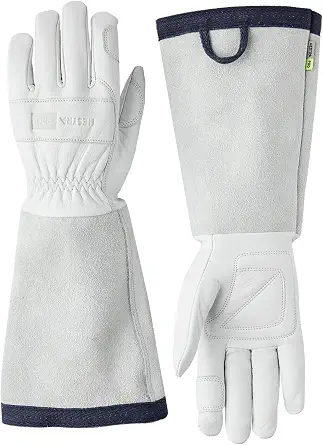 |
| Best Value The sweet spot between price and what you get | Acdyion Long Thorn-Proof Cowhide Gardening Gloves with Elbow-Length Cuffs |  |
| Best Budget The cheapest option that still gets the job done reliably | PALMORRA Long Thorn-Proof Gardening Gloves for Men and Women |  |
| Highest Rated A top-rated pick with lots of positive feedback | LELETEIL Thorn Proof Long Leather Gardening Gloves |  |
| Most Popular A crowd favorite that many people choose with confidence | HANDLANDY Thorn-Proof Long Leather Rose Pruning Gloves |  |
| Best Seller A high-volume bestseller chosen again and again | SLARMOR Long Cowhide Thorn-Proof Gardening Gloves |  |
HANDLANDY Pigskin Leather Long Gardening Gloves (Large)
| Material | Pigskin Leather, Synthetic Leather |
|---|---|
| Sleeve Length | Long Sleeve |
| Fit Type | Adjustable |
| Water Resistance | Water Resistant |
| Special Features | Breathable, Thorn Proof |
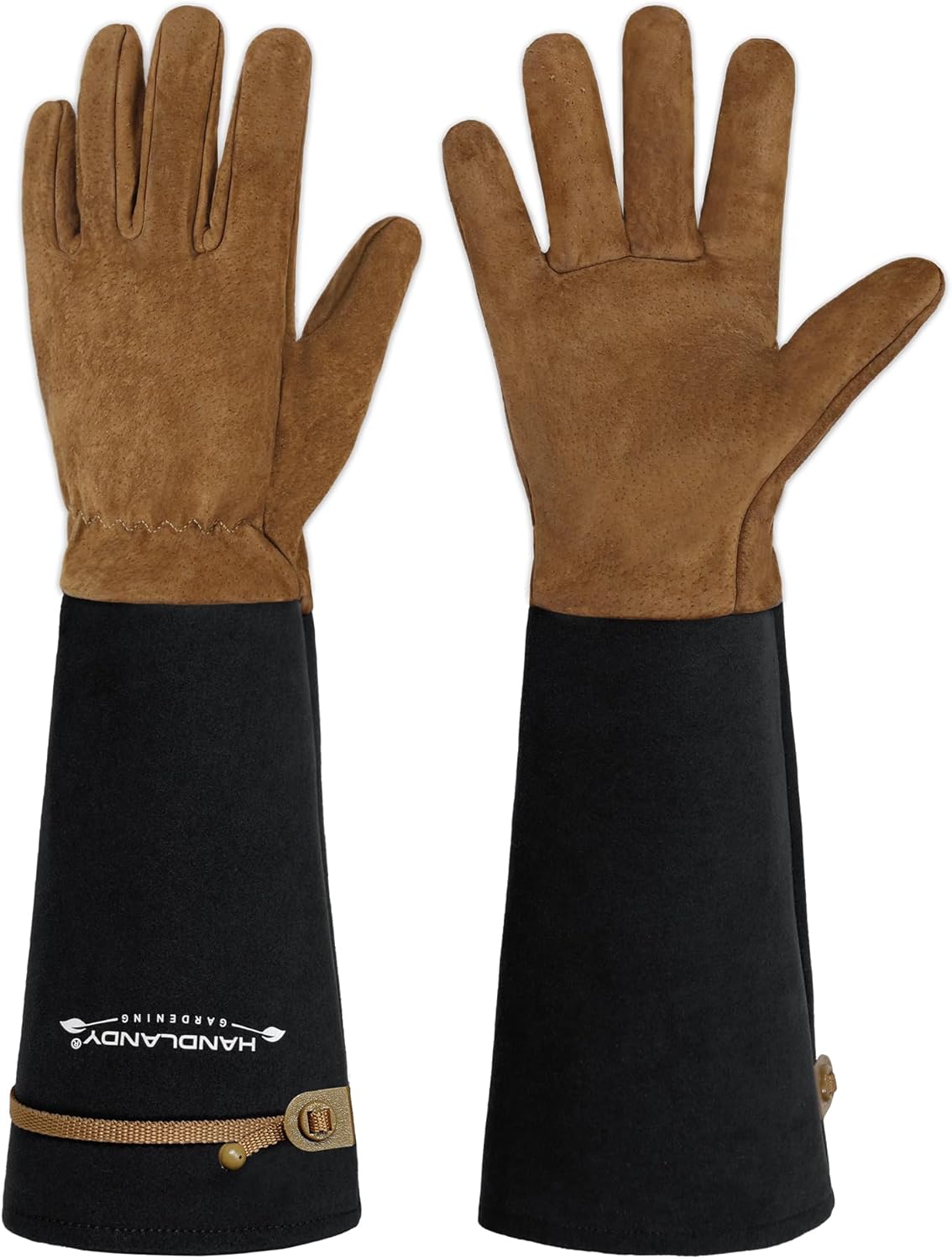
These HANDLANDY long gardening gloves combine a pigskin leather palm with synthetic-leather sleeves to give solid protection when working with roses, brambles, and other thorny plants. The supple pigskin on both front and back of the hand provides a natural grip and good dexterity for tasks like pruning, planting, and light digging, while the thick leather resists punctures and abrasions. The extended gauntlet sleeve protects the forearm and includes a drawstring cuff that keeps debris out when reaching into dense foliage. Breathability and flexibility are emphasized, so they stay comfortable during longer sessions, though the low-stretch fabric means a snug fit rather than a stretchy feel. These gloves are water resistant rather than fully waterproof, so they handle damp plant material but will eventually soak through in heavy rain. For gardeners who need durable thorn protection with forearm coverage, they are a practical, reusable choice; those wanting full waterproofing or a highly elastic fit may prefer different materials.
Best for: Gardeners who want strong thorn and forearm protection for routine pruning, rose care, and general yard work and who value durability and dexterity over a stretchy fit.
Less Ideal for: People who need fully waterproof gloves for wet-weather tasks or users who prioritize a highly elastic, form-fitting glove for precision handwork.
- Pigskin leather palm offers durable puncture and abrasion resistance for thorny plants
- Extended gauntlet sleeve with drawstring provides forearm protection and keeps debris out
- Breathable and flexible leather construction maintains dexterity for pruning and planting
- Adjustable elastic wrist cuff delivers a snug fit to reduce dirt entry
- Water resistant but not fully waterproof, so wet conditions can eventually penetrate
- Low-stretch fabrics produce a firmer fit that may feel restrictive for some hand shapes
Verdict: Choose these gloves when you need tough pigskin protection and extended forearm coverage for pruning and thorny garden work.
Hestra Pro Garden Rose Long Leather Gauntlet Gloves
| Department | womens |
|---|---|
| Manufacturer | Hestra Gloves |
| Item model number | 73410 |
| Date First Available | May 19, 2022 |
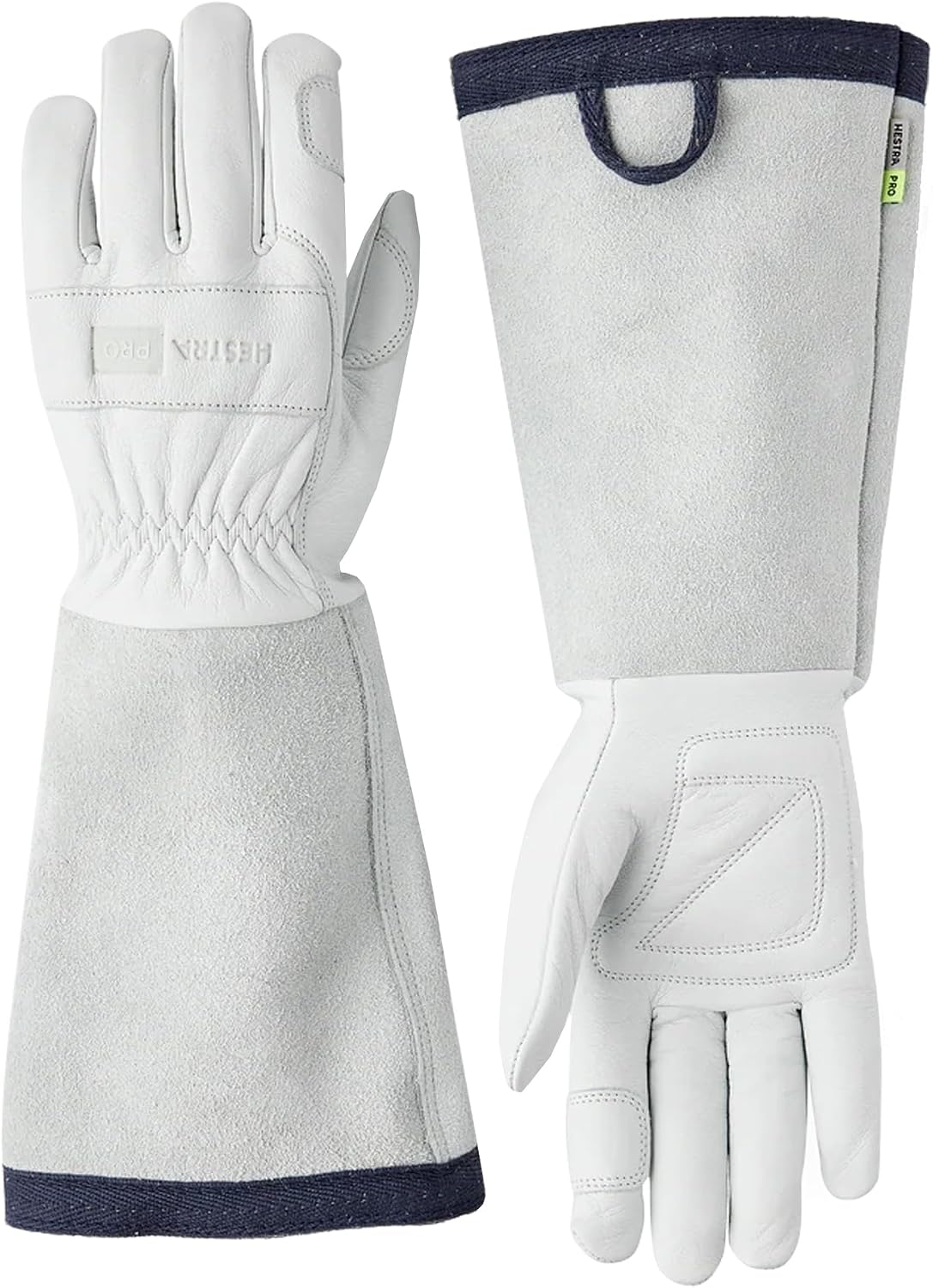
These Hestra Pro Garden Rose gloves are long leather gauntlets built for protective, hands-on gardening tasks like pruning roses, handling thorny shrubs, and digging in coarse soil. The goat leather outer and extended cuff shield the wrist and lower forearm from scratches and punctures while still allowing good finger dexterity for clipping and tying. They are typically used for heavier yard work where protection matters more than delicate touch, and the durable leather will age well with regular use. Notable features seen across the Hestra Pro line include a contoured fit, an elasticated or snug wrist area to keep debris out, and a long cuff that stays in place during movement. Practical benefits are solid abrasion resistance, lasting durability compared with fabric gloves, and strong protection against thorns and briars. Important limitations are that leather gloves can be stiffer when new and are not ideal for wet tasks where water repellency is required, and they require occasional conditioning to stay supple.
Best for: Gardeners who prioritize protection and durability for heavy-duty tasks like pruning roses, working with thorny plants, or rough landscaping and who value a glove that holds up over frequent use.
Less Ideal for: People who need lightweight, highly breathable gloves for long periods of delicate plant handling or who work primarily in wet conditions should consider alternatives.
- Extended leather gauntlet provides forearm protection from thorns and scratches
- Goat leather construction offers good abrasion resistance and long-term durability
- Contoured fit and gauntlet design maintain dexterity for pruning and garden tasks
- Leather is not fully water-repellent and can stiffen when wet or new
Verdict: Choose these gloves if you want a rugged, long leather gauntlet that puts protection and durability first for heavy garden work.
Acdyion Long Thorn-Proof Cowhide Gardening Gloves with Elbow-Length Cuffs

| Material | Leather |
|---|---|
| Is Waterproof | True |
| Sleeve Length Description | Long Sleeve |
| Glove Or Mitt | Glove |
| Stitching Type | Reinforced Stitching |
These Acdyion long gardening gloves are built for heavy-duty thorn and scratch protection while keeping enough dexterity for pruning and precision tasks. Made from thick cowhide leather with reinforced stitching and palm/fingertip patches, they resist punctures from roses, blackberries, and cacti and include an extended gauntlet that shields the forearm during deeper reach into bushes. The gloves are described as breathable and ergonomically shaped at the thumb so you can use shears, trowels, and harvest by hand without feeling overly stiff. Practical features include a pull-on design, ambidextrous fit, and reusable construction that should hold up across many seasons. Expect a firm, slightly stiff leather feel at first and a natural leather odor that fades with airing. These are not work gloves for tasks requiring fine fingertip sensitivity or non-leather water immersion for long periods, but for anyone who prioritizes puncture resistance and forearm protection in thorny gardens, they offer dependable coverage and long-term durability.
Best for: Gardeners who prioritize robust thorn protection and forearm coverage for pruning roses, harvesting berries, and clearing brambles and who prefer durable leather that will last across seasons.
Less Ideal for: People who need ultra-fine fingertip sensitivity, frequent wet immersion, or a tight, form-fitting glove for detailed container gardening should consider lighter or synthetic alternatives.
- Thick cowhide leather and reinforced palms provide strong puncture and abrasion resistance
- Elbow-length gauntlet cuff protects forearms when working with roses, brambles, or cacti
- Breathable leather construction and ergonomic thumb design preserve dexterity for pruning
- Reinforced stitching and durable construction designed for repeated seasonal use
- Initial stiffness and natural leather smell that require airing and a short break-in period
- Loose fit style may reduce fingertip precision for very delicate tasks
Verdict: Choose these gloves when you need reliable, long gauntlet protection against thorns and punctures without sacrificing usable dexterity for pruning tasks.
PALMORRA Long Thorn-Proof Gardening Gloves for Men and Women

| Brand | PALMORRA |
|---|---|
| Product type | Long gardening gloves |
| Gender | Women Men |
These extra-long gardening gloves extend well past the wrist to protect forearms while pruning roses, handling thorny shrubs, and doing general garden work. The gloves combine a thorn-resistant outer with a breathable, lightweight fabric so you can work without your hands overheating or losing dexterity. They are typically used for tasks that require arm protection: trimming, rose pruning, cactus handling, and moving thorny debris. The design keeps soil and scratches off skin and lets you grip secateurs and small tools comfortably. Practical benefits include extended coverage for the lower arm, good tactile feel for precise tasks, and material that sheds light debris. Limitations are that heavy-duty thorn resistance will not match thick leather gauntlets for extreme briars, and the lightweight material may wear faster under constant abrasion. Sizing and fit matter for dexterity, so check measurements before buying for tasks that need fine finger control.
Best for: Buyers who want affordable arm and hand protection for routine pruning and rose care and prioritize mobility and breathability over heavy-duty abrasion resistance.
Less Ideal for: Gardeners who regularly handle very dense, woody briars or need maximum abrasion resistance should choose thicker leather gauntlets instead.
- Extra-long cuff provides forearm protection during pruning and rose care
- Breathable, lightweight fabric keeps hands cooler for extended wear
- Flexible fit preserves finger dexterity for tool use and detailed tasks
- Sheds light debris and prevents scratches from thorns
- Not as abrasion-resistant as heavy leather gauntlets for very dense briars
- Lightweight material may show wear faster with heavy daily use
Verdict: A budget-friendly choice for gardeners who need extended forearm protection and breathability for pruning and rose work.
LELETEIL Thorn Proof Long Leather Gardening Gloves

| Manufacturer | LELETEIL |
|---|---|
| Item Weight | 9.92 ounces |
| Department | Women’s Men‘s |
| Date First Available | September 7, 2026 |
These thorn-proof gardening gloves use long leather gauntlets to protect hands and lower forearms when handling roses, brambles, and other plants with sharp thorns. They fit like traditional leather gloves and are typically used for pruning, transplanting, and clearing thorny growth where puncture resistance and abrasion protection matter. Notable features visible in the listing include extended cuff coverage and reinforced leather construction, which translate to confident handling of thorny stems and fewer punctures compared with thin cloth gloves. The gloves are practical for repetitive pruning because leather resists wear and can be wiped clean, though leather may stiffen if frequently exposed to water and will require occasional care to stay supple. These are not thin dexterity gloves, so fine fingertip tasks like tying knotty twine or handling tiny seedlings will feel less precise. For gardeners prioritizing durable, reliable protection while working with roses and brambles, these gloves deliver the core safety and longevity you want.
Best for: Gardeners who prioritize dependable protection when working with roses, brambles, and other thorny plants and who want a durable glove for regular pruning and clearing tasks.
Less Ideal for: People who need high fingertip sensitivity for delicate potting, seed work, or tasks requiring fine motor control should consider thinner dexterity gloves instead.
- Extended leather gauntlet protects lower forearm from thorns
- Reinforced leather construction offers strong puncture and abrasion resistance
- Wipe-clean surface and durable material stand up to repeated pruning tasks
- Leather can stiffen when wet and needs occasional conditioning to remain flexible
- Reduced fingertip dexterity compared with thin or synthetic gloves
Verdict: Choose these gloves if you want sturdy leather gauntlet protection you can rely on when tackling roses and other thorny plants.
HANDLANDY Thorn-Proof Long Leather Rose Pruning Gloves

| Material | Leather, Synthetic Leather |
|---|---|
| Sleeve Length | Long Sleeve |
| Protective Features | Abrasion Resistant, Cut-Resistant, Thorn Proof |
| Closure Type | Pull On |
| Temperature Rating | -10°C to +40°C |
These HANDLANDY thorn-proof gardening gloves use pigskin leather on the palm and back plus reinforced padding at the fingertips and palm to resist cuts, punctures, and abrasion while retaining good flexibility. The elbow-length gauntlet shields forearms from thorns and brambles, and the elastic slip-on cuff keeps dirt out during repetitive weeding, pruning, and brush clearance. Breathable pigskin helps keep hands cooler than heavier full-grain leather, and reinforced stitching and a padded palm improve durability for regular yard work. They are not waterproof and have no interior liner listed, so hands can get damp in wet conditions and dexterity with very fine tasks may feel slightly reduced compared with thin fabric gloves. For persistent thorny jobs these gloves trade a bit of fingertip finesse for confident protection and long wear. Care is simple: air out leather to remove initial smell and keep them dry between uses to prolong life.
Best for: Serious gardeners who prioritize protection and durability for thorny weeding and pruning tasks and want durable gloves that stand up to regular heavy use.
Less Ideal for: Gardners who need maximum fingertip sensitivity for delicate seeding, transplanting, or wet-weather work should consider lighter or waterproof alternatives.
- Thick pigskin leather palm and back for breathability with strong puncture resistance
- Extended elbow-length gauntlet protects forearms from thorns and brambles
- Reinforced palm and fingertip padding for better abrasion and cut resistance during heavy pruning
- Elastic slip-on cuff keeps debris out and provides a snug fit
- Reinforced stitching improves durability for frequent use
- Not water resistant so hands may get wet during damp weeding or rainy conditions
- No listed glove liner which can reduce warmth in cold weather and allow perspiration against skin
Verdict: Choose these gloves when thorny, heavy-duty weeding and pruning demand confident forearm and hand protection.
SLARMOR Long Cowhide Thorn-Proof Gardening Gloves

| Material | 100% Cowhide |
|---|---|
| Sleeve Length Description | Long Sleeve |
| Fit Type | snug |
| Is Waterproof | False |
| Palm Style | Reinforced Palm |
These SLARMOR gloves are built for heavy garden work that involves thorns, rough branches, and abrasive tasks. Constructed from 100% cowhide with reinforced palm stitching and a gunn-cut plus keystone thumb, they offer a durable, flexible fit that preserves dexterity for pruning, planting, and handling tools. The long gauntlet cuff protects the forearms up to the elbow, making thorny rose pruning, blackberry harvesting, and bramble clearing much safer. They are reusable leather gloves intended for outdoor use and require hand washing and occasional leather conditioning to remain supple. Limitations include no water resistance so muddy or wet tasks will soak the leather, and the heavyweight cowhide can feel stiff initially until broken in. Sizing runs snug by design, so those between sizes should consider sizing up for a better fit during extended use.
Best for: Gardeners who prioritize protection and durability when tackling thorny shrubs and heavy yard work and who want gloves that retain tool control for pruning and planting.
Less Ideal for: People who primarily do light, wet, or indoor gardening tasks that require a thin, washable glove or those who need immediate soft, form-fitting comfort without a break-in period.
- 100% cowhide leather palm and reinforced stitching for high abrasion and puncture resistance
- Extended gauntlet cuff protects forearms and elbows from thorns
- Gunn-cut construction with keystone thumb preserves grip and dexterity for tool work
- Reusable heavy-duty build suitable for repeated pruning, weeding, and yard tasks
- Not water resistant so leather can absorb moisture and require care
- Heavyweight leather needs a break-in period and may feel stiff at first
Verdict: Choose these gloves if you need maximum thorn and abrasion protection with good grip control for serious pruning and yard work.
Choosing the Right Extra Long Gardening Gloves: Key Factors to Consider
Cuff Length and Coverage
Cuff length determines how far up your arm the glove protects. For work with roses, brambles, or climbing vines you want cuffs that extend at least several inches past the wrist to prevent scratches when reaching into dense growth. Longer cuffs also let you tuck sleeves inside or overlap with a jacket to avoid gaps where thorns can enter.
Cuff design affects mobility as well. A rigid cuff that is too tight can restrict bending at the wrist and forearm, while a cuff that is too loose may slide down during repetitive reaching. Look for cuffs with gentle elastic, adjustable closures, or a flexible material that stays in place without constricting.
Material and Puncture Resistance
The glove material is the main line of defense against thorns and sharp stems. Leather and reinforced synthetic fabrics generally offer the best puncture and abrasion resistance. Some gloves add a protective overlay or multiple material layers across the palm and fingers where wear is highest. Consider both the material type and the thickness in high-stress zones.
Puncture resistance is a tradeoff with dexterity. Thicker, stiffer materials resist thorns better but reduce finger sensitivity needed for pruning and tying. For heavy thorn work choose stronger materials; for mixed tasks look for strategic reinforcements that protect critical areas while keeping fingers relatively nimble.
Fit and Hand Control
A glove that fits poorly will either cut off circulation or leave too much dead space, both of which degrade control. Proper fit means snug but not tight across the palm and fingers with enough wrist and forearm control to prevent slippage. Gloves that match your hand measurements let you use small tools, manipulate twine, and feel plant stems while still offering protection.
Consider how the glove shapes to your hand over time. Some materials break in and conform with use, while others remain rigid. If you perform a lot of delicate pruning or seed work, prioritize options that preserve fingertip sensitivity and a close fit.
Breathability and Comfort for Long Tasks
Gardening often involves extended work in warm weather. Breathable fabrics and moisture-wicking liners reduce sweat, clamminess, and skin irritation. Perforations, mesh panels, or lighter fabrics on the back of the hand improve airflow without compromising protection on the palm and forearm.
Comfort also includes how the glove handles moisture and dirt. Materials that dry quickly and resist odor help when you work daily. Evaluate the interior finish for seams and liners that might rub or blister during prolonged use.
Durability and Stitching
Construction quality predicts how long gloves will maintain protection under repeated use. Reinforced stitching at high-stress junctions, double-layer palms, and welded seams in synthetic gloves extend service life. Weak seams or glued layers often fail first, especially when gloves are used to pull or lever thorny branches.
Also consider how the glove responds to repeated washing and exposure to sun and dirt. Durable materials retain shape and protective properties longer, making them a better investment if you garden frequently or use gloves for heavy-duty tasks.
Ease of Cleaning and Maintenance
Gloves encounter soil, sap, and plant residues that can degrade materials or harbor pathogens. Washable gloves that tolerate a machine or a gentle hand-wash save time and keep the interior sanitary. Some leathers require specific care but can be refreshed with conditioners to maintain flexibility.
Fast-drying synthetics reduce downtime between uses. Also think about how easy it is to remove and put on the gloves, especially when switching tasks outdoors or between wet and dry work.
When Extra Length Is Worth It
Extra-long gloves are most useful when your tasks regularly expose the forearm to scratches, chemicals, or irritable plants. If you reach into dense rose canes, prune blackberries, harvest figs, or pull brambles, the added coverage prevents minor injuries that can become infected.
If your gardening is mostly container work, light weeding, or seed starting, the extra coverage may be unnecessary and could reduce dexterity. Think about the typical plants and actions you perform before committing to a longer cuff.
- Most beneficial for pruning, bramble clearing, and handling thorny vines
- Less necessary for potting, sowing, or delicate transplanting
- Provides a barrier against soil-borne irritants and insect contact
Materials Compared for Thorn Protection
Leather offers high natural abrasion and puncture resistance and shapes to your hand with use. Split leather is flexible but less protective than full-grain leather in high-abrasion tasks. Synthetic fabrics with reinforced palms can approach leather performance while being lighter and often easier to clean.
Some gloves mix materials to balance protection and comfort, using a tough palm panel with a softer, breathable back. Reinforced fingertips and palm overlays extend life where wear is concentrated.
- Full-grain leather: best abrasion resistance, heavier
- Split leather: more flexible, less heavy-duty
- Reinforced synthetics: lighter, often washable
Sizing Tips for a Better Fit
Measure across the widest part of your palm and compare to sizing charts. If you are between sizes, prefer the slightly larger size when working with thicker materials, since overly tight gloves can limit circulation. For fine handwork, a closer fit preserves dexterity.
Try gloves with adjustable closures at the wrist or forearm to keep the cuff in place. Consider whether you will layer thin liners underneath in cold months and choose size accordingly.
- Measure palm width for reliable sizing
- Account for liners or seasonal layering
- Adjustable cuffs help prevent slippage
Care and Storage to Extend Glove Life
Rinse soil off after each use and allow gloves to dry fully before storing to avoid mildew. Synthetic gloves often tolerate machine washing, while leather should be wiped clean and treated with a leather conditioner occasionally. Store flat or hung to avoid creases that stress seams.
Inspect gloves regularly for worn spots or compromised seams. A small repair or reinforcing patch can add useful months of life for work gloves used in heavy thorn tasks.
- Rinse and air-dry after use
- Use gentle cleaning for leather, machine wash synthetics if allowed
- Repair minor seam damage early to prevent failure
Matching Gloves to Specific Tasks
For heavy pruning and bramble clearing, prioritize puncture resistance and durable seams even if dexterity is reduced. For daily yard maintenance where you still need tool control, seek gloves that mix reinforced palms with flexible fingers.
When harvesting fruit or doing delicate pruning, choose options that preserve fingertip feel. For chemical handling or compost turning, pick gloves with appropriate material resistance and easy cleaning.
- Heavy clearance: maximum protection and reinforced seams
- General yard work: balance protection with dexterity
- Harvesting and pruning: prioritize fingertip sensitivity
How We Chose the Best Extra Long Gardening Gloves
We prioritized features that matter most when you need protection farther up the arm. Coverage and cuff length were required filters to ensure every candidate provided meaningful forearm protection beyond a standard glove. Puncture and abrasion resistance were weighted heavily because thorny roses and brambles are the primary use case. Fit and dexterity were evaluated to make sure gloves still allow pruning, tying, and seed planting without excessive bulk. Material performance included breathability and washability so gloves remain comfortable over long sessions and can be cleaned after contact with soil and sap. Durability and seam construction were assessed to predict how long a glove will keep protective properties when used repeatedly. We excluded gloves that only offer marginal cuff length, are designed solely for light household tasks, or lack clear material specifications. Final selections balanced safety, comfort, and usable dexterity for gardeners working with thorny plants, vines, or heavy soil conditions.
FAQ
Are extra-long gardening gloves waterproof?
Some extra-long gloves use waterproof liners or coated palms, but not all. Waterproof options protect against wet soil and sap but may reduce breathability, so choose based on how often you work in wet conditions.
Can I still use hand pruners while wearing extra-long gloves?
Often yes, but it depends on fit and material stiffness. Thinner, well-fitted long gloves let you manipulate small tools, while thicker puncture-resistant gloves may limit fine control.
How do I choose the right size for my forearm length?
Measure from the base of your palm to where you want the cuff to end on your forearm and compare that to product cuff length specs. If a product does not list cuff length, choose one that clearly states forearm coverage in inches or centimeters.
Will leather gloves protect against thorns better than synthetics?
Leather generally provides superior abrasion and puncture resistance, but modern reinforced synthetics can offer comparable protection while being lighter and easier to clean. The construction and reinforcement pattern matter as much as material.
How should I clean and dry extra-long gloves?
Rinse soil off and air-dry gloves after use. Machine wash only if the manufacturer allows it; leather should be hand-cleaned and conditioned. Avoid high heat during drying to prevent material shrinkage or stiffness.
Can extra-long gloves prevent insect bites?
Longer cuffs reduce exposure and lower the chance of bites on the forearm, but effectiveness depends on material thickness and fit. They are a useful barrier but not a guaranteed insect-proof solution.
Final Verdict
Prioritize what you do most in the garden when choosing extra-long gloves. If you handle thorny plants or do frequent bramble clearing, emphasize puncture resistance, strong seams, and sufficient cuff length. If your work includes a mix of heavy tasks and delicate pruning, choose gloves that balance reinforcement with fingertip dexterity and breathability. Think of these gloves as a tradeoff between protection and hand control. Focus on cuff coverage, material performance, fit, and ease of maintenance to find gloves that keep you safe and comfortable season after season.
