

Note: This article contains affiliate links. If you click on these links and make a purchase, I may earn a small commission at no extra cost to you. This helps support my research and content. Read my full affiliate disclosure here.
If you want a living miniature scene that feels charming and proportionate, picking the right fairy garden plants matters more than just good looks. Plants that stay small, tolerate confined soil, and react predictably to pruning let you create a balanced miniature landscape that lasts through seasons. This guide covers six shortlisted options suited to fairy gardens, patios, and small containers. We evaluate each choice for size control, light tolerance, and seasonal interest so you can pick plants that behave well in miniature settings. Read on for practical tips that make planting and maintaining these tiny landscapes straightforward.
Top Picks at a Glance
| Best Quality Built to a higher standard if you want something more solid | SuperMoss Moss Mix — Preserved Decorative Moss, 2 oz Bag |  |
| Best Value The sweet spot between price and what you get | Hirt's Gardens Mini Ferns for Terrariums – 3 live plants in 2" pots |  |
| Best Budget The cheapest option that still gets the job done reliably | FOIMAS 100‑Piece Miniature Plant Set for Fairy Gardens and Dioramas |  |
| Highest Rated A top-rated pick with lots of positive feedback | Optiflora Mini Terrarium Plants (6-Pack, 2" Pots) |  |
| Most Popular A crowd favorite that many people choose with confidence | Altman Plants 20-Pack Live Succulent Assortment (2" Pots) |  |
SuperMoss Moss Mix — Preserved Decorative Moss, 2 oz Bag

| Unit Count | 2 Ounce |
|---|---|
| Included Components | Spanish Moss, Reindeer Moss, Sheet Moss, Lichen Parmelia |
| Number of Packs | 1 |
| Brand Name | SuperMoss |
This SuperMoss Moss Mix is a small curated assortment of preserved Spanish moss, reindeer moss, sheet moss, and lichen that makes it easy to add natural texture and color to miniature gardens and fairy garden scenes. It arrives cleaned and ready to use, so you can tuck pieces into terrariums, top potted succulents, or glue accents onto miniature paths and structures without additional preparation. The mix gives a variety of shapes and hues that layer well for realistic groundcover and focal clumps, and the preserved material stays stable over time so you do not need to maintain live moss conditions. Because the bag is only 2 ounces, it is best suited for small projects or spot accents rather than large landscapes. Also observe the safety guidance and avoid inhaling dust when handling. For hobbyists who want a quick, natural-looking finish on fairy gardens or tabletop terrariums, this mix is a convenient ready-made option.
Best for: Someone building or detailing small fairy gardens, tabletop terrariums, or craft projects who values ready-to-use natural textures and quick application.
Less Ideal for: Not a good choice for users who need large quantities of live moss for restoring garden beds or extensive outdoor groundcover projects.
- Contains multiple preserved types (Spanish, reindeer, sheet moss and lichen) for varied texture and color
- Cleaned and ready to use for crafts and terrariums without conditioning
- Preserved product remains stable and does not require living-moss care
- Compact bag size is convenient for small projects and sample testing
- Small 2 ounce quantity limits coverage to small fairy gardens or accents
Verdict: A ready-to-use preserved moss assortment that lets fairy garden builders add realistic texture and color quickly and without live-moss care.
Hirt's Gardens Mini Ferns for Terrariums – 3 live plants in 2" pots

| Sunlight Exposure | Partial Sun |
|---|---|
| Unit Count | 1 Count |
| Item Weight | 2.1 pounds |
These mini ferns come as an assortment of three live plants in 2" pots and are aimed at adding real greenery to terrariums, fairy gardens, or small containers. They are shipped as a mixed variety so you get visual variety without selecting individual species, and the small pots make them easy to plant directly into glass jars, bottles, or shallow planters. The listed partial sun preference means they do well in bright, indirect light common in indoor terrarium setups. Practical benefits include low space requirements, ready-to-plant packaging, and the ability to be trimmed to maintain scale inside a miniature scene. Limitations are that the exact varieties are not specified and seasonal variation means plant size and look can differ between orders, so you should expect some variability and be prepared to repot or acclimate plants to your terrarium microclimate. For someone who wants instant living detail in a fairy garden, these are a convenient, space-efficient option.
Best for: Buyers who want an easy, space-efficient way to add real plants to a terrarium or fairy garden and prefer ready-to-plant stock that requires minimal setup.
Less Ideal for: Gardeners seeking specific fern species, precise aesthetic matches, or mature plants for outdoor beds should look for individually labeled or larger specimens.
- Sold as a ready-to-plant set of three 2" potted ferns for immediate use in terrariums or fairy gardens
- Small pots and compact growth habit are well suited to confined containers and miniature scenes
- Plants prefer partial sun which matches typical bright, indirect indoor light for terrariums
- Includes mixed varieties for visual interest without needing to source multiple species
- Varieties and exact appearance vary seasonally and are not specified before purchase
- Small pots mean plants may need repotting or acclimation for long-term growth
Verdict: A convenient, small-scale option for adding live ferns to terrariums and fairy gardens when you want ready-to-plant variety and compact size.
FOIMAS 100‑Piece Miniature Plant Set for Fairy Gardens and Dioramas
| Included Components | 100pcs mini model plants with 10 designs |
|---|---|
| Material Type | Plastic |
| Recommended Uses For Product | Home |
| Mounting Type | Tabletop |
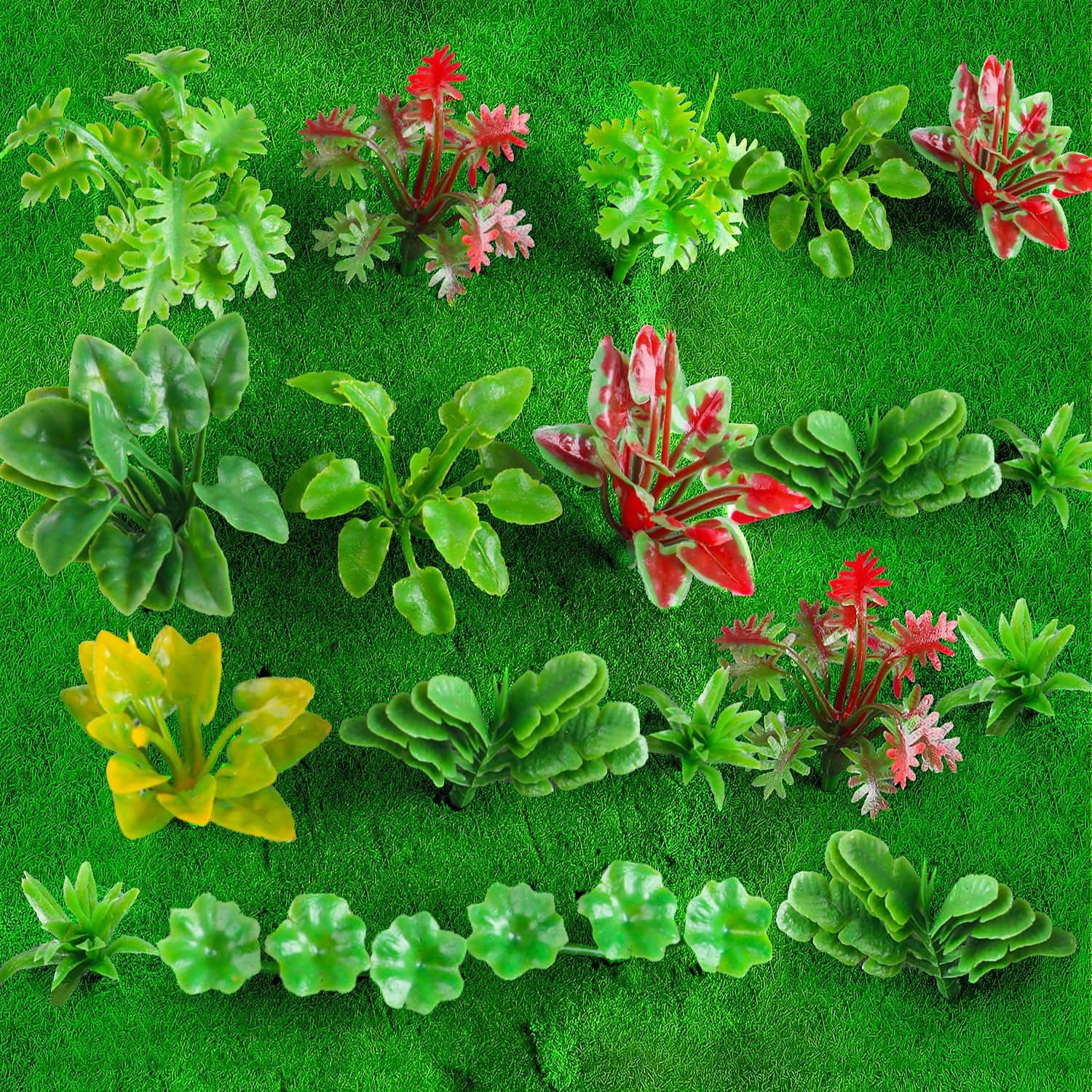
This FOIMAS set delivers 100 small plastic plants in about 10 different designs sized for fairy gardens, train scenery, and diorama projects. You get a mix of tiny shrubs, trees, and flowering plants that are pre-shaped and ready to place on a tabletop layout or small garden scene. The pieces are lightweight and wipe-clean plastic with detailed leaves and stems that read as realistic at close viewing distances. Practical benefits include the large quantity for filling multiple scenes or replacing pieces that get damaged, and the variety of shapes that help create depth in a miniature landscape. Limitations are the uniform plastic material and small scale, which means they are not suitable for outdoor planting or close photographic work that requires ultra‑high realism. For budget hobbyists who want a quick, low-maintenance way to populate a fairy garden or model layout, this set gives a lot of usable pieces for the cost, but modelers seeking premium flocking or handcrafted foliage should look elsewhere.
Best for: People building budget fairy gardens, beginner diorama makers, or hobbyists who need a large quantity of ready-to-use plants to quickly fill scenes without spending much.
Less Ideal for: Collectors or photographers who need ultra-realistic, premium foliage or anyone planning to use pieces outdoors where sun and rain exposure will degrade plastic appearance.
- Large pack of 100 pieces provides enough plants to populate multiple fairy gardens or dioramas
- Ten different designs add visual variety and help create layered miniature scenes
- Durable plastic construction is easy to clean and holds shape over time
- Small sizes (0.8–2.4 inches) are appropriate for model trains and tabletop fairy gardens
- Plastic finish and uniform material limit realism compared with handcrafted or flocked foliage
- Not weatherproof for long-term outdoor exposure in real gardens
Verdict: If you want an inexpensive way to stock a fairy garden or diorama with lots of ready-to-place miniature plants, this 100-piece FOIMAS set delivers strong value.
Optiflora Mini Terrarium Plants (6-Pack, 2" Pots)

| Indoor Outdoor Usage | Indoor |
|---|---|
| Other Special Features of the Product | High Humidity Tolerant, Low Maintenance, Pest Resistant |
| Sunlight Exposure | Partial Shade |
| Moisture Needs | Moderate Watering |
| Unit Count | 6 Count |
These Optiflora mini terrarium plants are a set of six different small varieties sold in 2-inch pots and intended for closed or open terrariums. They are greenhouse-grown and presented as easy-care, humidity-loving plants that prefer indirect or shaded light and consistently damp soil. Typical use is placing them inside a closed glass container or a fairy garden where low light and high humidity are maintained; trim back growth to keep them compact or let them establish slightly larger forms. Notable features include clear care guidance to keep the soil damp, compatibility with sandy potting mixes, and pest-resistant, low-maintenance varieties that suit beginners. Because they come as assorted varieties, ordering multiple packs increases diversity in a single terrarium. Limitations are that the plants are tiny and will need careful moisture monitoring in small closed systems to avoid rot, and exact varieties are not specified so you may get different foliage types than pictured.
Best for: Buyers who want a reliable, low-maintenance set of small plants specifically for creating or replenishing closed terrariums and value easy-care, humidity-tolerant stock.
Less Ideal for: Gardeners seeking named specimen plants, large decorative foliage, or instant mature displays should look for larger, identified plants instead.
- Six different mini plants provide immediate variety for a small terrarium
- Grown for high humidity and low light so they suit closed terrarium conditions
- Sold in 2" pots that make planting into a terrarium straightforward
- Labeled low maintenance with pest resistance and simple watering instructions
- Specific plant varieties are not listed so exact foliage types may vary
- Small size means they will need attention to moisture levels to prevent rot
Verdict: A dependable, low-light, high-humidity plant pack that makes assembling a closed terrarium quick and low-effort.
Altman Plants 20-Pack Live Succulent Assortment (2" Pots)
| Indoor Outdoor Usage | Indoor, Outdoor |
|---|---|
| Moisture Needs | Little To No Watering |
| Sunlight Exposure | Full Sun |
| USDA Hardiness Zone | 5 |
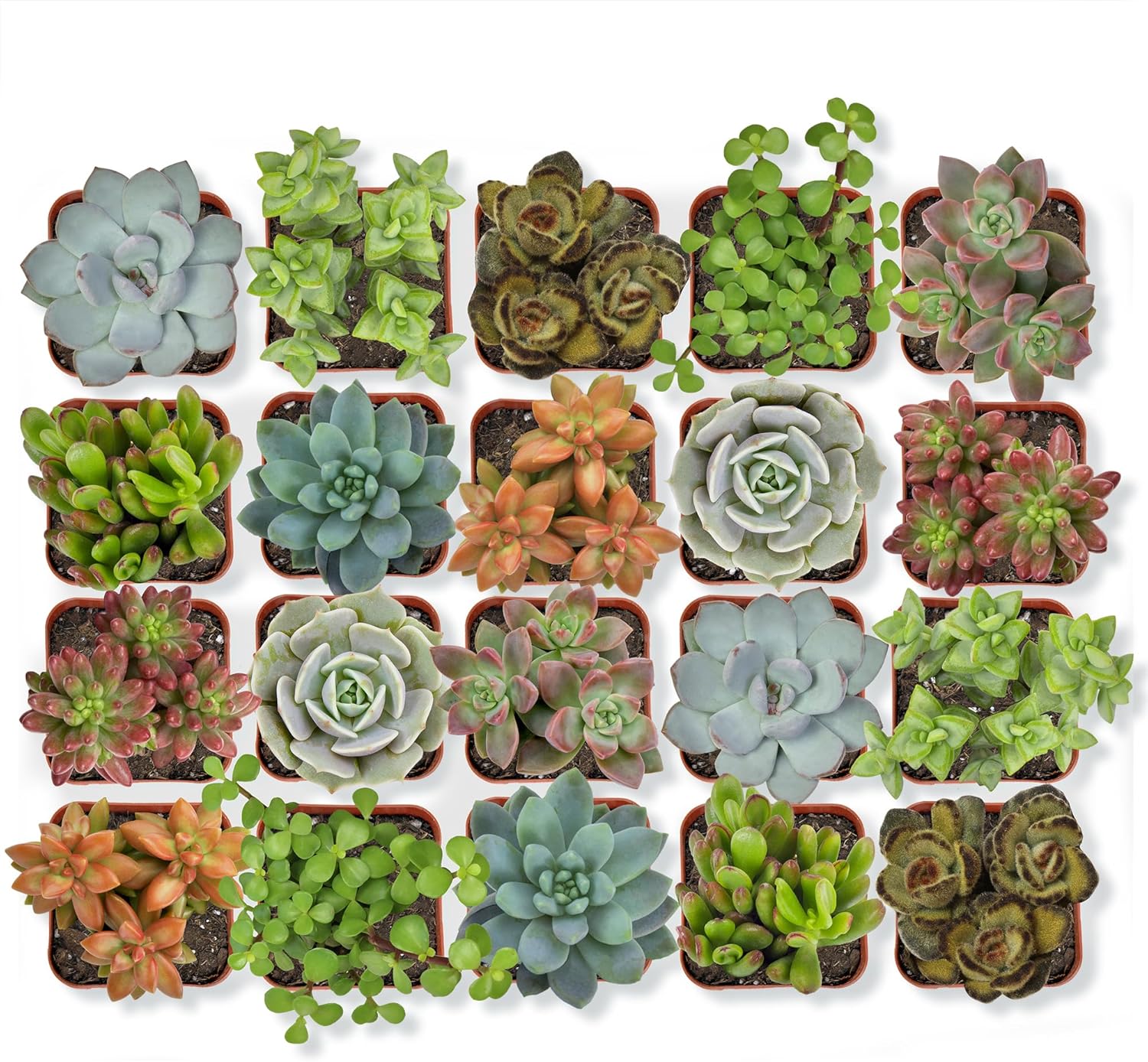
This 20-pack from Altman Plants delivers a varied selection of 2" succulents intended for starting container displays, terrariums, or gifting. Each pack contains ten paired varieties such as Echeveria, Crassula, Sedum and others, so you get color and texture variety without sourcing plants individually. The plants are grown to be drought tolerant and prefer bright light and sandy, well-draining media, which makes them easy to place in small pots or mixed container gardens. Practical benefits include low watering needs, year-round interest, and visibly healthy nursery-rooted stock suited to DIY arrangements. Limitations to note are the small nursery pot size, so plan to pot up into larger containers for long-term growth, and full sun preferences mean some indoor spots may require very bright light or supplemental light. For container projects these give a quick, coordinated start but expect to replant or group them for mature displays.
Best for: Buyers who want a reliable, low-maintenance way to start multiple container displays or DIY succulent projects and who value visible social proof that the mix performs well for other gardeners.
Less Ideal for: Gardeners seeking mature, display-size specimens or those who need plants for consistently low-light indoor spots should consider larger, sun-tolerant varieties or shade-adapted houseplants instead.
- Twenty individually potted succulents provide immediate variety for mixed container arrangements
- Pairs of ten different varieties make it easy to create balanced, symmetrical plantings
- Low watering needs and drought tolerance reduce maintenance for container growers
- Suitable for both indoor and outdoor container use when given bright light
- Plants come in 2" nursery pots and will need repotting for sustained growth
- Many varieties prefer full sun, which can limit bright indoor placement options
Verdict: A convenient, low-maintenance 20-pack that gets container succulent projects started quickly with a variety of ready-to-pot plants.
Choosing the Right Fairy Garden Plants: Key Factors to Consider
Mature Size and Scale
The mature height and spread determine whether a plant reads as miniature or accidentally outgrows the scene. Choose plants with predictable, compact habits that stay within the intended scale for fairy garden furniture and structures. When species have variable sizes, select dwarf cultivars or maintain tighter shaping through regular pinching and light pruning. Remember that soil fertility and container size influence final size, so potting into very rich mix or a larger container can make even slow growers stretch.
Light Requirements and Placement
Light exposure controls growth rate, leaf color, and flowering in many small plants. Assess the planned location for the fairy garden-full sun, part sun, or mainly shade-and pick plants known to perform under those conditions. Some plants will tolerate a range but may become leggy in low light, while sun-loving types will scorch in hot afternoon exposure. Matching plant light needs to site conditions reduces stress and the need for corrective pruning or relocation.
Container and Soil Suitability
Fairy gardens are typically planted in confined soil volumes, so root behavior is critical. Choose species that accept restricted rooting without becoming root-bound or developing invasive tendencies. Use a well-draining potting mix to prevent soggy soil that leads to root rot. Consider plants that tolerate periodic drying between waterings if your container lacks deep moisture retention. Good container-suitable plants keep maintenance predictable and reduce the need for frequent repotting.
Growth Rate and Pruning Response
A moderate to slow growth rate helps maintain the miniature scale with less intervention. But even slow growers benefit from timely pruning to preserve shape and proportion. Pick plants that respond well to pinching and light shearing so you can sculpt them without causing stress. Fast-growing choices can work if you are prepared for regular maintenance, but they will demand more time and may outcompete other miniatures in the same pot.
Seasonal Interest and Texture
Tiny gardens rely on texture and small-scale color shifts rather than large blooms to feel lively. Favor plants that offer year-round structure, interesting foliage, or small, delicate flowers that complement the miniature aesthetic. Evergreen or semi-evergreen species provide winter structure while seasonal bloomers add focal moments. Combining contrasting leaf shapes and colors improves depth and realism in a very small planting.
Hardiness and Stress Tolerance
Consider the local climate and where the fairy garden will be displayed. Some plants handle temperature swings, wind, and limited root insulation better than others. For outdoor miniatures, choose plants rated for local winter lows or plan to bring containers into protected spaces during extremes. Tolerance to drought or occasional overwatering is a bonus because small pots heat and dry quickly. Stress-tolerant plants reduce replacement and keep your tiny scene intact through changing conditions.
Setting Up a Successful Fairy Garden Container
Start with a shallow container that keeps scale in check. Use pots with drainage holes and a free-draining mix amended with a bit of grit or perlite to avoid waterlogging. Place a layer of coarse material or broken pottery at the bottom only if drainage is slow; otherwise rely on good potting mix and drainage holes.
Prepare planting positions before potting. Arrange the tallest miniature plants toward the back or center, then fill with lower-growing species and groundcover. Keep spacing tight but allow room for a small amount of growth. After planting, water thoroughly and monitor the pot for the first week to confirm the mix drains well and plants settle correctly.
- Use scale-appropriate soil depth; many miniature plants do well in 3 to 6 inches of mix.
- Avoid heavy garden soil which compacts in shallow containers.
- Group plants with similar light and water needs in the same container.
Watering and Fertilizing Small Volume Plantings
Small pots dry faster than beds, so check moisture frequently. Water thoroughly until excess drains from the hole, then allow the top inch of soil to dry before irrigating again for most small species. Adjust frequency for the season and exposure; summer sun may require daily checks while cool, shaded spots need less.
Fertilize lightly. Use a dilute balanced fertilizer during the growing season to avoid leggy, lush growth that overwhelms the miniature scale. Slow-release granules applied sparingly at potting time can reduce the need for frequent feeding in small containers.
- Watch for signs of overwatering such as yellowing leaves or poor root health.
- Flush containers occasionally to avoid salt buildup from fertilizers.
Design Tips to Keep Scale Realistic
Think like a landscape designer at tiny scale. Use a mixture of low mounds, single-stemmed miniatures, and groundcover textures to create depth. Small rocks, low pathways, and proportionate accessories enhance the illusion of a lived-in miniature landscape.
Limit the number of focal plants to one or two per container. Surround them with low, spreading species that knit the scene together. Repeat a plant or color to create cohesion, but avoid high-contrast plants that dominate the composition.
- Use trimmed moss or fine-leaved groundcovers to simulate lawns.
- Place miniature trees or shrubs in the back third of the arrangement to create perspective.
Seasonal Care and Overwintering Strategies
Adjust care through the year. Reduce watering and stop fertilizing as plants enter dormancy. Remove spent flowers and trim to shape in spring as growth resumes. For outdoor containers in cold climates, consider insulating pots or moving them to a sheltered spot to protect roots from freeze-thaw cycles.
Some fairy garden plants are tender and perform best as houseplants in winter. If a plant is not hardy in your zone, prepare a temporary indoor location with bright light and cooler night temperatures to maintain dormancy without encouraging excessive growth.
- Bring containers under cover during heavy frost or prolonged freezing.
- Refresh the top inch of soil in spring to replenish nutrients without repotting fully.
Companion Planting for Miniature Scenes
Select companions that share water and light needs. Combining drought-tolerant succulents with water-loving mosses will create maintenance conflicts. Instead, pair plants with similar rhythms so their care remains unified. Use contrasting textures like tiny-leaved groundcovers against small, upright forms to suggest gardens at real scale.
Avoid mixing fast-spreading species with tight growers unless you are prepared to prune aggressively. Companion planting should enhance the miniature narrative and remain manageable in a confined soil volume.
- Try repeating a small-leaved variety in two or three spots to suggest continuity.
- Include at least one evergreen or semi-evergreen for winter form.
How We Chose the Best Fairy Garden Plants
We focused on features that matter most for plants used in fairy gardens and other miniature displays. Selection prioritized compact mature size and slow to moderate growth rates so plants maintain scale in small containers. We also weighed light tolerance, choosing species that perform in a range of exposures from bright indirect sun to partial shade common on porches and windowsills. Root behavior and container suitability were evaluated to avoid aggressive or root-bound tendencies that quickly overwhelm small soil volumes. Seasonal interest in foliage, flowers, or texture was considered so each plant offers visual appeal across months. Ease of maintenance and pruning responsiveness were included because many miniature gardens are hobby projects for casual gardeners. We excluded plants known to grow vigorously, develop large root systems, or require extensive space or specialized care. The final list reflects a balance of size control, environmental tolerance, aesthetic contribution, and low-maintenance habit aligned with typical fairy garden conditions.
FAQ
What size container works best for fairy garden plants?
Shallow containers 3 to 6 inches deep often work well because they keep plants in scale and limit root expansion. Ensure there is adequate drainage and choose a pot width that fits your design while keeping soil depth appropriate for the selected plants.
How often should I water fairy garden containers?
Watering frequency depends on exposure and season. Check moisture daily in hot weather; allow the top inch to dry between thorough waterings. In cool or shaded locations, water less often to avoid soggy soil that can cause root problems.
Can I use houseplants in an outdoor fairy garden?
Some houseplants adapt to outdoor conditions if light and temperature needs match the site. Acclimate them gradually and avoid placing tropical houseplants in cold or exposed outdoor locations unless you plan to bring them indoors when temperatures drop.
How do I prevent plants from outgrowing the miniature scale?
Choose naturally compact species or dwarf cultivars and prune regularly to maintain proportion. Controlling soil fertility and using smaller containers will also help keep overall size in check.
Should I fertilize miniature plantings?
Yes, but use a light approach. A dilute balanced fertilizer during the growing season or a small amount of slow-release granules at potting time supplies nutrients without encouraging excessive, scale-breaking growth.
What should I do if a plant becomes root-bound in a fairy garden pot?
If the plant shows decline, trim some roots and repot into a slightly larger container or replace it with a more container-tolerant species. Regular maintenance and occasional inspection help prevent sudden decline from severe root restriction.
Final Verdict
Choosing the right fairy garden plants comes down to matching mature size, light tolerance, and container behavior to your site and design goals. Prioritize compact, slow-growing species that respond well to pruning and pair companions with similar water and light needs. Expect to do light seasonal maintenance and adjust care for winter protection where necessary. With those tradeoffs in mind, you can create a durable, believable miniature landscape that stays in scale and delivers long-term enjoyment.
