

Note: This article contains affiliate links. If you click on these links and make a purchase, I may earn a small commission at no extra cost to you. This helps support my research and content. Read my full affiliate disclosure here.
Choosing the right fall winter fertilizer matters because the wrong feed in late season can encourage tender top growth that freezes or fail to supply the nutrients plants need to overwinter. In cooler months you want formulations that shift energy into roots and crowns, limit lush top growth, and retain nutrients through wet, cold soil. This guide shortlists seven top fall winter fertilizers that are suited to garden beds, lawns, and containers. We evaluated candidates for nutrient balance, how they behave in cold conditions, and ease of use so you can select a winter feeding approach that matches your garden and time available.
Top Picks at a Glance
| Best Overall The best all-around choice for most situations | The Andersons PGF Balanced 10-10-10 Granular Fertilizer with Micronutrients and 2% Iron (18 lb, 5,000 sq ft) | 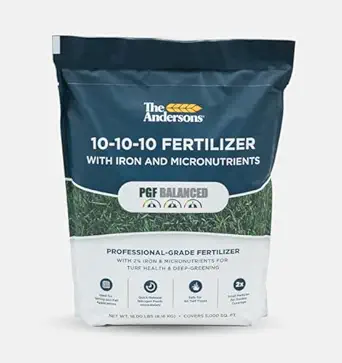 |
| Best Quality Built to a higher standard if you want something more solid | GreenView Fairway Formula Fall Lawn Fertilizer, 45 lb bag |  |
| Best Value The sweet spot between price and what you get | Jonathan Green Winter Survival Fall Lawn Food (10-0-20) – 15,000 sq ft |  |
| Best Budget The cheapest option that still gets the job done reliably | TPS Nutrients Fall Liquid Fertilizer, 8 fl oz |  |
| Highest Rated A top-rated pick with lots of positive feedback | Jonathan Green 10-0-20 Winter Survival Fall Fertilizer, 15 lb |  |
| Most Popular A crowd favorite that many people choose with confidence | Scotts Turf Builder WinterGuard Fall Lawn Food, 10 lb. |  |
| Best Seller A high-volume bestseller chosen again and again | Scotts Turf Builder WinterGuard Fall Lawn Food, 12.5 lb |  |
The Andersons PGF Balanced 10-10-10 Granular Fertilizer with Micronutrients and 2% Iron (18 lb, 5,000 sq ft)

| Item Form | Granules |
|---|---|
| Application Method | spreader |
| Coverage | 5000 square feet |
| Mixing Ratio | 10-10-10 |
| Target Species | Lawns and Gardens |
The Andersons PGF Balanced 10-10-10 is a fine-particle granular fertilizer designed for broad, even coverage across lawns and garden beds. It is typically applied with a broadcast spreader and then watered in to activate the quick-release nutrients. The unusually small particle size means a single 18 lb bag claims coverage up to 5,000 sq ft and helps reduce patchy feeding compared with coarse granules. The formula is balanced for nitrogen, phosphorus and potassium and includes micronutrients plus 2% iron for enhanced greening. It works well for spring and fall applications, for establishing new turf or boosting established lawns, and can be worked into soil for vegetable or flower beds. Users should sweep or blow product off paved surfaces to avoid iron staining and store any leftover in a dry area. Because the fertilizer is quick-release, expect faster visible response but shorter duration between applications than slow-release products.
Best for: Homeowners who prioritize consistent, dependable feeding and want a straightforward granular option that gives quick visible results across lawns and planting beds.
Less Ideal for: Gardeners seeking a long-duration, slow-release feeding program or those who need a no-iron product to avoid any risk of surface staining.
- Very fine particle size for more even coverage and less patchy feeding
- Balanced 10-10-10 formula with added micronutrients and 2% iron for deeper greening
- Suitable for lawns, gardens, trees and shrubs and can be applied at planting or during the season
- Covers up to 5,000 sq ft from a single 18 lb bag when applied as directed
- Quick-release nutrients mean results appear sooner but may require more frequent reapplication versus slow-release formulas
- Contains iron that can stain sidewalks and driveways if not cleaned off immediately
Verdict: Choose this fine-particle 10-10-10 if you want a reliable, fast-acting granular fertilizer that delivers even coverage and deeper greening for summer lawn care.
GreenView Fairway Formula Fall Lawn Fertilizer, 45 lb bag

| Item Form | Granules |
|---|---|
| Coverage | 15,000 sq. ft. |
| Specific Uses For Product | Plant Growth, Root Development, Seed Development, Soil Conditioning |
| Target Species | lawn grasses |
| Mixing Ratio | 30-0-12 |
GreenView Fairway Formula Fall Lawn Fertilizer is a granular, performance-focused product designed for preseason lawn care. It combines immediate-release and slow-release nitrogen—59% slow-release by the manufacturer—to deliver steady, even greening without a surge in top growth while feeding continuously for up to 12 weeks. Apply with a broadcast or drop spreader in the fall to repair summer damage, strengthen root systems, and improve spring appearance; the bag covers roughly 15,000 square feet. Notable features include a phosphate-free formula to limit runoff concerns and an N-P-K mixing ratio listed as 30-0-12 that supports both color and root development. Practical benefits are straightforward: long-lasting nitrogen reduces the need for repeat applications that can stress turf, and the granular form is easy to spread with standard lawn equipment. Important limitations are that it is intended as a seasonal fall treatment and not a multi-issue lawn program, and directions advise against hand spreading and recommend careful storage to keep it out of reach of children.
Best for: Homeowners focused on improving lawn performance who want a strong fall treatment to rebuild roots and promote a better spring lawn using a single, long-lasting application.
Less Ideal for: Gardeners seeking a multi-season granular program or products that combine weed control and fertilization in one step should look elsewhere.
- High proportion of slow-release nitrogen for even greening and reduced surge growth
- Covers up to 15,000 sq. ft. from a single 45 lb bag for large yards
- Phosphate-free formulation to help reduce nutrient runoff concerns
- Feeds continuously for up to 12 weeks, cutting down on repeat applications
- Formulated specifically for fall use and not intended as a year-round complete lawn program
- Requires a spreader for safe, effective application and should not be hand spread
Verdict: If you want a single, performance-focused fall fertilizer to build roots and deliver steady greening across a large lawn, this 45 lb GreenView formula is an efficient choice.
Jonathan Green Winter Survival Fall Lawn Food (10-0-20) – 15,000 sq ft

| N-P-K | 10-0-20 |
|---|---|
| Form | Granules |
| Coverage | 15,000 sq. ft. |
| Unit Count | 720 Ounce |
Jonathan Green Winter Survival is a granular fall lawn fertilizer with a 10-0-20 N-P-K analysis designed for use between August and November to repair summer damage and prepare turf for winter. You spread it across lawns (one application in early fall and an optional late-fall follow-up) to deliver slow-release nitrogen for extended greening and a high potassium dose to encourage deeper rooting and nutrient storage. The 45 lb bag covers up to 15,000 sq ft and needs no mixing, so it works with standard broadcast or drop spreaders and is suitable for reseeding or established turf. Benefits include season-long feeding for up to three months, broad compatibility with grass types, and a formulation geared toward winter hardiness and early spring green-up. Limitations are that it is a single-season, non-liquid granular product so results depend on correct timing and even spreading, and it does not supply phosphorus for root establishment beyond what the label specifies.
Best for: Buyers who prioritize a conservative, proven fall program to protect existing lawns through winter and want an easy-to-apply granular fertilizer that supports spring green-up.
Less Ideal for: People installing a new lawn from seed who need a higher-phosphorus starter fertilizer or gardeners seeking a liquid foliar feed for quick greening.
- High potassium (20) formula to promote deeper roots and better winter stress tolerance
- Slow-release nitrogen that maintains greener turf for up to three months
- Large 45 lb bag covers up to 15,000 sq ft for fewer trips to refill
- No mixing required and compatible with standard spreaders for easy application
- No phosphorus in the formula, so it may not be ideal as the only product when establishing new lawns
- Granular form requires careful spreading and correct timing to achieve consistent results
Verdict: Choose this if you want a straightforward, high-potassium fall fertilizer to strengthen roots and carry your lawn through winter for an earlier spring green-up.
TPS Nutrients Fall Liquid Fertilizer, 8 fl oz

| Item Form | Liquid |
|---|---|
| Coverage | Low |
| Target Species | plants |
| Liquid Volume | 8 fluid ounces |
This 8-ounce liquid fall fertilizer from TPS Nutrients is designed to be applied in autumn to promote deeper root development and help plants recover as the growing season ends. It is typically used on lawns, garden beds, shrubs, and trees where a low-coverage, targeted boost is wanted before winter. The product highlights easy application and a formulation aimed at strengthening roots and increasing plant resilience through colder months. Because it is a concentrated liquid in a small bottle, a little goes a long way for spot treatments or smaller yards and ornamentals. The main practical benefit is seasonal preparation: strengthening plants now can reduce winter stress and improve spring green-up. Limitations are its low coverage and small unit size, which make it less efficient for large lawns or extensive landscapes unless purchased in multiple bottles, and there is limited publicly listed dosing information on the label for large-scale use.
Best for: Best for gardeners with small yards, containers, or targeted plantings who want an easy-to-use fall treatment to boost root health before winter.
Less Ideal for: Not a good fit for owners of large lawns or commercial properties who need high-coverage, bulk fertilizer solutions.
- Formulated to support root strength and seasonal recovery
- Suitable for a range of plants including lawns, shrubs, flowers, and trees
- Liquid concentrate allows precise spot or small-area application
- Low coverage and small bottle size make it impractical for large lawns without multiple purchases
- Limited dosing/coverage details available in the listing
Verdict: A compact, easy-to-apply fall liquid fertilizer ideal for small gardens and targeted winter preparation.
Jonathan Green 10-0-20 Winter Survival Fall Fertilizer, 15 lb

| Net weight | 15 pounds |
|---|---|
| N-P-K | 10-0-20 |
| Intended use | Fall winterizer for cool-season grasses |
Jonathan Green 10-0-20 Winter Survival is a granular fall lawn fertilizer designed to strengthen roots and help grass store nutrients for winter. Homeowners apply it in autumn after overseeding or late-season maintenance to support recovery from summer stress and improve spring green-up. The 10-0-20 formula emphasizes potassium for winter hardiness while providing nitrogen for late-season growth; the granular form spreads evenly and covers typical yard areas without special equipment. Practical benefits include straightforward application, compatibility with cool-season grasses, and a focused nutrient profile aimed at root development and winter survival. Limitations are that the formula is specialized for fall use rather than all-season feeding, so it should be integrated into a full-year program rather than used alone, and users should follow label directions for timing and rates to avoid late-season excess growth. For gardeners who want a reliable, purpose-built winterizer, this product is a simple, effective choice.
Best for: Homeowners seeking a dependable fall treatment to strengthen cool-season lawns and improve spring recovery who prioritize products with a clear, season-specific purpose.
Less Ideal for: Gardeners looking for an all-season or slow-release multi-application fertilizer or those managing warm-season turf should consider a different product.
- 10-0-20 formulation emphasizes potassium for improved winter hardiness
- Granular formula spreads evenly for easy backyard application
- Specifically formulated for fall/winter use to strengthen roots and nutrient storage
- Suitable for use after overseeding to support recovery and spring green-up
- Designed for fall/winter application so it is not a complete year-round fertilizer
- Single bag size may be insufficient for larger lawns requiring multiple bags
Verdict: Choose this product if you want a straightforward, reliable fall winterizer that focuses on root strength and winter survival for cool-season lawns.
Scotts Turf Builder WinterGuard Fall Lawn Food, 10 lb.

| Item Form | Granules |
|---|---|
| Specific Uses For Product | Lawn Fertilizer |
| Application Method | spread |
| Coverage | 4000 |
| Target Species | lawn grasses |
Scotts Turf Builder WinterGuard is a granular fall lawn food designed to build strong, deep roots and help turf recover from summer heat, drought, and regular wear. It is applied with a broadcast or drop spreader over a lawn in autumn and can be used on any grass type. The bag covers about 4,000 sq. ft., and the package directions include recommended spreader settings and note that watering-in is optional for fast results. In practice this product provides a straightforward, DIY-friendly way to add nutrients before winter; the granules are easy to spread and work with standard spreaders. Notable features are its all-grass compatibility and clear application guidance. Limitations are that it is a single-season bag sized for small to medium yards and it does not include weed or insect control functions found in some other Scotts formulas, so you may need additional products if those issues are a concern. For homeowners wanting a simple autumn boost to root strength, this is an effective, no-frills option.
Best for: Homeowners who want a simple, reliable fall fertilizer to strengthen roots and help lawns recover from summer stress without complicated application steps.
Less Ideal for: People managing large lawns who need wide-coverage bulk fertilizer or those who want combined weed or insect control in the same product.
- Formulated specifically for fall to build deep, winter-ready roots
- Works on all grass types so it fits mixed lawns
- Clear application instructions and spreader settings for easy DIY use
- Covers 4,000 sq. ft. from a single 10 lb. bag for small to medium yards
- No built-in weed or insect control so additional products may be needed
- Single 10 lb. bag may be small for larger properties
Verdict: Choose this bag if you want an easy-to-apply fall fertilizer that strengthens roots and helps your lawn recover before winter.
Scotts Turf Builder WinterGuard Fall Lawn Food, 12.5 lb

| Item Form | Capsules |
|---|---|
| Application Method | spreader |
| Specific Uses For Product | Lawn Fertilizer |
| Coverage | Full |
| Mixing Ratio | 30-0-10 |
Scotts Turf Builder WinterGuard is a fall-specific lawn food designed to strengthen roots and help turf recover from summer heat and drought before winter. It is a granular product sold in a 12.5 lb bag that the manufacturer recommends applying with a broadcast spreader to wet or dry lawns; light watering after application can speed nutrient uptake but is not required. The formulation emphasizes root-building nutrients and is suitable for all grass types, so it works for northern and southern lawns alike. For practical use, one bag covers roughly 5,000 square feet, making it convenient for small to medium yards and for homeowners who follow a seasonal feeding plan. The product is easy to apply and integrates into a typical fall lawn care routine. Limitations are that it is a single-season fall feed rather than an all-in-one yearlong program, and you will still need a spreader and basic timing knowledge to get uniform coverage and the best results.
Best for: Homeowners who prefer low-risk, proven seasonal lawn care and want an easy-to-use fall fertilizer to strengthen roots and recover turf after summer stress.
Less Ideal for: Large-property owners or those seeking an all-in-one yearlong fertilization program should consider higher-coverage or multi-application products instead.
- Formulated specifically for fall to encourage deep root growth
- Works on all grass types so it is versatile for most lawns
- Easy to apply with a standard spreader and does not require watering-in
- One 12.5 lb bag covers about 5,000 sq. ft., suitable for small to medium yards
- Designed as a fall feed only so it does not replace a full-year fertilizer schedule
Verdict: Use this simple, fall-focused lawn food if you want a reliable, easy-to-apply product to build deep roots and help your lawn recover before winter.
Choosing the Right Fall Winter Fertilizer: Key Factors to Consider
Nutrient Ratio And Timing
The ratio of nitrogen, phosphorus, and potassium strongly influences late-season plant behavior. Lower nitrogen with moderate phosphorus and potassium shifts plant energy away from tender new shoots toward root and crown storage. Choosing a fertilizer labeled for fall or winter use reduces the risk of unwanted late growth.
Timing matters as much as ratio. Apply too early and you can still stimulate top growth that will be damaged by cold. Apply too late and cold soils may prevent uptake. Aim for treatments that release nutrients in cool conditions so plants can absorb what they need before dormancy.
Release Mechanism In Cool Soil
How a fertilizer releases nutrients in low soil temperatures determines whether it will be available when plants need it. Slow-release granules that work at lower temperatures, mineral-based salts that remain plant-available, and some organic materials that mineralize slowly can all perform differently in cold soil.
Avoid products that require warm soil microbial activity to convert nutrients; these often sit inactive through autumn and fail to feed plants before winter. Look for formulations with proven cold-weather performance or predictable dissolution characteristics.
Leaching And Weather Resistance
Wet autumns and winter thaw cycles increase the risk of nutrient leaching, especially for soluble nitrogen. Fertilizers with reduced leaching profiles, such as coated or stabilized nitrogen, organic forms that bind to soil, or products with higher potassium and phosphorus proportions, help keep nutrients in place.
Consider how the product behaves under heavy rain and freeze-thaw. A fertilizer that washes away or transforms into unavailable forms during winter does not benefit spring growth and can contribute to nutrient runoff problems.
Form And Application Method
Granules, powders, liquid concentrates, and spikes all have different pros and cons for late-season feeding. Granular slow-release products are convenient for broadcast or targeted spread; liquids allow quick delivery through irrigation; organic amendments add soil-building material but may release nutrients more slowly.
Pick a form that fits how you maintain the area. For lawns, spreadable granules are usually easiest. For containers or newly planted shrubs, water-soluble or root-drench forms provide more direct uptake when needed.
Safety For Plants And Soil Biology
Some late-season fertilizers can harm tender roots or soil organisms if used at high rates. Products formulated for fall use typically avoid salts and herbicidal effects that stress roots. If you rely on soil life for long-term fertility, choose fertilizers that do not dramatically disrupt microbial communities.
Read directions for maximum rates and any restrictions on application near young plants. A balanced approach protects root health during cold stress and preserves soil structure for spring recovery.
Versatility Across Garden Uses
You may want a single fall winter fertilizer that works on lawns, beds, trees, and containers. Versatile products reduce storage and simplify seasonal chores but may require adjusted application rates for different uses.
Check whether the product is safe for woody plants and perennials as well as turf. Some formulations are tailored to one use and may be inappropriate for fragile container roots or newly planted specimens.
When To Apply Fall Winter Fertilizer
The best window for application depends on your local climate and plant types. Aim to feed after active summer growth has slowed but several weeks before the first expected hard freeze so plants can take up nutrients into roots and crowns.
For lawns, a mid-to-late autumn application that avoids encouraging late shoot growth is typical. For trees and shrubs, treat when leaves begin to drop and growth patterns shift toward storage. In milder climates the window extends later into fall, while in cold regions you must move earlier.
- Apply after summer heat wanes and before prolonged soil freezing.
- Avoid feeding just before an expected deep freeze or heavy snow.
- Staggered, lighter applications often perform better than one heavy dose.
Organic Versus Synthetic Options
Organic materials such as composted manures, bone meal, or kelp offer slow nutrient release and benefit soil structure. They are less likely to cause rapid top growth and often continue releasing small amounts through cool conditions as microbial activity persists.
Synthetic formulas can include stabilized nitrogen and coated granules that release predictably in cold soils. These products are useful when you need predictable nutrient timing or stronger phosphorus and potassium boosts without adding bulk organic matter.
- Organics build soil long-term but usually release more slowly.
- Synthetic cold-release blends give precise nutrient delivery.
- Consider combining small organic additions with a targeted synthetic application for balanced results.
Applying Fertilizer In Containers And Raised Beds
Containers and raised beds warm and cool faster than in-ground beds, which affects nutrient availability. Container soils often lose nutrients more quickly with watering and exposure, so choose forms that deliver nutrients without forcing late top growth.
Use lower rates in containers and consider water-soluble or slow-release granules designed for confined root zones. Incorporate organic matter in spring rather than relying solely on heavy fall feedings in pots.
- Reduce recommended rates for containers to avoid salt buildup.
- Water in granular products thoroughly to help uptake before frost.
- Topdress raised beds lightly and avoid burying large amounts of fresh high-nitrogen material.
Winterizing Lawns With The Right Feed
A fall winter fertilizer for lawns should focus on root strength and carbohydrate storage rather than green-up. Fertilizers designed for late-season turf often reduce quick-release nitrogen while supplying phosphorus and potassium to support roots and stress tolerance.
Timing and application rate are critical: too much nitrogen close to frost can cause winter injury. Use a spreader for even coverage and follow label guidance for late-season applications.
- Choose blends labeled for late-season or winter lawn care.
- Avoid high-nitrogen summer-style lawn feeds in autumn.
- Light, well-timed applications support spring recovery without promoting freeze-susceptible growth.
Storing And Handling Fall Winter Fertilizers
Store fertilizers in a cool, dry place to prevent caking and nutrient loss. Keep products sealed away from moisture and animal access. Proper storage preserves application consistency across the season.
When handling, wear gloves and follow recommended protective measures. Avoid applying on windy, rainy days to reduce drift and runoff risk. Clean spreaders or sprayers between uses so product residues do not contaminate future applications.
- Keep granules dry and liquids tightly capped.
- Label containers with application dates and target areas.
- Rinse equipment after use to prevent cross-contamination.
How We Chose the Best Fall Winter Fertilizer
We focused on characteristics that actually affect plants during the transition to dormancy and in cold soil. Priority went to nutrient profile specifics that favor root development and winter hardiness, such as lower nitrogen with adequate phosphorus and potassium, plus forms of nitrogen that are less likely to stimulate late-season shoot growth. We evaluated release behavior in cool temperatures, including slow-release formulas and organic sources that continue supplying nutrients at low soil temperatures. Application practicality was another filter. Products that are easy to broadcast, dissolve reliably for watering in, or are safe for container use scored higher. Persistence in wet winter conditions and reduced leaching risk were required features. We also considered versatility across common garden uses: beds, shrubs, trees, and lawns. Exclusions: products that primarily drive leafy growth, high nitrogen summer blends, or fertilizers that rely on heat-dependent microbial activation were excluded. The final shortlist favors fertilizers that support root storage, winter hardiness, and manageable application for home gardeners.
FAQ
Can I use regular summer fertilizer in autumn?
Summer fertilizers usually have higher quick-release nitrogen that encourages soft top growth, which increases frost risk. It is better to choose a formula formulated for late season use or reduce the rate of a regular feed to avoid promoting new shoots.
Will fall feeding harm dormant plants?
When applied at recommended rates and timing, fall feeding is intended to support root reserves and should not harm dormant plants. Overapplication or using high-nitrogen products close to freezing temperatures can create tender growth that is vulnerable.
Is organic fall fertilizer effective in cold climates?
Organic fertilizers can be effective, especially for building soil health, but some rely on microbial activity that slows in cold soils. Choose organic materials known to mineralize in cool conditions or pair them with a cold-release product for more immediate availability.
How does rain affect fall fertilizer applications?
Heavy autumn rain increases leaching risk, especially for soluble nitrogen. Apply before a period of milder weather when possible, and prefer products with lower leaching profiles or stabilized nitrogen to reduce nutrient loss during wet spells.
Should I feed newly planted shrubs in late fall?
Newly planted shrubs benefit from root-focused nutrition, but avoid high rates that stimulate top growth. Use a gentle, root-enhancing formulation and follow planting guidance to support establishment without promoting vulnerable shoots.
Final Verdict
Prioritize fertilizers that favor root and crown strength, release nutrients in cool soils, and resist leaching when choosing a fall winter fertilizer. Match form and application rate to the planting type so you do not encourage late-season top growth at the expense of winter hardiness. Decide based on your garden needs: choose slower-release or organic approaches for long-term soil health, or predictable cold-weather formulations when you need reliable nutrient timing. Proper timing and conservative rates are the simplest ways to protect plants through winter and set up a strong spring.
