

Note: This article contains affiliate links. If you click on these links and make a purchase, I may earn a small commission at no extra cost to you. This helps support my research and content. Read my full affiliate disclosure here.
Choosing the right fertilizer for desert plants matters because arid soils and intermittent irrigation create different nutrient needs than wetter gardens. In dry climates you need a feed that supports root health, manages salt buildup, and works with low-water schedules. This guide covers seven shortlisted fertilizers suited for desert-adapted shrubs, succulents, cacti, and native perennials. We evaluated options on how they deliver balanced nutrients, control salts, and fit water-efficient routines. Read on to see which types match your soil and maintenance style before the product list below.
Top Picks at a Glance
| Best Overall The best all-around choice for most situations | The Grow Co Slow‑Release Succulent & Cactus Fertilizer, 5 oz |  |
| Best Quality Built to a higher standard if you want something more solid | Down To Earth Organic Cactus & Succulent Mix 2-4-8 (1 lb) |  |
| Best Value The sweet spot between price and what you get | Grow More Cactus Juice Liquid Fertilizer (1-7-6) 16 oz |  |
| Best Budget The cheapest option that still gets the job done reliably | Schultz Cactus Plus Liquid Plant Food (2-7-7), 4 fl oz |  |
| Highest Rated A top-rated pick with lots of positive feedback | GARDENWISE Liquid Kelp Concentrate for Desert Rose (16 oz) |  |
| Most Popular A crowd favorite that many people choose with confidence | Miracle-Gro Indoor Plant Food for Cactus & Succulent, 8 fl. oz. (2-Pack) |  |
| Best Seller A high-volume bestseller chosen again and again | TPS NUTRIENTS Succulent Fertilizer Liquid Plant Food, 8 oz |  |
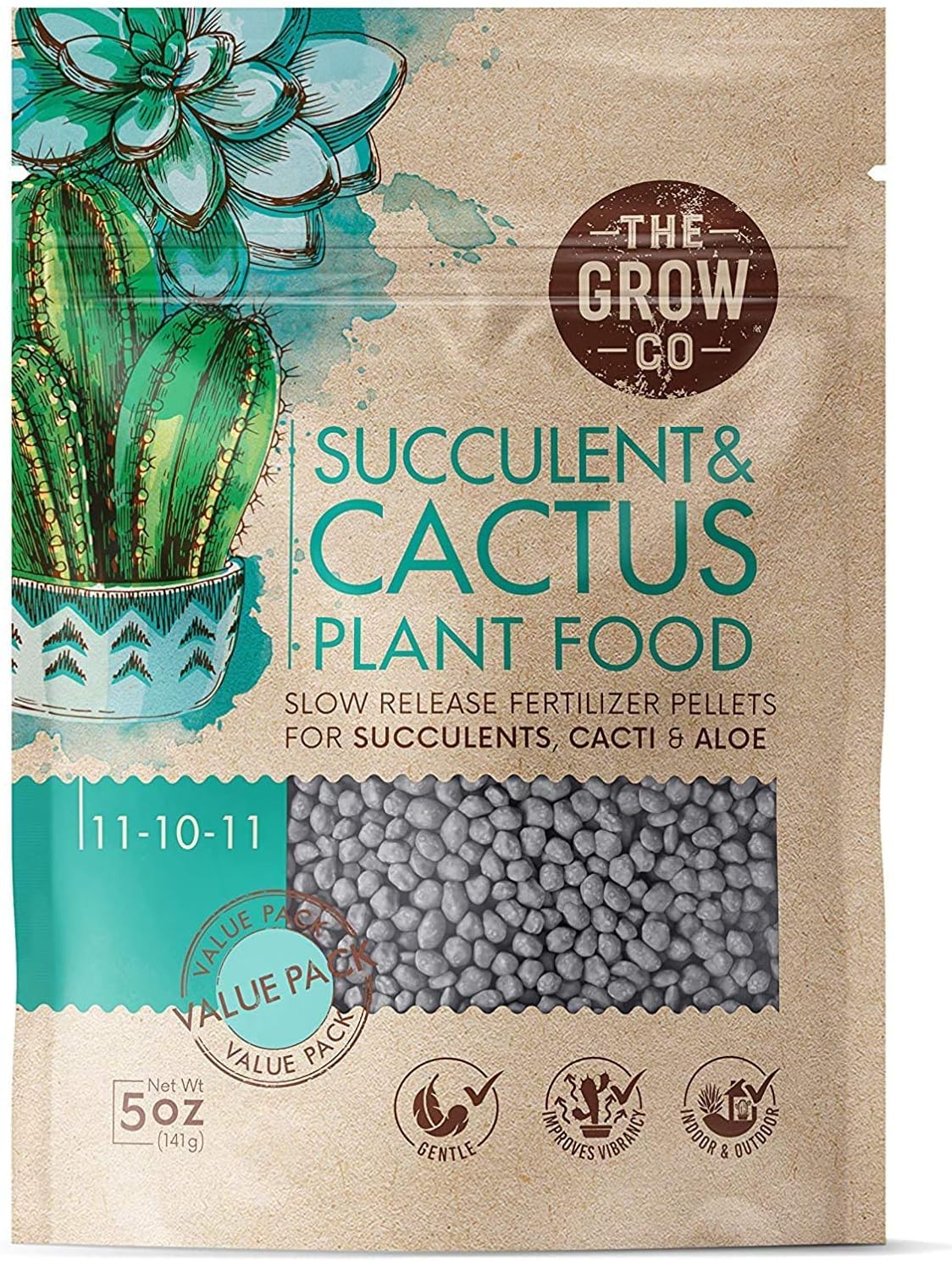
The Grow Co Slow‑Release Succulent & Cactus Fertilizer, 5 oz
| Item Form | Granules |
|---|---|
| Specific Uses For Product | Plant Food,Root Development |
| Application Method | Sprinkle or Poke Holes |
| Target Species | Cactus |
| Unit Count | 5 Ounce |
This granular slow‑release fertilizer is designed to give potted desert plants a steady, low-strength feed without frequent applications. You sprinkle or poke the coated granules into the top layer of potting mix, water once to activate them, and they release nutrients gradually for up to nine months. That makes it useful for indoor and outdoor succulents, cacti, aloe and similar plants where overfeeding and excess water are concerns. The low NPK approach and small pellets reduce risk of fertilizer burn and suit containers with pumice, perlite, gravel or coarse mixes. Practical benefits include minimal maintenance, predictable feeding intervals, and an easy application that avoids liquid mixing. Limitations are that the single 5 oz unit is small for collections of many pots and the fixed slow‑release profile means you cannot quickly correct a severe nutrient deficiency with this product alone.
Best for: Buyers who want a low‑maintenance, gentle fertilizer to maintain the health and color of container succulents and cacti with minimal dosing and fuss.
Less Ideal for: Gardeners who manage large numbers of plants, need rapid corrective feeding, or prefer liquid fertilizers for precise nutrient control should consider other options.
- Slow‑release coating provides up to nine months of steady feeding
- Low NPK formulation reduces risk of fertilizer burn for sensitive succulents
- Ready to use granules require no measuring or mixing
- Works in both indoor and outdoor pots and with coarse potting mixes
- Small 5 oz unit may not be economical for many pots or larger collections
- Not suitable for quickly correcting acute nutrient deficiencies
Verdict: A convenient, low‑strength slow‑release granule ideal for maintaining potted desert plants with minimal upkeep.
Down To Earth Organic Cactus & Succulent Mix 2-4-8 (1 lb)

| Item Form | Powder |
|---|---|
| Specific Uses For Product | Plant Growth, Soil Conditioning, Succulent Care |
| Coverage | Medium |
| Target Species | Cactus |
| Mixing Ratio | 2-4-8 |
This 1 lb mini box of Down To Earth Cactus & Succulent Mix is an organic, powder fertilizer designed to support desert-adapted plants. You mix the product into potting soil or apply before watering during the active growing season, then reapply roughly every 3 to 4 months. The 2-4-8 NPK emphasizes potassium for compact growth and flowering while keeping nitrogen low so succulents do not become stretched or overly lush. It is OMRI-friendly and made from natural marine, plant, and mineral resources, which makes it suitable for indoor potted succulents, outdoor xeriscapes, and container agaves. Practical benefits include encouraging stronger root systems and better bloom set without relying on synthetic inputs. The powder form is easy to store and meter for small collections, though it requires careful mixing to avoid uneven dosing and is not a fast liquid feed for rapid correction. For gardeners who need precise, frequent foliar boosts or instant results this product will be slower acting compared with soluble fertilizers.
Best for: Gardeners focused on plant performance who prioritize steady, organic nutrition for cactuses and succulents and want fertilizer that promotes compact growth and blooms.
Less Ideal for: People who need rapid foliar feeding or instant corrective fertilization or who prefer ready-to-use liquid feeds for frequent, quick applications.
- Low-nitrogen, high-potassium 2-4-8 formula suited to cactus and succulent growth habits
- OMRI-listed organic ingredients safe for organic gardening
- Powder form is easy to store and measure for small pots and collections
- Balanced for encouraging root development and flowering rather than excessive leafy growth
- Powder requires careful mixing into the soil to avoid uneven application
- Slower acting than liquid or soluble fertilizers for quick corrections
Verdict: Choose this organic 2-4-8 mix when you want steady, performance-focused nutrition that encourages compact growth and flowering in desert plants.
Grow More Cactus Juice Liquid Fertilizer (1-7-6) 16 oz

| Item Form | Liquid |
|---|---|
| Specific Uses For Product | Plant Growth |
| Coverage | Medium |
| Target Species | Cactus |
| Mixing Ratio | 1 teaspoon per gallon |
Grow More Cactus Juice is a water-soluble liquid fertilizer formulated with a 1-7-6 NPK profile and added calcium to support cacti, succulents, snake plants and other desert-adapted houseplants. You mix the concentrate at the recommended ratio (1 teaspoon per gallon) and apply it as part of routine watering to encourage root development and stronger foliage. The higher middle number indicates a phosphorus emphasis, which helps root growth and can improve bloom set on flowering succulents. The liquid form dissolves quickly and lets you control feeding frequency and strength without altering potting mix texture. Practical gardeners will appreciate that it is designed specifically for succulents rather than being a generic houseplant solution. Limitations are that the bottle is a small concentrate suited to potted collections rather than large outdoor landscapes and that the 1-7-6 balance is focused on rooting and bloom rather than leafy, nitrogen-driven growth. Follow dilution instructions carefully to avoid overfeeding.
Best for: Buyers who keep indoor or patio collections of cacti and succulents and want a targeted, easy-to-mix feed to encourage roots and occasional blooms while avoiding bulky granular products.
Less Ideal for: Gardeners managing large outdoor desert landscapes or those who need a high-nitrogen fertilizer for vigorous foliage growth should choose a different product.
- Succulent-focused 1-7-6 NPK formula tailored to root development and bloom
- Liquid concentrate mixes easily with water for precise feeding
- Includes calcium to support cell structure and reduce deficiencies
- Simple dilution ratio (1 teaspoon per gallon) for consistent application
- 16 oz bottle is geared toward small potted collections rather than large gardens
- Formula emphasizes phosphorus which is not ideal when you need strong leafy growth
Verdict: A small, easy-to-mix liquid fertilizer that delivers phosphorus-forward nutrition and added calcium specifically to support root development and blooming in cacti and succulents.
Schultz Cactus Plus Liquid Plant Food (2-7-7), 4 fl oz

| Item Form | Liquid |
|---|---|
| Specific Uses For Product | Plant Food |
| Coverage | Medium |
| Target Species | Cacti, Succulents |
| Unit Count | 4 Fluid Ounces |
Schultz Cactus Plus is a small, concentrated liquid plant food designed specifically for cacti, aloe, jade and other succulents. You add just a few drops to your watering can each time you water, so it feeds through the roots and fits into a regular watering routine. The 2-7-7 formula supplies higher phosphorus and potassium relative to nitrogen, which supports flowering and root strength in slow-growing succulents without promoting excessive leafy growth. Because it is liquid and highly concentrated, measurements are simple and distribution is even in pots. The bottle size is compact, making it easy to store, but that also means it will be used up faster if you have many plants. It is not a slow-release product, so you need to remember to dose each watering. Safety guidance is straightforward: keep away from children and pets and rinse off skin or eyes if contact occurs. For basic, reliable feeding of cacti and succulents this is a practical, low-effort option for everyday use.
Best for: Best for gardeners who want a simple, low-effort feeding routine for a small collection of cacti or succulents and prioritize convenience and predictable results.
Less Ideal for: Not ideal for someone managing a large collection who prefers less frequent, slow-release fertilizing or wants a multi-season bulk supply.
- Formulated specifically for cacti and succulents so nutrients match their needs
- Highly concentrated liquid allows easy, even dosing with only a few drops
- Supports flowering and root development with higher phosphorus and potassium
- Compact 4 fl oz bottle is easy to store and carry
- Small bottle size may require frequent repurchase for larger collections
- Not a slow-release formula so it must be applied consistently with watering
Verdict: A concentrated, easy-to-use liquid fertilizer tailored to cacti and succulents for simple regular feeding.
GARDENWISE Liquid Kelp Concentrate for Desert Rose (16 oz)

| Item Form | Liquid |
|---|---|
| Specific Uses For Product | Organic Liquid Kelp Concentrate for Desert Rose (Adenium obesum) |
| Application Method | foliar spray and root feed |
| Liquid Volume | 16 fluid ounces |
| Mixing Ratio | 1 tsp per 12 oz water (regular) or 1/2 tsp per 12 oz (foliar) |
GARDENWISE Liquid Kelp Concentrate is an organic seaweed fertilizer made for Desert Rose (Adenium obesum) that you dilute and apply every 7 to 10 days as a foliar spray or root feed. It supplies low levels of N, P and K plus trace elements and natural growth compounds from laminaria seaweed, which helps strengthen roots, improve recovery after pruning or transplanting, and encourage more vivid blooms and greener foliage. The bottle includes clear mixing directions (1 tsp per 12 oz for regular feeding, 1/2 tsp per 12 oz for foliar use) and is gentle enough to avoid burn when used as directed. Because it is a concentrate, a small bottle covers multiple applications and is easy to add to a watering routine for performance-focused growers. Limitations are that it is not a balanced high-NPK fertilizer so it is best used as a supplemental tonic rather than a sole feeding for heavy feeding schedules or to correct specific nutrient deficiencies.
Best for: Growers who prioritize plant performance and resilience and want a gentle organic tonic to boost blooms, aid recovery after pruning or transplanting, and strengthen root systems in Desert Rose.
Less Ideal for: Gardeners seeking a single product to fully supply macro nutrient needs or to correct specific nutrient deficiencies should choose a targeted balanced fertilizer instead.
- Formulated specifically for Adenium obesum with instructions for foliar and root application
- Contains laminaria seaweed and trace minerals to support root strength, recovery, and flowering
- Clear mixing ratios and a concentrate format that stretches multiple applications
- Gentle organic formula that minimizes risk of leaf burn when used as directed
- Very low NPK values mean it is a supplement rather than a complete fertilizer for heavy feeders
Verdict: A concentrated, gentle kelp tonic made to boost blooms and root resilience in Desert Rose rather than replace a complete fertilizer.
Miracle-Gro Indoor Plant Food for Cactus & Succulent, 8 fl. oz. (2-Pack)

| Item Form | Liquid |
|---|---|
| Application Method | Directly to soil or mixed with water |
| Target Species | Cactus and Succulents |
| Mixing Ratio | 8 pumps:1 quart of water |
| Unit Count | 16 Fluid Ounces |
This two-pack of Miracle-Gro Indoor Plant Food for Cactus & Succulent is a liquid fertilizer designed to give indoor succulents an easy, regular nutrient boost. It is formulated with phosphorus and potassium and can be applied directly to soil or mixed with water (mixing ratio 8 pumps per quart) so you can either feed while watering or spot-treat small pots. Typical use is every two weeks for active growth or to help plants recover from stress. The pump dosing and small 8 fl. oz. bottles make it convenient for desktop collections and for targeting individual containers. Practical benefits include fast uptake compared with granular feeds and a formulation tailored for sun-loving succulents and cacti. Important limitations are that it provides low coverage per bottle so frequent repurchasing may be necessary for larger collections, and liquid feeding requires regular application on a schedule rather than a set-and-forget spike. Also it does not list a specific NPK breakdown on the label beyond key elements, so growers wanting precise ratios may prefer a product with full NPK percentages.
Best for: A practical indoor plant owner who manages a small to medium collection of cacti and succulents and values easy, regular liquid feeding to keep plants resilient and actively growing.
Less Ideal for: Gardeners with large collections or outdoor cactus beds who prefer low-maintenance, slow-release fertilizers or precise NPK control should consider other options.
- Formulated specifically for cacti and succulents with phosphorus and potassium to support resiliency
- Flexible application: pump directly into soil or mix 8 pumps per quart to feed while watering
- Small bottles and pump dispensing make it easy to dose for small pots and desktop collections
- Feeds instantly as a liquid, so plants receive nutrients more quickly than slow-release granules
- Low coverage per 8 fl. oz. bottle means frequent purchases for larger collections
- No full NPK percentages listed in the product details for growers who want exact ratios
Verdict: A convenient liquid feed that makes regular, targeted nutrition for indoor cacti and succulents simple and fast.
TPS NUTRIENTS Succulent Fertilizer Liquid Plant Food, 8 oz

| Brand | TPS NUTRIENTS |
|---|---|
| Item Form | Liquid |
| Target Species | Cactus |
| Unit Count | 8 Fluid Ounces |
| Mixing Ratio | 1 teaspoon per gallon |
This 8 ounce liquid succulent fertilizer from TPS Nutrients is designed to feed potted succulents and cacti without encouraging leggy, stretched growth. It mixes at a very dilute rate (about 1 teaspoon per gallon) so you can feed small indoor or outdoor containers safely and avoid nutrient buildup. The product promotes firmer leaves, compact habit, and better root development, which is useful for Echeveria, Jade, and other common cacti and succulents. It is a liquid formula, so it dissolves quickly and is easy to apply with routine watering. Practical benefits include a gentle NPK balance targeted at preventing overvigorous top growth and a coverage level suited to medium-sized collections. Limitations are the small bottle size if you have many plants and the need to follow safety warnings to keep it away from children and pets. For gardeners who prefer low-risk, easy-to-control feeding, this is a straightforward option that supports steady, compact growth.
Best for: For cautious plant owners who want a mild, easy-to-control fertilizer to maintain compact, healthy succulents and cacti without risking overgrowth.
Less Ideal for: Not the best choice for gardeners with large outdoor beds or commercial growers who need bulk quantities or higher-strength formulations.
- Formulated specifically to prevent leggy growth and encourage compact succulent form
- Easy-to-mix liquid formula with a very dilute mixing ratio for safe container feeding
- Supports root development and nutrient uptake for healthier plants
- Suitable for indoor and outdoor use on common succulents and cacti
- Small 8 oz bottle may require frequent repurchasing for larger collections
- Not intended for edible food crops and requires careful storage away from children and pets
Verdict: A gentle, easy-to-use liquid fertilizer ideal for risk-averse succulent and cactus owners who want compact, healthy plants.
Choosing the Right Fertilizer for Desert Plants: Key Factors to Consider
Nutrient Balance and NPK Ratio
Desert plants often need a moderation of nitrogen to avoid excessive, weak growth while benefitting from phosphorus for bloom and root development. Look for fertilizers that list a clear N-P-K ratio and include small amounts of micronutrients such as iron and magnesium. A balanced or lower-nitrogen formula helps maintain compact, resilient foliage in arid conditions.
Check how the NPK aligns with the species you grow. Flowering succulents and many desert shrubs respond to a bloom-focused ratio in the growing season, whereas established cacti may need only occasional, low-nitrogen feedings.
Salt Content and Residue Management
Salts concentrate in dry soils as water evaporates, so fertilizers with a high soluble-salt index can damage roots or cause leaf burn. Choose products that specify low salt index or that are designed to minimize soluble salts when applied as directed.
Also consider how you will flush salts in containers and mulched beds. Fertilizers that leave minimal residue reduce the need for frequent leaching, which is important where water is limited.
Release Profile and Water Efficiency
Infrequent watering schedules demand fertilizers that release nutrients steadily or on-demand when moisture is present. Slow-release granules, coated prills that activate with moisture, or controlled-release organic blends are preferable to fast-release powders that require frequent irrigation.
Understand the product's temperature and moisture triggers. Some coatings break down faster in hot conditions typical of desert gardens, increasing nutrient delivery when plants are active but also shortening effective duration.
Application Method and Garden Compatibility
Backyard desert gardens often mix in-ground beds, raised planters, and containers. Choose a fertilizer whose application method suits your mix of plantings. Water-soluble feeds are convenient for foliar or drench applications, while granular slow-release is low-maintenance for in-ground or container top-dressing.
Consider how the feed interacts with mulches and drip irrigation. Some formulations are designed for banding or subsurface placement, which can be useful to keep nutrients near roots in sandy soils.
Micronutrients and pH Considerations
Arid soils commonly show deficiencies in iron, manganese, or magnesium because high pH and low organic matter limit availability. A fertilizer that includes chelated micronutrients or addresses common desert deficiencies can correct chlorosis and improve plant vigor.
Also factor in your soil pH. In alkaline soils, choose products formulated to supply micronutrients in plant-available forms or plan supplemental soil amendments to improve uptake.
Packaging, Storage, and Heat Stability
Hot, dry storage conditions can degrade some fertilizer formulations, especially organic or coated products. Look for packaging that protects against moisture and UV, and check shelf-life guidance for long summers.
Stable packaging that reseals makes it easier to store smaller quantities near the garden without loss of efficacy, which is helpful for seasonal feeding routines.
Matching Fertilizer Type to Desert Plant Groups
Different desert-adapted plants have different feeding needs. Cacti and many succulents generally require very low feeding frequency and low nitrogen, while flowering desert shrubs and perennials may benefit from modest phosphorus and micronutrient boosts during active growth. Native grasses and groundcovers can tolerate slightly higher nitrogen if you are encouraging cover quickly.
Assess each group and pick a fertilizer form that delivers the right pacing and nutrient emphasis. For containers, water-soluble or measured slow-release granules work well because you can control doses. For established in-ground specimens with deep roots, occasional banded granular applications can feed root zones without repeated surface disturbance.
- Cacti and rosette succulents: minimal, low-nitrogen feeds in spring
- Blooming shrubs and perennials: moderate phosphorus and micronutrients during growth
- Containers: controlled-release or soluble options tailored to watering frequency
- New plantings: light starter feeds focused on root development
How Soil Tests Guide Fertilizer Choice
A basic soil test tells you pH, salinity, and major nutrient levels, and that data should shape fertilizer selection. If tests show high pH and low iron availability, choose feeds with chelated iron or plan foliar micronutrient applications. If phosphorus is adequate, avoid bloom-heavy formulas that could unbalance soil chemistry.
Testing also reveals salt buildup, which suggests switching to lower-salt or organic blends and increasing occasional deep watering to flush salts from containers and compacted beds.
- Test before the growing season to set baseline needs
- Repeat tests every few years or when you see deficiency symptoms
- Use results to avoid unnecessary fertilization that wastes resources
Watering Strategies That Affect Fertilizer Performance
How you water-drip, soak-and-dry, or occasional deep irrigations-changes how fertilizers behave. Drip systems deliver small, frequent moisture pulses that can make water-soluble feeds more effective, while soak-and-dry routines pair better with slow-release products that release on the rare wetting events.
Match feed timing to your irrigation schedule. Apply slow-release granules at the start of the season for multi-month coverage, and reserve soluble boosts for key growth phases when you can provide a few targeted irrigations.
- Drip irrigation: use low-salt, water-soluble options or injector systems
- Soak-and-dry: prefer controlled-release granules activated by occasional wetting
- Avoid heavy soluble applications right before long dry spells
Organic Versus Synthetic Options in Dry Climates
Organic fertilizers add organic matter and can improve long-term soil structure, but they often release nutrients slowly and unpredictably in arid soils. Synthetic or formulated controlled-release products deliver predictable nutrient doses and may be easier to match to precise NPK needs in desert gardens.
Many gardeners use a hybrid approach: organic amendments during seasonal bed preparation to build soil over time, and targeted synthetic feeds during the active growing season for predictable bloom or growth responses.
- Organic: builds soil, slower release, variable in hot dry soils
- Synthetic: predictable release, easier salt management if low-salt formulations are chosen
- Hybrid approach: improve soil long-term while using targeted feeds seasonally
Safe Application Practices to Avoid Salt Damage
To reduce risk of fertilizer burn in dry conditions, follow label rates and avoid applying before extended heat without subsequent irrigation. For containers, flush the potting mix with water every few months to clear accumulating salts. For in-ground plantings, apply fertilizers in bands or below the surface near roots to limit leaf exposure.
Start with conservative doses and observe plant response. Yellowing or necrotic leaf margins can indicate salt stress or overfeeding and should prompt reduced application or a salt-flushing irrigation.
- Use recommended application rates and reduce frequency for established plants
- Flush containers periodically to prevent salt accumulation
- Place granules near root zone rather than on foliage
How We Chose the Best Fertilizer for Desert Plants
We picked fertilizers that suit arid landscapes and garden plants adapted to low moisture. Selection focused on measurable, garden-relevant dimensions: nutrient balance appropriate for desert species, salt index to avoid toxic buildup, slow-release behavior under infrequent irrigation, application method compatibility with container and in-ground planting, and packaging that preserves product stability in hot climates. We prioritized formulas with clear N-P-K and minor element labeling so gardeners can match feeds to soil tests or visual deficiency signs. Products without transparent nutrient data, unclear salt-management guidance, or that required daily watering schedules were excluded. We also filtered out blends designed only for high-nitrogen, fast-growth turf or heavy-feeding vegetables since those are not suitable for drought-adapted plants. The result is a shortlist aligned with dryland gardening needs and realistic watering routines.
FAQ
How often should desert plants be fertilized?
It depends on species and product type. Many cacti and succulents only need feeding once or twice during the growing season, while flowering desert perennials may benefit from modest feeding every 6 to 8 weeks during active growth. Slow-release products can lengthen intervals to several months.
Can I use a general-purpose fertilizer in a desert garden?
Sometimes, but general-purpose feeds often have higher nitrogen suited for lush growth rather than drought-adapted plants. If using a general-purpose product, reduce the application rate and watch for soft growth or signs of stress. Prefer formulas with lower salt levels and clear micronutrient information.
What signs show my desert plants need fertilizer?
Common indicators include slowed growth during the active season, pale or yellowing leaves that are not caused by pests, and poor flowering despite adequate light. Always check soil moisture and rule out cultural issues before adding fertilizer.
Should I worry about salt buildup from fertilizers?
Yes, salt buildup is a real risk in arid climates because evaporation concentrates salts. Use low-salt products when possible, flush container soils periodically, and avoid heavy soluble applications without occasional deep irrigation.
Are foliar feeds useful for desert plants?
Foliar sprays can quickly correct micronutrient deficiencies such as iron chlorosis, but they are short-lived and do not replace root feeding. In hot, dry conditions, spray in the cooler part of the day to reduce leaf stress and ensure uptake.
Final Verdict
Prioritize a fertilizer that matches your desert plants' growth habits, the soil test results, and your watering routine. Moderation of nitrogen, attention to salt index, and a release profile that suits infrequent irrigation are the most important tradeoffs. By choosing a feed with clear nutrient labeling and applying it conservatively, you will support blooms and root health without creating salt problems. Use the factors above to narrow options and pick the formula that fits your plant types and maintenance rhythm.
