

Note: This article contains affiliate links. If you click on these links and make a purchase, I may earn a small commission at no extra cost to you. This helps support my research and content. Read my full affiliate disclosure here.
Picking the right fertilizer for apple tree care changes how your trees grow, flower, and set fruit across the season. You want nutrients that correct soil deficiencies, support flowering and fruit development, and avoid excess salts that can scorch roots or foliage. This guide shortlists the top options for apple tree feeding and explains how we evaluated them for home orchards, small yards, and espaliered specimens. Below you will find concise rationale for each shortlisted option plus practical guidance on timing, application styles, and how to match a fertilizer to your soil test and tree age.
Top Picks at a Glance
| Best Overall The best all-around choice for most situations | Espoma Tree‑Tone 6-3-2 Organic Fertilizer, 4 lb. Bag (Pack of 2) |  |
| Best Quality Built to a higher standard if you want something more solid | Down To Earth Organic Fruit Tree Fertilizer, 6-2-4, 5 lb |  |
| Best Value The sweet spot between price and what you get | Farmer's Secret Fruit Tree Booster Liquid Fertilizer (32 oz) |  |
| Best Budget The cheapest option that still gets the job done reliably | Ironite Plus Granular Plant Food 12-10-10 (3 lb) |  |
| Highest Rated A top-rated pick with lots of positive feedback | Down To Earth Organic Fruit Tree Fertilizer, 6-2-4, 40 lb |  |
| Most Popular A crowd favorite that many people choose with confidence | Miracle-Gro Fruit & Citrus Plant Food Spikes (12-count) |  |
| Best Seller A high-volume bestseller chosen again and again | TPS Nutrients Apple Tree Liquid Fertilizer, 32 fl oz | 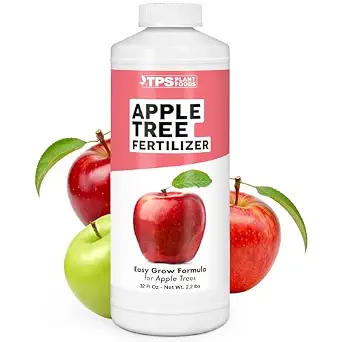 |
Espoma Tree‑Tone 6-3-2 Organic Fertilizer, 4 lb. Bag (Pack of 2)

| Item Form | Powder |
|---|---|
| Specific Uses For Product | Plant Growth |
| Coverage | Medium |
| Target Species | trees |
| Mixing Ratio | No mixing required |
Espoma Tree‑Tone is a ready‑to‑use organic fertilizer made for trees and larger woody plants. It delivers a balanced 6-3-2 NPK formulation with 5% calcium and organic inputs that feed roots slowly while improving soil biology. Typical use is in spring and fall: spread around the root zone according to label guidance and leave it on the soil surface since no mixing is required. The product comes in two 4 lb. bags that make treating multiple small trees convenient. Notable benefits are its organic certification and the inclusion of Bio-tone to support microbial activity, which helps sustained plant growth rather than a quick surge of foliage. Because it is granular and medium coverage, it is easy to apply precisely around drip lines. Limitations are its lower NPK numbers compared with synthetic fertilizers, so results are steady rather than dramatic, and you may need larger quantities for mature trees or fast corrective feeding. For gardeners prioritizing long-term soil health and consistent growth, Tree‑Tone performs reliably as a regular maintenance fertilizer.
Best for: Gardeners who want reliable, soil‑friendly feeding for shade, fruit, and ornamental trees and who prioritize steady, long‑term plant health over rapid foliage boosts.
Less Ideal for: People seeking fast, high‑nitrogen corrective feeding for heavy feeders or large mature trees that require concentrated, immediate nutrient correction.
- Organic formula approved for organic gardening and made with natural ingredients
- Contains 6-3-2 NPK plus 5% calcium to support steady tree growth and fruiting
- Ready to use granular form requires no mixing and is easy to apply
- Includes Bio-tone to encourage soil microbial activity and long-term soil health
- Lower nutrient concentration means larger or repeated applications may be needed for large or nutrient‑depleted trees
Verdict: Choose Tree‑Tone if you want an organic, easy‑to‑apply fertilizer that promotes steady tree growth and long‑term soil health.
Down To Earth Organic Fruit Tree Fertilizer, 6-2-4, 5 lb

| Item Form | Powder |
|---|---|
| Specific Uses For Product | Plant Growth,Potting |
| Target Species | fruit trees |
| Mixing Ratio | 6:2:4 |
This Down To Earth fruit tree mix is a dry, soil-applied organic fertilizer designed to support flowering and fruit set on backyard fruit trees. With a 6-2-4 NPK ratio and added calcium sources, it is meant to be broadcast around the root zone, lightly worked into the topsoil or covered with mulch, then watered in so nutrients reach feeder roots. The formula combines bone and fish meals, blood meal, alfalfa and kelp to supply both quick-release and slower-release nitrogen and a spectrum of micronutrients that help fruit development. Practical benefits for fig growers include steady nitrogen for leaf and shoot growth early in the season and calcium to support fruit quality. Because it is not water soluble and is OMRI-listed, it fits organic systems but requires correct placement and watering rather than foliar feeding. Expect a slower, soil-driven response compared with synthetic fertilizers and plan on seasonal reapplication per label rates for sustained production.
Best for: Fig growers who prioritize organic, soil-focused fertility and want a balanced, fruiting-focused feed to encourage consistent yields in backyard trees.
Less Ideal for: Gardeners needing rapid, soluble corrections or liquid feed options for greenhouse figs or container plants should consider a soluble fertilizer instead.
- OMRI-listed organic blend suitable for organic orchards
- 6-2-4 NPK with added calcium to support fruit set and quality
- Contains a mix of fast and slow-release organic ingredients for season-long feeding
- Shelf-stable dry formula that can be broadcast and worked into soil
- Not water-soluble so slower to correct acute nutrient deficiencies
- Requires proper incorporation and watering to be effective
Verdict: Choose this product if you want an OMRI-listed, calcium-fortified organic fertilizer that feeds figs through the soil for better fruit development.
Farmer's Secret Fruit Tree Booster Liquid Fertilizer (32 oz)

| Item Form | Liquid |
|---|---|
| Specific Uses For Product | Fruit Tree Care |
| Coverage | 1 teaspoon per gallon |
| Target Species | Apple, Banana, Peach |
| Unit Count | 32 Fluid Ounces |
This concentrated liquid fertilizer is formulated to strengthen roots and push fruit production for a wide range of fruit trees, including banana. It is mixed at 1 teaspoon per gallon and applied weekly as a soil drench around the drip line or as a foliar feed, which makes it easy to use with a watering can, sprayer, or irrigation system. The formula emphasizes higher phosphorus and includes macronutrients and trace minerals to support root expansion, disease resistance, and quicker nutrient uptake compared with granular products. One 32 oz bottle is highly concentrated so a small volume treats a full season for a mature tree, and the brand notes compatibility with young trees at higher per-feed rates. Practical limitations are that results depend on timing, tree age, and local conditions, and weekly applications may be more maintenance than slow-release granules. Also the label gives general guidance rather than crop-specific feeding charts for bananas, so growers wanting precise macronutrient ratios may prefer a product with an explicit NPK breakdown.
Best for: Growers focused on boosting fruit production and root development who are willing to follow a regular liquid feeding schedule and want quick nutrient availability for banana trees.
Less Ideal for: People who prefer low-maintenance, infrequent feeding or who need a fertilizer with an exact NPK label for tailored nutrient management.
- Highly concentrated formula stretches a 32 oz bottle across many feedings
- Phosphorus-rich blend aimed at improving root development and fruit set
- Usable as soil drench or foliar spray and compatible with irrigation systems
- Contains trace minerals in addition to NPK to support overall tree health
- No explicit NPK ratio listed on the provided specs for precise nutrient planning
- Requires weekly applications which can be more work than slow-release options
Verdict: A concentrated, phosphorus-forward liquid that gives banana growers a fast, professional-style boost to roots and fruit when used weekly.
Ironite Plus Granular Plant Food 12-10-10 (3 lb)

| Item Form | Granules |
|---|---|
| Specific Uses For Product | Outdoor |
| Application Method | Pour |
| Coverage | 100 square feet |
| Target Species | Shrubs, Trees, Flower gardens |
Ironite Plus is a small-bag granular fertilizer intended for routine feeding of shrubs, trees, and flowering beds. You spread or pour the granules around the root zone following package directions; the 12-10-10 N-P-K ratio supports leafy growth early in the season while phosphorus encourages stronger roots and better blooms. The formula also includes iron, sulfur, and other micronutrients that can help correct minor iron deficiencies and improve color. A 3 pound unit is easy to store and convenient for spot treatments or for homeowners with a few specimens rather than large landscapes. Coverage is listed at about 100 square feet, so it is best used on a handful of trees or concentrated flower beds rather than broad lawns. Limitations are the modest package size and the nitrogen-forward ratio, which may not be ideal if you need a lower-nitrogen bloom booster or long-term slow-release feeding for large plantings. Follow the label rates to avoid overapplication near young roots.
Best for: Home gardeners who want an affordable, easy-to-apply granular fertilizer for a few flowering trees, shrubs, or concentrated beds and who prefer quick visible results over long-term slow-release feeding.
Less Ideal for: People managing large landscapes or beds who need coverage from a single purchase or gardeners seeking a specialized low-nitrogen bloom booster should consider larger bags or different formulas.
- Balanced 12-10-10 N-P-K that supports growth, root development, and flowering
- Includes iron and micronutrients to help correct minor deficiencies and improve foliage color
- Granular form is easy to apply by hand and suitable for spot treatments
- Small 3 lb bag is convenient and reduces waste for homeowners with a few trees or beds
- Small package covers limited area so multiple purchases are needed for larger gardens
- Not a low-nitrogen bloom-specific formula for gardeners seeking a dedicated flowering booster
Verdict: A budget-friendly, easy-to-use granular 12-10-10 fertilizer that supplies iron and micronutrients for a few flowering trees and shrubs.
Down To Earth Organic Fruit Tree Fertilizer, 6-2-4, 40 lb

| Item Form | Granules |
|---|---|
| Coverage | 800 square feet |
| Target Species | Fruit Trees |
| Mixing Ratio | 6:2:4 |
| Included Components | Fertilizer |
This 40 lb bag of Down To Earth Fruit Tree fertilizer is a granular, soil‑applied organic formula meant to feed backyard fruit trees over a season. It is typically broadcast or hand‑applied around the drip line and lightly worked into the soil or covered with compost or mulch, then watered in. Key ingredients include feather meal, fish bone meal, calcium carbonate and seaweed meal, so it supplies primary nutrients plus extra calcium to support fruit set and development. Because it is a dry, nonwater‑soluble blend designed to feed soil biology, it works steadily rather than delivering a rapid soluble dose. The product is shelf stable, OMRI‑listed for organic use, and sized to cover roughly 800 sq ft, which makes it convenient for small orchards or multiple trees. Limitations are that you must apply it manually and allow time for soil microbes to mineralize nutrients, so it is not the best choice when an immediate nutrient boost is needed or for foliar feeding scenarios.
Best for: Buyers who prioritize an all‑natural, dependable fertilizer for established backyard orchards and want a product that works with soil biology for steady, long‑term feeding.
Less Ideal for: Gardeners who need quick, soluble nutrient corrections, want a foliar spray option, or who prefer premeasured liquid fertilizers for individual potted trees.
- Organic OMRI‑listed formula suitable for certified organic and home orchards
- Added calcium and a blend of animal, marine and plant meals to support fruit development
- Granular dry blend that is shelf stable and easy to store
- Coverage estimate of about 800 square feet from one bag
- Requires manual broadcast or hand application and incorporation into the soil
- Slow‑release behavior relies on soil biological activity so results are gradual
Verdict: A reliable, OMRI‑listed granular fertilizer built to feed fruit trees steadily and improve fruit development over the season.
Miracle-Gro Fruit & Citrus Plant Food Spikes (12-count)

| Item Form | Sticks |
|---|---|
| Specific Uses For Product | Fruit & Citrus Tree Care |
| Application Method | Insert spikes into the ground |
| Mixing Ratio | 10:15:15 |
| Number of Items | 12 |
These Miracle-Gro Fruit & Citrus Plant Food Spikes are pre-measured, slow-release sticks designed to feed in-ground fruit and citrus trees, including avocados, with a 10-15-15 NPK formula. Use is simple: water the soil to soften it, place spikes around the tree drip line according to the label chart, then drive them below the soil surface with a mallet or by stepping on them. The spikes deliver nutrients directly to the root zone, which reduces mess compared with granular feeding and eliminates monthly mixing. They are intended for a twice-yearly schedule, one application in early spring and another in mid-fall, so maintenance is low. Because the spikes are targeted and contain a balanced NPK higher in phosphorus and potassium, they can support flowering and fruit set for productive trees. Limitations to note are the infrequent feeding schedule and fixed nutrient ratio, so if your soil test shows different needs or you prefer monthly liquid feeding you may need supplemental products. Very compact root zones or heavy clay that stays hard when wet can make insertion difficult without extra effort or tools.
Best for: Home gardeners who want a low-effort, seasonal fertilizer for established avocado and other fruit trees and who prefer a simple apply-twice-a-year routine backed by broad user experience.
Less Ideal for: Growers who rely on frequent liquid feeding, need a customized nutrient program from soil tests, or work exclusively with container-grown trees.
- Direct root-zone delivery reduces surface runoff and mess compared with broadcast granules
- Pre-measured spikes make seasonal feeding fast and low-effort
- 10-15-15 NPK supports flowering and fruit development useful for fruiting trees
- Works on a range of trees listed for the product including avocado and palm
- Fixed NPK ratio and twice-yearly schedule may not match specific soil test recommendations
- May be hard to insert in very compacted or rocky soils without a mallet or tool
Verdict: A low-maintenance, targeted fertilizer solution that makes seasonal feeding of avocado and other fruit trees quick and reliable.
TPS Nutrients Apple Tree Liquid Fertilizer, 32 fl oz

| Item Form | Liquid |
|---|---|
| Specific Uses For Product | Plant Food |
| Coverage | Full |
| Target Species | Apple, Pear, Nut, and Fruit Trees |
| Mixing Ratio | 2 tablespoons per gallon of water |
This 32-ounce liquid fertilizer from TPS Nutrients is designed specifically for apple, pear, nut, and other fruit trees and is used as a regular feed to support root strength and consistent fruit production. It mixes at 2 tablespoons per gallon of water and can be applied as a soil drench or foliar spray, which makes it easy to integrate into routine orchard or backyard tree care. The formula emphasizes balanced nutrition to encourage fruit set without excessive vegetative growth, so it is well suited to keeping established trees productive. Practical benefits include targeted use on container and in-ground trees, a pourable liquid form that is simple to measure, and guidance aimed at repeat seasonal feeding. Limitations are that the label provides a general mixing ratio but no guaranteed N-P-K numbers on the listing and results depend on correct timing and soil conditions, so pairing this with a soil test will give clearer direction for long-term nutrient planning.
Best for: Buyers who want a simple, purpose-made fertilizer to maintain steady fruit production in backyard apple or other small orchard trees and prefer easy-to-use liquid feeds.
Less Ideal for: Growers managing large commercial orchards or those who require a fertilizer with a specified N-P-K label and granular long-term feeding schedule should consider other options.
- Formulated specifically for apple and other fruit trees to support fruit set and root health.
- Liquid concentrate is easy to mix and apply as a soil drench or foliar spray.
- Suitable for backyard orchards and container-grown fruit trees.
- Clear mixing ratio provided for straightforward application.
- Product listing does not show the exact N-P-K breakdown on the page data provided.
- 32 fl oz size may require repeated purchases for larger orchards.
Verdict: A straightforward liquid feed made for backyard apple and fruit trees that simplifies seasonal feeding for more reliable fruit set.
Choosing the Right Fertilizer for Apple Tree: Key Factors to Consider
Soil Test and pH
Knowing your soil pH and nutrient levels is the first step before choosing any fertilizer for apple tree feeding. Soil pH affects nutrient availability more than formulation type; for example, iron and manganese become less available in alkaline soils, which can lead to chlorosis even if the soil has adequate total iron.
A basic soil test tells you nitrogen, phosphorus, potassium, and pH so you can select a fertilizer that fills gaps rather than overdosing an already-sufficient element. Repeating a soil test every two to three years helps track changes from amendments, compost, and fertilizer applications.
Tree Age and Size
Young apple trees have different nutrient needs than mature, fruiting trees. Establishing trees need steady but moderate nitrogen to build roots and shoots without forcing excess vegetative growth at the expense of root development.
Mature trees that are establishing an annual fruiting cycle often benefit from targeted feeding timed around bloom and early fruit set. Overfeeding vigorous young trees can lead to weak wood and poor anchorage, so match application rates to the nursery or orchard guidelines for tree age.
Timing and Seasonal Feeding
When you apply fertilizer affects how trees use the nutrients. Early spring feeding supports leaf-out and bloom, while a lighter application after fruit set can support fruit growth. Avoid heavy nitrogen applications late in the season because they can stimulate soft late growth that is vulnerable to winter injury.
Application timing also interacts with soil moisture and temperature. Fertilizer applied to cold, dry soil is less available to roots; splitting applications or using a slow-release product can improve uptake and reduce nutrient loss.
Formulation and Release Rate
Granular, liquid, and slow-release fertilizers behave differently in the orchard. Soluble fertilizers give a quick nutrient boost useful for correcting deficiencies, while slow-release and controlled-release products provide steadier supply and reduce the chance of burn.
Consider how you water and whether you can irrigate after application. In systems with infrequent watering, a slow-release formula will be safer. If you spot-apply under individual trees, choose a formulation that spreads and dissolves predictably across the root zone.
Micronutrients and Fruit Set
Macronutrients are important, but micronutrients like boron, zinc, and magnesium play outsized roles in fruit set, pollination success, and fruit quality. Small deficiencies can reduce crop load or lead to internal fruit disorders.
Micronutrient needs vary by orchard history and soil type. If a soil test indicates low levels, select a fertilizer that includes the needed micros or plan targeted foliar sprays during bloom and early fruit development to correct short-term deficits.
Application Safety and Environmental Impact
Fertilizer applied incorrectly can leach into groundwater or volatilize into the air. Choose products and application methods that minimize runoff, avoid broadcasting high-salt blends near water, and follow local guidelines for nutrient management.
Proper calibration of spreaders and measuring tools reduces the chance of overapplication. Organic options can reduce soluble salt risk but still contribute nutrients; treat them with the same care when calculating annual rates.
When to Feed Apple Trees Through the Year
Feed timing depends on tree stage and local climate. For most temperate regions, the main feeding window is early spring just before or during early leaf-out to support bloom and initial vegetative growth. A lighter follow-up application after fruit set can help maintain nutrient supply through the fruit development window.
Avoid heavy late-summer or fall nitrogen applications that encourage soft growth. In cooler climates with a short growing season, aim to finish major nutrient applications earlier so wood can harden before dormancy.
- Early spring: main application for leaf-out and bloom support
- Post-fruit set: modest boost for fruit sizing
- Late summer/fall: avoid high nitrogen rates to reduce winter injury risk
Matching Fertilizer Type to Your Watering
Your irrigation frequency should influence the fertilizer formulation you choose. Regularly irrigated trees tolerate soluble or quick-release fertilizers because nutrients dissolve and reach roots promptly. For trees reliant on rainfall or infrequent watering, slow-release or coated formulations reduce leaching and provide steady nutrition.
Liquid feeds are useful for targeted correction or foliar work, while granular products are easier for broadcast or banded application around multiple trees.
- Daily or frequent irrigation: soluble feeds OK
- Infrequent watering: slow-release preferred
- Spot corrections: liquid or foliar applications
Applying Fertilizer Around the Root Zone
Apple tree feeding is most effective when applied over the existing root zone rather than right at the trunk. Spread granular products in a wide band that covers the drip line and slightly beyond, because feeder roots commonly extend past the canopy edge. Avoid piling fertilizer against the trunk.
When using liquid or soluble feeds, apply with enough water to move nutrients into the root zone. For young trees with limited root spread, keep applications closer to the trunk but still off the bark to prevent burn.
- Broadcast or band across the drip line for mature trees
- Keep materials off the trunk and graft union
- Water-in soluble feeds to transport nutrients to roots
Organic Vs Synthetic Approaches
Organic fertilizers release nutrients as soil organisms break them down. They improve soil structure and microbial activity but release nutrients more slowly and unpredictably. Synthetic fertilizers provide precise nutrient ratios and predictable availability, which is useful for correcting acute deficiencies.
Many gardeners use a blended approach: build soil with compost and organics, then correct specific deficiencies with targeted soluble applications as needed. Choose based on your soil goals, management style, and local regulations about nutrient application.
- Organics: soil-building, slower release, variable nutrient content
- Synthetics: predictable ratios, quick correction of deficiencies
- Combined approach: long-term soil health plus targeted corrections
Signs of Overfeeding and Nutrient Imbalance
Watch for excessive vegetative growth, leaf scorch, or poor fruit set as signs of inappropriate feeding. Overuse of nitrogen often produces lush leafy growth at the cost of fruiting and can increase susceptibility to pests and winter damage. Salt buildup from repeated high-rate applications can cause marginal leaf browning and reduced root function.
Regular monitoring, including soil tests and observing tree vigor, helps catch imbalances early. If you see unusual symptoms, pause fertilization and test soil or foliage to guide corrective action.
- Excess nitrogen: lush growth, reduced fruiting
- Salt burn: marginal browning and root decline
- Poor fruit set: possible micronutrient deficiency or timing issue
How We Chose the Best Fertilizer for Apple Tree
We prioritized products that deliver predictable nutrient ratios, clear application instructions, and practical formulation for orchard and backyard apple trees. Our selection filters emphasized nutrient balance relevant to fruit trees, including available nitrogen forms, phosphorus and potassium levels, and the presence or absence of micronutrients like boron and zinc that can affect fruit set. We also considered formulation type because granular, soluble, and slow-release fertilizers behave differently in a root zone and during rainy seasons. Application safety and clarity of directions were another key filter, since misuse is a common cause of leaf burn or reduced fruiting. We excluded options with vague nutrient guarantees, unclear spread or dilution guidance, or formulations unsuited to standard home garden spreading and watering methods. Lastly, we considered organic-compatible and synthetic options separately so gardeners can match a regimen to their soil management approach and pest-control plan.
FAQ
How often should I fertilize fruiting apple trees?
Usually once in early spring and an optional light application after fruit set is sufficient. Frequency depends on soil fertility, tree age, and the fertilizer formulation; slow-release products may only need annual application.
Can I use lawn fertilizer on apple trees?
Lawn fertilizers often have higher nitrogen ratios and may contain salt levels or additives unsuitable for trees. It depends, but matching the nutrient ratio and application rate to tree needs is essential to avoid excessive vegetative growth or root damage.
Do apple trees need micronutrients?
Yes. Micronutrients like boron and zinc influence fruit set and quality. If soil or foliar tests show deficiencies, targeted micros applied according to recommendations can correct problems without disrupting overall nutrient balance.
Is foliar feeding effective for apple trees?
Foliar feeding can quickly correct certain micronutrient deficiencies and support bloom, but it is a short-term measure. It is most effective as a supplement to proper soil-based nutrition rather than a complete replacement.
When is the worst time to apply fertilizer?
Late summer and fall are generally poor times to apply high-nitrogen fertilizers because they can stimulate late-season growth that does not harden before winter. Aim to finish major feeding earlier in the growing season.
How should I apply fertilizer to young apple trees?
For young trees, use lower rates applied close to the trunk but off the bark, focusing on steady, moderate nutrition to support root and scaffold development. Avoid high single-dose applications that drive excessive leafy growth.
Final Verdict
Choose a fertilizer for apple tree feeding based on soil test results, tree age, and how you water. Prioritize nutrient balance and a release profile that matches your irrigation and seasonal goals, and account for micronutrients if tests or symptoms indicate deficiencies. Be mindful of timing to support bloom and fruit development while avoiding late-season vigor that increases winter risk. With focused choices and careful application, you can improve fruit set and quality while protecting root health and long-term soil function. Match the fertilizer type and schedule to your orchard management plan and adjust based on periodic soil and foliar testing.
