

Note: This article contains affiliate links. If you click on these links and make a purchase, I may earn a small commission at no extra cost to you. This helps support my research and content. Read my full affiliate disclosure here.
If you grow asparagus, the right fertilizer can mean bigger spears in harvest and stronger crowns that return year after year. Asparagus is a long‑lived perennial with specific nutrient and timing needs, so choosing a product made for vegetable beds or perennial crowns matters in how the planting responds season to season. This guide summarizes six top options suited for asparagus production, focusing on nutrient balance, ease of application, and how each fits bed age and soil type. Read on to understand the practical tradeoffs and which characteristics matter most for productive asparagus beds.
Top Picks at a Glance
| Best Quality Built to a higher standard if you want something more solid | Old Cobblers Farm Wicked Organics Asparagus Fertilizer, 4-6-4, 5 lb | 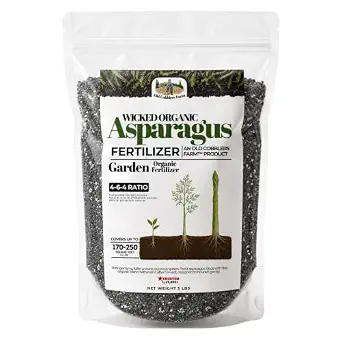 |
| Best Value The sweet spot between price and what you get | The Grow Co Urea Fertilizer 46-0-0 (5 lb) |  |
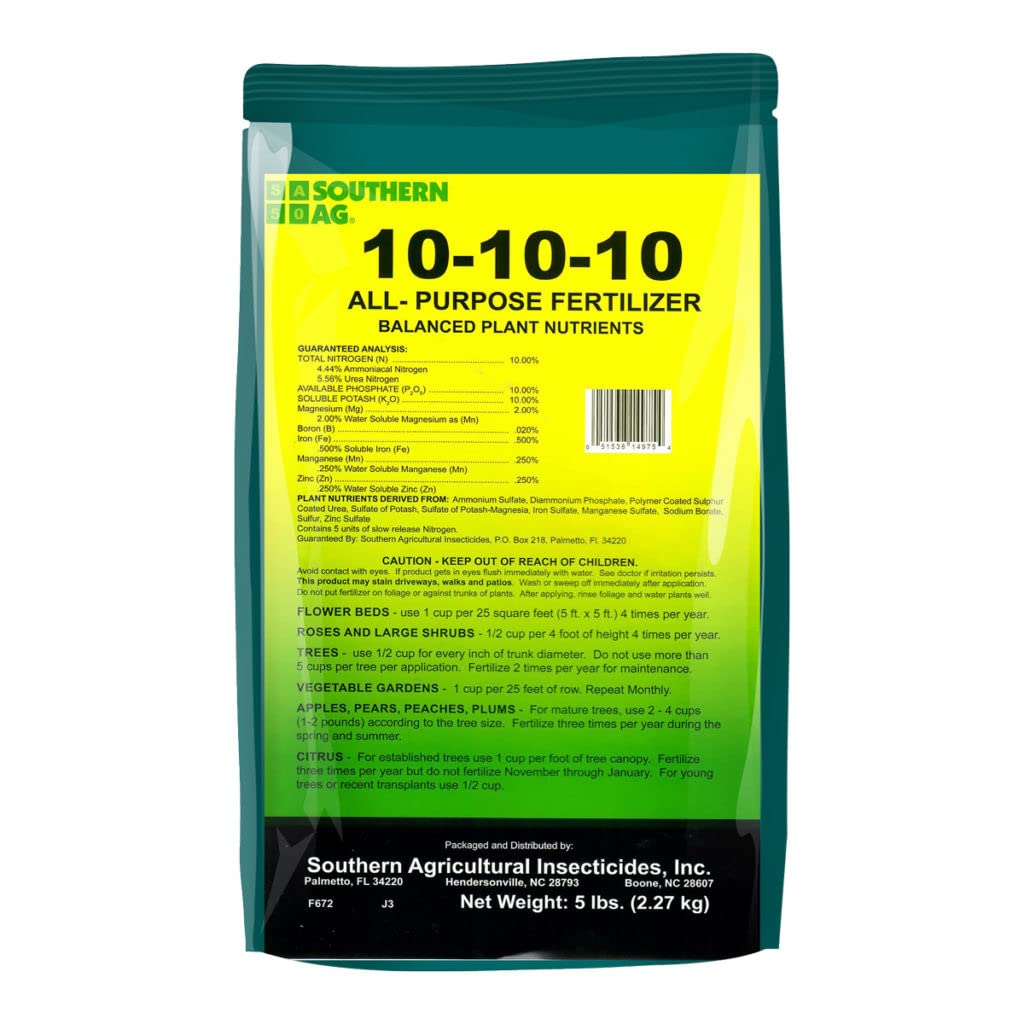
| Best Budget The cheapest option that still gets the job done reliably | Southern Ag All Purpose Granular Fertilizer 10-10-10 (5 lb) |  |
| Highest Rated A top-rated pick with lots of positive feedback | Old Cobblers Farm Wicked Growth Asparagus Fertilizer (16-10-13), Granular, 10 lb |  |
| Most Popular A crowd favorite that many people choose with confidence | ASTEVORA 10-10-10 All-Purpose Liquid Plant Fertilizer (8 fl oz) |  |
| Best Seller A high-volume bestseller chosen again and again | Miracle-Gro Shake 'N Feed All Purpose Plant Food, 4.5 lb |  |
Old Cobblers Farm Wicked Organics Asparagus Fertilizer, 4-6-4, 5 lb

| Item Form | Granules |
|---|---|
| Application Method | Broadcast |
| Target Species | Asparagus |
| Unit Count | 80 Ounce |
This granular asparagus fertilizer is built for perennial beds, with a 4-6-4 NPK that emphasizes phosphorus to strengthen crowns and promote consistent spear emergence. You broadcast the granules over the root zone before spears emerge and again after harvest to feed the fern growth that builds next season’s reserves. Notable features include a partly water-insoluble nitrogen fraction for slow release, meal-based organic ingredients such as animal protein meals and bone char, and clear application guidance for spring and post-harvest feeding. Practically, the formula supports stronger, more uniform spears and helps maintain crown health so beds remain productive year after year. The product is designed for organic gardening and is unlikely to burn shallow feeder roots when used as directed. Limitations are the single 5 lb package size for larger beds and the need to follow soil test recommendations before applying since the phosphorus-heavy blend is not ideal if your soil already tests high in P.
Best for: Gardeners focused on maximizing asparagus bed performance who maintain perennial plantings and follow a seasonal feeding routine. Ideal for growers who prefer organic, meal-based fertilizers and want to preserve long-term crown health.
Less Ideal for: Casual gardeners with very small or single-season plots who do not plan seasonal maintenance, and growers whose soil tests show high phosphorus levels should consider a different formulation.
- Formulated specifically for asparagus with a phosphorus-led 4-6-4 ratio to strengthen crowns and spear quality
- Contains slow-release nitrogen (part water-insoluble) to feed plants steadily without burning shallow roots
- Meal-based organic ingredients suitable for organic gardening and building soil biology
- Recommended application timing for both pre-emergence and post-harvest to support next year’s crop
- Only offered in a 5 lb unit in this listing which may require multiple bags for larger beds
- Phosphorus-heavy formulation could be unnecessary or harmful on soils that already test high in phosphorus
Verdict: Choose this fertilizer when you want an organic, phosphorus-focused slow-release feed that keeps perennial asparagus crowns healthy and productive.
The Grow Co Urea Fertilizer 46-0-0 (5 lb)

| Item Form | Granules |
|---|---|
| Specific Uses For Product | Grass |
| Target Species | grass, vegetables, fruits, and flowers |
| Unit Count | 80 Ounce |
| Mixing Ratio | 100% of the product |
This 46-0-0 urea fertilizer is a straightforward high-nitrogen supplement aimed at correcting nitrogen deficiency and driving fast, green vegetative growth. It is typically broadcast across turf or worked lightly into beds for vegetables, fruits and flowering plants, or applied in small measured amounts near individual plants. The product is highly soluble urea granules, so plants absorb nitrogen quickly and show visible greener foliage and more vigorous shoots within weeks. Directions are practical for home use, with specific spread rates for turf and cup/teaspoon measures for garden beds and individual plants. Important limitations are that this is pure nitrogen with no phosphorus or potassium, so it will not address root development or flowering needs by itself and should be paired with a balanced fertilizer or soil test when growing crops long-term. Also, high rates can encourage leafy growth at the expense of fruiting if used too often. For gardeners who prioritize quick correction of yellowing or strengthening spear-producing perennials like asparagus, it is effective when used judiciously in spring growth flushes.
Best for: Practical gardeners who want a targeted, fast-acting nitrogen boost to green up lawns or stimulate early seasonal growth in vegetable beds and perennial crops like asparagus.
Less Ideal for: Gardeners seeking a balanced all-purpose fertilizer or those who prefer slow-release nutrient programs for steady long-term feeding.
- Very high nitrogen concentration (46-0-0) delivers fast correction of nitrogen deficiency
- Granular form is easy to spread across lawns or measure for individual garden applications
- Highly soluble urea is quickly available for uptake, producing rapid greener foliage
- Clear usage directions for turf, beds, shrubs and individual plants
- Contains only nitrogen and no phosphorus or potassium, so not a complete fertilizer for longer-term crop balance
- Risk of promoting excessive leafy growth if overapplied or used late in the season
Verdict: Use this high-nitrogen urea when you need a fast, economical green-up or spring growth push for asparagus and other leafy crops.
Southern Ag All Purpose Granular Fertilizer 10-10-10 (5 lb)
| Item Form | Granules |
|---|---|
| Specific Uses For Product | Citrus and Fruit Trees, Flowerbeds, Roses, and Large Shrubs, Vegetable Gardens |
| Application Method | Broadcast evenly over area and water in. |
| Mixing Ratio | 10:10:10 |
This 5 lb bag of Southern Ag 10-10-10 granular fertilizer is a straightforward, balanced all-purpose feed for vegetable beds, fruit trees, roses, and shrubs. You spread the granules uniformly over soil or beds and water them in; directions and recommended cup measurements are printed for common uses so dosing is easy. The formula supplies equal parts nitrogen, phosphorus, and potassium plus trace minerals like magnesium, iron, manganese, zinc, and boron, which supports steady vegetative growth and overall plant health. For asparagus specifically it can be used as a periodic maintenance feed during the growing season to support fern growth and energy storage in crowns. The product is simple to store and apply, and the small bag size is convenient for trialing on a single bed or patch. Limitations are that it is a general blend rather than a tailored asparagus formula, so heavy feeders or soils needing specific nutrient correction may require additional amendments, and granular broadcast feedings require careful placement to avoid contact with foliage or runoff risks described on the label.
Best for: Gardeners on a budget who want a simple, balanced fertilizer to maintain small asparagus patches and other mixed beds without buying specialty formulas.
Less Ideal for: Growers managing large asparagus plantings, or who need a targeted high-potassium or soil-specific amendment, should choose a crop-specific or soil-test-driven fertilizer.
- Balanced 10-10-10 N-P-K supports general growth and root development.
- Includes micronutrients (iron, manganese, zinc, boron) for broader plant nutrition.
- Clear application instructions and coverage rates for common garden uses.
- Small 5 lb size is convenient for testing on a single asparagus bed or small garden.
- Not formulated specifically for asparagus so may lack the higher potassium or phosphorus some heavy beds benefit from.
- Granular broadcast application can stain hard surfaces and requires watering after application to activate nutrients.
Verdict: A low-cost, easy-to-use balanced granular fertilizer that is a practical maintenance feed for small asparagus beds and mixed gardens.
Old Cobblers Farm Wicked Growth Asparagus Fertilizer (16-10-13), Granular, 10 lb

| NPK Ratio | 16-10-13 |
|---|---|
| Item Form | Granules |
| Target Species | Asparagus |
| Included Components | Fertilizer |
| Unit Count | 5 Count |
This 16-10-13 granular fertilizer is built for asparagus beds and crowns, emphasizing post-harvest fern recovery to strengthen crowns for the following season. You apply it after the final spring harvest (or mix into soil when planting crowns); the nitrogen-forward formula encourages fern regrowth while phosphate and potash support roots and plant structure. Part-coated polymer urea gives a gradual nitrogen release so one application feeds plants over weeks rather than producing a short-lived flush. The blend includes potassium magnesium sulfate to supply magnesium for greener ferns and sulfur to aid nutrient uptake. Practical benefits include straightforward granule application, coverage estimates on the label, and suitability for both new plantings and established beds or raised beds. Important limitations are that it is a conventional synthetic fertilizer, so gardeners seeking organic inputs or who need different NPK ratios should look elsewhere, and you should follow label rates and a soil test to avoid overapplication. Keep granules off foliage and water in after spreading for best results.
Best for: Gardeners who prioritize consistent, reliable recovery and crown strength in asparagus beds and want a single post-harvest feeding that sustains fern growth without frequent reapplication.
Less Ideal for: Growers who require organic-certified products or who prefer very low-nitrogen formulas for specific soil conditions should consider alternative fertilizers.
- High nitrogen 16-10-13 formula targets post-harvest fern growth and crown recharge
- Part-coated polymer urea provides gradual nitrogen release for sustained feeding
- Includes magnesium and sulfur to support chlorophyll production and nutrient uptake
- Suitable for new crowns and established beds with label coverage guidance
- Not an organic formulation, so not suitable for gardeners requiring organic certification
- Contains conventional fertilizer ingredients that require careful soil testing and rate adherence
Verdict: Choose this fertilizer when you want a dependable, nitrogen-forward post-harvest feed that promotes sustained fern growth and crown recharge in asparagus beds.
ASTEVORA 10-10-10 All-Purpose Liquid Plant Fertilizer (8 fl oz)

| Item Form | Liquid |
|---|---|
| Specific Uses For Product | Lawns, Vegetables, Indoor Plants, Outdoor Plants, Flowers, Trees, Shrubs, Houseplants |
| Application Method | Watering can or hose-end sprayer |
| Liquid Volume | 8 fluid ounces |
| Mixing Ratio | 1:320 or 1:160 |
This 8 fl oz ASTEVORA 10-10-10 liquid fertilizer is a ready-to-dilute, all-purpose plant food designed to supply balanced NPK nutrition plus seaweed extract and chelated iron. You mix it into water (manufacturer suggests 1:320 or 1:160 mixing ratios or 0.5–1 oz per gallon) and apply with a watering can or hose-end sprayer to lawns, vegetables, flowers, shrubs and houseplants. The even, quickly absorbed liquid formulation makes it useful for correcting yellowing foliage and supporting overall growth without granular mess. Seaweed kelp adds trace micronutrients and growth-stimulating compounds while 6% chelated iron helps address iron deficiency across a range of soil pH. Practical limits are its small bottle size, which means frequent repurchases or having to buy multiple units for larger beds, and the generic 10-10-10 ratio may be broader than what asparagus growers prefer at specific growth stages. For plants sensitive to overfeeding follow the lower dilution guidance to avoid nutrient burn. The product is easy to use and fits into routine watering schedules for gardeners seeking a versatile, evidence-backed option.
Best for: Gardeners who want a single, easy-to-apply liquid fertilizer that addresses common nutrient needs and visible iron deficiency while fitting into regular watering routines.
Less Ideal for: Large-scale growers or those who prefer stage-specific fertilization programs for asparagus should consider larger-volume or tailored formulations instead.
- Balanced 10-10-10 NPK for general growth, bloom and root support
- Includes seaweed kelp extract for extra micronutrients and growth stimulation
- Contains 6% chelated iron to help correct chlorosis across varied soil pH
- Liquid formula mixes easily and is quickly absorbed when applied via watering can or hose-end sprayer
- Small 8 fl oz bottle may not be economical for large gardens
- General-purpose NPK may not match specific nutrient timing needs for asparagus through all growth stages
Verdict: A convenient, quick-absorbing all-purpose liquid fertilizer with kelp and chelated iron that makes correcting nutrient deficiencies and feeding mixed plantings simple.
Miracle-Gro Shake 'N Feed All Purpose Plant Food, 4.5 lb

| Item Form | Granules |
|---|---|
| Application Method | Shake onto soil and work into top 1-3 inches |
| Target Species | flowers, vegetables, herbs |
| Feeds For | Up to 3 months |
Miracle-Gro Shake 'N Feed is a granular, slow-release fertilizer you shake onto soil and work into the top 1 to 3 inches, then water to activate; a single application feeds plants for up to three months. It is designed for broad use on flowers, vegetables, herbs and container plants, and contains natural ingredients and micronutrients intended to support root strength and soil microbes. For asparagus beds you would apply it to the soil surface and lightly incorporate before watering to give crowns a steady supply of nutrients through the growing season without frequent feeding. The convenience of no mixing and a three-month feeding window makes it a low-effort option for gardeners who prefer predictable maintenance. Limitations are that it is an all-purpose formula rather than an asparagus-specific NPK blend, so growers wanting a tailored high-phosphorus or high-nitrogen program may prefer a specialty vegetable or perennial fertilizer. Also you must follow label rates carefully to avoid overapplication and potential root burn.
Best for: Gardners who want a low-maintenance, reliable granular fertilizer to provide steady nutrition to established asparagus beds without frequent applications and who prefer simple, predictable feeding routines.
Less Ideal for: Gardeners seeking a crop-specific fertilizer program for asparagus or those who want to closely control NPK ratios throughout the season should consider specialty vegetable or soil-tested amendments instead.
- Continuous-release granules feed for up to three months, reducing application frequency
- Works for both in-ground beds and containers, giving flexibility for established asparagus crowns and container-grown starts
- No mixing required; apply dry, work into topsoil, and water to activate
- Includes micronutrients and natural ingredients intended to support soil microbes and root development
- All-purpose formula is not tailored specifically to asparagus nutrient ratios
- Requires careful measurement and incorporation to avoid overfeeding and potential plant damage
Verdict: A convenient, low-effort slow-release granular feed that gives asparagus beds steady nutrition with just one application every three months.
Choosing the Right Fertilizer for Asparagus: Key Factors to Consider
Nutrient Balance and Ratios
Asparagus benefits from a fertilizer that supplies steady nitrogen without promoting excessive leafy growth at the expense of crown development. A balanced NPK tailored to perennial vegetable production helps support spear size early in the season and crown carbohydrate storage after harvest.
Pay attention to secondary nutrients such as magnesium and sulfur and to micronutrients like iron and manganese if your soil test shows deficiencies. Overapplication of nitrogen can weaken crowns over time, so choose a product whose label lets you adjust rates for planting age and bed fertility.
Release Pattern and Timing
Slow-release formulations or controlled-release fertilizers provide steady nutrition through the spear-sending period without large spikes that force soft tissue. For asparagus, early spring feeding just before spear emergence and a follow-up post-harvest application to replenish reserves are the typical timing needs.
Products that combine an immediate-feed component with a longer-term reservoir can be helpful for beds that are actively harvested. Liquid options allow faster correction of deficiencies but require more frequent applications and attention to timing.
Soil Health and Organic Matter
Asparagus crowns rely on a healthy soil biology to cycle nutrients and maintain structure. Fertilizers that contribute organic matter or support microbial activity help long-term productivity by improving nutrient availability and water retention.
Organic-based fertilizers or those blended with composted amendments are valuable in older beds where rebuilding soil organic matter is a goal. Synthetic nutrients can supply concentrated feeding but consider pairing them with organic matter to avoid long-term depletion of soil life.
Salt Content and Crown Safety
Crown crops are vulnerable to soluble salt damage because fertilizers are applied close to the root crown. High-salt materials or concentrated liquid feeds can cause tip burn or reduce emergence if applied improperly.
Choose low-salt formulations for in‑bed use and follow label dilution guidance for liquids. When working with starter or transplant scenarios, place granular feeds slightly away from the crown and water in thoroughly to reduce localized salt stress.
Application Method and Practicality
Consider how you will apply the fertilizer across the size of your asparagus planting. Small home beds benefit from granular broadcast or banded applications, while market beds may require mechanized spreading or water-soluble feeding through irrigation. Ease of measuring rates and safety of handling also matter for repeat seasonal use.
Products with clear application rates by bed length or per crown simplify routine care. Also factor in storage needs and how often you are willing to reapply-liquids mean more frequent attention, pellets or spikes are lower maintenance.
Compatibility with Soil Test Recommendations
A recent soil test should guide fertilizer choice and rate for asparagus. Some fertilizers are designed to correct specific nutrient shortfalls, while others provide general NPK support. Matching product chemistry to soil test results reduces waste and limits the risk of exacerbating existing imbalances.
If your soil is already high in phosphorus or potassium, choose a formulation that emphasizes nitrogen and micronutrients rather than blanket NPK additions. Good labels will allow rate adjustment so you can fine-tune applications according to test results.
When to Feed Asparagus Throughout the Year
Timing feeds around asparagus growth stages makes a big difference. Apply a spring feed just before or at first spear emergence to support spear length and thickness. After the harvest window closes, give a maintenance feeding to help crowns rebuild carbohydrate reserves for next year.
Avoid heavy fertilizing late in the season when plants are translocating sugars into crowns for dormancy. That late-season timing increases top growth instead of storage and can leave crowns weaker going into winter.
- Spring application: supports spear size and early growth
- Post-harvest application: replenishes crown reserves
- Avoid heavy late-season nitrogen to prevent reduced crown storage
Liquid Versus Granular Options: Pros and Cons
Liquid fertilizers act quickly and are useful for correcting a deficiency or giving a boost during a single season. They are easy to apply by watering can or through fertigation but require more frequent repeat doses.
Granular or slow-release fertilizers offer longer intervals between applications and reduce the risk of rapid nutrient swings. They can be broadcast or banded along rows and are often lower maintenance for perennial beds, though they may take longer to show visible effects.
- Liquid: fast-acting, flexible rates, more frequent application
- Granular: longer-lasting, lower maintenance, slower uptake
How Soil Type Changes Your Choice
Sandy soils drain quickly and lose nutrients faster, making slow-release or split applications beneficial to keep a steady supply available. Clay soils hold nutrients but may show signs of toxicity if salts build up, so low-salt formulations and organic matter additions help buffer nutrient availability.
Raised beds and containers need a different approach because root zones are shallower and nutrients leach more readily. Choose products suitable for confined root zones and monitor moisture and nutrient levels more often.
- Sandy beds: prefer split applications or slow-release
- Clay beds: watch for salt buildup and add organic matter
- Containers/raised beds: use formulations safe for shallow root zones
Using Compost and Organic Amendments with Fertilizer
Compost adds organic matter and feeds soil life that helps make applied nutrients available to asparagus crowns. When combined with a targeted fertilizer program, compost can lower the amount of concentrated fertilizer needed and improve soil structure over time.
Apply compost in spring or fall and work it lightly into the topsoil around crowns without disturbing them. Allow compost to complement nutrient inputs rather than acting as the sole fertility source if your soil test indicates specific deficiencies.
- Compost improves soil biology and structure
- Use compost to reduce reliance on synthetic inputs
- Avoid burying compost too close to delicate crowns
Troubleshooting Common Fertility Problems
Weak, spindly spears often point to low nitrogen early in the season, while thin yields over years can indicate depleted crown reserves or poor root health. Discolored spears or foliage may signal micronutrient deficiencies or pH issues.
Start with a soil test and adjust fertilizer type and rate accordingly. If symptoms persist after correcting nutrients, inspect for soil compaction, drainage problems, or pest and disease pressures that can mimic nutrient stress.
- Use soil testing to confirm suspected nutrient problems
- Adjust feeding method rather than only increasing rates
- Consider non-nutrient causes when fertility fixes do not help
How We Chose the Best Fertilizer for Asparagus
We shortlisted fertilizers that match the agronomic needs of asparagus rather than general garden feeds. Our selection filters favored products formulated for perennial vegetable crowns or heavy-feeding vegetable beds and excluded generic ornamental fertilizers and mixes intended only for fast‑growing annuals. Key evaluation criteria included nutrient ratio and release pattern to match asparagus growth timing, organic content and soil biology support, ease and flexibility of application for beds and crowns, salinity and soluble salt levels to avoid crown burn, and packaging sizes appropriate for small plots through market rows. We also considered clarity of label instructions and whether a product offers clear guidance on spring versus post-harvest feeding. We excluded any fertilizers lacking transparent nutrient information or with application methods unsuitable for established crowns. These criteria align with the scoring metrics used on each product card so gardeners can compare nutrition, safety, and handling at a glance.
FAQ
How often should I fertilize established asparagus beds?
Often a spring application and a post-harvest application are sufficient for established beds. Frequency can vary with soil fertility, crop yield, and product release pattern, so follow label guidance and adjust based on soil test results.
Can I use general vegetable fertilizer on asparagus?
You can use a general vegetable fertilizer if the nutrient balance matches asparagus needs, but choose one with appropriate nitrogen levels and low salt for crown safety. Modify rates based on soil test recommendations.
Is an organic fertilizer better for asparagus?
Organic fertilizers benefit soil biology and build organic matter over time, which supports long-term crown health. They may release nutrients more slowly, so plan applications with timing in mind and supplement if tests show specific deficiencies.
Will too much nitrogen harm my asparagus crop?
Too much nitrogen can encourage excessive fern growth and reduce the storage of carbohydrates in crowns, leading to weaker yields in subsequent years. Apply nitrogen at the recommended rates and avoid heavy late-season feeding.
How do I avoid salt burn when fertilizing crowns?
Choose low-salt formulations, place granular fertilizer slightly away from the crown, water in thoroughly after application, and dilute liquid feeds according to label directions. Regular soil testing helps detect salt accumulation early.
Should I change fertilizer strategy for newly planted crowns versus mature beds?
Yes. New plantings need gentler, lower-rate feeds to avoid root and crown stress, while mature beds often require maintenance applications to replenish reserves. Adjust rates and placement to protect young crowns.
Final Verdict
Prioritize fertilizers that match asparagus biology: a steady but moderate spring nitrogen for spear production and a follow-up feeding to rebuild crown reserves. Balance immediate needs with long-term soil health by combining nutrient sources that support microbes and organic matter. Tradeoffs include speed of response versus maintenance frequency and the risk of salt damage near crowns. Use soil testing and clear label directions to pick an option that suits your bed size, soil type, and how hands‑on you want to be.
