

Note: This article contains affiliate links. If you click on these links and make a purchase, I may earn a small commission at no extra cost to you. This helps support my research and content. Read my full affiliate disclosure here.
Choosing the right fertilizer for a bottlebrush tree matters because this shrub-like tree responds to nutrient balance and timing with big differences in bloom and root vigor. In the landscape, too much nitrogen or the wrong application timing can reduce flowering or stress roots, while the proper fertilizer encourages regular flushes of the signature red bottlebrush blooms and stronger branching. This guide covers seven carefully shortlisted fertilizers for bottlebrush tree, and explains the practical tradeoffs gardeners face. We evaluate products for nutrient balance, delivery method, and ease of use so you can match a feeding plan to your planting situation and maintenance style.
Top Picks at a Glance
| Best Overall The best all-around choice for most situations | Miracle-Gro Shake 'N Feed Flowering Trees & Shrubs Plant Food, 8 lb. |  |
| Best Quality Built to a higher standard if you want something more solid | Espoma Tree‑Tone 6-3-2 Organic Fertilizer, 4 lb. Bag (Pack of 2) |  |
| Best Value The sweet spot between price and what you get | Jobe's Organics Granular All Purpose Fertilizer, 4 lb |  |
| Best Budget The cheapest option that still gets the job done reliably | Scotts Evergreen, Flowering Tree & Shrub Continuous Release Plant Food |  |
| Highest Rated A top-rated pick with lots of positive feedback | Osmocote Smart‑Release Plant Food Plus Outdoor & Indoor, 2 lb |  |
| Most Popular A crowd favorite that many people choose with confidence | Miracle-Gro Water Soluble All Purpose Plant Food, 3 lb |  |
| Best Seller A high-volume bestseller chosen again and again | Miracle-Gro Tree & Shrub Plant Food Spikes, 12 Spikes |  |
Miracle-Gro Shake 'N Feed Flowering Trees & Shrubs Plant Food, 8 lb.

| Item Form | Granules |
|---|---|
| Application Method | shake evenly onto the soil |
| Target Species | flowering trees, shrubs and other acid-loving plants |
| Mixing Ratio | 18:6:12 |
| Unit Count | 128 Ounce |
Miracle-Gro Shake 'N Feed Flowering Trees & Shrubs is a granular, slow-release fertilizer designed to support flowering shrubs and acid-loving plants over an extended period. You apply it by shaking the granules evenly onto the soil under the branch spread or working it into potting mix for containers, then watering to activate the nutrients. The formula lists an 18-6-12 N-P-K ratio and includes organic-derived inputs such as kelp, feather meal, bone meal and earthworm castings to help feed soil microbes and support root development. Practically, that means less frequent feeding and improved foliage and bloom quality across a season—Miracle-Gro recommends reapplying every three months. It works for both in-ground and container plantings and covers a medium area per bag. Limitations are that it is a general-purpose shrub formula tuned for acid-loving species so it is not a precision fertilizer for nutrient-deficient soils and you still need to avoid contact with trunks and foliage when applying. For best results monitor soil pH and follow labeled application rates for newly planted versus established shrubs.
Best for: Gardeners who want a low-effort, season-long feed for flowering shrubs like forsythia and prefer a product that supports soil health without frequent reapplication.
Less Ideal for: Growers who need a precise corrective fertilizer for diagnosed nutrient deficiencies or who maintain shrubs that prefer neutral to alkaline soils.
- Continuous-release granules feed plants for up to three months reducing application frequency
- Contains organic inputs like kelp and earthworm castings to support soil microbes and root health
- Clear application method for both in-ground and container plants makes it easy to use
- Higher nitrogen ratio (18-6-12) promotes lush foliage and supports flowering season-long
- Not a targeted corrective fertilizer for specific mineral deficiencies
- Designed for acid-loving plants so less suitable for neutral or alkaline-preferring shrubs
Verdict: Use this to give forsythia and other acid-loving shrubs an easy, three-month continuous feeding that boosts foliage and blooms with minimal effort.
Espoma Tree‑Tone 6-3-2 Organic Fertilizer, 4 lb. Bag (Pack of 2)

| Item Form | Powder |
|---|---|
| Specific Uses For Product | Plant Growth |
| Coverage | Medium |
| Target Species | trees |
| Mixing Ratio | No mixing required |
Espoma Tree‑Tone is a ready‑to‑use organic fertilizer made for trees and larger woody plants. It delivers a balanced 6-3-2 NPK formulation with 5% calcium and organic inputs that feed roots slowly while improving soil biology. Typical use is in spring and fall: spread around the root zone according to label guidance and leave it on the soil surface since no mixing is required. The product comes in two 4 lb. bags that make treating multiple small trees convenient. Notable benefits are its organic certification and the inclusion of Bio-tone to support microbial activity, which helps sustained plant growth rather than a quick surge of foliage. Because it is granular and medium coverage, it is easy to apply precisely around drip lines. Limitations are its lower NPK numbers compared with synthetic fertilizers, so results are steady rather than dramatic, and you may need larger quantities for mature trees or fast corrective feeding. For gardeners prioritizing long-term soil health and consistent growth, Tree‑Tone performs reliably as a regular maintenance fertilizer.
Best for: Gardeners who want reliable, soil‑friendly feeding for shade, fruit, and ornamental trees and who prioritize steady, long‑term plant health over rapid foliage boosts.
Less Ideal for: People seeking fast, high‑nitrogen corrective feeding for heavy feeders or large mature trees that require concentrated, immediate nutrient correction.
- Organic formula approved for organic gardening and made with natural ingredients
- Contains 6-3-2 NPK plus 5% calcium to support steady tree growth and fruiting
- Ready to use granular form requires no mixing and is easy to apply
- Includes Bio-tone to encourage soil microbial activity and long-term soil health
- Lower nutrient concentration means larger or repeated applications may be needed for large or nutrient‑depleted trees
Verdict: Choose Tree‑Tone if you want an organic, easy‑to‑apply fertilizer that promotes steady tree growth and long‑term soil health.
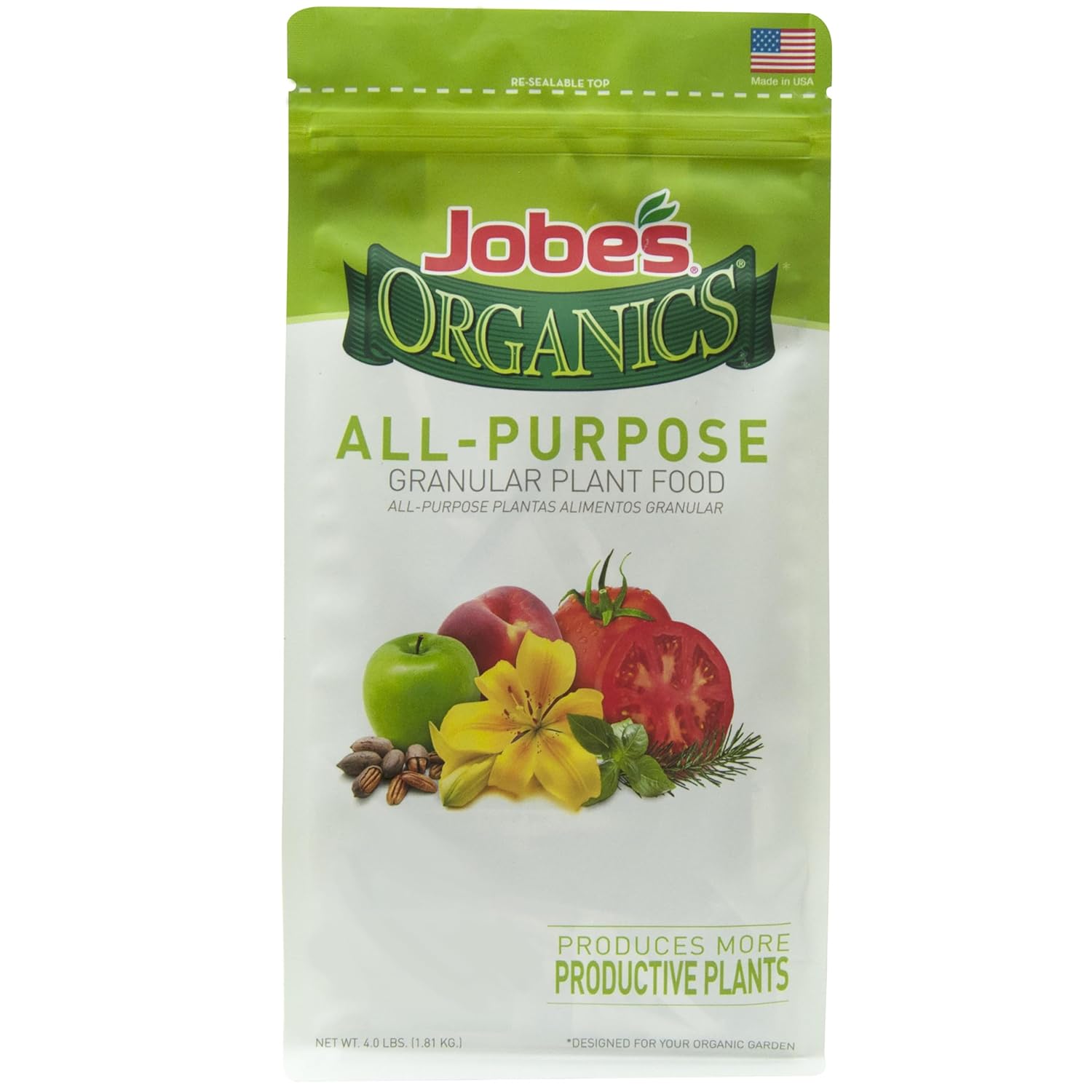
Jobe's Organics Granular All Purpose Fertilizer, 4 lb
| Item Form | Granules |
|---|---|
| Specific Uses For Product | Gardening |
| Coverage | Resealable |
| Mixing Ratio | 4-4-4 |
Jobe's Organics Granular All Purpose Fertilizer is a slow-release, OMRI-listed granular fertilizer designed for routine feeding of garden plants including young trees. You apply measured amounts around the root zone, water it in, and repeat every 2 to 3 weeks during the growing season. The 4-4-4 NPK balance with added calcium, magnesium, and sulfur supplies steady, mild nourishment without the burn risk of high-strength synthetic feeds, and the organic feedstocks encourage soil microbial activity that helps young root systems access nutrients. The resealable bag and granular form make it easy to portion and store, and directions are straightforward for gardeners who prefer repeat, low-effort applications. Limitations are that it is a light-strength general feed, so very nutrient-deficient soils or trees with established nutrient needs may require supplemental feeding or a specialized tree formula for faster correction. Also, granular organics act more slowly than soluble fertilizers, so expect gradual improvement rather than immediate greening.
Best for: Gardeners who prioritize safe, repeatable organic feeding and want a low-risk, easy-to-use fertilizer to support establishing root systems in young trees and mixed garden beds.
Less Ideal for: Users seeking fast, dramatic nutrient correction or a tree-specific high-nitrogen formulation for rapid canopy growth should consider more targeted or soluble products.
- USDA OMRI-listed organic formula suitable for organic gardening
- Balanced 4-4-4 NPK plus calcium, magnesium, and sulfur for steady, mild feeding
- Granular slow-release form reduces burn risk and supports soil microbes
- Resealable bag and simple application instructions make dosing and storage easy
- Lower NPK strength means slower visible results compared with soluble or high-N fertilizers
- Not targeted specifically to young trees so may need supplemental fertilization for deficient soils
Verdict: A gentle OMRI-listed granular fertilizer that is a practical, low-risk choice for regularly feeding young trees and maintaining soil health.
Scotts Evergreen, Flowering Tree & Shrub Continuous Release Plant Food

| Item Form | Powder |
|---|---|
| Application Method | Apply directly to soil |
| Coverage | Medium |
| Target Species | Evergreens, dogwoods, hydrangeas, magnolias, azaleas, camellias, rhododendrons |
This Scotts continuous-release plant food is designed for established magnolias, hydrangeas, azaleas and other acid-loving trees and shrubs. You apply the powder directly to the soil under the canopy, rake it into the top 1 to 3 inches, then water to start the slow-release feeding that lasts about two months. The formulation emphasizes steady nutrient availability to encourage vigorous root growth and lush foliage without the quick spikes that can stress woody shrubs. It is straightforward to use and sized for repeated applications through the growing season every two months. Limitations are that it is a general shrub formula rather than a magnolia-specific mix and coverage is described as medium, so larger trees will require multiple bags or repeated applications to treat the whole drip line. Also it is a granular/powder form so you must measure and distribute it evenly rather than using a liquid drench for quick correction of deficiencies.
Best for: Home gardeners on a budget who want a low-effort, periodic fertilizer to maintain established magnolia trees and similar acid-loving shrubs during the growing season.
Less Ideal for: People seeking a quick corrective treatment for nutrient deficiencies or a fertilizer tailored with a magnolia-specific N‑P‑K balance for intensive bloom or fruiting goals.
- Continuous-release formula feeds for up to two months reducing application frequency
- Formulated for acid-loving trees and shrubs common to magnolia care
- Easy application: apply from bag, rake into topsoil and water in
- Promotes root growth and fuller foliage suitable for woody ornamentals
- Coverage rated as medium so larger magnolias may need additional product to treat full canopy
Verdict: A simple, budget-friendly slow-release shrub fertilizer that keeps magnolias fed with minimal effort every two months.
Osmocote Smart‑Release Plant Food Plus Outdoor & Indoor, 2 lb

| Item Form | Granules |
|---|---|
| Application Method | Sprinkle |
| Target Species | All plants |
| Mixing Ratio | 1 capful (3 tablespoons) per 2 gallons soil or per 4 sq. ft. |
| Unit Count | 32 Ounce |
Osmocote Smart‑Release Plant Food Plus is a granular, resin‑coated fertilizer designed to feed flowers and other plants steadily for up to six months with 11 essential nutrients. You apply it by sprinkling the recommended amount into the top inch or two of potting mix or garden soil, watering it in, and reapplying every six months; indoor plants use about half the outdoor rate. The resin coating times nutrient release to moisture and temperature, which reduces the need for frequent feedings and lowers the risk of fertilizer burn when used as directed. It works across containers, raised beds, and in‑ground flower beds and covers up to roughly 75 square feet per 2 lb container. Limitations are that a single 2 lb container is only enough for small gardens or several pots, and the slow‑release formula is not suitable when an immediate corrective boost is needed for acute nutrient deficiencies. For gardeners focused on steady, maintenance feeding for flowering plants this is an easy, low‑effort option.
Best for: Gardeners who want reliable, low‑maintenance feeding for flowers and mixed plantings and prefer a consistent supply of nutrients over months rather than frequent liquid feedings.
Less Ideal for: Growers who need fast corrective feeding for visible nutrient deficiencies or those managing very large beds who want bulk fertilizer options to reduce trips to reapply.
- Feeds continuously up to six months with a single application
- Resin coating times nutrient release to plant needs based on moisture and temperature
- Formulated with 11 essential nutrients suitable for a wide range of flowering plants
- No-burn pledge when used as directed reduces risk of overfeeding
- 2 lb container only covers about 75 sq. ft., so frequent repurchase is needed for larger gardens
- Slow‑release formulation does not provide a rapid corrective nutrient boost
Verdict: Choose this product if you want a hands-off, long‑lasting fertilizer that keeps flowering plants fed for months with a single application.
Miracle-Gro Water Soluble All Purpose Plant Food, 3 lb

| Item Form | Powder |
|---|---|
| Application Method | Mix with water in a watering can |
| Fertilizer Analysis (N‑P‑K) | 24-8-16 |
| Unit Count | 48 Ounce |
| Coverage | Feeds approximately 1,200 sq. ft. |
Miracle‑Gro Water Soluble All Purpose Plant Food is a powdered NPK 24‑8‑16 formula that dissolves in water to give plants a quick nutrient boost. You mix measured scoops into a watering can and apply to the soil at the base of plants every 7–14 days for outdoor use or every 14 days for houseplants. Notable features include a high nitrogen content for leafy growth, compatibility with containers and in‑ground beds, and guidance for use with a Miracle‑Gro Garden Feeder for larger areas. In practical terms this is a fast‑acting feed that encourages bigger, greener foliage and works well in regular maintenance of perennials like hostas. Limitations are that it is a fast‑release fertilizer rather than a slow‑release option, so it requires regular reapplication and careful measuring to avoid overfeeding. Also, the 24‑8‑16 balance is geared toward vegetative growth, so it is not optimized if you want to prioritize flowering or bloom boosting.
Best for: Buyers who want a reliable, fast‑acting feed to maintain lush, leafy perennials and container plants and who value proven products with broad user endorsement.
Less Ideal for: Gardeners seeking a single, long‑lasting granular fertilizer or a bloom‑focused formula should consider alternative slow‑release or high‑phosphorus products.
- Water‑soluble powder mixes easily for quick uptake by roots
- High nitrogen formula promotes robust leafy growth ideal for shade plants
- Clear mixing and application instructions for both indoor and outdoor use
- Suitable for containers and in‑ground gardens and compatible with garden feeders
- Requires frequent applications so it is not a low‑maintenance, slow‑release option
- High nitrogen ratio is less suitable when the primary goal is more flowers than foliage
Verdict: A fast‑acting, water‑soluble fertilizer that reliably produces bigger, greener hosta leaves when used as directed.
Miracle-Gro Tree & Shrub Plant Food Spikes, 12 Spikes

| NPK | 15-5-10 |
|---|---|
| Coverage | 12 spikes per season |
| Target Species | trees, shrubs, evergreens and acid-loving plants |
| Application Method | Place spikes around the tree's drip line |
These Miracle-Gro Tree & Shrub Plant Food Spikes are pre-measured sticks that deliver slow-release nutrition directly to the root zone of trees and shrubs. They are typically used by watering the soil around the drip line, spacing spikes around the drip line at least 3 feet apart, and driving them into the ground so they sit below the soil surface. The 15-5-10 NPK mix supplies a higher proportion of nitrogen for foliage with phosphorus and potassium to support root and overall plant health, and the package contains 12 spikes intended for seasonal feedings. Practical benefits include simple, low-effort applications for established cherry trees where precise granular spreading is inconvenient, and the spikes help localize nutrients to the root zone rather than blanket-feeding the whole bed. Limitations are that they are designed for early spring and mid-fall use only, so they do not replace a tailored feeding schedule for trees needing summer supplements, and they require firm soil for insertion which can be difficult in very compacted or rocky sites. The product is best as an easy seasonal maintenance feed rather than an intensive corrective treatment.
Best for: Gardeners who want a low-effort, dependable seasonal feed for established flowering trees and shrubs and prefer an application that targets the root zone without granular spreading.
Less Ideal for: People needing aggressive summer corrections, quick nutrient fixes, or those working on newly planted trees that require a different feeding routine.
- Slow-release formula delivers nutrients directly to the root zone
- Pre-measured spikes make application simple and low-mess
- NPK 15-5-10 supports foliage color and overall tree vigor
- Includes 12 spikes, enough for multiple small trees or one larger drip line
- Intended for two seasonal applications only and not for summer feeding needs
- Can be hard to install in very rocky or compacted soils
Verdict: A simple, targeted seasonal feeding option that makes it easy to maintain vibrant foliage on established flowering trees with minimal effort.
Choosing the Right Fertilizer for Bottlebrush Tree: Key Factors to Consider
NPK Ratio and Bloom Support
NPK stands for nitrogen, phosphorus, and potassium, and the ratio has a direct effect on a bottlebrush tree's growth habit. A formula that has moderate nitrogen with higher phosphorus encourages flower production, while high nitrogen tends to push leafy growth at the expense of blooms.
Consider the life stage of the tree: newly planted specimens need a gentler, balanced feed to establish roots, while mature, flowering trees benefit from a bloom-focused ratio applied in the lead-up to flowering periods. Also note how often the label recommends feeding because repeated high-nitrogen applications can accumulate salts and damage roots over time.
Delivery Method and Frequency
Fertilizers come as slow-release granules, water-soluble powders, liquid concentrates, and soil drenches, and each behaves differently in a garden setting. Slow-release granules provide a steady nutrient supply with fewer applications, which is useful for low-maintenance gardens and to reduce the risk of overfeeding.
Water-soluble and liquid feeds deliver nutrients quickly and are helpful when you want an immediate bloom response or need to correct a deficiency. However they require more frequent applications and careful measuring. Pick a delivery method that fits how often you want to work on the tree and how precise you can be with measurements.
Micronutrients and Soil Interactions
Bottlebrush trees can show chlorosis or reduced vigor when micronutrients such as iron, manganese, or zinc are deficient, especially in alkaline or compacted soils. A fertilizer that includes important trace elements can prevent or correct these issues without separate treatments.
Also consider how the fertilizer interacts with your soil pH. In alkaline soils, iron may become less available even if present in the product. Read label notes on micronutrient chelation and whether foliar sprays are recommended as a complement for quick correction.
Salt Content and Root Safety
Some concentrated fertilizers have higher soluble salt content that can stress roots and reduce water uptake if applied too close to the trunk or at high rates. This is particularly important for container-grown bottlebrush trees where salts can build up more quickly.
Look for products with recommendations for flushing media or lower application rates for pots. Even in the ground, sandy soils with low organic matter are more prone to salt movement and root stress, so choose a formulation and schedule that avoids salt build-up.
Timing Relative to Bloom Cycle
Timing fertilizer applications around the natural bloom cycle is key to maximizing flower production. Fertilizing too late in the season can force tender new growth that gets damaged by cold or diverts energy away from next season's blooms.
For most climates, a feed before the main spring bloom and a light maintenance feed afterward is sufficient. Adjust timing if you live in a region with multiple flushes or a long growing season so that nutrients are available when flower buds form.
Environmental Considerations and Runoff
Fertilizer choices affect local water quality if nutrients leach from planting beds into storm drains or waterways. Slow-release formulations and lower-rate maintenance applications reduce the risk of runoff compared with frequent high-dose liquid feedings.
If your bottlebrush is planted near drainage or a pond, favor products with lower leaching potential and follow label instructions for buffer zones. Organic or controlled-release options may also reduce nutrient spikes in soil and nearby water.
Feeding Schedules for Different Planting Situations
Established in-ground bottlebrush trees and container-grown specimens have different feeding needs. In-ground trees with healthy soil can thrive on a couple of targeted feeds per year timed around bud formation, while container plants often need more frequent, lighter feeds because nutrients wash out with every irrigation.
Adjust schedules for climate and growth rate. In warm climates with long growing seasons, a low-dose monthly approach during active growth can keep blooms consistent. In cooler regions, concentrate feeding in the early growing season and avoid late-summer high-nitrogen feeds that could delay hardening off.
- In-ground mature trees: feed once or twice per year timed to pre-bloom and post-bloom
- New transplants: use a milder, balanced formula at low rates to aid root establishment
- Containers: use dilute, regular feeds or slow-release granules rated for pots
Correcting Common Deficiencies
Yellowing between leaf veins and poor bloom set can indicate micronutrient deficiencies or imbalanced soil chemistry. A soil test is the most reliable first step to diagnose whether you need iron, manganese, or other trace elements.
If a soil test is not possible, a foliar application of chelated iron can provide quick green-up for iron chlorosis, while a balanced soil feed with micronutrients helps longer term. Always follow label rates and test a small area first to avoid foliar burn.
- Use chelated forms for quick correction of iron deficiency
- Apply foliar treatments in the cooler part of the day
- Combine soil-applied micronutrient fertilizers with organic matter to improve long-term availability
Organic Versus Synthetic Options
Organic fertilizers release nutrients more slowly and often improve soil structure by adding organic matter. They can be a good match for long-term soil health and steady bloom support, especially in established beds where you want to build resilience.
Synthetic fertilizers give predictable nutrient numbers and rapid responses, which is useful when correcting a known deficiency or delivering a precise bloom-boosting feed. Choose synthetic options with lower salt indexes if root sensitivity or container culture is a concern.
- Organic feeds favor soil biology and reduce leaching
- Synthetic feeds are precise and fast-acting
- Consider combining approaches: organic base plus targeted synthetic feeds during bloom
Application Tips to Avoid Overfertilizing
Measuring and placement matter. Apply granular fertilizers evenly around the dripline rather than against the trunk to protect root collars from burn. For liquids and water-soluble formulas, measure carefully and dilute per label instructions to avoid concentrated zones.
If you suspect overfertilization, flush the soil with ample water to leach excess salts in pots, or apply organic matter and water deeply for in-ground trees to dilute concentrations. Monitor new growth for signs of recovery or continued stress and adjust future rates downward.
- Place granular fertilizer near the root zone but away from the trunk
- Always use a calibrated measuring tool for concentrates
- Flush containers periodically to prevent salt build-up
Pairing Fertilizer with Pruning and Watering
Fertilizer works best when integrated with proper pruning and watering. Prune after major bloom cycles to shape the tree and remove dead wood. Heavy pruning can stimulate new growth that will need nutrients, so plan a light feed after pruning if growth is desired.
Consistent watering helps nutrient uptake. Avoid dry spells right after feeding soluble fertilizers, and do not apply slow-release granules before heavy rains that could wash nutrients away. Match the fertilizer type to your irrigation pattern for best results.
- Feed lightly after pruning to support regrowth
- Time granular applications before a period of regular watering
- Avoid fertilizing during drought stress
How We Chose the Best Fertilizer for Bottlebrush Tree
We shortlisted fertilizers based on criteria that reflect how bottlebrush trees behave in home landscapes and containers. First, we prioritized NPK balance that supports flowering and root development rather than high-nitrogen formulas that favor leaf growth over blooms. Second, delivery method mattered: slow-release granules, water-soluble feeds, and soil drenches affect application frequency and accuracy differently, so we included a mix of formats suited to different gardeners. Third, we evaluated nutrient trace elements and micronutrient profiles because iron and manganese deficiencies can show up on bottlebrush foliage in certain soils. Fourth, ease of application and clarity of instructions were assessed so gardeners with limited time or experience can follow a reliable regimen. We also considered environmental impact factors such as leaching potential and recommendations for safe use near water features. Excluded items included fertilizers formulated solely for lawns or broad-spectrum garden products without clear bloom-focused ratios, and products that lack clear application guidelines. The final list reflects options that balance bloom promotion, root health, and gardener practicality.
FAQ
How often should I feed a mature bottlebrush tree?
Often it depends on the fertilizer type and climate. Many mature in-ground trees do well with one to two targeted feeds per year timed around bud set. Container plants usually need lighter, more frequent feeds because nutrients leach with watering.
Can too much fertilizer reduce flowering?
Yes. Excessive nitrogen encourages leafy growth and can suppress blooms. Use a bloom-focused ratio or reduce nitrogen when your goal is more flowers rather than vigorous foliage.
Is a soil test necessary before fertilizing?
A soil test is recommended when possible because it reveals pH and nutrient levels and guides specific corrections. If a test is not available, choose a balanced or bloom-oriented feed and monitor foliage and flowering response.
Are foliar sprays effective for correcting deficiencies?
Foliar sprays can provide quick correction for micronutrient deficiencies such as iron chlorosis, but they are usually a short-term fix. Combine foliar applications with soil amendments for longer-term improvement.
Should I use organic fertilizer for bottlebrush trees?
Organic fertilizers are useful for building soil health and providing steady nutrients over time. They can support consistent flowering and soil biology, though they may act more slowly than synthetic alternatives.
Final Verdict
When choosing a fertilizer for bottlebrush trees, prioritize a nutrient balance that supports flowering while protecting root health. Match the delivery method and frequency to whether the tree is in the ground or in a container, and consider micronutrients if foliage shows deficiency symptoms. Balance the tradeoffs between fast-acting formulas and slower, soil-building options, and time applications around bloom cycles to get the best flower displays.
