

Note: This article contains affiliate links. If you click on these links and make a purchase, I may earn a small commission at no extra cost to you. This helps support my research and content. Read my full affiliate disclosure here.
Getting the right fertilizer for butterfly bushes matters because these shrubs reward proper feeding with bigger flower spikes and a longer bloom period. You want nutrients that encourage flowering without pushing excessive leafy growth or making plants leggy. This guide covers seven top-tested fertilizer options suited to butterfly bush care, shortlisted for gardeners who want reliable bloom production and straightforward application. We evaluated each option for nutrient balance, ease of use, and how it fits into common garden soils and watering routines. Read on to find a feeding approach that matches your planting site and seasonal schedule.
Top Picks at a Glance
| Best Quality Built to a higher standard if you want something more solid | FoxFarm Tiger Bloom Liquid Plant Food (1 pint) |  |
| Best Value The sweet spot between price and what you get | Scotts Rose & Bloom Continuous Release Plant Food, 3 lb |  |
| Highest Rated A top-rated pick with lots of positive feedback | TPS Nutrients Liquid Bush Fertilizer, 32 fl oz |  |
| Most Popular A crowd favorite that many people choose with confidence | Miracle-Gro Shake 'N Feed Flowering Trees & Shrubs Plant Food, 8 lb. |  |
| Best Seller A high-volume bestseller chosen again and again | Miracle-Gro Water Soluble All Purpose Plant Food, 3 lb |  |
FoxFarm Tiger Bloom Liquid Plant Food (1 pint)
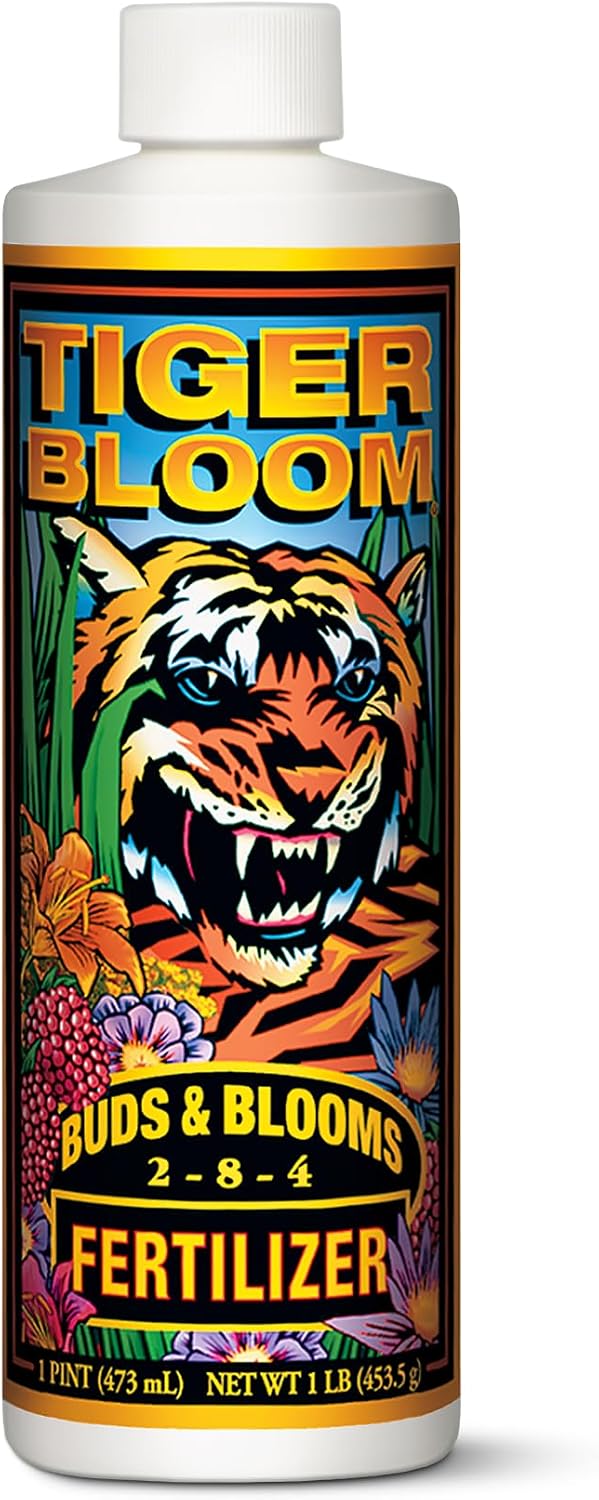
| Item Form | Liquid |
|---|---|
| Specific Uses For Product | Hydroponic |
| Application Method | Watering; Foliar spraying |
| Target Species | Flowering Plants |
| Mixing Ratio | 1:200 or 1:300 |
Tiger Bloom is a liquid, high-phosphorus fertilizer designed to push plants into a strong flowering and fruiting phase. You mix a small amount into the irrigation water or use it as a foliar spray and apply from first signs of flowering through harvest. The 2-8-4 formula and included micronutrients support bud set and larger blooms, and the concentrate mixes at 1:200 to 1:300 for routine feeding or 2 to 4 teaspoons per gallon for heavier feeding. It works in both soil and hydroponic setups and is formulated for quick nutrient uptake and stable micronutrient availability during storage. Practical benefits include flexible application methods, suitability for intensive flowering cycles, and a small bottle that lasts when used at recommended dilutions. Important limitations are that it is bloom-focused rather than an all-purpose feed so it may not meet vegetative needs, and the phosphorus content means users near waterways should follow local regulations to avoid runoff issues.
Best for: Serious growers who prioritize maximizing flower and bloom performance and want a concentrated, fast-acting bloom booster for soil or hydroponic environments.
Less Ideal for: Casual gardeners seeking a single all-purpose fertilizer for every growth stage or those managing turf or non-flowering lawns where phosphorus restrictions apply.
- High phosphorus NPK (2-8-4) concentrated for stronger bud development
- Works in soil and hydroponic systems for versatile use
- Liquid concentrate mixes easily for foliar or watering applications
- Formulated for quick nutrient uptake and stable micronutrient availability
- Focused on flowering so it is not a balanced all-stage fertilizer
- Contains phosphorus which may be restricted near waterways
Verdict: Choose Tiger Bloom when you need a concentrated, fast-acting bloom booster to maximize flower and fruit production.
Scotts Rose & Bloom Continuous Release Plant Food, 3 lb

| Item Form | Granules |
|---|---|
| Coverage | Medium |
| Target Species | Roses, annuals, perennials |
| Mixing Ratio | 12-4-8 |
| Unit Count | 48 Ounce |
This Scotts Rose & Bloom formula is a simple, no-frills granular fertilizer made to encourage flowering on roses, annuals and perennials. You apply it directly to soil, lightly rake it into the top 1–3 inches, water in, and it releases nutrients steadily for about two months. The N-P-K analysis (12-4-8) and emphasis on phosphorus means it favors bloom production over leafy growth, so it is useful during the flowering season. Its strengths are ease of use and predictable, slow feeding that reduces how often you need to treat beds. Because it is a granular continuous-release product, results appear over weeks rather than instantly like a liquid feed. Users should follow label rates to avoid overapplication and wear gloves to avoid skin or eye contact. For gardeners wanting a budget-friendly, low-maintenance way to increase bloom set, this product delivers reliable performance, but those who need rapid corrective feeding or precise soluble nutrition may prefer a water-soluble alternative.
Best for: Gardeners who want an affordable, low-maintenance fertilizer to increase flowering with fewer applications during the growing season.
Less Ideal for: Growers who need fast-acting, soluble feeds for quick correction or precise nutrient control should consider a water-soluble fertilizer instead.
- Continuous-release granules feed plants for up to two months, cutting application frequency
- Formulated to promote blooms on roses, annuals and perennials
- Easy application: sprinkle, rake into topsoil and water in
- Widely suitable for outdoor beds and containers when used as directed
- Not water-soluble so it does not provide an immediate nutrient boost
- Contains chemicals that require safe handling and temporary area reentry restrictions
Verdict: A budget-friendly, easy-to-use continuous-release fertilizer that reliably boosts blooms with only occasional applications.
TPS Nutrients Liquid Bush Fertilizer, 32 fl oz

| Brand | TPS NUTRIENTS |
|---|---|
| Item Form | Liquid |
| Specific Uses For Product | Plant Growth |
| Target Species | Shrubs and Bushes |
| Unit Count | 32 Fluid Ounces |
This 32 fl oz liquid bush fertilizer from TPS Nutrients is made to be a regular feed for hedges, ornamental shrubs, and landscape bushes. It supplies a balanced nutrient mix with added calcium, magnesium, and kelp in a nitrate-based liquid for quick uptake through roots and foliage. Typical use is straightforward dosing during the growing season and applying evenly to soil or as a foliar spray for faster absorption. Practical benefits include faster visible leaf growth, denser branching that helps maintain hedge shape, and support for root health that improves winter hardiness and resilience. The liquid format makes application and mixing predictable compared with slow-release granules, but it does require a regular schedule to maintain results. There is no detailed N-P-K breakdown on the label provided here, so gardeners who need exact nutrient ratios or specialized formulations may want additional information before committing. For everyday hedge maintenance this product delivers convenient, concentrated nutrition that helps keep shrubs full and vigorous.
Best for: Gardeners who want a simple, dependable liquid feed to keep hedges and ornamental shrubs consistently full and healthy and who prefer predictable, repeatable applications.
Less Ideal for: People seeking a precise N-P-K specification for tailored nutrient management or those who prefer one-time granular slow-release fertilizers for low-maintenance feeding.
- Liquid formula allows faster nutrient uptake and easy mixing for regular feeding
- Contains added calcium, magnesium, and kelp to support root strength and overall plant vigor
- Formulated specifically for shrubs and bushes to encourage denser branching and fuller foliage
- Concentrated 32 fl oz size suitable for multiple applications across a small to medium hedge
- No explicit N-P-K ratio listed in the provided product details, so exact nutrient balance is unclear
- Requires repeated applications during the season rather than a single slow-release treatment
Verdict: A reliable liquid feed that helps hedges and ornamental shrubs develop fuller foliage and stronger roots when used as a regular maintenance fertilizer.
Miracle-Gro Shake 'N Feed Flowering Trees & Shrubs Plant Food, 8 lb.

| Item Form | Granules |
|---|---|
| Application Method | shake evenly onto the soil |
| Target Species | flowering trees, shrubs and other acid-loving plants |
| Mixing Ratio | 18:6:12 |
| Unit Count | 128 Ounce |
Miracle-Gro Shake 'N Feed Flowering Trees & Shrubs is a granular, slow-release fertilizer designed to support flowering shrubs and acid-loving plants over an extended period. You apply it by shaking the granules evenly onto the soil under the branch spread or working it into potting mix for containers, then watering to activate the nutrients. The formula lists an 18-6-12 N-P-K ratio and includes organic-derived inputs such as kelp, feather meal, bone meal and earthworm castings to help feed soil microbes and support root development. Practically, that means less frequent feeding and improved foliage and bloom quality across a season—Miracle-Gro recommends reapplying every three months. It works for both in-ground and container plantings and covers a medium area per bag. Limitations are that it is a general-purpose shrub formula tuned for acid-loving species so it is not a precision fertilizer for nutrient-deficient soils and you still need to avoid contact with trunks and foliage when applying. For best results monitor soil pH and follow labeled application rates for newly planted versus established shrubs.
Best for: Gardeners who want a low-effort, season-long feed for flowering shrubs like forsythia and prefer a product that supports soil health without frequent reapplication.
Less Ideal for: Growers who need a precise corrective fertilizer for diagnosed nutrient deficiencies or who maintain shrubs that prefer neutral to alkaline soils.
- Continuous-release granules feed plants for up to three months reducing application frequency
- Contains organic inputs like kelp and earthworm castings to support soil microbes and root health
- Clear application method for both in-ground and container plants makes it easy to use
- Higher nitrogen ratio (18-6-12) promotes lush foliage and supports flowering season-long
- Not a targeted corrective fertilizer for specific mineral deficiencies
- Designed for acid-loving plants so less suitable for neutral or alkaline-preferring shrubs
Verdict: Use this to give forsythia and other acid-loving shrubs an easy, three-month continuous feeding that boosts foliage and blooms with minimal effort.
Miracle-Gro Water Soluble All Purpose Plant Food, 3 lb

| Item Form | Powder |
|---|---|
| Application Method | Mix with water in a watering can |
| Fertilizer Analysis (N‑P‑K) | 24-8-16 |
| Unit Count | 48 Ounce |
| Coverage | Feeds approximately 1,200 sq. ft. |
Miracle‑Gro Water Soluble All Purpose Plant Food is a powdered NPK 24‑8‑16 formula that dissolves in water to give plants a quick nutrient boost. You mix measured scoops into a watering can and apply to the soil at the base of plants every 7–14 days for outdoor use or every 14 days for houseplants. Notable features include a high nitrogen content for leafy growth, compatibility with containers and in‑ground beds, and guidance for use with a Miracle‑Gro Garden Feeder for larger areas. In practical terms this is a fast‑acting feed that encourages bigger, greener foliage and works well in regular maintenance of perennials like hostas. Limitations are that it is a fast‑release fertilizer rather than a slow‑release option, so it requires regular reapplication and careful measuring to avoid overfeeding. Also, the 24‑8‑16 balance is geared toward vegetative growth, so it is not optimized if you want to prioritize flowering or bloom boosting.
Best for: Buyers who want a reliable, fast‑acting feed to maintain lush, leafy perennials and container plants and who value proven products with broad user endorsement.
Less Ideal for: Gardeners seeking a single, long‑lasting granular fertilizer or a bloom‑focused formula should consider alternative slow‑release or high‑phosphorus products.
- Water‑soluble powder mixes easily for quick uptake by roots
- High nitrogen formula promotes robust leafy growth ideal for shade plants
- Clear mixing and application instructions for both indoor and outdoor use
- Suitable for containers and in‑ground gardens and compatible with garden feeders
- Requires frequent applications so it is not a low‑maintenance, slow‑release option
- High nitrogen ratio is less suitable when the primary goal is more flowers than foliage
Verdict: A fast‑acting, water‑soluble fertilizer that reliably produces bigger, greener hosta leaves when used as directed.
Choosing the Right Fertilizer for Butterfly Bushes: Key Factors to Consider
Nutrient Ratio and Bloom Priority
Butterfly bushes bloom best when feeding prioritizes flowering nutrients without encouraging too much leafy growth. Look for formulations that provide adequate phosphorus and potassium relative to nitrogen. Excessive nitrogen can promote lush foliage at the expense of flower production, while too little nitrogen will weaken overall vigor.
Consider whether a fertilizer is marketed specifically for flowering shrubs or for general shrubs and trees. A targeted bloom formula is useful during pre-bloom and peak-flower seasons, while a more balanced feed might be better for establishment or recovery after pruning.
Release Type and Feeding Schedule
Fertilizers come as quick-release liquids, water-soluble powders, granular slow-release mixes, and coated controlled-release granules. Liquid feeds give a rapid nutrient boost that is visible within days but require more frequent repeat applications. Slow-release and controlled-release options feed over weeks or months, reducing labor and the chance of nutrient spikes.
Choose a release type that matches how often you want to feed and how closely you monitor the plants. In hot, fast-draining soils, controlled-release granules can maintain steady nutrition, while containers often benefit from more regular liquid feeding because nutrients wash out faster.
Application Method and Ease
How you apply fertilizer affects both effectiveness and convenience. Granular spreads are simple for established beds and can be worked into the topsoil or left on the surface to dissolve with irrigation. Water-soluble powders and liquids require mixing but allow precise, quick feeding and foliar applications when needed.
Consider tools and access: a spreader helps with larger beds, a watering-can applicator is handy for smaller plantings, and spike-style feeders are low-effort but offer less control over dosage. Pick a method that fits your gardening routine and the scale of your plantings.
Soil Type and pH Considerations
Soil texture and pH influence nutrient availability. Butterfly bushes generally tolerate a range of soils but perform best when nutrients are accessible. In alkaline soils, certain micronutrients and phosphorus can become less available, while very acidic soils may leach mobile nutrients quickly.
Test your soil or observe plant symptoms to choose a fertilizer that supplies the right blend and includes micronutrients if your soil is deficient. For containers or raised beds, use blends formulated for potted shrubs since those soils drain and hold nutrients differently than in-ground beds.
Salt Content and Environmental Impact
Some fertilizers have higher soluble salt levels that can stress roots, especially in droughty conditions or in containers where salts accumulate. Low-salt formulations and slow-release options reduce burn risk and are gentler on established root systems.
Also think about runoff and nearby pollinator habitat. Choose formulas that minimize excess nitrogen runoff and avoid heavy chemical residues that could harm soil life or water quality. Organic or lower-salt products are often a safer choice near pollinator plantings.
Seasonal Timing and Pruning Coordination
When you feed affects bloom timing and shrub structure. Early spring feeding supports new growth and can set the stage for summer blooms, but feeding immediately after a heavy pruning can push excessive vegetative regrowth. Many gardeners time lighter feeding after a first bloom flush and again midseason to encourage continued flowering.
Plan fertilizer timing around your pruning schedule and local bloom periods. For repeat-flowering varieties, a midseason feed that is bloom-focused helps extend the display without causing late-season tender growth that could be damaged by frost.
Feeding Timetable for Strong Blooms
Establish a simple feeding timetable based on the fertilizer type you choose. For slow-release granules, a single application in early spring is often sufficient to carry a shrub through the main bloom period. Liquids and water-soluble feeds are best used every four to six weeks during the active growing season.
Adjust timing for local climate: in cool regions, delay heavy feeding until soil has warmed and shoots are actively growing. In hot climates with long seasons, a light midseason top-up helps sustain flowering without forcing late tender growth.
- Early spring: apply controlled-release or a starter dose to support new growth
- Pre-bloom or early bloom: use a bloom-focused feed to encourage flower set
- Midseason: a light feed can extend flowering for repeat bloomers
- Late season: avoid high-nitrogen feeding that promotes frost-sensitive growth
Soil Testing and Adjustments
A basic soil test gives useful information about pH and major nutrient levels. Many extension services and garden centers offer quick test options. Matching fertilizer choice to soil test results helps you avoid overfertilizing and directs you to formulas that correct specific deficiencies.
If phosphorus is already high, choose a balanced feed rather than a high-phosphorus product. If micronutrient deficiencies show up as leaf discoloration, select a fertilizer that includes those trace elements or supplement with targeted amendments.
- Test soil every two to three years or when plant health declines
- Adjust pH with lime or sulfur only if test results indicate a problem
- Use targeted micronutrient supplements for persistent deficiency signs
Container and Raised Bed Considerations
Butterfly bushes in containers or raised beds have different nutrient dynamics than in-ground plants. Potting mixes drain faster and have fewer nutrient reserves, so they often require more regular feeding. Choose fertilizers formulated for containers or use a reliable slow-release blend combined with occasional liquid feedings.
Monitor for salt buildup in pots by leaching the soil with a thorough watering once or twice a season. Repot or refresh the top few inches of soil every couple of years to restore fertility and structure.
- Use container-specific formulas or supplement slow-release granules with liquids
- Leach salts periodically by running water through the pot until drainage is clear
- Refresh potting mix every 2-3 years to restore nutrient reserves
Organic Vs Synthetic Options
Organic fertilizers release nutrients through microbial action and improve soil structure over time. They tend to be lower in salt and provide steady, long-term benefits but may not produce rapid bloom flushes. Synthetic fertilizers deliver predictable nutrient amounts quickly and are useful when an immediate response is needed.
Choose organic blends if you are building soil health or want to minimize environmental runoff. Synthetic controlled-release formulas are a practical compromise when you need reliable bloom support with less frequent applications.
- Organic: gentler, soil-building, slower-acting
- Synthetic: faster response, precise nutrient ratios, available in controlled-release forms
- Combine approaches carefully to avoid overfeeding
Practical Application Tips
Apply granular fertilizers evenly around the drip line rather than at the stem base and lightly work them into the topsoil. For liquids, wet the root zone before application to reduce the risk of burning and follow package dilution instructions carefully.
Always water in granular applications to move nutrients into the root zone, and avoid fertilizing drought-stressed shrubs until they are rehydrated. Use personal protective equipment when handling concentrated fertilizers and store products securely out of reach of children and pets.
- Spread granules near the drip line, not at the trunk
- Water after application to incorporate nutrients
- Avoid fertilizing during drought; rehydrate plants first
How We Chose the Best Fertilizer for Butterfly Bushes
We focused on practical, garden-focused criteria that predict how a fertilizer will affect butterfly bushes in real planting conditions. Primary evaluation points included nutrient ratio and bloom-targeted formulation to ensure a higher proportion of phosphorus and potassium where appropriate, and realistic nitrogen levels to avoid excessive vegetative growth. We also assessed release type, favoring slow-release or controlled-release formulas that reduce the risk of nutrient burn and cut down on frequent applications. Application method and frequency were important because liquid feeds, granular spreads, and spikes perform differently depending on gardener preference and irrigation. Soil compatibility and solubility were reviewed to ensure options work in a range of soils from sandy to loamy and in raised beds or containers. We considered environmental impact by preferring lower-salt formulations and options that minimize runoff risk. Exclusions: products that are exclusively for lawns, general houseplants, or those with application methods unsuitable for established shrubs were not considered. The final shortlist reflects fertilizers that balance bloom encouragement, ease of application, and garden safety.
FAQ
How often should I fertilize butterfly bushes?
It depends on the product. Controlled-release granules generally need a single spring application, while liquid or water-soluble feeds are typically applied every four to six weeks during the growing season.
Can I use a general-purpose shrub fertilizer on butterfly bushes?
Often yes. A balanced shrub fertilizer will support health, but for extra bloom production choose a formula with a bloom-friendly nutrient mix. Avoid high-nitrogen feeds if your goal is more flowers rather than foliage.
Are organic fertilizers effective for promoting blooms?
Organic options can be effective over time and improve soil health, but they usually release nutrients more slowly. For an immediate bloom boost a water-soluble feed may show faster results, while organics support long-term vigor.
Will too much fertilizer harm butterfly bushes?
Yes. Overapplication can cause salt build-up, root burn, excessive leafy growth, and reduced flowering. Follow label directions and adjust amounts for soil type and plant size to avoid damage.
What is the best time of year to feed for peak flowering?
Apply a main feed in early spring as growth resumes and use a bloom-focused feed just before or at the start of the flowering period. A light midseason top-up can extend blooms for repeat-flowering varieties.
Should I change fertilizer after pruning?
Prune first and wait for new growth before applying high-nitrogen feeds. A balanced or bloom-focused feed after recovery supports flower production without encouraging weak regrowth immediately after heavy pruning.
Final Verdict
Choosing the right fertilizer for butterfly bushes comes down to balancing bloom-focused nutrients, release type, and how you prefer to apply feed. Prioritize a nutrient ratio that encourages flowering without excessive nitrogen, select a release profile that fits your maintenance rhythm, and account for soil type and container conditions. Accept tradeoffs: fast-acting liquids give quick results but require repeat applications, while slow-release and organic options reduce labor and lower burn risk. Use the factors above to match a fertilizer to your garden and seasonal plans so you get strong, consistent blooms without unnecessary risk.
