

Note: This article contains affiliate links. If you click on these links and make a purchase, I may earn a small commission at no extra cost to you. This helps support my research and content. Read my full affiliate disclosure here.
If you grow coconuts, the right fertilizer makes a big difference in trunk strength, canopy size, and nut production. Coconut palms need steady access to key nutrients over a long growing season, so selecting a fertilizer formulated for palms or tropical trees can speed recovery after transplanting, correct nutrient deficiencies, and support consistent fruiting. This guide covers seven top picks for fertilizer for coconut tree that fit common garden situations, from container palms to yard-planted specimens. We'll explain the practical reasons each pick made our shortlist and the evaluation criteria used to compare nutrient formulas, application methods, and long-term soil effects.
Top Picks at a Glance
| Best Overall The best all-around choice for most situations | PERFECT PALM Dual Action Palm Tree Fertilizer, 7 lb Pail with Measuring Scoop |  |
| Best Quality Built to a higher standard if you want something more solid | MicroLife Palms & Tropical Granular Organic Fertilizer (4-2-4), 7 lb |  |
| Best Value The sweet spot between price and what you get | TPS NUTRIENTS Palm Tree Liquid Fertilizer, 32 fl oz |  |
| Best Budget The cheapest option that still gets the job done reliably | Jobe's Organics Granular Palm Tree Fertilizer, 4 lb |  |
| Highest Rated A top-rated pick with lots of positive feedback | 8-2-12 Slow-Release Palm, Tree & Shrub Fertilizer (25 lb) |  |
| Most Popular A crowd favorite that many people choose with confidence | Miracle-Gro Shake 'N Feed Palm Plant Food, 4.5 lb |  |
| Best Seller A high-volume bestseller chosen again and again | Miracle-Gro Palm Tree Food, 20 lb |  |
PERFECT PALM Dual Action Palm Tree Fertilizer, 7 lb Pail with Measuring Scoop

| Item Form | Granules |
|---|---|
| Application Method | Sprinkle |
| Specific Uses For Product | Palm Tree Health and Growth |
| Mixing Ratio | 7:14:40 |
Perfect Palm 7 lb is a granular, dual-action fertilizer designed specifically for palms and built around a spoon-feed application that is easy to use. You simply fill the included scoop, sprinkle the granules evenly within the root zone around the trunk and irrigate as normal; the mix contains quick-release and slow-release granules so some nutrients take effect immediately while others feed the tree over about six weeks. Notable features include a free measuring scoop and a resealable pail for tidy storage, a 7-14-40 NPK ratio that prioritizes potassium for stress resistance, and micronutrients such as iron and magnesium to support greening. The product is intended for repeated applications every six weeks and is sized to feed multiple small to medium palms per container. Limitations are that it is a palm-specific formula so it is not a balanced all-purpose fertilizer for non-palm ornamentals and the granular surface application requires even distribution and routine irrigation to dissolve evenly.
Best for: Buyers who prioritize measurable performance for Majesty palms and want a palm-specific program that delivers steady feeding and improved frond color with minimal mixing or calibration.
Less Ideal for: Gardeners seeking a multi-purpose fertilizer for lawns or non-palm ornamentals or those who prefer liquid or foliar feeding methods.
- Formulated specifically for palms with a 7-14-40 NPK that boosts potassium for improved stress tolerance
- Includes a measuring scoop and resealable pail for precise, tidy application
- Dual-action granules combine immediate and sustained nutrient release over roughly six weeks
- Contains micronutrients (iron, magnesium, manganese, zinc) to help correct deficiencies and improve frond color
- Designed for palms rather than as a general-purpose fertilizer for mixed plantings
- Requires even surface distribution and consistent irrigation to activate slow-release granules
Verdict: A purpose-built granular program for Majesty palms that delivers predictable, spoon-fed nutrition and improved frond color with minimal fuss.
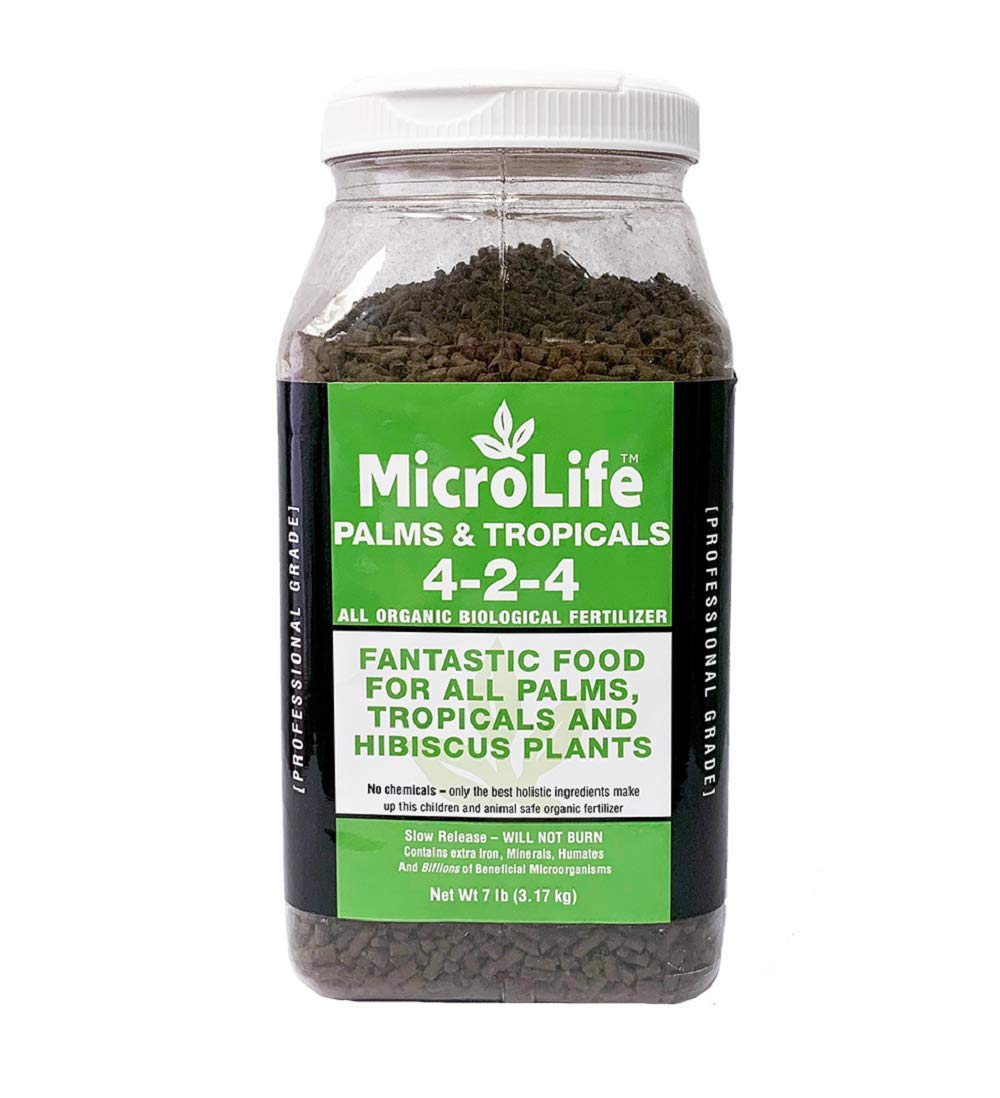
MicroLife Palms & Tropical Granular Organic Fertilizer (4-2-4), 7 lb
| Item Form | Granules |
|---|---|
| Specific Uses For Product | Organic |
| Target Species | Palms, tropicals & hibiscus |
| Mixing Ratio | 1:1:1 |
This granular formula delivers steady nutrition with a 100 percent slow-release profile designed to avoid burning sensitive tropical plants. You apply it to soil around the base of new plantings and as part of annual maintenance; the slow-release granules feed over time so you do not need frequent reapplication. The product includes extra potassium, magnesium, manganese, and iron, which support strong foliage color and stress tolerance in nutrient-hungry tropicals. Its professional-grade concentration means you can expect robust, gradual growth and improved plant resilience rather than a short burst of lush but weak growth. On the downside it is a specialty palm/tropical blend so it is not tailored for every fruiting crop and directions must be followed to get the intended slow-release benefit. Also the granular form requires spreading or incorporation into soil, so it is less convenient than a liquid feed for foliar applications. For gardeners focused on steady, dependable nutrition this fertilizer simplifies seasonal feeding for tropical and hibiscus plantings.
Best for: Buyers who prioritize dependable, low-maintenance nutrition for tropical plants and want a slow, steady feeding program rather than frequent dosing.
Less Ideal for: Growers seeking a fertilizer optimized specifically for pineapple fruit production or those who prefer liquid or foliar feeds for quick correction.
- 100% slow-release granules reduce risk of fertilizer burn and provide sustained feeding
- Includes added potassium, magnesium, manganese and iron to support foliage health and stress tolerance
- Professional-strength formula suited for new plantings and annual maintenance
- Formulated specifically for palms and tropicals so nutrient balance may not match all fruiting crops
- Granular form requires soil application and is not suitable for quick foliar feeding
Verdict: Choose this slow-release tropical fertilizer when you want reliable, low-risk seasonal feeding to maintain healthy foliage and steady growth.
TPS NUTRIENTS Palm Tree Liquid Fertilizer, 32 fl oz

| Item Form | Liquid |
|---|---|
| Specific Uses For Product | Plant Food |
| Application Method | hose end sprayer or leaf misting |
| Target Species | Palm |
| Mixing Ratio | 1:128 |
This 32-ounce TPS NUTRIENTS liquid fertilizer is formulated specifically for palms and is intended for routine feeding to promote green fronds, steady frond development, and stronger roots. It is used diluted at the manufacturer’s mixing ratio (1:128) and can be applied through a hose-end sprayer or light leaf misting, which makes treating landscape palms or container specimens straightforward. The formula is micronutrient-enriched, so it addresses both foliage color and underlying nutrient needs that support new growth. Because it is liquid and designed for full coverage, you can expect quicker uptake compared with slow-release granules, particularly when applied to moist soil or sprayed on foliage. Limitations include the need to mix accurately to avoid overapplication and the smaller 32 oz size, which means frequent repurchasing for larger plantings or mature coconut trees with high nutrient demand.
Best for: Buyers who want a palm-focused, easy-to-apply liquid feed for regular maintenance of potted palms or small landscape specimens and who prioritize visible frond health.
Less Ideal for: Large properties with many mature coconut palms or growers seeking a long‑lasting granular program should consider higher‑volume or slow‑release alternatives.
- Formulated specifically for palms to support frond color and development
- Micronutrient-enriched formula targets root health and new growth
- Can be applied via hose-end sprayer or leaf misting for easy, even coverage
- Liquid form allows faster nutrient uptake than granular options
- Small 32 fl oz bottle may not be economical for large or mature coconut trees
Verdict: A convenient, palm-focused liquid feed that delivers quick foliar and root benefits for routine maintenance of individual coconut or ornamental palms.
Jobe's Organics Granular Palm Tree Fertilizer, 4 lb

| NPK | 4-2-4 |
|---|---|
| Item Form | Granules |
| Unit Count | 64 Ounce |
| Target Species | palm trees and plants |
This granular palm fertilizer is designed to feed palms and similar house or landscape plants on a slow-release schedule. It is OMRI listed and made from organic sources such as feather meal and bone meal, so you can apply it around ornamentals, indoor palms, and planted containers without synthetic chemicals. Typical use is straightforward: broadcast or sprinkle the granules around the root zone every 2 to 3 months during the growing season and water in. The 4-2-4 NPK plus added calcium and magnesium supplies steady nitrogen and potash for leaf development while supporting root health. Practical benefits include low risk of burn when used as directed, easy measuring, and longer-lasting effects compared with quick-release feeds. Limitations are that a 4 lb bag covers a moderate area only, so larger landscapes will need multiple bags, and nutrient release is slower so you will not see immediate greening after a single application.
Best for: Gardeners looking for an affordable, organic palm fertilizer they can apply infrequently and safely around ornamental palms and potted specimens.
Less Ideal for: People who need rapid greening or who manage large acreages of palms and want a high-volume commercial option.
- OMRI listed organic formula safe for use around ornamentals, children, and pets when used as directed
- Balanced 4-2-4 NPK with added calcium and magnesium supports foliage and root development
- Slow-release granular form provides longer-lasting feeding and lower burn risk
- Simple application schedule of every 2 to 3 months makes maintenance easy
- 4 lb bag provides only medium coverage so multiple purchases may be needed for larger plantings
- Slow-release formula delays visible results compared with fast-release fertilizers
Verdict: A budget-friendly organic granular fertilizer that gives steady, low-risk nutrition to palms with easy, infrequent applications.
8-2-12 Slow-Release Palm, Tree & Shrub Fertilizer (25 lb)

| Mixing Ratio | 8:2:12 |
|---|---|
| Item Form | Granules |
| Application Method | Spread |
| Coverage | 100 square feet |
| Target Species | palms, trees, shrubs, turf, ornamentals and fruit-bearing trees |
This 8-2-12 granular fertilizer is designed specifically to support palms and landscape trees by delivering balanced nitrogen, potassium and slow-release magnesium from kieserite. It is applied by broadcasting or with a standard spreader at the recommended rate (up to 1.5 lb per 100 sq ft) every 2 to 3 months, which provides steady nutrient release and helps prevent the yellowing commonly seen with magnesium deficiency. The inclusion of kieserite means magnesium is available over time rather than all at once, reducing the risk of short-lived flushes and improving frond color and vigor in low pH soils. The 25 lb bag is sized for routine seasonal maintenance across multiple palms or small landscape areas and is the same formulation used by landscaping professionals. Important limitations are typical of granular fertilizers: it requires even application to avoid localized staining and should be used with seasonal timing in mind rather than as an emergency corrective treatment, and handling precautions are needed to avoid irritation and dust inhalation.
Best for: Homeowners and landscapers who want a reliable, maintenance-friendly fertilizer that prevents palm magnesium deficiency and supports steady seasonal growth.
Less Ideal for: People needing a quick corrective feed or a liquid foliar treatment for acute deficiencies should choose a different product.
- Slow-release magnesium from kieserite helps prevent and correct magnesium deficiency over months
- Formulated specifically for palms and landscape trees to improve frond color and overall vigor
- Compatible with standard broadcast spreaders for easy application
- Long-lasting effect with 2–3 month reapplication interval reduces maintenance frequency
- Granular form can stain sidewalks and requires careful, even spreading
- Not formulated for rapid corrective feeding when immediate nutrient uptake is needed
Verdict: Choose this product if you want a professional-strength, slow-release palm fertilizer that reliably corrects magnesium deficiency and supports healthy frond color with low maintenance.
Miracle-Gro Shake 'N Feed Palm Plant Food, 4.5 lb

| Item Form | Powder |
|---|---|
| Application Method | shake onto soil |
| Target Species | Palm plants |
| Unit Count | 72 Ounce |
| Mixing Ratio | 8:2:12 |
Miracle-Gro Shake 'N Feed Palm Plant Food is a shake-on granular fertilizer designed to supply steady nutrition to palms, cycads, and other tropical plants for up to three months per application. You apply it by shaking the powder evenly onto soil beneath the fronds, working it into the top 1–3 inches of soil, then watering to activate the feed; it can also be mixed into new potting soil at planting. The formulation includes nitrogen, phosphorus and potassium plus magnesium, iron and manganese to help reduce yellowing and promote greener fronds, and the product contains compost to support root health. The main practical benefits are simple application without measuring equipment, slow-release feeding that reduces application frequency, and targeted nutrients for palm health. Limitations are that it is a general palm formula rather than tailored to specific palm species and you must avoid contact with trunks and foliage to prevent damage; correct application rates are important to avoid overfeeding. This is a straightforward option if you want low-effort, periodic feeding for established palms in containers or in-ground beds.
Best for: Gardeners who want a low-effort, reliable palm fertilizer that requires infrequent applications and straightforward shake-on use for established container or in-ground palms.
Less Ideal for: Growers needing a species-specific nutrient program or precise, frequent feeding schedules for high-value or finicky palms.
- Continuous-release formula that feeds up to three months reducing application frequency
- Includes micronutrients (magnesium, iron, manganese) to help prevent yellowing of fronds
- Easy shake-on application for in-ground and container palms without mixing equipment
- Contains compost to support root health and improve water efficiency
- Not species-specific so it may not address unique nutrient needs of all palm varieties
Verdict: A no-fuss, slow-release palm fertilizer that delivers targeted micronutrients and three months of feeding with simple shake-on application.
Miracle-Gro Palm Tree Food, 20 lb

| Item Form | Granules |
|---|---|
| Target Species | palm trees |
| Mixing Ratio | 8-4-8 |
| Unit Count | 320 Ounce |
| Coverage | 20 |
Miracle-Gro Palm Tree Food is a granular, slow-release fertilizer designed specifically for palm trees and other tree plantings. You spread the granules around the root zone, work them into the top inch or two of soil or mulch, and water them in; directions call for roughly 1/2 cup per 4 sq. ft., which the manufacturer says provides up to six weeks of feeding and about 15 feedings per bag for a 10 ft. canopy. Notable features include an 8-4-8 NPK ratio with added magnesium, iron and manganese to help reduce yellowing and curling of fronds, and the slow-release nitrogen reduces the chance of burning when used as directed. Practically, this makes it a low-maintenance option for routine seasonal feeding and for maintaining deeper green foliage. Limitations are that it is a general palm formula rather than a tailored program for nutrient-deficient soils, and it needs correct placement and watering to avoid trunk contact and ensure even distribution of nutrients.
Best for: Buyers who want a dependable, low-maintenance palm feed to keep established palms green without frequent applications; best for homeowners who prefer straightforward seasonal care.
Less Ideal for: Gardeners looking for a soil-specific or corrective fertilizer program for known severe nutrient deficiencies or for those who need a liquid fertilizer for quick correction.
- Formulated specifically for palms with added magnesium, iron and manganese to combat yellowing
- Slow-release nitrogen lowers risk of fertilizer burn when applied as directed
- Granular form is easy to apply around existing trees and mixes into soil or mulch
- Feeds for up to six weeks per application, reducing maintenance frequency
- Not a diagnostic treatment for specific nutrient deficiencies beyond the included micronutrients
- Requires correct application rate and placement to avoid contact with the trunk
Verdict: A simple, slow-release palm fertilizer that reliably maintains deep green foliage with minimal fuss.
Choosing the Right Fertilizer for Coconut Tree: Key Factors to Consider
Nutrient Ratio and Macronutrients
Coconut palms need a steady supply of macronutrients in the right proportions. Nitrogen supports leaf growth and canopy development, phosphorus helps root establishment and flowering, and potassium is essential for fruit set and overall stress tolerance. A fertilizer labeled for palms or tropical trees often uses an N-P-K ratio tailored to these needs. Overemphasizing one macronutrient can create imbalance; for example, too much nitrogen can encourage leafy growth at the expense of flowering and fruiting.
When evaluating fertilizer labels, look for clear N-P-K numbers and information about secondary elements like magnesium and calcium. These additional macronutrients influence chlorophyll production and structural strength. A balanced macronutrient profile reduces the risk of deficiency symptoms and supports steady development over seasons.
Micronutrient Content
Micronutrients such as manganese, boron, zinc, and iron are often required in small amounts but have outsized effects on coconut palm health. Manganese deficiency, for example, can cause yellowing between leaf veins. Boron is important for reproductive development and nut set. Micronutrient deficiencies can mimic other problems, so using a fertilizer that includes these trace elements or planning periodic foliar feeds can prevent chronic issues.
Because micronutrients vary by soil type and local availability, consider a product that lists them explicitly. Some formulations include chelated forms for better uptake in alkaline soils, while others supply elemental forms suitable for acidic conditions. Match the micronutrient package to your soil test results or local extension recommendations when possible.
Release Profile and Feeding Frequency
How quickly nutrients become available matters for both convenience and plant health. Slow-release granular fertilizers provide steady nutrition for weeks or months, reducing the need for frequent applications. Liquid feeds deliver an immediate boost, useful for correcting deficiencies or supporting rapid growth, but they require more frequent reapplication. Foliar sprays can correct certain micronutrient shortages quickly but do not replace root feeding for macronutrients.
Choose a release profile that fits your maintenance rhythm. For remote or low-maintenance plantings, a long-duration slow-release product reduces labor and risk of overfeeding. For newly planted or actively fruiting palms, a program that combines periodic liquid boosts with an underlying slow-release granular can offer both correction and sustained support.
Salt Index and Root Safety
Many fertilizers introduce soluble salts to the root zone, which can stress young or container-grown coconut palms and inhibit water uptake. The salt index or electrical conductivity of a product gives an idea of how saline it will make the soil solution. Lower-salt formulations are gentler on roots but may require slightly higher application rates to deliver the same nutrient mass.
Avoid high-salt products for newly planted palms, freshly rooted transplants, or poorly drained sites. When using fertilizers with moderate salt levels, irrigate thoroughly after application to move salts out of the root zone and reduce burn risk. In containers, periodic leaching and use of salt-safe formulas help maintain root health.
Soil Compatibility and pH Effects
Fertilizers can change soil pH over time or interact differently depending on initial soil chemistry. Some formulations are acidic and will lower pH slightly, increasing micronutrient availability in alkaline soils. Others are neutral or slightly alkaline. Because nutrient availability for coconut palms depends on pH, choose a fertilizer that complements your soil rather than forcing frequent pH adjustments.
A soil test is the best way to match fertilizer chemistry to your site. For container palms, use potting mixes with stable, appropriate pH and select fertilizers formulated for container use. In ground plantings, consider whether the fertilizer will help correct a known deficiency or exacerbate an existing imbalance.
Application Method and Labor
Different gardeners have different time budgets and equipment. Granular spreads are often quickest for multiple yard-planted palms and can be broadcast or banded around the root zone. Liquid fertilizers require measuring, dilution, and either watering-in or foliar application. Some products are designed for easy feeding through irrigation systems, which suits landscapes with established irrigation.
Also consider safety and drift: liquids can splash or run off if not applied carefully, while granules can be unevenly distributed if not spread methodically. Choose a method that fits your routine and the scale of your planting to ensure consistent, accurate feeding.
Feeding Schedule for Different Growth Stages
Coconut palms have different nutritional needs as they move from establishment to maturity. Young palms require steady nitrogen and adequate phosphorus to build root systems and leaf area, while palms entering regular fruiting benefit from sustained potassium and micronutrients to support nut development.
A common practical approach is a more frequent, lighter feeding schedule for the first year after planting, switching to less frequent but higher-dose feedings once the palm is established. Monitor leaf color and new spear development to adjust timing and rates; slow yellowing often signals nutrient shortage, whereas scorched tips indicate over-application or salt buildup.
- Establishing palms: smaller, more frequent feedings focusing on nitrogen and phosphorus.
- Maturing palms: increase potassium and micronutrients to encourage fruiting.
- Containers: reduce dose per application and leach periodically to avoid salt buildup.
Choosing Between Granular and Liquid Forms
Granular slow-release fertilizers are convenient for yard plantings because they provide multi-month feeding with a single application and are less likely to wash away in heavy rain if incorporated correctly. Liquid feeds offer rapid uptake and are useful when correcting visible deficiencies or during active growth spurts.
If you manage many palms across a landscape, granular products save time and maintain more even nutrition. For potted palms or situations where you need quick correction, a liquid program or occasional foliar spray can be more effective. Combining both types can give immediate correction from liquids and steady baseline nutrition from granules.
- Granular for long-term maintenance and low labor.
- Liquid for quick correction and targeted treatments.
- Use both in rotation for balanced short- and long-term nutrition.
Interpreting Fertilizer Labels
A fertilizer label lists the N-P-K ratio along with secondary and micronutrient contents. Beyond those numbers, check the release mechanism, whether nutrients are chelated, and any warnings about salt or application rates. The guaranteed analysis section tells you how much of each nutrient you are applying per weight or volume.
Labels sometimes include suggested rates per palm size or per foot of canopy spread. Use these as starting points but adjust based on soil tests, local climate, and observed plant response. When in doubt, err on the lower side and monitor over weeks rather than applying large corrective doses immediately.
- Verify N-P-K and any magnesium or calcium entries.
- Look for micronutrient listings and chelation status.
- Follow label rates and adapt based on soil tests.
Environmental and Soil Health Considerations
Frequent heavy applications of soluble fertilizers can leach into groundwater or run off into nearby water bodies. Selecting slow-release formulations and matching rates to plant needs reduces nutrient loss and environmental impact. Organic or biologically active products can improve soil structure and microbial life, which in turn helps long-term nutrient availability.
Be mindful of local restrictions and best practices for fertilizer timing to avoid applications before heavy rains. Incorporating organic matter around palms can improve water retention and reduce the need for frequent feeding.
- Prefer slow-release when runoff risk is high.
- Use organic amendments to support soil biology.
- Time applications to avoid heavy rain events.
Monitoring and Adjusting Based on Plant Response
Regular visual checks are the most practical monitoring tool: look for new growth color, spear development, and any spotting or necrosis that suggests deficiencies or toxicities. A simple foliar inspection monthly during the growing season helps catch issues early.
If problems persist, collect a soil sample or tissue test to confirm deficiencies before changing programs dramatically. Adjust both nutrient ratios and application frequency incrementally and keep records so you can correlate changes with plant response.
- Inspect new spears and older fronds for color changes.
- Use soil or tissue tests when visible symptoms are ambiguous.
- Keep a fertilization log to track timing and outcomes.
How We Chose the Best Fertilizer for Coconut Tree
We shortlisted products that address the specific nutritional needs and cultural habits of coconut palms. Our primary filters were nutrient composition, ease of application, and formulation longevity. Nutrient composition means the presence and ratio of nitrogen, phosphorus, potassium, magnesium, and micronutrients such as manganese and boron that commonly affect palm health. Ease of application covers whether the product is granular, slow-release, liquid, or foliar feed and how straightforward it is to apply accurately in garden or container settings. Formulation longevity assesses how long a single application remains effective and whether the release profile matches seasonal needs. We also evaluated salt content and fertilizer safety for young roots, since coconut palms can be sensitive to high-salt products. Environmental impact and soil compatibility were considered, including whether the fertilizer supports soil biology or risks buildup. Products that lacked clear nutrient labeling or were unsuitable for outdoor tropical palms, containers, or long-term feeding schedules were excluded. The result is a list focused on practical performance for gardeners growing coconut palms in warm climates, balancing immediate nutrient correction with sustained feeding and minimal soil harm.
FAQ
How often should I fertilize a young coconut palm?
Young palms usually benefit from smaller, more frequent feedings during the first year. Applying a balanced fertilizer every 6 to 8 weeks or using a slow-release formula that lasts several months are both common approaches, depending on the product's release profile and the planting conditions.
What nutrients commonly cause yellowing in coconut leaves?
Yellowing between veins often indicates manganese deficiency, while a general pale canopy can point to nitrogen shortage. Iron and magnesium issues can also cause discoloration. A soil or tissue test can determine which element is lacking so you can correct it precisely.
Can I use garden fertilizer on container-grown coconut palms?
You can, but container palms need lower dose rates and careful leaching to prevent salt buildup. Choose fertilizers labeled safe for containers or use diluted liquid feeds more frequently. Regular flushing of the potting mix helps avoid root burn from accumulated salts.
Is organic fertilizer sufficient for coconut palms?
Organic fertilizers can supply nutrients and improve soil biology, but they often release nutrients more slowly. For established palms, organics can work well as part of a feeding plan. If rapid correction of a deficiency is needed, pairing organics with targeted mineral feeds may be necessary.
How do I prevent salt buildup from fertilizing?
Use low-salt or slow-release formulations, apply recommended rates, and irrigate deeply after feeding to move salts away from roots. In containers, periodically leach the potting mix by running extra water through the drainage holes.
When is the best time of year to fertilize outdoor coconut palms?
Feed during the active growing season, usually spring through summer in warm climates, to support canopy expansion and fruiting. Avoid heavy applications during dormancy or stress periods and time feedings to avoid imminent heavy rainfall.
Final Verdict
Selecting the right fertilizer for coconut tree depends on matching nutrient ratios and application methods to the palm's growth stage and the planting situation. Prioritize a product that supplies the right balance of N, P, and K along with key micronutrients, while keeping salt levels appropriate for young roots or containers. Consider a feeding program that combines slow-release baseline nutrition with targeted liquid corrections when needed. Focus on soil tests, gradual adjustments, and regular monitoring rather than one-time heavy corrections. That approach helps you maintain healthy palms, steady growth, and reliable fruiting with minimal risk to roots and surrounding soil.
