

Note: This article contains affiliate links. If you click on these links and make a purchase, I may earn a small commission at no extra cost to you. This helps support my research and content. Read my full affiliate disclosure here.
Crotons are prized for their bold, colorful foliage and respond visibly to the right feeding routine. Choosing the correct fertilizer for crotons matters because the mix of nutrients and how you apply them directly affects leaf pigmentation, new growth, and plant vigor in both container and landscape settings. This guide covers seven top choices shortlisted for croton care and explains practical differences in nutrient ratios, application methods, and timing. Read on to understand the real-world tradeoffs so you can pick a product that fits your planting situation and maintenance style.
Top Picks at a Glance
| Best Overall The best all-around choice for most situations | Dyna-Gro Foliage Pro 32 oz Liquid Plant Fertilizer | 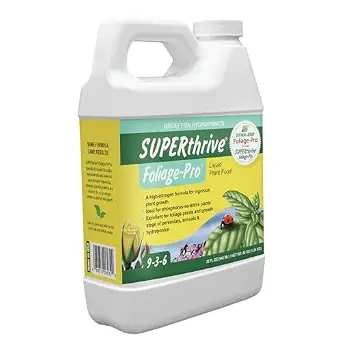 |
| Best Quality Built to a higher standard if you want something more solid | Exotica Tropicals Professional Nursery Croton Fertilizer, 4 lb Slow-Release Granules |  |
| Best Value The sweet spot between price and what you get | BLESS YOUR SOIL Big Green Leaves Indoor Plant Food, 1 lb Concentrated Powder |  |
| Best Budget The cheapest option that still gets the job done reliably | Miracle-Gro Plant Food Spikes, 6-12-6, 1.1 oz (24 sticks) |  |
| Highest Rated A top-rated pick with lots of positive feedback | Miracle-Gro Water Soluble All Purpose Plant Food, 12.5 lb |  |
| Most Popular A crowd favorite that many people choose with confidence | Miracle-Gro Water Soluble All Purpose Plant Food, 1.5 lb |  |
| Best Seller A high-volume bestseller chosen again and again | Osmocote Smart-Release Plant Food Plus Outdoor & Indoor, 1 lb |  |
Dyna-Gro Foliage Pro 32 oz Liquid Plant Fertilizer

| Item Form | Liquid |
|---|---|
| Specific Uses For Product | indoor plant care, greenhouse production, and low light environments |
| Application Method | Mix with water |
| Mixing Ratio | 3:1:2 or 9-3-6 |
Dyna-Gro Foliage Pro is a concentrated liquid fertilizer designed as a complete nutrient source for tropical foliage and common indoor plants. It mixes with water and can be used as the sole feed in soil or hydroponic setups, with the label recommending a 3:1:2 or 9-3-6 mixing ratio to match plant needs. In practice it encourages leafy growth, stronger stems, and richer leaf color thanks to its foliage-focused NPK balance, and its liquid form makes it easy to apply during regular watering. The formula is versatile for greenhouse production and low-light interiors where steady nutrition matters. Expect reliable, steady results rather than instant dramatic changes; you still need to follow dilution guidance and schedule to avoid overfeeding. The product comes in a pint/quart-sized bottle that is easy to measure and store, but users should wear basic protection when handling concentrate and keep it away from children and pets.
Best for: Plant owners who prioritize steady, performance-oriented foliage results and want a single liquid feed they can rely on for indoor and greenhouse plants.
Less Ideal for: Growers who need a bloom-boosting or high-phosphorus feed for flowering and fruiting plants should choose a fertilizer formulated for blooms instead.
- Balanced foliage-focused NPK (3:1:2) tuned for leaf growth and coloration
- Liquid concentrate that mixes easily with water for consistent feeding
- Suitable as a sole nutrient for both soil and hydroponic systems
- Works well in low-light and greenhouse environments where steady nutrition is needed
- Requires careful dilution and regular scheduling to avoid nutrient buildup
- Not formulated for heavy-flowering or fruiting requirements where different NPK is preferred
Verdict: If you want a dependable, foliage-focused liquid fertilizer that can serve as a single feed for indoor and greenhouse plants, this is a strong choice.
Exotica Tropicals Professional Nursery Croton Fertilizer, 4 lb Slow-Release Granules

| Item Form | Granules |
|---|---|
| Coverage | 5 to 6 months |
| Target Species | Croton Codiaeum variegatum |
| Mixing Ratio | 18:5:12 |
This Exotica Tropicals formula is a nursery-grade granular fertilizer designed specifically for croton plants. It combines an 18-5-12 slow-release NPK with a small instant-feed fraction and added micronutrients such as magnesium, iron, manganese and zinc to support color, foliage density, and overall vigor. Typical use is a single application to potting mix or garden beds where the pellets steadily release nutrients over about five to six months, reducing the need for frequent feeding. The pro-grade formulation and inclusion of minor elements make it especially useful for restoring variegation and promoting consistent growth in young or recovering specimens. Practical limitations are that it is a granular slow-release product so it will not correct severe nutrient deficiencies immediately and application rates must be followed to avoid overfeeding; it is also formulated specifically for crotons so it is less versatile than general-purpose fertilizers. For growers who want a robust, low-maintenance feeding schedule tailored to croton performance this product delivers predictable results.
Best for: Gardners focused on strong visual performance of crotons who prefer a professional, low-maintenance feeding routine that supports color and steady growth.
Less Ideal for: Gardeners who need an immediate corrective feed for deficient plants or who want a single fertilizer to use across many unrelated plant types.
- Formulated specifically for croton with an 18-5-12 NPK to support foliage and color
- Slow-release pellets provide approximately 5–6 months of steady feeding
- Includes micronutrients (Mg, Fe, Mn, Zn) that help maintain variegation and prevent minor deficiencies
- Not a quick-fix for acute nutrient deficiencies since release is gradual
- Designed for crotons rather than as a broad-use fertilizer for many species
Verdict: Choose this if you want a professional, slow-release fertilizer formulated to keep croton foliage vibrant with minimal reapplication.
BLESS YOUR SOIL Big Green Leaves Indoor Plant Food, 1 lb Concentrated Powder

| NPK Ratio | 12-4-8 |
|---|---|
| Form | Powder, water-soluble concentrate |
| Yield | Makes ~90 gallons of solution |
| Application Methods | Soil drench, foliar feed, hydroponic/LECA compatible |
| Includes | Pre-measured teaspoon scoop |
Big Green Leaves is a dry, water-soluble houseplant fertilizer designed to drive leafy growth in tropical indoor plants. It mixes quickly with a pre-measured scoop and yields roughly 90 gallons of feed solution from a 1 lb pouch, so it is typically used as a routine soil drench or foliar spray every 2–4 weeks during active growth. The 12-4-8 NPK leans high on nitrogen for bigger leaves and stems while included sea kelp and a chelated micronutrient blend support root development and consistent uptake across variable pH levels. Practical benefits include compatibility with potting mixes, soilless media, and hydro/LECA systems, a resealable pouch for tidy storage, and no fillers or urea that can cause salt buildup. Important limitations are that its formulation is aimed at foliage-driven tropicals rather than cacti, succulents, or high-phosphorus flowering plants, and the concentrated powder requires careful measuring and dilution to avoid overfeeding sensitive specimens. For growers focused on vigorous leaf production, it delivers a clear, concentrated option with broad application modes.
Best for: Buyers who prioritize rapid, healthy leaf growth on tropical and foliage houseplants and want a concentrated, value-oriented fertilizer they can use across soil and soilless systems.
Less Ideal for: Gardeners who mainly grow succulents, cacti, or flowering houseplants that require higher phosphorus or very low-nitrogen fertilizers should choose a product tailored to those needs.
- High 12-4-8 NPK tailored for leafy tropical houseplants to promote rapid foliage growth.
- Contains sea kelp and chelated micronutrients to support root health and improve nutrient uptake.
- Very concentrated yield (about 90 gallons per pound) for lower cost and less packaging than liquid fertilizers.
- Versatile application: soil drench, foliar feed, hydroponic and LECA compatibility.
- Resealable pouch with a pre-measured scoop for consistent mixing and tidy storage.
- Not formulated for cacti, succulents, or flowering plants that need higher phosphorus levels.
- Requires accurate measuring and dilution because of its concentration, which can risk overfeeding if misused.
Verdict: If you want fast, fuller foliage on tropical houseplants, this concentrated 12-4-8 powder gives strong, versatile feeding and excellent value per gallon.
Miracle-Gro Plant Food Spikes, 6-12-6, 1.1 oz (24 sticks)

| Item Form | Sticks |
|---|---|
| Application Method | Insert into soil |
| Coverage | Medium |
| Target Species | all indoor plants |
| Mixing Ratio | 6:12:6 |
These plant food spikes deliver a simple, low-effort way to feed indoor plants such as crotons. Each spike is inserted into moist potting soil and dissolves slowly, releasing balanced nutrients and micronutrients over about two months. The 6-12-6 formula provides a higher middle number for bloom and foliage development, which helps croton leaves hold vibrant color when used consistently. The sticks remove the need to mix liquid fertilizer and reduce the chance of overfeeding since doses are premeasured. They are best for small to medium pots and for gardeners who prefer set-and-forget maintenance rather than frequent applications. Limitations are that spikes give less control over precise nutrient timing or strength compared with liquid feeds, and they are less suitable for very large containers or plants with unusually high nutrient demands. For routine feeding of common houseplants and crotons, these spikes are a convenient, low-cost option.
Best for: Best for budget-minded indoor gardeners who want a low-effort, reliable way to keep crotons and other houseplants fed without frequent liquid applications.
Less Ideal for: Not a good fit for growers who need precise nutrient management, are feeding many large containers, or who prefer tailored feeding schedules.
- Premeasured sticks that are easy to insert and reduce risk of overfeeding
- Feeds continuously for up to two months, cutting down maintenance frequency
- 6-12-6 formula supports foliage color and overall plant growth
- Contains micronutrients tailored for indoor potted plants
- Not ideal for very large pots or heavy-feeding plants where liquid fertilizer allows finer control
- Fixed dosing means you cannot easily adjust strength between applications
Verdict: If you want a low-cost, low-effort routine feed for crotons, these premeasured Miracle-Gro spikes make consistent monthly feeding simple.
Miracle-Gro Water Soluble All Purpose Plant Food, 12.5 lb

| Item Form | Powder |
|---|---|
| Specific Uses For Product | Plant Food |
| Coverage | general purpose, suitable for various plants |
| Mixing Ratio | 1 tablespoon per gallon of water |
Miracle‑Gro Water Soluble All Purpose is a powder fertilizer designed to dissolve in water and deliver fast nutrients to indoor and outdoor plants. Gardeners mix the recommended scoop with a watering can or use a compatible garden feeder to apply directly to the soil around roots; the product gives routine feedings every 7 to 14 days outdoors or every 2 weeks for houseplants. Notable features include an NPK of 24‑8‑16 for strong vegetative growth, a quoted coverage of about 5,000 sq ft from a 12.5 lb container, and an included scoop with separate measuring ends for indoor and outdoor rates. In practice this means quick uptake for leafy growth and an easy, repeatable dosing routine for reliability across container and in‑ground Clusia specimens. Limitations are that it is a general‑purpose formula rather than a Clusia‑specific mix and frequent applications are required during the growing season, so you will need to follow the label closely to avoid overfeeding.
Best for: Buyers who want a dependable, easy‑to‑measure fertilizer to keep Clusia healthy with consistent, repeatable feedings and straightforward application routines.
Less Ideal for: Growers seeking a slow‑release or custom‑formulated Clusia fertilizer or those who prefer lower‑frequency, hands‑off feeding strategies.
- Fast‑acting water‑soluble formula for near‑instant nutrient availability
- Simple mixing ratios and included scoop make dosing consistent
- Large 12.5 lb container covers a lot of garden area for routine feedings
- Suitable for both container and in‑ground use so it works with potted Clusia and landscape plantings
- General all‑purpose NPK may not match specialized nutrient needs of Clusia at every growth stage
- Requires regular applications during the season rather than a slow‑release schedule
Verdict: A reliable, easy‑to‑mix water‑soluble fertilizer that delivers fast, consistent feedings for Clusia in both pots and landscape settings.
Miracle-Gro Water Soluble All Purpose Plant Food, 1.5 lb

| Item Form | Powder |
|---|---|
| Application Method | Watering Can |
| Target Species | For all flowers, vegetables, trees, shrubs and houseplants |
| Mixing Ratio | 24-8-16 |
Miracle-Gro Water Soluble All Purpose Plant Food is a powder concentrate you mix with water to give a quick nutrient boost to flowers, vegetables, houseplants, shrubs and trees. It is typically dissolved in a watering can or used with a compatible garden feeder to soak soil at the base of plants, delivering nitrogen-heavy nutrition that shows effects faster than granular fertilizers. Notable features include an easy scooping method for indoor and outdoor dosing, compatibility with containers and in-ground planting, and clear directions for feeding every one to two weeks. In practice this makes the product a convenient option when you want visible growth and greener foliage quickly, and the 1.5 lb container covers roughly 600 sq. ft. Important limitations are that it is a fast-release, high-nitrogen formula best used as a regular quick feed rather than a long-term slow-release solution, and it requires careful measuring to avoid overfeeding. For routine maintenance combine with good watering and follow the label to avoid nutrient imbalance.
Best for: Buyers who prefer proven, easy-to-use feeding routines and want noticeable growth quickly for a variety of garden and houseplants, guided by established usage directions and broad user experience.
Less Ideal for: Gardeners seeking a single, long-term slow-release solution or those who prefer organic or low-nitrogen fertilizers for sensitive plantings should consider alternative products.
- Water-soluble powder starts working quickly at the roots when mixed and applied
- Clear, simple dosing for indoor and outdoor use with included scoop guidance
- Suitable for a wide range of plants including vegetables, flowers, shrubs and houseplants
- Covers a large area from a small container (about 600 sq. ft. per 1.5 lb)
- Fast-release formula means benefits are short-term compared with slow-release granular fertilizers
- Requires precise measuring and regular reapplication to avoid overfeeding
Verdict: A reliable, fast-acting water-soluble plant food for gardeners who want easy, repeatable feeding and quick visible results.
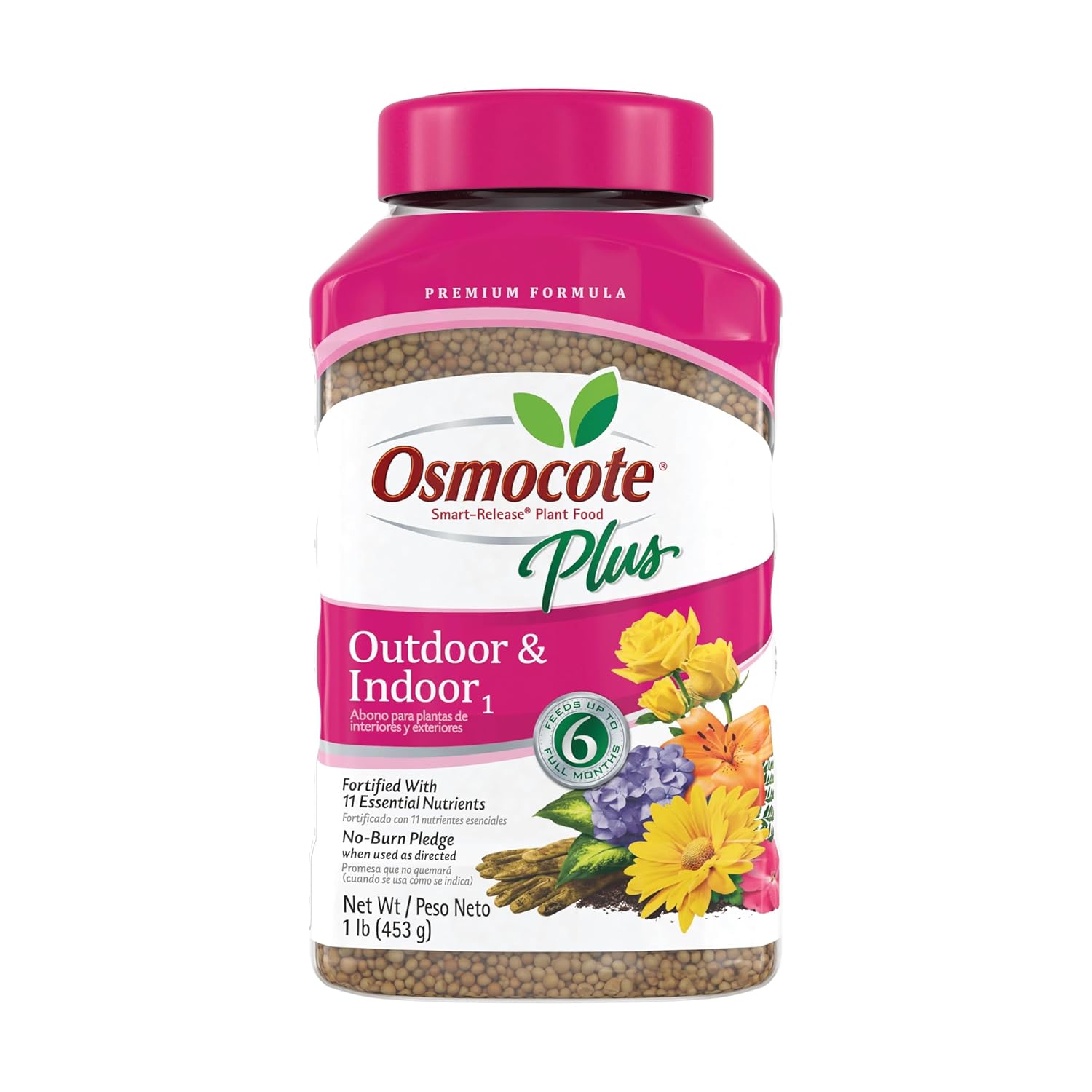
Osmocote Smart-Release Plant Food Plus Outdoor & Indoor, 1 lb
| Item Form | Granules |
|---|---|
| Specific Uses For Product | Plant Food |
| Application Method | sprinkle around the base and work into the soil |
| Unit Count | 16 Ounce |
Osmocote Smart-Release Plant Food Plus is a resin-coated granular fertilizer designed to deliver steady nutrition to a wide range of plants for up to six months from a single application. You apply it by sprinkling the recommended scoop into the top inch or so of potting mix for containers or around plants in garden beds, then watering to activate the coating. The product contains 11 essential nutrients and is formulated to release based on soil temperature, which helps reduce overfeeding and supports consistent bloom and foliage performance in hanging baskets. Its no-burn pledge makes it easy to use at the recommended rates for mixed annuals, trailing plants, and container veggies. Limitations are that coverage is modest from a 1 lb. container so frequent use on many large baskets will require buying more, and release timing still depends on temperature so plants in cool, shaded spots may receive nutrients more slowly than those in warm sun.
Best for: Gardeners who prioritize steady, low-maintenance feeding for hanging baskets and containers and want consistent bloom and foliage without frequent fertilizing.
Less Ideal for: Those who need immediate, short-term nutrient boosts or precise liquid feeding schedules for plants that demand fast correction.
- Resin-coated granules provide controlled release of nutrients for up to six months
- Formulated with 11 essential nutrients suitable for a wide variety of plants
- No-burn pledge when used as directed reduces risk of damaging roots in containers
- Simple sprinkle-and-water application works well for hanging baskets and pots
- 1 lb container covers a limited area so multiple baskets will need additional product
- Release rate depends on temperature so nutrient delivery can be slower in cool conditions
Verdict: An easy, low-maintenance slow-release fertilizer that keeps hanging baskets fed for months with minimal effort.
Choosing the Right Fertilizer for Crotons: Key Factors to Consider
Nutrient Ratio and Micronutrients
Crotons benefit from a balanced fertilizer that supports vibrant foliage without excessive vegetative stretch. A moderate nitrogen level maintains leaf size and green foundation, while phosphorus supports root health and potassium improves overall stress tolerance. Micronutrients such as iron, magnesium, and manganese are particularly important because deficiencies quickly show as chlorosis or dulling of leaf color.
When assessing a product, look for clearly listed N-P-K numbers and an explicit micronutrient panel. Products that hide ingredient details or use vague terms make it hard to tailor feeding to your croton's needs. For container plants, soluble micronutrient availability matters more because potting mixes have limited mineral reserves.
Release Profile and Solubility
How a fertilizer releases nutrients affects both speed of response and maintenance frequency. Fast-soluble feeds produce quick color changes and new growth, which is useful when correcting deficiencies or boosting color before a display. Slow-release formulations provide steadier nutrition and reduce the risk of overfeeding, which is helpful for potted crotons that receive irregular attention.
Consider whether you prefer regular liquid feeds for precise control or a granule/slow-release product that reduces the number of applications. Also note solubility: some granular feeds require dissolution before use, while water-soluble powders and liquids are ready for foliar or root applications.
Application Method and Timing
Crotons respond to both soil drench feeding and foliar feeding, but timing and method change the effect. Root drench applications supply a steady stream of nutrients for general growth, while foliar sprays can correct micronutrient deficiencies more quickly and restore leaf color faster.
Timing matters seasonally. Feed more actively during warm months when the plant is actively growing and reduce or skip feedings during cool or dormant periods. For container crotons, more frequent but lighter feedings prevent salt buildup and root burn.
Salt Index and Leaf Burn Risk
Some fertilizers have high salt indices and can scorch croton foliage or damage fine roots if used too concentrated. Because crotons often have delicate variegated tissue, they are particularly susceptible to foliar burn from overspray or from root-applied salts building up in a container.
Look for products with guidance on dilution rates and rinse recommendations. For potted plants, flush the potting mix occasionally to prevent salt accumulation and always follow label concentration to reduce leaf burn risk.
Suitability for Containers Versus Landscape
Crotons are commonly grown in containers where nutrient availability and water retention differ from garden beds. Container-grown crotons need fertilizers that deliver predictable, soluble nutrients or clearly labeled slow-release formulations designed for potting mixes.
In-ground plantings can tolerate longer-release products and may rely on soil life to cycle nutrients. Choose products labeled for the intended setting and consider how often you can realistically apply them when making a selection.
Ease of Use and Dosing Clarity
Clear application instructions and measured dosing are practical necessities. Gardeners who prefer simple routines will value products that list explicit dilution rates in common units and provide guidance for plant size or pot volume.
Products that require guesswork increase the chance of feeding errors. Packaging that includes measuring tools or straightforward concentration tables reduces mistakes and helps maintain consistent feeding schedules for healthy croton color and growth.
Feeding Schedules for Different Growing Conditions
Adjust feeding frequency based on where your croton lives. Container-grown crotons usually need lighter, more frequent feedings because potting mix drains quickly and lacks mineral reserves. A diluted liquid feed every two to four weeks during the growing season is common practice.
Landscape crotons in well-amended soil can often be fed less frequently. A slow-release granular application in spring with a light supplemental feed midseason keeps color strong without constant attention.
- Containers: dilute liquid feed every 2-4 weeks in warm months
- Indoor crotons: reduce frequency and strength to avoid salt buildup
- Landscape: single spring application of slow-release plus spot-feeds
Foliar Feeding: When and How to Use It
Foliar sprays are an efficient way to deliver micronutrients and correct early chlorosis. Use a water-soluble product formulated for foliar application and apply on cooler mornings to reduce rapid evaporation and leaf wetness issues.
Avoid foliar feeding on hot afternoons or during direct sun when leaves are warm. Always follow dilution instructions and test a small area first to ensure no sensitivity.
- Best for quick micronutrient correction
- Apply in mild weather and avoid strong sun
- Test on a lower leaf before wide use
Balancing Growth and Color
Concentrated nitrogen can drive lush green growth but at the expense of color intensity and leaf definition in some croton varieties. If your goal is vivid foliage, choose a formula that balances nitrogen with adequate potassium and iron to promote pigmentation.
Alternate feeding strategies can help: use a moderate N feed regularly and add targeted micronutrient boosts or foliar feeds when color starts to fade.
- Moderate nitrogen maintains size without washing out color
- Potassium supports leaf robustness and stress tolerance
- Micronutrient boosts restore or maintain pigmentation
Watering and Fertilizer Interaction
Fertilizer effectiveness depends on consistent, appropriate watering. Overwatering reduces oxygen at the roots and can limit nutrient uptake, while underwatering concentrates salts and increases burn risk.
For potted crotons, water thoroughly until drainage runs clear at each cycle and avoid letting the pot dry to rock-hard. That ensures even distribution of soluble fertilizer and reduces localized salt damage.
- Watering frequency affects nutrient uptake
- Thorough watering prevents salt pockets in pots
- Adjust feed strength when changing watering habits
Recognizing Nutrient Deficiencies in Crotons
Common signs include yellowing between veins from iron or magnesium shortage, stunted new growth from low phosphorus, and overall dulling of color from lacking micronutrients. Symptoms often appear first on newer leaves for micronutrient shortages and on older leaves for nitrogen issues.
Diagnose carefully before increasing fertilizer. Correct identification helps you choose targeted corrections rather than overfeeding.
- Iron and magnesium deficiency show as interveinal chlorosis on new leaves
- Nitrogen deficiency appears as uniform yellowing on older foliage
- Targeted foliar or root-applied micronutrients can correct early signs
How We Chose the Best Fertilizer for Crotons
We focused on criteria that directly affect croton health and their signature foliage. Primary evaluation points were nutrient balance and ratio, because the right nitrogen, phosphorus, and potassium mix plus micronutrients influences leaf color and variegation. Application method was assessed to match common croton settings: containers, indoor specimens, and landscape plantings. Solubility and release profile were included to judge how quickly effects appear and how long feeding intervals last. Safety and burn risk were considered to prevent leaf scorch on tender variegated tissue. Finally, packaging and dosing clarity matter for gardeners who need precise, repeatable feeds. We excluded products that lacked clear nutrient labeling or that were formulated for very different plant types, such as lawn feeds or bulk orchard blends. We also filtered out fertilizers with unverified slow-release claims or confusing application instructions. The remaining picks were chosen because they offered clear N-P-K and micronutrient information, practical application options for crotons, and feeding profiles suited to common gardening rhythms.
FAQ
How often should I fertilize crotons year-round?
Usually feed more frequently in spring and summer when growth is active, and reduce or stop feeds in cooler months. For containers, a diluted liquid feed every two to four weeks in warm months is common, while planted crotons typically need only seasonal or slow-release maintenance.
Can I use a general houseplant fertilizer on crotons?
Often a balanced houseplant fertilizer will work, but check the label for micronutrients and dilution rates. Crotons may need more attention to iron and magnesium, so choose a general fertilizer that includes these or supplement with targeted micronutrient feeds if deficiencies appear.
Will foliar feeding harm croton leaves?
Foliar feeding is safe when you use recommended dilutions and apply in mild conditions. Avoid foliar sprays in direct hot sun and test a small area first to check for sensitivity, especially on variegated or thin-leaved varieties.
How can I avoid fertilizer burn on potted crotons?
Use recommended dilution rates, apply smaller, more frequent feeds rather than large concentrated doses, and flush the potting mix periodically to prevent salt buildup. If you suspect burn, leach the pot thoroughly with water and pause feeding until recovery.
Do crotons need different fertilizer indoors versus outdoors?
Indoor crotons generally need lighter, less frequent feeding because growth is slower and pots retain salts. Outdoor plants in warm, active growth may tolerate stronger or more regular feeds. Match product choice and concentration to the plant's environment and observed growth rate.
Final Verdict
Pick a fertilizer that matches how and where you grow crotons. Prioritize clear nutrient ratios with essential micronutrients, a release profile that fits your maintenance routine, and instructions that minimize the risk of overfeeding. For containers, favor soluble or low-dose frequent feeds and watch for salt buildup; for landscape plantings, a reliable slow-release option with periodic micronutrient boosts will maintain color. Decide which tradeoffs matter most to you: rapid color correction versus steady, low-maintenance feeding. Use the evaluation criteria above to match a product to your schedule and growing conditions and you will get the best foliage color and plant vigor from your crotons.
