

Note: This article contains affiliate links. If you click on these links and make a purchase, I may earn a small commission at no extra cost to you. This helps support my research and content. Read my full affiliate disclosure here.
Dahlias respond quickly to the right feeding, producing bigger blooms and sturdier stems when given balanced nutrients at the right time. Choosing an appropriate fertilizer for dahlias matters because these tuberous perennials need both bloom-focused nutrients during the growing season and enough potassium to build healthy tubers for next year. This guide covers seven shortlisted fertilizers for dahlias that gardeners commonly reach for, and it explains the practical differences in nutrient profile, ease of application, and suitability for containers versus beds. Below we summarize how we judged each option and what to expect from proper feeding throughout the season.
Top Picks at a Glance
| Best Overall The best all-around choice for most situations | FoxFarm Tiger Bloom Liquid Plant Food, 16 fl oz |  |
| Best Quality Built to a higher standard if you want something more solid | FoxFarm Big Bloom Liquid Plant Food, 1 Quart |  |
| Best Value The sweet spot between price and what you get | Jack's Classic Blossom Booster Water-Soluble Fertilizer 10-30-20, 1.5 lb |  |
| Best Budget The cheapest option that still gets the job done reliably | Miracle-Gro Water Soluble Bloom Booster Flower Food, 10-52-10, 1 lb |  |
| Highest Rated A top-rated pick with lots of positive feedback | Espoma Bulb-Tone Organic Fertilizer, 3-5-3, 4 lb (Pack of 2) |  |
| Most Popular A crowd favorite that many people choose with confidence | Miracle-Gro Water Soluble All Purpose Plant Food, 3 lb |  |
| Best Seller A high-volume bestseller chosen again and again | Miracle-Gro Water Soluble All Purpose Plant Food, 1.5 lb |  |
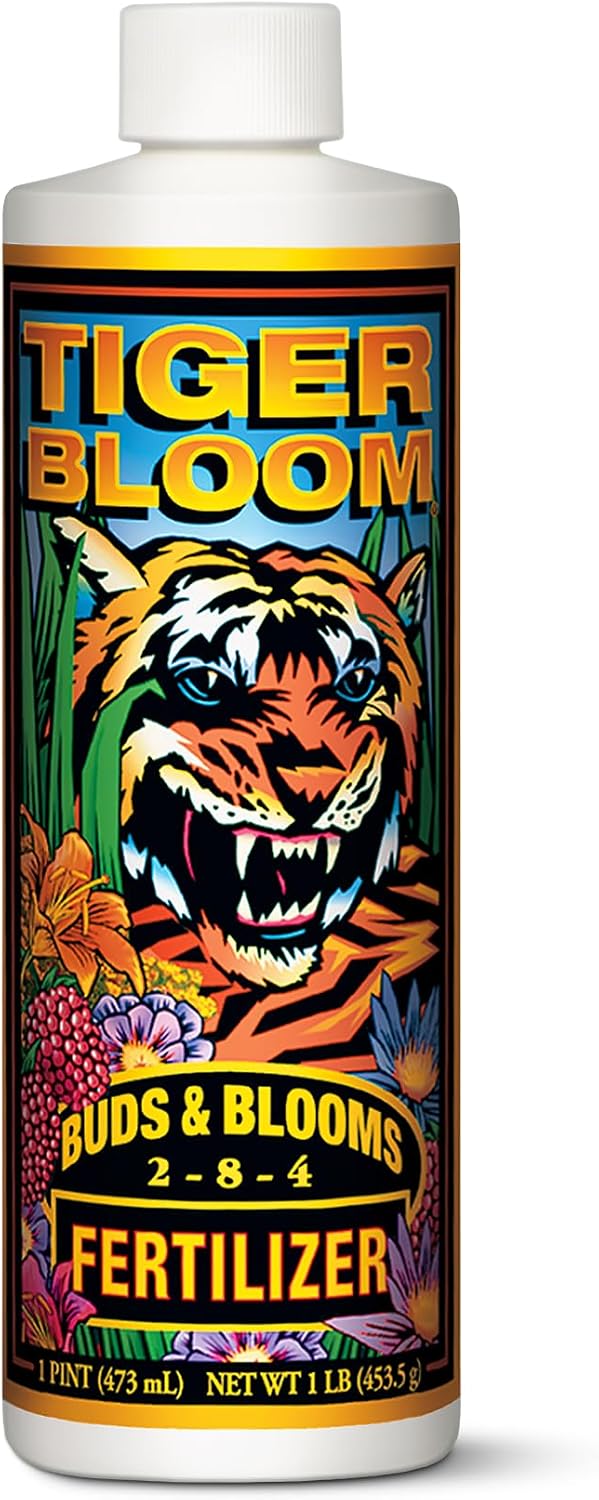
FoxFarm Tiger Bloom Liquid Plant Food, 16 fl oz
| Unit Count | 16 Fluid Ounces |
|---|---|
| Item Form | Liquid |
| Application Method | Watering; Foliar spraying |
| Specific Uses For Product | Hydroponic |
| Mixing Ratio | 1:200 or 1:300 (1 part fertilizer to 200 or 300 parts water) |
Tiger Bloom is a liquid concentrate designed to boost flowering and fruit set by supplying a phosphorus-forward 2-8-4 nutrient balance and micronutrients. It is mixed into irrigation or applied as a foliar spray and is intended for use from first signs of flowering through harvest. The liquid format makes it quick to dissolve and absorb, which is useful when you need a fast nutrient hit during the dahlia flowering period. Practical benefits include compatibility with soil and hydroponic setups and clear mixing guidelines of 2 to 3 teaspoons per gallon for regular feedings or up to 4 teaspoons for heavier feeding. Because it targets blooms, you should expect stronger bud development and fuller flowers when used according to directions. Important limitations are that it is a concentrated phosphorus product, so runoff concerns and local restrictions may apply and it is not formulated as a complete all‑stage feed, so you will still need a balanced grow fertilizer for vegetative growth and maintenance.
Best for: Gardeners who want a targeted bloom booster to maximize flower and bud development on dahlias and are comfortable adding a dedicated flowering feed alongside their regular fertilizer.
Less Ideal for: Growers seeking a single all‑in‑one feed for all growth stages or those in regions with strict phosphorus application rules should consider alternatives.
- High phosphorus 2-8-4 formula targets stronger bud and bloom development
- Liquid concentrate mixes easily for watering or foliar application
- Works in both soil and hydroponic systems for flexible use
- Quick nutrient uptake helps plants respond faster during flowering
- Phosphorus content can contribute to runoff concerns and may be restricted in some areas
- Not a complete all‑purpose fertilizer for vegetative growth stages
Verdict: Use Tiger Bloom as a dedicated bloom booster to reliably increase dahlia bud set and flower size during the flowering phase.
FoxFarm Big Bloom Liquid Plant Food, 1 Quart

| Item Form | Liquid |
|---|---|
| Unit Count | 32 Fluid Ounces |
| Mixing Ratio | 4 tbsp per gallon of water |
| Specific Uses For Product | Plant Food |
Big Bloom is a concentrated liquid fertilizer aimed at boosting flowers and fruits by delivering readily available organic nutrients. You mix 4 tablespoons per gallon of water and apply every other watering or through a hose-end sprayer or drip system, which makes it convenient for bedded dahlias and container-grown specimens alike. The formula highlights earthworm castings and bat guano for a nutrient profile that supports multiple blooms, stronger buds, and improved flower fragrance and fruit flavor. As a liquid concentrate it absorbs quickly, so you can expect visible response faster than many slow-release granulars. Important limitations are that it is a bloom-focused, low-N product so it is not intended as a complete all-purpose feed for heavy leafy growth and it contains phosphorus, which is regulated in some areas. For performance-minded dahlia growers it works best during the flowering and color-development phase when you want bigger, more frequent blooms.
Best for: Dahlia growers who prioritize bigger, more frequent blooms and want a liquid feed that integrates easily into regular watering for peak flowering performance.
Less Ideal for: Gardeners seeking an all-purpose fertilizer for heavy vegetative growth or those who cannot apply phosphorus-containing products due to local rules.
- Concentrated liquid formula for quick nutrient uptake and fast visible results
- Contains organic inputs like earthworm castings and bat guano to support bloom development
- Easy to apply via watering can, hose-end sprayer, or drip systems
- Designed specifically to encourage flowering and fruiting, improving bloom size and fragrance
- Low nitrogen emphasis means it will not promote vigorous leafy growth alone
- Contains phosphorus which may be restricted by local regulations
Verdict: Use Big Bloom when you want a quick-acting, bloom-focused liquid fertilizer to maximize dahlia flower size and frequency.
Jack's Classic Blossom Booster Water-Soluble Fertilizer 10-30-20, 1.5 lb

| Item Form | Powder |
|---|---|
| Application Method | foliar or root feeding |
| Target Species | Flowers |
| Mixing Ratio | 1:3:2 |
Jack's Classic 10-30-20 Blossom Booster is a concentrated powdered fertilizer formulated to push flowering and improve bloom color and quantity. It mixes with water using the included scoop and can be applied as a foliar spray, root drench, or in continuous-feed setups, which makes it convenient for both potted dahlias and garden beds. The high middle number (phosphorus) supports bud set and flowering while added micronutrients help overall plant health. Practical benefits include economical coverage from a powder concentrate, clear mixing directions for frequent or maintenance feedings, and compatibility with different application methods. Limitations to note are that it is a bloom-focused formula so it is not balanced for heavy leafy growth and must be measured and mixed correctly to avoid overfeeding. Users should follow the specified dilution rates and timing around bud set to get the best results for dahlias.
Best for: Gardeners who prioritize bigger, more plentiful blooms on dahlias and want a cost-effective, flexible fertilizer they can apply by spray or soil drench.
Less Ideal for: Growers focused on building foliage, establishing young plants, or those who want an all-in-one balanced feed for both vegetative growth and flowering.
- High phosphorus ratio (10-30-20) tailored to increase bloom set and flower production
- Water-soluble powder concentrates allow economical mixing for multiple gallons of feed
- Can be used as foliar spray or root drench and works with continuous-feed systems
- Includes a measuring spoon and clear mixing ratios for straightforward application
- Formulated primarily for flowering so it is not ideal when promoting strong vegetative growth
- Requires careful measuring and mixing which adds a small learning step for new users
Verdict: Choose this concentrated 10-30-20 water-soluble booster when you want a practical, application-flexible fertilizer to increase dahlia bloom number and color.
Miracle-Gro Water Soluble Bloom Booster Flower Food, 10-52-10, 1 lb

| Item Form | Liquid |
|---|---|
| Application Method | Water Soluble |
| Coverage | 500 square feet |
| Target Species | all blooming plants |
| Mixing Ratio | 1 tablespoon/gallon (indoor 1.5 tsp/gal) |
This 1-pound Miracle-Gro bloom booster is a water-soluble fertilizer with a 10-52-10 N-P-K ratio designed to promote blooms in flowering plants. You mix it with water (1 tablespoon per gallon for outdoor use, a reduced amount for indoor plants) or use it as a refill in compatible garden feeders to cover roughly 500 square feet per packet. In practice it feeds both through roots and leaves for faster visible results and is intended for use during bud set and bloom every 7 to 14 days. The high phosphorus content encourages larger and more abundant flowers, which is helpful for showy varieties like dahlias. It is easy to apply, works quickly, and is labeled safe when used as directed. Limitations are that the formulation focuses on bloom promotion rather than overall plant nutrition, so it should be paired with balanced feeding earlier in the season and used carefully to avoid overapplication; it is also a concentrated product that requires accurate measuring and mixing.
Best for: Gardeners who want an affordable, fast-acting bloom booster to increase flower size and color on dahlias and other flowering plants during the bloom period.
Less Ideal for: Growers seeking an all-in-one fertilizer for early season root or leaf development or those who prefer slow-release, low-maintenance feeding programs.
- High phosphorus formula specifically promotes bigger, more abundant blooms
- Water-soluble for fast uptake and works through both roots and foliage
- Clear mixing directions and compatible with garden feeders for convenient application
- Broadly labeled for all flowering annuals and perennials, including containers and in-ground plantings
- Focused on bloom boosting rather than providing a complete balanced feed for vegetative growth
- Requires careful measuring and regular applications to avoid overfeeding
Verdict: Use this concentrated, high-phosphorus bloom booster when you want quick, affordable improvement in dahlia flower size and abundance during bloom time.
Espoma Bulb-Tone Organic Fertilizer, 3-5-3, 4 lb (Pack of 2)

| Item Form | Powder |
|---|---|
| Specific Uses For Product | Plant Food |
| Coverage | 60 Sq. Ft. |
| Mixing Ratio | 3-5-3 |
| Target Species | Spring and fall flowering bulbs |
Espoma Bulb-Tone is an organic, powder-form fertilizer designed for use with spring and fall flowering bulbs; it contains a 3-5-3 nutrient ratio with added calcium and Espoma’s Bio-tone blend. Typical use is placing the fertilizer into the planting hole when setting new bulbs or sprinkling it on the soil surface and watering for established plants after bloom. Because it is ready to use and contains no sludges or fillers, it is simple to apply without mixing for most home garden tasks. The higher middle number (phosphorus) helps encourage root development and flowering, while the calcium supports bulb health. It is approved for organic gardening, so it fits growers who prefer natural inputs. Limitations are that the product is specifically targeted at bulbs rather than general-purpose feeding for foliage-heavy ornamentals or vegetables, and coverage is modest at about 60 sq. ft. per unit so larger beds will require multiple bags.
Best for: Gardeners who prioritize reliable, organic inputs for flowering bulbs and want a straightforward fertilizer they can apply at planting or after bloom.
Less Ideal for: Growers seeking a multi-purpose fertilizer for vegetables, lawns, or large mixed beds should consider broader-spectrum or higher-coverage options.
- Organic, ready-to-use formula approved for organic gardening
- 3-5-3 NPK with added calcium tailored to promote bulb rooting and bloom
- Can be placed in the planting hole or surface-applied after bloom for flexible use
- Designed specifically for bulbs so not ideal as a broad-spectrum garden fertilizer
- Coverage per unit is limited, requiring extra product for larger beds
Verdict: Choose this product when you want a ready-to-use organic fertilizer focused on promoting strong roots and blooms in bulb plantings.
Miracle-Gro Water Soluble All Purpose Plant Food, 3 lb

| Item Form | Powder |
|---|---|
| Application Method | Mix with water in a watering can |
| Unit Count | 48 Ounce |
| Fertilizer Analysis (NPK) | 24-8-16 |
| Coverage | Feeds approximately 1,200 sq. ft. |
Miracle-Gro Water Soluble All Purpose Plant Food is a powdered, fast-acting fertilizer you mix with water and apply every 7 to 14 days to give plants a nutrient boost. It contains a 24-8-16 NPK balance designed to promote leafy growth and general vigor, and the powder dissolves for quick uptake at the roots when watered in. Typical use is mixing the scoop with a watering can for container plants or using the larger scoop for outdoor beds; it can also be used with a compatible garden feeder for larger areas. Practical benefits include rapid visible feeding, broad compatibility with flowers, vegetables and ornamentals, and clear dosing instructions for indoor versus outdoor use. Important limitations are that the high nitrogen ratio favors foliage more than bloom enhancement and frequent feedings are required compared with slow-release granules, so it demands regular attention to avoid overfeeding if directions are ignored. For dahlias specifically, it can support strong vegetative growth but may need to be paired with a bloom-boosting program as plants approach peak flowering.
Best for: Gardeners who want a reliable, fast-acting feed to green up and strengthen dahlia plants between blooms and who value proven, widely used products with strong user consensus.
Less Ideal for: Growers seeking a low-maintenance slow-release fertilizer or those who prioritize maximum flower set without supplemental bloom-focused feeding.
- Water-soluble formula delivers nutrients quickly to roots
- Clear mixing and application instructions for indoor and outdoor use
- Broadly compatible with a wide range of plants including vegetables and flowers
- Dissolves easily from powder form for even distribution
- Higher nitrogen ratio promotes foliage over flowering compared with bloom-specific formulas
- Requires regular reapplication every 1–2 weeks rather than providing long-term slow release
Verdict: A fast-acting, widely used water-soluble feed that quickly boosts dahlia vigor between feeding sessions.
Miracle-Gro Water Soluble All Purpose Plant Food, 1.5 lb

| Item Form | Powder |
|---|---|
| Application Method | Watering Can |
| Target Species | For all flowers, vegetables, trees, shrubs and houseplants |
| Mixing Ratio | 24-8-16 |
Miracle-Gro Water Soluble All Purpose Plant Food is a powdered, water-soluble fertilizer designed for routine feeding of a wide range of plants. You mix the measured scoop with water and apply it with a watering can or a compatible garden feeder to deliver nutrients directly to the root zone. The 24-8-16 formula supplies a fast-acting dose of nitrogen for leafy growth plus phosphorus and potassium to support blooms and overall vigor. Its practical benefits are predictable and easy dosing for regular maintenance, compatibility with both containers and in-ground beds, and directions for indoor and outdoor use. For growers of dahlias it can jump-start growth and help produce larger foliage and stronger flower stems when used on the recommended schedule. Important limitations are that it is a quick-release feed rather than a slow-release option, so it needs repeated applications every 1 to 2 weeks, and its higher nitrogen content can favor leaf growth over flowering if overused. Follow the mixing directions closely to avoid overfeeding.
Best for: Buyers who want a low-risk, easy-to-use fertilizer for regular feeding and consistent results across houseplants, containers, and garden beds; ideal for gardeners who follow directions and prefer predictable, repeatable feeding routines.
Less Ideal for: Growers seeking a slow-release or low-nitrogen formula specifically tailored to maximize bloom production without frequent refeeding should consider targeted bloom boosters or granular slow-release alternatives.
- Fast-acting water-soluble formula that delivers nutrients immediately to roots
- Clear mixing/application instructions for both indoor and outdoor use
- Versatile for containers and in-ground gardens including vegetables and flowers
- Recognized all-purpose NPK (24-8-16) suitable for general growth and bloom support
- Quick-release powder requires frequent reapplication rather than long-term feeding
- Higher nitrogen ratio may encourage foliage over flowers if used too often
Verdict: A dependable, easy-to-use water-soluble feed that gives quick, predictable growth and bloom support when applied as directed.
Choosing the Right Fertilizer for Dahlias: Key Factors to Consider
Nutrient Ratio and Timing
Dahlias benefit from a nutrient program that changes over the season. Early growth needs moderate nitrogen to build foliage and stems without encouraging floppy growth. As buds form, a higher phosphorus ratio helps set more blooms and a strong potassium level supports flower size and tuber filling.
Understanding the label N-P-K numbers and how to switch feeds or choose a balanced all-season formula affects bloom count, stem strength, and tuber quality heading into winter dormancy.
Release Type: Soluble Vs Slow-Release
Soluble fertilizers dissolve quickly and deliver a fast nutrient boost, which is useful for correcting deficiencies or feeding during peak bloom. They require more frequent applications and careful dilution to avoid foliar or root burn.
Slow-release or controlled-release granules release nutrients over weeks to months and reduce the need for repeat feedings. They are forgiving for gardeners who prefer low-maintenance feeding schedules but offer less ability to react quickly to nutrient shortages.
Application Method and Convenience
Consider how you plan to feed your dahlias: soil drench, foliar spray, granular top-dress, or through irrigation. Some formulas are optimized for broadcast in beds, others dissolve easily for watering cans, and some are designed for foliar feeding during bloom. Convenience matters if you maintain many plants or if some plants are in containers or hanging baskets.
Packaging that measures easily and clear application rates will reduce the risk of over- or under-feeding and make it simpler to follow a seasonal feeding plan.
Salt Content and Tubers Safety
High-salt fertilizers can burn roots and damage tender tubers, especially in container culture or in soils with poor drainage. Look for formulas with moderate soluble salts and follow recommended rates. Rinsing or watering in thoroughly after application helps mitigate salt concentration around tubers.
Choosing a lower-salt feed or using slow-release options can protect tubers during hot, dry spells and reduce the risk of foliage scorch.
Secondary Nutrients and Micronutrients
Calcium, magnesium, and trace elements like iron and manganese influence plant vigor beyond just N-P-K. Calcium strengthens cell walls, reducing stem collapse, while magnesium aids chlorophyll production and overall color. Micronutrient availability can prevent subtle deficiencies that reduce bloom performance.
If your soil test shows low micronutrients, select a fertilizer that supplies them or plan supplemental applications to avoid weak growth or pale foliage that undermines flowering.
Suitability for Containers and Beds
Container-grown dahlias face a different feeding environment than those planted in garden beds. Containers dry out faster and accumulate salts more quickly, so dilute soluble feeds and monitor watering. Garden beds with rich soil may need less frequent feeding, while newly planted or poor soils benefit from a steady nutrient supply.
Match product choice to planting situation to avoid overfeeding containers or underfeeding bed-grown plants.
When to Start Feeding Dahlias
Begin feeding when shoots are about 6 inches tall and active growth has started in spring. Early-season feedings should support foliage and stem development without pushing excessive, weak growth.
Switch to a bloom-focused regimen once buds form, usually a few weeks after the first feed. Continue feeding through the main flowering period, then taper off as foliage naturally dies back in late season to allow tubers to mature.
- Initial feed: moderate nitrogen to encourage sturdy stems
- Bloom phase: lower nitrogen, higher phosphorus and potassium
- Late season: cut back feeding to help tuber formation
Feeding Rates and Application Tips
Always follow label rates but start at the lower end if you are unsure, especially with soluble concentrates. Overfeeding leads to lush foliage at the expense of blooms and can harm tubers.
Water plants before applying concentrated feeds to reduce root stress. For granular slow-release products, apply around the root zone and lightly work into the topsoil, then water to activate release. For liquid feeds, apply as a soil drench or light foliar spray early in the morning.
- Measure carefully to avoid fertilizer burn
- Watering in helps distribute nutrients to feeder roots
- Reduce feed frequency in very hot or drought conditions
Adjusting Fertilizer Based on Soil and Plant Response
A soil test is the most reliable way to know what your planting area lacks. If soil tests show adequate phosphorus and potassium, favor lighter maintenance feeds rather than high-P formulas that can build up over time.
Monitor plant signs such as pale leaves, small flowers, or weak stems. Pale leaves often indicate nitrogen or micronutrient issues while small or few blooms suggest low phosphorus. Adjust feed type or frequency according to visible responses rather than a fixed schedule.
- Use soil tests to guide major fertilizer choices
- Watch foliage color and bloom count for short-term adjustments
- Avoid changing multiple variables at once to identify causes
Organic Vs Synthetic Options
Organic fertilizers release nutrients as the material decomposes and often improve soil structure over time. They tend to have lower immediate nutrient concentrations, so gardeners may see slower but steady improvements in plant health and tuber quality.
Synthetic fertilizers provide predictable nutrient levels and faster results, which is useful during peak bloom. They require attentive dosing and may be paired with soil-building practices to maintain long-term soil health.
- Organics improve soil biology and structure
- Synthetics act fast and are easier to tailor by N-P-K
- Consider combining approaches: organic baseline with targeted synthetic boosts
Special Considerations for Container Dahlias
Containers concentrate salts and dry quickly, so choose low-salt feeds and reduce concentration for liquid applications. Frequent light feedings are often preferable to large, infrequent doses that can stress roots.
Use a well-draining potting mix and flush containers periodically with plain water to wash out accumulated salts. Monitor for root-bound plants and refresh the media or repot as needed to maintain nutrient availability.
- Feed lightly and often for containers
- Flush containers every few months to prevent salt buildup
- Use slow-release granules with caution in small pots
How We Chose the Best Fertilizer for Dahlias
We evaluated fertilizers for dahlias using criteria that reflect real garden outcomes. We prioritized nutrient balance and timing because dahlias need a shift from moderate nitrogen early in spring to higher phosphorus and potassium during bloom and tuber development. Ease of application was important since many gardeners feed from containers or limited bed space and need user-friendly formats. Longevity and release type mattered because slow-release formulas reduce feeding frequency while soluble feeds allow quick correction of deficiencies. Safety and salt load were considered to avoid fertilizer burn to tender tubers and foliage. We also looked at ingredient transparency so gardeners can match N-P-K and secondary nutrients to their soil test or goals. Products were excluded if they lacked clear nutrient analysis, were formulated solely for lawns or trees, or required specialty equipment unavailable to most home gardeners. The final picks reflect a balance of bloom support, tuber health, and practical application for home dahlia culture.
FAQ
How often should I feed my dahlias during the growing season?
Frequency depends on the product. Soluble feeds are usually applied every one to two weeks during active growth, while slow-release products can be applied once at planting and again midseason. Monitor plant vigor and bloom to fine-tune timing.
Can I use a general-purpose flower fertilizer on dahlias?
Often yes. General-purpose flower fertilizers with a balanced or bloom-focused N-P-K work for dahlias, but check that nitrogen is not excessively high. If blooms are small or few, choose a formula with higher phosphorus and potassium.
Are organic fertilizers effective for dahlias?
Organic fertilizers can be very effective, especially for long-term soil health and steady nutrient release. They may act more slowly than synthetics, so pair them with timely supplemental feeds if you need quick correction during peak bloom.
Will overfeeding improve bloom size?
No. Overfeeding, particularly with high nitrogen, often produces lush foliage at the expense of flowers and can damage tubers. Use recommended rates and shift to bloom-focused feeds once buds appear.
When should I stop feeding to let tubers mature?
Begin tapering or stop feeding as foliage naturally dies back in late season. Reducing fertilizer at this stage helps tubers ripen rather than encouraging late-season soft growth that is vulnerable to rot during storage.
Final Verdict
Choose a fertilizer for dahlias based on whether you need quick nutrient correction or steady, low-maintenance feeding. Prioritize formulas that support bloom production while protecting tuber development, and match release type to how often you can apply feed. Balance tradeoffs between convenience and control: slow-release products reduce work but limit rapid correction, while soluble feeds let you respond to plant needs quickly. Follow label rates, watch plant response, and adjust nutrient timing to get bigger blooms and healthy tubers year after year.
