

Note: This article contains affiliate links. If you click on these links and make a purchase, I may earn a small commission at no extra cost to you. This helps support my research and content. Read my full affiliate disclosure here.
If you have heavy clay soil, choosing the right lawn fertilizer makes a big difference in how your grass looks and performs. Clay holds nutrients tightly, drains slowly, and can compact easily, so a product that feeds turf while improving structure will deliver the best results. This guide covers our top five picks for fertilizer for grass in clay soil, shortlisted for their nutrient profiles, soil-conditioning benefits, and ease of application. We evaluate each option on feeding effectiveness and how it influences soil texture and drainage to help you pick the best fit for your yard.
Top Picks at a Glance
| Best Overall The best all-around choice for most situations | Scotts Turf Builder Thick'R Lawn Sun & Shade, 40 lb |  |
| Best Quality Built to a higher standard if you want something more solid | Jonathan Green Mag-I-Cal Plus Soil Food for Lawns (18 lb) |  |
| Best Budget The cheapest option that still gets the job done reliably | Milorganite Slow-Release Organic Fertilizer, 5 lb |  |
| Highest Rated A top-rated pick with lots of positive feedback | HyR BRIX Slow-Release 20-0-8 Phosphorus-Free Lawn Fertilizer, 45 lb |  |
| Most Popular A crowd favorite that many people choose with confidence | Jonathan Green Love Your Soil Soil Food for Hard Soils (54 lb) |  |
Scotts Turf Builder Thick'R Lawn Sun & Shade, 40 lb

| Included Components | Grass Seed, Plant Fertilizer |
|---|---|
| Coverage | Up to 4,000 sq. Ft. |
| Sunlight Exposure | Full Sun |
| Expected Planting Period | Fall |
Scotts Turf Builder Thick'R Lawn Sun & Shade is a ready-to-use overseeding bag that mixes seed, fertilizer, and a soil improver so you can treat thin turf in a single application. It is applied with a broadcast spreader after mowing and raking, then kept consistently moist for about two weeks to allow seed germination. Notable features include the combined seed-and-feed formula and guidance to use a Scotts spreader for even coverage; one 40 lb bag claims to cover up to 4,000 sq ft. In practice this saves time compared with buying seed and fertilizer separately and reduces the number of follow-up steps for building density. The fertilizer component helps existing grass green up while the soil improver supports root establishment for stronger seedlings. Important limitations are that success depends on proper prep, daily watering during germination, and seeding windows in spring or fall; results will vary on very compacted or heavily shaded sites. For homeowners who follow the label directions, it is a practical one-application solution to noticeably thicken an already workable lawn.
Best for: Homeowners who want a practical, time-saving way to thicken an existing lawn without buying separate seed and fertilizer and who are willing to follow prep and watering steps.
Less Ideal for: Gardeners with lawns in heavy shade, severely compacted soil, or those unable to maintain the frequent watering needed for seed establishment.
- 3-in-1 formula combines grass seed, fertilizer, and soil improver for one-step application
- Covers a large area with a single 40 lb bag, reducing trips and mixing
- Fertilizer component promotes quicker greening of existing turf while seed establishes
- Designed for use with a spreader for consistent distribution and easier application
- Requires daily watering for the first two weeks to achieve germination
- Performance depends on proper lawn prep and is limited in heavily shaded or severely compacted soils
Verdict: Pick this if you want a convenient one-bag overseed-and-feed solution to noticeably thicken a sun-exposed lawn when you can follow the recommended prep and watering routine.
Jonathan Green Mag-I-Cal Plus Soil Food for Lawns (18 lb)

| Item Form | Powder |
|---|---|
| Specific Uses For Product | Lawns |
| Coverage | 5,000 sq. ft. |
| Target Species | lawn grasses |
Mag-I-Cal Plus is a powdered soil food aimed at lawns struggling in acidic or compacted soils. It supplies soluble calcium carbonate, fast-acting gypsum, humic acid, and iron to quickly raise soil pH, loosen clay, and improve root penetration. Typical use is broadcasting the product and incorporating it into the topsoil over up to 5,000 square feet per bag, then following with regular fertilization once pH has improved. The calcium and gypsum components help free nutrients locked in dense clay and support microbial activity, while humic acid improves soil structure and nutrient exchange. Practical benefits include faster pH correction than some lime products and clearer turf color as nutrient uptake improves. Limitations are that it is a soil amendment rather than a complete fertilizer so you will still need a balanced fertilizer program, and results depend on proper soil testing and incorporation; very alkaline soils or problems unrelated to pH will not be solved by this product alone.
Best for: Gardeners who need measurable performance improvements in compacted or acidic clay lawns and prioritize faster pH correction to get nutrients working for turf.
Less Ideal for: Those looking for an all-in-one fertilizer or a long-term sole solution for nutrient deficiencies should consider pairing this with a balanced fertilizer or choosing a dedicated fertilizer product.
- Formulated to raise soil pH rapidly for quicker nutrient availability
- Contains gypsum and humic acid to help break up clay and improve soil structure
- Includes soluble calcium for plant uptake and improved turf function
- Covers up to 5,000 sq ft per bag, suitable for small to medium lawns
- Not a complete lawn fertilizer so additional feeding is required
- Effectiveness depends on correct soil testing and physical incorporation into hard soils
Verdict: Choose Mag-I-Cal Plus when you want a targeted, fast-acting soil amendment to raise pH and loosen clay so your lawn fertilizer performs better.
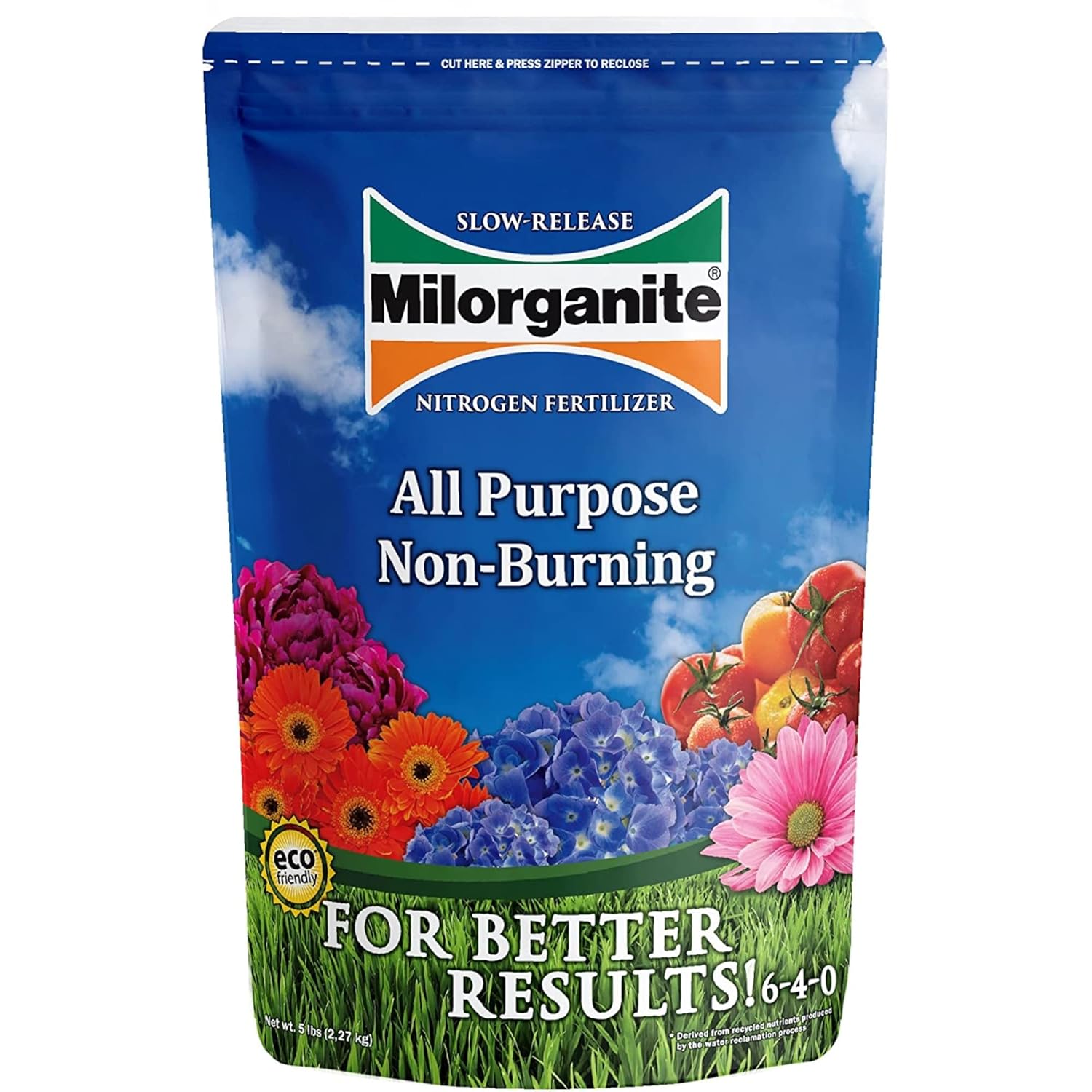
Milorganite Slow-Release Organic Fertilizer, 5 lb
| Item Form | Granules |
|---|---|
| Specific Uses For Product | Lawns, Flowers and Gardens |
| Coverage | 390 Square Feet |
| Ingredients | Nitrogen |
Milorganite is a granular, slow-release organic fertilizer formulated to feed lawns and garden plants for about 8 to 10 weeks per application. It is typically broadcast by hand or with a spreader and does not require immediate watering in, making it easy to fit into routine maintenance. Notable features include a low-salt formula that greatly reduces the risk of burning turf, organically complex iron that greens grass without staining hard surfaces, and about 85% organic matter that helps improve soil structure over time. The product covers roughly 390 square feet from a 5 pound bag and is positioned as safe for use on lawns, shrubs, flowers, trees, and edible gardens. Limitations are that nutrient release is gradual, so it is not a quick fix for severe nitrogen deficiency, and the bag has an earthy odor at first that some pets may find attractive until it dissipates or is watered in. For someone managing Empire Zoysia, use on the recommended schedule and expect steady, low-risk green-up rather than instant color change.
Best for: Gardeners who prioritize steady, low-risk nutrient delivery and soil health and who prefer a hands-off feeding schedule for fine-textured lawns like Empire Zoysia.
Less Ideal for: Homeowners wanting rapid color correction or fast-acting synthetic nitrogen boosts should choose a quick-release fertilizer instead.
- Slow-release nitrogen feeds lawns for 8–10 weeks reducing application frequency
- Low salt formulation minimizes risk of burning sensitive turf like Zoysia
- Provides organically complex iron that greens grass without staining concrete
- High organic matter improves soil structure and water retention over time
- Slow-release action means it will not correct severe yellowing immediately
- Initial earthy odor that may attract some pets until it is watered in or dissipates
Verdict: Choose Milorganite for Empire Zoysia when you want a safe, slow-release organic feed that greens turf steadily without burning or staining.
HyR BRIX Slow-Release 20-0-8 Phosphorus-Free Lawn Fertilizer, 45 lb

| Item Form | Granules |
|---|---|
| Specific Uses For Product | Dense, Healthy Grass – Ideal for Clay & Sandy Soils |
| Application Method | broadcast spreader |
| Coverage | 4,000 Square Feet |
| Target Species | Lawns |
This 45 lb bag from HyR BRIX is a slow-release granular lawn fertilizer designed specifically for clay and sandy soils. The 20-0-8 N-P-K formula omits phosphorus for use in sensitive areas while adding calcium, sulfur, and micronutrients to improve soil function and turf color. It is applied with a broadcast spreader and rated to cover up to 4,000 square feet at the recommended rate, so one application supplies extended feeding rather than frequent top-ups. In practice the slow-release granules reduce nutrient loss and support denser grass that can help suppress weeds. The inclusion of humic acids and trace irons and zinc supports soil health and color, but users should be prepared to follow spreader settings and rates carefully to avoid uneven results. This product focuses on steady, reliable nutrition rather than a quick green-up, so you may not see dramatic overnight changes but should get consistent improvement in turf vigor and thickness over a season.
Best for: Gardeners who prioritize dependable, season-long turf nutrition for clay or sandy lawns and want a product that supports soil health rather than quick cosmetic gains.
Less Ideal for: Homeowners needing a fast green-up before an event or those who prefer liquid or fertilizer blends with phosphorus for new seeding; not aimed at users who avoid granular application methods.
- Phosphorus-free formula suitable for environmentally sensitive or regulated areas
- Slow-release granules provide steady feeding and reduced nutrient loss
- Contains calcium, sulfur and micronutrients to improve soil function and turf color
- Covers up to 4,000 sq ft from a single 45 lb bag when applied as directed
- Requires a broadcast spreader and correct calibration for even application
- Not formulated for rapid, immediate green-up since it emphasizes slow-release nutrition
Verdict: Choose this fertilizer when you want a reliable, slow-release, phosphorus-free option that improves soil function and delivers steady turf improvement across clay soils.
Jonathan Green Love Your Soil Soil Food for Hard Soils (54 lb)

| Item Form | Pellet |
|---|---|
| Application Method | Spreader |
| Coverage | Up to 15,000 sq. ft. |
| Ingredients | Gypsum, Calcium Carbonate, Iron Humate, Molasses |
Jonathan Green Love Your Soil is a pelletized soil food designed to loosen hard, compacted soils and support healthier turf and plants. You apply it with a broadcast spreader over established lawns, new seedings, or after sodding; it can also be worked into beds for trees, roses, vegetables, and container mixes. Key ingredients such as gypsum, calcium carbonate, iron humate, and molasses aim to improve soil structure, stimulate microbial life, and help release nutrients that are otherwise locked up in clay. Practical benefits include better root penetration and increased drought tolerance as roots access loosened soil and stored humus. The 54 lb (listed as 55 lb weight) bag covers up to 15,000 sq ft, making it suitable for modest to large yards without repeated trips to refill. Limitations to note are that results take time and depend on existing soil chemistry and proper application; this product conditions soil rather than acting as an immediate high-nitrogen fertilizer, so expect gradual improvement rather than instant greening.
Best for: Homeowners who need a practical soil conditioner to rehabilitate compacted or clay lawns and prefer products with established ingredient profiles and user feedback.
Less Ideal for: Gardeners who need fast, high-nitrogen feeding for immediate green-up or those with very small yards looking for smaller, easier-to-handle packages.
- Formulated to improve drainage and aeration in hard or clay soils
- Contains gypsum and organic components to stimulate microbial activity
- Suitable for multiple uses: established lawns, overseeding, sodding, trees and vegetables
- Pellet form applies easily with a broadcast spreader for even coverage
- Covers up to 15,000 sq ft per bag, reducing reapplication frequency
- Not a quick-release fertilizer so visible greening is gradual
- Effectiveness depends on existing soil chemistry so may require testing
- Large bag weight may be heavy to handle for some users
Verdict: Choose this product if you want a pelletized soil amendment that steadily improves clay or compacted soils to promote deeper roots and long-term lawn health.
Choosing the Right Fertilizer for Grass in Clay Soil: Key Factors to Consider
Nutrient Ratio and Timing
The ratio of nitrogen, phosphorus, and potassium drives how quickly turf responds and what kind of growth you get. Lawns in clay typically need steady nitrogen for leaf growth, but excessive quick-release nitrogen can encourage lush top growth while doing nothing to relieve compaction or poor root development.
Timing matters because clay retains water longer; fertilizing just before a heavy rain increases runoff risk. Choose a schedule and product release profile that matches seasonal growth windows and the drainage characteristics of your lawn.
Soil-Conditioning Additives
Products that include or work well with conditioners help clay soil breathe and drain. Amendments like gypsum, wetting agents, or organic matter do not replace fertilizer but can change how nutrients move and how roots access oxygen.
A fertilizer that either contains gentle conditioners or is explicitly compatible with adding compost or gypsum gives you a practical two-pronged approach: feed the grass while improving the medium that holds the roots.
Release Type: Quick-Release Versus Controlled-Release
Quick-release fertilizers provide a fast green-up but can leach in poorly draining clay and require more frequent applications. Controlled-release granules deliver nutrients over weeks to months, which reduces leaching risk and provides steadier growth suited to compact soils.
Match release type to lawn goals: short-term recovery after stress can justify a quick feed, while routine maintenance on clay lawns usually benefits from controlled-release formulations.
Salt Index and Turf Safety
High-salt fertilizers can damage grass roots and exacerbate compaction problems in clay by drawing moisture away from roots. Look for products with a moderate to low salt index or those labeled safe for frequent use on turf.
Low-salt options protect root health and make it safer to combine feeding with other cultural practices like aeration and overseeding.
Compatibility With Cultural Practices
How a fertilizer fits into your broader lawn care routine determines real-world effectiveness. On clay soils you should plan aeration, overseeding, topdressing, and amendment applications alongside feeding so each step complements the others.
Choose fertilizers that can be applied before or after aeration, that do not interfere with seed germination if overseeding, and that work well with topdressing materials.
Application Rates and Equipment
Clear, accurate application instructions are essential because over- or under-application leads to poor results or damage. Products that list spreader settings and offer easily measured application rates reduce guesswork for homeowners.
Consider the type of spreader you own and whether the fertilizer granule size or form is compatible with it. Ease of cleanup and storage are practical considerations for regular lawn care.
How Clay Soil Changes Fertilizer Behavior
Clay particles hold nutrients tightly and retain water, which alters both nutrient availability and root oxygen levels. Nutrients bound to clay can be less available to roots unless you supply forms the plants can uptake or change the soil chemistry with amendments.
Because clay drains slowly, soluble nutrients from quick-release fertilizers can run off or stay concentrated near the surface, encouraging shallow roots. Understanding these dynamics helps you select products and timing that encourage deeper root development and more resilient turf.
- Higher cation exchange means some nutrients stay locked to particles
- Slow drainage raises risk of runoff after heavy rain
- Compaction and poor aeration limit root growth and nutrient uptake
Integrating Fertilizer With Aeration and Topdressing
Core aeration opens compacted clay, allowing fertilizers and amendments to reach the root zone more effectively. Applying a fertilizer designed for clay soils shortly after aeration increases the chance that nutrients will be incorporated deeper rather than staying on the surface.
Topdressing with a blend of sand and compost after aeration helps improve tilth over time. Choose fertilizers that will not interfere with seed germination if you plan to overseed right after aeration.
- Aerate during active growth for best recovery
- Apply controlled-release feeds after aeration for steady uptake
- Use topdressing to improve texture and nutrient distribution
When to Apply Fertilizer on Clay Lawns
Apply fertilizers during the lawn's peak growth periods so the turf can use nutrients quickly. For cool-season grasses this is in spring and fall; for warm-season grasses focus on late spring through summer. Avoid heavy feeding immediately before expected heavy rains on clay soil.
If you aerate, time fertilizer applications for the same maintenance window to maximize soil incorporation. For controlled-release products you can rely on fewer applications; quick-release products require closer attention to weather and mowing schedules.
- Align feeding with active growth, not dormancy
- Avoid fertilizing before heavy rain events
- Coordinate feeding with aeration for best results
Organic Amendments Versus Synthetic Formulations
Organic fertilizers release nutrients more slowly and add organic matter that improves structure over time. On clay soils, this gradual contribution to soil tilth can be especially helpful, but organic options may not give the fast green-up some situations require.
Synthetic or blended fertilizers often include specific nutrients and release profiles tailored to turf needs. Combining synthetic feeds with targeted organic amendments or gypsum can deliver both immediate nutrition and long-term soil improvement.
- Organics build soil structure slowly and feed soil life
- Synthetics provide predictable nutrient doses and timing
- A combined approach often yields the best short- and long-term results
Wetting Agents and Drainage Aids
Wetting agents help water penetrate dense clay rather than pooling on the surface. While not a fertilizer, using a wetting agent with your feeding program can improve water distribution and reduce localized dry or waterlogged spots.
Some fertilizer products include wetting agents or are formulated to be compatible with them. When dealing with persistent drainage issues, pair feeding with long-term soil-structure work such as repeated topdressing and organic matter additions.
- Wetting agents improve infiltration on compacted clay
- Use in combination with aeration for best effect
- Check compatibility before mixing products
How We Chose the Best Fertilizer for Grass in Clay Soil
We focused on formulations and features that matter most for lawns planted in clay-heavy soils. Key evaluation criteria included nutrient balance tuned for turf, presence of amendments that aid soil structure, release type and timing, and ease of application for typical home lawns. We prioritized products that combine readily available nitrogen with supporting macro- and micronutrients and that either include or are compatible with soil conditioners like gypsum or organic matter. Release type-quick-release versus controlled-release-was weighed against seasonal needs and risk of runoff in poorly draining soils. Application practicality such as spreader compatibility and clear rate instructions was also scored. Exclusions: we excluded products formulated only for ornamental beds, pure soil conditioners without nutrients, and high-salt landscape fertilizers unsuited to clay loam turf. The final shortlist reflects a balance between feeding performance and practical benefits for improving clay soil behavior.
FAQ
Can I use the same fertilizer I used on sandy soil for my clay lawn?
It often depends. Fertilizers that worked on sandy soil may release nutrients too quickly for clay and increase runoff risk. Choose a formulation with a more controlled release or one paired with soil conditioners to better match clay behavior.
How soon after aeration should I apply fertilizer?
Applying fertilizer within a few days after core aeration is usually beneficial because holes let nutrients reach the root zone. Controlled-release products are especially effective after aeration because they supply nutrients over the recovery period.
Is gypsum necessary when fertilizing clay soil?
Gypsum can help improve structure in some clay soils by displacing sodium and reducing surface crusting, but its benefit depends on your soil chemistry. It is often useful alongside a feeding program but is not a substitute for balanced nutrients.
Will organic fertilizers fix compacted clay quickly?
Organic fertilizers add organic matter and support soil life, which gradually improves structure. They will not relieve compaction immediately; mechanical aeration and topdressing speed up visible improvement while organic feeds support long-term change.
How does fertilizer timing change during wet seasons?
During wet periods on clay, avoid applying soluble, quick-release fertilizers before heavy rain to reduce runoff. Opt for controlled-release products or delay feeding until soils dry enough to accept applications without excessive runoff.
Final Verdict
When feeding turf in clay soil, prioritize formulations that balance steady nutrient delivery with measures that improve or at least do not worsen soil structure. Controlled-release nutrients, compatibility with amendments, and products that work well with aeration programs will produce the most reliable results. Decide based on whether you need quick recovery or long-term improvement, then combine feeding with aeration and organic topdressing to promote deeper roots and healthier turf.
