

Note: This article contains affiliate links. If you click on these links and make a purchase, I may earn a small commission at no extra cost to you. This helps support my research and content. Read my full affiliate disclosure here.
Tomatoes respond quickly to the wrong and the right feed, so picking a fertilizer that matches your soil and growing style matters for yield, flavor, and plant health. This guide focuses on fertilizers for growing tomatoes and covers a range of options suited to containers, raised beds, and in-ground gardens. We shortlisted seven top-rated fertilizer options and evaluated them for nutrient balance, ease of application, and how they perform across common tomato problems like blossom end rot and poor fruit set. Read on to understand the practical tradeoffs so you can choose a feeding plan that fits your plot and harvest goals.
Top Picks at a Glance
| Best Overall The best all-around choice for most situations | FoxFarm Grow Big Liquid Plant Food, 1 Quart (6-4-4) |  |
| Best Quality Built to a higher standard if you want something more solid | FoxFarm Happy Frog Tomato & Vegetable Fertilizer, 5-7-3, 4 lb |  |
| Best Value The sweet spot between price and what you get | Miracle-Gro Shake 'N Feed Tomato, Fruit & Vegetable Plant Food, 1 lb |  |
| Best Budget The cheapest option that still gets the job done reliably | Jobe's Tomato Fertilizer Spikes, 18 Count (6-18-6) |  |
| Highest Rated A top-rated pick with lots of positive feedback | Espoma Organic Tomato-tone 3-4-6 Organic Fertilizer, 18 lb |  |
| Most Popular A crowd favorite that many people choose with confidence | Miracle-Gro Water Soluble Tomato Plant Food, 1.5 lb |  |
| Best Seller A high-volume bestseller chosen again and again | Burpee Organic Tomato & Vegetable Granular Plant Food, 4 lb |  |
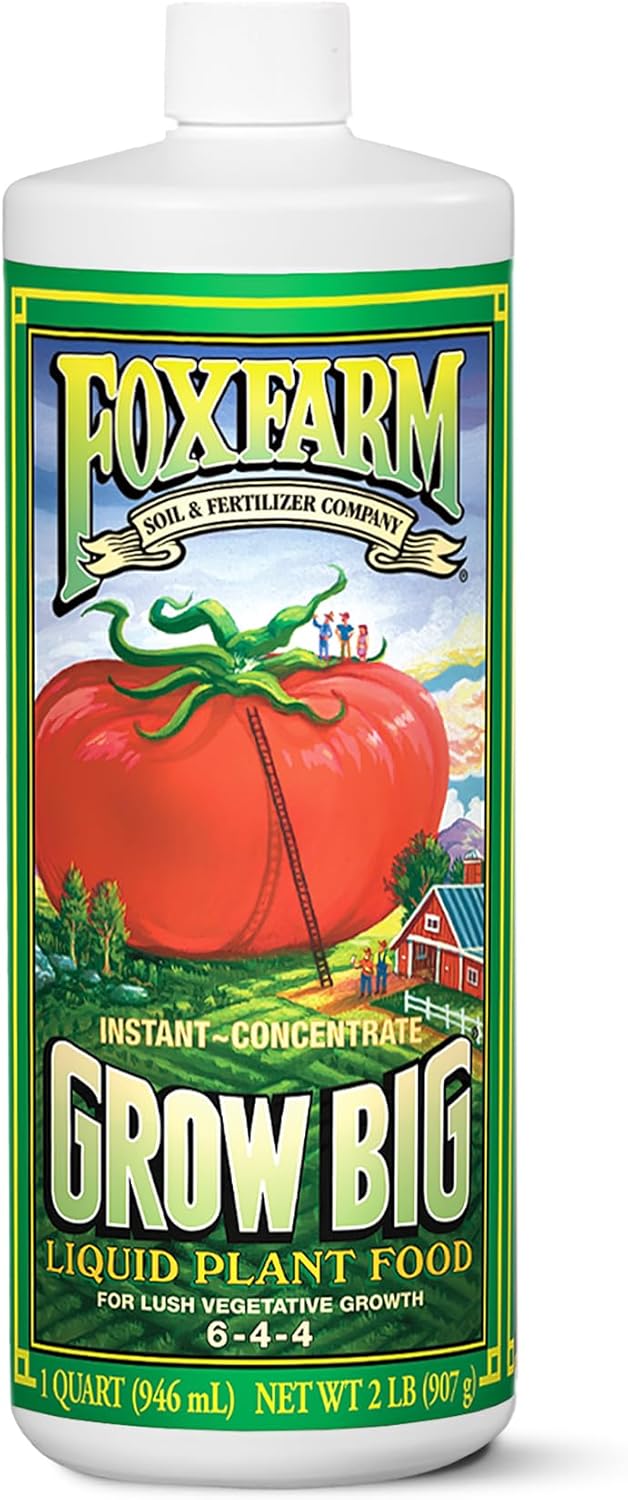
FoxFarm Grow Big Liquid Plant Food, 1 Quart (6-4-4)
| NPK | 6-4-4 |
|---|---|
| Form | Liquid |
| Unit Count | 32 Fluid Ounces |
| Mixing Ratio | 2-3 teaspoons per gallon of water |
FoxFarm Grow Big is a 6-4-4 liquid concentrate designed to boost vegetative growth in vegetables, roses, and houseplants. Mixed at 2 to 3 teaspoons per gallon, it is used either as a soil drench with regular watering or as a foliar feed for quicker uptake. Notable features include a fast-acting, low pH formula that helps micronutrients remain stable and available, plus clear mixing instructions for easy application. In practice it encourages larger, greener plants and stronger stems during the growth phase, which is useful when preparing tomato plants for fruiting. Because it is a balanced vegetative feed rather than a bloom or high-phosphorus formula, it supports size and structure more than flower set. Practical limitations are that the concentrate requires careful measuring to avoid overfeeding and it is focused on vegetative development so you will likely want to switch or supplement with a bloom or phosphorus-rich fertilizer as tomatoes begin to set heavy fruit. The quart size is convenient for home gardeners and mixes easily into watering cans or hose-end applicators.
Best for: Home gardeners who want a reliable, easy-to-use vegetative fertilizer to build healthy, vigorous tomato plants before fruiting and who prefer a concentrated liquid feed.
Less Ideal for: Growers focused only on maximizing tomato fruit set or bloom production without additional phosphorus-rich feeding should choose a bloom/formula designed for flowering instead.
- Concentrated liquid mixes easily for foliar or soil application
- Low pH formula helps micronutrients stay available for quick uptake
- Clear mixing ratio and simple application for home gardeners
- Promotes vigorous vegetative growth and stronger plant structure
- Formulated primarily for vegetative growth so it is not optimized for flowering or fruit set
- Contains phosphorus which may be restricted for lawn use in some areas
Verdict: A dependable, easy-to-mix vegetative concentrate that builds strong, vigorous tomato plants during the growth phase.
FoxFarm Happy Frog Tomato & Vegetable Fertilizer, 5-7-3, 4 lb

| Item Form | Granules |
|---|---|
| Specific Uses For Product | Vegetables, Tomatoes, Soft Fruits, and Berries |
| Mixing Ratio | 5:7:3 |
| OMRI Listed | Yes |
This granular 5-7-3 fertilizer is designed for tomato and vegetable growers who want strong vegetative growth followed by abundant fruiting. You apply it to containers, in-ground beds, or rows following the package directions; the formula supplies higher phosphorus relative to nitrogen to encourage flowering and fruit set while calcium helps reduce blossom end rot. Included mycorrhizal fungi can improve root nutrient and water uptake, which is useful in both young transplants and established plants. As a dry granular product it is easy to store and spread, and it works with standard feeding schedules rather than requiring daily applications. It is OMRI listed for organic gardening, which matters if you aim for organic production. Limitations are that it is a single blend so you may need additional amendments for specific soil deficiencies or precise low-nitrogen maintenance, and granular fertilizers take a little longer to act than soluble feeds when you need an immediate boost.
Best for: Gardeners focused on maximizing tomato yield and fruit quality who prefer an organic, easy-to-apply granular feed that supports root function and blossom health.
Less Ideal for: Growers who need rapid nutrient correction or highly customized nutrient programs should consider water-soluble concentrates or targeted soil amendments instead.
- Balanced 5-7-3 formula targets vegetative growth then fruit production for tomatoes and vegetables
- Contains calcium to help prevent blossom end rot in fruiting crops
- Includes mycorrhizal fungi to potentially improve root nutrient and water uptake
- OMRI listed for use in organic gardening systems
- Granular form is easy to store and apply to containers, rows, or in-ground beds
- Single fixed N-P-K ratio may not address all soil nutrient imbalances
- Granular feed acts more slowly than soluble fertilizers for immediate correction
Verdict: Choose this fertilizer if you want an organic granular feed that promotes strong vegetative growth, supports flowering and fruit set, and helps prevent blossom end rot in tomatoes.
Miracle-Gro Shake 'N Feed Tomato, Fruit & Vegetable Plant Food, 1 lb

| Item Form | Granules |
|---|---|
| Specific Uses For Product | Plant Food |
| Target Species | Tomato, Fruit & Vegetable Plant Food |
| Unit Count | 16 Ounce |
| Item Type Name | Continuous Release Plant Food Plus Calcium |
This granular Shake 'N Feed formula is designed to nourish tomato, fruit and vegetable plants in both in-ground beds and containers by releasing nutrients over time. You apply it dry—shake it onto soil and work into the top inch or two for beds, or mix at planting for containers—then water to activate feeding. The N-P-K balance and added calcium support stronger cell walls and reduce common calcium-related disorders in fruiting crops, while natural ingredients feed soil microbes that improve root health and water use. The three-month feeding interval cuts back on how often you need to fertilize during the season, which is convenient for busy gardeners. Important limitations are that it is a general granular feed rather than a high-phosphorus bloom booster, so growers seeking a quick bloom or rapid corrective feeding may prefer a water-soluble feed for fast results. Also you must follow label rates to avoid over-application and it is not meant to be pre-mixed with water.
Best for: Gardeners who want a low-maintenance, season-long fertilizer for tomatoes and other edible crops and prefer a simple dry application that supports soil health.
Less Ideal for: Growers who need rapid, targeted nutrient corrections or who prefer frequent liquid feeding and precise dosing for peak flowering.
- Continuous-release granules feed plants for up to three months reducing reapplication frequency
- Includes calcium to help prevent blossom end rot and improve fruit quality
- Formulated for both in-ground and container tomato/vegetable use
- Natural ingredients to support soil microbes and root health
- Not a water-soluble fast-acting feed for immediate nutrient correction
- Limited to a general NPK approach rather than a specialized bloom-boost formula
Verdict: An easy, three-month granular feed that delivers calcium and steady nutrition to keep tomato and vegetable crops healthier with minimal effort.
Jobe's Tomato Fertilizer Spikes, 18 Count (6-18-6)

| Unit Count | 18 Count |
|---|---|
| NPK | 6-18-6 |
| Application Method | Insert spikes around the plants |
| Target Species | Tomato |
Jobe's Tomato Fertilizer Spikes are pre-measured sticks you insert into the soil around tomato plants to feed roots on a slow-release 6-18-6 formula. They are intended for use at planting or early in the season and provide targeted phosphate-heavy nutrition that supports flowering and fruit set while minimizing surface runoff. The spikes are convenient and mess-free compared with granular or liquid fertilizers since there is no measuring or mixing and a single application can last several weeks. Practical benefits include easy placement in containers or garden beds and reduced risk of overfertilizing because each spike contains a set nutrient dose. Limitations are the fixed NPK ratio and fixed dose per spike, which gives less control for fine-tuning fertility or feeding different-sized plants; users will need to place multiple spikes for larger plants or repeat applications for long seasons. Also, because the product contains phosphorus, check local restrictions before broad use near waterways.
Best for: Home gardeners who want a low-effort, straightforward way to feed tomato plants and prefer set-and-forget fertilization over frequent measurements.
Less Ideal for: Growers who need precise, adjustable nutrient programs for large tomato plants, heavy feeders, or season-long tailored feeding schedules should consider granular or liquid fertilizers instead.
- Pre-measured spikes deliver consistent, mess-free dosing
- Slow-release formula feeds roots for up to eight weeks
- High phosphorus content supports flowering and fruit development
- Easy to apply at planting or in containers without mixing
- Fixed NPK and pre-measured dose limits precision for atypical plant sizes or tailored feeding
Verdict: A simple, low-effort spike fertilizer that reliably feeds tomato roots for weeks, making it an easy pick for budget-conscious gardeners who want fuss-free feeding.
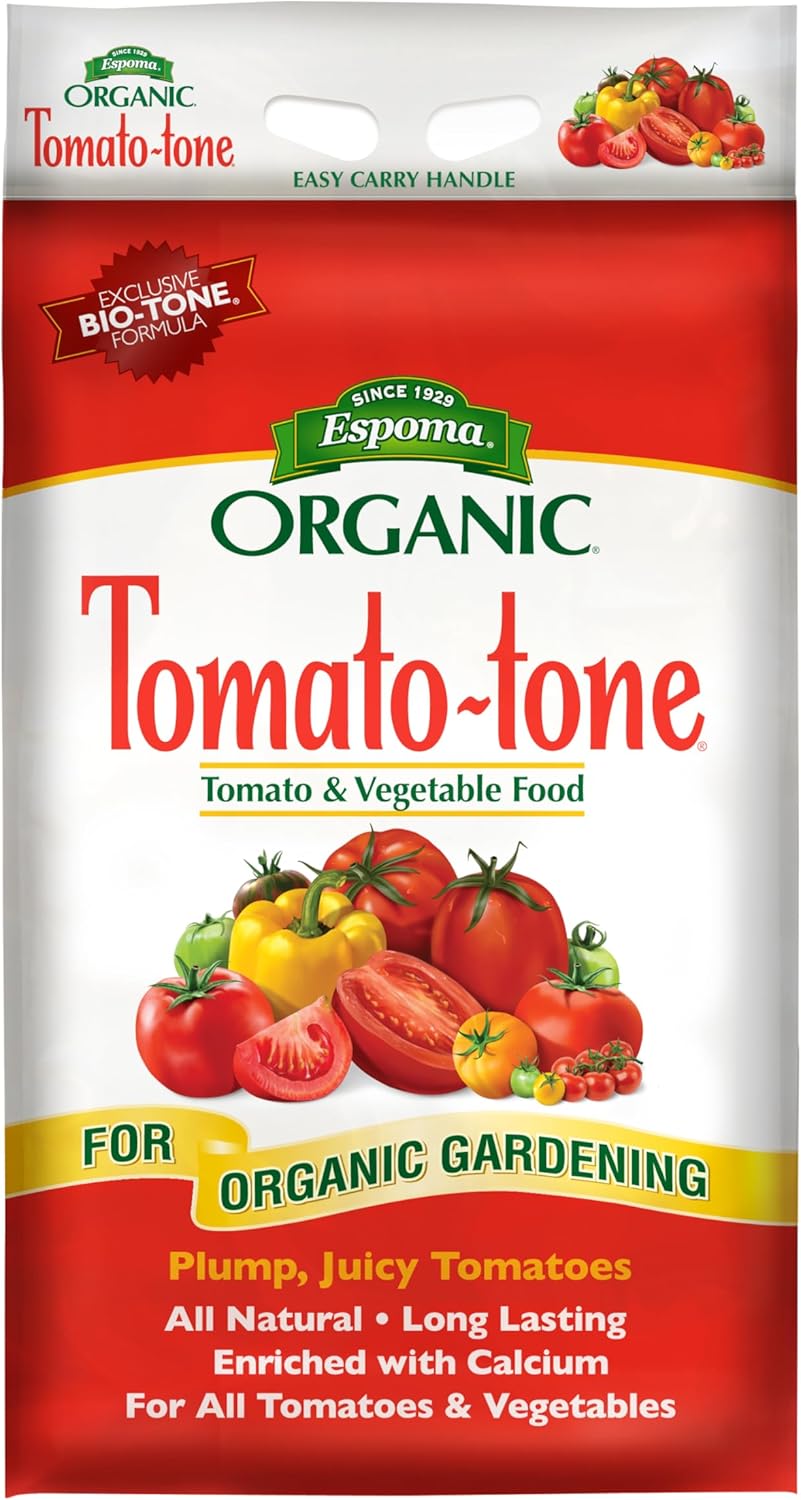
Espoma Organic Tomato-tone 3-4-6 Organic Fertilizer, 18 lb
| Item Form | Granules |
|---|---|
| Specific Uses For Product | Agriculture,Plant Growth |
| Coverage | Medium |
| Target Species | tomatoes, vegetables |
| Mixing Ratio | 3:4:6 |
Espoma Tomato-tone is a ready-to-use granular organic fertilizer designed to boost flower and fruit set in tomatoes and other vegetables. You spread it around the plant drip line and water it in; the manufacturer recommends applications every two weeks during the growing season. The 3-4-6 N-P-K ratio emphasizes phosphorus and potassium to support blooms and fruit development while the included 8 percent calcium helps reduce blossom end rot. Because it is a granular, organic formula, it feeds steadily rather than delivering a quick synthetic spike, which suits steady, long-season tomato production. It is approved for organic gardening and formulated by a recognized brand, so gardeners seeking predictable, soil-friendly feeding will appreciate its consistency. Limitations are that it is not a fast-acting soluble feed for foliar feeding or quick correction of severe nutrient deficiencies, and the twice-monthly application schedule requires regular attention through the season.
Best for: Gardeners who prioritize reliable, soil-friendly feeding for tomato crops and who follow a regular feeding schedule to maintain steady fruit production.
Less Ideal for: Growers who need rapid foliar feeding or an immediate fix for acute nutrient deficiencies should consider a soluble fertilizer instead.
- Organic granular formula suitable for certified organic gardens
- 3-4-6 N-P-K with 8% calcium to support fruit set and reduce blossom end rot
- Ready to use with simple application around the drip line
- Steady-release feeding preferred for consistent tomato production
- Not a fast-acting soluble fertilizer for immediate correction of deficiencies
- Requires regular biweekly applications during the growing season
Verdict: Choose this organic granular formula when you want dependable, steady feeding that promotes blooms and reduces blossom end rot in tomato gardens.
Miracle-Gro Water Soluble Tomato Plant Food, 1.5 lb

| Item Form | Liquid |
|---|---|
| Application Method | Water Soluble |
| Target Species | Tomatoes and vegetables |
| Mixing Ratio | 18-18-21 |
| Unit Count | 24 Ounce |
Miracle-Gro Water Soluble Tomato Plant Food is a concentrated, water‑soluble fertilizer made for tomatoes and other vegetables; you mix it into a watering can or use it with the Miracle‑Gro Garden Feeder and apply every 7 to 14 days. The 18-18-21 NPK mixing ratio supplies a balanced dose of nitrogen, phosphorus, and potassium for steady growth, flowering, and fruit set, and it starts working immediately when applied to the soil around plant bases. Typical use is straightforward: measure per-label amounts for outdoor or indoor plants, water in, and repeat during the growing season. Practical benefits include quick nutrient availability, compatibility with hose feeders for larger beds, and clear dosing instructions for both containers and in‑ground plants. Important limitations are that it is a soluble feed requiring frequent reapplication versus slow‑release options and that overuse can still cause issues if label directions are ignored. It is best used as a regular feeding program alongside good watering and soil practices rather than as a one‑time fix for poor soil.
Best for: Gardeners who want a proven, easy-to-use feed to boost tomato and vegetable yields and who prefer a product with many positive user experiences to back it up.
Less Ideal for: People seeking a low‑maintenance, single-application slow‑release fertilizer or those who prefer organic-only formulations.
- Balanced 18-18-21 NPK formulation targeted for vegetables and tomatoes
- Works with watering cans or the Miracle-Gro Garden Feeder for easy application
- Fast-acting soluble formula that delivers nutrients immediately to roots
- Requires repeated applications every 7–14 days rather than providing long-term slow release
- Needs careful measuring to avoid overfeeding sensitive plants
Verdict: Choose this if you want a reliable, fast‑acting soluble fertilizer that makes it easy to feed tomatoes and vegetables on a regular schedule.
Burpee Organic Tomato & Vegetable Granular Plant Food, 4 lb

| Item Form | Granules |
|---|---|
| Application Method | Sprinkle |
| Coverage | 160 Square Feet |
| Mixing Ratio | 3-6-4 |
| Specific Uses For Product | Gardening,Plant Growth,Root Development |
This Burpee granular plant food is an organic, all-purpose fertilizer designed for tomatoes and vegetable gardens. You apply it by sprinkling the granules around the plant base and watering in; nutrients are released immediately and continue feeding for up to three months, reducing how often you need to reapply. Its 3-6-4 mixing ratio supplies nitrogen, phosphorus, and potassium along with calcium and minor nutrients that support root development and steady growth in containers, beds, and seed starting. Being OMRI-listed and from a long-established brand makes it a reassuring choice for gardeners who prefer organic inputs. Coverage is listed for roughly 160 square feet from a 4 lb bag, so it is best for small to medium plots or for targeted applications around tomato plants. Limitations are that the bag is modest in size for larger vegetable gardens and granular application requires even distribution and watering to avoid localized burn or uneven feeding.
Best for: Gardeners who prioritize organic, low-maintenance feeding for tomato plants and small vegetable plots and want a product that provides steady nutrition across the season without frequent reapplication.
Less Ideal for: Large-scale vegetable growers or those who prefer liquid feeds for quick foliar feeding and precise dose control should consider larger bulk or liquid fertilizer options.
- OMRI-listed organic formula suited for organic vegetable production
- Granular form releases nutrients immediately and continues feeding for up to three months
- Includes calcium and minor nutrients to support plant and soil health
- Easy sprinkle application works for containers, beds, and seed starting
- 4 lb bag covers about 160 sq ft so may be small for larger gardens
- Granular feeding requires careful, even application and watering to avoid uneven results
Verdict: A reliable OMRI-listed granular fertilizer that provides steady season-long nutrition for home gardeners growing tomatoes and other vegetables.
Choosing the Right Fertilizer for Growing Tomatoes: Key Factors to Consider
Nutrient Ratio Targeting
Tomatoes need shifting balances of nitrogen, phosphorus, and potassium through their life cycle. Early growth benefits from moderate nitrogen for strong stems and leaves, but excessive nitrogen during fruiting reduces yields and delays ripening. A fertilizer that lists an N-P-K ratio suited to flowering and fruit set will help you avoid too-green, low-yield plants.
For many gardeners, a mid-range phosphorus and higher potassium ratio during bloom and fruiting supports flower retention and fruit development. Check labels for specific guidance on when to switch formulations or adjust application frequency so feeding matches the plant's stage rather than a one-size-fits-all schedule.
Calcium and Secondary Nutrients
Blossom end rot is a common physiological disorder linked to calcium availability rather than total soil calcium alone. Fertilizers that supply calcium in a plant-available form or that are compatible with foliar calcium applications can reduce the risk of soft, sunken fruit ends.
Secondary nutrients and micronutrients like magnesium, sulfur, boron, and iron support overall fruit quality and plant resilience. Look for products that either include these elements or pair cleanly with separate supplements, because deficiencies often show as leaf chlorosis or poor fruit set and are harder to correct once the season is underway.
Release Type and Timing
Liquid feeds, water-soluble granulars, and slow-release formulations each fit different gardening rhythms. Liquid and soluble fertilizers give quick corrections and are useful during bloom and early fruiting for fast nutrient uptake, while slow-release granules reduce the need for frequent reapplication and lower the risk of small dosing errors.
Consider how often you want to feed and how consistent your watering is. In containers, soluble or regular liquid feeding often works best because potting mixes leach nutrients faster. In established beds with stable irrigation, a timed-release product can provide steady nutrition without weekly attention.
Application Ease and Compatibility
Ease of use matters when you are feeding dozens of plants or managing a small patio patch. Products that come with clear dilution ratios, measuring tools, or granular spreader guidance reduce dosing mistakes. Compatibility with common garden practices like fertigation, foliar sprays, or side-dressing also determines whether a fertilizer integrates into your existing routine.
If you compost regularly or topdress with organic matter, choose fertilizers that complement rather than conflict with organic amendments. Also consider whether the product's instructions account for container volume, plant spacing, and repeated applications during the season.
Salt Load and Plant Safety
Some concentrated fertilizers have high soluble salt contents that can burn roots or harm seedlings, especially in containers and poorly drained soils. A lower salt index is safer for close-to-seedling applications and for tomatoes grown in pots or small raised beds.
Check product information for guidance on safe dilution and recommended application intervals. When switching products midseason, allow a recovery period and monitor for leaf tip burn or stalled growth that can indicate salt stress.
How Fertilizer Formulation Affects Fruit Quality
Different formulations influence not just yield but sugar concentration and firmness. Higher potassium during ripening helps sugar movement into fruit and can improve texture and shelf life. Phosphorus supports root growth and early bloom set but does not directly increase fruit sugar.
Practical steps include adjusting feed during key windows: leaner nitrogen during fruit set, slightly higher potassium as fruit swell, and ensuring calcium availability throughout. Observing fruit size, firmness, and flavor across a season will tell you whether your chosen strategy is working.
- Shift toward potassium-focused feeds as first fruits set
- Avoid heavy nitrogen after flowering to prevent lush foliage over fruit
- Ensure steady calcium supply to reduce blossom end rot risk
Feeding Strategies for Containers Versus In-Ground
Containers lose nutrients faster and dry out more rapidly, so frequent, lighter liquid feedings or soluble granulars are usually best. Choose fertilizers that provide quick uptake and include micronutrients to compensate for limited root volume.
In-ground plants benefit from a mix of slow-release base fertilization and targeted soluble feeds during heavy fruiting. A pre-season soil amendment with compost combined with midseason side-dressing can support sustained yields in beds.
- Containers: regular dilute liquid feed every 1 to 2 weeks
- In-ground: base granular application plus targeted liquid during peak demand
- Always match application to irrigation frequency to avoid under- or over-feeding
Addressing Common Tomato Problems with Feeding
Poor fruit set, blossom end rot, and blossom drop often stem from nutritional imbalances, inconsistent watering, or calcium and micronutrient shortages. A fertilizer plan that pairs consistent moisture with appropriate calcium and boron levels reduces these issues.
If you see specific deficiency symptoms, act quickly with targeted supplements rather than broad increases in nitrogen. For example, blossom end rot responds to calcium amendments and steady water, while chlorotic leaves may indicate iron or magnesium shortages that foliar sprays can correct more rapidly.
- Stabilize watering before changing fertilizer if blossom end rot appears
- Use foliar sprays for quick correction of micronutrient deficiency symptoms
- Increase potassium slightly if fruits are underdeveloped or tasteless
Organic Versus Synthetic Feeding Approaches
Organic fertilizers release nutrients more slowly and often improve soil biology, which supports long-term fertility and flavor. They can be paired with compost and mulches to build soil structure but may not supply fast fixes during acute deficiencies.
Synthetic fertilizers deliver predictable, readily available nutrients and are useful for quick corrections and precise ratio adjustments. Many gardeners combine both approaches: organic matter to build soil health and soluble feeds for targeted seasonal needs.
- Combine compost with targeted soluble feeds for balance
- Use organic amendments well before planting for best results
- Reserve synthetic soluble feeds for midseason corrections or concentrated demand periods
Timing Feeds Through the Tomato Season
A simple seasonal schedule helps avoid over- or under-feeding. Start with a moderate feed at transplant, reduce nitrogen as first flowers appear, increase potassium during fruit swell, and taper feeding as harvest winds down. Adjust frequency based on plant vigor and leaf color.
Keep a log of feed dates, observed plant responses, and any foliar treatments so you can refine timing in subsequent seasons. Different cultivars may have slightly different appetites, so observation is the best companion to any planned schedule.
- Transplant to first flower: moderate balanced feed
- Flowering to early fruit: reduce nitrogen, maintain phosphorus and potassium
- Fruit swell to harvest: emphasize potassium and calcium availability
How We Chose the Best Fertilizer for Growing Tomatoes
We evaluated candidates based on tomato-specific performance factors gardeners can observe in the season. Primary filters included the fertilizer's nutrient ratio and how that ratio supports flowering and fruit development, the presence and form of calcium and magnesium to reduce blossom end rot, and release type so feeding schedules match common tomato growth stages. We also assessed application methods and compatibility with containers versus in-ground beds, plus ease of use for gardeners who prefer granular, liquid, or slow-release formats. We excluded products aimed only at general lawn care, broad-spectrum houseplant mixes, or fertilizers with unverified nutrient analysis. We prioritized formulations and delivery methods that supply available nitrogen without encouraging excess foliage at the expense of fruit, that offer bioavailable calcium when possible, and that fit practical garden routines. Soil test compatibility, clarity of label instructions, and environmental considerations such as salt content and runoff risk were also part of the selection framework.
FAQ
How often should I fertilize tomato plants?
Frequency depends on the fertilizer type. Liquid or water-soluble feeds are commonly applied every 1 to 2 weeks, while slow-release granules can last several weeks to months. Adjust based on plant vigor and container versus in-ground conditions.
Can I use a general vegetable fertilizer for tomatoes?
Often yes if the formulation matches tomato needs during the season. Look for a product with moderate nitrogen early and the option to shift to higher potassium during fruiting. If the label lacks guidance for fruiting crops, supplement with targeted potassium or calcium as needed.
What should I do if my tomatoes get blossom end rot?
Blossom end rot usually indicates inconsistent calcium uptake. Keep watering even and steady, avoid over-fertilizing with high-nitrogen feeds, and consider adding a calcium source that is plant-available. Foliar calcium sprays can help in the short term while soil adjustments take effect.
Are foliar sprays effective for correcting nutrient deficiencies?
Foliar sprays provide fast temporary relief for certain micronutrient deficiencies and are useful when roots are stressed. They do not replace proper soil nutrition and repeated use may be needed until root uptake is restored.
Do tomato varieties change fertilizer needs?
Varieties vary in vigor and fruit load, so high-yielding or indeterminate types often need more frequent feeding than compact determinate plants. Monitor growth and fruit set, and adjust fertilizer frequency and strength accordingly.
Final Verdict
Choose a fertilizer plan that matches your planting method and the tomato growth stage. Prioritize nutrient ratios that support flowering and fruiting, ensure calcium availability, and pick a release type that fits how often you want to feed. Accept tradeoffs between quick corrections and long-term soil health: combine organic soil-building practices with targeted soluble feeds during peak demand for the most consistent harvests. With a clear feeding schedule and observation, you can reliably improve fruit set, size, and flavor.
