

Note: This article contains affiliate links. If you click on these links and make a purchase, I may earn a small commission at no extra cost to you. This helps support my research and content. Read my full affiliate disclosure here.
Growing in leca (lightweight expanded clay aggregate) changes how plants access water and nutrients. Because leca does not hold soluble fertilizer the way soil or potting mix does, you need products and feeding routines that provide consistent, balanced nutrition without accumulating salts around roots. This guide covers the top shortlisted fertilizers for leca and explains how each option suits common houseplants, succulents, and greenhouse uses. We evaluated mixes for nutrient completeness, salt control, and ease of dosing to help you pick a fertilizer that fits your watering style and plant types. Below are our top picks followed by practical guidance on choosing and using fertilizer in leca setups.
Top Picks at a Glance
| Best Overall The best all-around choice for most situations | FoxFarm Grow Big Hydroponic Liquid Plant Food, 1 Pint |  |
| Best Quality Built to a higher standard if you want something more solid | Pretty in Green Leaf LUX Concentrated Liquid Fertilizer (8 fl oz) |  |
| Best Value The sweet spot between price and what you get | Purived All-Purpose Liquid Houseplant Fertilizer, 16 fl oz (Makes 50 Gallons) |  |
| Best Budget The cheapest option that still gets the job done reliably | Tigvio Hydroponic Nutrients A&B (800 ml) for Aerogarden and Hydroponics |  |
| Highest Rated A top-rated pick with lots of positive feedback | General Hydroponics FloraGro 2-1-6 Liquid Plant Food, 1 Quart |  |
| Most Popular A crowd favorite that many people choose with confidence | TPS Nutrients Liquid Plant Food for AeroGarden and Hydroponics, 8 oz | 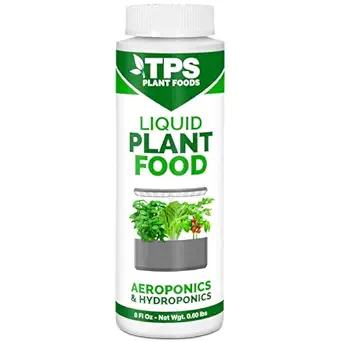 |
| Best Seller A high-volume bestseller chosen again and again | TPS NUTRIENTS Indoor Plant Food Liquid Fertilizer, 8 fl oz |  |
FoxFarm Grow Big Hydroponic Liquid Plant Food, 1 Pint

| Item Form | Liquid |
|---|---|
| Specific Uses For Product | Hydroponic |
| Liquid Volume | 16 fluid ounces |
| Mixing Ratio | 2-3 teaspoons per gallon |
FoxFarm Grow Big Hydroponic is a 3-2-6 liquid concentrate designed to feed plants during the vegetative phase in hydroponic systems. You mix 2 to 3 teaspoons per gallon and maintain pH around 5.8 to 6.3, then apply through your leca reservoir or recirculating system for steady nutrient delivery. The formula includes micronutrients and earthworm castings to support leaf and stem development and is optimized for quick uptake in soilless media. Practical benefits include easy measuring, immediate availability to roots in an inert medium like leca, and a clear progression plan to switch to bloom formulas when plants begin flowering. Important limitations are that it is targeted to vegetative growth so you will need a complementary bloom fertilizer later and it requires monitoring EC/ppm and pH for best results. Also it is a concentrate, so accurate dilution is necessary to avoid nutrient burn in sensitive plants.
Best for: Growers who want a reliable, easy-to-mix vegetative nutrient for leca or other soilless setups and who follow a staged feeding program.
Less Ideal for: If you need an all-in-one formula that covers both vegetative and flowering stages or if you prefer a no-monitoring, low-maintenance fertilizer, this is not the best fit.
- Formulated specifically for hydroponic and soilless systems for fast root uptake
- Includes micronutrients and earthworm castings to support vigorous vegetative growth
- Clear dosing guidance (2–3 tsp per gallon) and pH range make it easy to integrate into a feeding schedule
- Focused on vegetative phase so you must use a separate bloom nutrient for flowering
- Requires regular pH and EC/ppm monitoring to avoid imbalances
Verdict: A straightforward, hydroponic-focused vegetative nutrient that gives leca-grown plants quick, reliable growth when you monitor pH and nutrient strength.
Pretty in Green Leaf LUX Concentrated Liquid Fertilizer (8 fl oz)

| Item Form | Liquid |
|---|---|
| Specific Uses For Product | Plant Growth, Root Development, Seed Development, Soil Conditioning, leaf growth |
| Coverage | 40 gallons of nutrient water |
| Mixing Ratio | 1 cap per gallon of water |
This concentrated 8 fl oz liquid fertilizer is built for feeding aroids and other houseplants across soil, LECA, semi-hydro and full hydro systems. It mixes at the recommended rate of one cap per gallon (with higher dosages suggested for LECA and semi-hydro) and is buffered for pH to improve nutrient uptake from tap or filtered water. The formula supplies a balanced 2.5-1.7-2.3 NPK and includes calcium, magnesium and a full complement of micronutrients and chelated trace elements, so you can skip a separate CalMag in many cases. Practical benefits include a high coverage yield (makes about 40 gallons) and an odorless, easily dosed concentrate in a small bottle for tight indoor setups. Important limitations are that it must be diluted carefully and users should follow the stronger LECA dosing guidance rather than assuming the soil rate; concentrated product can harm plants if applied directly. For growers focused on steady weekly feeding and simplified nutrient inputs for aroid collections, this is a compact, performance-oriented choice.
Best for: Buyers who prioritize reliable, repeatable feeding for aroid collections grown in LECA or mixed media and want a compact concentrate that simplifies weekly nutrient dosing.
Less Ideal for: Casual plant owners who rarely fertilize or those who prefer granular or slow-release formulas for outdoor beds.
- Concentrated formula yields about 40 gallons of nutrient solution from one bottle
- Balanced N-P-K with added calcium and magnesium reduces need for separate CalMag
- pH buffered for better uptake from tap or filtered water
- Suitable for multiple media including LECA, semi-hydro, soil and full hydro systems
- Requires careful dilution and different dosing for LECA versus soil
- Small bottle size means frequent repurchase for larger collections
Verdict: A concentrated, pH-buffered liquid designed to deliver complete macro and micronutrients for high-performance aroid feeding in LECA and other hydro systems.
Purived All-Purpose Liquid Houseplant Fertilizer, 16 fl oz (Makes 50 Gallons)

| Item Form | Liquid |
|---|---|
| Application Method | soil drench, foliar feed, full & semi hydroponics |
| Target Species | Houseplants |
| Mixing Ratio | 320:1 |
Purived All-Purpose Liquid Houseplant Fertilizer is a concentrated 16 fl oz bottle that mixes 1 cap per gallon to treat up to 50 gallons of water. It is formulated for indoor potted plants and supports multiple application methods including soil drench, foliar spray, and full or semi-hydroponics, so you can use the same product whether you water, mist, or run nutrient solutions. The formula lists primary macronutrients and a range of micronutrients, which helps correct common deficiencies and supports steady growth when used at the recommended dilution. Practical benefits include an easy-to-follow mixing ratio, an odorless solution that is simple to store, and broad compatibility with different feeding routines. Important limits are that the label gives no N-P-K percentages, so precise nutrient planning for sensitive seedlings or specialty plants is not possible, and safety precautions mean you must handle and store it carefully. For new plants, start at or below the recommended dilution and observe growth before increasing frequency.
Best for: Buyers who want a versatile, no-fuss fertilizer for establishing and maintaining new houseplants and who value a single product that works across watering, misting, and basic hydroponic setups.
Less Ideal for: Growers who need exact N-P-K formulations for seedlings, specialty plants, or strict hydroponic nutrient regimens should consider a product with full nutrient breakdown and concentration details.
- Very concentrated so one bottle treats up to 50 gallons, reducing repurchase frequency
- Suitable for multiple application methods: soil drench, foliar feed, and hydroponics
- Includes a range of micronutrients in addition to primary NPK components
- Simple, clear mixing ratio (320:1) that is easy to follow
- No N-P-K ratio listed on the product information, limiting precise nutrient management
- Requires careful handling and storage due to safety warnings
Verdict: A concentrated, easy-to-use all-purpose fertilizer that covers feeding, foliar, and basic hydroponic needs for new houseplants.
Tigvio Hydroponic Nutrients A&B (800 ml) for Aerogarden and Hydroponics
| Item Form | Liquid |
|---|---|
| Specific Uses For Product | Plant Growth |
| Liquid Volume | 800 ml |
| Mixing Ratio | 1:1 |
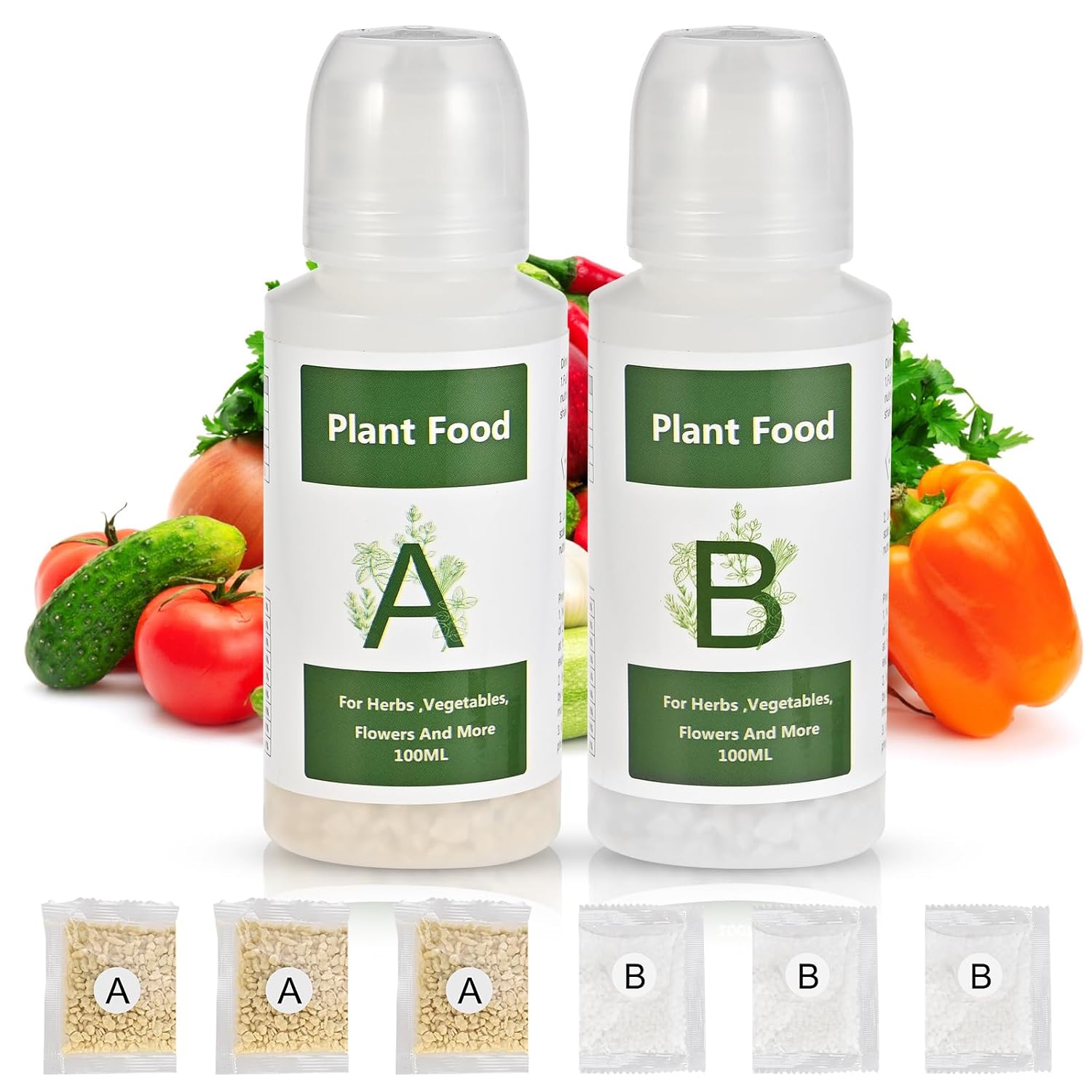
Tigvio's Hydroponic Nutrients A&B is a straightforward two-part liquid feed designed to supply essential elements for indoor hydroponic growth. You use it by mixing each concentrate with water (manufacturer directions: mix each nutrient with 100 ml water and add 5 ml A and 5 ml B per liter) and dosing the reservoir on a regular schedule. The kit includes two bottles and multiple packs, giving a reasonable supply for several crop cycles. Its water-soluble, pH-balanced formula helps plants take up nutrients efficiently, which is useful when growing in inert media like LECA where all nutrition must come from the solution. Practical benefits are easy mixing, compatibility with Aerogarden and most hydroponic systems, and concentrated dosing that keeps storage and handling simple. Limitations to note are that labels do not list detailed NPK or micronutrient breakdowns, so you cannot fine-tune feed by numbers, and safety precautions are needed because it is a concentrated chemical solution. For growers who need precise element ratios or want organic-certified inputs, this product may not meet those requirements.
Best for: Practical indoor gardeners running Aerogarden-style or DIY hydroponic systems who want an affordable, ready-to-use liquid nutrient to feed plants in LECA without complex mixing routines.
Less Ideal for: Growers who require full lab-style nutrient breakdowns, organic certification, or precise customizable element ratios should consider specialty or analytical-grade nutrients instead.
- Two-part A and B system suitable for hydroponic dosing in inert media like LECA
- pH-balanced, water-soluble formulation for efficient nutrient uptake
- Includes multiple bottles/packs so you get a usable supply for several grow cycles
- Simple mixing and clear dosing instructions for reservoir systems
- No detailed NPK or full micronutrient analysis provided on the label
- Not labeled as organic or for growers seeking certified inputs
Verdict: A budget-friendly, easy-to-use two-part liquid nutrient that delivers pH-balanced, water-soluble feeding for hydroponic systems using LECA.
General Hydroponics FloraGro 2-1-6 Liquid Plant Food, 1 Quart

| Item Form | Liquid |
|---|---|
| Specific Uses For Product | Plant Growth, Root Development, Seed Development |
| Target Species | All Plants |
| Liquid Volume | 1 quarts |
| Mixing Ratio | 2-1-6 |
FloraGro is the structural growth component of General Hydroponics' three-part FloraSeries and is designed to be mixed with FloraMicro and FloraBloom for complete feeding. In practice you use FloraGro when plants need leaf and stem development or as a supplement for potted plants grown in LECA by following the 2-1-6 mixing ratio and combining with the micro and bloom formulas. The liquid concentrate is easy to dose and dissolves readily for consistent nutrient delivery in hydroponic reservoirs or top-fed LECA systems. Its formulation focuses on building foliage and structure rather than flowering alone, so it is most useful during vegetative stages or to strengthen transplants and cuttings. Limitations are that it is not a single-solution all-in-one feed and requires pairing with FloraMicro (and often FloraBloom) plus attention to EC and pH management for reliable results in inert media like LECA.
Best for: Buyers who prioritize predictable, system-based feeding for hydroponics or LECA and want a proven component they can rely on to build strong vegetative growth.
Less Ideal for: Casual growers who prefer a one-bottle, no-mix all-in-one fertilizer or those unwilling to monitor nutrient strength and pH regularly.
- Formulated specifically for structural and foliar growth to strengthen stems and leaves
- Liquid concentrate mixes easily for consistent dosing in hydroponic reservoirs and LECA setups
- Part of a modular three-part system that lets you tailor nutrient ratios for growth stages
- Suitable as a supplement for potted plants as well as hydroponic applications
- Not a complete single-bottle fertilizer and must be used with FloraMicro and often FloraBloom
- Requires monitoring and adjustment of EC and pH for reliable performance in inert LECA media
Verdict: Use FloraGro as the reliable vegetative building block in a FloraSeries feeding program to get consistent, controllable growth in LECA and hydroponic systems.
TPS Nutrients Liquid Plant Food for AeroGarden and Hydroponics, 8 oz

| Item Form | Liquid |
|---|---|
| Specific Uses For Product | Plant Growth, Root Development |
| Target Species | Herb, Vegetable |
| Mixing Ratio | 5 mL (1 tsp) per quart of feedwater |
| Unit Count | 8 Fluid Ounces |
This 8 oz liquid plant food provides concentrated, reservoir-safe nutrition intended for AeroGarden and comparable hydroponic units. It is used by mixing the recommended 5 mL per quart of feedwater into the system reservoir on a regular feeding schedule to supply macro and micronutrients for herbs, greens, and other compact edible plants. Notable features include a liquid formulation that dissolves easily, a focus on root development, and explicit compatibility with indoor hydroponic gardens. In practice it simplifies feeding for small indoor crops because a measured teaspoon per quart is straightforward to dose and store. Important limitations are the small bottle size, which will require frequent repurchasing for larger or multiple units, and the need to follow dilution directions carefully to avoid overfeeding. Safety handling is necessary because the concentrate should be kept away from children and pets. For risk-averse growers, the product’s clear mixing ratio and hydroponic focus make predictable feeding simple, but you should track reservoir concentrations rather than guessing frequency or volume adjustments.
Best for: Buyers who want a simple, low-risk feeding routine for indoor green onions and other small edible hydroponic crops and prefer clear dosing instructions they can follow reliably.
Less Ideal for: Growers managing large hydroponic setups, outdoor beds, or those who need a detailed NPK profile for tailored nutrient programs should look for larger or fully specified concentrates.
- Designed specifically for AeroGarden and similar hydroponic systems for straightforward compatibility
- Liquid formula mixes easily for even nutrient distribution in the reservoir
- Clear mixing ratio (5 mL per quart) simplifies dosing and repeatable feeding
- Targets root development and steady growth for herbs and vegetables
- Small 8 oz bottle may not last long for multiple or larger units
- No full nutrient analysis or NPK breakdown provided on the product listing
Verdict: A compact, easy-to-dose liquid fertilizer that makes predictable feeding of indoor green onions simple and low risk.
TPS NUTRIENTS Indoor Plant Food Liquid Fertilizer, 8 fl oz

| Item Form | Liquid |
|---|---|
| Specific Uses For Product | Plant Food |
| Application Method | Watering can |
| Mixing Ratio | 2:1 (oz/gallon) or 1:64 (tbsp/gallon) |
TPS NUTRIENTS Indoor Plant Food is a concentrated liquid fertilizer made for regular use with houseplants. You mix the measured dose into water and apply it with your usual watering can; the label gives an easy mixing ratio for household use. Its kelp-enriched formula is pitched at improving leaf color, encouraging steady new growth, and supporting root health, so expect glossier foliage and more frequent leaf production when plants are fed consistently. The 8 fl oz bottle is portable and fits on a plant shelf or utility area, and the liquid form dissolves readily for even application. It is intended for medium coverage and labeled as gentle for weekly feeding, which simplifies care for busy owners. Important limitations are that this is a small bottle meant for regular top-up feedings rather than long-term bulk use, and it assumes you will follow dilution directions to avoid overfeeding. Keep it away from children and pets and avoid skin or eye contact when handling.
Best for: Plant owners who want a simple, low-effort weekly fertilizer to keep indoor foliage vibrant and encourage steady new leaf growth. Good for people who prefer an easy liquid mix applied during regular watering routines.
Less Ideal for: Gardeners needing a bulk or multi-season fertilizer for outdoor beds or large collections should consider larger-capacity or specialized products instead.
- Liquid concentrate mixes easily for even application with a watering can
- Kelp-enriched formula aimed at improving foliage color and encouraging new growth
- Gentle enough for weekly feedings according to product guidance
- Clear mixing instructions for home use
- Small 8 fl oz volume limits how many plants you can feed before repurchasing
- Not formulated or labeled for outdoor or large-scale garden use
Verdict: A convenient kelp-enriched liquid concentrate that makes weekly feeding easy for anyone who wants healthier, more vibrant indoor foliage.
Choosing the Right Fertilizer for Leca: Key Factors to Consider
Nutrient Balance and Ratio
A fertilizer for leca should provide a balanced macronutrient profile suited to the plant types you grow. Leca does not buffer or store nutrients, so the N-P-K ratio you supply in solution largely determines what the roots absorb. For foliage-heavy houseplants a higher nitrogen proportion can promote leaf growth, while flowering and fruiting plants need higher phosphorus and potassium at appropriate stages.
Because leca relies on repeated feeding, choose a fertilizer that offers steady, predictable nutrient ratios rather than one that depends on soil microbes to convert forms. Clear label information about nitrate versus ammonium and available phosphorus helps you avoid unintended imbalances over time.
Soluble Salt Management
Leca's inert nature means salts can accumulate in the root zone if you overfeed or fail to flush the substrate. Fertilizers vary in their total dissolved solids and how aggressively they contribute to salinity. Low-salt formulations and fertilizers designed for hydroponics tend to be gentler for frequent feedings.
Look for products with guidance on electrical conductivity (EC) or specific ppm targets. Regular monitoring and periodic flushing of leca with plain water or a low-EC solution will help prevent leaf tip burn and root stress. Choosing a fertilizer that dissolves cleanly and leaves minimal residue reduces the risk of salt hotspots inside the clay nodules.
Dosing Flexibility and Ease of Use
Because leca systems often use frequent, dilute feedings, a fertilizer that can be reliably diluted to low concentrations is essential. Flexible dosing instructions allow you to tailor feed strength for seedlings, mature plants, or staged growth cycles. Concentrated stock solutions that are easy to measure and mix reduce user error.
Practical dosing also means clear instructions for different watering regimes, such as top-watering, ebb-and-flow, or wick-fed setups. If the fertilizer requires complex mixing steps or unstable stock solutions, it becomes harder to maintain consistent nutrient delivery in a leca system.
Micronutrient Availability
Macronutrients get most attention, but micronutrients like iron, manganese, zinc, and boron are critical in leca because the substrate offers no supplemental mineral exchange. Deficiencies can develop subtly and limit growth even when N-P-K is adequate. A complete micronutrient package, preferably chelated where appropriate, helps keep foliage vibrant and roots healthy.
When shopping, check that iron is present in a plant-available form and that trace elements are balanced to avoid antagonisms. Some formulas allow separate bolstering of micronutrients if specific deficiencies appear.
Mix Clarity and Residue Potential
How a fertilizer dissolves matters in leca systems because residue can cling to clay pellets and create uneven nutrient pockets. Clear, fully soluble formulas minimize visible residue and blockages in emitters or trays. Formulations that produce precipitates when combined with hard water or other additives are poor choices for leca unless you can control water chemistry precisely.
Consider whether the fertilizer is prone to leaving film or cake on pellets after drying. Low-residue mixes reduce maintenance and make periodic flushing more effective at resetting the root environment.
Compatibility With Water Quality
Your tap water chemistry interacts with any soluble fertilizer. Hard water high in calcium and magnesium can cause precipitates with certain phosphates or sulfates, while very soft or low-alkalinity water influences pH swings when diluted. Because leca does not buffer pH well, pick fertilizers and mixing practices that allow you to manage solution pH and prevent nutrient lockout.
Testing your water and adjusting dilution or using a conditioner when necessary helps maintain stable nutrient availability. Some fertilizers are formulated specifically for use with a wide range of water types, which reduces fuss for gardeners who cannot easily change source water chemistry.
How Fertilizer Behavior Differs in Leca Compared With Soil
Leca is an inert, porous medium that holds moisture in its pores but does not provide chemical nutrients. That means dissolved fertilizer is the sole source of plant-available minerals, and feeding frequency and solution strength determine nutrient availability more than in soil. Expect faster changes in root exposure to nutrients after each watering because leca does not buffer concentration spikes the way potting mix does.
Because of this dynamic, gardeners using leca benefit from predictable, repeatable feeding routines and fertilizers designed for soluble delivery. You will also want to pay attention to solution pH and EC between waterings, since leca does not moderate those values.
- Nutrients in leca are delivered only through the water solution.
- Salt buildup happens faster without soil buffering.
- pH and EC fluctuate more visibly in leca systems.
Feeding Schedules That Work With Leca
Two common approaches work well: frequent low-dose feedings and less frequent moderate-dose feedings. Frequent feeding mimics hydroponic practice and keeps nutrients consistently available without spiking salts. Less frequent feedings require careful flushing to avoid accumulation.
Match the schedule to plant type and water retention in your particular leca setup. Fast-draining setups and high-light plants often need more frequent feedings, while shade plants with slower uptake tolerate less frequent applications.
- Frequent low-dose: better for sensitive plants and salt control.
- Moderate-dose with flushing: useful for growers who prefer fewer mixing events.
- Always flush leca periodically to prevent salt hotspots.
Testing and Monitoring Nutrient Levels
Regular testing of solution EC and occasional ppm checks tell you if salts are accumulating. Portable EC meters are inexpensive tools that help you dial in feed strength and determine when a flush is needed. Watch leaves for tip burn, chlorosis, or stunted growth as secondary indicators of nutrient stress.
Record keeping helps. Note feed concentration, water quality, and plant response over several weeks so you can spot trends rather than react to single events.
- Use an EC meter to track dissolved salts.
- Record dilution rates and plant responses.
- Inspect roots and leca periodically for crusting.
Adjusting Formulations for Plant Stage
Seedlings, vegetative plants, and flowering specimens have different nutrient demands. In a leca system you can switch concentrations or choose slightly altered N-P-K ratios by adjusting dilution or combining formulations. Lower strength is better for seedlings to avoid osmotic stress.
When moving to flowering or fruiting, increase phosphorus and potassium within recommended ranges and monitor for any salt-related stress. Make changes gradually across several feedings to give roots time to adapt.
- Start seedlings at low-strength solutions.
- Increase bloom nutrients gradually for flowering plants.
- Monitor for signs of nutrient imbalance after each stage change.
Common Mistakes With Fertilizing in Leca
Overconcentration and infrequent flushing are two of the biggest errors. Because leca does not dilute salts on its own, applying strong solutions repeatedly leads to buildup and root damage. Another frequent mistake is ignoring water chemistry; without correcting for hard water or extreme pH, precipitates and lockout can occur.
Also avoid using fertilizers that do not dissolve cleanly or that leave sticky residues on pellets. Those residues make flushing less effective and can harbor salts in pockets that stress roots.
- Avoid heavy-strength feedings without regular flushing.
- Test water and solution pH before routine use.
- Do not rely on soil-based dosing recommendations for leca setups.
How We Chose the Best Fertilizer for Leca
We focused on fertilizers that behave predictably in inert substrates like leca and excluded products designed only for soil top-dressing or slow-release granulars that depend on microbial activity. Selection criteria emphasized nutrient profile completeness, soluble salt concentration, and the clarity of dosing instructions for container and hydroponic-style watering. We also considered formulation flexibility, meaning how well a product can be diluted for frequent low-dose feedings versus occasional stronger feedings. Longevity and consistency of nutrient ratios were part of the review, along with label transparency about N-P-K and micronutrients. Products without clear soluble nutrient data or those relying on ambiguous organic claims were excluded. Practical handling factors such as mixing clarity, residue tendency, and whether the fertilizer left visible buildup on leca were also important. These filters ensured the list focuses on fertilizers that deliver balanced, low-salt nutrition suitable for plants grown in leca.
FAQ
How often should I fertilize plants grown in leca?
It depends on plant type and system. Many growers use a low-strength solution each watering for frequent feeders, while others feed every one to two weeks with a moderate-strength solution and flush between feedings. Monitor plant response and EC to fine-tune frequency.
Can I use organic fertilizers in leca?
Organic fertilizers can be used but often require microbes or breakdown processes that inert leca does not provide. Soluble, clarified organic extracts may work, but they sometimes increase residue and clogging. For predictable results, many gardeners prefer soluble mineral formulations.
How do I prevent salt buildup in leca?
Use low-EC fertilizer concentrations, flush the leca periodically with plain water, and monitor solution conductivity. Choosing a fertilizer formulated for hydroponic or inert media use reduces the chance of rapid salt accumulation.
Should I adjust pH when fertilizing in leca?
Yes, pH affects nutrient availability. Aim for a solution pH range suited to your plant types, typically slightly acidic for most houseplants. Because leca buffers pH poorly, check the mixed solution and adjust before applying if needed.
What signs indicate I need to change my fertilizer routine?
Look for leaf tip burn, yellowing between veins, slowed growth, or white crust on leca pellets. These signs suggest salt buildup or nutrient imbalance and mean you should reduce concentration, increase flushing, or test water chemistry.
Can I mix different fertilizers for leca to get the right ratio?
Mixing is possible but requires caution. Some combinations precipitate or change effective concentrations. If you mix, prepare small test batches, check for cloudiness or solids, and monitor EC and pH closely to avoid unexpected reactions.
Final Verdict
When feeding plants in leca, prioritize soluble, low-residue fertilizers with clear nutrient ratios and dosing guidance. Maintain a feeding rhythm that matches plant uptake and water retention in your setup, and use EC and pH measurements to avoid silent problems like salt buildup or nutrient lockout. By focusing on nutrient balance, salt control, and dosing flexibility, you can keep roots healthy and plants vigorous in inert media.
