

Note: This article contains affiliate links. If you click on these links and make a purchase, I may earn a small commission at no extra cost to you. This helps support my research and content. Read my full affiliate disclosure here.
If your garden soil runs acidic, choosing the right fertilizer changes how well plants take up nutrients and how often you must amend soil chemistry. Fertilizers formulated for low pH soil supply nutrient ratios and formulations that suit acid-loving shrubs, vegetables, and container plantings while avoiding common mistakes that worsen deficiencies. This guide covers our shortlisted top picks for fertilizers for low pH soil and explains the evaluation criteria used to judge nutrient balance, pH interaction, and ease of use. Read on to match a fertilizer style to your soil test results and planting situation.
Top Picks at a Glance
| Best Overall The best all-around choice for most situations | MicroLife Acidifier Organic Fertilizer 6-2-4, 40 lb |  |
| Best Quality Built to a higher standard if you want something more solid | FoxFarm Happy Frog Acid-Loving Plant Fertilizer, 4 lb |  |
| Best Value The sweet spot between price and what you get | Earth Science Fast Acting Sulfur Granules, 5 lb |  |
| Best Budget The cheapest option that still gets the job done reliably | True Organic Prilled Sulfur — Prilled Elemental Sulfur Granules, 5 lb |  |
| Highest Rated A top-rated pick with lots of positive feedback | Lawn Synergy Soil Acidifier Elemental Sulfur (18 lb) |  |
| Most Popular A crowd favorite that many people choose with confidence | Down To Earth Acid Mix Organic Fertilizer 4-3-6, 1 lb |  |
| Best Seller A high-volume bestseller chosen again and again | Espoma Organic Soil Acidifier, 30 lb |  |
MicroLife Acidifier Organic Fertilizer 6-2-4, 40 lb

| Item Form | Granules |
|---|---|
| Specific Uses For Product | Organic |
| Coverage | 40 |
| Target Species | azaleas, roses, blueberries, camellias and acid loving plants |
| Mixing Ratio | 6:2:4 |
MicroLife Acidifier 6-2-4 is a 40 lb granular organic fertilizer designed for acid-loving plants such as camellias, azaleas, blueberries and roses. You apply it worked into soil or as a top dressing at the rates on the label and repeat every 3 to 4 months; its slow-release formula supplies nutrients over time rather than a quick spike. Notable ingredients include added sulfur and iron plus humates, fish, kelp and a bio-inoculant with beneficial microorganisms and mycorrhizae to support root health and nutrient uptake. In practice this product helps maintain a target pH range for acid-loving species while delivering steady nitrogen, phosphorus and potassium in a 6-2-4 ratio. The organic composition reduces burn risk and is suitable for use in beds and around established ornamentals. Limitations are the need to measure and apply by area for correct coverage and the large bag size that can be cumbersome for small gardens or container-grown camellias. Expect gradual improvement rather than immediate color changes in foliage or blooms.
Best for: Gardeners who want a dependable, organic fertilizer to support healthy camellias and other acid-loving shrubs and prefer steady long-term feeding over quick fixes.
Less Ideal for: Those who only grow a few potted camellias or need a lightweight, small-pack option for container plants should consider smaller bags or concentrated fertilizers.
- Formulated specifically for acid-loving plants including camellias
- Contains sulfur, iron and humates to help maintain lower soil pH
- Slow-release organic granules that feed plants over several months
- Includes beneficial microorganisms and mycorrhizae to support root health
- 40 lb bag can be heavy and awkward to handle for small-scale gardeners
- Requires measuring and spreading by area for correct application rates
Verdict: Choose this if you want a reliable organic acidifier that maintains low pH and feeds camellias steadily throughout the season.
FoxFarm Happy Frog Acid-Loving Plant Fertilizer, 4 lb

| Item Form | Powder |
|---|---|
| Application Method | Granular |
| Coverage | Medium |
| Target Species | Acid-loving plants |
| Mixing Ratio | 1/16 cup per gallon |
FoxFarm Happy Frog Acid-Loving Plant Fertilizer is a granular, slow-release powder designed for azaleas, rhododendrons and other low-pH garden plants. It is typically worked into potting mix or top-dressed around established shrubs following the package mixing instructions, and it delivers gentle feedings that reduce the risk of burning sensitive roots. Notable features include an OMRI-listed formulation and added soil microbes and mycorrhizal fungi intended to enhance nutrient uptake and water absorption. In practice this means steady, low-maintenance nutrient delivery and healthier root development over weeks rather than a single flush of growth. Application is straightforward using the suggested mixing ratio or the established plant application table, making it suitable for beds and containers. The main limitations are that it is tailored specifically to acid-loving species and does not replace targeted micronutrient or corrective soil amendments if your soil test shows deficiencies or pH issues; gardeners with neutral or alkaline soils will need to adjust pH first for best results.
Best for: Gardeners focused on getting consistent, long-term performance from azaleas, rhododendrons and other acid-loving ornamentals who prefer low-maintenance, steady feeding rather than frequent liquid fertilizing.
Less Ideal for: Growers who need an all-purpose fertilizer for mixed beds or who require rapid corrective feeding based on specific soil test results should consider other products.
- Formulated specifically for acid-loving plants like azaleas and rhododendrons
- Slow-release granular formula provides steady, low-burn feedings
- Contains mycorrhizal fungi and beneficial soil microbes to support root health and nutrient uptake
- Easy-to-follow mixing ratio and application instructions for beds and containers
- Not suitable as a general-purpose fertilizer for neutral or alkaline soil without pH adjustment
- Does not replace corrective amendments when specific nutrient deficiencies are identified
Verdict: Choose this product when you want a purpose-built, slow-release feed that supports stronger roots and steady growth in azaleas and rhododendrons.
Earth Science Fast Acting Sulfur Granules, 5 lb

| Item Form | Granules |
|---|---|
| Specific Uses For Product | Lawn |
| Target Species | acid-loving plants |
| Unit Count | 80 Ounce |
Earth Science Fast Acting Sulfur is a granular elemental sulfur product designed to lower soil pH for lawns and acid-loving plants such as hydrangeas, azaleas, and blueberries. You apply it with a standard spreader at the recommended rate (1 lb per 100 sq ft for garden beds or 5 lb per 1,000 sq ft for lawns) and optionally water in for faster activation. The product highlights Nutri-Bond technology that helps granules adhere to soil and reduce runoff, which makes applications more efficient and environmentally considerate. Because it is granular, it is easy to handle and distributes evenly with a spreader, and people and pets can use treated areas immediately after application. Limitations: sulfur changes pH gradually and the amount needed depends on current soil buffering, so annual soil tests are still necessary and impatient gardeners may not see instant plant responses. Also, a 5 lb pouch is sized for small to medium areas rather than large properties.
Best for: Gardeners who want a straightforward, spreader-applied solution to lower soil pH for acid-loving plants and who prioritize efficient use of material and reduced runoff.
Less Ideal for: Large-property owners who need to treat many thousands of square feet or gardeners seeking an immediate pH change without testing and staged applications.
- Formulated to lower soil pH to benefit acid-loving plants
- Nutri-Bond granules help reduce runoff and keep product where applied
- Can be applied with any standard spreader for even distribution
- People and pets may use treated areas immediately after application
- pH adjustment speed and magnitude depend on existing soil buffering and require testing to dose correctly
- 5 lb size may not be convenient for large lawns or extensive beds
Verdict: A practical, spreader-friendly sulfur granule that reliably lowers pH for acid-loving plants while minimizing runoff.
True Organic Prilled Sulfur — Prilled Elemental Sulfur Granules, 5 lb

| Item Form | Granules |
|---|---|
| Specific Uses For Product | Agriculture, Gardening |
| Coverage | Medium |
| Unit Count | 80 Ounce |
| Target Species | Plants |
True Organic Prilled Sulfur is a granular elemental sulfur product intended to acidify soil and improve nutrient availability for in-ground gardens. It is typically broadcast or worked into soil one to two weeks before planting to gradually lower pH and support better flowering and fruiting. The prilled form makes it easy to spread evenly over beds, and a 5 lb bag advertises coverage up to about 1,333 sq. ft., which suits larger blueberry patches or multiple planting areas. Because it is pure elemental sulfur, results are gradual and best for long-term pH adjustment rather than an immediate fix. The product is made with organic inputs and is presented for gardening and agricultural use, which may appeal to buyers avoiding synthetic acidifiers. Important practical limits are that you must test soil pH first and calculate application rates carefully to avoid over-acidifying, and it does not provide nutrients beyond its pH effect, so plan a complementary fertilizer program for blueberry-specific needs.
Best for: Gardeners who test soil and want a conservative, organic-compatible way to lower pH for acid-loving plants like blueberries and are comfortable planning applications ahead of planting.
Less Ideal for: People needing rapid pH change immediately before harvest or those who want an all-in-one fertilizer that also supplies macronutrients.
- Prilled granular form spreads evenly for straightforward application to beds
- Formulation is elemental sulfur, which reliably lowers soil pH over time
- 5 lb bag claims wide coverage suitable for multiple blueberry planting areas
- Made with organic inputs and presented for garden use
- Acts slowly so it is not a quick pH correction
- Contains only sulfur and does not supply other nutrients blueberries need
Verdict: A practical organic-compatible sulfur granule for gardeners who plan ahead to safely acidify soil for blueberries and other acid-loving plants.
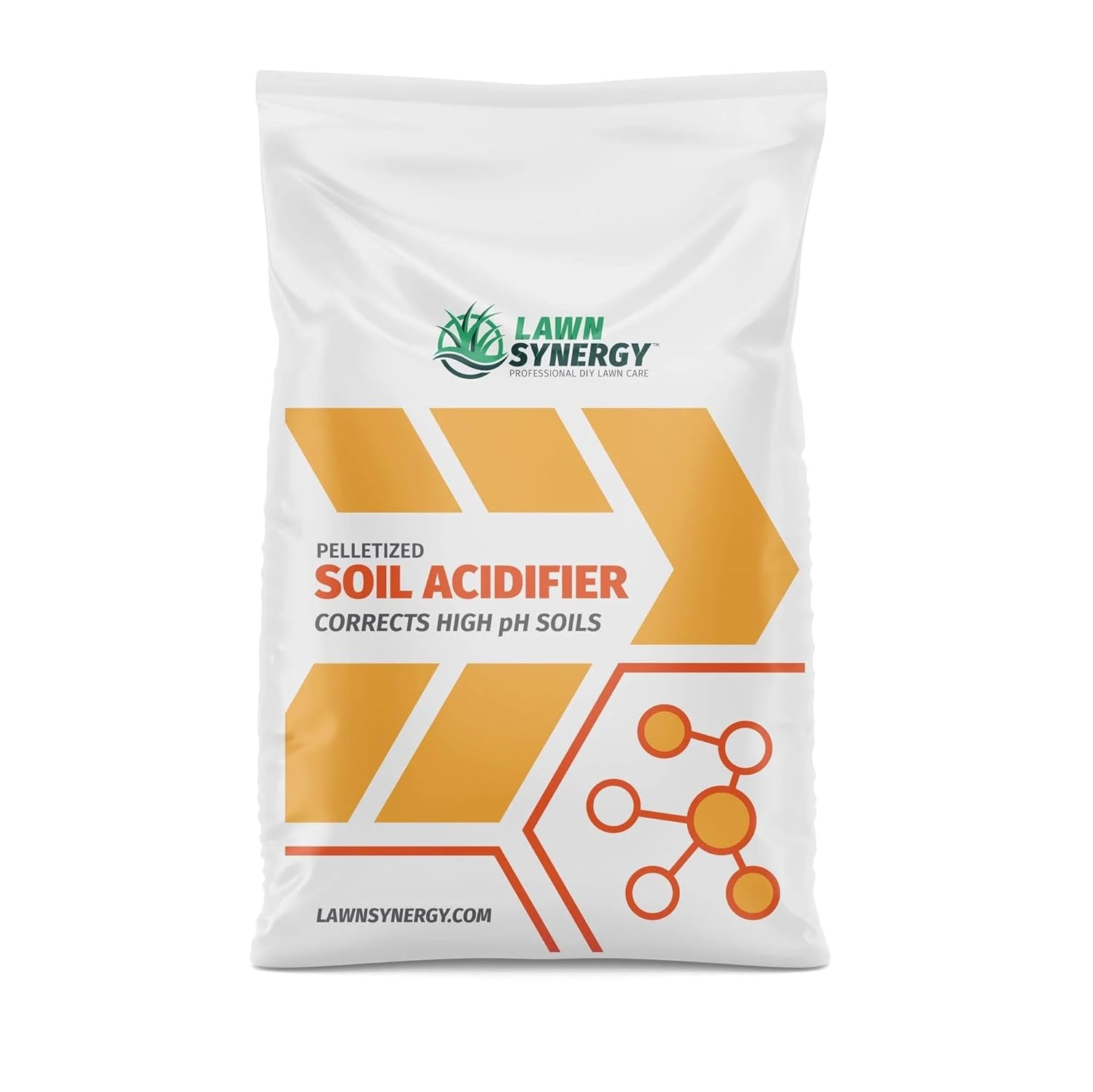
Lawn Synergy Soil Acidifier Elemental Sulfur (18 lb)
| Item Form | Granules |
|---|---|
| Coverage | 1800 sq.ft. |
| Target Species | lawns, hydrangeas, blueberry bushes |
| Ingredients | Elemental Sulfur 90% |
This 18 lb bag of Lawn Synergy Soil Acidifier is 90% elemental sulfur in granule form designed to lower soil pH for acid-loving plants. You spread it across the planting area or mix into the root zone to progressively acidify the soil; the label lists a coverage of about 1800 sq. ft. and the high sulfur content means it acts reliably where pH reduction is needed. For blueberry growers the product creates the more acidic conditions these shrubs prefer, which helps nutrient availability and fruiting when used as part of a regular soil management plan. Application is simple and lends itself to broadcast spreading or spot treatment around plants; because it works through soil microbiology it produces steady pH change rather than an instant chemical shock. Limitations to expect are the need for proper pH testing before and after application and slower action in cool or poorly drained soils where conversion to sulfate is reduced. This is a straightforward, no-frills amendment for gardeners who want a dependable way to lower pH over time.
Best for: Gardeners who prioritize consistent, dependable pH correction for acid-loving crops and who plan treatments based on soil tests and seasonal timing.
Less Ideal for: People who need an immediate pH change or a multi-nutrient fertilizer solution; those seeking quick foliar fixes or rapid short-term results should consider alternatives.
- High elemental sulfur concentration (90%) for effective pH reduction.
- Granular form that is easy to distribute for broadcast or spot applications.
- Covers a large area per bag (listed coverage about 1800 sq. ft.).
- Formulation suited specifically for acid-loving plants such as blueberries and hydrangeas.
- Acts through soil biology so pH change can be gradual and slower in cool or poorly drained soils.
- Requires prior and follow-up soil pH testing to avoid over-application.
Verdict: A reliable, high-concentration elemental sulfur amendment for gardeners who need steady, test-driven soil acidification for blueberries.
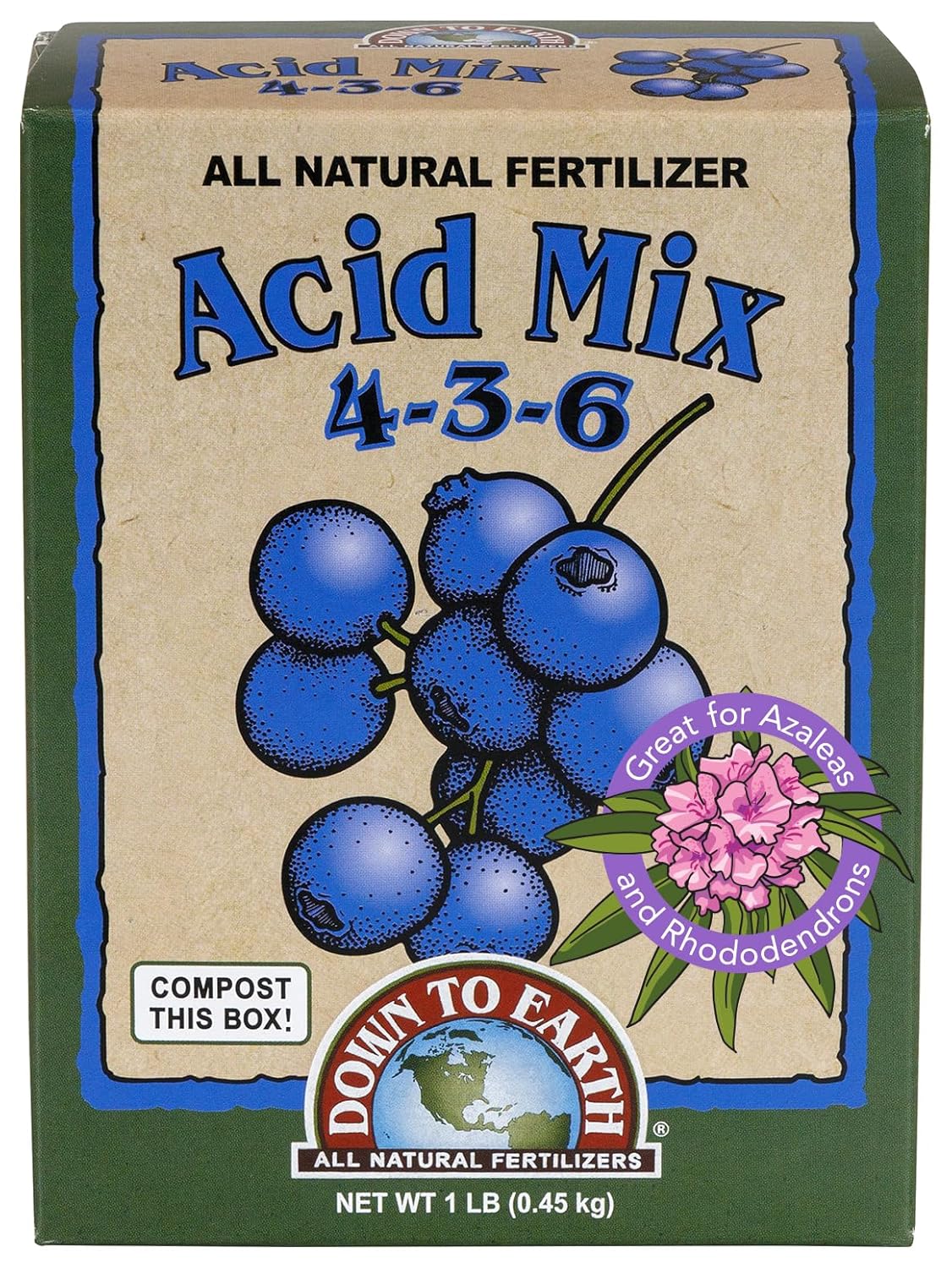
Down To Earth Acid Mix Organic Fertilizer 4-3-6, 1 lb
| Item Form | Granules |
|---|---|
| Specific Uses For Product | Acid-loving plants |
| Target Species | rhododendrons, azaleas, hydrangeas, evergreen trees and shrubs, blueberries, raspberries |
| Mixing Ratio | 4:3:6 |
Down To Earth Acid Mix is an organic granular fertilizer designed to feed acid-loving plants such as blueberries, azaleas, rhododendrons and other shrubs. You can broadcast it on the soil surface or mix it into planting holes, then water it in; the manufacturer recommends applications in early spring, at bloom and again in fall to support vegetative growth, flowering and root development. The 4-3-6 formula delivers a higher potassium ratio to help fruiting and overall plant vigor, while slow-release materials like feather meal, fish bone meal and kelp provide longer-lasting nutrition so you do not need to feed frequently. It is shelf stable and OMRI-listed ingredients support organic gardening practices. Limitations to note are the small 1 lb unit size, which means frequent repurchase for larger beds, and that this product is a fertilizer rather than a soil pH fixer so you will still need sulfur or lime to significantly change soil acidity. For gardeners feeding a few blueberry plants or refreshening planting holes, it is an effective, low-fuss organic option.
Best for: Gardeners with a few blueberry plants or small acid-loving beds who want an easy-to-use organic fertilizer and prefer low-maintenance, sustained feeding.
Less Ideal for: Large-scale blueberry plantings or growers who need to change soil pH significantly without using separate amendments.
- Formulated specifically for acid-loving plants including blueberries and azaleas
- Slow-release organic ingredients provide sustained feeding and reduce application frequency
- Can be applied on the soil surface or mixed into planting holes for flexible use
- OMRI-friendly ingredient sources support organic gardening practices
- Small 1 lb package limits coverage for larger beds or multiple bushes
Verdict: A compact, slow-release organic fertilizer tailored for small blueberry plantings and other acid-loving plants to provide steady, low-maintenance nutrition.
Espoma Organic Soil Acidifier, 30 lb

| Unit Count | 480 Ounce |
|---|---|
| Item Type Name | Espoma UL30 Organic Soil Acidifier Fertilizer, 30 lb |
| Included Components | Fertilizer |
| Manufacturer | Espoma |
Espoma Organic Soil Acidifier is a pelletized, elemental sulfur-based amendment designed to lower soil pH for acid-loving plants like hydrangeas and blueberries. It is applied by spreading around the root zone or across beds and watering in; the package gives straightforward application rates for new plants, established plants, containers, and per-100 sq. ft. for gradual pH changes. The product is approved for organic gardening and avoids aluminum sulfate, so it is a safer choice for repeated use to achieve bluer hydrangea blooms. Practical benefits include clear instructions for different plant situations, a large 30 lb bag that covers significant area, and pellet form that is easy to handle and spread. Important limitations are that pH changes are gradual and may require repeat applications every 60 days, and it can irritate skin and eyes so gloves and a mask are recommended. Expect to monitor soil pH and plant response rather than seeing instant color shifts.
Best for: Gardeners who want a reliable, organic method to lower soil pH for blue hydrangeas and other acid-loving plants and who are willing to test and follow repeated applications for gradual results.
Less Ideal for: People who need instant pH shifts or a one-time quick fix for blooms or those unwilling to use protective gear when handling fertilizers.
- Pelletized elemental sulfur formula specifically formulated to lower soil pH for acid-loving plants
- Clear application rates for pots, individual plants, and per 100 sq. ft. make dosing straightforward
- Approved for organic gardening so it fits organic production and home organic beds
- Large 30 lb bag covers a lot of ground for repeated seasonal applications
- pH adjustment is gradual and requires repeat applications over months to see full effect
- Can cause irritation on contact so protective gear is needed when handling
Verdict: Use this organic, pelletized sulfur amendment if you want a safe, repeatable way to lower soil pH and intensify blue hydrangea blooms over time.
Choosing the Right Fertilizer for Low pH Soil: Key Factors to Consider
Nutrient Ratios Suited to Acidic Conditions
In low pH soil some macronutrients can become less available while others may be present in excess. Look for fertilizers with nitrogen, phosphorus, and potassium ratios that match what test results indicate for your planting. An imbalance can worsen deficiency symptoms even if the total nutrient numbers look high.
Choosing a product with the right ratios reduces the need for frequent corrective applications. For acid-loving plants, formulations that emphasize readily available nitrogen and phosphorus without excessive potassium are often more appropriate because potassium can compete with other cations in acidic soils.
How the Fertilizer Affects Soil pH
Some fertilizers are acidifying while others have neutral or buffering effects. In already acidic soil, repeated use of acidifying feeds can drive pH lower and cause micronutrient toxicity or macronutrient lockup. Conversely, a fertilizer that contains buffering agents or that is less acidifying helps maintain a stable pH over time.
Understanding the short-term and cumulative effect of a fertilizer on soil reaction lets you plan liming or other amendments appropriately. If you want to avoid shifting pH, prioritize products that state minimal acidifying impact or that are designed for acid-tolerant plantings.
Micronutrient Form and Availability
Micronutrients like iron, manganese, zinc, and boron behave differently in acid soils. Some forms are more soluble and can become excessive, while others are insoluble and unavailable. A good fertilizer for low pH soil supplies micronutrients in forms that remain available without causing toxicity risks for acid-loving plants.
Pay attention to whether micronutrients are chelated or in soluble salts, and consider how that will interact with the existing soil chemistry. Products that include corrective micronutrients at measured rates help address common deficiencies observed in acidic soils.
Application Method and Timing
How you apply fertilizer matters in acidic soils. Granular, slow-release, and soluble fertilizers each behave differently: slow-release feeds reduce spikes in nutrient availability and pH changes, whereas soluble feeds give a rapid nutrient boost but may require more frequent pH management. Consider the planting type and access when choosing an application method.
Timing is also important. Applying fertilizer when soil temperatures and moisture favor root uptake improves efficiency and reduces the risk of nutrient losses. For container-grown acid-loving plants, more frequent but lighter applications are often better than heavy seasonal doses.
Compatibility with Soil Amendments and Lime
In many acid soil situations you will use lime, wood ash, or magnesium sources to raise pH. Choose fertilizers that are compatible with those amendments. Some fertilizers can react with lime or other materials, reducing effectiveness or creating insoluble compounds.
If you plan to lime, coordinate timing with fertilizer applications and select formulations that deliver nutrients in a form that remains plant-available after liming.
Suitability for Different Plant Types and Situations
Plants vary in their tolerance and preference for acidity. A fertilizer that works for acid-loving ornamentals may not suit vegetables or young transplants. Match the product to your planting type-shrubs, acidophilic perennials, fruiting plants, or container specimens.
Also consider garden scale and labor. Some products are better for raised beds and containers because they dissolve readily and are easy to measure. Others are formulated for in-ground beds where slower nutrient release is preferred.
Interpreting a Soil Test in Acidic Gardens
A recent soil test gives the baseline you need to choose a fertilizer for low pH soil. Focus on measured pH, available phosphorus, potassium, and levels of calcium and magnesium. Tests often flag micronutrient excesses or deficiencies common in acid soils, and that information guides both fertilizer choice and amendment timing.
After you have test results, decide whether to treat pH first or prioritize nutrient correction. For mildly acidic soils, nutrient adjustments alone may suffice. For strongly acidic beds consider addressing pH with lime or dolomite while selecting a fertilizer that will remain effective during the correction process.
- Use pH results to determine whether lime or a buffering fertilizer is needed
- Match P and K recommendations from the test to fertilizer ratios
- Factor in calcium and magnesium levels before adding supplements
Slow-Release Versus Quick-Release Options
Slow-release fertilizers supply nutrients steadily and reduce the chance of sudden pH shifts or nutrient spikes in root zones. They are often a safer choice in acidic soils where micronutrient sensitivity is a concern.
Quick-release or soluble fertilizers deliver rapid results and are useful for correcting acute deficiencies identified by plant symptoms or soil tests. Use them carefully and monitor pH if you rely on soluble feeds frequently.
- Slow-release reduces labor and pH fluctuation risk
- Soluble feeds are good for fast corrections but require monitoring
- Consider split applications to balance immediacy with stability
Feeding Schedules for Containers and Raised Beds
Containers and raised beds often acidify faster than in-ground soil because of limited buffering capacity. They also leach nutrients quickly, so choose a fertilizer regimen that accounts for frequent watering. Lighter, more frequent applications usually work better in containers to keep nutrient levels steady without large pH swings.
For raised beds, consider combining a base slow-release application with periodic soluble feeds during the growing season. This hybrid approach balances convenience with the ability to respond to observed deficiencies.
- Containers: lighter, frequent applications
- Raised beds: base slow-release plus occasional soluble boost
- Monitor leachate and adjust frequency after heavy rains
Managing Micronutrients Without Causing Toxicity
In acidic soils, iron and manganese can become overly available and cause toxicity, while elements like molybdenum may be deficient. Choose fertilizers that provide micronutrients in measured amounts and in chemical forms appropriate for acid conditions. Avoid blanket heavy dosing of micronutrients without a documented deficiency.
Foliar applications can correct some micronutrient shortages quickly without dramatically changing soil chemistry. For persistent or borderline deficiencies, coordinate soil amendments and fertilizer choices to address long-term availability rather than relying solely on repeated foliar sprays.
- Test before adding micronutrients
- Use foliar feeds for quick correction when appropriate
- Avoid repeated heavy micronutrient dosing that risks toxicity
Seasonal Considerations and Crop Stage
Plants have different nutrient needs through the season. Young transplants need steady, moderate nutrient availability, while flowering and fruiting stages demand higher phosphorus and potassium. Tailor fertilizer selection and timing to growth stages to avoid overfeeding or pH disturbances during sensitive periods.
Apply heavier amendments or lime during dormant periods when root uptake is low to allow soil chemistry to stabilize before the next growing season.
- Adjust feeding to developmental stage of plants
- Make major pH corrections in off-season when possible
- Reassess soil chemistry annually or after major amendments
How We Chose the Best Fertilizer for Low pH Soil
We focused on fertilizers that specifically address the challenges of acidic soils and acid-preferring plants. Selection prioritized nutrient formulations with balanced ratios of nitrogen, phosphorus, and potassium tailored for low pH availability, plus micronutrient profiles that account for elements commonly limited in acidic conditions such as calcium, magnesium, and molybdenum. We also evaluated how each option interacts with soil chemistry, looking for products that avoid rapid pH swings or that include amendments to buffer acidity when appropriate. Practical application factors informed our choices: ease of application for beds and containers, suitability for seasonal feeding schedules, and whether the product works with common soil test recommendations. We excluded products that require specialized equipment or those designed only for hydroponics. The final shortlist favors versatile fertilizers that help correct nutrient imbalances in low pH soils without introducing new management problems.
FAQ
Can I use a regular garden fertilizer in low pH soil?
Often you can, but regular formulas may not account for nutrient availability issues in acidic soils. A standard fertilizer can supply nutrients, but you should match ratios to soil test recommendations and monitor for signs of deficiency or toxicity.
How often should I test soil pH when using fertilizers?
Testing once a year is common, but in actively managed beds or containers test twice a year if you are making amendments or seeing plant problems. More frequent checks help you catch trends before they harm plants.
Will fertilizer change the soil pH quickly?
Most fertilizers produce gradual pH effects with repeated use rather than immediate large shifts. Some soluble nitrogen sources are more acidifying, so cumulative application matters. Major pH changes usually stem from deliberate amendments like lime or sulfur rather than routine feeding.
Should I add lime and a fertilizer at the same time?
It depends. Lime application can alter nutrient availability, so coordinating timing helps. Applying lime well before major fertilizer inputs gives soil chemistry time to adjust. For container-grown plants, lime is used sparingly and with careful monitoring.
Are foliar feeds better for correcting micronutrients in acidic soils?
Foliar applications can quickly address specific micronutrient deficiencies without major soil chemistry changes. They are useful for short-term correction, but long-term balance is best achieved by amending soil and selecting compatible fertilizers.
How do I avoid micronutrient toxicity in acid soils?
Avoid blanket micronutrient applications and follow soil test guidance. Use measured rates, prefer products formulated for acid conditions, and monitor plant responses. If toxicity signs appear, stop supplementation and reassess soil chemistry.
Final Verdict
Choosing the right fertilizer for low pH soil means balancing nutrient supply with the realities of acidic chemistry. Prioritize products that match soil test recommendations, provide appropriate micronutrient forms, and have predictable effects on soil reaction. Consider application method, timing, and whether a slow-release or soluble approach fits your planting style. Focus on stabilizing nutrient availability rather than chasing quick fixes. By coordinating fertilizer choice with periodic soil testing and measured amendments, you can support healthy, productive plants that thrive in acidic conditions.
