

Note: This article contains affiliate links. If you click on these links and make a purchase, I may earn a small commission at no extra cost to you. This helps support my research and content. Read my full affiliate disclosure here.
Mandevilla are heavy bloomers that reward consistent feeding with longer flowering periods and stronger, more vigorous vines. Choosing the right fertilizer for Mandevilla matters because the wrong nutrient balance or release rate can reduce blooms, cause leggy growth, or stress the plant during hot weather. This guide covers six shortlisted fertilizers suited for mandevilla growing situations and container culture. We evaluate each option on nutrient formulation, ease of application, and how well it supports repeated flowering. Read on to find the feeding approach that fits your potting mix, watering habit, and seasonal routine.
Top Picks at a Glance
| Best Quality Built to a higher standard if you want something more solid | Miracle-Gro Water Soluble Bloom Booster Flower Food, 10-52-10, 1 lb |  |
| Best Value The sweet spot between price and what you get | EarthPods Tropical Flower Fertilizer Spikes, 100 Count |  |
| Best Budget The cheapest option that still gets the job done reliably | TATAWORM Organic Bougainvillea Seaweed Fertilizer (Powder) |  |
| Highest Rated A top-rated pick with lots of positive feedback | Cz Garden BloomBiscus Hibiscus Plant Food 10-4-12 (4 lb) |  |
| Most Popular A crowd favorite that many people choose with confidence | Nelson NutriStar Bougainvillea & Flowering Vine Granular Fertilizer 17-7-10 (2 lb) |  |
| Best Seller A high-volume bestseller chosen again and again | Elevanta Bougainvillea Granular Plant Food (2% Iron) |  |
Miracle-Gro Water Soluble Bloom Booster Flower Food, 10-52-10, 1 lb

| Item Form | Liquid |
|---|---|
| Application Method | Water Soluble |
| Coverage | 500 square feet |
| Target Species | all blooming plants |
| Mixing Ratio | 1 tablespoon/gallon (1.5 tsp/gallon for indoor plants) |
This Miracle-Gro bloom booster is a water-soluble fertilizer with a 10-52-10 formula designed to kick-start and sustain heavy flowering. You mix the powder into water and apply every 7 to 14 days during bud set and bloom, using a watering can or the Miracle-Gro garden feeder to cover roughly 500 square feet per packet. The high middle number indicates a phosphorus-focused blend to encourage bud formation and more vivid blooms, and the product feeds both through the roots and leaves for faster uptake. In practice it is easy to use, dissolves quickly, and is well suited to container and in-ground flowering plants that need frequent feeding during the bloom period. Limitations are that it is a bloom-focused formula rather than an all-purpose balanced fertilizer, so it is not intended for general vegetative growth or long-term feeding without alternating products, and frequent applications are required to maintain peak performance.
Best for: Gardeners who prioritize maximizing flower production on ornamental bloomers and want a product that delivers visible results during the flowering cycle.
Less Ideal for: Growers seeking a single, all-purpose feed for foliage, root development, or long-term maintenance should consider a balanced fertilizer or a feeding program that alternates products.
- High phosphorus formulation specifically promotes bud set and larger blooms
- Water-soluble for fast uptake through roots and leaves
- Simple mixing ratio and suitable for use in garden feeders or watering cans
- Works for both containers and in-ground flowering plants
- Focused on flowering so it does not support general vegetative development as a balanced all-purpose feed
- Requires repeated applications every 7 to 14 days during the bloom period
Verdict: Use this high-phosphorus, water-soluble booster when you want to drive bigger, more abundant blooms on flowering plants like mandevilla.
EarthPods Tropical Flower Fertilizer Spikes, 100 Count

| Brand | EarthPods |
|---|---|
| Item Form | Capsules |
| Specific Uses For Product | Bougainvillea plant food, Hibiscus fertilizer, Plumeria fertilizer, Tropical flower fertilizer |
| Target Species | Tropical flowers | Hibiscus | Bougainvillea | Plumeria | Anthurium | Bird of paradise |
| Unit Count | 100 Count |
EarthPods Tropical Flower Fertilizer Spikes are pre-measured, push-in capsules that release nutrients slowly over 14 to 21 days to support blooms, foliage color and root health on tropical flowering plants. You insert the recommended number of capsules into moist soil near the stem and water; one to two per small pot, two to four for medium containers and four to eight for large pots or in-ground shrubs. The product is organic, compact and eliminates liquid measuring or messy spills, making regular feeding straightforward for container collections or patio plantings. Because they are formulated specifically for tropical flowers, they simplify feeding mandevilla and similar species during active growth and bloom cycles. Limitations are that feedings are on a fixed slow-release schedule, so rapid correction of nutrient deficiencies is not possible and you must follow the spacing and frequency guidance to avoid overfeeding.
Best for: Gardeners who want a simple, low-fuss feeding routine for mandevilla and other tropical flowering plants and who prioritize tidy, regular maintenance over custom liquid feeding schedules.
Less Ideal for: Growers who need fast, adjustable nutrient dosing for corrective treatments or those who prefer to tailor fertilization precisely with liquid feeds.
- Pre-measured capsules provide consistent, mess-free feeding without liquid mixing
- Slow-release formula feeds plants for 14 to 21 days, reducing how often you need to apply
- Organic ingredients and added trace minerals suitable for flowering tropical species
- Compact form works well for potted mandevilla and patio containers
- Cannot quickly correct acute nutrient deficiencies because release is gradual
- Requires following specific capsule counts and timing for different pot sizes
Verdict: If you want a tidy, low-effort organic feed to keep mandevilla blooming without mixing liquids, these pre-measured slow-release capsules are an efficient choice.
TATAWORM Organic Bougainvillea Seaweed Fertilizer (Powder)

| Item Form | Powder |
|---|---|
| Application Method | soil drench |
| Target Species | bougainvillea |
| Mixing Ratio | 1/4 tsp per gallon of water |
| Formula | 0-0-18 |
This small, concentrated seaweed powder is designed to feed bougainvillea with a high-potassium formula that supports stronger roots, improved nutrient uptake, and more abundant blooms. You mix a measured 1/4 teaspoon per gallon (label shows mixing guidance) into water and apply as a soil drench every 2 to 3 weeks during active growth, which makes it easy to use on potted specimens or plants in the landscape. The powder dissolves readily and carries a mild marine scent but no harsh chemicals since it is OMRI listed and made from Ascophyllum nodosum harvested in Maine. Because it is concentrated and makes up to 24 gallons, a single 2 ounce unit stretches a long way for routine feeding, which helps gardeners watching costs. Limitations: results are gradual and depend on overall care, and you must avoid overapplication or use during frost; the product is focused on bloom support rather than fast-release macronutrient spikes, so expect steady improvement rather than instant green-up.
Best for: Home gardeners who want an organic, economical bloom booster for vining tropicals and container mandevilla-like plants and prefer simple, infrequent feedings.
Less Ideal for: Gardeners who need immediate, high-nitrogen greening or who manage large beds requiring high-volume fertilizer purchases should consider broader-spectrum or bulk fertilizers instead.
- Concentrated formula that makes up to 24 gallons so each purchase covers many feedings
- Seaweed-based OMRI-listed formula suitable for organic routines
- High potassium focus to encourage more blooms and richer bract color
- Easy to mix water-soluble powder with included scoop for simple soil drench application
- Small container size may require careful measuring to avoid running out on larger plant collections
- Not formulated as a quick nitrogen booster so leaf greening is gradual
Verdict: If you want an affordable, organic seaweed bloom booster that stretches across many feedings, this concentrated powder is a practical pick.
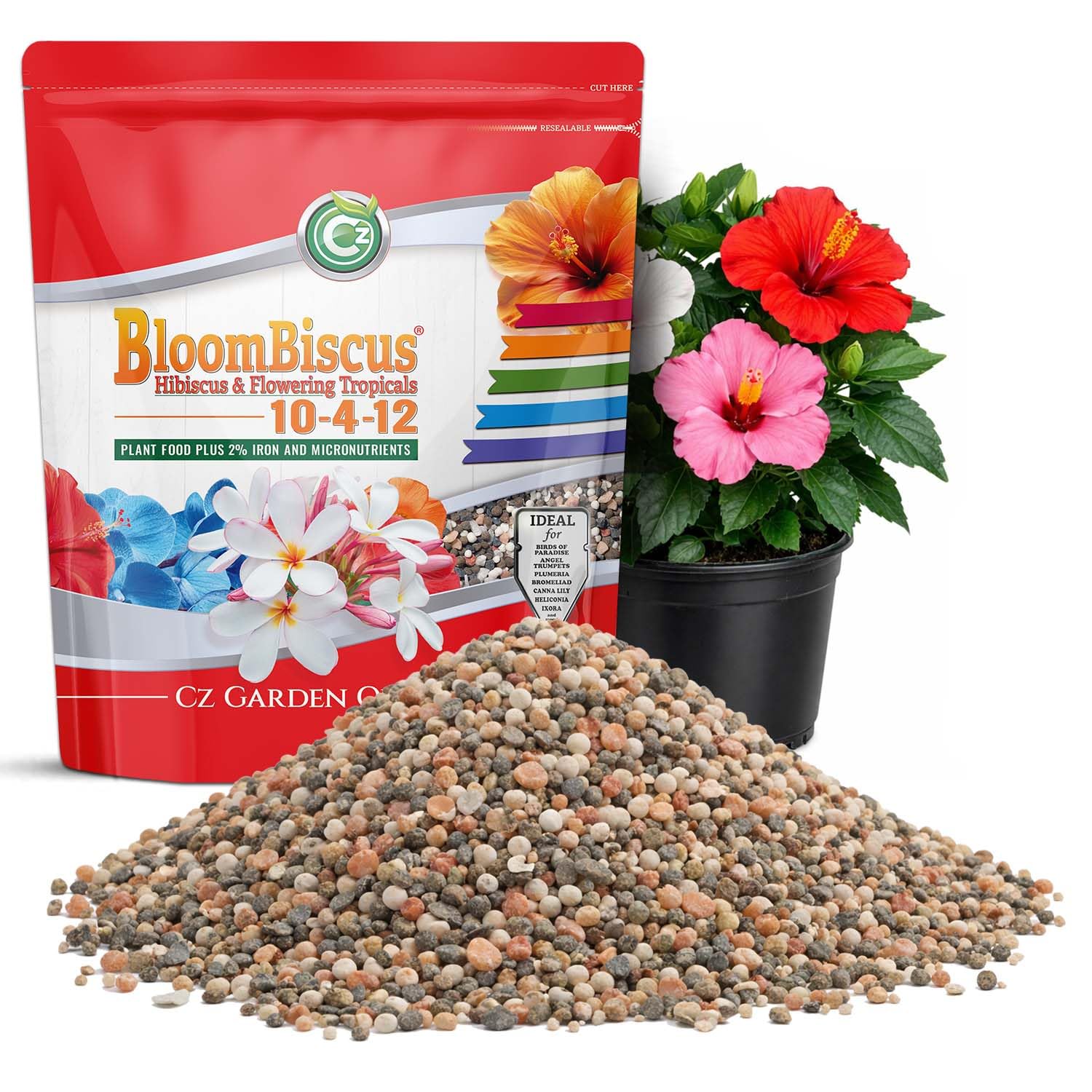
Cz Garden BloomBiscus Hibiscus Plant Food 10-4-12 (4 lb)
| Item Form | Granules |
|---|---|
| Specific Uses For Product | Plant Growth, Root Development, Seed Development, Soil Conditioning |
| Target Species | Flowering Tropicals |
| Mixing Ratio | 10-4-12 |
The Cz Garden BloomBiscus granular fertilizer is a ready-to-use 10-4-12 formula designed to promote vigorous flowering and healthy growth in hibiscus and similar tropical ornamentals. Users typically broadcast or side-dress the granules around the root zone or mix to package directions to feed potted plants and garden beds. The 2% iron and included micronutrients help correct mild iron deficiencies that can limit bloom color and foliage health, while the higher phosphorus and potassium balance supports bud formation and flower retention. The resealable pouch makes portioning and storage straightforward for seasonal applications. Because it is a conventional granular mix, results show up over several weeks rather than instantly, and follow-up feedings during the growing season are recommended. This product is focused on bloom and overall plant vigor rather than rapid foliar greening, so it pairs well with routine soil care and proper watering. Expect steady, reliable performance when used as directed, though those seeking an organic-labeled or slow-release granular option should compare alternatives.
Best for: Gardeners who prioritize steady, predictable fertilizer results for flowering tropicals and want a straightforward product that is easy to apply and store.
Less Ideal for: Growers seeking certified organic fertilizers or those who need instant foliar feeding for emergency nutrient correction should look elsewhere.
- Balanced 10-4-12 NPK tailored for flowering tropicals to encourage blooms and root development
- Includes 2% iron and micronutrients to address common nutrient deficiencies in tropicals
- Granular form allows easy application as a top-dress or soil amendment
- Resealable heavy-duty pouch simplifies storage and measuring between feedings
- Not labeled as organic which may concern organic gardeners
- Granular formula produces gradual effects rather than an immediate foliar boost
Verdict: A reliable, easy-to-use 10-4-12 granular fertilizer that consistently supports blooms and vigor in hibiscus and other flowering tropicals.
Nelson NutriStar Bougainvillea & Flowering Vine Granular Fertilizer 17-7-10 (2 lb)

| Item Form | Granules |
|---|---|
| Application Method | Granular |
| Coverage | Medium |
| Mixing Ratio | 17:7:10 |
| Target Species | bougainvillea vines and flowering |
This granular Nelson NutriStar formula provides targeted nutrition for flowering vines using a 17-7-10 NPK blend with added sulfur and gypsum to support bloom production and soil structure. It is applied dry on top of the soil, making it simple to use for hanging baskets, containers, and in-ground vines both indoors and outdoors. The product emphasizes slow‑release nitrogen from four sources so you can feed every 14 days until blooming then switch to monthly applications, which reduces maintenance compared with frequent liquid feeds. Practical benefits include a nutrient-dense mix meant to encourage larger, more frequent blooms and improved root zone conditions thanks to the sulfur and gypsum. Limitations are that the package is small at 2 pounds for larger plantings and the granular form requires surface application and subsequent watering to move nutrients into the root zone, so it is not an instant foliar feed.
Best for: A practical gardener who wants a low-maintenance, vine-focused fertilizer that supports bigger blooms without frequent liquid feeding and values proven product performance.
Less Ideal for: Large-scale plantings or growers who need rapid foliar correction or instant results should choose bulk fertilizers or a liquid feed instead.
- Formulated 17-7-10 NPK tailored for flowering vines to boost bloom size and frequency
- Slow‑release granular nitrogen for less frequent feeding once established
- Includes sulfur and gypsum to help lower pH locally and improve soil structure
- Easy top-dress application suitable for hanging baskets, pots and ground plantings
- Small 2 lb package may not be cost-effective for multiple large vines or beds
- Granular slow‑release action requires watering and time before nutrients are available to roots
Verdict: If you want an easy, low-maintenance granular feed that reliably increases blooms on mandevilla and similar flowering vines, this 17-7-10 formula is a practical choice.
Elevanta Bougainvillea Granular Plant Food (2% Iron)

| Item Form | Granules |
|---|---|
| Specific Uses For Product | Plant Growth, Root Development, Seed Development, Soil Conditioning |
| Target Species | Flowers |
| Unit Count | 1 Ounce |
This granular plant food is built specifically for bougainvillea and similar flowering vines and is intended for regular, easy feeding of garden and container plants. It supplies a balanced NPK blend with added micronutrients and 2% iron, which helps correct mild iron deficiency and promotes greener foliage and stronger flowering. The granules require no mixing: you measure and apply around the root zone according to directions, so routine feeding is quick and low-effort. The product is packaged in a resealable pouch for tidy storage, and the formulation is made to support root development and overall plant vigor as well as bloom production. Limitations to note are that the listing does not show specific NPK numbers or feeding intervals on the product page here, so careful attention to label instructions is required before use, and heavier-feeding situations may require supplemental applications or a different formulation targeted to that need.
Best for: Buyers who want a simple, low-effort fertilizer tailored to flowering vines and who prioritize consistent, risk-averse feeding routines for healthy foliage and blooms.
Less Ideal for: Gardeners seeking a fertilizer with clearly posted NPK ratios on the product page or those needing a high-strength corrective feed for severely nutrient-deficient plants.
- Formulated specifically for bougainvillea and flowering vines
- Includes 2% iron and micronutrients to support foliage color and bloom health
- Granular form requires no mixing and is easy to apply to pots or garden beds
- Resealable pouch for convenient storage and repeated use
- Product listing does not display explicit NPK ratio or detailed feeding schedule
- May not be sufficient alone for heavy-feeding or corrective fertilizer needs
Verdict: A no-mess granular formula made for bougainvillea and other flowering vines that simplifies routine feeding and supports greener foliage and better blooms.
Choosing the Right Fertilizer for Mandevilla: Key Factors to Consider
Nutrient Ratio and Blooming
Mandevilla respond best to a fertilizer that encourages flower production without driving excessive leafy growth. A balanced formula with a slightly elevated middle number for phosphorus can support bud set and sustained blooms. Overly high nitrogen promotes soft, leafy growth at the expense of flowers, while too little phosphorus can limit bud development.
When evaluating labels, look for clear N-P-K percentages and follow recommended rates closely. For continuous bloom, gardeners often alternate a bloom-focused feed with a general balanced feed to maintain plant vigor while encouraging flowering.
Release Type and Feeding Frequency
How nutrients are delivered matters for mandevilla, especially in containers where salts can accumulate quickly. Fast-release liquid feeds give an immediate nutrient boost and are easy to dose but require more frequent applications. Slow-release granules reduce application frequency but may not supply timely phosphorus peaks needed when buds form.
Consider your watering habits and how often you can realistically feed. If you water daily or travel frequently, a reliable slow-release option can reduce maintenance. If you want quick bloom response at the start of the season or after pruning, a soluble liquid or water-soluble powder can be effective.
Micronutrients and Leaf Health
Beyond the primary macronutrients, trace elements such as iron, magnesium, and manganese help keep mandevilla leaves green and free of chlorosis. Deficiencies can show up as pale leaves or interveinal yellowing and can indirectly reduce flowering by weakening the plant.
Check fertilizer labels for included micronutrients or consider supplementing with targeted chelated elements if your water or potting medium is prone to deficiencies. Balanced micronutrient support helps maintain plant resilience through heat and variable water regimes.
Salt Load and Container Safety
Containers concentrate soluble salts and can stress mandevilla roots if fertilizers are overapplied. High-salt formulas or frequent heavy feeding can lead to leaf burn, tip dieback, or poor water uptake. Gardeners should factor in pot size, drainage, and the potting mix when choosing a fertilizer.
Prefer lower-salt soluble feeds for small pots and ensure regular flushing with clean water during the season. For larger tubs with good drainage, moderate salt-index products are usually tolerated better, but monitoring foliage and performing occasional leaching still helps prevent buildup.
Application Method and Convenience
How you apply fertilizer affects whether you will use it consistently. Water-soluble concentrates, ready-to-use sprays, granular slow-release, and spikes each offer different convenience levels. Concentrates require measuring and mixing, spikes are simple but can be uneven, and granules need incorporation into the potting mix or surface application.
Choose a method that matches your comfort and schedule. Busy gardeners may prefer a dependable slow-release or an easy-to-apply liquid concentrate with clear dosing instructions to avoid mistakes that can harm mandevilla.
Timing and Seasonal Feeding Strategy
Mandevilla have active growth and bloom cycles tied to temperature and day length. Feeding schedules should align with active growth in spring through late summer. Heavy feeding during dormancy or cool weather produces little benefit and can injure roots.
Plan to feed more frequently during peak bloom and taper back as growth slows. Consider pairing a bloom-promoting feed during bud formation with lighter maintenance feeds afterward. Also, adapt rates for plants moved indoors or into protected areas where light and water regimes change.
Feeding Mandevilla in Containers Versus Garden Beds
Container mandevilla have different nutrient dynamics than those planted in the ground. Pots dry and warm faster, causing nutrients to be used or leached more quickly, so they often need more frequent feeding. Choose a formula and schedule that compensate for quicker nutrient turnover in containers.
In garden beds with richer soil and more buffering, mandevilla can rely on existing organic matter and may need less frequent supplemental feeding. Slow-release options or lighter liquid feeds applied during the active season usually keep bed-grown plants healthy without overfertilizing.
- Containers: prefer gentler, lower-salt soluble feeds or controlled-release granules.
- Beds: consider feeding less often and using organic amendments to build soil fertility.
- Always check drainage to avoid salt buildup in pots and beds.
Organic Versus Synthetic Fertilizers
Organic fertilizers release nutrients as microbes break down material, offering a slow and steady supply and improving soil structure. They are gentle and reduce the risk of sudden salt buildup in pots but may not provide quick phosphorus boosts when you need immediate bloom response.
Synthetic fertilizers deliver predictable nutrient concentrations and fast results. They are useful for targeted bloom encouragement but require careful dosing and attention to salt accumulation in containers. Many gardeners use a hybrid approach, combining organic soil building with occasional synthetic bloom feeds.
- Organic feeds improve long-term soil health.
- Synthetic feeds offer quick, measurable nutrient delivery.
- Blend approaches for both immediate bloom support and soil building.
Adjusting Feed Strength Based on Plant Response
Start at or below the label rate and watch mandevilla for signs of over- or underfeeding. Pale leaves, reduced bloom set, or stunted growth suggest the need to adjust either concentration or frequency. Leaf tip browning and slowed new growth can indicate salt stress from overfeeding.
Record feeding dates and concentrations so you can correlate changes in foliage and flowering to your routine. Small adjustments over two to three weeks give a clearer signal than abrupt changes that can confuse plant responses.
- Reduce concentration if you see leaf scorch or brown tips.
- Increase frequency slightly rather than concentration for steady support.
- Flush containers with water if salts build up or plants show stress.
Feeding Schedule for Peak Bloom
To maximize flowering, time higher-phosphorus or bloom-focused feeds just before and during bud set. Continue lighter maintenance doses between peak cycles to sustain plant energy. Frequent, low-dose liquid feeding often produces more consistent blooms than infrequent heavy applications.
Adjust schedules for local climate and light. In cooler or lower-light areas, slow the feeding rate and focus on maintaining plant health rather than forcing heavy bloom that the environment cannot support.
- Apply bloom-focused feed at first bud formation and every 2 to 4 weeks as needed.
- Use maintenance doses between peak applications to preserve vigor.
- Reduce feeding as temperatures cool or growth slows.
Common Nutrient Deficiencies and How to Spot Them
Iron and magnesium deficiencies show up as yellowing between veins while veins stay green. Nitrogen shortage causes overall pale foliage and reduced growth, while inadequate phosphorus can reduce flower production and cause poor bud development. Monitoring leaf color and new growth gives early clues to needed adjustments.
Address mild deficiencies with targeted micronutrient sprays or foliar feeds for faster results. For persistent issues, test your potting mix or soil to rule out pH problems that lock out nutrients.
- Iron: interveinal chlorosis on new growth.
- Magnesium: yellowing of older leaves with green veins.
- Nitrogen: uniformly pale leaves and reduced vigor.
How We Chose the Best Fertilizer for Mandevilla
We selected products that suit mandevilla's needs as flowering tropical vines, focusing on nutrient ratios and practical use in containers and garden beds. Our evaluation emphasized specific, measurable criteria: nitrogen-phosphorus-potassium balance and bloom support; nutrient release method and consistency; micronutrient content relevant to leaf health; and ease of application for common gardener routines. We prioritized formulas designed for repeated flowering rather than general all-purpose feeds. Filters excluded fertilizers formulated solely for lawns, acid-loving shrubs, or slow-release turf blends that do not deliver regular bloom-triggering phosphorus and potassium. We also excluded products with unclear label information about nutrient percentages or application rates. Recommendations favored options with clear instructions and predictable feeding schedules that match mandevilla's typical growing cycle.
FAQ
How often should I feed mandevilla to encourage continuous blooms?
Frequency depends on the fertilizer type. Water-soluble feeds are typically applied every 1 to 2 weeks during the growing season, while slow-release granules may only need reapplication every 8 to 12 weeks. Watch plant response and adjust frequency rather than exceeding label rates.
Can I use a general houseplant fertilizer on mandevilla?
You can use a general houseplant feed if it provides balanced nutrients, but mandevilla often benefit from a bloom-focused ratio at key times. If using a general fertilizer, consider supplementing with a bloom feed when buds form.
Will overfertilizing mandevilla increase flowering?
Overfertilizing usually does not increase flowering and can harm roots or cause salt buildup in containers. Excess nitrogen can reduce flower production by encouraging leafy growth. Follow recommended rates and reduce concentration if you see foliage burn or poor bud set.
Should I change my fertilizing routine when moving mandevilla indoors?
Yes. Plants indoors receive less light and slower growth, so reduce feeding frequency and strength. Use lighter maintenance feeds and monitor for signs of stress, increasing only if plants show healthy new growth and buds.
Is foliar feeding effective for correcting micronutrient issues quickly?
Foliar feeding can deliver micronutrients faster than soil amendments and is often effective for correcting visible deficiencies. Use labeled foliar products at recommended rates and apply during cooler parts of the day to reduce leaf burn risk.
Final Verdict
Pick a fertilizer that matches how and where you grow mandevilla. Prioritize a nutrient balance that supports blooming without excess nitrogen, a release method that fits your watering and maintenance habits, and adequate micronutrient support to keep foliage healthy. Accept the tradeoff between fast-acting synthetic feeds for immediate bloom response and slower organic options that build soil health. Match feeding frequency and strength to container size and light conditions, and adjust based on plant response to choose confidently for sustained, abundant flowering.
