

Note: This article contains affiliate links. If you click on these links and make a purchase, I may earn a small commission at no extra cost to you. This helps support my research and content. Read my full affiliate disclosure here.
Growing microgreens is fast, space-efficient, and rewarding, but the wrong fertilizer can stall growth or cause bitter, salt-damaged leaves. You need a feed that matches quick germination, tender shoots, and short grow cycles. This guide covers our top shortlisted fertilizers for microgreens and explains the practical reasons each type works in a small-scale tray setup. We evaluate products on nutrient balance, salt concentration, application ease, and suitability for common microgreen substrates. Read on to find the right feeding approach for your trays and harvest rhythm.
Top Picks at a Glance
| Best Overall The best all-around choice for most situations | FoxFarm Grow Big Hydroponic Liquid Plant Food, 1 Pint (3-2-6) |  |
| Best Quality Built to a higher standard if you want something more solid | Greenway Biotech Lettuce Fertilizer 8-15-36 Powder (1 lb) |  |
| Best Value The sweet spot between price and what you get | BLESS YOUR SOIL Big Green Leaves Indoor Plant Food, 1 lb Concentrated Powder |  |
| Highest Rated A top-rated pick with lots of positive feedback | TPS Nutrients Microgreens Liquid Fertilizer, 8 fl oz |  |
| Most Popular A crowd favorite that many people choose with confidence | OceanSolution 2-0-3 All-Natural Liquid Concentrated Fertilizer (32 oz) |  |
| Best Seller A high-volume bestseller chosen again and again | TPS Nutrients Liquid Plant Food for AeroGarden and Hydroponics, 8 oz |  |
FoxFarm Grow Big Hydroponic Liquid Plant Food, 1 Pint (3-2-6)

| Item Form | Liquid |
|---|---|
| Specific Uses For Product | Hydroponic |
| Liquid Volume | 16 fluid ounces |
| Mixing Ratio | 2-3 teaspoons per gallon |
FoxFarm Grow Big Hydroponic is a liquid concentrate designed to feed plants during the vegetative phase in hydroponic setups. It is typically mixed at 2 to 3 teaspoons per gallon and used early in a feeding cycle to promote leaf and stem development thanks to its 3-2-6 NPK ratio and added micronutrients. The formula includes earthworm castings and soluble micronutrients for quick uptake, which is useful when you need noticeably faster green growth in trays or reservoirs. Practical benefits include easy dosing for small systems, compatibility with common hydroponic routines, and guidance to switch to bloom formulas once plants begin flowering. Important limitations are that it is focused on vegetative growth rather than complete lifecycle feeding and requires pH control and monitoring of conductivity or ppm for best results, so it is not a set-and-forget feed for beginners who do not test water parameters.
Best for: Gardeners running small hydroponic systems who want a reliable, easy-to-dose nutrient to boost early leaf and stem growth and who are comfortable monitoring water chemistry.
Less Ideal for: People seeking a single all-in-one nutrient for both vegetative and flowering stages or growers who prefer passive, no-testing feeding methods.
- Nutrient mix (3-2-6) tailored for vigorous vegetative growth
- Liquid concentrate mixes at low volumes suitable for small hydroponic systems
- Contains micronutrients and earthworm castings to support quick uptake
- Clear dosing guidance (2–3 teaspoons per gallon) for routine feeding
- Formulated for vegetative stage only and not optimized for flowering or finishing
- Requires pH and conductivity/ppm monitoring to avoid nutrient imbalances
Verdict: Choose this if you need a concentrated, fast-absorbing vegetative feed for small hydroponic setups that delivers reliable green growth when water chemistry is monitored.
Greenway Biotech Lettuce Fertilizer 8-15-36 Powder (1 lb)

| NPK | 8-15-36 |
|---|---|
| Item Form | Powder |
| Specific Uses For Product | Hydroponics |
| Target Species | Leafy greens |
| Mixing Ratio | 1 tablespoon per gallon |
This powdered 8-15-36 formula is designed to supply the nutrient balance leafy greens need, with moderate nitrogen for steady leaf growth and a high potassium level to improve texture and shelf life. It dissolves completely in room-temperature water, so it is easy to mix for foliar sprays, soil drenches, or hydroponic reservoirs and is labeled safe for NFT, DWC, aeroponics, ebb-and-flow and drip systems. The blend includes EDTA-chelated iron, manganese, zinc and copper plus boron and molybdenum, which helps micronutrients stay available across a wide pH range common in home and commercial systems. Directions and mixing ratios are provided, making routine feedings straightforward for backyard beds or small-scale hydroponics. Expect good results on spinach when applied as directed, though users managing calcium-related tip burn should still supplement calcium-magnesium separately. The product is tested for heavy metals and comes from a company with an established fertilizer line, but it is a single-salt powdered concentrate so careful measuring is required to avoid overfeeding sensitive plants.
Best for: Gardeners who want one reliable, water-soluble fertilizer to feed spinach and other leafy greens across both soil beds and small hydroponic setups, prioritizing consistent texture and nutrient availability.
Less Ideal for: Growers seeking an all-in-one cal-mag solution or those who prefer slow-release granular fertilizers for low-maintenance beds should consider other products.
- High potassium content to improve leaf texture and postharvest shelf life.
- EDTA-chelated micronutrients maintain availability across a wide pH range.
- Fully water-soluble powder suitable for foliar, soil drench, and common hydroponic systems.
- Clear mixing ratios provided for both soil and hydroponic applications.
- Does not include calcium-magnesium so additional supplementation may be needed to prevent tip burn.
- Single-concentrate powder requires accurate measuring to avoid nutrient imbalances.
Verdict: If you need a soluble, pH-tolerant feed that improves texture and supports vigorous spinach growth, this 8-15-36 powder is a dependable choice.
BLESS YOUR SOIL Big Green Leaves Indoor Plant Food, 1 lb Concentrated Powder

| NPK Ratio | 12-4-8 |
|---|---|
| Form | Powder, water-soluble concentrate |
| Yield | Makes ~90 gallons of solution |
| Application Methods | Soil drench, foliar feed, hydroponic/LECA compatible |
| Includes | Pre-measured teaspoon scoop |
Big Green Leaves is a dry, water-soluble houseplant fertilizer designed to drive leafy growth in tropical indoor plants. It mixes quickly with a pre-measured scoop and yields roughly 90 gallons of feed solution from a 1 lb pouch, so it is typically used as a routine soil drench or foliar spray every 2–4 weeks during active growth. The 12-4-8 NPK leans high on nitrogen for bigger leaves and stems while included sea kelp and a chelated micronutrient blend support root development and consistent uptake across variable pH levels. Practical benefits include compatibility with potting mixes, soilless media, and hydro/LECA systems, a resealable pouch for tidy storage, and no fillers or urea that can cause salt buildup. Important limitations are that its formulation is aimed at foliage-driven tropicals rather than cacti, succulents, or high-phosphorus flowering plants, and the concentrated powder requires careful measuring and dilution to avoid overfeeding sensitive specimens. For growers focused on vigorous leaf production, it delivers a clear, concentrated option with broad application modes.
Best for: Buyers who prioritize rapid, healthy leaf growth on tropical and foliage houseplants and want a concentrated, value-oriented fertilizer they can use across soil and soilless systems.
Less Ideal for: Gardeners who mainly grow succulents, cacti, or flowering houseplants that require higher phosphorus or very low-nitrogen fertilizers should choose a product tailored to those needs.
- High 12-4-8 NPK tailored for leafy tropical houseplants to promote rapid foliage growth.
- Contains sea kelp and chelated micronutrients to support root health and improve nutrient uptake.
- Very concentrated yield (about 90 gallons per pound) for lower cost and less packaging than liquid fertilizers.
- Versatile application: soil drench, foliar feed, hydroponic and LECA compatibility.
- Resealable pouch with a pre-measured scoop for consistent mixing and tidy storage.
- Not formulated for cacti, succulents, or flowering plants that need higher phosphorus levels.
- Requires accurate measuring and dilution because of its concentration, which can risk overfeeding if misused.
Verdict: If you want fast, fuller foliage on tropical houseplants, this concentrated 12-4-8 powder gives strong, versatile feeding and excellent value per gallon.
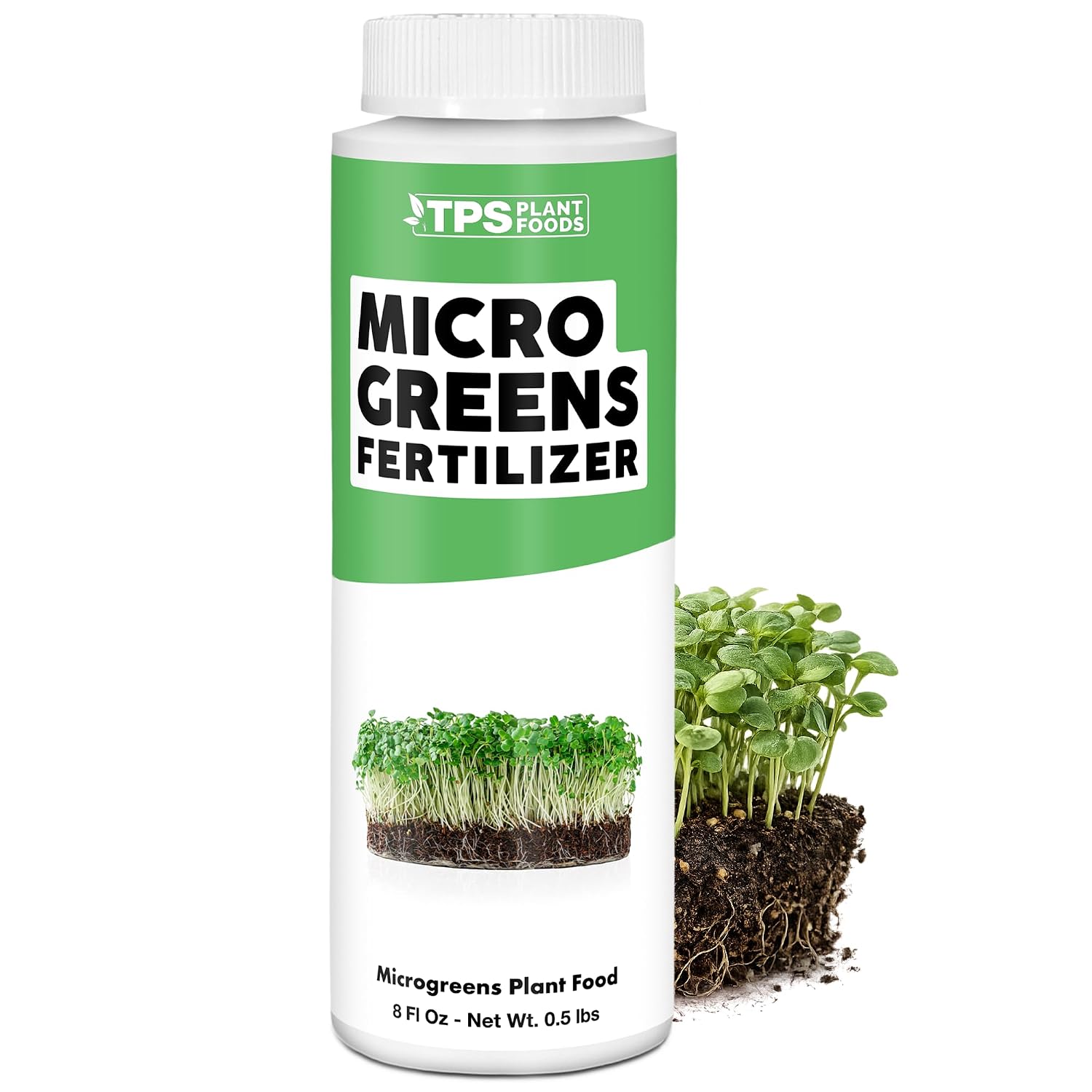
TPS Nutrients Microgreens Liquid Fertilizer, 8 fl oz
| Item Form | Liquid |
|---|---|
| Application Method | watering cans, hose-end sprayers |
| Target Species | plants |
| Liquid Volume | 8 fluid ounces |
This 8 fl oz liquid fertilizer from TPS Nutrients is made for regular feeding of microgreens and other small container crops. It mixes into watering cans or hose-end sprayers so you can apply it as part of a routine watering schedule; the NPK-based formula is intended to encourage vigorous foliage and better root development rather than act as a slow-release soil amendment. In practical use it is convenient for quick top-dress feedings between plantings and for container-grown microgreen trays where precise, water-soluble nutrition matters. Notable features include a ready-to-use liquid form and compatibility with common application methods, which reduce measuring fuss and let you feed more frequently. Limitations are the small 8 oz volume, which means frequent repurchase for larger or continuous production, and the label does not list a detailed NPK ratio on the provided product information which makes exact nutrient planning harder for advanced growers.
Best for: Growers who prioritize consistent, easy-to-apply feedings for microgreens or small container crops and want a straightforward liquid product to integrate into regular watering routines.
Less Ideal for: Large-scale producers who need bulk volumes or growers who require exact, labeled NPK breakdowns for tailored nutrient programs.
- Liquid concentrate suitable for watering cans and hose-end sprayers for easy application
- Formulated to support root development and vigorous foliage useful for quick-growing crops
- Made for both indoor and outdoor container use, so it fits microgreen trays and small gardens
- Small 8 fl oz bottle may require frequent replacement for continuous microgreen production
- No detailed NPK ratio provided in the visible product information for precise nutrient management
Verdict: A simple, ready-to-use liquid fertilizer designed to give microgreens reliable, frequent feedings for healthier foliage and roots.
OceanSolution 2-0-3 All-Natural Liquid Concentrated Fertilizer (32 oz)

| Item Form | Liquid |
|---|---|
| Specific Uses For Product | Plant Growth |
| Target Species | plants |
| Mixing Ratio | 1:128 |
| Liquid Volume | 32 fluid ounces |
OceanSolution 2-0-3 is a highly concentrated liquid fertilizer built around an ocean mineral blend intended for fast uptake and broad plant nutrition. It is typically mixed at 1 ounce per gallon and applied to microgreens, hydroponic solutions, or as a foliar/soil feed for indoor and outdoor vegetables. Key features include a liquid ionic formula for immediate absorption, an odorless, easy-to-handle concentrate, and an OMRI-compatible natural mineral profile that replenishes macro and micronutrients. In practice the concentration and mixing ratio make it economical for small-scale growers and continuous hydroponic systems where consistent, low-volume dosing is important. Because it is mineral-based rather than a balanced NPK granular, users should monitor electrical conductivity and nutrient balance when using it as a primary feed in nutrient-sensitive setups. For gardeners focused on flavor and soil mineral replenishment, it offers a practical way to boost micronutrients without messy solids, but growers who need precise, full-spectrum NPK control may need to supplement with additional products.
Best for: Growers who want a concentrated, easy-to-use mineral supplement for microgreens, small hydroponic setups, or indoor edible plants and who value products with strong user feedback and natural ingredient claims.
Less Ideal for: Large-scale growers who require a single complete NPK formula or gardeners seeking a dry granular fertilizer for long-term soil amendment.
- Very concentrated mix (1 oz per gallon) keeps running costs low for frequent feeding
- Liquid ionic formula promotes quick absorption in microgreens and hydroponic systems
- Contains a wide range of ocean-derived macro and micronutrients to replenish soil and plant needs
- Odorless and easy to handle compared with messy granular or fish-based fertilizers
- Not a complete granular NPK fertilizer so may require pairing with other feeds for balanced macronutrients
- Users need to monitor EC and dosing carefully in hydroponic or sensitive systems
Verdict: A cost-effective, odorless concentrated ocean-mineral liquid that quickly supplies micronutrients and works well as the core supplement for microgreens and small hydroponic systems.
TPS Nutrients Liquid Plant Food for AeroGarden and Hydroponics, 8 oz

| Item Form | Liquid |
|---|---|
| Specific Uses For Product | Plant Growth, Root Development |
| Target Species | Herb, Vegetable |
| Mixing Ratio | 5 mL (1 tsp) per quart of feedwater |
| Unit Count | 8 Fluid Ounces |
This 8 oz liquid plant food provides concentrated, reservoir-safe nutrition intended for AeroGarden and comparable hydroponic units. It is used by mixing the recommended 5 mL per quart of feedwater into the system reservoir on a regular feeding schedule to supply macro and micronutrients for herbs, greens, and other compact edible plants. Notable features include a liquid formulation that dissolves easily, a focus on root development, and explicit compatibility with indoor hydroponic gardens. In practice it simplifies feeding for small indoor crops because a measured teaspoon per quart is straightforward to dose and store. Important limitations are the small bottle size, which will require frequent repurchasing for larger or multiple units, and the need to follow dilution directions carefully to avoid overfeeding. Safety handling is necessary because the concentrate should be kept away from children and pets. For risk-averse growers, the product’s clear mixing ratio and hydroponic focus make predictable feeding simple, but you should track reservoir concentrations rather than guessing frequency or volume adjustments.
Best for: Buyers who want a simple, low-risk feeding routine for indoor green onions and other small edible hydroponic crops and prefer clear dosing instructions they can follow reliably.
Less Ideal for: Growers managing large hydroponic setups, outdoor beds, or those who need a detailed NPK profile for tailored nutrient programs should look for larger or fully specified concentrates.
- Designed specifically for AeroGarden and similar hydroponic systems for straightforward compatibility
- Liquid formula mixes easily for even nutrient distribution in the reservoir
- Clear mixing ratio (5 mL per quart) simplifies dosing and repeatable feeding
- Targets root development and steady growth for herbs and vegetables
- Small 8 oz bottle may not last long for multiple or larger units
- No full nutrient analysis or NPK breakdown provided on the product listing
Verdict: A compact, easy-to-dose liquid fertilizer that makes predictable feeding of indoor green onions simple and low risk.
Choosing the Right Fertilizer for Microgreens: Key Factors to Consider
Nutrient Ratio and Concentration
Microgreens have a very short growth cycle and need a nutrient mix that supports quick leaf development without encouraging excessive stem stretch. A balanced ratio with modest nitrogen and available phosphorus and potassium helps deliver steady, even growth. High-concentration formulas intended for mature plants can overload seedlings unless diluted precisely.
Concentration matters because microgreen trays hold limited substrate and water. A small dosing error with a concentrated feed can raise soluble salts rapidly and damage tender cotyledons. Choose products with clear feeding charts and plan to start at lower-than-recommended strengths for mature plants.
Soluble Salt Levels and EC
Young microgreen shoots are sensitive to salt buildup. Fertilizers that greatly increase electrical conductivity (EC) in the tray can cause leaf tip burn, wilting, or slow germination. It is wise to pick fertilizers labeled for low-salt or designed for seedlings, and to monitor EC when possible.
Using low-salt formulations or diluting concentrated feeds minimizes risk. If you water with stored or high-mineral tap water, account for that baseline conductivity when calculating feed strength to avoid cumulative salt stress in the shallow substrate.
Application Method and Frequency
Microgreens are typically fed via light drench, misting, or nutrient solution in hydroponic setups. The fertilizer you choose should be easy to apply in small, accurate doses and should mix cleanly with water to avoid clumping or uneven distribution. Liquids and soluble powders are usually the easiest for tray-scale feeding.
Frequency is also crucial. Because microgreens grow and are harvested quickly, you may feed only once or twice before harvest. That means a fertilizer that provides immediate, plant-available nutrients is preferable to slow-release products that take weeks to act.
Substrate Compatibility
Microgreens are grown in a variety of substrates including sterile seed-starting mixes, coco coir, compost blends, and hydroponic mats. Some fertilizers interact differently with organic-rich media versus inert media. For example, organic liquid feeds may perform well in composted mixes but can be less predictable in sterile media where microbial activity is low.
Pick a fertilizer that matches your chosen substrate. For hydroponic mats and coco coir, water-soluble, mineral-based fertilizers often give more consistent results, whereas living mixes can benefit from gentle organic feeds that complement microbial processes.
pH Stability and Buffering
Seedlings are more sensitive to pH swings than mature plants. The fertilizer should either have a neutral pH profile when mixed or be easy to adjust with pH up/down solutions. Products that cause large pH shifts can lock out nutrients or reduce uptake efficiency in the short timeframe microgreens grow.
Consider whether you will test and adjust pH. If not, choose fertilizers that are formulated to be pH-stable or labeled for seedling use to reduce the need for additional adjustments.
Practical Packaging and Waste
Microgreen growers often work in small batches, so packaging that lets you measure small amounts without waste matters. Concentrated concentrates in large jugs can be inconvenient unless you plan multiple batches; small bottles, measured spoons, or clear dilution instructions reduce guesswork.
Also think about shelf life and storage. Liquid organic feeds may spoil faster than dry soluble fertilizers. Choose packaging that protects product integrity and matches how frequently you will use the fertilizer.
Liquid Vs Powdered Fertilizers: Which Works Best for Trays
Liquid fertilizers and soluble powders each have advantages for microgreen trays. Liquids are ready to use and reduce mixing time, which is convenient when you are watering small batches multiple times per week. Powders can be more economical and allow you to prepare exact concentrations, but they require thorough dissolving to avoid uneven feeding.
For beginners, a premixed seedling liquid or an easy-to-dissolve powder with clear dosing is often the least fussy choice. Hydroponic growers tend to prefer water-soluble salts because they dissolve predictably and are formulated for rapid uptake.
- Liquids: convenient, fast dosing, may have shorter shelf life
- Powders: precise control, longer storage, require complete dissolution
Organic Options and When to Use Them
Organic fertilizers offer gentler nutrient release and can improve flavor in some crops, but they rely on microbial activity to mineralize nutrients. In sterile media or hydroponic setups, organic feeds may not deliver nutrients promptly unless the mix contains active biology or additional inoculants.
If you grow microgreens in compost-rich mixes or want an entirely organic workflow, pick organic liquid extracts designed for seedlings. Expect to adjust feeding frequency and monitor plant response rather than following standard label rates made for mature plants.
- Works well in living mixes with microbes
- May be slower to supply nutrients in sterile or hydro setups
Hydroponic Feeding Practices for Microgreens
Hydroponic microgreens need a complete, water-soluble nutrient solution formulated for rapid uptake. Choose products with a balanced, full-spectrum mix that supports quick leaf development and short harvest windows. Monitor EC and pH regularly to keep conditions stable in the circulating or static reservoir.
Start at a low fraction of the recommended strength for mature hydroponic crops and observe plant response. Because microgreen roots are shallow, avoid overly concentrated solutions that can stress young tissues.
- Use water-soluble, complete hydro formulas
- Monitor EC and pH for steady results
Measuring and Diluting Safely
Accurate measurement is key with microgreens. Use small graduated syringes, teaspoons, or digital scales to ensure repeatable dilutions. Always mix feeds into water, not the other way around, to ensure complete dissolution and avoid concentrated pockets that can burn seedlings.
When trying a new fertilizer, start at one-quarter to one-half of the label strength for mature plants and work up only if the microgreens show healthy, rapid growth without leaf tip burn.
- Start low and increase cautiously
- Mix thoroughly and measure with small tools
Common Feeding Schedules for Fast Harvests
For many microgreen species, a single light feed after the first true leaves appear is enough before harvest. Others benefit from a very light feeding every few days. The right schedule depends on species, substrate fertility, and whether the crop is in soil or hydroponic culture.
Observe plants for signs of nutrient deficiency such as pale leaves or stunted growth and adjust frequency accordingly. Overfeeding shows as leaf burn or reduced vigor and should be corrected by flushing with clean water and reducing concentration.
- One light feed is often sufficient for short-cycle crops
- Increase frequency for heavier-feeding varieties or poor substrates
How We Chose the Best Fertilizer for Microgreens
We focused on fertilizers and nutrient sources that suit the unique biology and growing conditions of microgreens. Selection criteria prioritized nutrient ratios appropriate for young shoots, low soluble salt levels to prevent burn, and formulations that apply cleanly to tray, soil, or hydroponic systems. Ease of mixing and measuring matters for frequent, small-batch applications, so we preferred products with clear dosing guidance and reliable concentration control. We also considered compatibility with common media such as seed-starting mixes, coco coir, and hydroponic solutions, plus practical packaging for small-scale use. Exclusions included fertilizers formulated only for large-surface lawns, slow-release granular products that do not mobilize quickly for short cycles, and specialty amendments intended for mature vegetables rather than microgreens. The final shortlist balanced nutrient profile, salt safety, application flexibility, and user clarity so gardeners can pick a feeding strategy that fits their workflow and harvest windows.
FAQ
Do microgreens need fertilizer every day?
Usually not. Most microgreens do well with one light feed when true leaves appear, or a couple of light feeds during the short cycle. Daily feeding can raise soluble salts and risk burn unless concentrations are extremely low.
Can I use vegetable garden fertilizer for microgreens?
It depends. Fertilizers formulated for mature vegetables are often too concentrated for seedlings. If you use them, dilute heavily and start at a low fraction of the recommended rate. Prefer products labeled safe for seedlings when possible.
Are organic fertilizers safe for hydroponic microgreens?
Organic fertilizers can be used, but they may not perform reliably in hydroponic systems that lack microbial activity. Choose organic liquid extracts designed for hydro use or add a microbial inoculant to help mineralize nutrients.
How do I know if my fertilizer is causing salt burn?
Look for browning leaf tips, wilting, or slowed growth shortly after feeding. Measuring EC is the most reliable way to detect high salts. If burn appears, flush trays with clean water to lower salt concentration and reduce feed strength on future applications.
What is the best way to measure small fertilizer doses?
Use small measuring spoons, syringes, or a precision scale for repeatable dosing. Preparing a master dilution and using a secondary measuring cup for each tray reduces errors and waste when working in small batches.
Final Verdict
Choosing a fertilizer for microgreens is about matching nutrient availability to a very short, high-turnover growth cycle. Prioritize low-salt, easy-to-dilute formulations with clear dosing guidance and compatibility with your substrate or hydro system. Balance immediate plant-available nutrients with gentle concentrations to avoid burn. Focus on predictable mixing, modest concentrations, and a feeding schedule that supports leaf development without risking salt buildup. With those priorities in mind, you can pick a fertilizer that consistently produces healthy, flavorful microgreen harvests.
