

Note: This article contains affiliate links. If you click on these links and make a purchase, I may earn a small commission at no extra cost to you. This helps support my research and content. Read my full affiliate disclosure here.
If you grow night blooming jasmine, choosing the right fertilizer makes the difference between sparse, seasonal blooms and a plant that reliably perfumes evening air. These vines and shrubs respond best to nutrition that encourages flowering without producing excess leafy growth that can reduce bloom set. The shortlist below highlights seven top fertilizers suited for Night Blooming Jasmine across common garden situations, from containers to trellised yard plants. We focused on mixes and application methods that promote strong root health, consistent bloom production, and easy feeding routines. Read on to see the types of fertilizers included and the practical factors we used to evaluate them.
Top Picks at a Glance
| Best Overall The best all-around choice for most situations | TPS Nutrients Jasmine Liquid Fertilizer, 8 fl oz |  |
| Best Quality Built to a higher standard if you want something more solid | FoxFarm Tiger Bloom Liquid Plant Food (1 pint) |  |
| Best Value The sweet spot between price and what you get | HiThrive Jasmine Liquid Fertilizer, 16 oz |  |
| Best Budget The cheapest option that still gets the job done reliably | Miracle-Gro Water Soluble Bloom Booster Flower Food, 10-52-10, 1 lb |  |
| Highest Rated A top-rated pick with lots of positive feedback | Sovata Jasmine Flower Food Powder (900 g) |  |
| Most Popular A crowd favorite that many people choose with confidence | Perfect Plants Liquid Jasmine Fertilizer, 8 oz Concentrate |  |
| Best Seller A high-volume bestseller chosen again and again | TPS NUTRIENTS Indoor Plant Food Liquid Fertilizer, 8 fl oz |  |
TPS Nutrients Jasmine Liquid Fertilizer, 8 fl oz

| Item Form | Liquid |
|---|---|
| Coverage | Single Jasmine plant |
| Target Species | Jasmine |
| Mixing Ratio | 1:400 |
| Unit Count | 8 Fluid Ounces |
This 8 ounce liquid fertilizer from TPS Nutrients is formulated for jasmine and other flowering vines, using a kelp-based mix with added calcium and magnesium. It is designed to be diluted (mixing ratio 1:400) and applied to single jasmine plants, making it easy to dose for containers or individual trellised vines. In use it supplies balanced nutrition aimed at steady foliage growth and improved bloom production without overstimulating vegetative growth. Practical benefits include targeted support for fragrant blooms, compatibility with potted jasmine and climbing specimens, and a small bottle size that reduces waste if you only feed a few plants. Limitations are the small unit size if you care for many plants and the need to follow the dilution instructions carefully to avoid under- or over-feeding. There is no multi-plant coverage specification beyond a single plant, so bulk buyers will need multiple bottles or a different product for larger gardens.
Best for: Buyers who want a simple, plant-specific fertilizer to maintain steady blooming on a few jasmine plants and prefer low-risk, easy-to-follow feeding routines.
Less Ideal for: Gardeners with large numbers of jasmine or who need broad-coverage, economy-sized fertilizer options should consider larger-capacity products.
- Formulated specifically for jasmine and flowering vines for targeted nutrition.
- Kelp-based with added calcium and magnesium to support blooms and overall plant vigor.
- Liquid concentrate with a clear 1:400 mixing ratio for precise dosing.
- Small bottle size minimizes waste for owners of one or a few plants.
- Only lists coverage as a single jasmine plant, so not cost-effective for large plantings.
- Small 8 fl oz volume requires frequent repurchase for multiple plants.
Verdict: A small, easy-to-dose liquid fertilizer formulated for jasmine that makes reliable bloom support simple for owners of a few plants.
FoxFarm Tiger Bloom Liquid Plant Food (1 pint)
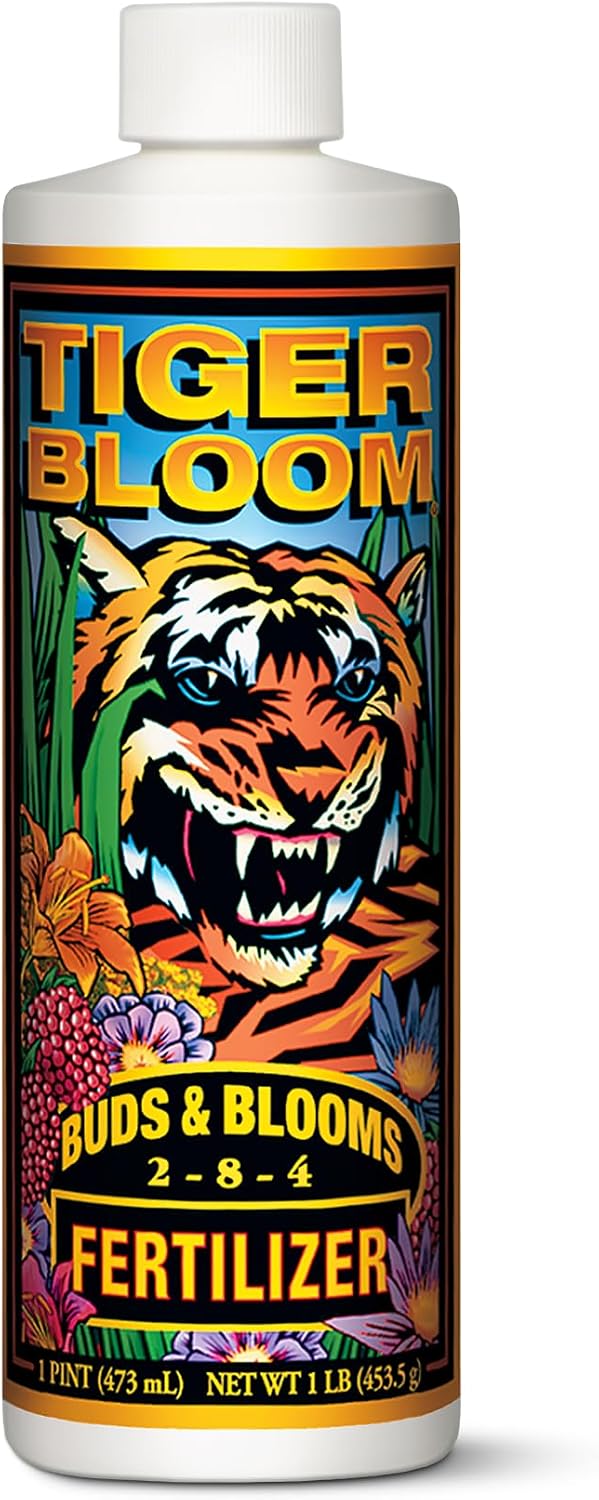
| Item Form | Liquid |
|---|---|
| Specific Uses For Product | Hydroponic |
| Application Method | Watering; Foliar spraying |
| Target Species | Flowering Plants |
| Mixing Ratio | 1:200 or 1:300 |
Tiger Bloom is a liquid, high-phosphorus fertilizer designed to push plants into a strong flowering and fruiting phase. You mix a small amount into the irrigation water or use it as a foliar spray and apply from first signs of flowering through harvest. The 2-8-4 formula and included micronutrients support bud set and larger blooms, and the concentrate mixes at 1:200 to 1:300 for routine feeding or 2 to 4 teaspoons per gallon for heavier feeding. It works in both soil and hydroponic setups and is formulated for quick nutrient uptake and stable micronutrient availability during storage. Practical benefits include flexible application methods, suitability for intensive flowering cycles, and a small bottle that lasts when used at recommended dilutions. Important limitations are that it is bloom-focused rather than an all-purpose feed so it may not meet vegetative needs, and the phosphorus content means users near waterways should follow local regulations to avoid runoff issues.
Best for: Serious growers who prioritize maximizing flower and bloom performance and want a concentrated, fast-acting bloom booster for soil or hydroponic environments.
Less Ideal for: Casual gardeners seeking a single all-purpose fertilizer for every growth stage or those managing turf or non-flowering lawns where phosphorus restrictions apply.
- High phosphorus NPK (2-8-4) concentrated for stronger bud development
- Works in soil and hydroponic systems for versatile use
- Liquid concentrate mixes easily for foliar or watering applications
- Formulated for quick nutrient uptake and stable micronutrient availability
- Focused on flowering so it is not a balanced all-stage fertilizer
- Contains phosphorus which may be restricted near waterways
Verdict: Choose Tiger Bloom when you need a concentrated, fast-acting bloom booster to maximize flower and fruit production.
HiThrive Jasmine Liquid Fertilizer, 16 oz

| Item Form | Liquid |
|---|---|
| Specific Uses For Product | Plant Growth |
| Coverage | Jasmine plants (indoor & outdoor) |
| Mixing Ratio | 1 teaspoon per gallon of water |
HiThrive Jasmine Liquid Fertilizer is a concentrated 16 oz bloom booster formulated specifically for jasmine plants, indoors and outdoors. It mixes at 1 teaspoon per gallon for regular feeding or 2 teaspoons per gallon to correct nutrient deficiencies and is designed to be applied with each watering either to the soil or by bottom-watering. The 6-2-4 NPK plus micronutrients like iron, manganese, zinc, and copper supports leafy growth, stress resilience, and more abundant fragrant blooms. Because it is liquid, it dissolves easily and delivers nutrients quickly compared with granular fertilizers, making it convenient for potted jasmine and trellised vines. Practical benefits include a high coverage ratio (96 gallons per bottle) and straightforward dosing instructions, so you can maintain a consistent feeding schedule. Be mindful that concentrated liquids require careful measuring to avoid overfeeding, and the safety guidance means you should keep it away from children and pets and rinse skin promptly after contact. Workers who prefer slow-release or dry amendments may prefer a different product for less frequent applications.
Best for: Gardeners who want a targeted, easy-to-mix feed to keep jasmine plants flowering and healthy with regular, hands-on watering and feeding routines.
Less Ideal for: Those who prefer low-maintenance, infrequent feeding from slow-release granules or who need an organic-certified fertilizer for specific certification requirements.
- Formulated specifically for jasmine with a 6-2-4 NPK and added micronutrients
- High dilution yield — one 16 oz bottle makes about 96 gallons of feed
- Liquid form dissolves quickly for fast nutrient uptake in potted and garden plants
- Simple dosing instructions for regular maintenance and deficiency correction
- Concentrated liquid requires accurate measuring to avoid overfeeding
- Not a slow-release option so requires frequent application with each watering
Verdict: If you want a targeted, high-yield liquid feed to keep jasmine plants vigorous and blooming, this concentrated jasmine fertilizer is a practical choice.
Miracle-Gro Water Soluble Bloom Booster Flower Food, 10-52-10, 1 lb

| Item Form | Liquid |
|---|---|
| Application Method | Water Soluble |
| Coverage | 500 square feet |
| Target Species | all blooming plants |
| Mixing Ratio | 1 tablespoon/gallon (1.5 tsp for indoor plants) |
This Miracle-Gro bloom booster is a water-soluble plant food designed for flowering annuals and perennials, and it is typically mixed into a watering can or used with a garden feeder. The 10-52-10 formula supplies a high phosphorus dose aimed at increasing bud set and flower production, and it starts working quickly through root and foliar feeding when applied as directed. Practical features include a simple mixing ratio (1 tablespoon per gallon for outdoor use, reduced rate for indoor plants) and compatibility with the Miracle-Gro garden feeder for easy coverage up to about 500 square feet per refill. For gardeners focused on colorful displays, the concentrated phosphorus and repeat feeding schedule (every 7 to 14 days during bloom) deliver noticeably fuller flower shows. Limitations are that it is specifically a bloom booster rather than an all-purpose fertilizer and should be used only during bud set and bloom to avoid nutrient imbalance; following label rates is important to prevent overfeeding. For basic container or bedding displays, it is an easy-to-use option that targets bloom performance without complicated application steps.
Best for: Gardeners who want an affordable, straightforward booster to increase flower production on annuals and container displays and who plan to feed regularly during the bloom period.
Less Ideal for: Those seeking an all-in-one, season-long fertilizer or a slow-release product for hands-off maintenance should look elsewhere.
- High phosphorus 10-52-10 formula to promote more blooms and better bud set
- Water-soluble for quick uptake and easy mixing in a watering can or garden feeder
- Clear mixing instructions with lower indoor rate to reduce risk of burning when used as directed
- Covers a substantial area per feeder refill, useful for beds and multiple containers
- Focused on bloom boosting rather than providing a balanced, all-season nutrient program
Verdict: If you want an inexpensive, easy-to-use booster that reliably increases blooms on annuals and containers, this is a strong, no-frills choice.
Sovata Jasmine Flower Food Powder (900 g)

| Item Form | Powder |
|---|---|
| Application Method | Soil incorporation and foliar spray |
| Coverage | Large |
| Target Species | Jasmine |
Sovata Jasmine Flower Food is an organic powder fertilizer designed for jasmine growers who want bigger blooms and stronger plants. It is applied to soil or used as a foliar spray and claims to boost soil microbe activity, correct pH imbalances, and support root development. In practice the powder format makes it easy to measure and spread across multiple plants or a larger bed, and the microbe-focused formula should improve nutrient uptake over a season rather than delivering instant foliage spikes. Notable features include targeted jasmine formulation and both soil and foliar application options, which gives flexibility for feeding established shrubs or container plants. Because it is organic and promotes gradual improvement in soil health, you can expect steadier, longer-term flowering rather than rapid, short-lived flushes. Limitations are that detailed N-P-K numbers are not provided on the listing so precise dosing and timing require following label instructions closely, and results depend on baseline soil conditions and consistent use.
Best for: Gardeners who prioritize dependable, long-term improvement to jasmine health and bloom production and who prefer organic, soil-building fertilizers for beds or multiple plants.
Less Ideal for: Buyers seeking a fast, high-nitrogen boost for instant foliage growth or those who need precise nutrient ratios for corrective fertilization.
- Formulated specifically for jasmine to encourage abundant flowering
- Organic powder promotes soil microbe activity and healthier root development
- Can be applied as soil incorporation or foliar spray for flexible feeding
- Large coverage suitable for multiple plants or garden beds
- No explicit N-P-K breakdown provided on the product listing
- Effectiveness depends on consistent use and existing soil health
Verdict: Choose this organic jasmine-specific powder if you want a reliable, soil-building fertilizer that encourages abundant blooms over the growing season.
Perfect Plants Liquid Jasmine Fertilizer, 8 oz Concentrate

| Item Form | Liquid |
|---|---|
| Application Method | Water |
| Target Species | Jasminum |
| Mixing Ratio | 9-3-6 |
This liquid jasmine fertilizer is a concentrated 8 ounce bottle designed to be mixed into watering water and used regularly to support vigorous jasmine growth and more frequent blooms. It contains a 9-3-6 NPK ratio plus calcium, sulfur, magnesium, copper, iron, zinc and manganese, so it supplies both macronutrients and common micronutrients jasmine benefits from. Typical use is simple: dilute one teaspoon per gallon and substitute that for plain water once the top couple inches of soil have dried; a single bottle makes roughly 48 gallons of feed. The liquid form means nutrients are immediately available to roots and can be premixed for larger containers or regular watering cycles. Practical benefits include even nutrient distribution, faster uptake compared with granules, and the convenience of feeding at every watering without heavy buildup. Limitations are inherent to concentrated liquid feeds: you need to measure and dilute carefully to avoid overfeeding and the small bottle size means you must store premixed solution or buy multiples if you maintain a large jasmine planting.
Best for: Gardeners who want a straightforward, regular-feed solution to keep jasmine vigorous and flowering through the growing season and prefer fast-acting liquid nutrition over slow-release pellets.
Less Ideal for: People who prefer set-and-forget slow-release fertilizers or who manage very large landscapes where a larger-volume product would be more practical.
- Formulated specifically for Jasminum with a bloom-supporting 9-3-6 NPK ratio
- Includes key micronutrients such as calcium, iron, zinc and magnesium
- Concentrated formula yields about 48 gallons from one 8 fl oz bottle
- Liquid form delivers faster and more uniform nutrient uptake than granules
- Small 8 oz bottle may require premixing or frequent replacement for larger plantings
- Requires careful measuring and dilution to avoid overfeeding
Verdict: A concentrated, easy-to-use liquid feed that delivers fast-acting nutrients to keep jasmine plants greener and blooming more consistently.
TPS NUTRIENTS Indoor Plant Food Liquid Fertilizer, 8 fl oz

| Item Form | Liquid |
|---|---|
| Specific Uses For Product | Plant Food |
| Application Method | Watering can |
| Mixing Ratio | 2:1 (oz/gallon) or 1:64 (tbsp/gallon) |
TPS NUTRIENTS Indoor Plant Food is a concentrated liquid fertilizer made for regular use with houseplants. You mix the measured dose into water and apply it with your usual watering can; the label gives an easy mixing ratio for household use. Its kelp-enriched formula is pitched at improving leaf color, encouraging steady new growth, and supporting root health, so expect glossier foliage and more frequent leaf production when plants are fed consistently. The 8 fl oz bottle is portable and fits on a plant shelf or utility area, and the liquid form dissolves readily for even application. It is intended for medium coverage and labeled as gentle for weekly feeding, which simplifies care for busy owners. Important limitations are that this is a small bottle meant for regular top-up feedings rather than long-term bulk use, and it assumes you will follow dilution directions to avoid overfeeding. Keep it away from children and pets and avoid skin or eye contact when handling.
Best for: Plant owners who want a simple, low-effort weekly fertilizer to keep indoor foliage vibrant and encourage steady new leaf growth. Good for people who prefer an easy liquid mix applied during regular watering routines.
Less Ideal for: Gardeners needing a bulk or multi-season fertilizer for outdoor beds or large collections should consider larger-capacity or specialized products instead.
- Liquid concentrate mixes easily for even application with a watering can
- Kelp-enriched formula aimed at improving foliage color and encouraging new growth
- Gentle enough for weekly feedings according to product guidance
- Clear mixing instructions for home use
- Small 8 fl oz volume limits how many plants you can feed before repurchasing
- Not formulated or labeled for outdoor or large-scale garden use
Verdict: A convenient kelp-enriched liquid concentrate that makes weekly feeding easy for anyone who wants healthier, more vibrant indoor foliage.
Choosing the Right Fertilizer for Night Blooming Jasmine: Key Factors to Consider
Nutrient Ratio and Bloom Focus
Blooming jasmine benefits from a fertilizer that encourages flower set without forcing excessive vegetative growth. Look for formulas where phosphorus is adequate to promote bud development while nitrogen is moderate. Too much nitrogen can push soft leaf growth at the expense of flowers, especially on a plant that naturally blooms on new and existing wood.
Understanding the N-P-K numbers helps you match a product to soil tests and observed plant behavior. If your soil test shows low phosphorus or potassium, choose a mix that replenishes those needs. For routine maintenance, a balanced or bloom-boosting feed applied at recommended intervals typically produces the best floral response.
Application Method and Frequency
Different application methods suit different gardener routines and planting situations. Water-soluble fertilizers deliver a quick nutrient hit and are useful when you want to stimulate immediate bud set before a flowering period. Granular slow-release options reduce the need for frequent feeding and are convenient for in-ground plantings or busy gardeners.
For container-grown plants, more frequent but lighter feedings are often necessary because potting mix holds fewer nutrients and flushes salts faster. Foliar sprays can supplement root feeding when uptake is limited, but they should be used as a temporary boost rather than the primary feeding strategy.
Soil Type and Biology
Soil texture, organic matter, and microbial activity affect how fertilizer is held and made available to plants. Sandy soils leach nutrients more quickly and often need more frequent applications or slow-release formulations. Heavier soils with more organic matter retain nutrients but can tie up phosphorus if pH is off.
Organic fertilizers support long-term soil biology and improve structure over time, which benefits jasmine by enhancing root function and moisture retention. Synthetic formulations provide immediate nutrient availability but do not improve soil organic content. Consider the long-term health of planting beds and whether you want to build soil as you feed.
Container Vs In-Ground Considerations
Night blooming jasmine in containers has different nutrient dynamics than plants in the ground. Pots dry out faster and nutrients can accumulate as salts, so products labeled safe for container use or those that recommend leaching are preferable. Slow-release granules specifically formulated for containers reduce the risk of quick nutrient swings.
In-ground plants can tolerate less frequent feeding and benefit more from soil amendments and organic matter. If you plan to grow jasmine on a trellis or as a landscape specimen, choose a fertilizer that supports extended root systems and has recommendations for broadcast or side-dress applications.
Timing Relative to Bloom Cycle
Timing fertility to the plant's flowering cycle maximizes results. Apply a bloom-focused feed as buds form rather than during heavy vegetative growth. A milder maintenance feed during the off-bloom season supports plant vigor without encouraging a flush of foliage that can delay blooming.
Avoid heavy late-season feeding that stimulates tender new growth vulnerable to cooler temperatures. Where climates permit multiple bloom flushes, plan lighter, more frequent applications timed to coincide with bud development for each flush.
Organic Vs Synthetic Fertilizers for Fragrance and Blooming
Organic fertilizers feed the soil as well as the plant, slowly releasing nutrients and building microbial life that supports root health and sustained flowering. They are especially useful in planting beds and for gardeners who prefer a hands-off, soil-improvement approach over time.
Synthetic fertilizers deliver nutrients more predictably and can be used to trigger stronger bloom pushes at key times. If you need immediate results ahead of a season of shows or events, soluble synthetics offer rapid uptake but require more precise timing and careful watering.
- Organics improve soil structure and reduce long-term reliance on frequent feeding
- Synthetics provide fast nutrient availability and simpler dosing for quick bloom stimulation
- Consider a combined approach: organic baseline with targeted synthetic feeds when you need extra blooms
Feeding Container-Grown Night Blooming Jasmine
Containers demand closer attention to feeding because potting mixes have limited nutrient reserves and salts can build up. Choose fertilizers labeled for container use or use smaller, more frequent doses of soluble feed to avoid root burn. Regular repotting and refreshing potting mix every couple of years also helps maintain a healthy nutrient balance.
Water management in pots affects nutrient availability. Water thoroughly after fertilizing to move nutrients into the root zone, and occasionally flush the potting medium to prevent salt accumulation if using synthetic feeds.
- Use half-strength soluble feeds every few weeks during active growth for potted plants
- Prefer slow-release blends if you want low-maintenance feeding
- Repot and refresh medium periodically to reset nutrient availability
Adjusting Fertility Based on Soil Test Results
A soil test gives actionable information about pH and nutrient levels, helping you pick the right fertilizer profile. Night blooming jasmine prefers slightly acidic to neutral soils for best nutrient uptake. If a test shows low phosphorus or potassium, select a formula that corrects those deficits rather than applying a generic feed.
Testing also prevents over-application of nutrients that can harm plants and the surrounding landscape. Base your feeding schedule and product choice on test results for the most efficient and environmentally responsible care.
- Correct pH before major nutrient additions for best uptake
- Match fertilizer N-P-K to identified soil deficiencies
- Retest every few years to track changes and refine feeding
Practical Tips for Application and Timing
Apply fertilizer early in the growing season to encourage healthy establishment, then switch to bloom-focused feeding as buds form. Follow label directions closely for rates and frequency, and err on the conservative side when trying a new product on established plants.
Always water before and after applying granular fertilizers to reduce leaf burn risk and help nutrients move into the root zone. For water-soluble feeds, use consistent intervals and adjust strength rather than frequency if foliage shows stress.
- Feed at manufacturer-recommended intervals, reducing strength rather than increasing frequency if stress appears
- Avoid heavy feeding late in the season to prevent tender growth into cooler periods
- Combine fertilizing with pruning and pest checks for best bloom outcomes
Safe Use Around Pollinators and Nearby Plants
Night blooming jasmine is often prized for its evening fragrance that attracts pollinators. Choose fertilizer products and application methods that minimize harm to beneficial insects. Avoid foliar sprays during peak pollinator activity and rinse any drift from nearby blooms.
When using synthetic feeds, prevent runoff into borders and water features by following application rates and watering practices. Organic choices tend to be gentler on local ecosystems, though they can still be overapplied if used excessively.
- Apply granular feeds when pollinator activity is low
- Rinse equipment and avoid drift onto flowering parts
- Use products with clear environmental guidance if planting near water or wildlife habitat
How We Chose the Best Fertilizer for Night Blooming Jasmine
We selected products that match the feeding needs and growing habits of Night Blooming Jasmine. Our editorial filters prioritized nutrient balance, bloom-promoting formulations, and suitability for the common planting situations where this species thrives, such as containers, raised beds, and in-ground hedging. We looked for clear N-P-K profiles that favor bloom development without excessive nitrogen, formulations that support root health and soil biology, and delivery methods gardeners can apply confidently: granular for slow feeding, water-soluble for controlled bloom pushes, and organic options for longer-term soil improvement. Key evaluation criteria included nutrient ratio and clarity of labeling, ease and frequency of application, suitability for potted versus in-ground plants, impact on soil structure and biology, and safety for nearby ornamentals and pollinators. We excluded products with unclear formulation details, those intended only for lawns or unrelated crops, and fertilzers with application methods impractical for typical home gardeners. The result is a focused set of fertilizers that work across the typical care patterns of night blooming jasmine, with tradeoffs between speed of response and long-term soil health made explicit in the notes.
FAQ
How often should I fertilize night blooming jasmine?
It depends on the product and planting situation. Container plants usually need lighter, more frequent feedings every 2 to 4 weeks during active growth. In-ground plants can be fed less often, using slow-release granules once in spring and a targeted bloom feed as buds form.
What N-P-K ratio is best for encouraging blooms?
A moderate nitrogen level with adequate phosphorus and potassium is ideal. Look for a formula that does not heavily favor nitrogen; bloom-focused feeds or balanced mixes with a slightly higher middle or third number can support bud development.
Can I use organic fertilizer exclusively for night blooming jasmine?
Yes, organic fertilizers can support healthy bloom cycles while improving soil structure. They release nutrients more slowly, so expect longer timelines for response. Some gardeners pair organic base feeds with occasional soluble feeds if faster bloom pushes are needed.
Will fertilizing make my jasmine grow too much foliage?
Overuse of high-nitrogen fertilizers can encourage leafy growth at the expense of flowers. Stick to recommended rates and choose formulas that prioritize bloom support rather than heavy vegetative stimulation.
Is foliar feeding useful for jasmine that is not blooming?
Foliar feeding can provide a quick nutrient boost when root uptake is limited, but it is a short-term tactic. Use it to correct visible deficiencies or to give a targeted push before flowering, while also addressing soil nutrition for longer-term results.
Final Verdict
Prioritize a fertilizer that supports bud formation and overall root health rather than one that simply drives leafy growth. Match the product type and feeding schedule to your planting situation: containers need gentler, more frequent inputs, while in-ground plants benefit from slower-release and soil-building options. Balance immediate bloom needs with long-term soil health to keep night blooming jasmine performing year after year. With the tradeoffs in mind, select the feeding approach that fits your routine and the plant's bloom cycle to get reliable evening fragrance and strong floral displays.
