

Note: This article contains affiliate links. If you click on these links and make a purchase, I may earn a small commission at no extra cost to you. This helps support my research and content. Read my full affiliate disclosure here.
Getting fertilizer right matters when you are growing lots of small plants in trays, flats, or liners. The wrong feed can burn delicate roots, produce uneven growth, or force extra work with corrective applications. This guide focuses on fertilizers for nursery plants and explains the practical differences that matter in a busy propagation area. We shortlisted six top options that suit common nursery setups and evaluated them on factors like nutrient balance, application method, and safety for young roots. Read on to understand the tradeoffs so you can pick the feed that matches your propagation style and crop mix.
Top Picks at a Glance
| Best Quality Built to a higher standard if you want something more solid | Florikan Controlled Release Nursery Fertilizer 12-6-6, 50 lb |  |
| Best Value The sweet spot between price and what you get | Exotica Tropicals Professional Nursery Plumeria Fertilizer, 4 lb, Slow Release |  |
| Best Budget The cheapest option that still gets the job done reliably | Schultz Nursery Plus Slow-Release Plant Food 12-6-6, 3.5 lb |  |
| Highest Rated A top-rated pick with lots of positive feedback | Beanstalk Agriculture V-Basis Controlled-Release Fertilizer 14-4-12, 16 fl oz |  |
| Most Popular A crowd favorite that many people choose with confidence | Osmocote Smart‑Release Plant Food Plus Outdoor & Indoor, 2 lb |  |
| Best Seller A high-volume bestseller chosen again and again | Osmocote Smart-Release Plant Food Plus Outdoor & Indoor, 1 lb |  |
Florikan Controlled Release Nursery Fertilizer 12-6-6, 50 lb

| N-P-K | 12-6-6 |
|---|---|
| Coated Nitrogen | 8% polymer coated |
| Item Form | Granules |
| Specific Uses For Product | Potting |
| Target Species | woody ornamentals |
This Florikan 12-6-6 is a performance-focused controlled release fertilizer designed for nursery and landscape use on woody ornamentals. Its polymer-coated granules deliver 8% coated nitrogen plus an early-release fraction so plants get a quick green-up followed by steady feeding over the stated 2 to 3 month window when soil temperatures are near the benchmark. Typical use is as a topdressing in the landscape or incorporated into potting mixes at the labeled rates, where the coating helps prevent nutrient dumping and reduces leaching compared with simple soluble fertilizers. The Florikote polymer technology makes release predictable and less affected by media pH, which simplifies scheduling across different substrates. Important limitations are clear: it is not intended for sensitive annuals or perennials and the release schedule is tied to soil temperature so performance varies by climate and season. For growers seeking consistent, low-maintenance nutrition for woody nursery stock, this product provides reliable, staged feeding with minimal reapplication.
Best for: Growers and nursery managers who prioritize consistent, low-maintenance nutrient delivery for woody ornamentals and need predictable performance across different media types.
Less Ideal for: Home gardeners growing sensitive annuals or perennials, or anyone needing a fast-acting soluble feed for immediate nutrient correction.
- Polymer-coated granules provide controlled nutrient release for steady feeding
- Includes an early-release fraction for quicker green-up after application
- Release rate is driven by soil temperature, improving predictability across media and pH
- Suitable for both topdressing in landscapes and incorporation into potting mixes
- Not safe for use on sensitive crops such as annuals and many perennials
- Release duration depends on soil temperature so results vary by climate and season
Verdict: Choose this fertilizer when you need reliable, staged nutrient delivery for woody nursery stock with minimal reapplication.
Exotica Tropicals Professional Nursery Plumeria Fertilizer, 4 lb, Slow Release

| Item Form | Granules |
|---|---|
| Specific Uses For Product | Fertilization of Plumeria Plants, both Potted and in Landscape |
| Coverage | Medium |
| Mixing Ratio | 18:5:12 |
This granular fertilizer is made for nursery-quality care of plumeria and other frangipani, combining slow-release coated pellets with a small instant-release portion to give both sustained nutrition and an early green-up. It is typically applied to potted plants as a water-soluble feed or broadcast into landscape soil at the recommended rates and repeated every 6 to 8 weeks during the growing season. Notable features include a professional 18-5-12 NPK mix, micronutrients such as magnesium, iron, and manganese, and a slow-release coating rated for roughly 5 to 6 months, which reduces the need for very frequent refeeding. Practical benefits are stronger, sustained growth and less hands-on feeding compared with quick-release formulas, and clear application directions for both pots and beds. Limitations are that it is targeted specifically to plumeria so broader-use claims are limited and users who prefer organic or liquid-only programs will need a different product. Follow label rates carefully to avoid overfeeding when using in containers.
Best for: Gardeners who want a low-maintenance, effective fertilizer for plumeria and nursery-grown frangipani and who prioritize consistent growth with fewer feedings.
Less Ideal for: People looking for a broadly labeled all-purpose or certified organic fertilizer or those who only use liquid feeding programs should consider other options.
- Professional nursery-grade formulation with an 18-5-12 NPK balance for robust growth
- Slow-release coated pellets provide up to 5–6 months of extended feeding
- Includes essential micronutrients like magnesium, iron, and manganese
- Clear directions for both potted plants and landscape application
- Formulated specifically for plumeria so not marketed as a general-purpose fertilizer
- Not labeled as organic which may be a drawback for organic growers
Verdict: Choose this product if you need a professional, slow-release fertilizer that delivers sustained, nursery-grade nutrition specifically for plumeria with minimal reapplication.
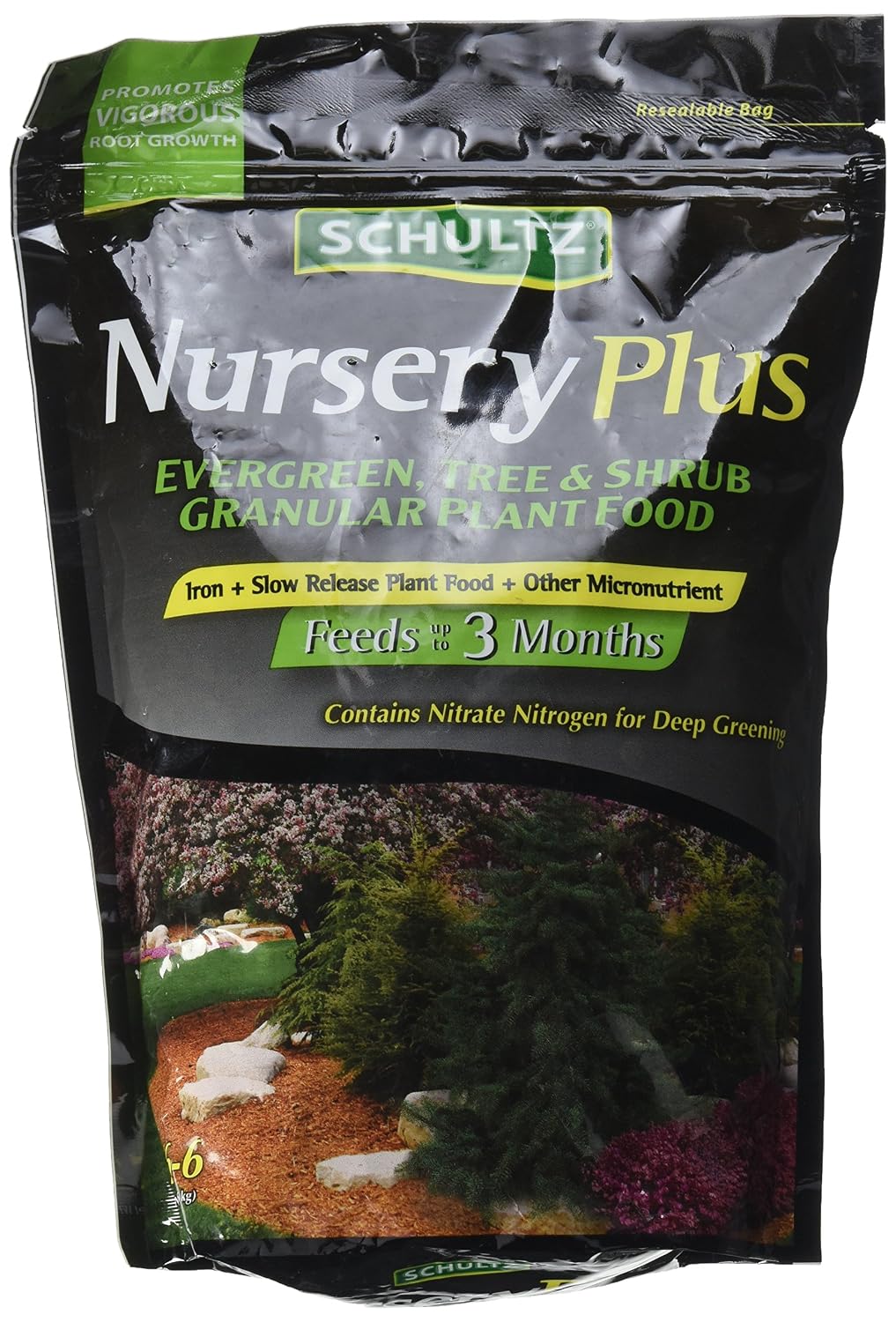
Schultz Nursery Plus Slow-Release Plant Food 12-6-6, 3.5 lb
| Unit Count | 56 Ounce |
|---|---|
| Item Form | Granules |
| Mixing Ratio | 12:6:6 |
| Coverage | Medium |
| Target Species | Plants |
This Schultz Nursery Plus slow-release plant food is a granular 12-6-6 fertilizer designed for general nursery and potted plant use. Applied by measuring and spreading evenly around the plant base, the slow-release formulation provides steady nutrition over time, reducing the need for frequent feeding. The granule form is easy to handle and suitable for active nursery settings where medium coverage is needed. Key practical benefits are consistent nitrogen for leafy growth, included micronutrients, and a straightforward mixing ratio for routine applications. Because it is slow release, it lowers the risk of short-term burn from overfeeding and cuts down on application frequency, which is helpful for busy growers. Limitations are the small 3.5 pound size if you manage many plants and the mid-range NPK that may not meet specialist needs like bloom-boosting or high-phosphorus starts; users with specific crop-stage requirements may prefer targeted formulas. Follow label directions and safety guidance when applying around young or sensitive stock.
Best for: Growers looking for an affordable, easy-to-apply, general-purpose slow-release feed for nursery pots and active container stock who prioritize steady nutrition and low maintenance feeding.
Less Ideal for: Specialty growers who need high-phosphorus bloom formulas or very large-scale operations that require bulk packaging and lower per-unit cost.
- Slow-release 12-6-6 formula provides steady nutrition and reduces application frequency
- Granular form is easy to measure and spread around container and nursery stock
- Includes micronutrients to support general plant health
- Medium coverage suitable for routine nursery and potted plant feeding
- Small 3.5 lb package may be insufficient for larger nursery operations
- Balanced NPK is general-purpose and not optimized for heavy flowering or initial root establishment
Verdict: A convenient, budget-friendly slow-release 12-6-6 granular feed that keeps nursery and container plants nourished with minimal fuss.
Beanstalk Agriculture V-Basis Controlled-Release Fertilizer 14-4-12, 16 fl oz

| Item Form | Granules |
|---|---|
| Mixing Ratio | 14:4:12 |
| Specific Uses For Product | Rooted |
| Unit Count | 16 Fluid Ounces |
V-Basis is a controlled-release granular fertilizer formulated for vegetative support in nursery stock, rooted plants and hydroponic systems. It is designed to be mixed into soil, coco, or peat at the manufacturer directions and release nutrients through irrigation cycles so growers do not need frequent feedings. Key features include a 14-4-12 NPK ratio, a proprietary coating for controlled release, and simple dosing guidance (25 grams per gallon of medium) that suits repeatable nursery routines. In practice this means steadier nutrient delivery, less day-to-day mixing, and reduced labor for maintaining a veg room or propagation bench. The product comes in a compact 16 fluid ounce unit that is easy to store and measure for small-to-medium batches. Limitations are that the package size and single NPK ratio may require purchasing additional supplements for bloom or specific micronutrient needs, and exact release timing will vary with irrigation frequency and medium. For growers who prioritize consistent, low-maintenance feeding during vegetative phases, V-Basis is a practical option.
Best for: Growers and nursery managers who need a dependable, low-maintenance veg fertilizer that delivers consistent results with simple dosing and fits into repetitive propagation and veg workflows.
Less Ideal for: Flowering-focused growers or large commercial operations that need large-volume, stage-specific nutrient programs should consider broader multi-product systems instead.
- Controlled-release coating provides steadier nutrient delivery during veg
- Clear mixing direction (25 g per gallon) simplifies repeatable dosing
- Granular form is easy to store and measure for nursery routines
- Formulation focuses on vegetative growth with a 14-4-12 NPK ratio
- Single NPK ratio means additional products may be needed for bloom or specialty stages
- Small 16 fl oz unit may not be economical for very large nurseries
Verdict: Choose V-Basis when you want a simple, controlled-release veg fertilizer that reduces daily feeding and keeps nursery plants consistently fed.
Osmocote Smart‑Release Plant Food Plus Outdoor & Indoor, 2 lb

| Item Form | Granules |
|---|---|
| Application Method | Sprinkle |
| Target Species | All plants |
| Mixing Ratio | 1 capful (3 tablespoons) per 2 gallons soil or per 4 sq. ft. |
| Unit Count | 32 Ounce |
Osmocote Smart‑Release Plant Food Plus is a granular, resin‑coated fertilizer designed to feed flowers and other plants steadily for up to six months with 11 essential nutrients. You apply it by sprinkling the recommended amount into the top inch or two of potting mix or garden soil, watering it in, and reapplying every six months; indoor plants use about half the outdoor rate. The resin coating times nutrient release to moisture and temperature, which reduces the need for frequent feedings and lowers the risk of fertilizer burn when used as directed. It works across containers, raised beds, and in‑ground flower beds and covers up to roughly 75 square feet per 2 lb container. Limitations are that a single 2 lb container is only enough for small gardens or several pots, and the slow‑release formula is not suitable when an immediate corrective boost is needed for acute nutrient deficiencies. For gardeners focused on steady, maintenance feeding for flowering plants this is an easy, low‑effort option.
Best for: Gardeners who want reliable, low‑maintenance feeding for flowers and mixed plantings and prefer a consistent supply of nutrients over months rather than frequent liquid feedings.
Less Ideal for: Growers who need fast corrective feeding for visible nutrient deficiencies or those managing very large beds who want bulk fertilizer options to reduce trips to reapply.
- Feeds continuously up to six months with a single application
- Resin coating times nutrient release to plant needs based on moisture and temperature
- Formulated with 11 essential nutrients suitable for a wide range of flowering plants
- No-burn pledge when used as directed reduces risk of overfeeding
- 2 lb container only covers about 75 sq. ft., so frequent repurchase is needed for larger gardens
- Slow‑release formulation does not provide a rapid corrective nutrient boost
Verdict: Choose this product if you want a hands-off, long‑lasting fertilizer that keeps flowering plants fed for months with a single application.
Osmocote Smart-Release Plant Food Plus Outdoor & Indoor, 1 lb

| Item Form | Granules |
|---|---|
| Specific Uses For Product | Plant Food |
| Application Method | sprinkle around the base and work into the soil |
| Unit Count | 16 Ounce |
Osmocote Smart-Release Plant Food Plus is a resin-coated granular fertilizer designed to deliver steady nutrition to a wide range of plants for up to six months from a single application. You apply it by sprinkling the recommended scoop into the top inch or so of potting mix for containers or around plants in garden beds, then watering to activate the coating. The product contains 11 essential nutrients and is formulated to release based on soil temperature, which helps reduce overfeeding and supports consistent bloom and foliage performance in hanging baskets. Its no-burn pledge makes it easy to use at the recommended rates for mixed annuals, trailing plants, and container veggies. Limitations are that coverage is modest from a 1 lb. container so frequent use on many large baskets will require buying more, and release timing still depends on temperature so plants in cool, shaded spots may receive nutrients more slowly than those in warm sun.
Best for: Gardeners who prioritize steady, low-maintenance feeding for hanging baskets and containers and want consistent bloom and foliage without frequent fertilizing.
Less Ideal for: Those who need immediate, short-term nutrient boosts or precise liquid feeding schedules for plants that demand fast correction.
- Resin-coated granules provide controlled release of nutrients for up to six months
- Formulated with 11 essential nutrients suitable for a wide variety of plants
- No-burn pledge when used as directed reduces risk of damaging roots in containers
- Simple sprinkle-and-water application works well for hanging baskets and pots
- 1 lb container covers a limited area so multiple baskets will need additional product
- Release rate depends on temperature so nutrient delivery can be slower in cool conditions
Verdict: An easy, low-maintenance slow-release fertilizer that keeps hanging baskets fed for months with minimal effort.
Choosing the Right Fertilizer for Nursery Plants: Key Factors to Consider
Nutrient Ratio and Concentration
The ratio of nitrogen, phosphorus, and potassium plus the presence of secondary nutrients and micronutrients determines how plants allocate resources. In nurseries you often want a formula that encourages steady leaf and root development without forcing excessive top growth that creates leggy or unstable liners.
Concentration matters because highly concentrated feeds increase the risk of osmotic stress in small root volumes. Look for options that specify recommended dilution rates for plugs and small pots and that offer lower-strength mixes or clear guidance for repeated low-dose applications.
Salt Index and Root Burn Risk
Salt buildup from frequent feeding can scorch tender root tips and reduce water uptake. Fertilizers vary in salt index and how quickly salts accumulate in a container substrate.
Choose feeds with lower salt potential for daily or frequent watering schedules, and consider products that recommend periodic leaching or that include guidelines for EC or conductivity targets. For propagation, conservative application rates and monitoring of media EC are essential to avoid setbacks.
Application Method and Flexibility
Nursery workflows range from hand-watering flats to automated fertigation. Some fertilizers are formulated for constant-feed irrigation, others for weekly drenches, and some are dry granules or spikes for slower release.
Pick a product that fits your delivery method. Liquid concentrates that mix cleanly and remain stable in stock tanks suit fertigation systems, while soluble powders that dissolve without residue are more practical for manual mixing. Consider whether you need one product that can serve multiple stages or separate feeds for propagation and later growth.
Compatibility With Growing Media and Water Quality
Different mixes-peat, coir, bark, or soilless blends-interact with nutrients differently. Media pH, cation exchange capacity, and buffering affect nutrient availability and retention.
Also account for irrigation water chemistry. Hard water or high bicarbonate levels can raise media pH and tie up micronutrients. Opt for fertilizers that include acidifying components if your water is alkaline, or choose formulations that supply chelated micronutrients to remain available across a wider pH range.
Storage, Stability, and Handling
Nurseries need products that stay stable in bulk and are easy to measure during busy shifts. Some concentrated liquids require careful dilution order or temperature control, and some powders can cake if stored poorly.
Evaluate packaging that allows quick scooping or pouring, shelf-life information, and any special storage needs. Also consider safety data: clear labeling, PPE recommendations, and spill cleanup reduce risk when staff are mixing frequent batches.
Cost Per Use and Labor Implications
For production nurseries, the effective cost per tray matters as much as the sticker price. Concentrated feeds that require precise mixing can be economical but may add labor overhead for measuring and calibration.
Estimate how many feedings a product will provide for a given tray count and whether special equipment or dilution steps increase handling time. A slightly higher-cost product that reduces rework or plant losses can be more economical overall in a production environment.
When To Use Low-Strength Daily Feeds
Low-strength daily feeds are common in propagation because they supply a steady stream of nutrients without spiking salt levels. This approach reduces stress on young roots and promotes even, compact growth across trays.
Daily feeding works well with automated irrigation or when you have reliable EC monitoring. It reduces the need for high-concentration drenches and can simplify staging from seed to liner.
- Best for high-density plug trays and rapid turnover schedules
- Requires monitoring of media EC and periodic leaching
- Pairs well with soluble, easily mixed concentrates
Using Periodic Drenches and Controlled-Release Options
Periodic drenches and controlled-release products reduce daily handling and can be useful when labor is limited. Controlled-release formulations release nutrients over weeks and are useful for later stages of production when plants move to larger pots.
For very small plugs, use very low-dose drenches to avoid localized salt spikes. Controlled-release granules should be selected to match the crop cycle so the release profile aligns with production timing.
- Good when you want predictable feeding with less daily labor
- Match release duration to crop production schedule
- Avoid high-salt drenches on very small root volumes
Managing Water Quality and pH in Nursery Feed Programs
Water quality can undermine even the best fertilizer choice. High bicarbonate or alkaline water raises media pH and reduces availability of iron and other micronutrients, often causing chlorosis in liners.
Test source water regularly and adjust feed mixes to offset alkalinity. Consider acidifying components or chelated micronutrients when necessary, and flush media occasionally to control soluble salts.
- Test water for alkalinity and hardness before setting a feed program
- Adjust feed pH gradually and monitor plant response
- Use chelated micronutrients if intermittent micronutrient deficiencies appear
Practical Mixing and Stock Tank Tips
Create standard operating procedures for mixing to ensure consistent concentration across batches. Use clear measuring tools, label stock tanks with target EC and dilution ratios, and train staff on safe handling.
When mixing powders, dissolve fully in warm water and avoid adding multiple concentrated products together without checking compatibility. Clean tanks and lines regularly to prevent biofilm and salt deposits.
- Label batches with date, concentration, and person who mixed them
- Rinse measuring tools between products to prevent cross-contamination
- Schedule regular tank and line maintenance
Transitioning From Propagation to Potting On
As plants leave plugs and move into larger pots, nutrient needs shift. Transplanting often calls for a slightly higher feed strength and formulations that support root expansion and structural growth.
Plan a gradual change in concentration and consider switching to a feed better suited for longer-term growth once root systems occupy more of the container volume.
- Increase feed strength slowly over several waterings after potting on
- Switch to formulations with more balanced NPK for structural development
- Monitor for signs of overfertilization following transplant shock
How We Chose the Best Fertilizer for Nursery Plants
We selected products that fit propagation and nursery production needs rather than home garden general-purpose feeds. Our filters prioritized formulations and formats suited to small pots, plug trays, and liners, and we excluded feeds designed only for large landscape or field application. Key evaluation criteria included nutrient ratio precision, how gently nutrients are delivered to delicate roots, and compatibility with common growing media and irrigation systems. We also looked at application flexibility for both constant liquid feed and periodic granular schedules, the potential for salt buildup and drainage impacts, and handling safety for staff in a nursery environment. Practical considerations such as ease of measuring and mixing, storage stability in a busy production space, and compatibility with fertigation equipment influenced inclusion. Products that lacked clear instructions for nursery use or that presented known risks of root burn at typical nursery rates were excluded.
FAQ
What strength fertilizer should I use on plug trays?
Plug trays usually need much lower concentrations than larger pots. Many nurseries use a low-strength daily feed or a weak weekly drench with clear EC targets. Start conservatively and raise concentration only after observing steady growth without leaf tip burn.
Can I use the same fertilizer from seed to finish?
Sometimes a single scalable formulation can work across stages, but most production schedules benefit from adjusting ratio and strength as plants grow. Early-stage feeds emphasize gentle roots and micronutrients while later feeds support structural growth and bloom.
How do I prevent salt buildup in containers?
Regular leaching with clean water, monitoring media EC, and using lower-strength feeds for frequent applications reduce salt accumulation. Periodic substrate replacement or top-dressing can also help in long-running production benches.
Is chelated iron necessary in nursery feeds?
Chelated iron helps prevent iron tie-up in alkaline conditions or in media with high pH buffering. Whether it is necessary depends on your water chemistry and media pH. It is often useful as a preventative in areas with hard water.
How important is compatibility with fertigation systems?
Compatibility is critical if you rely on automated systems. Products must dissolve cleanly, remain stable in stock tanks, and not precipitate with other additives. Check product instructions for fertigation use and avoid mixing incompatible chemicals.
When should I switch from soluble feeds to controlled-release options?
Switch when plants are large enough that container volume buffers salts and when production timing matches the release profile. Controlled-release works best for longer crop cycles where steady nutrition reduces labor, but they are less flexible for quick turnaround propagation.
Final Verdict
Choose a fertilizer that matches your nursery workflow and the stage of production. For propagation, favor low-strength, low-salt options that are easy to dilute and monitor; for later stages, a shift to feeds that support root expansion and structural growth is usually sensible. Prioritize formulations that suit your water quality and application method, and plan for simple mixing and EC checks so you avoid root stress and uneven batches.
