

Note: This article contains affiliate links. If you click on these links and make a purchase, I may earn a small commission at no extra cost to you. This helps support my research and content. Read my full affiliate disclosure here.
Getting fertilizer right makes a big difference in how well onions form bulbs, how quickly tops develop, and how long crops store after harvest. Whether you grow sets, transplants, or direct-seeded rows, the right nutrient mix and timing affect flavor, size, and disease resistance. This guide shortlists seven fertilizers suited for onions in a range of garden soils and growing setups. We evaluated options based on nutrient ratios, release type, micronutrient content, and how they interact with common onion soil conditions. Read on to see which types fit your planting method and season plan.
Top Picks at a Glance
| Best Overall The best all-around choice for most situations | Gardenera Liquid Power Onion Fertilizer Spray, Ready-to-Use 8 oz |  |
| Best Quality Built to a higher standard if you want something more solid | Old Cobblers Farm Wicked Growth 8-16-16 Granular Fertilizer (5 lb) for Root Crops |  |
| Best Value The sweet spot between price and what you get | Gardenera Liquid Power Onions Fertilizer Concentrate, 8 oz |  |
| Best Budget The cheapest option that still gets the job done reliably | TPS NUTRIENTS 5-10-5 Liquid Fertilizer, 8 fl oz | 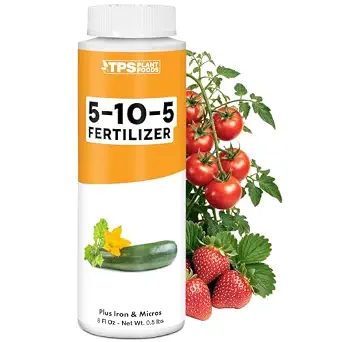 |
| Highest Rated A top-rated pick with lots of positive feedback | Old Cobblers Farm Wicked Growth Garlic and Onion Fertilizer (5 lb) |  |
| Most Popular A crowd favorite that many people choose with confidence | TPS NUTRIENTS Onion Fertilizer Liquid Plant Food, 8 oz |  |
| Best Seller A high-volume bestseller chosen again and again | Prevegenics Onion Liquid Fertilizer (32 fl. oz.) |  |
Gardenera Liquid Power Onion Fertilizer Spray, Ready-to-Use 8 oz

| Item Form | Liquid |
|---|---|
| Application Method | Spray |
| Coverage | Low |
| Target Species | Vegetables |
| Unit Count | 8 Fluid Ounces |
The Gardenera Liquid Power Onion Fertilizer Spray is a premixed foliar feed delivered in an easy spray bottle for quick nutrient uptake by onion leaves and stems. It is used by simply shaking and misting foliage every 7 to 14 days to give plants an immediate boost without measuring or mixing. Notable features include a fast-acting liquid formula designed specifically for vegetables, a low-coverage spray suited to targeted applications, and portability for use in pots, raised beds, or garden rows. Practical benefits are visible quicker than soil-applied feeds because the spray bypasses the soil and supplies nutrients directly to the plant, which can help when growth or color looks weak midseason. Limitations are the small 8 ounce volume and low coverage rating, so heavy feeders or larger beds will require multiple bottles or more frequent purchases, and foliar sprays do not replace balanced soil fertility or long-term soil amendments. For gardeners seeking a simple, no-mix foliar tonic for onion plants this product makes feeding fast and straightforward.
Best for: Gardeners who want a simple, no-mix foliar boost for onion plants in containers or small beds and prefer fast visible results with minimal fuss.
Less Ideal for: Growers managing large vegetable plots or commercial beds who need high-coverage, long-lasting soil fertilizers or bulk nutrient solutions.
- Ready-to-use spray eliminates measuring and mixing for quick application
- Foliar delivery promotes rapid nutrient uptake through leaves and stems
- Formulated specifically for vegetables and onions to support growth and yield
- Portable 8 oz bottle works well for potted plants and small garden plots
- Low coverage and small bottle size mean frequent repurchasing for larger gardens
- Foliar spray is not a substitute for comprehensive soil fertility management
Verdict: Buy this if you want an easy, ready-to-use foliar spray to quickly support onion growth and improve foliage and yields in small-scale gardens.
Old Cobblers Farm Wicked Growth 8-16-16 Granular Fertilizer (5 lb) for Root Crops

| Item Form | Granules |
|---|---|
| Application Method | Broadcast, Side-dress, Or Soil Incorporation |
| Target Species | Root Crops |
| Unit Count | 1 Fluid Ounces |
This 8-16-16 granular fertilizer is designed to boost root crop yield by supplying higher phosphorus and potassium with moderate nitrogen to avoid excessive top growth. It is typically applied at planting by broadcasting, banding beside rows, or worked into beds, then used again as a midseason side-dress when tubers begin to size. Notable features include a straight-nutrient formulation focused on P and K, clear application guidance for row crops, and a coverage claim that a 5 lb bag treats roughly 170 to 250 sq ft depending on rate. In practice the higher P and K supports bulb and tuber bulking for onions, potatoes, carrots, and beets while the lower N helps prevent leafy overgrowth that can reduce bulb formation. The main limitation is that it is a single-formula granular feed so you should pair it with a soil test or complementary nitrogen source if your soil is deficient; it also requires careful placement to avoid seed or bulb contact and thorough watering after application. For growers who monitor soil nutrients, it makes a straightforward, performance-focused feed for onion production.
Best for: Growers who prioritize harvest size and quality in onions and other root crops and who base feeding on soil tests or planned nutrient programs.
Less Ideal for: Beginners who want an all-in-one balanced fertilizer without testing or gardeners seeking a liquid feed for quick foliar correction.
- High phosphorus and potassium ratio supports bulb and tuber bulking important for onions
- Moderate nitrogen minimizes excessive leafy growth that can reduce bulb development
- Multiple application methods supported: broadcast, side-dress, or soil incorporation
- Clear coverage guidance for planting and midseason side-dressing from the 5 lb bag
- Single NPK formulation means you may need an additional nitrogen product if soil tests show low N
- Granular form requires careful placement and watering to avoid seed or bulb contact
Verdict: Choose this fertilizer if you want a performance-focused granular feed that boosts phosphorus and potassium to increase onion bulb size while keeping foliage growth in check.
Gardenera Liquid Power Onions Fertilizer Concentrate, 8 oz

| Item Form | Liquid |
|---|---|
| Specific Uses For Product | Onions |
| Coverage | Full |
| Liquid Volume | 8 fluid ounces |
| Mixing Ratio | 3:1:2 |
Gardenera Liquid Power is a targeted liquid fertilizer concentrated for onions, intended to be diluted and applied to soil or used as a foliar spray. It supplies a balanced NPK emphasis toward phosphorus and potassium plus chelated micronutrients and an acidic formulation that helps unlock iron and other trace elements in alkaline soils. Typical use is mixing per the supplied 3:1:2 ratio and applying with a watering can, drip system, or hose-end sprayer; it is also suitable for potted and in-ground onion beds. Practical benefits include faster nutrient availability, improved bulb firmness and flavor, and reduced risk of soft or splitting bulbs by supporting moisture balance and root vigor. Important limitations are the small 8 oz size for larger plots and the low pH which requires careful handling and protective gear; follow dilution instructions to avoid leaf burn and do not apply near sensitive plants. The product is marketed for onions specifically, so gardeners growing mixed vegetable beds should plan application accordingly.
Best for: Gardeners who want a focused, easy-to-apply feed to optimize onion bulb size and flavor in small to medium beds or containers and who prioritize efficient nutrient uptake.
Less Ideal for: Growers managing large-scale plots who need bulk fertilizer or those looking for an all-purpose vegetable feed for mixed crops.
- Onion-specific NPK and micronutrient blend designed to support bulb development and flavor.
- Acidic formula that improves micronutrient availability in alkaline soils.
- Versatile application options compatible with watering cans, drip systems, and foliar sprays.
- Fast-acting liquid concentrate that can be mixed to match bed size and needs.
- Small 8 oz bottle may require frequent repurchasing for larger garden areas.
- Low pH concentrate requires careful dilution and protective handling to avoid plant or skin irritation.
Verdict: Choose this concentrate when you want a practical, onion-focused feed that improves bulb development and nutrient availability with minimal fuss.
TPS NUTRIENTS 5-10-5 Liquid Fertilizer, 8 fl oz

| Brand | TPS NUTRIENTS |
|---|---|
| Item Form | Liquid |
| Target Species | Vegetables |
| Liquid Volume | 8 fluid ounces |
| Mixing Ratio | 5-10-5 |
The TPS NUTRIENTS 5-10-5 liquid fertilizer is a small, concentrated feed aimed at supporting root and bulb crops like onions. It is supplied as an 8 fl oz liquid with a 5-10-5 NPK ratio and micronutrients, designed to be mixed and applied with a watering can or hose-end sprayer. In practice it is used during bed preparation in spring and for maintenance through the growing season to encourage strong roots, steady foliage growth, and improved bulb development. The liquid format makes it easy to apply evenly in garden rows or containers and the moderate phosphorus level helps support root and tuber formation important for onions. The compact bottle is convenient for small plots but requires accurate measuring because the supply is limited compared with larger bottles or granular options. Safety guidance calls for gloves and careful storage away from children and pets. For home gardeners growing onions in beds or containers, this product is a straightforward, easy-to-use feed with a formulation suited to bulbs, though heavy feeders or larger plots may need more frequent repurchasing or larger-volume alternatives.
Best for: Home gardeners growing onions in small beds or containers who want an easy-to-apply, bulb-focused fertilizer and prefer a low upfront cost per bottle.
Less Ideal for: Large-scale growers or anyone managing extensive beds who need a long-lasting, high-volume fertilizer solution.
- 5-10-5 NPK ratio targeted for root and bulb development
- Liquid form allows even application with a watering can or hose-end sprayer
- Includes micronutrients to support overall plant health
- Compact 8 fl oz bottle is easy to store and handle
- Small 8 fl oz volume may require frequent repurchasing for larger gardens
- Concentrated liquid requires careful measuring to avoid overapplication
Verdict: A compact, easy-to-apply 5-10-5 liquid feed that fits budget-minded home gardeners looking to support onion bulb and root development.
Old Cobblers Farm Wicked Growth Garlic and Onion Fertilizer (5 lb)

| Item Form | Granules |
|---|---|
| Target Species | Garlic and Onion |
| Application Method | Granular |
| Unit Count | 16 Ounce |
This granular fertilizer is designed specifically for garlic, onions, shallots and related alliums and is meant to be used both pre-plant and as a side-dress during the growing season. Its balanced 10-10-10 NPK plus 3% sulfur (from gypsum and elemental sulfur), 2% calcium and micronutrients boron and zinc targets bulb formation, even development, and the sulfur compounds that contribute to allium flavor. Typical use is mixing 1/2 to 1 cup per 10 sq ft pre-plant, then side-dressing 1/2 cup per 10 linear feet when tops are 4 to 6 inches tall and repeating every 4 to 6 weeks, with feeding stopped a few weeks before harvest. Practical benefits include a crop-specific nutrient profile that reduces guesswork for allium beds and clear application guidance on the label. Important limitations are that it is a conventional synthetic granular feed so soil testing is still advisable to avoid over-application, and granules must be kept off foliage and bulb shoulders and watered in to prevent burn or uneven uptake.
Best for: Gardeners who prioritize consistent, predictable results for onion and garlic beds and want a fertilizer formulated specifically to support bulb development and flavor.
Less Ideal for: Organic-only growers or those seeking liquid foliar feeds or slow-release organic compost alternatives should consider other products.
- Balanced 10-10-10 NPK tailored for bulb formation
- Contains 3% sulfur to support typical allium flavor compounds
- Includes calcium, boron and zinc to improve bulb firmness and development
- Clear pre-plant and side-dress directions for easy seasonal use
- Conventional granular formula so a soil test is recommended before use
Verdict: Choose this product when you want a reliable, allium-focused granular fertilizer that supports bulb formation and flavor with a balanced nutrient profile.
TPS NUTRIENTS Onion Fertilizer Liquid Plant Food, 8 oz

| Item Form | Liquid |
|---|---|
| Application Method | Mix with water and spray or pour onto plants |
| Target Species | Onions |
| Liquid Volume | 8 fluid ounces |
| Mixing Ratio | 1 tablespoon per gallon of water |
This TPS Nutrients onion fertilizer is a targeted liquid plant food designed for onions, garlic, and other alliums; it is mixed with water at 1 tablespoon per gallon and applied by spraying or pouring onto soil. In practice it is used through the bulbing stage to encourage stronger roots, balanced foliage, and denser bulbs, and the liquid form makes nutrients available quickly during key growth phases. The product is compact and easy to store, which makes it convenient for gardeners using raised beds, containers, or in-ground rows. Notable features include its onion-specific formulation and straightforward mixing ratio. Practical benefits are improved bulb consistency and the ability to feed plants precisely when they need it. Limitations are its small 8 ounce volume and low coverage rating, so larger plantings will require multiple bottles and more frequent purchases. The product is useful as a focused supplement within a broader feeding plan rather than a one-stop solution for large-scale fertility management.
Best for: Gardeners growing onions, garlic, or other alliums in small beds or containers who want a targeted, easy-to-use feed to improve bulb size and consistency.
Less Ideal for: Large-scale growers or those managing extensive planting areas who need high-coverage or bulk fertilizer solutions.
- Onion-specific formula aimed at promoting root strength and bulb development
- Liquid form that is absorbed quickly when mixed and applied
- Simple mixing ratio (1 tablespoon per gallon) makes dosing easy
- Suitable for beds, raised planters, and container-grown onions
- Small 8 ounce bottle provides limited coverage for medium to large gardens
- Listed coverage rated as low, so frequent applications may be needed
Verdict: Use this concentrated liquid feed when you want a straightforward, onion-specific fertilizer to boost bulb development in small home gardens and containers.
Prevegenics Onion Liquid Fertilizer (32 fl. oz.)

| Item Form | Liquid |
|---|---|
| Specific Uses For Product | Plant Growth |
| Coverage | Full |
| Target Species | Allium cepa |
| Liquid Volume | 32 fluid ounces |
Prevegenics Onion Liquid Fertilizer is a 32 fl. oz. concentrated liquid designed to be diluted and applied at the base of onion plants to improve growth and bulb quality. It supplies a balanced mix of macronutrients and micronutrients including nitrogen, phosphorus, potassium, calcium, magnesium, sulfur and trace elements such as boron, copper, manganese and zinc. Typical use is to mix one part fertilizer to three parts water and apply as a soil drench during the onion growing season to support healthier foliage and potentially larger, more uniform bulbs. The liquid form makes measurement and even application straightforward while the full-coverage label indicates it can be used across beds. Limitations are that precise N-P-K values are not listed on the product details and the formula relies on regular, correct dilution for safe use, so cautious gardeners should follow directions to avoid overfeeding. For gardeners who prefer granular slow-release feeds, this product requires more frequent handling and mixing.
Best for: Practical backyard growers who want a ready-to-use, plant-specific liquid feed for onions and prefer predictable, instruction-led care.
Less Ideal for: Gardeners who want granular slow-release fertilizers or need precise N-P-K numbers for tight nutrient management.
- Formulated specifically for onions, targeting Allium cepa needs.
- Liquid concentrate is easy to dilute and apply evenly as a soil drench.
- Includes a range of macro and micronutrients to support overall plant health.
- Clear mixing ratio provided for consistent application.
- No explicit N-P-K ratio shown in the product details.
- Requires regular mixing and application versus a single granular feed.
Verdict: A straightforward liquid concentrate made for onion beds that supplies a broad set of macro and micronutrients for growers seeking an easy, plant-specific feed.
Choosing the Right Fertilizer for Onions: Key Factors to Consider
Nutrient Ratio and Stage Timing
Onions need different nutrients at each stage. Early growth benefits from modest nitrogen to build a healthy top without delaying bulb set. As bulbs form, a shift toward moderate potassium and available phosphorus helps size and storage quality. Applying a high-nitrogen fertilizer late in the season can produce lush tops at the expense of bulb development and storage life.
Gardeners should match the fertilizer's N-P-K profile to the crop stage and plan feedings accordingly. Split applications or using a product with predictable release behavior lets you give a milder nitrogen boost early and then move to formulations that favor bulb maturity.
Release Type and Feeding Schedule
Fertilizers come as quick-release soluble formulas, slow-release granules, and organic amendments that mineralize over time. Fast-release products give an immediate nutrient shot but can burn seedlings and require more frequent applications. Slow-release and controlled-release forms offer steadier availability, reducing the risk of nutrient spikes and minimizing labor for repeated feeds.
Decide based on how often you can feed and whether you want precise control. For short-season or small-scale plantings, a liquid feed timed with critical growth stages can be efficient. For larger beds or unattended plots, a slow-release granule or incorporated organic material is usually more forgiving.
Soil Texture, pH, and Compatibility
Onion response to fertilizer depends on soil texture and pH. Sandy soils drain quickly and may need more frequent feeding because nutrients leach. Clay soils hold more nutrients but can tie up some minerals, making them less available. pH influences nutrient availability; for instance, micronutrients become less available in alkaline soils, which can cause yellowing even when overall nutrient levels seem adequate.
Use a soil test to guide fertilizer choice and lime or sulfur adjustments. Choose fertilizers and application methods that complement your soil type, and avoid high-salt synthetic feeds on young transplants in light soils where burn risk is higher.
Micronutrients and Bulb Quality
Beyond N-P-K, onions need certain micronutrients for strong growth and storage. Sulfur is important for flavor compounds and is a particular consideration in onions. Boron, zinc, and manganese affect cell wall strength and overall plant vigor. A deficiency in key micronutrients can reduce bulb size and shorten storage life even if macronutrients are adequate.
Look for fertilizers that include or can be paired with trace element supplements when a soil test indicates deficiencies. Avoid overapplication of micronutrients; they are needed in small amounts and can be toxic if applied excessively.
Application Method and Labor
Consider how you will apply fertilizer. Banding or preplant incorporation places nutrients where roots will access them early. Side-dressing during the growing season is common for onions but requires repeated trips down the bed. Foliar feeds can correct quick deficiencies but are not a substitute for good root-zone fertility.
Match product form to your workflow. Granular fertilizers are convenient for preplant and sidedress applications. Soluble fertilizers work well with irrigation or for targeted feeding at transplanting. If you grow onions in containers or small raised beds, concentrated liquid feeds allow precise control with less material to store.
Organic Vs Synthetic Sources
Organic fertilizers release nutrients more slowly as microbes break them down, which can improve soil structure and long-term fertility. They are less likely to cause salt burn and are often preferred by gardeners aiming for sustainable systems. Synthetic fertilizers deliver nutrients in plant-available forms immediately, making them useful for correcting deficiencies or for short-season production.
Decide based on your growing philosophy, the timing needs of your crop, and how quickly you need nutrients to be available. Many gardeners use a combination: build soil with organic amendments and supplement with targeted synthetic feeds when faster correction is needed.
Matching Fertilizer to Onion Planting Method
Transplants, sets, and direct-seeded onions each have different nutrient needs at establishment. Sets usually need gentler feeding to avoid excessive top growth, while transplants benefit from a balanced starter that helps roots settle. Direct-seeded onions emerge slowly and can be more sensitive to concentrated salts from strong starters.
- Use low-to-moderate nitrogen at planting for sets.
- Apply a starter with a balanced N-P-K for transplants to support root establishment.
- For direct seeding, incorporate organic matter or mild, evenly distributed granular fertilizer to reduce burn risk.
Timing Fertilizer Applications Through the Season
Plan feeds around the onion life cycle: establishment, bulbing initiation, bulb enlargement, and maturation. Early applications should encourage steady top growth without excess vigor. A mid-season feed emphasizing potassium can aid bulb fill. Stop heavy feeding several weeks before harvest to allow tops to senesce and bulbs to cure properly.
- Consider a light starter at planting.
- Schedule a mid-season sidedress when bulbs begin to swell.
- Avoid high-nitrogen applications late in the season.
Soil Testing and Adjustments
A soil test gives specific direction on what your plot lacks and whether pH adjustments are needed. Base fertilizer choice and application rates on test results rather than default recipes. Tests also reveal salt levels that might influence whether you use organic or low-salt synthetic products.
- Test pH and available phosphorus, potassium, and organic matter.
- Adjust lime or sulfur based on pH recommendations.
- Use test results to pick micronutrient supplements only when indicated.
Feeding Onions in Containers and Small Beds
Container-grown onions need frequent, diluted feedings because pots limit nutrient reserves and nutrients wash out with irrigation. Choose soluble feeds or regular liquid organic teas and reduce concentration to prevent root damage. Small raised beds with good organic matter can often be managed with one preplant incorporation followed by a single midseason feed.
- Use half-strength liquid feeds more often for containers.
- In raised beds, build fertility with compost before planting.
- Monitor plants closely for signs of deficiency in confined soils.
Combining Organic Matter with Targeted Fertilizers
Adding compost or well-rotted manure before planting improves soil structure and provides a slow nutrient source. Pairing this with a targeted fertilizer allows you to fine-tune N-P-K and address micronutrient gaps. This mixed approach supports both immediate crop needs and longer-term soil health.
- Incorporate compost at planting for long-term fertility.
- Use targeted fertilizers to correct specific nutrient ratios.
- Avoid fresh manure high in nitrogen right before planting as it can burn seedlings.
How We Chose the Best Fertilizer for Onions
Our selection focused on fertilizers that match the physiology and seasonal needs of onions. We prioritized nutrient formulations that support the bulb initiation and enlargement phases without forcing excess top growth. Release profiles were assessed to favor steady feeding or adjustable timing compatible with typical onion crop cycles. We examined nutrient balance with attention to nitrogen, phosphorus, and potassium ratios, plus secondary nutrients and micronutrients that matter for bulb quality. Soil compatibility was another major filter: products suitable for low-organic soils, raised beds, and potted onions were included. Ease of use and application flexibility – dry versus liquid, sidedress versus preplant incorporation – were weighed so gardeners can fit feeding into existing routines. We excluded items intended only for lawns or broad-spectrum vegetable mixes that lack onion-appropriate ratios. Also left out were fertilizers with ingredients known to burn small onion roots when misapplied. The final list emphasizes practical feeding approaches that match common onion planting times and soil tests.
FAQ
How much nitrogen do onions need and when should I apply it?
Onion nitrogen needs are modest relative to leafy crops. Apply a light nitrogen supply at establishment to support tops, then reduce rates as bulbs begin to form. A midseason feed with moderate nitrogen is acceptable, but avoid heavy nitrogen late in the season to prevent delayed bulb maturity.
Can I use general vegetable fertilizer on onions?
General vegetable fertilizers can work if their N-P-K and release pattern match onion needs. Avoid mixes with very high nitrogen or those lacking potassium and sulfur. Adjust application timing so the fertilizer supports bulb formation rather than excessive top growth.
What signs show my onions need micronutrients?
Yellowing that is not corrected by balanced N-P-K, poor bulb development, or weak tops can indicate micronutrient issues. A soil test is the best way to confirm deficiencies. Foliar symptoms can help diagnose which trace element is lacking, but test results guide treatment and rates.
Should I stop fertilizing before harvest?
Yes. Reduce or stop feeding several weeks before harvest so tops can die back naturally and bulbs cure. Continuing heavy feeding close to harvest risks softer bulbs and poor storage life.
Is slow-release fertilizer better than liquid for onions?
Slow-release fertilizers are convenient for beds where you want steady nutrition with fewer applications. Liquid feeds offer precise control and quicker correction for deficiencies. The best choice depends on your schedule and how quickly the onions need available nutrients.
Will compost alone supply enough nutrients for onions?
Compost improves soil structure and supplies some nutrients, but it may not provide the exact N-P-K balance onions need for optimal bulb size. Many gardeners use compost as a baseline and add targeted fertilizer based on soil test results.
Final Verdict
Choose a fertilizer strategy that fits your planting method, soil test results, and how much time you can spend feeding. Prioritize an N-P-K profile and release type that encourage bulb set and fill rather than late-season leafy growth. Address micronutrient needs only when indicated and aim to stop feeding before bulbs mature to ensure good curing and storage. By matching nutrient ratios, timing, and application method to your onion crop, you can reliably improve bulb quality and storage life without risking burn or excess top growth.
