

Note: This article contains affiliate links. If you click on these links and make a purchase, I may earn a small commission at no extra cost to you. This helps support my research and content. Read my full affiliate disclosure here.
If you keep plants in water-whether for simple propagation, indoor hydroponics, or elegant vase displays-the right fertilizer keeps roots healthy and foliage vigorous. Fertilizers formulated for water culture behave differently than soil amendments: they must dissolve fully, supply the right balance of macro and micronutrients, and avoid residues that cloud water or fuel algae. This guide shortlists seven top options suitable for plants growing in water and explains the practical tradeoffs gardeners should weigh. We evaluated products for nutrient completeness, solubility, ease of dosing, and suitability for different water-based setups so you can pick the right fit for cuttings, houseplants in vases, or small hydroponic systems.
Top Picks at a Glance
| Best Overall The best all-around choice for most situations | TPS NUTRIENTS Water Plant Fertilizer, Liquid Plant Food, 8 oz |  |
| Best Quality Built to a higher standard if you want something more solid | FoxFarm Grow Big Hydroponic Liquid Plant Food, 1 Pint |  |
| Best Value The sweet spot between price and what you get | Purived All-Purpose Liquid Houseplant Fertilizer, 16 fl oz (Makes 50 Gallons) |  |
| Best Budget The cheapest option that still gets the job done reliably | crystalpro Flora Multi Minerals Liquid Aquarium Plant Fertilizer (125 ml) |  |
| Highest Rated A top-rated pick with lots of positive feedback | General Hydroponics FloraGro 2-1-6 Liquid Plant Food, 16 oz |  |
| Most Popular A crowd favorite that many people choose with confidence | TPS Nutrients Liquid Plant Food for AeroGarden and Hydroponics, 8 oz |  |
| Best Seller A high-volume bestseller chosen again and again | Ahopegarden 800ml A&B Hydroponic Nutrients Liquid Plant Food |  |
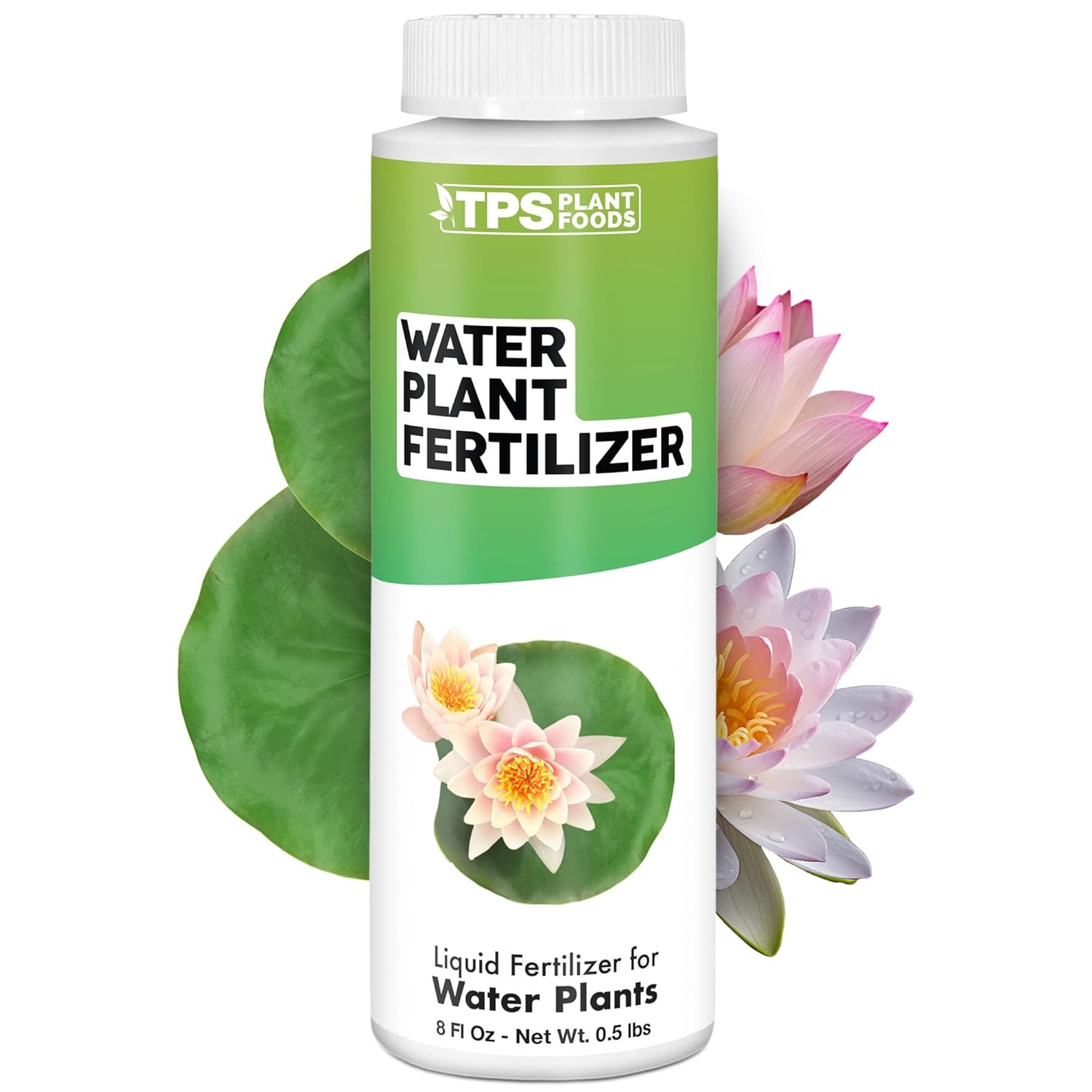
TPS NUTRIENTS Water Plant Fertilizer, Liquid Plant Food, 8 oz
| Item Form | Liquid |
|---|---|
| Specific Uses For Product | Aquatic Plant Growth |
| Target Species | Water Plants |
| Liquid Volume | 8 fluid ounces |
| Mixing Ratio | 1:0:0 |
This 8 oz liquid fertilizer is made specifically for plants grown in water and supplies a balanced, low-nitrogen feed with iron and micronutrients to support foliage and root development. It is typically mixed at the recommended rate (1 teaspoon per gallon) and applied weekly, making it easy to use for small water gardens, indoor propagation jars, and container pond plants. The formulation emphasizes gentle nutrition for aquatic species, so it helps keep leaves green without encouraging excessive algae that high-nitrogen feeds can cause. Practical benefits include targeted support for water-grown plants and clear dosing instructions, plus compatibility with other TPS products like Aqua Soil and Aqua CO2 for hobbyists building a complete setup. Limitations are the small 8 oz volume, which means frequent repurchase for larger or multiple ponds, and the safety note to avoid skin and eye contact and not to allow fertilizer into natural water sources. This product suits routine weekly maintenance but is not intended to replace larger-volume pond treatments for sizable water features.
Best for: Gardeners who maintain small water gardens, indoor water planters, or propagation jars and want a gentle, easy-to-dose fertilizer tailored to aquatic plants.
Less Ideal for: Owners of large outdoor ponds or commercial water features that need bulk dosing or long-interval treatments should look for higher-volume pond fertilizers.
- Formulated specifically for aquatic plants, including water lilies and lotus
- Low nitrogen formula with added iron and micronutrients to support green foliage
- Simple weekly dosing (1 teaspoon per gallon) for easy routine use
- Liquid form mixes readily in water for even nutrient distribution
- Small 8 oz bottle limits coverage for larger ponds or multiple containers
- Contains instructions to avoid entry into natural water sources which requires careful application
Verdict: A compact, easy-to-use liquid fertilizer that delivers gentle, aquarium-safe nutrition for small water gardens and indoor aquatic plant setups.
FoxFarm Grow Big Hydroponic Liquid Plant Food, 1 Pint

| Item Form | Liquid |
|---|---|
| Specific Uses For Product | Hydroponic |
| Liquid Volume | 16 fluid ounces |
| Mixing Ratio | 2-3 teaspoons per gallon |
FoxFarm Grow Big Hydroponic is a concentrated liquid nutrient designed for vegetative stages in hydroponic systems. You mix 2 to 3 teaspoons per gallon depending on strength, maintain pH around 5.8 to 6.3, and feed plants weekly or per your system schedule. The 3-2-6 formula plus micronutrients and earthworm castings supports rapid leaf and stem development and is formulated for quick uptake in water-based setups. Practical benefits include easy dosing, compatibility with conductivity or ppm monitoring, and a proven brand feeding schedule that guides transitions to bloom formulas when flowering begins. Limitations are that it is focused on vegetative growth rather than flowering so you will need separate bloom nutrients for later stages, and users must monitor pH and EC to avoid overfeeding in recirculating systems. The pint size is convenient for hobby and small commercial setups but frequent heavy feeders will need larger volumes or repeat purchases. Follow safety directions to avoid skin or eye contact.
Best for: Growers who prioritize vigorous vegetative growth in hydroponic or water-based systems and who monitor pH and nutrient strength to optimize performance.
Less Ideal for: Gardeners who need an all-in-one feed that covers aggressive flowering or those who prefer dry or soil-only fertilizers.
- Formulated specifically for hydroponics with a 3-2-6 NPK aimed at vegetative growth
- Contains micronutrients and earthworm castings for more complete nutrition
- Quickly absorbed liquid concentrate suitable for water-based systems
- Simple, measurable mixing ratio that works with ppm/EC monitoring
- Designed for vegetative growth only so a separate bloom product is required for flowering
- Small 1 pint volume may require frequent repurchasing for larger or multiple systems
Verdict: If you want fast, measurable vegetative growth in hydroponic systems, this concentrated Grow Big formula delivers targeted nutrients for strong leaf and stem development.
Purived All-Purpose Liquid Houseplant Fertilizer, 16 fl oz (Makes 50 Gallons)

| Item Form | Liquid |
|---|---|
| Application Method | soil drench, foliar feed, full & semi hydroponics |
| Target Species | Houseplants |
| Mixing Ratio | 320:1 |
Purived All-Purpose Liquid Houseplant Fertilizer is a concentrated 16 fl oz bottle that mixes 1 cap per gallon to treat up to 50 gallons of water. It is formulated for indoor potted plants and supports multiple application methods including soil drench, foliar spray, and full or semi-hydroponics, so you can use the same product whether you water, mist, or run nutrient solutions. The formula lists primary macronutrients and a range of micronutrients, which helps correct common deficiencies and supports steady growth when used at the recommended dilution. Practical benefits include an easy-to-follow mixing ratio, an odorless solution that is simple to store, and broad compatibility with different feeding routines. Important limits are that the label gives no N-P-K percentages, so precise nutrient planning for sensitive seedlings or specialty plants is not possible, and safety precautions mean you must handle and store it carefully. For new plants, start at or below the recommended dilution and observe growth before increasing frequency.
Best for: Buyers who want a versatile, no-fuss fertilizer for establishing and maintaining new houseplants and who value a single product that works across watering, misting, and basic hydroponic setups.
Less Ideal for: Growers who need exact N-P-K formulations for seedlings, specialty plants, or strict hydroponic nutrient regimens should consider a product with full nutrient breakdown and concentration details.
- Very concentrated so one bottle treats up to 50 gallons, reducing repurchase frequency
- Suitable for multiple application methods: soil drench, foliar feed, and hydroponics
- Includes a range of micronutrients in addition to primary NPK components
- Simple, clear mixing ratio (320:1) that is easy to follow
- No N-P-K ratio listed on the product information, limiting precise nutrient management
- Requires careful handling and storage due to safety warnings
Verdict: A concentrated, easy-to-use all-purpose fertilizer that covers feeding, foliar, and basic hydroponic needs for new houseplants.
crystalpro Flora Multi Minerals Liquid Aquarium Plant Fertilizer (125 ml)

| Form | Liquid |
|---|---|
| Liquid Volume | 125 ml |
| Mixing Ratio | 5:100 (High Support), 1:100 (Low Light) |
| Target Species | plants |
| Ingredients | potassium, nitrate, magnesium, calcium, iron, boron, manganese, zinc, copper, molybdenium, cobalt |
Crystalpro Flora Multi Minerals is a concentrated all-in-one liquid fertilizer for freshwater planted aquariums designed to promote faster root and leaf growth. It is mixed into tank water at specified ratios (5:100 for high support, 1:100 for low light) and dosed weekly to biweekly depending on planting density. The formula lists both macronutrients and trace elements — potassium, nitrate, magnesium, calcium and iron plus boron, manganese, zinc, copper, molybdenum and cobalt — so it covers a wide spectrum of plant needs without separate bottles for micro and macro feeds. Notably it contains no phosphate or silicate, which helps reduce the chance of fueling algae compared with fertilizers that include those components. Packaging is small and highly concentrated so a single 125 ml bottle will treat many gallons when dosed sparingly. Limitations: it is strictly a liquid mineral solution so users wanting added carbon, chelated iron forms for extreme deficiencies, or fertilizer tabs for substrate release may need complementary products.
Best for: Buyers who want a simple, cost-effective way to feed a freshwater planted tank without buying separate micro and macro bottles and who prefer low-maintenance weekly dosing.
Less Ideal for: Aquarists seeking substrate slow-release nutrients, full carbon dosing solutions, or highly customized chelated iron treatments should consider specialized supplements or combined regimens instead.
- Complete macro and trace element blend in one bottle so you do not need multiple supplements
- Zero phosphate and silicate formulation reduces risk of encouraging algae
- High concentration means small doses treat large volumes, stretching a budget
- Safe for fish, shrimp and snails so it can be used in community planted tanks
- Small bottle size requires careful measuring for larger tanks
- Does not supply carbon or substrate-bound nutrients, so some setups will need additional products
Verdict: A concentrated, algae-friendly all-in-one mineral fertilizer that stretches a small budget by covering macro and trace needs in a single bottle.
General Hydroponics FloraGro 2-1-6 Liquid Plant Food, 16 oz

| Item Form | Liquid |
|---|---|
| Specific Uses For Product | Plant Growth, Structural Growth, Root Development |
| Target Species | All plants |
| Mixing Ratio | 2.2:1 |
FloraGro 2-1-6 is a concentrated liquid nutrient intended to promote structural and leaf development for plants grown in hydroponic systems and containers. It is normally used as one component of the FloraSeries trio, mixed with FloraMicro and FloraBloom to tailor nutrient ratios for different growth stages; the product lists a mixing ratio of 2.2:1 for preparing a working solution. In practice it delivers easily measured nitrogen and potassium levels that support vigorous vegetative growth and works across a wide range of plant types. The liquid format makes dosing and quick adjustments simple for regular feedings, and the 16-ounce bottle is convenient for hobby grow rooms or small tubs. Limitations are that it is not a complete single-bottle fertilizer by itself and requires combining with other products to cover micronutrients and other growth phases, and careful mixing and handling are needed because concentrates can burn roots or foliage if overdosed. For someone who wants dependable, adjustable hydroponic nutrition, this fits into a reliable feeding routine when paired correctly.
Best for: Growers who prioritize a predictable, adjustable feeding program for plants in water or containers and who plan to use a multi-part nutrient system to manage different growth stages.
Less Ideal for: Casual gardeners who want a single-bottle, all-in-one fertilizer or beginners unwilling to learn mixing and dosing procedures.
- Concentrated liquid formula allows precise dosing and easy adjustments
- Specifically formulated to promote structural and foliar growth
- Designed to integrate with FloraMicro and FloraBloom for customizable nutrient mixes
- Suitable for all hydroponic applications and as a supplement for potted plants
- Not a complete single-step fertilizer and requires other FloraSeries components for a full nutrient program
- Concentrated formula requires careful measuring to avoid overfeeding
Verdict: Buy this if you want a dependable, adjustable liquid nutrient to reliably support vegetative growth in hydroponic or container setups when used with the rest of the FloraSeries.
TPS Nutrients Liquid Plant Food for AeroGarden and Hydroponics, 8 oz

| Item Form | Liquid |
|---|---|
| Specific Uses For Product | Plant Growth, Root Development |
| Target Species | Herb, Vegetable |
| Mixing Ratio | 5 mL (1 tsp) per quart of feedwater |
| Unit Count | 8 Fluid Ounces |
This 8 oz liquid plant food provides concentrated, reservoir-safe nutrition intended for AeroGarden and comparable hydroponic units. It is used by mixing the recommended 5 mL per quart of feedwater into the system reservoir on a regular feeding schedule to supply macro and micronutrients for herbs, greens, and other compact edible plants. Notable features include a liquid formulation that dissolves easily, a focus on root development, and explicit compatibility with indoor hydroponic gardens. In practice it simplifies feeding for small indoor crops because a measured teaspoon per quart is straightforward to dose and store. Important limitations are the small bottle size, which will require frequent repurchasing for larger or multiple units, and the need to follow dilution directions carefully to avoid overfeeding. Safety handling is necessary because the concentrate should be kept away from children and pets. For risk-averse growers, the product’s clear mixing ratio and hydroponic focus make predictable feeding simple, but you should track reservoir concentrations rather than guessing frequency or volume adjustments.
Best for: Buyers who want a simple, low-risk feeding routine for indoor green onions and other small edible hydroponic crops and prefer clear dosing instructions they can follow reliably.
Less Ideal for: Growers managing large hydroponic setups, outdoor beds, or those who need a detailed NPK profile for tailored nutrient programs should look for larger or fully specified concentrates.
- Designed specifically for AeroGarden and similar hydroponic systems for straightforward compatibility
- Liquid formula mixes easily for even nutrient distribution in the reservoir
- Clear mixing ratio (5 mL per quart) simplifies dosing and repeatable feeding
- Targets root development and steady growth for herbs and vegetables
- Small 8 oz bottle may not last long for multiple or larger units
- No full nutrient analysis or NPK breakdown provided on the product listing
Verdict: A compact, easy-to-dose liquid fertilizer that makes predictable feeding of indoor green onions simple and low risk.
Ahopegarden 800ml A&B Hydroponic Nutrients Liquid Plant Food

| Item Form | Liquid |
|---|---|
| Specific Uses For Product | Hydroponic Nutrients, Plant Growth, Root Development, Seed Development |
| Target Species | Vegetables, Fruits, Flowers |
| Liquid Volume | 800 ml |
| Mixing Ratio | 1:1 (5ml A + 5ml B per 1L then use 1:200) |
This two-part Ahopegarden hydroponic nutrient comes as an 800 ml concentrate intended to feed plants through every growth stage in indoor hydroponic systems. You mix 5 ml of Solution A and 5 ml of Solution B into 1 L of water (a 1:200 working ratio) and dose that solution to your reservoir; the product separates incompatible minerals across two bottles to keep the formula stable and bioavailable. In practice it is easy to use for beginners thanks to clear directions and a marked cap for measuring, and the complete A&B formula means you do not need multiple specialty bottles for veg versus bloom phases. The concentrate should support many refill cycles, which helps stretch value for budget-minded growers. Limitations are typical of concentrated A&B systems: you must keep the two parts separate until mixing and follow the dosing precisely to avoid nutrient imbalance, and no N-P-K breakdown or micronutrient list is provided on the label for fine-tuning advanced nutrient programs.
Best for: Growers who want an affordable, all-in-one hydroponic nutrient that is easy to measure and stretches across multiple refill cycles for year-round indoor vegetables and herbs.
Less Ideal for: Advanced hobbyists who need exact N-P-K and micronutrient specifications or growers running specialized nutrient regimens will want a product with full analytical data.
- Large 800 ml concentrate provides enough solution for multiple grow cycles
- Two-part A&B formulation keeps incompatible minerals separate for stable potency
- Simple, marked cap and clear mixing instructions make it beginner-friendly
- Marketed as complete full-cycle feed suitable for vegetables, fruits, and flowers
- Label does not list a detailed N-P-K or full micronutrient breakdown for precision feeding
- Requires careful mixing of two parts and accurate dosing to avoid imbalance
Verdict: Ahopegarden's 800 ml A&B concentrate is a budget-friendly, easy-to-use complete feed that stretches across many hydroponic cycles for reliable full-cycle indoor growing.
Choosing the Right Fertilizer for Plants Growing in Water: Key Factors to Consider
Nutrient Profile and Ratios
The proportions of nitrogen, phosphorus, and potassium determine how a plant allocates resources between leaf growth, root development, and flower or fruit production. In water culture you need a formula that provides available forms of these macronutrients rather than relying on soil processes.
Micronutrients such as iron, manganese, zinc, and boron are equally important because they prevent subtle deficiencies that show up quickly in hydroponic or vase-grown plants. Choose fertilizers that list full NPK values and a clear micronutrient panel so you can match the blend to the plant type and growth stage.
Solubility and Water Clarity
Fertilizers for water culture must dissolve fully and leave minimal residue. Insoluble solids will cloud small containers, coat roots, and create pockets where anaerobic bacteria can flourish.
Clear solutions are easier to monitor for root health and algae. Highly soluble, water-stable formulations reduce the need for frequent water changes and simplify dosing because you can be confident every measurement goes into solution as intended.
Dosing Precision and Container Size
Many water-grown setups use tiny volumes of water, so a small dosing error can cause large swings in nutrient concentration. Look for products with precise measuring tools or simple per-liter dosing guidance.
Concentrated concentrates can be economical but are harder to dose at small scales. If you grow cuttings in jars or maintain decorative vases, pick formulas that allow milliliter-level accuracy or come with graduated droppers to avoid overfeeding.
pH Stability and Chelated Micronutrients
Plants in water are sensitive to pH swings because there is no buffering soil. Fertilizers that help stabilize pH or include chelated iron and other trace elements make nutrients more available across the typical pH range of tap and filtered water.
Chelation prevents micronutrients from precipitating out of solution and becoming unavailable to roots. For long-term water culture or hydroponic setups, pH-friendly formulations reduce the need for constant adjustments.
Algae Control Considerations
Any nutrient in the water is also a food source for algae. Bright light, warm temperatures, and organic residues accelerate algal growth in open reservoirs. Formulas that dissolve cleanly and include minimal organic additives lower algae risk.
Practical countermeasures include opaque containers, smaller top-ups with fresh water, and balanced dosing schedules. When algae are a frequent problem, favor fertilizers designed for hydroponics rather than those containing organic components meant for soil microbiology.
Plant Stage and Species Needs
Different plants and growth stages demand different nutrient mixes. Young cuttings need milder nutrient levels focused on root formation, while actively growing foliage or flowering specimens need higher nitrogen or bloom-supporting phosphorus respectively.
Consider the plant species you are growing in water. Tropical houseplants, succulents in propagation, and fast-growing edible greens have varying nutrient tolerances. Choose a product that matches the growth phase and adjust dose accordingly.
Preparing Water and Measuring Dosage
Start with clean water that matches the source the fertilizer guidelines assume. Many labels are based on tap water, but if your water is very hard or soft, small adjustments to dose or pH may be necessary. Always mix the fertilizer into a separate measuring container before adding it to your plant reservoir to ensure full dissolution.
- Use a calibrated syringe or graduated dropper for small jars.
- Make up a concentrated stock only if it is stable and the manufacturer provides mixing instructions.
- Record doses and water-change intervals so you can spot trends in plant response.
Managing Root Health and Aeration
Roots in stagnant water can suffer from low oxygen. For long-term water culture or denser plantings, add gentle aeration or plan frequent water changes to keep oxygen levels high and reduce anaerobic zones. Aeration also helps disperse dissolved nutrients evenly in the reservoir.
- Air stones or small aquarium pumps help in small hydroponic setups.
- For single cuttings in jars, replace part of the water every week and refresh nutrients at a milder concentration.
- Keep roots free of slimy buildup by inspecting and rinsing occasionally.
Algae Prevention Without Chemical Algaecides
Algae control is mostly about light management and cleanliness. Reduce light exposure to the reservoir, avoid direct sun on clear containers, and change water regularly to remove floating nutrients that feed algae. Mechanical cleaning and opaque containers are usually enough for home setups.
- Use dark or frosted vases to block light.
- Keep leaf debris out of the water by trimming before placing cuttings.
- Schedule periodic full water changes if algae frequently appear.
Adjusting Feeding for Propagation Vs Established Growth
Young cuttings form roots faster under low-to-moderate nutrient levels. For propagation, use low-concentration feeding and prioritize aeration and stable water conditions. Once roots are established and new leaves develop, gradually increase nutrient concentration according to the product guidance. For ongoing growth or flowering, follow a maintenance or bloom regimen with higher macronutrient ratios suited to the plant's stage. Change water and reset dosing when you switch stages to avoid buildup of excess ions.
- Start propagation at one quarter to half the recommended maintenance dose.
- Increase concentration incrementally over several weeks for leafy growth.
- Monitor foliage color and root vigor when changing feed strength.
Choosing Between Liquid and Soluble Powder Formats
Liquid blends are convenient and usually easier to dose in small quantities. They tend to dissolve quickly and are ready to use, which makes them attractive for decorative vases and small glass jars. Powdered soluble fertilizers can be more economical and are often easier to ship, but they require complete dissolution and careful measurement at small scales. If you prefer very small reservoirs, choose formats that come with dropper caps or clear per-milliliter instructions. For larger home hydroponic rigs, soluble powders are a practical option if you have accurate measuring tools.
- Check that powders dissolve fully at the concentrations you intend to use.
- Prefer liquids with clear dropper markings for single-cutting jars.
- Consider storage and shelf life when picking a format.
How We Chose the Best Fertilizer for Plants Growing in Water
We focused our selection on fertilizers that are explicitly intended for or commonly used in water-based plant culture. Primary evaluation criteria included nutrient formulation, solubility and clarity, dosing simplicity, and suitability across common water-growing situations such as propagation jars, decorative vases, and small hydroponic systems. We also considered safety for indoor use and the likelihood of fostering excessive algae under realistic light and water-change routines. Products were excluded if they were designed solely for soil application, required soil microbes to activate, or left significant insoluble residues in water. We filtered out concentrated compounds that demand complex mixing steps beyond standard measuring tools, and we excluded hobbyist blends without clear nutrient analysis. The final list favors complete or complementary formulas that deliver required macronutrients and trace elements, dissolve cleanly, and include straightforward dosing guidance. Where applicable, packaging and labeling clarity were considered so gardeners can dose confidently for small reservoirs and decorative displays.
FAQ
How often should I add fertilizer to plants growing in water?
Frequency depends on plant size and reservoir volume. Small jars often need very dilute feeding weekly, while larger hydroponic reservoirs usually follow a twice-weekly or continuous feed schedule. Monitor plants and root health to adjust timing.
Will all houseplants tolerate fertilizer in water?
Many houseplants tolerate light to moderate nutrient levels in water, but tolerance varies. Species prone to root rot or with low nutrient needs do better with milder feeds. Start at a reduced dose and watch for leaf discoloration or root decline.
How do I prevent mineral buildup in my reservoir?
Perform partial or full water changes on a regular schedule and avoid overdosing. Using filtered water with lower dissolved solids reduces buildup. Periodically clean container walls and roots to remove any precipitated minerals.
Can I use a general hydroponic fertilizer for decorative vases and propagation jars?
General hydroponic formulas are often suitable, but you may need to reduce concentration for small containers and young cuttings. Choose products that dissolve cleanly and offer dosing guidance for small volumes.
Does fertilizer affect water pH in short-term setups?
Some fertilizers can shift pH slightly, especially concentrated salts. In short-term propagation jars you may not need constant pH control, but in longer-term water culture it helps to monitor pH and use pH-stable formulas when available.
Final Verdict
Choose a fertilizer that matches the scale and purpose of your water-grown plants. Prioritize a clear, complete nutrient profile and a formula that dissolves without residue to minimize algae and root problems. For propagation and small decorative displays, favor gentle dosing and precise measuring tools; for larger hydroponic setups, focus on nutrient balance and pH stability. Balancing solubility, dosing accuracy, and algae control will guide most gardeners to the right choice. Follow incremental adjustments and observe plant response to dial in the right regimen for healthy roots and vigorous growth.
