

Note: This article contains affiliate links. If you click on these links and make a purchase, I may earn a small commission at no extra cost to you. This helps support my research and content. Read my full affiliate disclosure here.
Getting fertilizer right for pole beans matters because these climbing legumes need a steady supply of the right nutrients without encouraging excessive leafy growth at the expense of pods. In a backyard, allotment, or container trellis, the wrong feed can reduce yields, increase disease risk, or make plants flop. This guide looks at seven shortlisted options suited for pole beans in common home garden situations. We evaluate each choice for nutrient balance, how easy it is to apply, and how it behaves in real garden soil and containers. Below you will find practical notes on application, timing, and suitability so you can pick a fertilizer that matches your soil, planting style, and harvest goals.
Top Picks at a Glance
| Best Overall The best all-around choice for most situations | Farmer's Secret Fruit & Bloom Booster Liquid Fertilizer (8 oz) |  |
| Best Quality Built to a higher standard if you want something more solid | Jack's Classic 20-20-20 All Purpose Water‑Soluble Fertilizer, 1.5 lb | 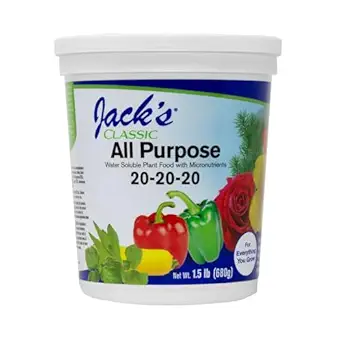 |
| Best Value The sweet spot between price and what you get | Miracle-Gro Water Soluble All Purpose Plant Food (1.5 lb) |  |
| Best Budget The cheapest option that still gets the job done reliably | Miracle-Gro Water Soluble Tomato Plant Food, 1.5 lb |  |
| Highest Rated A top-rated pick with lots of positive feedback | FoxFarm Happy Frog Tomato & Vegetable Fertilizer (5-7-3), 4 lb |  |
| Most Popular A crowd favorite that many people choose with confidence | Miracle-Gro Water Soluble All Purpose Plant Food, 3 lb |  |
| Best Seller A high-volume bestseller chosen again and again | Dr. Earth Organic Tomato, Vegetable & Herb Fertilizer (64 oz) |  |
Farmer's Secret Fruit & Bloom Booster Liquid Fertilizer (8 oz)

| Item Form | Liquid |
|---|---|
| Application Method | dilute with water and pour or spray |
| Coverage | general garden use |
| Mixing Ratio | 1 teaspoon : 2 gallons |
Farmer's Secret Fruit & Bloom Booster is a concentrated liquid feed designed to increase blooms and fruit set by supplying higher levels of phosphorus and potassium alongside nitrogen and trace minerals. You dilute one teaspoon per two gallons of water and apply as a soil drench or foliar spray every 1–2 weeks during the mid-to-late growth cycle when plants begin to bud. The formulation emphasizes root development and nutrient uptake, which helps flowering crops produce more and healthier fruit while supporting disease resistance. Its liquid form means nutrients are immediately available and compatible with watering cans, sprayers, and irrigation systems. Because the bottle is small but very concentrated, a little goes a long way for small-scale vegetable beds or home gardeners growing pole beans. Limitations are its focused bloom/fruit formula rather than a balanced all-season feed and the need to follow dilution instructions carefully to avoid overfeeding sensitive young plants.
Best for: Home gardeners growing pole beans and other vining vegetables who want a targeted boost to flowering and pod set and prefer easy-to-use liquid feeds.
Less Ideal for: Gardeners seeking an all-season, complete maintenance fertilizer or those managing large-acreage plantings who need bulk quantities.
- High phosphorus and potassium blend targeted to increase blooms and fruit set.
- Liquid concentrate is immediately plant-available and compatible with sprayers or irrigation.
- Very concentrated mixing ratio yields many applications from a small bottle.
- Contains trace minerals (iron, zinc, calcium) that support overall plant health.
- Simple dilution instructions and recommended feeding schedule for home gardeners.
- Small 8 oz bottle may be inconvenient for very large gardens despite concentration.
- Formula is geared toward flowering and fruiting stages rather than all-purpose, continuous feeding.
Verdict: If you want a compact, easy-to-use liquid booster to encourage stronger roots and better flower and pod production on pole beans, this concentrated formula delivers quick, targeted results.
Jack's Classic 20-20-20 All Purpose Water‑Soluble Fertilizer, 1.5 lb

| Item Form | Powder |
|---|---|
| Specific Uses For Product | Plant Growth |
| Coverage | All |
| Mixing Ratio | 0.22 |
Jack's Classic 20-20-20 is a professional‑grade, water‑soluble powder designed for routine feeding of vegetables, ornamentals, and houseplants. You mix the measured powder into water and apply it to roots or foliage every 7 to 14 days, or dilute much lower for seedlings and cuttings. The balanced N-P-K formula promotes quick green-up and leaf expansion, making it useful during vegetative growth of pole beans and other vining crops. It includes micronutrients so you do not typically need a separate supplement, and the provided scoop makes dosing straightforward. As a soluble powder it stretches farther than premixed liquids and suits spray or continuous feed systems. Important limits to note are that it is a general all‑purpose formula rather than a crop‑specific blend optimized for heavy pod set, and it requires careful measuring to avoid overfeeding; follow the directions for seedlings and established plants. If you want a simple, consistent feed to maintain vigorous foliage and steady growth through the season, this product performs reliably.
Best for: Gardeners who prioritize consistent, performance-oriented nutrition for healthy vegetative growth and want a single soluble fertilizer they can use across seedlings, container plants, and garden rows.
Less Ideal for: Growers seeking a bloom- or pod-focused fertilizer to maximize bean yields or those who prefer slow-release granular feeds that require less frequent application.
- Balanced 20-20-20 formula supports quick green-up and leaf expansion for vegetative growth
- Water-soluble powder stretches farther than liquids and works for foliar spray or root feeding
- Includes micronutrients so additional supplements are usually unnecessary
- Comes with a measuring scoop and clear mixing directions for consistent dosing
- General-purpose blend rather than a formula tailored specifically for maximizing bean flowering and pod set
- Requires careful measurement and dilution to avoid nutrient burn or overfeeding
Verdict: A dependable, performance-focused soluble 20-20-20 fertilizer that delivers quick green-up and flexible foliar or root feeding for vigorous pole bean vegetative growth.
Miracle-Gro Water Soluble All Purpose Plant Food (1.5 lb)

| Item Form | Powder |
|---|---|
| Application Method | Watering Can |
| Target Species | For all flowers, vegetables, trees, shrubs and houseplants |
| Mixing Ratio | 24-8-16 |
| Coverage | Full |
Miracle-Gro Water Soluble All Purpose Plant Food is a fast-acting powdered fertilizer you dissolve in water and apply with a watering can or garden feeder to feed vegetables, flowers, shrubs and houseplants. With a 24-8-16 NPK it delivers a strong nitrogen boost that promotes quick leafy growth, which is useful during the vegetative phase of pole beans. The powder mixes easily and the package includes dosing guidance for indoor and outdoor use, plus instructions for use with a Miracle-Gro Garden Feeder. Practical benefits include rapid uptake by roots for visible response in days and flexible use in containers or in-ground beds. Important limitations: the high nitrogen ratio favors foliage over flowering and fruit set, so reduce feeding or switch to a bloom/fruit formula when beans begin to flower and set pods; frequent applications per label are required for continued effect. Also this product is a soluble quick-feed rather than a slow-release option, so it needs regular reapplication to maintain nutrition.
Best for: Home gardeners who prioritize fast, dependable vegetative growth for pole beans and want an easy-to-mix, flexible fertilizer for containers or small beds.
Less Ideal for: Growers seeking a slow-release or bloom-focused fertilizer throughout pod development should consider a lower-nitrogen or bloom/fruit formula instead.
- Water-soluble powder mixes easily for quick nutrient uptake
- High nitrogen NPK (24-8-16) promotes fast vegetative growth
- Clear dosing instructions for indoor and outdoor applications
- Works with watering cans, garden feeders, containers and in-ground beds
- High nitrogen balance may reduce flowering and pod set if used through bloom stage
- Requires repeated applications because it is not slow-release
Verdict: If you want fast, easy feeding to build vigorous pole bean foliage early in the season, this soluble 24-8-16 formula delivers visible results quickly.
Miracle-Gro Water Soluble Tomato Plant Food, 1.5 lb

| Item Form | Liquid |
|---|---|
| Application Method | Water Soluble |
| Specific Uses For Product | Plant Food |
| Target Species | Tomatoes and vegetables |
| Mixing Ratio | 18-18-21 |
This Miracle-Gro water-soluble tomato plant food is a ready-to-mix fertilizer designed to give vegetables a quick nutrient boost when applied with a watering can or garden feeder. It uses an 18-18-21 NPK mixing ratio for rapid uptake and is intended to be used every 7 to 14 days during the growing season. In practice it dissolves easily, distributes evenly through a hose-end feeder or watering can, and produces visible greening and increased fruit set within a couple of feedings when used as directed. The product is safe for a wide range of edible plants and will not burn when mixed to the recommended strength. Limitations to consider are that frequent liquid feeding can require more frequent attention than slow-release granular options and a small 1.5 lb container covers a moderate area, so larger beds may need multiple bottles or refills. For gardeners who want fast, measurable results for vegetable beds, this delivers predictable, easy-to-use nutrition.
Best for: Practical vegetable gardeners on a budget who want an affordable, easy-to-use liquid fertilizer to boost yields in annual vegetable beds and containers.
Less Ideal for: Those who prefer low-maintenance, infrequent feeding or who manage large acreages where bulk granular or slow-release fertilizers are more economical.
- Water-soluble formula mixes easily for use with a watering can or garden feeder
- Balanced NPK (18-18-21) for both vegetative growth and fruit development
- Works quickly so you can see results within one to two feedings
- Smaller 1.5 lb size may require frequent repurchasing for larger gardens
- Requires regular applications every 1–2 weeks compared with slow-release fertilizers
Verdict: A fast-acting, easy-to-mix liquid fertilizer that gives vegetable gardeners a budget-friendly way to boost bean and tomato yields quickly.
FoxFarm Happy Frog Tomato & Vegetable Fertilizer (5-7-3), 4 lb

| Item Form | Granules |
|---|---|
| Specific Uses For Product | Vegetables, Tomatoes, Soft Fruits, and Berries |
| Mixing Ratio | 5:7:3 |
| Unit Count | 64 Ounce |
FoxFarm Happy Frog Tomato & Vegetable Fertilizer is a granular, balanced 5-7-3 feed designed for vigorous feeders such as tomatoes, vegetables, and soft fruits. You apply it to in-ground beds, containers, or rows following the package mixing instructions; it supplies higher middle-number phosphorus to support flowering and fruit set while calcium helps reduce blossom end rot. Included mycorrhizal fungi aim to improve root efficiency and nutrient uptake, which is useful for plants with heavy fruit loads. The product is OMRI listed, so it fits organic-minded gardens, and the granular form is easy to work into soil or mix for side-dressing. Limitations are that it is a general vegetable formula rather than a bean-specific feed and its nutrient ratio may be richer than low-nitrogen programs some growers prefer for legumes. Also the 4 lb bag is convenient for small plots but may require more frequent repurchasing for larger gardens. For growers who prioritize consistent results and root support, this fertilizer delivers predictable, garden-ready nutrition.
Best for: Buyers who want a reliable, organic-friendly all-purpose vegetable fertilizer that supports strong roots and consistent fruit set in small to medium vegetable beds.
Less Ideal for: Gardeners who manage large-scale beds or who need a low-nitrogen, bean-specific fertilizer should consider products formulated specifically for legumes or larger-volume options.
- Balanced 5-7-3 ratio supports vegetative growth and fruit production
- Contains calcium to help prevent blossom end rot on fruiting crops
- Includes mycorrhizal fungi to improve root nutrient and water uptake
- OMRI listed for use in organic gardening
- Granular form is easy to apply to containers, rows, or in-ground beds
- Not tailored specifically to legumes so nitrogen level may be higher than some bean programs recommend
- 4 lb bag may be small for larger or multi-bed gardens
Verdict: A dependable organic-friendly granular fertilizer that promotes root efficiency and reliable fruit production in small to medium vegetable plantings.
Miracle-Gro Water Soluble All Purpose Plant Food, 3 lb

| Item Form | Powder |
|---|---|
| Application Method | Mix with water in a watering can |
| Fertilizer Analysis | 24-8-16 |
| Unit Count | 48 Ounce |
Miracle-Gro Water Soluble All Purpose Plant Food is a powdered NPK 24-8-16 fertilizer designed to be mixed with water and applied with a watering can or garden feeder to give plants a fast nutrient boost. Typical use is straightforward: measure the included scoop, dissolve in the recommended volume of water, and soak the soil at the base of plants every 1 to 2 weeks for steady feeding. Notable features are its water-soluble format for rapid root uptake, clear mixing directions for indoor and outdoor use, and broad suitability across vegetables, flowers, trees, shrubs, and houseplants. For pole beans specifically, the higher nitrogen content supports leafy growth during establishment while phosphorus and potassium help flowering and pod development when used as directed. Practical benefits include quick visible response compared with granular feeds and wide coverage from a single 3 lb container. Important limitations are that frequent applications are required for ongoing nutrition and that the relatively high nitrogen ratio may require moderation once plants begin heavy fruiting to avoid excessive foliage. Handle carefully to avoid skin or eye contact and follow label dilution rates.
Best for: Gardeners who want a reliable, fast-acting fertilizer with many positive user reviews and clear instructions for use on vegetables like pole beans.
Less Ideal for: People who prefer low-maintenance, slow-release feeding or organic-only gardeners should consider alternate granular or organic formulas.
- Water-soluble powder delivers nutrients to roots quickly for fast plant response
- Clear mixing instructions for indoor and outdoor use make application simple
- Broadly labeled safe for vegetables and container plants when used as directed
- Feeds a large area from one container with coverage of approximately 1,200 sq ft
- Requires reapplication every 1 to 2 weeks, so more maintenance than granular slow-release fertilizers
- High nitrogen ratio may encourage foliage over fruit if overused during pod set
Verdict: Choose this if you want a proven, fast-acting soluble fertilizer that reliably feeds pole beans and other vegetables with easy, repeatable applications.
Dr. Earth Organic Tomato, Vegetable & Herb Fertilizer (64 oz)

| Item Form | Granules |
|---|---|
| Specific Uses For Product | Organic |
| Coverage | Medium |
| Target Species | Herb |
| Unit Count | 64 Ounce |
This Dr. Earth organic granular fertilizer is designed to feed vegetable gardens, raised beds, containers and transplants with a balanced, slow-release nutrient profile and added soil microbes. It is typically applied at planting, during transplanting, or mid-season and the directions recommend repeat feedings for containers every six weeks. Notable features include a 100 percent organic ingredient list, probiotic strains and both ecto- and endo-mycorrhizae intended to improve nutrient uptake and drought tolerance. In practical terms that means it can boost plant vigor while reducing the need for synthetic fertilizers and may help pole beans access phosphorus and other nutrients more effectively in marginal soils. Limitations are that it is a medium-coverage granular product so larger beds will require multiple bags and the product contains phosphorus which some local regulations restrict near waterways. For gardeners who prefer organic, proven formulations with microbial support, this is a straightforward, low-risk choice for improving vegetable yields.
Best for: Gardeners who prioritize organic, low-risk inputs and want a microbial-enhanced fertilizer for vegetable beds and containers to support steady growth and yield.
Less Ideal for: People who need a high-coverage commercial solution for large-scale acreage or those who must avoid any phosphorus-containing products due to local rules.
- 100 percent organic ingredients with no GMOs, chicken manure, or sewage sludge
- Includes probiotic microbes and eight strains of mycorrhizae to support nutrient uptake and drought tolerance
- Granular slow-release formula that feeds for several months after application
- Suitable for planting, transplanting, raised beds and containers with clear application guidance
- Medium coverage means multiple bags are needed for larger plots
- Contains phosphorus which may be restricted by local regulations near waterways
Verdict: A dependable organic granular fertilizer with microbial inoculants that makes a safe, low-risk option for feeding pole beans and other vegetables in home gardens.
Choosing the Right Fertilizer for Pole Beans: Key Factors to Consider
Nutrient Ratio and Pod Development
Pole beans need a balance that supports flowering and pod set more than lush foliage. A fertilizer with moderate nitrogen, adequate phosphorus, and potassium helps encourage blooms and fruiting. Too much nitrogen can push vines to produce leaves at the expense of flowers, which reduces pod yield.
Look for formulations that list an N-P-K ratio tuned toward bloom and fruiting or products labeled for flowering vegetables. Micronutrients like magnesium and boron also affect flower retention and pod fill, so consider feeds that include these in small amounts.
Release Rate and Feeding Schedule
How quickly nutrients become available affects timing and frequency of applications. Fast-release soluble feeds give quick boosts during flowering or after heavy picking, but they require more frequent reapplication and careful dosing to avoid burn. Slow-release granules or coated fertilizers provide steadier, lower-maintenance feeding over weeks to months.
Match release rate to how intensively you tend the crop. For intensive, frequently harvested plots, a combination of an initial slow-release base and periodic soluble top-ups often works best. For low-maintenance beds or vacation periods, lean toward longer-release options.
Application Method and Practicality
Ease of applying fertilizer matters when plants climb trellises and access is limited. Liquid feeds applied at the base are simple and allow more frequent, low-dose feeding. Granules sprinkled on soil or incorporated into planting holes are less labor-intensive but harder to adjust midseason.
Consider whether you prefer hand-mixing a liquid concentrate, broadcasting granules, or using spike-type feeders. Also factor in how fertilizer interacts with irrigation-some forms dissolve quickly with drip systems while others rely on soil moisture to break down.
Soil Type and pH Interactions
Soil texture and pH influence nutrient availability and fertilizer choice. Clay soils hold more nutrients but can bind some elements at certain pH ranges, while sandy soils drain quickly and may need more frequent feeding. Soil pH affects availability of phosphorus and micronutrients, so testing soil before choosing a feed helps avoid wasted applications.
If your soil is acidic or alkaline, select a fertilizer whose nutrients remain available in that pH range or plan to adjust pH with amendments. In containers, use potting mixes with known composition and select formulations designed for container culture.
Safety for Edible Harvests
Because pole beans are eaten fresh or shelled, choose fertilizers labeled safe for food crops and follow withholding guidelines if any. Avoid feeds that contain salts or additives that can accumulate in soil and affect taste or safety, particularly in containers where salts concentrate faster.
Follow application rate directions closely and irrigate after application where recommended to reduce burn risk and prevent salt buildup.
Environmental Impact and Organic Options
Consider how the fertilizer affects soil life, nearby water, and beneficial insects. Organic or slow-release mineral options tend to support soil biology better and reduce runoff risk. Synthetic soluble feeds can be effective but require careful management to avoid leaching into waterways.
If you prioritize soil health and long-term fertility, look for products with minimal synthetic additives and that improve organic matter when combined with compost practices.
Timing Feeding With Growth Stages
Feed pole beans at stages that match their needs. Start with a light application at planting to support root establishment, then reduce nitrogen as vines develop to avoid excess foliage. Apply a bloom-focused feed when flowers appear to encourage pod set.
After the first flush of pods, a midseason boost can help sustain production. Use soluble feeds at low concentration for a quick lift, or side-dress with a balanced granular feed for a slower effect. Always follow guidance for edible crops and water in granular feeds to move nutrients into the root zone.
- Planting: light starter dose with root-friendly micronutrients
- Flowering: shift to lower nitrogen, higher phosphorus for pod set
- Midseason: small, regular boosts to maintain production
Feeding in Containers and Small Spaces
Containers require closer attention to feeding because potting mixes hold limited nutrients and salts can build up. Use watered-in liquid feeds at reduced strength more often rather than large granular applications. Consider slow-release granules at planting to provide a baseline and supplement with periodic liquid feeding.
Choose fertilizers formulated for container vegetables and flush containers occasionally with plain water to prevent salt accumulation. Also monitor plant vigour and leaf color for signs of deficiency rather than relying solely on a schedule.
- Start with a slow-release at potting time
- Top up with weak liquid feed every 1 to 2 weeks during bloom
- Flush containers once midseason to remove excess salts
Organic Vs Synthetic Feeds: Tradeoffs
Organic fertilizers release nutrients more slowly and support soil biology, which benefits long-term fertility and structure. They often contain lower concentrations of immediately available phosphorus and potassium, so response is gradual. Synthetic soluble feeds give predictable, fast nutrient availability useful for sprinting crops or correcting deficiencies quickly.
For gardeners who prioritize flavor and soil health, organic options combined with compost and mulch are attractive. For those needing rapid correction or feeding during intense production windows, water-soluble synthetics can be used sparingly and responsibly.
- Organic: better for soil life, slower acting
- Synthetic: fast action, requires careful dosing
- Combine approaches for baseline fertility plus targeted boosts
Common Nutrient Deficiencies and What They Look Like
Yellowing older leaves is often a sign of nitrogen shortfall, while pale new growth or distorted leaves may indicate micronutrient issues such as iron or manganese. Poor flower set or small pods can point to low phosphorus or potassium during bloom.
Scouting regularly helps detect issues early. Before changing fertilizer strategy, inspect roots and soil moisture because water stress and pests can cause similar symptoms. A simple soil test will clarify nutrient levels and guide corrections without guesswork.
- Nitrogen deficiency: yellowing older leaves, reduced vigor
- Phosphorus shortage: poor flowering, weak root growth
- Potassium lack: small or poorly filled pods
Applying Fertilizer Around Trellised Plants
When plants climb a trellis, space and access influence how you apply fertilizer. Basal applications at the root zone are safest and do not disturb vines. For foliar feeding, use low-strength sprays applied in the early morning or evening to avoid leaf burn and to improve absorption during flowering.
If you use granular side-dressing, place material several inches from stems and work gently into the topsoil to avoid root damage. Water in after application unless the product instructions advise against it.
- Apply at the root zone rather than on foliage unless foliar feed is advised
- Use low-strength foliar sprays when quick correction is needed
- Avoid piling granules against stems to prevent burn
How We Chose the Best Fertilizer for Pole Beans
We started by focusing on fertilizers whose nutrient profiles and application methods fit climbing legumes. Evaluation centered on nutrient balance that supports flowering and pod set rather than excessive vegetative growth, formulation types that suit in-ground and container plantings, and ease of applying precise doses on trellised plants. We prioritized options with clear nitrogen, phosphorus, and potassium ratios, available micronutrients important for flower development, and products compatible with common soil types and composting cycles. We also assessed how quickly nutrients become available to plants, whether the formulation reduces burn risk, and the practicality of reapplication during the growing season. Exclusions applied to any feed that is explicitly formulated for heavy-feeding vegetable crops that encourage leafy growth only, products unsuitable for edible crops, or formulations requiring specialist equipment not common to home gardeners. The final list favors reliable nutrient delivery, predictable timing, and methods that work for both raised beds and containers.
FAQ
How often should I fertilize pole beans during the season?
It depends on the feed type. Slow-release granules typically need one application at planting and possibly a midseason top-up. Soluble feeds are often applied every one to three weeks at reduced strength during flowering and pod development.
Can too much nitrogen harm pole bean yields?
Yes. Excess nitrogen encourages leafy growth and can reduce flowering and pod set. Choose a fertilizer with moderate nitrogen and adequate phosphorus and potassium during bloom to favor pods over foliage.
Are foliar feeds useful for pole beans?
Foliar sprays can correct micronutrient deficiencies quickly and give a fast boost during flowering. Use low concentrations and apply in cooler parts of the day to reduce burn risk. Foliar feeding should supplement, not replace, a soil-based feeding plan.
Should I change my feeding approach for containers?
Yes. Containers need more frequent, lower-dose feeding because potting mix holds less nutrient and salts can build up. Use slow-release at potting and supplement with weak liquid feeds, and flush containers occasionally to prevent salt accumulation.
Do pole beans fix their own nitrogen so I can skip fertilizing?
Pole beans fix atmospheric nitrogen with rhizobia but still benefit from balanced nutrients for flowering and pod development. Nitrogen fixation may not supply enough phosphorus, potassium, or micronutrients needed for strong yields, so targeted feeding is often helpful.
Final Verdict
Choose a fertilizer strategy that prioritizes flowering and pod set rather than promoting leafy growth. Start with a baseline that suits your soil or potting mix, then time supplemental feeds for bloom and after heavy picking. Tradeoffs include rapid response from soluble feeds versus lower maintenance and soil health benefits from slow-release or organic options. Focus on nutrient ratios, safe use for edible crops, and a method you will reliably apply. That approach will maximize pod production while protecting soil and plant health throughout the season.
