

Note: This article contains affiliate links. If you click on these links and make a purchase, I may earn a small commission at no extra cost to you. This helps support my research and content. Read my full affiliate disclosure here.
If you grow poppies in beds, borders, or containers, the right fertilizer helps plants set more flowers without encouraging floppy growth or burnt roots. Poppies prefer light, free-draining soil and a feeding approach that promotes bloom rather than unchecked foliage. This guide narrows the choices to seven shortlisted options suited for growing poppies, with notes on nutrient balance, application method, and timing. You will find practical evaluation points gardeners use to pick a fertilizer that fits soil type, planting situation, and maintenance rhythm. Read on to see which characteristics matter most and how the selections were judged.
Top Picks at a Glance
| Best Overall The best all-around choice for most situations | Jack's Classic 20-20-20 All Purpose Water-Soluble Fertilizer (24 oz) | 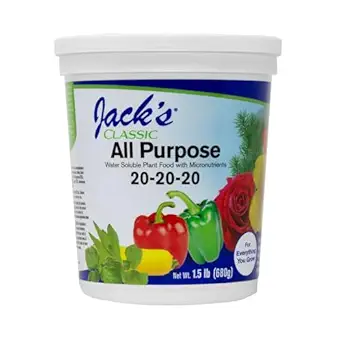 |
| Best Quality Built to a higher standard if you want something more solid | FoxFarm Tiger Bloom Liquid Plant Food (1 pint) |  |
| Best Value The sweet spot between price and what you get | Miracle-Gro Water Soluble Bloom Booster Flower Food, 4 lb |  |
| Best Budget The cheapest option that still gets the job done reliably | Jobe's Flowering Plant Food Spikes 10-10-4, 50 Pack |  |
| Highest Rated A top-rated pick with lots of positive feedback | Espoma Flower-Tone Organic Granular Flower Fertilizer, 4 lb |  |
| Most Popular A crowd favorite that many people choose with confidence | Miracle-Gro Water Soluble All Purpose Plant Food, 3 lb |  |
| Best Seller A high-volume bestseller chosen again and again | Miracle-Gro Water Soluble All Purpose Plant Food, 1.5 lb |  |
Jack's Classic 20-20-20 All Purpose Water-Soluble Fertilizer (24 oz)

| Item Form | Powder |
|---|---|
| Specific Uses For Product | Plant Growth |
| Coverage | All |
| Mixing Ratio | 0.22 |
Jack's Classic 20-20-20 is a professional‑grade, water‑soluble powder fertilizer intended for general feeding of indoor and outdoor plants. You dissolve the measured spoonfuls in water and apply as a root drench or foliar spray every 7 to 14 days, or use weaker mixes for seedlings and cuttings. The even 20-20-20 NPK formula promotes quick green‑up and leaf expansion, while included micronutrients support overall plant health. Because it is a powder concentrate, a small tub makes multiple gallons of feed, which is convenient for regular maintenance across beds, containers, and ornamentals. The product ships with a measuring spoon and clear directions, so it is easy to dose consistently. Limitations to note are that it is a generalist formula rather than crop‑specific booster, so plants with specialized needs may do better with targeted blends, and it requires careful handling and dilution to avoid overfeeding. Protective handling is recommended since the powder can irritate skin and eyes.
Best for: Gardeners who want a reliable, easy-to-use all‑around fertilizer for regular maintenance of outdoor beds, containers, and ornamentals and who value predictable, balanced nutrition.
Less Ideal for: Growers seeking a specialized bloom booster or a fertilizer tailored to a single crop should choose a targeted formula instead.
- Balanced 20-20-20 NPK supports fast green-up and leaf growth across many plant types
- Water‑soluble powder stretches farther than comparable liquid feeds so one tub makes multiple gallons
- Usable as both foliar spray and root feed for flexible application
- Includes measuring spoon and clear mixing directions for consistent dosing
- Added micronutrients reduce need for separate supplements
- General all-purpose formula is not optimized for bloom or fruit boosting
- Requires accurate measuring and dilution to avoid fertilizer burn
Verdict: A straightforward, professional‑grade balanced fertilizer that delivers reliable, easy-to-dose nutrition for maintaining healthy outdoor plants.
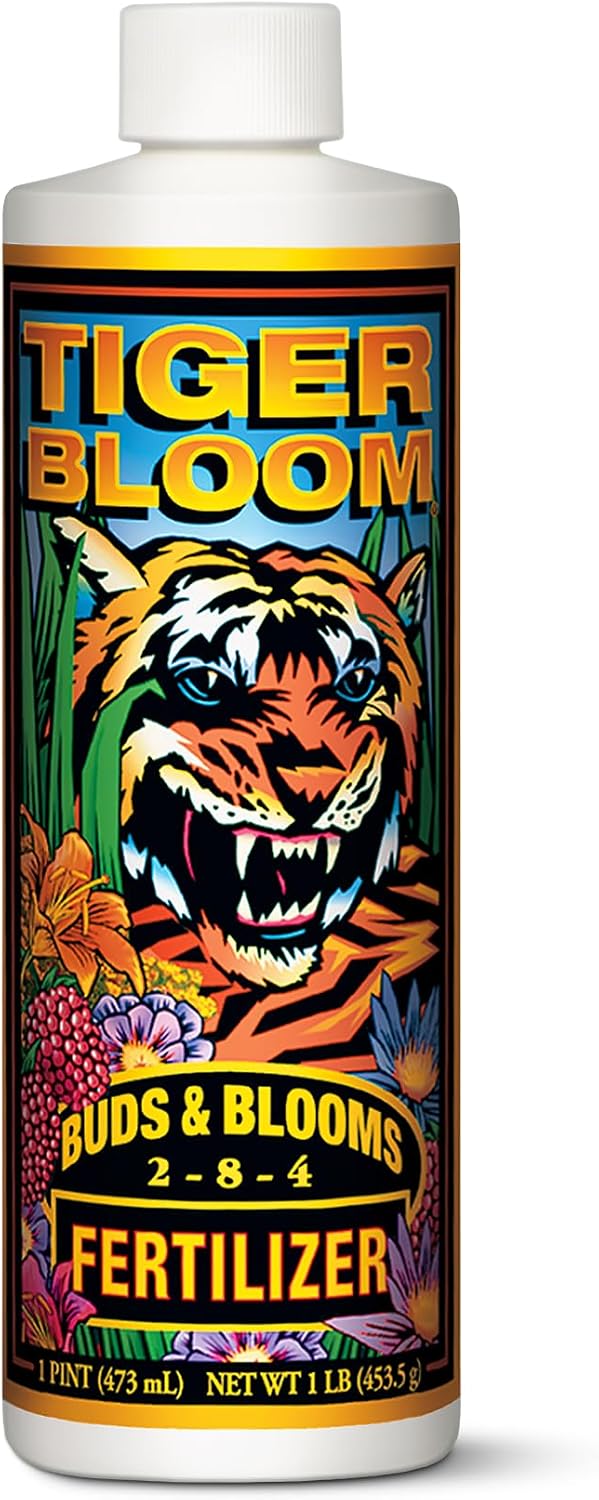
FoxFarm Tiger Bloom Liquid Plant Food (1 pint)
| Item Form | Liquid |
|---|---|
| Specific Uses For Product | Hydroponic |
| Application Method | Watering; Foliar spraying |
| Target Species | Flowering Plants |
| Mixing Ratio | 1:200 or 1:300 |
Tiger Bloom is a liquid, high-phosphorus fertilizer designed to push plants into a strong flowering and fruiting phase. You mix a small amount into the irrigation water or use it as a foliar spray and apply from first signs of flowering through harvest. The 2-8-4 formula and included micronutrients support bud set and larger blooms, and the concentrate mixes at 1:200 to 1:300 for routine feeding or 2 to 4 teaspoons per gallon for heavier feeding. It works in both soil and hydroponic setups and is formulated for quick nutrient uptake and stable micronutrient availability during storage. Practical benefits include flexible application methods, suitability for intensive flowering cycles, and a small bottle that lasts when used at recommended dilutions. Important limitations are that it is bloom-focused rather than an all-purpose feed so it may not meet vegetative needs, and the phosphorus content means users near waterways should follow local regulations to avoid runoff issues.
Best for: Serious growers who prioritize maximizing flower and bloom performance and want a concentrated, fast-acting bloom booster for soil or hydroponic environments.
Less Ideal for: Casual gardeners seeking a single all-purpose fertilizer for every growth stage or those managing turf or non-flowering lawns where phosphorus restrictions apply.
- High phosphorus NPK (2-8-4) concentrated for stronger bud development
- Works in soil and hydroponic systems for versatile use
- Liquid concentrate mixes easily for foliar or watering applications
- Formulated for quick nutrient uptake and stable micronutrient availability
- Focused on flowering so it is not a balanced all-stage fertilizer
- Contains phosphorus which may be restricted near waterways
Verdict: Choose Tiger Bloom when you need a concentrated, fast-acting bloom booster to maximize flower and fruit production.
Miracle-Gro Water Soluble Bloom Booster Flower Food, 4 lb

| Item Form | Powder |
|---|---|
| Application Method | Water Soluble |
| Target Species | flowers |
| Mixing Ratio | 1 tablespoon per gallon |
This Miracle‑Gro Bloom Booster is a water‑soluble powder designed to promote bigger, more colorful blooms on annuals and perennials. It mixes easily in a watering can (mixing ratio 1 tablespoon per gallon for outdoor use) and can also be used with a garden feeder to treat multiple containers and flower beds. The high phosphorus 10-52-10 formulation is the notable feature for encouraging bud set and more abundant flowers, and it delivers results quickly because nutrients dissolve and reach roots fast. Typical use is every 7 to 14 days during the growing season, which makes it convenient for regular maintenance of flowering groundcovers like creeping phlox or mixed container displays. Limitations include the frequent reapplication schedule compared with slow‑release granular fertilizers and the focused bloom‑boosting formula which is not balanced for leafy growth or nonflowering plants. It is best used as a periodic flowering supplement alongside a basic all‑purpose feed or when you specifically want to increase bloom production.
Best for: Gardeners who prioritize frequent, visible flowering results and want an easy soluble booster to use on spring and summer bloomers such as creeping phlox in beds and containers.
Less Ideal for: Those seeking a low‑maintenance, slow‑release fertilizer for foliage development or for primarily nonflowering perennials should consider an all‑purpose or slow‑release option instead.
- High phosphorus 10-52-10 formula to encourage bud formation and more blooms
- Water‑soluble powder that dissolves quickly for fast nutrient uptake
- Works with a watering can or Miracle‑Gro Garden Feeder for flexible application
- Clear mixing directions (1 tablespoon per gallon) make dosing straightforward
- Requires feeding every 7–14 days rather than long‑term slow release
- Specialized bloom formula may not support vigorous leafy growth for nonflowering periods
Verdict: Choose this bloom booster when you want a fast‑acting, water‑soluble fertilizer that reliably increases flower production in creeping phlox and other bloom‑focused plantings.
Jobe's Flowering Plant Food Spikes 10-10-4, 50 Pack

| Item Form | Sticks |
|---|---|
| Application Method | Insert pre-measured spikes into the ground |
| Coverage | Medium |
| Target Species | flowering houseplants |
| Mixing Ratio | 10:10:4 |
Jobe's Flowering Plant Food Spikes are pre-measured sticks you push into potting mix or garden soil to supply a steady dose of nitrogen, phosphorus, and potassium with minimal effort. Each spike is intended for medium coverage and targets flowering houseplants, making them handy for seasonal bloom support. The big practical benefit is convenience: there is no mixing, measuring, or liquid feeding schedule to track, so you can treat multiple plants quickly and without mess. For gardeners growing poppies in containers or small beds, the balanced 10-10-4 formula supports both foliage and flower development. Limitations include lack of precise dosing control for very small seedlings and no information on release rate duration, so heavier feeders may need repeat applications on a schedule. Also these spikes are bulk packaged for routine use rather than one-off specialty feeds, so they work best as a regular maintenance product rather than a targeted remedy for nutrient deficiencies.
Best for: Gardeners who want a no-fuss, economical way to support regular flowering in containers or small beds and prefer low-maintenance root feeding over liquid fertilizers.
Less Ideal for: Growers seeking precise, slow-release scheduling or specialized formulations for diagnosed nutrient deficiencies should consider labored granular or soluble alternatives.
- Pre-measured spikes for fast, low-mess application
- Balanced 10-10-4 N-P-K suitable for supporting blooms
- Bulk 50-pack covers multiple plants or repeat applications
- Simple root-zone delivery avoids leaf burn from foliar feeding
- No stated release duration so feeding frequency must be estimated
- Not suited for precise micro-dosing on seedlings or very small plants
Verdict: A practical, budget-friendly choice for gardeners who want an easy, repeatable way to encourage flowers without mixing liquids or complex schedules.
Espoma Flower-Tone Organic Granular Flower Fertilizer, 4 lb

| Brand | Espoma |
|---|---|
| Item Form | Granules |
| Application Method | Mixing into soil |
| Specific Uses For Product | Organic,Plant Food |
| Mixing Ratio | 3-4-5 |
Espoma Flower-Tone is an organic granular fertilizer designed to be mixed into soil and give steady nutrition to flowering plants. With a 3-4-5 N-P-K ratio it supplies higher phosphorus for bloom development while also providing nitrogen and potassium for overall vigor. It is typically applied when planting or as a top-dress for beds, containers and hanging baskets to support wildflowers and other ornamentals. The granule form makes it easy to measure and incorporate into soil, and the organic ingredients reduce reliance on synthetic salts, which helps preserve soil life over time. Coverage is listed as medium, so a single 4 lb bag suits small beds or several pots rather than large meadows. If you want predictable, long-term feeding for wildflower mixes or mixed perennial borders, this product is a straightforward, low-maintenance option, though heavy-feeding sites will require repeated applications or larger quantities.
Best for: Gardeners who prioritize reliable, soil-friendly feeding for garden beds, containers, and small wildflower patches and want a low-maintenance organic option that promotes blooms over time.
Less Ideal for: People establishing large meadow-size wildflower plantings or those needing immediate, fast-release results should consider higher-coverage or quick-action alternatives.
- Organic formula that supports soil biology and avoids synthetic salts
- 3-4-5 N-P-K ratio emphasizes phosphorus for better bloom production
- Granular form is easy to measure and mix into planting soil
- Suitable for a variety of flowering plants including annuals, perennials and hanging baskets
- 4 lb bag provides limited coverage for larger wildflower areas and requires reapplication
- Not formulated for fast-release feeding if an immediate green-up is needed
Verdict: A dependable organic granular fertilizer that supports steady bloom production in small wildflower beds and container plantings.
Miracle-Gro Water Soluble All Purpose Plant Food, 3 lb

| Item Form | Powder |
|---|---|
| Application Method | Mix with water in a watering can |
| Fertilizer Analysis (N‑P‑K) | 24-8-16 |
| Unit Count | 48 Ounce |
| Coverage | Feeds approximately 1,200 sq. ft. |
Miracle‑Gro Water Soluble All Purpose Plant Food is a powdered NPK 24‑8‑16 formula that dissolves in water to give plants a quick nutrient boost. You mix measured scoops into a watering can and apply to the soil at the base of plants every 7–14 days for outdoor use or every 14 days for houseplants. Notable features include a high nitrogen content for leafy growth, compatibility with containers and in‑ground beds, and guidance for use with a Miracle‑Gro Garden Feeder for larger areas. In practical terms this is a fast‑acting feed that encourages bigger, greener foliage and works well in regular maintenance of perennials like hostas. Limitations are that it is a fast‑release fertilizer rather than a slow‑release option, so it requires regular reapplication and careful measuring to avoid overfeeding. Also, the 24‑8‑16 balance is geared toward vegetative growth, so it is not optimized if you want to prioritize flowering or bloom boosting.
Best for: Buyers who want a reliable, fast‑acting feed to maintain lush, leafy perennials and container plants and who value proven products with broad user endorsement.
Less Ideal for: Gardeners seeking a single, long‑lasting granular fertilizer or a bloom‑focused formula should consider alternative slow‑release or high‑phosphorus products.
- Water‑soluble powder mixes easily for quick uptake by roots
- High nitrogen formula promotes robust leafy growth ideal for shade plants
- Clear mixing and application instructions for both indoor and outdoor use
- Suitable for containers and in‑ground gardens and compatible with garden feeders
- Requires frequent applications so it is not a low‑maintenance, slow‑release option
- High nitrogen ratio is less suitable when the primary goal is more flowers than foliage
Verdict: A fast‑acting, water‑soluble fertilizer that reliably produces bigger, greener hosta leaves when used as directed.
Miracle-Gro Water Soluble All Purpose Plant Food, 1.5 lb

| Item Form | Powder |
|---|---|
| Application Method | Watering Can |
| Target Species | For all flowers, vegetables, trees, shrubs and houseplants |
| Mixing Ratio | 24-8-16 |
Miracle-Gro Water Soluble All Purpose Plant Food is a powder concentrate you mix with water to give a quick nutrient boost to flowers, vegetables, houseplants, shrubs and trees. It is typically dissolved in a watering can or used with a compatible garden feeder to soak soil at the base of plants, delivering nitrogen-heavy nutrition that shows effects faster than granular fertilizers. Notable features include an easy scooping method for indoor and outdoor dosing, compatibility with containers and in-ground planting, and clear directions for feeding every one to two weeks. In practice this makes the product a convenient option when you want visible growth and greener foliage quickly, and the 1.5 lb container covers roughly 600 sq. ft. Important limitations are that it is a fast-release, high-nitrogen formula best used as a regular quick feed rather than a long-term slow-release solution, and it requires careful measuring to avoid overfeeding. For routine maintenance combine with good watering and follow the label to avoid nutrient imbalance.
Best for: Buyers who prefer proven, easy-to-use feeding routines and want noticeable growth quickly for a variety of garden and houseplants, guided by established usage directions and broad user experience.
Less Ideal for: Gardeners seeking a single, long-term slow-release solution or those who prefer organic or low-nitrogen fertilizers for sensitive plantings should consider alternative products.
- Water-soluble powder starts working quickly at the roots when mixed and applied
- Clear, simple dosing for indoor and outdoor use with included scoop guidance
- Suitable for a wide range of plants including vegetables, flowers, shrubs and houseplants
- Covers a large area from a small container (about 600 sq. ft. per 1.5 lb)
- Fast-release formula means benefits are short-term compared with slow-release granular fertilizers
- Requires precise measuring and regular reapplication to avoid overfeeding
Verdict: A reliable, fast-acting water-soluble plant food for gardeners who want easy, repeatable feeding and quick visible results.
Choosing the Right Fertilizer for Poppies: Key Factors to Consider
Nutrient Ratio and Form
The balance of nitrogen, phosphorus, and potassium determines whether poppies produce strong stems with abundant buds or just leafy growth. Poppies typically do best with moderate nitrogen and a slightly higher phosphorus level during bud set to encourage bloom production. Slow-release or controlled-release forms provide a steady supply without spikes that trigger excessive foliage.
Liquid fertilizers deliver a quick dose that can be useful for a targeted bloom push, but they need careful timing. Granular and coated slow-release options reduce the risk of overfeeding and are easier to pair with regular garden maintenance.
Application Method and Timing
How you apply fertilizer affects both plant response and convenience. Granular products applied at planting or as a top dressing give longer-term coverage and require fewer repeat visits. Liquid feeds are responsive and work well during the precise bud-forming window, but they require more frequent scheduling.
Timing matters because poppies set buds on the current season's growth. A light feeding at early growth and another at bud initiation is often sufficient. Overfeeding late in the season can delay flowering or produce weak stems that flop in wind.
Salt Index and Burn Risk
Poppies have relatively shallow root systems, especially when grown in containers or shallow beds, so a high-salt fertilizer or heavy applications can scorch roots and damage seedlings. Choose low-salt formulations or slow-release products with a gentle initial nutrient release to lower burn risk.
If using a concentrated liquid, dilute to below the label maximum for sensitive ornamentals. Always water well after applying dry fertilizers to move nutrients toward roots and avoid surface salt accumulation.
Soil Type and Compatibility
Poppies favor light, sandy or loamy soils that drain easily. If your soil is heavier or has more organic matter, choose a fertilizer that will not hold excess moisture or promote overly lush foliage. Some formulations include soil conditioners or organic matter that can improve structure in poor soils, but these may not be necessary in already well-drained beds.
For container-grown poppies, a balanced, slow-release fertilizer designed for pots helps offset nutrient leaching while keeping the root zone stable.
Feed Longevity and Maintenance Rhythm
Consider how often you want to feed. Slow-release fertilizers can last several weeks to months, which fits gardeners who prefer low-maintenance schedules. Shorter-acting granular feeds or liquids allow more precise control of bloom timing but demand more attention.
Match the product longevity to your gardening routine. If you deadhead and monitor regularly, a responsive liquid regime may be fine. If you prefer set-and-forget, select a reliable slow-release option.
Environmental Profile and Pollinator Considerations
Poppies are highly valuable for pollinators, so fertilizer choice should minimize runoff and avoid high soluble salts that can affect nearby beneficial insects. Organic or low-solubility formulas reduce the chance of nutrient wash into surrounding plants and water sources.
Also check the label for any added pesticides or stabilizers that could be harmful to bees. Choosing fertilizers with clear, minimal ingredient lists helps protect pollinators attracted to poppy blooms.
When To Feed Poppies
Feed newly established poppies lightly at planting and again when the first true leaves are well developed. A second, modest feed at bud initiation supports flower set. Avoid heavy feeding once buds are visible to prevent producing soft, floppy growth.
For spring-blooming varieties, time the second application just as stems begin to elongate. For long-season or repeat-blooming types, monitor growth and apply small, conservative feeds rather than a single large dose.
- Early growth feed: gentle, balanced nutrients
- Bud initiation feed: slightly higher phosphorus for blooms
- Avoid late-season high-nitrogen applications
Feeding Poppies in Containers and Small Beds
Containers lose nutrients faster through watering, so use a product made for potted plants or supplement slow-release granules with occasional weak liquid feeds. Ensure pots have good drainage and monitor soil moisture to reduce salt buildup.
In small beds where soil is shallow, apply lighter doses and water thoroughly after application to move nutrients into the root zone. Top-dressing with compost in the off season can improve nutrient-holding capacity without overfeeding.
- Use pot-specific formulations for containers
- Top-dress shallow beds lightly and water in well
- Flush container soil periodically if salts accumulate
Organic Versus Synthetic Options
Organic fertilizers provide slower nutrient release and contribute organic matter, which can benefit soil life around poppies. They tend to be lower in salt and are a good choice for pollinator-friendly plantings. Expect a gentler, longer ramp-up in plant response compared with soluble synthetics.
Synthetic fertilizers offer quick, predictable nutrient availability and are useful when you need a rapid response ahead of blooming. Use conservative rates to avoid pushing excessive vegetative growth, and choose formulas designed for flowering ornamentals rather than for leafy vegetables or lawns.
- Organic: slower release, soil health benefits, lower salt
- Synthetic: fast acting, predictable timing, needs cautious dosing
Adjusting Fertilizer For Soil Test Results
A soil test removes guesswork. If tests show low phosphorus, prioritize a fertilizer with slightly higher P to support bud formation. If nitrogen is already adequate, avoid high-nitrogen feeds that simply promote leafiness.
pH affects nutrient availability, so correct extremes before applying bloom-focused fertilizers. Many poppies tolerate a range of pH, but ensuring the soil is not strongly acidic or alkaline helps plants take up delivered nutrients efficiently.
- Use test results to select nutrient ratios
- Correct pH issues before major feeding
- Re-test every few years for persistent garden areas
Common Application Mistakes to Avoid
Overapplication is the most frequent error. Too much fertilizer, especially soluble nitrogen, leads to floppy foliage and fewer blooms. Follow label rates precisely and err on the side of lighter feeding for poppies.
Applying dry fertilizer to dry soil without watering can concentrate salts at the root surface and cause burn. Conversely, applying immediately after heavy rain can wash nutrients away. Pick a calm, dry day and water appropriately after application for best results.
- Do not overfeed with high-nitrogen formulas
- Water in dry granular applications to reduce burn risk
- Avoid feeding right before heavy rain
How We Chose the Best Fertilizer for Poppies
We focused on attributes that directly affect poppy performance in real garden situations. Key evaluation criteria included the nutrient ratio and form, because poppies respond differently to high nitrogen than to balanced or bloom-focused mixes. Application method and ease were judged since gardeners often prefer a dry granular, a slow-release pellet, or a liquid feed for timed blooms. Soil compatibility was considered to ensure a fertilizer performs in light, well-drained soils and in raised beds or containers. Salt index and burn risk were assessed to avoid root damage in shallow-rooted poppy seedlings. Timing and predictability measured how reliably a product supports the flowering window without forcing excessive vegetative growth. Finally, environmental profile and suitability for use around pollinator-friendly plants were considered. We excluded products formulated primarily for lawns or heavy-feeding vegetables and any fertilizer with unusually high soluble nitrogen that could encourage leggy, weak poppy plants. Only formulations offering clear instructions and suitable nutrient balance for flowering ornamentals were included.
FAQ
How often should I fertilize established poppies?
Usually twice per season is sufficient: a light feed early in growth and another at bud initiation. Frequency depends on soil fertility and the product's longevity; slow-release formulas need fewer applications.
Can I use general-purpose plant food on poppies?
General-purpose feeds can work if they are balanced and not high in nitrogen. Choose a formula suited to flowering ornamentals and apply conservatively to avoid excessive leaf growth at the expense of blooms.
Are organic fertilizers better for pollinator-friendly poppy beds?
Organic fertilizers often have lower soluble salts and add organic matter, which supports soil life and reduces runoff risk. They are a good match for pollinator plantings but release nutrients more slowly than synthetic options.
How can I tell if my poppies are being overfed?
Signs include unusually lush, soft foliage, weak stems that flop, and delayed or reduced flowering. Leaf burn or white crust on the soil surface indicates salt buildup from overapplication.
Should I adjust feed for container-grown poppies?
Yes. Containers leach nutrients with frequent watering, so use container-specific slow-release products or supplement with periodic diluted liquid feeds while monitoring for salt accumulation.
Is phosphorus important for poppy blooms?
Phosphorus supports root development and bud set, so a slightly higher P during the bud-forming stage can encourage better flowering. Avoid excessive P in soils that already test high.
Final Verdict
Choose a fertilizer that matches your soil, planting situation, and maintenance routine. Prioritize a nutrient balance that supports bud set rather than aggressive leaf growth, and select a delivery form that fits how often you want to feed. Be conservative with nitrogen, avoid high-salt formulas for shallow-rooted poppies, and consider organic options if pollinator protection and soil health are priorities. With those tradeoffs in mind, you can pick a feeding strategy that reliably improves bloom production without stressing plants.
