

Note: This article contains affiliate links. If you click on these links and make a purchase, I may earn a small commission at no extra cost to you. This helps support my research and content. Read my full affiliate disclosure here.
Choosing the right fertilizer for pumpkins makes a real difference in vine vigor, blossom production, and final fruit size. Pumpkins are heavy feeders that need a mix of nutrients at different stages: early growth, flowering, and fruit development. This guide covers six top fertilizer options suited for pumpkins, narrowed to those that perform reliably in home gardens, patches, and allotments. We shortlisted products based on nutrient ratios, ease of application, and how they support each growth phase. Read on for practical guidance about feeding schedules, application methods, and which fertilizer traits matter most for larger, healthier pumpkins.
Top Picks at a Glance
| Best Overall The best all-around choice for most situations | Pendelton Pumpkin Juice Foliar Liquid Fertilizer 11-8-5 (1 qt) |  |
| Best Quality Built to a higher standard if you want something more solid | Prevegenics Liquid Pumpkin Fertilizer (32 fl. oz.) |  |
| Best Value The sweet spot between price and what you get | Scotts All Purpose Flower & Vegetable Continuous Release Plant Food, 3 lb |  |
| Best Budget The cheapest option that still gets the job done reliably | Miracle-Gro Water Soluble Tomato Plant Food, 1.5 lb |  |
| Highest Rated A top-rated pick with lots of positive feedback | HyR BRIX Custom Blend Pumpkin Fertilizer 8-6-12, 45 lb |  |
| Most Popular A crowd favorite that many people choose with confidence | Farmer's Secret Fruit & Bloom Booster Liquid Fertilizer (8 oz) |  |
Pendelton Pumpkin Juice Foliar Liquid Fertilizer 11-8-5 (1 qt)
| Form | Liquid |
|---|---|
| Application Method | foliar |
| Target Species | pumpkins and vegetables |
| Mixing Ratio | 128:1 |
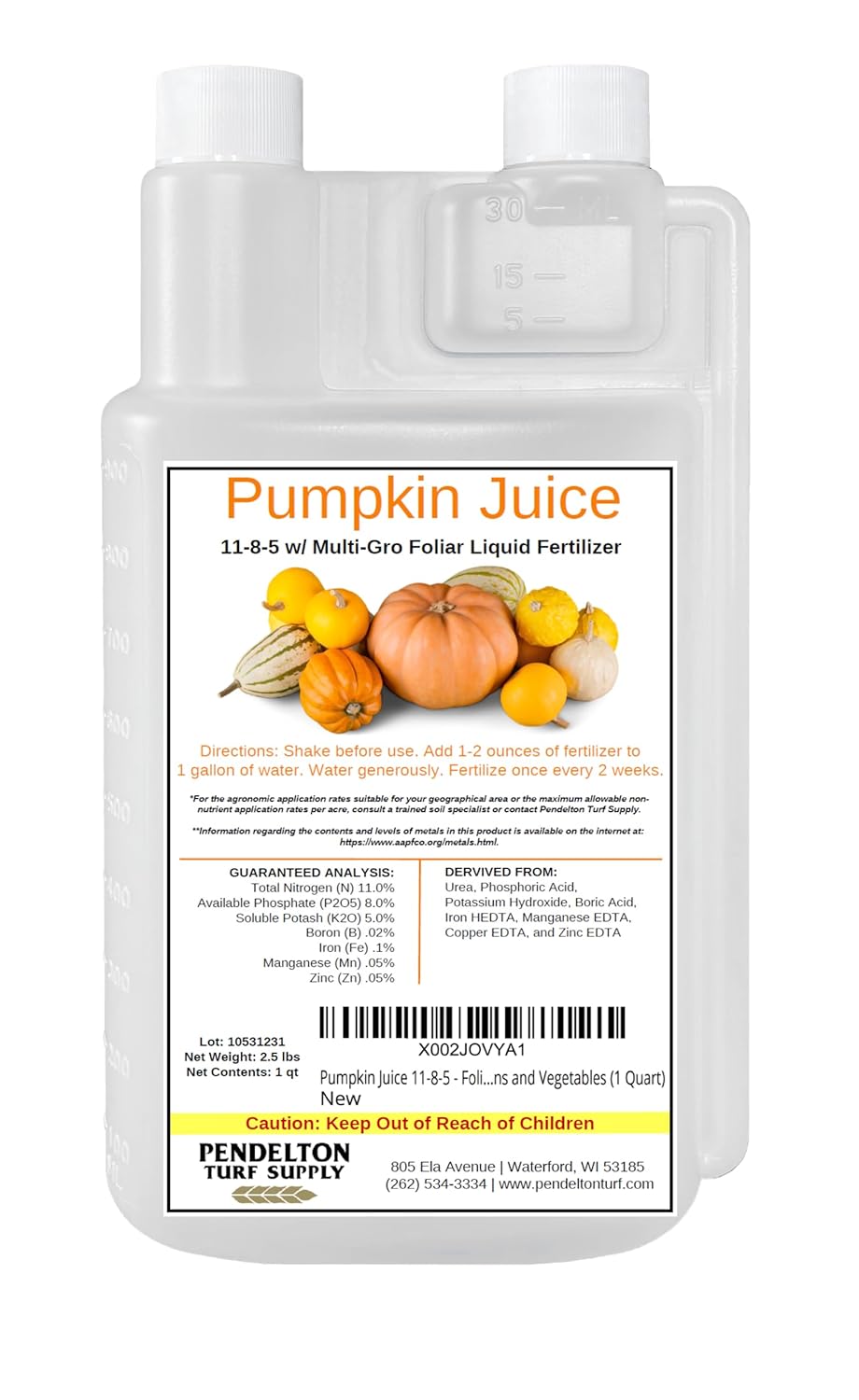
Pendelton Pumpkin Juice is a concentrated foliar liquid fertilizer designed to feed both through leaves and roots, formulated specifically for pumpkins and other vegetables. You dilute it at the recommended ratio (roughly 1 to 2 ounces per gallon) and spray foliage or drench the soil to supply a boost of nitrogen, phosphorus, potassium and trace micronutrients. The 11-8-5 analysis plus added iron, manganese, zinc and boron supports vigorous vegetative growth, flowering and fruit set, and the bottle includes a squeeze-measure cap for easy dosing. As a supplement it works well alongside a regular soil fertility program to jump-start plants, correct minor deficiencies, or push growth during key stages. Limitations are that it is an acidic, supplemental feed rather than a complete soil amendment so it should not replace balanced base fertilization, and foliar sprays require careful timing and mixing to avoid leaf burn or runoff.
Best for: Gardeners growing pumpkins who want a targeted, easy-to-use growth booster to increase vigor, flowering and yield while maintaining a regular soil fertility plan.
Less Ideal for: Those looking for an all-in-one soil amendment or who prefer purely granular slow-release fertilizers for low-maintenance feeding should consider other options.
- High-concentrate formula that makes up to 32 gallons from a 1 quart bottle
- Balanced 11-8-5 NPK with added micronutrients for flowering and fruit set
- Designed for foliar and root application to provide quick nutrient uptake
- Easy measure-and-pour bottle simplifies accurate dilution
- Intended as a supplement and not a complete soil fertility solution
- Acidic formulation requires correct mixing and timing to avoid foliar injury
Verdict: Use this concentrated foliar booster when you need a quick, nutrient-rich lift to improve pumpkin growth, flowering and yields alongside your regular soil program.
Prevegenics Liquid Pumpkin Fertilizer (32 fl. oz.)

| Item Form | Liquid |
|---|---|
| Specific Uses For Product | Pumpkin Growth, Gourd Growth |
| Target Species | pumpkins and gourds |
| Unit Count | 32 Fluid Ounces |
Prevegenics Liquid Pumpkin Fertilizer is a ready-to-mix liquid feed aimed at growers who want faster, measurable gains in pumpkin and gourd vigor and yields. It supplies 9% nitrogen with 3% phosphorus and 6% potassium plus a suite of chelated micronutrients, which supports leafy growth, stronger roots, and better flowering when applied to foliage or soil. Typical use is diluting to the label rate and applying regularly through the growing season as a foliar feed or soil drench to correct deficiencies and boost productivity. The chelated minerals improve uptake in varied soil conditions and the liquid form makes it easy to tank-mix for spot applications or broadcast feeding. Limitations are that exact mixing ratios are left to the product label and aggressive nitrogen content can encourage foliage over fruit if overapplied, so users must follow timing and dilution closely. For performance-focused gardeners it offers a concentrated, convenient way to push growth and fruit set when used as part of a broader fertility plan.
Best for: Gardeners who prioritize measurable performance and want a concentrated, easy-to-apply fertilizer to drive rapid growth and improve pumpkin yields when carefully timed.
Less Ideal for: Casual or beginner gardeners who prefer low-maintenance, premeasured slow-release feeds or those unwilling to follow dilution and timing instructions closely.
- High nitrogen formula (9% N) promotes rapid leafy growth and vigor
- Includes 3% phosphorus and 6% potassium to support root development and fruiting
- Chelated micronutrients improve nutrient uptake across different soils
- Liquid format is easy to dilute and apply as foliar spray or soil drench
- Mixing ratio on the listing is unspecified, requiring consultation of the label before use
- High nitrogen level can favor foliage over fruit if applied at the wrong stage
Verdict: A concentrated liquid feed designed for growers who want to push pumpkin growth and yields with a high-nitrogen, micronutrient-rich formula.
Scotts All Purpose Flower & Vegetable Continuous Release Plant Food, 3 lb

| Item Form | Granules |
|---|---|
| Application Method | Sprinkle on soil and rake into top 1-3 inches |
| Unit Count | 48 Ounce |
| Target Species | All Purpose Flower & Vegetable Continuous Release Plant Food |
This Scotts All Purpose Flower & Vegetable Continuous Release Plant Food is a granular garden fertilizer meant for in-ground use on flowers, annuals, perennials and vegetables. You apply it by sprinkling the granules around plants, raking into the top 1 to 3 inches of soil, and watering to activate the slow-release feeding which the manufacturer says lasts up to two months. Its simplicity and measured coverage make it easy to use across a small to medium patch of pumpkins or mixed vegetable beds without repeated weekly feeding. The notable features are the continuous-release formulation that reduces application frequency and clear labeling for coverage rates. Limitations to expect are that it is not a specialty high-nitrogen or bloom-specific formula tailored for giant pumpkin competition and it requires manual distribution and incorporation rather than a spreader or liquid feed. For gardeners who want steady, low-effort nutrition for a home pumpkin patch, it provides reliable baseline feeding; growers chasing aggressive vine or fruit-size gains may prefer a program with higher nitrogen or targeted bloom/fruit fertilizers alongside this product.
Best for: Gardeners who want a low-maintenance, reliable monthly-to-bimonthly feeding for a home pumpkin patch or mixed vegetable bed and prefer straightforward application and predictable results.
Less Ideal for: Competitive growers or those seeking aggressive, targeted nutrient programs for very large pumpkins should consider specialized high-nitrogen or bloom/fruit-focused fertilizers instead.
- Continuous-release granules feed plants for up to two months reducing application frequency
- Simple application: sprinkle, rake into topsoil and water
- Suitable for a wide range of plants including vegetables and tomatoes so it fits mixed beds
- Clear coverage guidance so you can estimate how much product is needed for small patches
- Not formulated specifically for heavy-feeding crops or to push maximum pumpkin fruit size
- Manual application means more work for larger plantings compared with liquid or spreader-friendly formats
Verdict: A simple, low-effort continuous-release granular feed that delivers steady two-month nourishment ideal for practical home pumpkin growers.
Miracle-Gro Water Soluble Tomato Plant Food, 1.5 lb

| Item Form | Liquid |
|---|---|
| Application Method | Water Soluble |
| Specific Uses For Product | Plant Food |
| Target Species | Tomatoes and vegetables |
| Mixing Ratio | 18-18-21 |
This water-soluble Miracle‑Gro formula is designed to give fast nutrition to tomato and vegetable plants when mixed into a watering can or used with a hose-feeder. The 18-18-21 analysis supplies balanced NPK plus quick-release nutrients that start working immediately, so you can feed every 7 to 14 days during the growing season to encourage larger, more productive fruiting. It is easy to use: measure per label (1 tablespoon per gallon for outdoor plants) and soak the base of plants while watering. Practical benefits include fast uptake for hungry vines and compatibility with standard garden feeders and watering cans. Limitations are that it is a soluble, quick-release fertilizer rather than a slow-release option, so it requires regular reapplication and attention to correct dilution to avoid overfeeding. Also this bottle size feeds a moderate area and may need multiple purchases for large pumpkin plots.
Best for: Gardeners on a tight budget who want a straightforward, easy-to-apply fertilizer to boost fruit set and size on vines and vegetable beds with minimal fuss.
Less Ideal for: Growers who prefer low-maintenance, slow-release fertility or who manage very large pumpkin patches where bulk granular fertilizers are more economical.
- Fast-acting water-soluble formula delivers nutrients quickly to foliage and roots
- Balanced 18-18-21 NPK mix suited for flowering and fruit development
- Works with Miracle-Gro Garden Feeder or a watering can for flexible application
- Clear label directions for mixing and regular feeding schedule
- Quick-release nutrients require feeding every 1–2 weeks rather than long-term coverage
- 1.5 lb bottle covers a moderate area and may not be economical for very large plantings
Verdict: A simple, fast-acting water-soluble fertilizer that stretches a tight budget while reliably boosting vegetable and pumpkin fruit growth.
HyR BRIX Custom Blend Pumpkin Fertilizer 8-6-12, 45 lb

| NPK Analysis | 8-6-12 |
|---|---|
| Form | Granules |
| Coverage | 2,142 Square Feet |
| Specific Uses For Product | Supports Pumpkin Growth |
| Slow Release | Yes |
This HyR BRIX Custom Blend is a one-application, slow-release granular fertilizer formulated for pumpkin and squash production. Applied before planting and mixed into the soil, its 8-6-12 NPK plus added calcium and sulfur aim to support vigorous vine growth, stronger cell walls, and steady nutrient supply through the season. The bag also contains earthworm castings and mineral-based ingredients intended to promote beneficial soil biology and improve nutrient efficiency. Practical benefits include season-long feeding without repeated applications and coverage large enough for several home garden beds. Important limitations to note are that it is a bulk 45 lb bag which requires storage space and handling, and it must be incorporated and watered as directed to avoid concentrated pockets that can harm seedlings. Also, specific application rates and timing must be followed to prevent overapplication and nutrient imbalance. For gardeners prioritizing consistent, low-maintenance feeding for pumpkins, this product delivers a reliable, soil-focused formula.
Best for: Gardeners who want a dependable, low-maintenance fertilizer to feed pumpkin patches through the season with minimal reapplication and a focus on soil health.
Less Ideal for: People who need small-quantity packaging for container gardening or those unwilling to handle and store a heavy bulk bag.
- Formulated NPK 8-6-12 tailored for pumpkin and vine crops
- Slow-release granules provide season-long nutrition with a single application
- Contains calcium and sulfur to support plant structure and protein-related functions
- Includes earthworm castings and minerals to encourage soil biology and nutrient availability
- Large 45 lb bag requires storage and can be cumbersome to handle
- Must be mixed into soil and watered after application to avoid localized root damage
Verdict: Choose this product if you want a reliable, soil-focused slow-release fertilizer that feeds pumpkins all season with a single application.
Farmer's Secret Fruit & Bloom Booster Liquid Fertilizer (8 oz)

| Item Form | Liquid |
|---|---|
| Liquid Volume | 8 fluid ounces |
| Mixing Ratio | 1 teaspoon : 2 gallons |
| Application Method | dilute with water and pour or spray |
| Target Species | Multiple |
This concentrated liquid fertilizer is designed to boost blooms and fruit by supplying elevated phosphorus and potassium alongside nitrogen and trace minerals. It is used by diluting 1 teaspoon per 2 gallons of water and applying as part of regular watering or as a foliar spray every 1 to 2 weeks during the mid to late growth cycle, which fits pumpkin flowering and fruit set stages. Practical benefits include fast availability to plants because it is liquid, a small bottle yields many applications, and compatibility with watering cans, sprayers, or irrigation systems for easy coverage of vines and root zones. The formula also emphasizes root health and contains micronutrients like zinc and iron that support overall plant vigor. Limitations are that the 8 oz size is highly concentrated but small, so heavy feeders or large pumpkin patches will need multiple bottles, and timing and dilution must be followed carefully to avoid overapplication. It is intended for general garden use rather than a crop-specific granular program, so plan a feeding schedule in combination with soil management for best pumpkin yields.
Best for: Gardeners who want a fast-acting, easy-to-use bloom and fruit booster for individual pumpkin plants or small patch plantings and who prefer following tested feeding schedules.
Less Ideal for: Growers managing large-scale pumpkin plots or those who prefer granular slow-release feeding programs should consider higher-volume or different-format fertilizers.
- High phosphorus and potassium focus to support flowering and fruit set
- Liquid concentrate is quickly available to plants and easy to apply as a foliar spray or soil drench
- Very concentrated mixing ratio yields many treatments from an 8 oz bottle
- Includes micronutrients (zinc, iron, calcium) that support overall plant health
- Small 8 oz bottle may not be economical for large pumpkin patches or multiple mature vines
- No NPK ratio listed explicitly on the label for precise nutrient planning
Verdict: A highly concentrated, easy-to-use liquid booster that speeds flowering and fruit set for pumpkin plants and small patches.
Choosing the Right Fertilizer for Pumpkins: Key Factors to Consider
Nutrient Ratio and Timing
Pumpkins need different nutrients at different stages. Young plants and vines benefit from higher nitrogen to build leaves and stems, while flowering and fruit set require more phosphorus and potassium to encourage blooms and develop sugar-rich fruit. Choosing a fertilizer with stage-appropriate ratios or planning a feeding schedule that shifts the balance over the season will help avoid excessive vine growth at the expense of pumpkins.
Timing of applications matters. A boost of balanced feed during early establishment, followed by a potassium-focused feed once fruit begins to swell, generally produces better yields. Overfeeding nitrogen late in the season can delay ripening and reduce fruit quality.
Formulation and Release Type
Fertilizers come as granular dry, water-soluble, slow-release granules, and liquid concentrates. Water-soluble formulas give quick availability and are useful for correcting short-term deficiencies or giving a fast bloom boost. Slow-release and controlled-release granular options supply nutrients over weeks and reduce the need for frequent feeding.
Consider how often you want to apply feed and how consistent you need nutrient delivery to be. In warm, wet soils, some quick-release products can leach, so a slow-release formula may provide steadier nutrition through heavy rainfall or frequent irrigation.
Application Method and Ease
How you plan to apply fertilizer affects product choice. Granular spreaders and hand-broadcasting work well for large patches, while small garden beds or containers benefit from measured liquid feeds or water-soluble mixes. Some products are suitable for side-dressing directly beside the vine root zone, others are best incorporated into soil before planting.
Ease of mixing and clarity of label instructions matter. Products that dissolve cleanly and state application rates per plant or per square foot make it simpler to avoid under- or overfeeding.
Soil Type and pH Compatibility
Soil texture and pH influence nutrient availability. Sandy soils drain quickly and can lose soluble nutrients, so they often need more frequent applications or slow-release formulas. Clay soils hold nutrients but may bind certain elements unless pH is managed. Most pumpkins prefer slightly acidic to neutral soils; some nutrients become less available if pH drifts too far from that range.
Testing soil and matching fertilizer choice to local soil conditions prevents wasted feed and reduces the risk of nutrient imbalances that can affect fruit set and flavor.
Organic Versus Synthetic Sources
Organic fertilizers deliver nutrients more slowly as microbes break down material, improving soil structure and long-term fertility. They are a good match for gardeners focused on soil health and long-term patch productivity. Synthetic fertilizers supply nutrients in plant-ready forms and are easier to calibrate for precise N-P-K ratios, which can be useful when trying to correct specific deficiencies or push fruit growth quickly.
Decide based on your management goals: quick corrective feeding and precise ratios are easier with synthetic options, while soil-building and reduced runoff risk favor organic sources.
Salt Index and Plant Safety
Some fertilizers have a high soluble salt content that can stress young seedlings or cause root burn if applied too close to stems. Products with lower salt indices are safer for direct application near roots and for seedlings. Follow label dilution and placement guidance to avoid foliage scorch or stunted growth.
In very dry conditions, salts can concentrate in soil surfaces; rinsing after application or using lower-salt formulas reduces the risk to vines and developing pumpkins.
Feeding Schedule for Pumpkin Growth Stages
Develop a feeding schedule tied to growth stages: establishment, vine growth, flowering, and fruit development. Start with a balanced feed at planting to support root development and young leaf growth. Once vines are established, shift to a slightly higher nitrogen program to encourage vigorous lateral growth.
Begin transitioning to phosphorus- and potassium-focused feeds as flower buds appear and after fruit set. Reduce nitrogen as pumpkins swell to avoid excessive foliage at the expense of fruit maturity. Finish with a potassium-rich feed several weeks before expected harvest to support sugar accumulation and rind development.
- At planting: balanced starter fertilizer or incorporated compost
- Early vine growth: moderate nitrogen to build healthy foliage
- Flowering and fruit set: increase phosphorus and potassium
- Pre-harvest: lower nitrogen, higher potassium to ripen fruit
Soil Testing and Correcting Deficiencies
A basic soil test identifies pH and nutrient shortfalls so you can choose a fertilizer that addresses real needs rather than guessing. Tests often reveal low phosphorus or potassium even when soil looks fertile. Adjust pH first if results show extreme acidity or alkalinity because pH affects nutrient uptake.
When deficiency shows up in plant symptoms, such as pale leaves from nitrogen shortage or poor fruit set from low potassium, target those with the appropriate fertilizer type and application method. Repeat testing every couple of years in heavy-use patches.
- Collect samples from multiple spots in the patch for accurate results
- Correct pH before heavy nutrient applications
- Address obvious plant symptoms quickly with targeted feeding
Liquid Versus Granular: Pros and Cons
Liquid feeds and water-soluble fertilizers offer fast uptake and are useful for foliar sprays or quick soil drench corrections. They let you feed often in small doses and are handy in containers or raised beds where precise control matters. However, liquids require more frequent applications and careful mixing to avoid root burn.
Granular and slow-release products reduce application frequency and can be broadcast over larger areas cheaply. They are generally lower maintenance for big patches but may not correct immediate deficiencies as fast as liquids. Choose a format that matches how often you want to work in the patch.
- Liquid: fast uptake, good for spot corrections and foliar feeding
- Granular: low-frequency feeding, better for large patches
- Slow-release: steady nutrition, less risk of leaching in sandy soil
Local Climate and Irrigation Considerations
Warm, wet climates can cause quick nutrient leaching, so slow-release formulations or split applications reduce loss. In dry climates, salts from fertilizer can build up; use lower-salt products and ensure thorough irrigation after application. Match fertilizer timing to local rainfall patterns to avoid washing nutrients away right after application.
Irrigation method matters. Drip systems deliver nutrients more directly to the root zone with less surface runoff, while overhead watering can wash foliar sprays and dilute surface-applied granules. Coordinate feeding with irrigation for consistent uptake.
- Avoid heavy feeding right before expected heavy rain
- Use drip irrigation to maximize root-zone nutrient delivery
- Rinse foliar feeds gently if salts are visible on leaves
Compost and Soil-Building Practices
Incorporating compost improves nutrient retention and soil structure so fertilizers work more effectively. Compost adds slow-release nutrients and supports microbial activity that helps make nutrients available to pumpkin roots. Regular compost topdressings reduce reliance on quick-release chemical feeds over time.
Combine compost with targeted fertilization for best results: build soil health with organic matter, then use fertilizers to supply precise ratios during key growth phases. Mulching also moderates soil moisture and temperature, improving nutrient uptake efficiency.
- Apply compost in fall or at planting for long-term benefits
- Use mulch to conserve moisture and reduce nutrient leaching
- Pair compost with targeted feeds for stage-specific needs
How We Chose the Best Fertilizer for Pumpkins
We focused on fertilizers that support the unique growth pattern of pumpkins: vigorous vegetative growth followed by heavy fruit set and long maturation. Selection criteria emphasized nutrient formulation and stage-appropriate feeding, with attention to how soluble the nutrients are and whether they provide a steady supply versus a quick boost. Application practicality was important, including whether the product is easy to spread, dissolve, or apply with common garden equipment. We evaluated product nutrient ratios for early nitrogen needs and later potassium and phosphorus support, assessed suitability for soil or foliar feeding, and considered organic versus synthetic sources for gardeners who prefer one approach. Longevity of nutrient release and compatibility with common soil types were key filters. Products with unclear ingredient lists, poor solubility, or claims that did not match typical pumpkin needs were excluded. Our picks reflect what gardeners need to feed vines, encourage blooms, and promote large, well-ripened fruit.
FAQ
How often should I feed pumpkins during the season?
Often depends on fertilizer type. Water-soluble feeds may be applied every 1 to 2 weeks for quick boosts, while slow-release granules are applied less frequently, often once or twice per season. Adjust frequency to plant vigor and weather to avoid overfeeding.
Can I use general vegetable fertilizer on pumpkins?
General vegetable fertilizers can work if their nutrient ratios match pumpkin needs, especially if you adjust timing. Focus on providing extra potassium and phosphorus once flowers form, and reduce nitrogen later to encourage fruit ripening.
Is foliar feeding useful for pumpkins?
Foliar feeding can correct micronutrient deficiencies quickly and deliver supplemental nutrients during bloom. It should not replace soil feeding for macronutrients. Apply foliar sprays in the cooler parts of the day and follow label dilution to avoid leaf scorch.
When should I stop fertilizing before harvest?
Reduce or stop nitrogen-heavy feeding several weeks before expected harvest to help pumpkins mature and develop firm rinds. Continue potassium-rich inputs earlier in the ripening window, but avoid late heavy feeding that prolongs vegetative growth.
Will too much fertilizer make pumpkins taste bad?
Excessive nitrogen can lead to lush vines and poor fruit quality, including lower sugar concentration. Balanced feeding and timing prevent runaway foliage at the expense of flavor and storage life.
Can I rely on compost alone to feed pumpkins?
Compost provides steady, slow nutrients and improves soil health, but it may not supply the immediate or stage-specific nutrient ratios pumpkins need for maximum fruit size. Many gardeners combine compost with targeted feeding during bloom and fruit set.
Final Verdict
Prioritize fertilizers that match pumpkins' changing needs across establishment, flowering, and fruit growth. Favor products that let you shift from nitrogen-driven vine development to phosphorus and potassium support as flowers set and fruit enlarges. Balance application ease, release behavior, and soil compatibility to fit your patch and climate. A feeding plan that pairs good soil-building practices with stage-appropriate fertilizers gives the best chance of big, well-ripened pumpkins. Focus on nutrient balance and timing rather than frequent blanket feeding to choose confidently.
