

Note: This article contains affiliate links. If you click on these links and make a purchase, I may earn a small commission at no extra cost to you. This helps support my research and content. Read my full affiliate disclosure here.
Rhododendrons need a feeding approach that supports new buds, strong roots, and the acidic, well-drained soil they prefer. Choosing the right fertilizer for rhododendrons matters because too much nitrogen, the wrong pH effect, or coarse particles can reduce flowering and stress shallow root systems. This guide shortlists the top options for rhododendrons in a variety of garden settings and evaluates each by nutrient formula, pH behavior, and ease of use. Read on to see which characteristics mattered most and how each shortlisted option performs against those criteria.
Top Picks at a Glance
| Best Overall The best all-around choice for most situations | Down To Earth Acid Mix Organic Fertilizer 4-3-6, 1 lb |  |
| Best Quality Built to a higher standard if you want something more solid | FoxFarm Happy Frog Acid-Loving Plant Fertilizer (4 lb) |  |
| Best Value The sweet spot between price and what you get | ASTEVORA 8-4-8 Granular Fertilizer for Acid-Loving Plants (12 oz) |  |
| Best Budget The cheapest option that still gets the job done reliably | Dr. Earth Organic Acid Lover Fertilizer for Azalea, Camellia, Rhododendron & Maple (1 lb) |  |
| Highest Rated A top-rated pick with lots of positive feedback | GreenGro Acid Loving Organic Fertilizer, 5-5-3, 4 lb |  |
| Most Popular A crowd favorite that many people choose with confidence | Miracle-Gro Water Soluble Azalea, Camellia & Rhododendron Plant Food, 5 lb |  |
| Best Seller A high-volume bestseller chosen again and again | Espoma Organic Holly-Tone 4-3-4 Plant Food for Acid-Loving Plants, 36 lb |  |
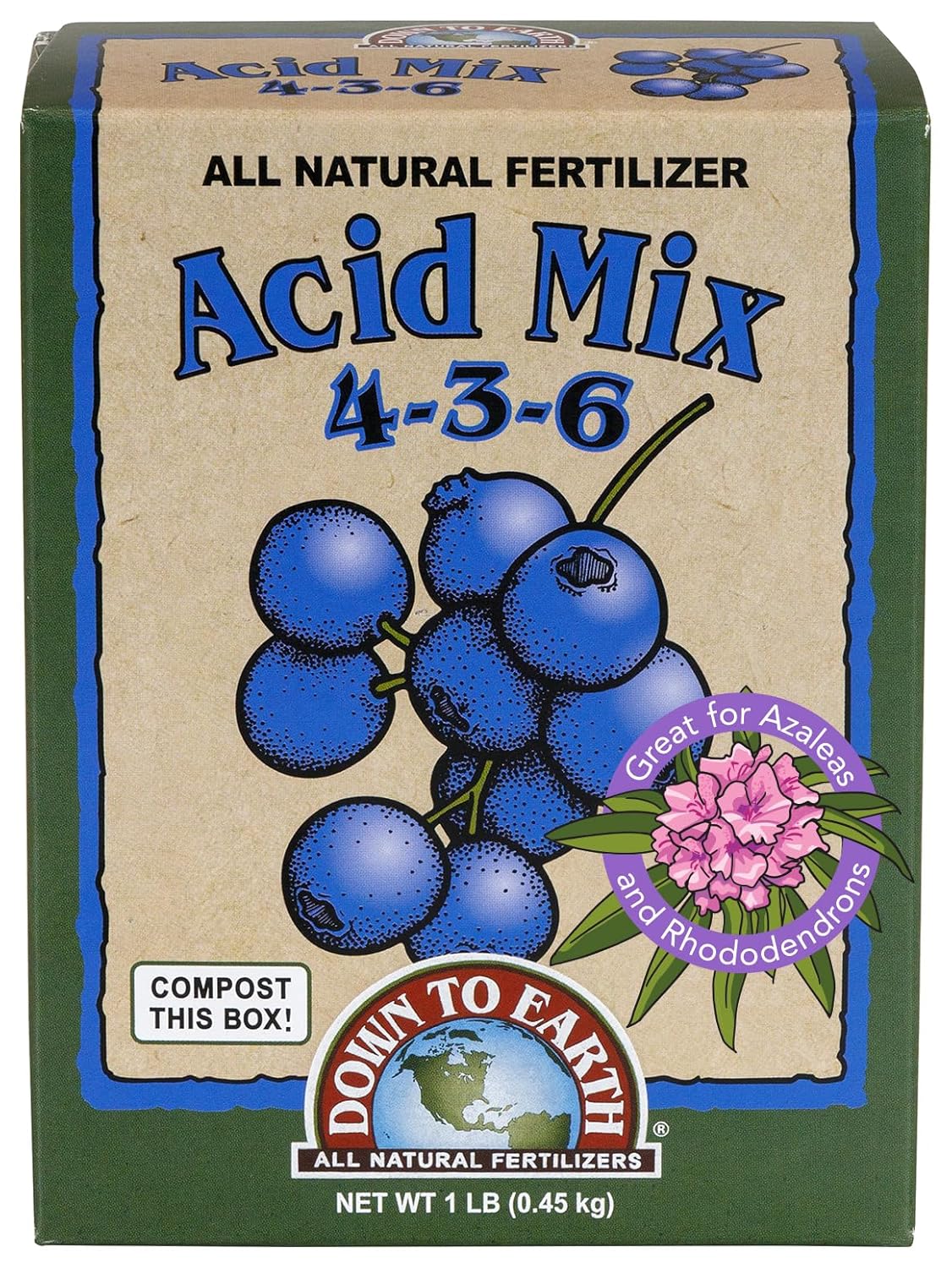
Down To Earth Acid Mix Organic Fertilizer 4-3-6, 1 lb
| Item Form | Granules |
|---|---|
| Specific Uses For Product | Acid-loving plants |
| Target Species | rhododendrons, azaleas, hydrangeas, blueberries |
| Mixing Ratio | 4:3:6 |
This 1 lb Down To Earth Acid Mix is a granular, slow-release fertilizer formulated for acid-loving shrubs and berries like rhododendrons, azaleas, hydrangeas and blueberries. It is applied to the soil surface or mixed into planting soil and should be watered in; the manufacturer recommends early spring, at bloom and in fall for root health. The 4-3-6 NPK ratio supplies steady nitrogen, phosphorus and potassium while the ingredient list — feather meal, fish bone meal, kelp and humates — supports gradual nutrient availability and soil biology rather than quick flushes of growth. The product is shelf-stable and OMRI-friendly which fits organic gardening practices. Practical limits are its small 1 lb unit size, which means heavier feeders or larger beds will need multiple packages, and it will not change soil pH on its own so use sulfur or lime if you need to alter acidity. For typical rhododendron care this mix offers an easy, organic way to feed plants through the season without frequent reapplications.
Best for: Gardeners who want an organic, steady-feed fertilizer tailored to acid-loving ornamentals and berries and prefer low-maintenance seasonal applications.
Less Ideal for: Large properties or heavy-feeding specimens where bulk fertilizer or higher nutrient concentrations are needed.
- Formulated specifically for acid-loving plants common to rhododendron beds
- Slow-release granular formula provides steady nutrition over time
- Made from natural ingredients that support soil biology
- Shelf-stable and suitable for organic gardening practices
- Small 1 lb package may require multiple purchases for larger plantings
- Does not alter soil pH by itself; separate amendments needed to change acidity
Verdict: A compact organic slow-release fertilizer that reliably feeds rhododendrons and other acid-loving plants throughout the season.
FoxFarm Happy Frog Acid-Loving Plant Fertilizer (4 lb)

| Item Form | Powder |
|---|---|
| Application Method | Granular |
| Coverage | Medium |
| Target Species | Acid-loving plants |
| Mixing Ratio | 1/16 cup per gallon |
This granular Happy Frog fertilizer is formulated specifically for acid-loving plants such as rhododendrons and azaleas and is intended for both new plantings and established beds. It supplies a steady, slow-release nutrient supply and includes beneficial soil microbes and mycorrhizal fungi to help roots access nutrients and water. Typical use is to mix small amounts into planting soil or apply around established plants following the label dosing; the product includes simple mixing guidance for container and landscape applications. Practical benefits include gentle, consistent feeding that reduces the risk of overfertilizing and the microbial additions that can improve uptake in low-pH soils. Limitations are that it is a general granular powder rather than a targeted liquid feed, so results develop over weeks rather than days, and it is sized as a single 4 lb package which may be small for larger landscapes. This fertilizer is a solid choice if you want a product tailored to acid-loving shrubs with a focus on steady, long-term root support rather than fast, short-term green-up.
Best for: Gardeners focused on improving rhododendron and other acid-loving shrub performance who prefer steady, low-risk feeding and enhanced root support.
Less Ideal for: People who need rapid, immediate green-up or who manage large landscapes requiring bulk fertilizer supplies.
- Formulated specifically for acid-loving plants like rhododendrons and azaleas
- Slow-release granular formula provides steady feeding without frequent applications
- Contains mycorrhizal fungi and soil microbes to support nutrient and water uptake
- Simple mixing and application instructions suitable for new plantings and established plants
- 4 lb package may be small for larger gardens or multiple shrubs
- Slow-release action means visible results take weeks rather than days
Verdict: Choose this fertilizer when you want a rhododendron-specific, slow-release feed with beneficial microbes to improve long-term root health and nutrient uptake.
ASTEVORA 8-4-8 Granular Fertilizer for Acid-Loving Plants (12 oz)

| Item Form | Granules |
|---|---|
| Specific Uses For Product | Acid-loving plants; enhances bloom vibrancy and soil acidification |
| Application Method | Spread evenly to soil and water thoroughly |
| Target Species | Azaleas, camellias, hydrangeas, magnolia trees, evergreens, blueberries, gardenias, rhododendrons |
ASTEVORA 8-4-8 is a granular, slow-release fertilizer designed specifically for acid-loving plants like rhododendrons. You apply it by sprinkling the granules under the plant canopy, lightly mixing into the topsoil, and watering to activate nutrients; the manufacturer recommends three applications a year in spring, summer, and early fall. The formula supplies balanced N-P-K (8-4-8) plus micronutrients such as iron, magnesium, and manganese to help prevent chlorosis and support flowering and root development. The product also highlights a biosolid-derived component that supplies live bacterial microbes to support soil biology. In practice this pack is convenient for routine maintenance of shrubs: the granules are easy to distribute, the slow-release profile reduces feeding frequency, and the micronutrients are useful where leaves show yellowing from iron deficiency. Limitations to note are the small unit size, which may only cover a few shrubs before repurchasing, and that soil pH and nutrient needs should be checked first so you can confirm acidification is required and avoid overapplication.
Best for: Gardeners who want a low-effort, targeted feed for rhododendrons and other acid-loving shrubs and prefer a slow-release granular product that reduces how often they must fertilize.
Less Ideal for: Large-scale plantings or landscapers who need bulk fertilizer or growers who require detailed, lab-style nutrient and pH prescriptions.
- Balanced 8-4-8 N-P-K formula with added iron, magnesium, and manganese to reduce chlorosis and support blooms
- Slow-release granular form that requires only about three applications per year
- Formulated to acidify soil and target acid-loving species such as rhododendrons and azaleas
- Contains biosolid-derived microbes intended to support soil microbial activity
- Small 12-ounce unit may not be economical for larger plantings
- Does not include specific application rates by plant size on the label in the provided details
Verdict: A convenient, slow-release 8-4-8 granular fertilizer that targets rhododendrons and other acid-loving shrubs to boost blooms and correct iron-related yellowing.
Dr. Earth Organic Acid Lover Fertilizer for Azalea, Camellia, Rhododendron & Maple (1 lb)

| Item Form | Powder |
|---|---|
| Specific Uses For Product | Organic |
| Coverage | Medium |
| Target Species | Rhododendron |
| Mixing Ratio | 4 pounds of the fertilizer blend |
This 1 lb Dr. Earth Acid Lover fertilizer is a powder blend designed specifically for acid-loving plants such as rhododendrons, azaleas, camellias and maples. It is marketed as an organic formula that includes probiotic soil microbes and mycorrhizae to help rebuild tired soils and improve transplant success. You use it at planting or transplanting and as a regular feed; the listing gives a mixing ratio and notes medium coverage. Practical benefits include organic certification credentials and a nutrient base of nitrogen, phosphorus and potassium delivered without synthetic chicken manures or harsh chemicals. The small 1 lb unit is handy for container-grown shrubs or spot treatments in a small garden, but the quantity means heavier feeders or larger beds will require multiple bags. While the probiotic claim is attractive, expect gradual soil improvement rather than immediate dramatic changes, and follow the package directions for application rates to avoid overfeeding. For gardeners who want an organic, microbe-friendly option tailored to acid-loving species, this product is a straightforward choice for targeted feeding.
Best for: Home gardeners focused on caring for a few rhododendrons or acid-loving shrubs who prioritize organic, biologically active fertilizers and targeted spot treatments.
Less Ideal for: Large-scale plantings or landscapers who need bulk fertilizer for many shrubs or rapid correction of severe nutrient deficiencies.
- Formulated specifically for acid-loving plants like rhododendrons and azaleas
- Contains beneficial microbes and mycorrhizae to support soil biology
- Organic and non-GMO verified with recognized organic program listings
- Powder form allows even mixing at planting or as a top-dress
- Only a 1 lb package so not economical for large beds or many shrubs
- No guaranteed immediate performance from biological additives
Verdict: A small, certified organic powder fertilizer with beneficial microbes tailored for homeowners feeding rhododendrons and other acid-loving shrubs.
GreenGro Acid Loving Organic Fertilizer, 5-5-3, 4 lb

| Item Form | Granules |
|---|---|
| Specific Uses For Product | Acid-loving plants, Indoor & Outdoor use |
| Target Species | Acid-loving plants |
| Unit Count | 64 Ounce |
This GreenGro Acid Loving fertilizer combines a balanced 5-5-3 nutrient mix with elemental sulfur and biological soil inputs to support rhododendrons and other acid-loving shrubs. It is applied as a granular top-dress or worked into the root zone in spring and periodically through the growing season; container rates are provided for easy dosing. Notable features are the sulfur for gradual pH lowering and the inclusion of mycorrhizal fungi, beneficial bacteria and biochar to improve nutrient availability and soil moisture retention. Practically, that means you get both nutrition and support for root health in one product, which is helpful where acidic soil is needed for consistent flowering and leaf color. Limitations are that pH change is gradual so it is not a fast fix for strongly alkaline sites, and repeated applications are required to maintain acidity; users should follow rates closely to avoid over-acidifying. The 4 pound bag is convenient for small-to-medium plantings and containers but heavier feeders or larger beds will need larger quantities or more frequent purchases.
Best for: Gardeners who want a dependable, dual-purpose fertilizer that both feeds rhododendrons and gradually acidifies soil while supporting soil biology.
Less Ideal for: People needing a fast-acting pH correction for severely alkaline soil or those managing large landscapes who prefer bulk commercial quantities.
- Contains elemental sulfur to gradually lower soil pH for acid-loving plants
- Includes mycorrhizae, beneficial bacteria and biochar to improve root function and nutrient availability
- Balanced 5-5-3 N-P-K provides regular feeding as well as soil conditioning
- Clear application rates for both in-ground and container use
- 4 lb bag may be small for larger beds or multiple shrubs
- pH adjustment is gradual and not suitable for rapid correction of strongly alkaline soils
Verdict: Choose this if you want a reliable organic fertilizer that feeds rhododendrons while gradually lowering soil pH and improving root health.
Miracle-Gro Water Soluble Azalea, Camellia & Rhododendron Plant Food, 5 lb

| Item Form | Powder |
|---|---|
| Application Method | watering can or Miracle-Gro Garden Feeder |
| Target Species | Azaleas, Camellias, Rhododendrons, Gardenias, Hibiscus, Hollies, Hydrangeas, Orchids |
| Mixing Ratio | 1:144 (indoor), 1:18 (outdoor) |
| Unit Count | 80 Ounce |
This powder fertilizer is designed specifically for acid-loving shrubs and flowering plants and is used by dissolving measured amounts in a watering can or Miracle-Gro Garden Feeder. In practice you mix modest doses for indoor plants and a stronger outdoor solution, then apply every 7 to 14 days during active growth to support blooms and foliage. Notable features include a water-soluble powder form that is easy to measure, explicit mixing ratios for indoor and outdoor use, and a stated coverage that a 5 lb container feeds roughly 2,000 sq ft. The product targets rhododendrons, azaleas, camellias, hydrangeas, gardenias and some ornamentals, so it is straightforward to match to acid-preferring plantings. Limitations to keep in mind are that you must follow mixing instructions carefully to avoid overfeeding, it requires regular reapplication rather than a single slow-release treatment, and the formula is specialized so it is not a one-size-fits-all choice for neutral or alkaline-soil plants.
Best for: Gardeners who want a targeted, easy-to-use feed for rhododendrons and other acid-loving shrubs and who prefer a product with clear instructions and wide user acceptance.
Less Ideal for: People seeking a low-maintenance, slow-release fertilizer or a general-purpose feed for plants that do not prefer acidic soil.
- Formulated specifically for acid-loving plants including rhododendrons and azaleas
- Water-soluble powder mixes quickly for use with a watering can or garden feeder
- Clear mixing ratios provided for indoor and outdoor applications
- 5 lb container covers a large area (about 2,000 sq ft) when used as directed
- Requires frequent reapplication every 7–14 days during active growth
- Must be measured and mixed correctly to avoid overfeeding
Verdict: If you want a straightforward, widely used water-soluble feed to keep rhododendrons and other acid-loving shrubs blooming, this product delivers clear instructions and broad coverage.
Espoma Organic Holly-Tone 4-3-4 Plant Food for Acid-Loving Plants, 36 lb

| Item Form | Granules |
|---|---|
| Specific Uses For Product | Acid-loving plants |
| Application Method | Sprinkle around the drip line and water thoroughly |
| Coverage | Acid-loving plants (hollies, azaleas, camellias, evergreens, dogwoods, rhododendrons) |
Espoma Holly-Tone is an organic granular plant food designed specifically for acid-loving shrubs and small fruiting plants. You apply it by sprinkling the granules around the plant drip line and watering in; the formula breaks down slowly to provide steady nutrients rather than a quick flush. Notable features include a 4-3-4 NPK analysis, 5% sulfur to help maintain soil acidity, and Bio-tone microbes intended to support root and soil biology. In practical use it is convenient and low-maintenance for spring and fall feedings and is cleared for organic gardening, so it fits into organic care routines. The large 36 lb bag covers multiple shrubs or a small planting area, which reduces repeat purchases. Limitations are its coarse granule form that requires manual spreading and watering to activate, and the size may be more than needed for a single small yard or container collection. It is not a fast-acting corrective for severe nutrient deficiencies but works well as a steady, maintenance fertilizer for rhododendrons over the growing season.
Best for: Gardeners who prioritize low-risk, organic care and want a dependable, long-term fertilizer for rhododendrons and other acid-loving shrubs.
Less Ideal for: Those needing a quick corrective feed, or growers with only one small potted rhododendron who would prefer a smaller, more concentrated product.
- Formulated specifically for acid-loving plants like rhododendrons and azaleas
- Organic ingredients with Bio-tone microbes to support soil and root health
- Slow-release 4-3-4 NPK provides steady feeding for seasonal maintenance
- Contains sulfur to help maintain or lower soil pH for acid-loving species
- Large 36 lb bag may be excessive for very small gardens or container-grown rhododendrons
- Not intended for rapid correction of severe nutrient deficiencies
Verdict: Choose Holly-Tone if you want an organic, slow-release fertilizer tailored to rhododendrons that supports soil biology and steady seasonal feeding.
Choosing the Right Fertilizer for Rhododendrons: Key Factors to Consider
Nutrient Ratio and Formulation
Rhododendrons respond best to fertilizer formulas that favor moderate nitrogen with adequate phosphorus for blooms and potassium for overall vigor. Look for clear N-P-K labeling and because these shrubs are often grown in low-nutrient, acidic media, the proportion of nutrients matters more than a high total number.
Also consider the form of nitrogen. Ammonium-based and slow-release organic sources tend to be gentler than quick-release nitrate salts, reducing the risk of excessive leafy growth at the expense of flowers. For container plants, low-solubility forms help avoid sudden nutrient spikes that can stress roots.
Effect on Soil Acidity
Rhododendrons prefer acidic conditions, so a fertilizer that helps maintain or at least does not neutralize soil acidity is important. Some fertilizers contain lime or other alkalinizing fillers that raise pH over time; avoid those for ericaceous plantings.
Organic acidifying materials and ammonium forms of nitrogen can help maintain acidity, while sulfate-based inputs lower pH more predictably. If you rely on municipal water that is alkaline, choose a fertilizer with a mild acidifying effect or plan supplementary soil acidification.
Release Profile and Longevity
How quickly nutrients become available affects both safety and convenience. Slow-release granular and coated formulations feed shrubs over weeks to months, reducing the chance of root burn and the need for frequent applications. Fast-release water-soluble products give quick green-up but may require more frequent light feedings to encourage sustained bloom production.
For larger beds, long-duration products reduce labor. For containers or newly planted shrubs, shorter, controlled feedings allow closer control of growth during establishment.
Physical Form and Application Method
Fertilizers come as granular, water-soluble, liquid concentrates, spikes, or organic amendments. Granular slow-release is easy to broadcast under shrubs and work into the mulch layer. Water-soluble options are convenient for precise dosing in containers or when root uptake is limited.
Consider how you normally water and whether the product can be dissolved or incorporated without disturbing roots. Spikes reduce surface broadcast but can concentrate salts if placed too close to the trunk.
Root Safety and Salt Index
Rhododendron roots are shallow and sensitive to soluble salts. A fertilizer's salt index and the concentration of readily soluble salts determine the risk of burn. Lower-salt organic or coated-release formulations are generally safer for frequent use or for plants recovering from transplant shock.
Always follow dilution and application rates, and avoid piling granular fertilizer against stems or in planting holes. For young or stressed shrubs, start with lighter feedings and observe foliage response before increasing strength.
Suitability for Planting Situation
Your planting situation-container, small patio planting, large bed, or woodland slope-changes the ideal fertilizer choice. Containers need products with predictable soluble behavior and careful dosing. In-ground beds benefit from longer-lasting formulations and products that integrate with mulches and organic amendments.
Also account for companion plants. If you grow rhododendrons alongside acid-loving companions, pick a fertilizer that supports the bed collectively rather than addressing a single specimen's needs.
When to Feed Rhododendrons
Timing influences flowering and new growth. Feed established rhododendrons in early spring as buds begin to swell, and again after flowering if you want to support next season's bud set. Avoid heavy late-season nitrogen that can promote tender growth vulnerable to winter damage.
For container-grown plants, lighter monthly feedings during the active season maintain steady nutrition without overwhelming the rootball. Always water before and after applying granular feeds to move nutrients into the root zone.
- Early spring for active growth and bud development
- Light post-bloom application to support root recharge
- Avoid heavy late-season nitrogen
Amending Soil Versus Routine Feeding
A one-time soil amendment can improve long-term fertility and structure, but it is not a replacement for periodic feeding. Organic matter and ericaceous compost help retain moisture and supply slow nutrients, while fertilizers supply more predictable ratios for bloom and foliage needs.
If soil tests show low nutrients or poor acidity, correct those first with amendments and then apply a regular feeding schedule tuned to plant vigor and bloom performance.
- Use compost and acidic mulches to improve structure
- Follow soil test recommendations before heavy fertilization
Feeding Containers and Small Spaces
Containers have limited soil volume and need gentler, more frequent feeding. Water-soluble fertilizers or dilute liquid organics applied every two to four weeks during the growing season give consistent results without over-concentrating salts.
Repotting every few years with fresh ericaceous potting mix plus a light starter feeding helps keep container plants healthy and flowering.
- Prefer dilute water-soluble feeds for containers
- Repot periodically and refresh media with acidic mix components
Organic Options and Soil Biology
Organic fertilizers and amendments feed soil life as well as plants. Materials like composted leaf mold, well-rotted manure from acid-tolerant sources, and fish-based feeds release nutrients slowly and improve microbial activity in the rhizosphere.
While organic options can be lower in immediate N-P-K numbers, they help build a resilient, moisture-retentive root environment that supports long-term health and flowering.
- Organic inputs support microbial health and slow nutrient release
- Combine organics with targeted feeds if blooms lag
Adjusting Feeding to Seasonal Weather
Wet springs can leach nutrients from the root zone; light follow-up feedings may be necessary after heavy rain. Conversely, drought reduces nutrient uptake, so avoid applying high-concentration feeds during dry spells and focus on restoring moisture first.
Monitor foliage and bloom set rather than following a rigid calendar; plant response is the best indicator of whether more feeding is needed.
- Replace leached nutrients after extended rain
- Avoid concentrated feeds during drought stress
How We Chose the Best Fertilizer for Rhododendrons
We focused on traits that actually affect rhododendron health and flowering in home gardens. Editorial filters prioritized fertilizers with formulas aimed at acid-loving shrubs, clearly labeled nutrient ratios, and evidence of slow-release behavior or organic nutrient sources. We also assessed how each product alters soil pH or works with typical ericaceous mixes, plus physical form and particle size because root scorch risk is higher with fine, high-soluble salts. Ease of application and clear dosing guidance were important for container growers and beds alike. We excluded generalized lawn or vegetable fertilizers that lack acid-targeted formulations, products without clear N-P-K labeling, and any items with application methods unsuitable for shallow-rooted shrubs. Final selections balanced predictable nutrient delivery, compatibility with acidic soils, application versatility, and gardener safety.
FAQ
How often should I feed rhododendrons in the ground?
Usually feed once in early spring and a light follow-up after bloom. Frequency depends on soil fertility and the product's release profile; slow-release types can reduce the need for repeat applications.
Can I use general-purpose garden fertilizer on rhododendrons?
General fertilizers can work but may not support acidic soil needs. Avoid any fertilizer that contains lime or is formulated for lawns and opt for products or amendments that are neutral or acid-friendly.
What is the safest way to feed potted rhododendrons?
Use a dilute water-soluble or liquid organic feed every two to four weeks during the growing season. Repot with fresh acidic mix every few years and avoid concentrated granular applications directly on the rootball.
Will fertilizer change my soil pH over time?
Some fertilizers influence pH depending on their chemistry. Ammonium- and sulfate-containing fertilizers tend to acidify soil slowly, while high rates of lime-containing or alkaline amendments can raise pH. Check product composition if maintaining acidity is critical.
How do I avoid burning rhododendron roots with fertilizer?
Follow label rates and dilute concentrates for containers. Work granular feeds lightly into mulch rather than placing them against stems or into planting holes, and water after application to move nutrients away from root surfaces.
Final Verdict
Prioritize a fertilizer that matches the acidic preferences and shallow root habit of rhododendrons. Balance nutrient ratios for bloom and root health, choose a release profile that fits your watering and maintenance routine, and avoid products that raise soil pH or have a high soluble-salt index. For container plants use dilute soluble feeds; for beds prefer longer-lasting, acid-compatible formulations. With attention to these tradeoffs you can pick a feeding approach that supports steady growth and better bloom production.
