

Note: This article contains affiliate links. If you click on these links and make a purchase, I may earn a small commission at no extra cost to you. This helps support my research and content. Read my full affiliate disclosure here.
Russian sage is a drought-tolerant, long-blooming shrub that rewards light feeding with more prolific flowers and stronger stems. Choosing the right fertilizer for Russian sage matters because too much nitrogen or the wrong application schedule can reduce flowering, encourage floppy growth, or stress plants in hot, dry sites. This guide shortlists five carefully chosen fertilizers suited for Russian sage growing conditions and explains the practical tradeoffs gardeners face. Below we outline the evaluation criteria used to pick these top options and what to expect from each type of fertilizer. Use this overview to match a feeding approach to your garden's soil, climate, and maintenance preferences.
Top Picks at a Glance
| Best Overall The best all-around choice for most situations | SouthernGRO Rose Food, 4 lb (14-12-11) |  |
| Best Value The sweet spot between price and what you get | GARDENWISE 10-10-10 Slow-Release Granular Plant Fertilizer (1/2 Quart) |  |
| Highest Rated A top-rated pick with lots of positive feedback | Miracle-Gro Water Soluble All Purpose Plant Food, 3 lb |  |
| Most Popular A crowd favorite that many people choose with confidence | Great Big Plants Great Big Roses & Flowers Liquid Fertilizer Booster, 1 Gallon |  |
| Best Seller A high-volume bestseller chosen again and again | MitoGrow It's Not Dead Yet Tree & Shrub Biostimulant Powder |  |
SouthernGRO Rose Food, 4 lb (14-12-11)

| Item Form | Granules |
|---|---|
| Specific Uses For Product | Rose food |
| Coverage | Medium |
| Mixing Ratio | 14:12:11 |
SouthernGRO Rose Food is a granular 14-12-11 fertilizer formulated for roses that supplies a balanced mix of nitrogen, phosphorus and potassium plus trace micronutrients. It is applied to the soil around plants following package directions and works by feeding new growth, encouraging greener leaves and supporting root development. The granule form is easy to broadcast or sprinkle and the medium coverage suits small beds or several individual shrubs. Notable features include its balanced N-P-K ratio tailored toward flowering shrubs and added micronutrients such as iron, manganese, zinc, boron and copper to correct common deficiencies. As a general-purpose rose food it will promote bloom production and overall vigor when used at recommended rates, but it is not a slow-release or organic formulation and requires careful application to avoid overfeeding. Also it is designed and marketed for roses so gardeners should adjust frequency or mix with other products if treating different species or large landscape areas.
Best for: Gardeners who want a straightforward, balanced fertilizer to maintain bloom and foliage vigor in ornamental shrubs and roses and who prefer a granular product they can apply themselves.
Less Ideal for: Those seeking organic, slow-release or multi-purpose landscape fertilizers for large areas should consider alternative products.
- Balanced 14-12-11 N-P-K formula suited to flowering shrubs
- Contains micronutrients (Fe, Mn, Zn, B, Cu) to correct trace element deficiencies
- Granular form is easy to apply by hand or with a spreader
- Medium coverage good for small beds or several shrubs
- Not an organic or slow-release formula
- Formulation and directions are tailored specifically for roses rather than broad landscape use
Verdict: A simple, balanced granular rose food with added micronutrients that reliably promotes greener foliage and stronger blooms for ornamental roses.
GARDENWISE 10-10-10 Slow-Release Granular Plant Fertilizer (1/2 Quart)
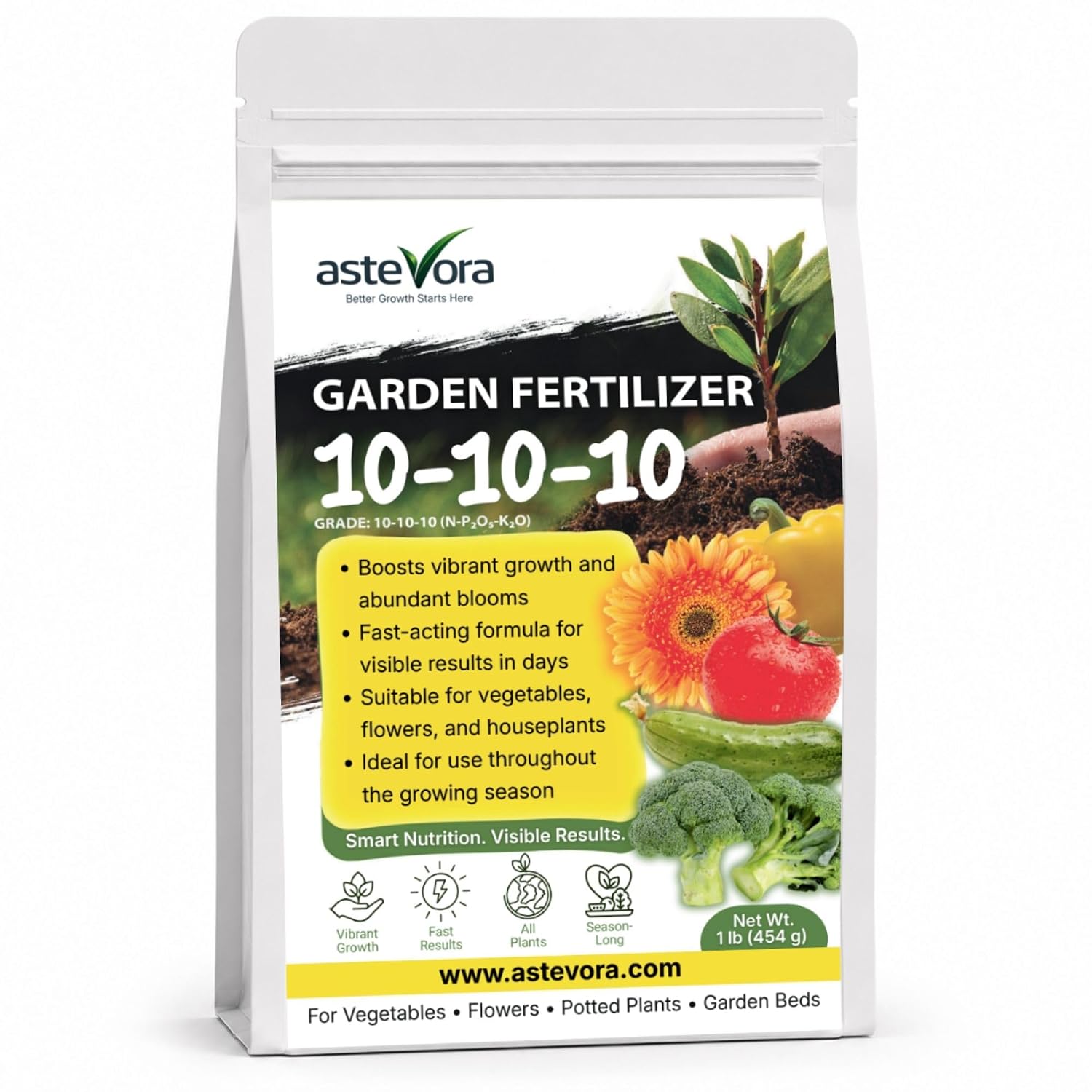
| Item Form | Granules |
|---|---|
| Mixing Ratio | 10-10-10 |
| Specific Uses For Product | Vegetable gardens, fruit trees, shrubs, lawns, flowers, potted plants, indoor gardening |
| Liquid Volume | 0.5 quarts |
This GARDENWISE 10-10-10 granular fertilizer is an all-purpose, slow-release plant food that supplies equal parts nitrogen, phosphorus, and potassium for up to eight weeks. You apply the fine granules evenly around the root zone and water in; directions include specific rates for vegetable beds, lawns, flowers, shrubs, and trunk-diameter-based dosing for fruit trees. The balanced N-P-K and slow-release formulation support root development, steady leaf and shoot growth, and improved stress tolerance—useful for fig trees between spring feeding cycles and as a maintenance boost during the growing season. Practical benefits include predictable feeding intervals that cut down on frequent applications and clear dosing guidance for different plant types. Limitations are that the product is a general-purpose formula rather than a fig-specific blend, so if your soil test shows particular nutrient imbalances or micronutrient needs you may need a supplemental product. Also the pack is a small consumer size, so larger orchards will need multiple bags.
Best for: Buyers who want a straightforward, low-maintenance fertilizer to support fig tree growth without fuss and who prefer predictable feeding intervals and simple dosing instructions.
Less Ideal for: Growers managing nutrient-deficient or pH-sensitive soils, or those who need large-volume supplies for multiple mature trees should consider targeted or bulk alternatives.
- Balanced 10-10-10 N-P-K supports roots, foliage, and fruiting for a wide range of plants
- Slow-release granules provide up to eight weeks of continuous feeding, reducing application frequency
- Clear, plant-specific dosing guidelines including per-inch trunk recommendations for fruit trees
- Fine granule form spreads evenly for good soil contact and easy watering-in
- Not formulated with fig-specific micronutrients or pH adjustments that some fruit growers prefer
- Small 0.5 quart/16 ounce consumer size may be insufficient for larger fig trees or multiple trees
Verdict: A convenient, balanced slow-release granular fertilizer that makes routine feeding of fig trees simple and low-effort.
Miracle-Gro Water Soluble All Purpose Plant Food, 3 lb

| Item Form | Powder |
|---|---|
| Application Method | Mix with water in a watering can |
| Fertilizer Analysis (N‑P‑K) | 24-8-16 |
| Unit Count | 48 Ounce |
| Coverage | Feeds approximately 1,200 sq. ft. |
Miracle‑Gro Water Soluble All Purpose Plant Food is a powdered NPK 24‑8‑16 formula that dissolves in water to give plants a quick nutrient boost. You mix measured scoops into a watering can and apply to the soil at the base of plants every 7–14 days for outdoor use or every 14 days for houseplants. Notable features include a high nitrogen content for leafy growth, compatibility with containers and in‑ground beds, and guidance for use with a Miracle‑Gro Garden Feeder for larger areas. In practical terms this is a fast‑acting feed that encourages bigger, greener foliage and works well in regular maintenance of perennials like hostas. Limitations are that it is a fast‑release fertilizer rather than a slow‑release option, so it requires regular reapplication and careful measuring to avoid overfeeding. Also, the 24‑8‑16 balance is geared toward vegetative growth, so it is not optimized if you want to prioritize flowering or bloom boosting.
Best for: Buyers who want a reliable, fast‑acting feed to maintain lush, leafy perennials and container plants and who value proven products with broad user endorsement.
Less Ideal for: Gardeners seeking a single, long‑lasting granular fertilizer or a bloom‑focused formula should consider alternative slow‑release or high‑phosphorus products.
- Water‑soluble powder mixes easily for quick uptake by roots
- High nitrogen formula promotes robust leafy growth ideal for shade plants
- Clear mixing and application instructions for both indoor and outdoor use
- Suitable for containers and in‑ground gardens and compatible with garden feeders
- Requires frequent applications so it is not a low‑maintenance, slow‑release option
- High nitrogen ratio is less suitable when the primary goal is more flowers than foliage
Verdict: A fast‑acting, water‑soluble fertilizer that reliably produces bigger, greener hosta leaves when used as directed.
Great Big Plants Great Big Roses & Flowers Liquid Fertilizer Booster, 1 Gallon

| Item Form | Liquid |
|---|---|
| Specific Uses For Product | Plant Growth, Root Development, Soil Conditioning |
| Application Method | Watering can or hose end sprayer |
| Target Species | Roses and Flowers |
| Unit Count | 128 Fluid Ounces |
Great Big Roses & Flowers is a 1 gallon liquid concentrate designed to activate soil biology and make nutrients more available to flowering plants. You mix 4 ounces per gallon of water and apply around the base of roses, hydrangeas, and other ornamentals using a watering can or hose-end sprayer. The formula combines humic acids, seaweed extract and chelated trace minerals intended to support root development, increase bloom production, and improve fertilizer efficiency so existing feeds perform better. It is useful across beds, containers, and raised planters and can be applied without digging or soil amendment. Because it is a soil booster rather than a complete fertilizer, it works best when used alongside a balanced fertilizer program rather than as a sole nutrient source. Application frequency and dilution should be followed to avoid overapplication, and results depend on existing soil condition and plant health rather than producing instant growth on poor sites.
Best for: Gardeners who want to boost blooms and root health by improving soil biology and making their existing fertilizer program more effective rather than relying on quick-release feeds.
Less Ideal for: Gardeners seeking a standalone, high-nitrogen or quick-release fertilizer for instant leafy growth or those unwilling to follow a repeat feeding schedule.
- Organic concentrate that introduces humic acids, seaweed, and chelated trace minerals to the root zone
- Works with watering can or hose-end sprayer for easy application around base of plants
- Formulated to improve nutrient uptake so existing fertilizers perform better
- Suitable for beds, containers, and raised planters without digging
- Not a complete fertilizer so should be paired with regular fertilizing
- Effectiveness varies with initial soil biology and may take several applications to notice change
Verdict: Use this organic soil booster when you want to improve soil biology and get more blooms out of roses and flowering plants by making your existing fertilizer work better.
MitoGrow It's Not Dead Yet Tree & Shrub Biostimulant Powder

| Item Form | Granules, Powder |
|---|---|
| Specific Uses For Product | Growth Recovery, Plant Establishment, Planting, Stress Reduction, Transplanting |
| Target Species | Trees, Shrubs |
| Mixing Ratio | 2 tablespoons per gallon |
| Unit Count | 8 Ounce |
MitoGrow It’s Not Dead Yet Tree & Shrub is a powdered biostimulant designed to help woody plants establish, recover from stress, and improve nutrient uptake without adding fertilizer. You mix the granules at the stated rate (2 tablespoons per gallon) and apply as a drench or foliar treatment to new transplants or struggling established shrubs. Notable features include a root-promoting auxin (indole-3-butyric acid), several B vitamins, beneficial Bacillus bacteria, and a broad mix of endo- and ectomycorrhizal fungi that together aim to boost root growth and soil microbial support. Practically, that means faster take-off after planting, reduced transplant shock, and incremental improvement in vigor over weeks with repeated use. The product is nonfertilizer so it works alongside regular feeding rather than replacing it. Important limitations are the small unit size and concentrated formulation which require careful measuring, and results are gradual rather than instant, typically showing in one to four weeks depending on plant size.
Best for: Buyers who want a low-risk, supportive supplement to help newly planted or stressed woody shrubs establish and recover, and who prefer products that work alongside rather than replace fertilizer.
Less Ideal for: Gardeners seeking an all-in-one fertilizer solution or those who need immediate, dramatic greening will be disappointed; not aimed at large-scale turf or broad-acre applications.
- Patented biostimulant formula targets root development and stress recovery without adding NPK
- Contains root hormone (IBA), B vitamins, beneficial bacteria, and diverse mycorrhizal fungi
- Mixable powder that can be applied as a drench for easy use on shrubs and small trees
- Non-toxic and described as safe around pets when used as directed
- Small 8-ounce unit may require frequent repurchasing for larger gardens
- Effects are gradual and often require repeated applications over weeks for visible benefit
Verdict: Use this targeted biostimulant when you want a gentle, science-backed way to reduce transplant shock and strengthen roots for Russian sage and other woody shrubs.
Choosing the Right Fertilizer for Russian Sage: Key Factors to Consider
Nutrient Ratio and Flower Promotion
Russian sage benefits from a nutrient profile that encourages flowering rather than vigorous leafy growth. Look for formulas with moderate nitrogen, balanced phosphorus to support bud formation, and adequate potassium for overall plant health. A high-phosphorus bloom booster can help when plants are short on flowers, but repeated high-phosphorus applications are unnecessary in soils that already test adequate. Matching the N-P-K ratio to the plant's flowering goals reduces the chance of excessive vegetative growth that can make stems flop.
Consider also secondary nutrients. Calcium and magnesium play roles in cell structure and pigment development, while trace elements such as iron and manganese help maintain healthy foliage color. If your soil test shows deficiencies, choose a fertilizer that addresses those specific needs rather than applying a blanket high-nitrogen product.
Release Type and Timing
How a fertilizer releases nutrients affects both plant response and maintenance. Slow-release granular fertilizers supply nutrients over several weeks to months, which reduces the risk of burn and suits low-maintenance garden beds. Water-soluble feeds offer rapid uptake and are useful for quick bloom pushes, but they require more frequent application and careful dosing. Liquid organics provide gradual benefits to soil biology but may not deliver a fast bloom response.
Timing matters: apply a balanced or slow-release fertilizer in early spring as new growth begins, and use a targeted bloom feed at the start of flowering if needed. Avoid late-season high-nitrogen feeding that can delay hardening off before winter.
Soil Texture and Drainage Considerations
Russian sage prefers well-drained, lighter soils where fertilizers can be more readily leached. In sandy or gravely beds, nutrients move faster, so slow-release formulations or organic options that hold nutrients longer are preferable. In heavier soils with better nutrient retention, lighter feeding or water-soluble feeds timed around bloom can be effective.
Also consider how amendments interact with your existing soil. Organic fertilizers improve structure and water-holding capacity over time, which may be desirable in very lean sites. However, adding rich organic materials to a gravel garden can alter drainage and may require adjusting planting practices.
Application Practicality for Home Gardeners
Ease of use often determines whether a feeding program is followed. Granular products that can be broadcast or sprinkled around the dripline work well for borders and mixed beds. Water-soluble fertilizers require a watering can or hose-end feeder but allow precise control over dose. Pelleted organics and bagged composts need incorporation or top-dressing and may demand more physical effort.
Consider packaging size and instructions. Smaller packets are handy for container-grown Russian sage, while larger bags fit perennial borders. Clear label directions reduce the risk of overapplication and make seasonal routines repeatable for gardeners with limited time.
Salt Content and Burn Risk
Fertilizer salts can damage roots and foliage when applied too close to the stem or at high concentration. Russian sage can tolerate lean soils but is susceptible to burn if a high-salt feed is misapplied. Products labeled low-salt or slow-release are safer choices for dry sites where irrigation is infrequent.
Always follow label spacing and dilution recommendations to lower burn risk. When using water-soluble feeds, apply after a thorough watering to reduce salt concentration in the root zone. In container or raised bed plantings, leach the soil periodically to prevent salt accumulation.
When to Feed Russian Sage
Feed Russian sage in early spring as new shoots emerge to support a season of healthy growth and abundant blooms. A single moderate application of a slow-release granular fertilizer at the season start often gives the right balance of steady nutrition without promoting weak, floppy stems.
If your plants show poor flowering midseason, apply a light, targeted bloom feed formulated to encourage bud set. Avoid heavy late-summer fertilizing because it can push tender growth that does not harden before cooler weather.
- Early spring: apply balanced slow-release feed around the dripline
- Early bloom: consider a light soluble boost if flowers are sparse
- Late summer: avoid high-nitrogen feeds to prevent late tender growth
Feeding Container-Grown Russian Sage
Containers drain faster and have limited nutrient reserves, so potted Russian sage benefits from regular, light feeding. Use a diluted water-soluble fertilizer on a two- to four-week schedule during the active growing season or a timed-release pellet sized for the container volume.
Also refresh potting mix annually or top-dress with organic matter to maintain structure and micronutrients. Watch for signs of salt buildup such as leaf tip scorch and flush the container with clear water if salts accumulate.
- Use diluted soluble feed for quick corrections
- Use slow-release granules for low-maintenance pots
- Flush containers occasionally to remove excess salts
Organic Vs Synthetic Options
Organic fertilizers build soil biology and improve structure over time, which helps long-term plant health and water retention in lean sites. They tend to release nutrients more slowly and pose lower burn risk, but they may not provide an immediate bloom response.
Synthetic fertilizers offer predictable nutrient ratios and faster uptake, which gardeners may prefer when stimulating flower production. Choose lower-strength soluble feeds and follow dosing directions carefully to avoid foliar scorch or root stress.
- Organics: steady soil benefits, slower bloom response
- Synthetics: quick action, predictable N-P-K, higher burn risk if misapplied
Reading Labels and Matching Soil Tests
A soil test helps you decide whether to correct specific deficiencies or apply a general maintenance feed. Read product labels for guaranteed analysis and recommended rates, and convert rates to your bed size before applying. Pay attention to the N-P-K ratio as well as the presence of secondary nutrients.
If you have no soil test, err on the side of lighter feeding. Russian sage is adapted to relatively poor soils and often responds well to modest fertilization rather than heavy feeding.
- Compare guaranteed analysis to soil test recommendations
- Calculate application rate for the planting area
- Prefer conservative rates when soil data is missing
Common Feeding Mistakes to Avoid
Overapplying high-nitrogen fertilizers can reduce flower production and cause weak, floppy stems. Applying fertilizer against the crown or directly touching stems can burn tissue. Frequent full-strength liquid feeds increase salt buildup and stress plants in dry sites.
Avoid late-season fertilization that promotes new growth late in the year. Also, do not assume heavier-feeding leads to better blooms; matching feed type and timing to plant needs is more effective.
- Do not apply fertilizer directly against the plant crown
- Avoid excessive nitrogen and repeated full-strength liquid feeds
- Stop high-nitrogen applications well before dormancy
How We Chose the Best Fertilizer for Russian Sage
We prioritized fertilizers that support flowering shrubs in lean, well-drained soils where Russian sage typically thrives. Selection focused on nutrient balance that favors bloom production over excessive leafy growth, stable slow-release formulas that limit burn risk, and products that are easy to apply in home garden settings. We also considered fertilizer form: granular blends for spring top-dressing, water-soluble feeds for targeted bloom boosts, and organic options that improve soil structure over time. Practical application factors such as spreader compatibility, mixing instructions, and seasonality were weighed because gardeners often want straightforward routines. Exclusions included specialty fertilizers formulated primarily for lawns, high-nitrogen mixes intended to drive foliage, or products requiring complex greenhouse schedules. We avoided items that demand frequent, precise dosing beyond typical home gardener practices. The final list favors predictable nutrient ratios, clear usage guidance, and compatibility with common Russian sage planting situations such as borders, mixed perennial beds, and gravel gardens.
FAQ
How often should I fertilize Russian sage?
Often a single spring application of a slow-release granular fertilizer is sufficient for garden-planted Russian sage. Container plants may need diluted water-soluble feeds every two to four weeks during the growing season. Frequency depends on soil fertility and plant performance.
Will fertilizing make Russian sage grow too large or floppy?
It can if you use high-nitrogen formulas or overapply fertilizer. Choose balanced or bloom-focused ratios and moderate rates to encourage flowers without excessive leafy growth.
Can I use compost instead of commercial fertilizer?
Yes. A top-dressing of well-aged compost improves soil structure and provides slow-release nutrients. Compost is a good long-term strategy but may not give the quick bloom boost that a targeted fertilizer can provide.
Should I use a bloom booster to increase flowers?
A bloom-focused feed higher in phosphorus can help when flowering is sparse, but use it sparingly and only after confirming other cultural needs are met. Overuse of bloom boosters offers diminishing returns and may cause nutrient imbalances.
Is there a risk of fertilizer burn on Russian sage?
Yes. High salt fertilizers or concentrated liquid feeds can burn roots and leaf tips. Use slow-release products, follow label rates, and water before and after applying soluble fertilizers to reduce burn risk.
Final Verdict
Prioritize a feeding plan that supports flowering without encouraging excessive leafy growth. For most garden settings, a moderate spring application of a slow-release or balanced fertilizer delivers steady nutrition and reduces maintenance. Use targeted soluble feeds only when you need a quick bloom boost, and prefer low-salt or organic options in hot, dry sites. Match the fertilizer form and schedule to your soil texture, container needs, and how hands-on you want to be. With cautious dosing and appropriate timing, you can increase flower production on Russian sage while avoiding the common pitfalls of overfeeding.
