

Note: This article contains affiliate links. If you click on these links and make a purchase, I may earn a small commission at no extra cost to you. This helps support my research and content. Read my full affiliate disclosure here.
Growing productive squash and zucchini depends heavily on the fertilizer you use. Too little nitrogen early on and plants produce sparse foliage and few fruits. Too much nitrogen later and you get lush vines with few zucchinis. This guide covers seven shortlisted fertilizer options chosen for gardeners who want predictable fruit set, balanced plant growth, and straightforward application in vegetable beds, raised beds, or containers. We evaluated options against nutrient balance, ease of use, suitability for soil and container growing, and how they affect bloom and fruit development. Read on to see which fertilizer profiles and application methods match your soil and growing plan.
Top Picks at a Glance
| Best Overall The best all-around choice for most situations | Gardenera Liquid Power Squash Fertilizer, 8 fl oz |  |
| Best Quality Built to a higher standard if you want something more solid | FoxFarm Grow Big Liquid Plant Food – 6-4-4 Quart Concentrate |  |
| Best Value The sweet spot between price and what you get | Miracle-Gro Water Soluble All Purpose Plant Food, 5 lb |  |
| Best Budget The cheapest option that still gets the job done reliably | Miracle-Gro Water Soluble Tomato Plant Food, 1.5 lb |  |
| Highest Rated A top-rated pick with lots of positive feedback | FoxFarm Happy Frog Tomato & Vegetable Fertilizer, 5-7-3, 4 lb |  |
| Most Popular A crowd favorite that many people choose with confidence | Dr. Earth Organic Tomato, Vegetable & Herb Fertilizer (64 oz) |  |
| Best Seller A high-volume bestseller chosen again and again | Miracle-Gro Liquid All Purpose Plant Food Concentrate, 32 oz. |  |
Gardenera Liquid Power Squash Fertilizer, 8 fl oz

| Item Form | Liquid |
|---|---|
| Target Species | Squash |
| Liquid Volume | 8 fluid ounces |
| Mixing Ratio | 1:32 |
Gardenera Liquid Power is a focused, fast-acting liquid fertilizer designed for squash and zucchini growers who want quicker growth and better fruit set. The 8-ounce concentrate mixes at 1:32 and supplies a targeted balance of nitrogen, phosphorus, potassium plus chelated micronutrients to support leafy growth, root development, flowering, and fruit quality. The formula is described as low pH to improve micronutrient availability and help prevent common squash issues like blossom-end rot and leaf yellowing. In practice you would dilute per the mixing ratio and apply at regular feeding intervals through the season to encourage continuous bloom and improved drought resilience. The small concentrated bottle is easy to store and is suitable for both container and in-ground plantings, but the size means you'll need multiple bottles for larger beds. If you follow the label rates it should integrate cleanly with standard watering and feeding routines, though gardeners who prefer granular or organic-only inputs may not find it suitable.
Best for: Gardeners who grow squash or zucchini and want a purpose-built, easy-to-apply liquid fertilizer to boost growth and harvests across a full season.
Less Ideal for: Those managing very large beds who prefer bulk granular fertilizers or gardeners committed to certified organic products should consider alternatives.
- Formulated specifically for squash to support vines, roots, flowering, and fruit set
- Concentrated 1:32 mixing ratio makes it easy to dose and store
- Includes chelated micronutrients to improve uptake and address common deficiencies
- Low pH formulation helps unlock iron and other trace elements for faster nutrient availability
- Small 8 fl oz bottle requires multiple purchases for larger gardens
- Not specified as organic for gardeners seeking only organic inputs
Verdict: A compact, squash-specific liquid concentrate that speeds up growth and improves fruit set for home gardeners wanting targeted, season-long feeding.
FoxFarm Grow Big Liquid Plant Food – 6-4-4 Quart Concentrate
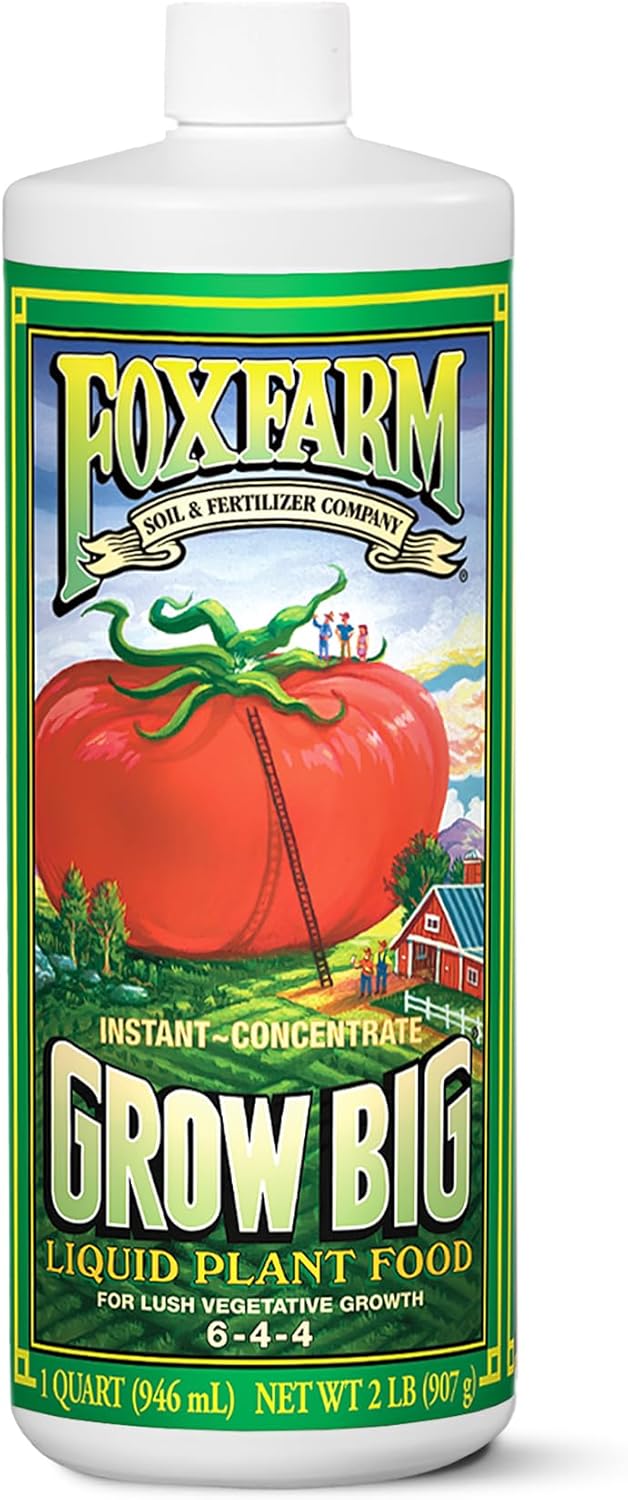
| Nutrient ratio | 6-4-4 |
|---|---|
| Form | Liquid concentrate |
| Unit count | 32 Fluid Ounces |
| Mixing ratio | 2-3 teaspoons per gallon of water |
FoxFarm Grow Big is a fast-acting liquid concentrate designed to boost vegetative growth in vegetables like squash and zucchini. Mixed at 2 to 3 teaspoons per gallon, it can be applied through regular watering or as a foliar feed to deliver nitrogen-rich nutrition that encourages larger leaves and stronger vines during the growth phase. The low pH formula helps keep micronutrients stable and available, so plants often show quick responses after feeding. Practical benefits for summer squash include faster canopy development and improved plant vigor, which can translate to better light capture and potentially higher yields. Because it emphasizes vegetative support rather than bloom-specific feeding, use it during early and mid-season growth and switch to a fertilizer higher in phosphorus when you want to push fruit set. The concentrate format is convenient and economical for regular feeding, but you will need to follow the mixing guidance carefully to avoid overfeeding and nutrient burn.
Best for: Gardeners focused on maximizing vegetative growth and canopy development for summer vegetables who want a fast-acting, easy-to-mix liquid feed.
Less Ideal for: Growers who need a single all-purpose fertilizer for bloom and fruit set without switching products or those preferring granular slow-release options.
- Concentrated liquid formula for flexible foliar or soil feeding
- Low pH helps micronutrient stability and quick uptake
- Nutrient ratio (6-4-4) supports vigorous vegetative growth ideal for squash vines
- Clear mixing instructions make routine feeding simple
- Higher emphasis on vegetative nutrients so not optimized alone for flowering or fruit-set stages
Verdict: Choose this concentrated liquid when you want a fast-acting, nitrogen-forward feed to build big, vigorous squash and zucchini plants.
Miracle-Gro Water Soluble All Purpose Plant Food, 5 lb
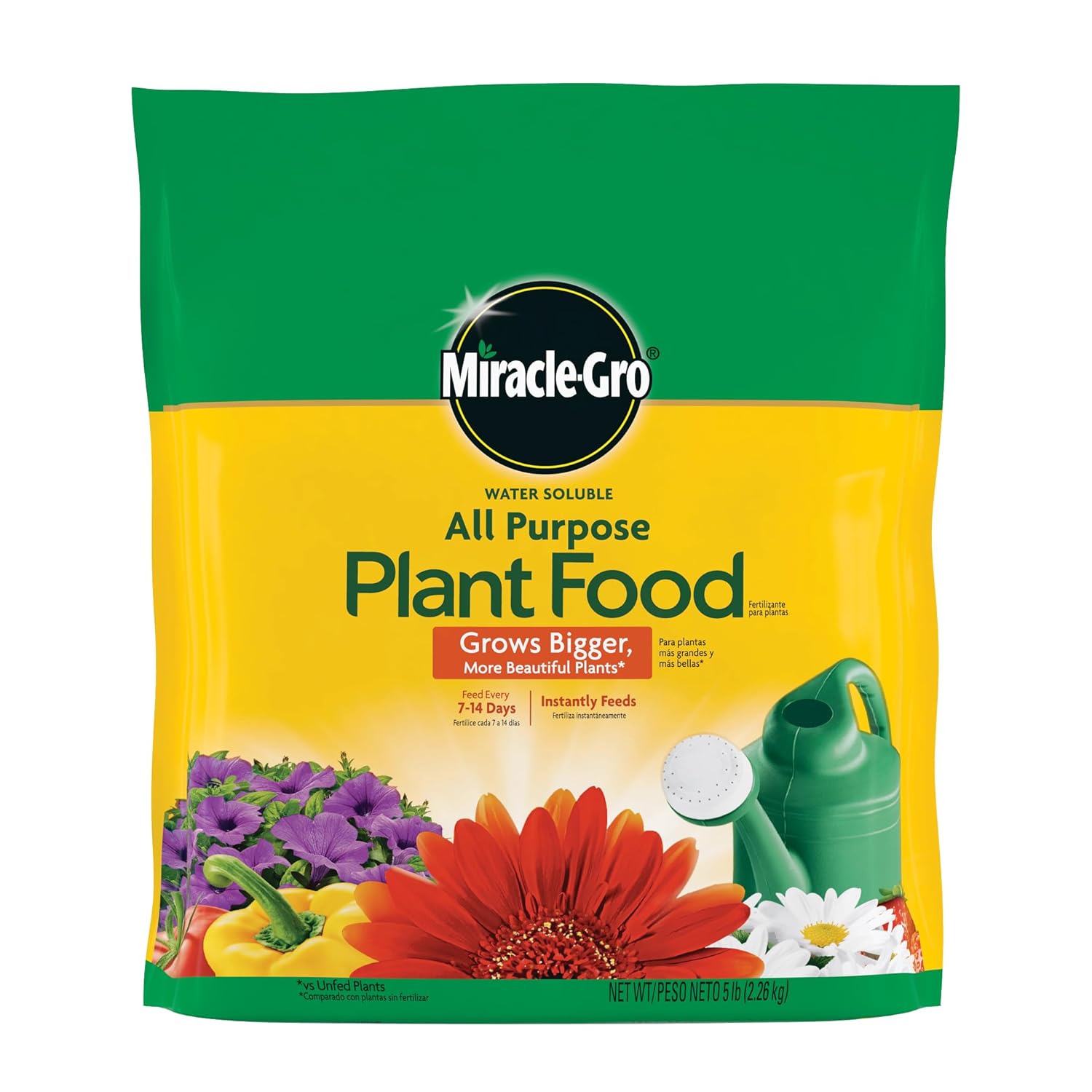
| Item Form | Powder |
|---|---|
| Application Method | watering can |
| Target Species | all plants |
| Mixing Ratio | 24-8-16 |
Miracle-Gro Water Soluble All Purpose Plant Food is a powdered fertilizer you mix into water to feed container and in-ground plants. With a 24-8-16 NPK ratio it delivers a strong nitrogen boost that encourages rapid leafy growth, making it useful during the vegetative phase of squash and zucchini. Application is straightforward: use the included scoop and water at the base of plants every 7 to 14 days or through a compatible garden feeder for larger areas. The powder dissolves easily and starts working fast compared with granular feeds. Practical benefits include wide compatibility with vegetables, flowers, trees, and houseplants and measurable coverage from a 5 lb bag. Important limitations are its high nitrogen relative to phosphorus and potassium, so it is best used early in the season or rotated with a bloom/fruit-focused feed when plants begin flowering and setting fruit. Also it requires regular mixing and repeat applications rather than a single long-lasting application.
Best for: Gardeners who prioritize fast, reliable vegetative growth and want a simple, repeatable fertilizer routine for early-season squash and zucchini plants.
Less Ideal for: Growers who prefer slow-release feeding or a single-season all-in-one fertilizer for continuous fruit production without switching products.
- Fast-acting water-soluble formula that delivers nutrients immediately to roots
- Wide applicability for both indoor and outdoor plants including vegetables
- Easy-to-follow mixing instructions and included scoop for consistent dosing
- 5 lb bag feeds a large area, suitable for multiple squash plants or a small vegetable patch
- High nitrogen ratio may reduce flowering or fruiting if used alone during bloom stage
- Requires frequent reapplication every 1–2 weeks rather than long-term slow feeding
Verdict: Choose this if you want a dependable, fast-acting soluble fertilizer to push early leafy growth in squash and zucchini before switching to a bloom/fruit formula.
Miracle-Gro Water Soluble Tomato Plant Food, 1.5 lb

| Unit Count | 24 Ounce |
|---|---|
| Item Form | Liquid |
| Application Method | Water Soluble |
| Target Species | Tomatoes and vegetables |
| Mixing Ratio | 18-18-21 |
Miracle-Gro Water Soluble Tomato Plant Food is a water-soluble fertilizer designed to deliver quick nutrition to tomatoes and other vegetables, including squash and zucchini. You mix the powder into a watering can or use the Miracle-Gro Garden Feeder and apply every 1 to 2 weeks; the packaging gives specific mixing ratios for outdoor and indoor use. The formula provides an NPK profile (listed as 18-18-21 on the product page) intended to support both foliage and fruit development, so plants typically show faster growth and fuller yields compared with unfed controls. Practical benefits include rapid uptake through watering, easy dilution for containers or in-ground beds, and compatibility with standard garden feeders. Limitations are that it requires regular reapplication during the season and careful measuring to avoid overfeeding, and the medium coverage means a single 1.5 lb container will cover modest garden plots rather than large-acreage plantings. For gardeners who want quick, measurable results for summer vegetables, it is a straightforward option; those seeking slow-release or organic alternatives will need a different product.
Best for: Gardeners who need an affordable, easy-to-use fertilizer to boost summer vegetable growth and increase yields for small to medium beds or containers, and who prefer fast results over long-term slow feeding.
Less Ideal for: Growers who prioritize organic certification, minimal reapplication, or very large vegetable plots that need bulk long-duration feeding should consider other formulations.
- Water-soluble formula feeds plants quickly after application
- Clear mixing instructions for watering can and garden feeder make dosing straightforward
- Balanced NPK aimed at supporting both foliage and fruiting in vegetables
- Works well for containers and in-ground beds when applied every 7 to 14 days
- Requires frequent reapplication through the growing season
- Not an organic or slow-release fertilizer option
Verdict: A simple, budget-friendly water-soluble fertilizer that delivers fast, measurable growth and better yields for squash and zucchini in small to medium gardens.
FoxFarm Happy Frog Tomato & Vegetable Fertilizer, 5-7-3, 4 lb

| Item Form | Granules |
|---|---|
| Specific Uses For Product | Vegetables, Tomatoes, Soft Fruits, and Berries |
| Mixing Ratio | 5:7:3 |
| Unit Count | 64 Ounce |
FoxFarm Happy Frog Tomato & Vegetable Fertilizer is a granular, 5-7-3 blend designed for heavy-feeding vegetables and fruiting crops such as squash and zucchini. You spread or side-dress the granules around established plants or mix per the package directions for container use; the formula supplies higher phosphorus to support flowering and fruit set while added calcium helps reduce blossom end rot on fruiting vegetables. The inclusion of mycorrhizal fungi can improve root nutrient and water uptake in typical garden soils, which is helpful for large shallow-rooted plants like zucchini. It is OMRI listed so it fits organic-minded beds and works across in-ground rows and containers. Limitations to expect are that granular fertilizers act more slowly than soluble feeds and results depend on correct application rate and soil biology. Also the 4 lb bag is best for small to medium plots rather than large acreage. For gardeners wanting a dependable, organic-minded feed to support consistent fruiting, this product is a practical choice.
Best for: Gardeners who prioritize consistent, reliable fruit production in backyard beds or containers and prefer an organic-listed fertilizer that supports root health and blossom-end-rot prevention.
Less Ideal for: People who need fast-acting, quick-correct nutrient boosts or who manage very large vegetable plots where bulk commercial fertilizer would be more economical.
- 5-7-3 N-P-K ratio tailored for flowering and fruit development
- Contains calcium to help prevent blossom end rot on tomatoes and squash
- Includes mycorrhizal fungi to support root efficiency and nutrient uptake
- OMRI listed for use in organic gardening systems
- Granular form releases nutrients more slowly than liquid or soluble fertilizers
- 4 lb bag may be small for large beds or multiple rows of heavy feeders
Verdict: A dependable, OMRI-listed granular fertilizer formulated to support steady flowering, fruit set, and root health for squash and zucchini in home gardens.
Dr. Earth Organic Tomato, Vegetable & Herb Fertilizer (64 oz)

| Item Form | Granules |
|---|---|
| Specific Uses For Product | Organic |
| Coverage | Medium |
| Target Species | Herb |
| Unit Count | 64 Ounce |
This organic granular fertilizer is designed to boost productivity and flavor in vegetables like squash and zucchini by supplying balanced primary nutrients plus beneficial microbes. You apply it at planting, transplanting, or mid-season and for containers every six weeks; it can also be brewed into compost tea. Notable features include a 100 percent natural formula, multiple strains of beneficial endo- and ecto-mycorrhizae to improve nutrient uptake and drought tolerance, and a nutrient release profile that starts quickly and continues feeding for months. In practice this means stronger root development, better nutrient availability for heavy-feeding summer squash, and generally improved plant vigor without synthetic chemicals. Important limitations are that it contains phosphorus so local regulations about phosphorus application may apply and gardeners should monitor soil pH around 6.5 for best results. As a packaged granular product the feeding schedule may require reapplication through a long season for very large plantings.
Best for: Gardeners who want an organic, probiotic fertilizer that improves yield and plant health for summer vegetables like squash and zucchini and who prefer evidence-backed products with a track record of positive reviews.
Less Ideal for: Those who need a zero-phosphorus fertilizer due to local rules or gardeners seeking a single-application, season-long slow-release solution for very large acreage.
- Organic, 100 percent natural ingredients with no GMOs or chicken manure
- Includes multiple strains of beneficial microbes and eight mycorrhizae to enhance nutrient uptake and drought tolerance
- Quick nutrient release with feeding that continues for several months
- Versatile use: suitable for in-ground beds, raised beds, containers and compost tea
- Contains phosphorus which may be restricted by some local regulations
- Requires periodic reapplication during long growing seasons to sustain heavy-feeding plants
Verdict: Choose this if you want an organic granular fertilizer with beneficial microbes that improves nutrient uptake and flavor in squash and zucchini.
Miracle-Gro Liquid All Purpose Plant Food Concentrate, 32 oz.

| Item Form | Liquid |
|---|---|
| Specific Uses For Product | Plant Growth, Root Development |
| Application Method | Mix with water in a watering can |
| Unit Count | 32 Fluid Ounces |
| Mixing Ratio | 1:10 (concentrate to water, estimate) |
Miracle-Gro Liquid All Purpose Plant Food is a water-soluble concentrate designed to deliver nutrients quickly to container and in-ground plants. You mix the concentrate with water (the bottle provides simple dosing instructions) and apply with a watering can every 1 to 2 weeks. For garden beds the directions give a cap-to-water ratio intended to cover a measured area, and for houseplants a teaspoon-per-gallon guideline keeps feeding light and regular. The product’s liquid form means nutrients are available to roots fast, which can help leafy growth and flowering for summer crops like squash and zucchini. It is easy to use, stores compactly, and works across many plant types so you do not need separate formulas. Limitations are typical of all-purpose fertilizers: it is not a specialized vegetable or bloom booster formula and it requires regular reapplication rather than a slow-release schedule. Users should follow the mixing directions to avoid overfeeding sensitive plants and keep it out of reach of children.
Best for: Gardeners who want a reliable, easy-to-mix feed they can use across beds and containers and who prioritize predictable, steady feeding over one-off specialty products.
Less Ideal for: Growers seeking a targeted NPK bloom booster or an infrequent, slow-release fertilizer should consider dedicated vegetable or slow-release options instead.
- Fast-acting liquid formula makes nutrients available to roots quickly
- Simple mixing directions for both garden beds and individual houseplants
- Versatile all-purpose formula suitable for many plant types including vegetables and flowers
- Not a specialty vegetable or bloom-boosting formulation
- Requires frequent reapplication every 1–2 weeks rather than long-term slow release
Verdict: A straightforward, fast-acting liquid feed that makes regular, predictable nutrient boosts easy for gardeners growing squash and zucchini.
Choosing the Right Fertilizer for Squash and Zucchini: Key Factors to Consider
Nutrient Ratio and Timing
The N-P-K ratio determines whether a fertilizer encourages leafy growth, strong root development, or abundant fruiting. Squash and zucchini need a balanced approach: modest nitrogen to support early leaf development, higher phosphorus to encourage flowering, and adequate potassium for fruit development. Timing matters because high nitrogen late in the season can delay flowering and reduce yield.
Choose fertilizers with clear guidance on application timing, or combine a starter feed for seedlings with a bloom and fruiting formula once plants begin to set flowers. Slow-release formulations can supply steady nutrients, while soluble feeds let you correct deficiencies quickly.
Application Method and Labor
How you apply fertilizer affects both its effectiveness and the amount of work in the garden. Granular and slow-release products are convenient for beds and raised beds: they are worked into soil or top-dressed and require fewer repeat visits. Water-soluble fertilizers and liquid feeds act quickly and allow targeted foliar or root feeding, but they require more frequent applications and measuring.
Consider whether you will use a watering can, hose-end feeder, or spreader. For container-grown squash, soluble feeds and diluted liquids are often safer because they distribute nutrients more evenly in limited soil volumes.
Soil Type and Existing Fertility
Your soil determines how fertilizer behaves. Sandy soils leach nutrients faster and benefit from slow-release or split-feed approaches. Heavy clay holds nutrients but can lock up phosphorus unless organic matter is present. Testing soil before choosing a fertilizer helps avoid over-application and reveals pH issues that affect nutrient availability.
Amendments such as compost or aged manure change the need for supplemental fertilizer and can buffer sudden nutrient swings. Match fertilizer strength and frequency to your soil's baseline fertility to protect plant roots and avoid wasting product.
Container Vs In-Ground Growing
Squash and zucchini grown in containers need more regular feeding because potting mix holds far less reserve nutrients than garden soil. Containers also dry faster, concentrating salts if too much fertilizer is applied. Use diluted, balanced liquid feeds on a set schedule for containers and flush pots occasionally to prevent buildup.
In-ground plants can tolerate longer-acting granular feeds and side-dressing, but you still need to monitor for nutrient depletion during heavy fruiting periods.
Secondary Nutrients and Disorder Prevention
Beyond N-P-K, secondary nutrients like calcium and magnesium, plus micronutrients such as boron and zinc, can influence fruit quality and reduce disorders. Calcium is particularly important for preventing blossom-end rot and for producing firm fruit. A fertilizer program that includes calcium sources or supplements as needed will lower the risk of common fruit defects.
Watch plant symptoms rather than guessing: blossom-end rot, yellowing between veins, or stunted growth point to specific deficiencies. Choose fertilizers that either contain these secondary elements or allow safe supplementary applications.
Environmental Impact and Runoff Risk
Fertilizer application influences nearby water and non-target plants. Highly soluble, high-nitrogen feeds can wash away in heavy rain, harming waterways and wasting product. Slow-release and organic-based fertilizers reduce immediate runoff risk by releasing nutrients gradually.
Plan applications to avoid heavy rain windows, use proper rates, and consider buffer zones between vegetable beds and drainage channels. Responsible application protects both your plants and the broader environment.
When to Start Feeding Squash and Zucchini
Begin feeding after seedlings have developed their first true leaves and when transplants are established in the garden. Early-stage plants need modest nutrients to build roots and foliage without becoming leggy.
Switch to a bloom-and-fruit feed as flower buds appear and continue through peak fruiting. Adjust frequency based on fertilizer type: soluble feeds every one to two weeks, slow-release every few months or at planting.
- Start light and increase feeding intensity when flowers set
- Monitor plant vigor to avoid excess vegetative growth
- For containers, feed more frequently at lower strength
Organic Options and Soil Health
Organic fertilizers such as compost, well-rotted manure, and fish emulsion add nutrients while improving soil structure and microbial activity. They release nutrients more slowly and help maintain long-term fertility in vegetable beds.
Use organic sources when building soil, and supplement with targeted organic liquid feeds during heavy fruiting periods to correct short-term nutrient gaps without upsetting soil biology.
- Incorporate compost before planting for better nutrient retention
- Apply organic liquid feeds to correct short-term deficiencies
- Balance organic amendments with occasional testing to avoid nitrogen overload
Correcting Common Nutrient Problems
Blossom-end rot shows as dark, sunken spots on developing fruit and usually signals calcium deficiency or inconsistent watering. Address this with consistent moisture, calcium-rich amendments, and avoiding excessive nitrogen that limits calcium uptake.
Yellowing between leaf veins typically indicates magnesium deficiency, while uniformly pale leaves suggest low nitrogen. Use targeted supplements or balanced feeds depending on the symptom and soil test results.
- Keep moisture consistent to improve nutrient uptake
- Use targeted foliar sprays only when root uptake is compromised
- Confirm with a soil test before applying strong corrective feeds
Feeding Schedules for Raised Beds and Large Plots
Raised beds heat and dry faster than in-ground plots, which affects nutrient release and watering frequency. Start with amended soil and follow a predictable feed schedule based on your chosen product type.
For large plots, map out side-dressing dates and monitor plant density to avoid uneven fertilization across a bed. Use splitter tools or spreaders for granular feeds to keep application uniform.
- Apply slow-release feeds at planting in raised beds
- Side-dress in rows when fruit begins to form
- Adjust frequency for heavy fruiting seasons
Safety and Handling Tips
Follow label directions for mixing and application rates to avoid burning roots or causing foliage damage. Store fertilizers in a dry, cool place away from children and pets.
When using concentrated soluble feeds, measure carefully and flush pots occasionally to prevent salt buildup. Wear gloves and avoid inhaling dust from dry products.
- Measure precisely for concentrated liquids
- Avoid applying before heavy rain
- Rinse equipment after use
How We Chose the Best Fertilizer for Squash and Zucchini
We selected fertilizers that reliably support the growth pattern of cucurbits without relying on brand reputations. Criteria emphasized nutritional profile and timing, application method, compatibility with common soil types, and observed effects on bloom and fruit set in real garden situations. We preferred formulas that provide the right balance of nitrogen, phosphorus, and potassium for leafy growth early and fruiting later, along with options that include secondary nutrients and calcium to reduce blossom-end rot. Ease of use was a key filter: granular, slow-release, and water-soluble products were included only if gardeners can apply them accurately to beds or containers. Environmental and safety considerations were also applied, favoring fertilizer choices that minimize runoff risk when used as instructed. Exclusions: experimental blends without labeled nutrient analysis, products meant strictly for lawns, and indoor houseplant fertilizers that lack the N-P-K ratios appropriate for outdoor squash and zucchini. The included dimensions reflect what mattered most when comparing options: nutrient ratios and timing, application practicality, soil compatibility, disease and disorder prevention, and measured effect on flowering and fruiting.
FAQ
How often should I fertilize squash and zucchini?
Frequency depends on the fertilizer type. Slow-release products are usually applied at planting and once midseason. Water-soluble or liquid feeds are often used every one to two weeks during active growth and fruiting.
Can I use a general vegetable fertilizer for squash and zucchini?
Often yes. Many general vegetable fertilizers have balanced N-P-K ratios suitable for squash and zucchini. Choose one with guidance for fruiting crops and adjust timing so flowering and fruit set are supported.
Will too much nitrogen stop my plants from fruiting?
Too much nitrogen, especially late in the season, can encourage leafy growth at the expense of flowers and fruit. Shift to a bloom-focused feed when buds appear to avoid this tradeoff.
How do I prevent blossom-end rot on squash and zucchini?
Blossom-end rot is commonly linked to inconsistent soil moisture and calcium deficiency. Keep watering regular, avoid over-fertilizing with high nitrogen, and add calcium sources if soil tests or symptoms indicate a shortage.
Are foliar feeds useful for correcting deficiencies quickly?
Foliar feeds can supply micronutrients rapidly and are useful when root uptake is impaired. They are not a substitute for a balanced root feeding program and should be used alongside soil-applied fertilizers.
Do container-grown squash and zucchini need different fertilizer rates?
Yes. Containers hold less nutrient reserve, so they need more frequent, lower-strength feedings. Flush pots periodically to prevent salt accumulation and monitor plants for signs of stress.
Final Verdict
Choose a fertilizer program that matches your soil, planting method, and the growth stage of your squash and zucchini. Prioritize nutrient balance and timing over one-off heavy applications. For in-ground beds, slow-release or pre-plant amendments reduce maintenance. For containers or during heavy fruiting, use diluted soluble feeds to correct deficiencies quickly. Focus on preventing common disorders like blossom-end rot by maintaining consistent moisture and ensuring calcium is available. With the right feeding rhythm and attention to soil health, you can encourage steady flowering and higher yields without excessive vegetative growth.
