

Note: This article contains affiliate links. If you click on these links and make a purchase, I may earn a small commission at no extra cost to you. This helps support my research and content. Read my full affiliate disclosure here.
Starting seeds is one of the most cost-effective ways to expand your garden, but young seedlings need different nutrition than established plants. A fertilizer for starting seeds should encourage root development and steady leaf growth without overwhelming delicate cotyledons. In this guide we cover seven shortlisted fertilizers that suit seed-starting situations and explain the criteria used to evaluate them. You will find practical notes on application methods, nutrient balance, and seeding setups so you can pick a product that matches your propagation style and growing medium. Next up are the product options followed by detailed buying guidance and common questions gardeners ask about seed fertilization.
Top Picks at a Glance
| Best Overall The best all-around choice for most situations | Espoma Organic Bio-Tone Starter Plus 4-3-3 Organic Starter Fertilizer (4 lb) |  |
| Best Quality Built to a higher standard if you want something more solid | Dr. Earth Root Zone Starter & Transplant Fertilizer, 4 lb |  |
| Best Value The sweet spot between price and what you get | Jobe's Organics Fast Start Planting Fertilizer Tablets (20 Count) |  |
| Best Budget The cheapest option that still gets the job done reliably | Miracle-Gro Organic Planting Tablets, 20 Tablets |  |
| Highest Rated A top-rated pick with lots of positive feedback | Espoma Organic Bio-Tone Starter Plus 4-3-3 Organic Starter Fertilizer, 8 lb | |
| Most Popular A crowd favorite that many people choose with confidence | Miracle-Gro Quick Start Planting & Transplant Starting Solution, 48 fl. oz. |  |
| Best Seller A high-volume bestseller chosen again and again | TPS Nutrients Liquid Plant Food for AeroGarden and Hydroponics, 8 oz | 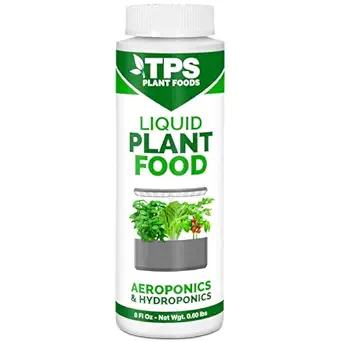 |
Espoma Organic Bio-Tone Starter Plus 4-3-3 Organic Starter Fertilizer (4 lb)

| Item Form | Granules |
|---|---|
| Specific Uses For Product | Gardening |
| Coverage | Medium |
| Mixing Ratio | 9 pounds per cubic yard or 1 cup per cubic foot |
Espoma Bio-Tone Starter Plus is a granular organic starter fertilizer designed to boost root growth at planting or transplanting. It combines a 4-3-3 N-P-K formula with calcium and both endo and ecto mycorrhizae, which support stronger root systems and better water and nutrient uptake for seedlings and transplants. Typical use is mixing the granules into backfill soil around roots or incorporating into potting mixes at the recommended rate to place nutrients in the root zone. Practical benefits include organic certification for use in organic gardens, a ready-to-use granular form that avoids measuring liquid concentrates, and included mycorrhizae to improve early establishment and reduce transplant shock. Limitations are its focus on starter-stage nutrition rather than ongoing feeding and the small 4 lb bag may require repeat purchases for larger seed-starting projects or many transplants. For seed-starting, follow the mixing ratio and avoid overapplication to prevent excessive nitrogen for tiny seedlings.
Best for: Gardeners who want an organic, root-focused starter fertilizer to give seedlings and newly transplanted plants a stronger start without synthetic inputs.
Less Ideal for: Growers looking for a complete long-term feed schedule or bulk quantities for large-scale seed starting should consider regular fertilzers or larger commercial products.
- Organic, registered for use in organic gardening
- Includes both endo and ecto mycorrhizae to improve early root establishment
- Granular, ready-to-use formula that is easy to incorporate into planting holes or mixes
- Balanced 4-3-3 N-P-K with added calcium to support seedlings and transplants
- Formulated for initial planting and not intended as a complete ongoing fertilizer program
- 4 lb bag may be small for larger-scale seed-starting or multiple transplanting projects
Verdict: Choose this organic starter if you want an easy-to-use granular fertilizer with mycorrhizae that helps seedlings and transplants establish strong roots.
Dr. Earth Root Zone Starter & Transplant Fertilizer, 4 lb
| Specific Uses For Product | Organic |
|---|---|
| Coverage | 2000 |
| Target Species | Plants |
| Mixing Ratio | 2:1000 |
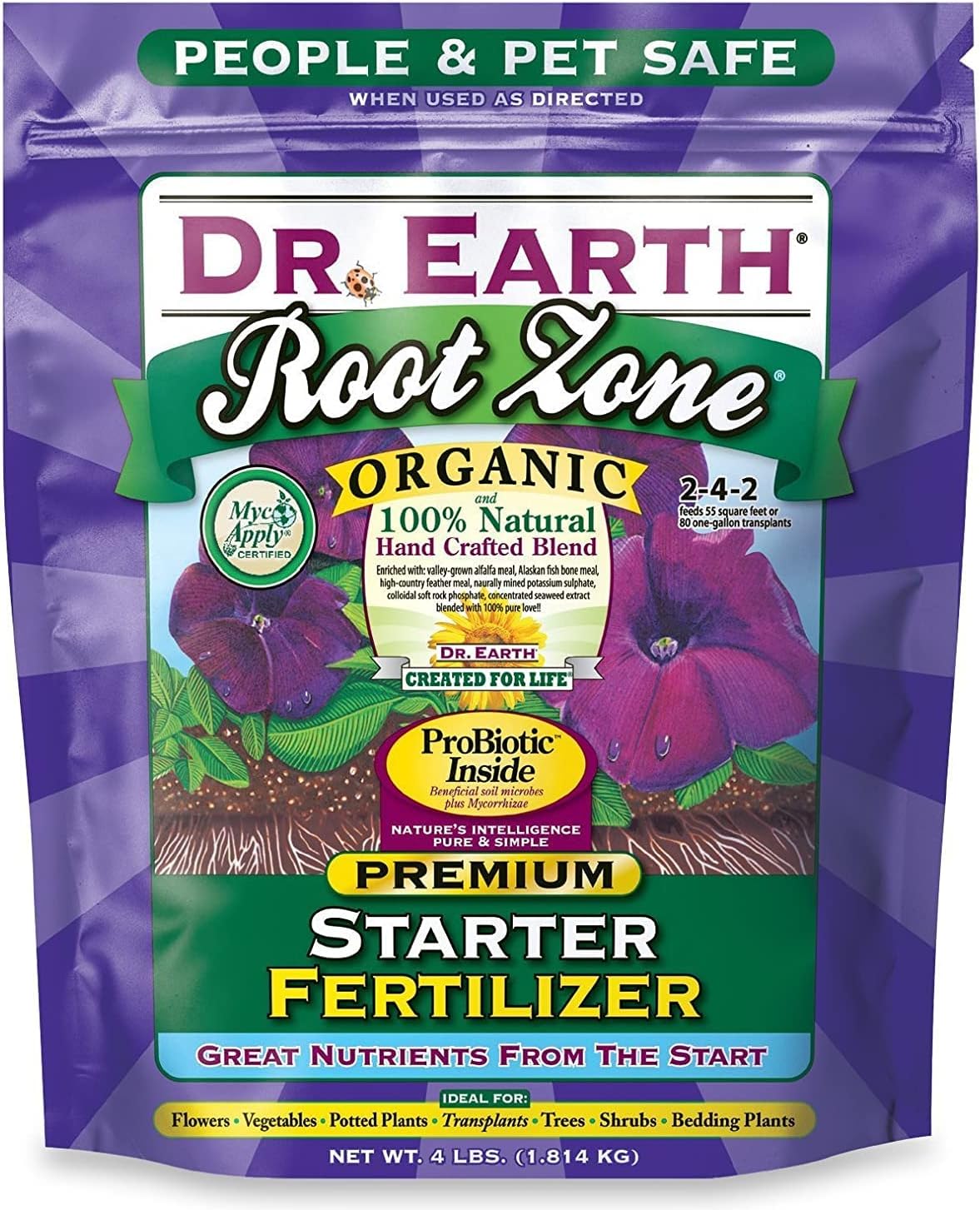
Dr. Earth Root Zone Starter & Transplant Fertilizer is a granular organic starter fertilizer designed for use at planting and transplanting to give seedlings and young plants a fast but sustained nutrient boost. It is typically mixed into the root zone at planting or applied to containers and potting mixes, then followed up with regular Dr. Earth feeds every six weeks. Notable features include a 2-4-2 nutrient ratio optimized for early growth, a recommended mixing ratio for dilute applications, and a blend of beneficial soil microbes and mycorrhizae to improve nutrient uptake and drought tolerance. Practical benefits are quick nutrient release that supports early root and shoot development, multi-month feeding that reduces how often you need to reapply, and organic ingredients that avoid synthetic additives. Limitations are that it contains phosphorus so local restrictions may apply and gardeners who need a strictly measured synthetic formula or precise NPK control may prefer a different product for fine-tuned feeding programs.
Best for: Gardeners focused on fast, reliable establishment of seedlings and transplants who prefer organic inputs and want a product that improves early root development and soil biology.
Less Ideal for: Growers who need exact, repeatable synthetic nutrient concentrations for hydroponics or those constrained by local bans on phosphorus-containing fertilizers.
- Organic formula with no GMOs, chicken manure, or sewage sludge
- Includes beneficial microbes and ecto and endo mycorrhizae to boost root function and nutrient uptake
- Feeds quickly and continues releasing nutrients for several months
- Formulated specifically for starters and transplants with a 2-4-2 NPK ratio
- Contains phosphorus which may be restricted by local regulations for non-agricultural turf
- Granular form requires mixing at planting or in media rather than a ready-to-use liquid
- Not a precision synthetic formula for users who want exact nutrient control
Verdict: A performance-oriented organic starter fertilizer that speeds early root and shoot growth while building beneficial soil biology for stronger transplants.
Jobe's Organics Fast Start Planting Fertilizer Tablets (20 Count)

| Item Form | Tablets |
|---|---|
| Specific Uses For Product | Gardening |
| Application Method | Drop |
| Target Species | Transplants and seedlings |
| Mixing Ratio | 2-7-4 |
Jobe's Organics Fast Start tablets are pre-measured organic fertilizer pellets intended to be dropped at the root zone when planting transplants or seedlings. With a 2-7-4 NPK ratio formulated for new growth, the tablets provide phosphorus-heavy nutrition that supports root development and bloom set while reducing the guesswork of measuring liquid or granular feeds. Application is straightforward: press a tablet into the planting hole at time of planting and the tablet releases nutrients over roughly three months, which helps reduce the frequency of follow-up feeding. The tablets are OMRI listed for organic gardening and use ingredients like feather meal, bone meal, and sulfate of potash, so they suit gardeners avoiding synthetic fertilizers. Limitations to note are the fixed nutrient ratio and single application format, which means you cannot fine-tune feeding for different seed varieties or adjust doses mid-season; very small seed trays may receive more fertilizer than they need. For practical starters who want an easy, low-mess solution at planting, these tablets simplify early care, but they are not a complete feeding program for every growth stage.
Best for: Gardeners who prioritize simple, low-mess feeding at planting and want an organic, pre-measured solution to support seedlings and transplants without frequent follow-up applications.
Less Ideal for: Growers who need precise, adjustable feeding schedules for many different seed varieties or who prefer liquid fertilizers for regular, incremental feeds.
- Pre-measured tablets remove measuring errors and reduce mess at planting
- Organic, OMRI-listed ingredients suitable for organic seed starting
- Nutrient ratio (2-7-4) tailored to root development and early bloom support
- Single application feeds plants for up to three months, cutting down on repeat feeding
- Fixed NPK ratio and dose limit flexibility for different species or sowing stages
- Not ideal for very small seed trays where full tablet strength may be too concentrated
Verdict: If you want an easy, organic, pre-measured way to feed seedlings and new transplants at planting, these tablets deliver root-focused nutrition with minimal fuss.
Miracle-Gro Organic Planting Tablets, 20 Tablets

| Item Form | Tablets |
|---|---|
| Coverage | Vegetable gardens, flower beds, and herb gardens |
| Target Species | flowers, vegetables |
| Ingredients | Soybean meal, alfalfa meal, bone meal, sulfate of potash |
| NPK | 3-7-4 |
Miracle-Gro Organic Planting Tablets are pre-measured fertilizer tablets designed to give transplants and starter plants a nutrient boost at planting. You drop the recommended number of tablets into the planting hole, cover with a thin layer of soil, set the plant, and water to activate the tablet. Each tablet contains natural ingredients such as soybean meal, alfalfa meal, bone meal, and sulfate of potash and is OMRI listed for organic use. The formula includes calcium and a 3-7-4 NPK that targets early root development, so young vegetables, herbs, and flowers get an easy, low-mess dose of nutrition for roughly the first 30 days. Because the tablets are single-use and portioned, they simplify planting across in-ground beds, raised beds, and containers. Limitations are that they only cover the early establishment phase and you will need a follow-up feeding after about a month, and the tablets are not a substitute for ongoing soil management or broad-spectrum fertilizers for mature plants.
Best for: Home gardeners who want a simple, no-fuss way to give newly transplanted seedlings and starter plants a reliable organic nutrient boost at planting.
Less Ideal for: Gardeners who need an all-season feeding plan or high‑frequency fertilization for established heavy-feeding crops should consider longer‑lasting or higher‑rate fertilizers instead.
- Pre-measured tablets make dosing simple and low-mess at planting
- OMRI listed and made from natural ingredients suitable for organic gardens
- Formulated with calcium and a 3-7-4 NPK to encourage early root growth
- Works in in-ground beds, raised beds, and containers with the same application
- Provides nutrition primarily for the first 30 days and requires follow-up feeding
Verdict: These tablet-form organic starters make it easy and inexpensive to give new seedlings and transplants a targeted root‑building feed at planting.
Espoma Organic Bio-Tone Starter Plus 4-3-3 Organic Starter Fertilizer, 8 lb
| Item Form | Granules |
|---|---|
| Application Method | Mix with soil |
| Specific Uses For Product | Gardening |
| Target Species | For everything you plant |
Espoma Organic Bio-Tone Starter Plus is a granular, ready-to-use starter fertilizer designed for planting and transplanting a wide range of garden plants. You mix it into backfill soil or potting mixes so the nutrients and added mycorrhizae sit in the root zone at planting time. The formula combines an organic 4-3-3 nutrient ratio with beneficial bacteria, humates, and both endo and ecto mycorrhizae to encourage faster root development, improved soil structure, and better establishment under stressful conditions. Typical uses include flower beds, bulbs, transplant holes, and planting mixes where quick root growth matters. Because it is organic and approved for organic gardening, it is suited to gardeners who prefer natural inputs. The main limitations are that it is intended as a starter or planting amendment rather than an all-season feed and dosing is by volume for different applications so you need to follow the mixing instructions for correct results. For gardeners wanting an easy organic boost at planting, this product provides a focused, microbially active start.
Best for: Gardeners who prioritize natural, microbially active amendments and want a reliable organic boost when planting or transplanting ornamentals, vegetables, and bulbs.
Less Ideal for: Buyers looking for a one-product solution for seasonal feeding or those who prefer liquid feeds or quick-release chemical fertilizers for immediate foliar results.
- Contains both endo and ecto mycorrhizae to aid root establishment
- Organic 4-3-3 formula enhanced with beneficial bacteria and humates
- Ready-to-use granules that are mixed into soil at planting
- Approved for organic gardening and made by a long-standing organic fertilizer brand
- Formulated primarily for initial planting and transplant use rather than ongoing feeding
- Dosing instructions vary by application and require measuring by volume for correct results
Verdict: Choose this if you want an organic, microbe-enhanced starter fertilizer to help new plantings establish strong roots.
Miracle-Gro Quick Start Planting & Transplant Starting Solution, 48 fl. oz.

| Item Form | Liquid |
|---|---|
| Specific Uses For Product | Agriculture,Starting |
| Application Method | Mix with water and pour around new plantings |
| Target Species | For all flowers, vegetables, trees, shrubs, transplants and seedlings |
| Mixing Ratio | Fill cap to 1st line and mix with 1 gallon of water |
Miracle-Gro Quick Start is a liquid concentrate designed for use when planting or moving seedlings and transplants. You measure the concentrate with the bottle cap, mix with a gallon of water, and pour the diluted solution around the root zone to settle soil and feed young roots. The 4-12-4 NPK formula emphasizes phosphorus to encourage root development and faster blooms versus unfed plants. Typical use is at planting and again seven days later, after which you can switch to a regular feeding schedule. Practical benefits include an easy, measured application, compatibility with flowers, vegetables, trees, shrubs and seedlings, and clear instructions for gardeners who want a simple transplant routine. Limitations to note are that this is a starter solution only, so it is not intended as a long-term sole fertilizer, and frequent large-scale applications without following label guidance could overfeed delicate seedlings. Also it is a liquid concentrate, so you need a watering can and care when diluting to avoid spills or accidental over-concentration.
Best for: Gardeners who want a simple, reliable way to reduce transplant shock and give seedlings a nutrient-rich start when planting in beds or containers.
Less Ideal for: People seeking an all-in-one, long-term fertilizer solution for ongoing feedings or those who prefer granular or organic-only products.
- Focused 4-12-4 NPK formula to encourage root development at transplanting
- Liquid concentrate with a measured cap makes dosing straightforward
- Suitable for a wide range of plants including vegetables, flowers, shrubs and trees
- Simple application that settles soil and feeds roots right after planting
- Designed as a short-term starter solution rather than a complete feeding program
- Requires correct dilution and handling to avoid overfeeding seedlings
Verdict: Use this easy-to-dose liquid starter to give seedlings and transplants a nutrient boost that helps roots establish quickly.
TPS Nutrients Liquid Plant Food for AeroGarden and Hydroponics, 8 oz

| Item Form | Liquid |
|---|---|
| Specific Uses For Product | Plant Growth, Root Development |
| Target Species | Herb, Vegetable |
| Mixing Ratio | 5 mL (1 tsp) per quart of feedwater |
| Unit Count | 8 Fluid Ounces |
This 8 oz liquid plant food provides concentrated, reservoir-safe nutrition intended for AeroGarden and comparable hydroponic units. It is used by mixing the recommended 5 mL per quart of feedwater into the system reservoir on a regular feeding schedule to supply macro and micronutrients for herbs, greens, and other compact edible plants. Notable features include a liquid formulation that dissolves easily, a focus on root development, and explicit compatibility with indoor hydroponic gardens. In practice it simplifies feeding for small indoor crops because a measured teaspoon per quart is straightforward to dose and store. Important limitations are the small bottle size, which will require frequent repurchasing for larger or multiple units, and the need to follow dilution directions carefully to avoid overfeeding. Safety handling is necessary because the concentrate should be kept away from children and pets. For risk-averse growers, the product’s clear mixing ratio and hydroponic focus make predictable feeding simple, but you should track reservoir concentrations rather than guessing frequency or volume adjustments.
Best for: Buyers who want a simple, low-risk feeding routine for indoor green onions and other small edible hydroponic crops and prefer clear dosing instructions they can follow reliably.
Less Ideal for: Growers managing large hydroponic setups, outdoor beds, or those who need a detailed NPK profile for tailored nutrient programs should look for larger or fully specified concentrates.
- Designed specifically for AeroGarden and similar hydroponic systems for straightforward compatibility
- Liquid formula mixes easily for even nutrient distribution in the reservoir
- Clear mixing ratio (5 mL per quart) simplifies dosing and repeatable feeding
- Targets root development and steady growth for herbs and vegetables
- Small 8 oz bottle may not last long for multiple or larger units
- No full nutrient analysis or NPK breakdown provided on the product listing
Verdict: A compact, easy-to-dose liquid fertilizer that makes predictable feeding of indoor green onions simple and low risk.
Choosing the Right Fertilizer for Starting Seeds: Key Factors to Consider
Nutrient Balance and Ratios
Seedlings need a different balance of nutrients than mature plants. A fertilizer for starting seeds should provide modest nitrogen to promote leaf growth without encouraging excessive top-heavy stretch. Phosphorus supports early root establishment but does not need to be high in most modern potting mixes; an appropriate ratio avoids forcing early reproductive growth.
Pay attention to micronutrients too. Small amounts of iron, manganese, and zinc help avoid pale or weak seedlings when growing under artificial light or in soilless mixes that are low in trace elements. Overly concentrated macronutrients or unbalanced ratios can cause salt build-up and burn delicate roots.
Application Method and Dilution Control
How a fertilizer is applied matters greatly at the seedling stage. Liquid concentrates that mix at low parts-per-million are often safer because they allow precise, repeatable feeds and foliar sprays. Slow-release or granular products can be inconsistent in small pots or trays and are harder to dose for seedlings.
Look for clear label instructions with workable dilution ranges and guidance for weekly or biweekly use. Products that dissolve cleanly and remain stable in solution reduce the risk of clogging misters or uneven dosing when using small watering cans or hand sprayers.
Compatibility with Seed-Starting Media
Many seed-starting mixes are soilless and have minimal nutrient reserves. A fertilizer that is formulated to complement inert media will supply what seedlings need without creating excess soluble salts. Conversely, fertilizers designed for heavy garden soil may overdose a soilless mix.
Consider whether the fertilizer is recommended for peat-free mixes, coco coir, or standard seedling composts. Some formulations include wetting agents or pH buffers that can change how media holds water and nutrients, which matters when using shallow trays and small volumes of substrate.
Gentleness and Salt Index
Young roots are sensitive to high soluble salt levels. A fertilizer with a low salt index or a formulation designed for frequent, dilute feeds minimizes burn and transplant shock. Gentle products allow you to maintain steady nutrition between transplant stages without stressing seedlings.
If you plan to use bottom-watering or capillary mats, choose fertilizers that will not concentrate at the surface. Also consider whether the product recommends a reduced-strength feed for seedling stages to further limit osmotic stress.
pH and Micronutrient Availability
Fertilizer can influence the pH of the root zone and therefore the availability of certain micronutrients. Seedlings in containers rely on a narrow pH range for iron and manganese uptake. A fertilizer that either buffers pH or is formulated for neutral to slightly acidic media helps maintain nutrient availability.
Check labels for chelated micronutrients if you are growing under low-light or cooler conditions where nutrient uptake slows. These formulations can prevent early-stage deficiencies that show up as yellowing or stunted growth.
Practical Handling and Safety
Seed-starting often happens indoors or on a small bench, so ease of handling and safety are practical concerns. Powders and high-concentration granules increase the risk of accidental overdosing. Liquids with simple measuring caps or pre-diluted options reduce error.
Also consider storage stability and whether the product needs refrigeration or protection from sunlight. Clear safety instructions for accidental contact and child-safe packaging are useful when gardening with family or in small indoor spaces.
When to Start Feeding Seedlings
Begin feeding seedlings after they have their first true leaves, usually one to two weeks after germination for many species. Cotyledons contain their own initial food stores, so early feeding can cause imbalanced growth if applied too soon.
- Start with a weak solution at one-quarter to one-half the recommended strength and observe growth for a week.
- Increase frequency rather than concentration; dilute feeds given weekly are safer than infrequent strong doses.
- Adjust timing for warm-season crops that may need a little earlier nitrogen once they show active leaf expansion.
Application Techniques That Protect Delicate Roots
Use gentle top-watering with a fine rose, or bottom-water trays so the root ball takes up moisture gradually. Foliar feeding can supplement nutrition but should be done sparingly and with very dilute solutions to avoid leaf spotting.
- Avoid heavy drenching that saturates small cells and displaces oxygen.
- For bottom-watering, apply fresh dilute solution rather than reusing runoff to prevent salt build-up.
- If using misting systems, pick fertilizers that dissolve completely to prevent nozzle clogging.
Adapting Feeds for Different Seed Types
Not all seeds need the same nutrition. Brassicas and greens often respond well to slightly higher nitrogen once true leaves form, while legumes and native wildflowers may prefer lighter feeding to avoid stretch. Treat tender annuals and woody perennials differently through the early weeks.
- Leafy crops: modest nitrogen to support leaf tissue.
- Flowering/fruiting crops: maintain low N early to encourage strong roots first.
- Long-season transplants: gradual ramping of nutrient strength before moving outdoors.
Transitioning Seedlings to Larger Pots or the Garden
When potting up or hardening off, keep nutrition steady but avoid sudden concentration increases. A consistent, low-strength feed supports root expansion in larger volumes of media without shocking the plant.
- Give at least one week between potting and a stronger feed to allow roots to re-establish contact with new media.
- Begin hardening with lower-frequency feeds and focus on light and airflow to toughen plants.
Common Mistakes to Avoid
Overfertilizing is the most frequent error with seed starting. Symptoms include burned leaf margins, slow growth, and thin stems. Underfeeding usually shows as pale, slow-developing seedlings but is easier to correct than nutrient burn.
Ensure you follow dilution instructions, consider the nutrient content of your seed mix, and avoid high-salt granular products in small cells or trays.
- Never use full-strength garden fertilizers on seedlings unless specified for seed-starting.
- Do not feed daily at full strength; frequent light feeds are preferable.
- Watch for salt crusts on media surface and flush with plain water if detected.
How We Chose the Best Fertilizer for Starting Seeds
Our shortlist prioritizes products and formulations that reliably support early seedling development while minimizing common risks like fertilizer burn or stretched, weak growth. We evaluated offerings based on nutrient profile, dilution and application flexibility, compatibility with common seed-starting mixes, and ease of use under indoor and protected sowing conditions. We excluded fertilizers formulated solely for mature flowering or fruiting stages, high-salt concentrate dry blends not intended for frequent dilute use, and products requiring complex mixing equipment. The final criteria focused on the nutrients and delivery gardeners actually control when starting seeds: nitrogen form and concentration to support green growth without excess, phosphorus and potassium levels appropriate for roots without forcing premature maturity, klarity about micronutrient content, and user-friendly concentration guidance for gentle, repeatable application. Other important filters were solubility for foliar and water application, predictable dilution ranges, and safety labeling for young plants.
FAQ
How soon after germination should I start feeding seedlings?
Usually wait until the first true leaves appear, not the cotyledons. That is typically one to two weeks after germination. Start with a very dilute feed and increase gradually if seedlings respond well.
Can I use a regular houseplant fertilizer for seedlings?
Often you can if it allows very low dilution rates and dissolves well. Check that the product is appropriate for small pots and that the N-P-K ratio and salt index are gentle enough for young roots.
Is foliar feeding safe for seedlings?
Foliar feeding can be safe if the solution is extremely dilute and applied during cooler parts of the day to avoid leaf scorch. Use it as a supplement rather than the primary feeding method for most seedlings.
Should I change fertilizer when transplanting seedlings outdoors?
You can transition to a formulation for growing-on or garden use after roots have established in new media. Do it gradually and avoid sudden increases in concentration to reduce transplant stress.
How do I avoid fertilizer burn in seed trays?
Use low-strength solutions, apply nutrients less frequently, and ensure good drainage. If you see white crusts or burnt leaf edges, flush trays with plain water to remove excess salts and reduce concentration going forward.
Do seedlings need micronutrients or just N-P-K?
Micronutrients help prevent subtle deficiencies, especially in soilless mixes and low-light conditions. Small amounts of chelated iron and other trace elements can be beneficial but should be balanced with macronutrients.
Final Verdict
When choosing a fertilizer for starting seeds, prioritize formulations that deliver gentle, controllable nutrition and clear dilution guidance. The main tradeoffs are ease of dosing versus nutrient completeness; liquids and low-strength concentrates offer the safest path for delicate seedlings, while higher-concentration products require careful handling. Focus on nutrient balance, solubility, and the product's compatibility with your seed-starting media. By starting with dilute feeds and increasing strength gradually as true leaves appear, you reduce the risk of burn and give seedlings the steady nutrition they need to transplant successfully.
