

Note: This article contains affiliate links. If you click on these links and make a purchase, I may earn a small commission at no extra cost to you. This helps support my research and content. Read my full affiliate disclosure here.
Summer squash responds quickly to feeding, and the right fertilizer can mean earlier fruits, fuller vines, and fewer blossom problems. If you grow in raised beds, a small backyard plot, or containers, choosing the right formulation and application method affects plant vigor and final yield. This guide covers the top shortlisted options for summer squash and explains the practical differences between granular, liquid, and slow-release choices. We evaluate nutrient balance, ease of application, and how each type behaves in typical garden conditions to help you pick the best fit for your situation.
Top Picks at a Glance
| Best Overall The best all-around choice for most situations | Miracle-Gro Water Soluble Plant Food for Vegetables & Herbs, 2 lb |  |
| Best Quality Built to a higher standard if you want something more solid | Jack's Classic 20-20-20 All Purpose Water-Soluble Fertilizer (24 oz) | 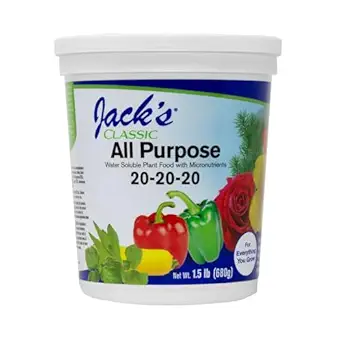 |
| Best Value The sweet spot between price and what you get | Southern Ag All Purpose Granular Fertilizer 10-10-10 (5 lb) |  |
| Highest Rated A top-rated pick with lots of positive feedback | Miracle-Gro Water Soluble All Purpose Plant Food, 12.5 lb |  |
| Most Popular A crowd favorite that many people choose with confidence | Miracle-Gro Water Soluble All Purpose Plant Food, 1.5 lb |  |
Miracle-Gro Water Soluble Plant Food for Vegetables & Herbs, 2 lb

| Item Form | Liquid |
|---|---|
| Application Method | watering can |
| Target Species | Vegetables and Herbs |
| Mixing Ratio | 1.5:2 |
This Miracle-Gro water-soluble plant food delivers a balanced 18-18-21 NPK blend formulated for vegetables and herbs, including tomatoes, peppers, cucumbers and basil. It dissolves instantly in water so you can mix the recommended dose into a watering can or use a garden feeder and soak the soil at the plant base every 7 to 14 days while plants are actively growing. The practical benefits are straightforward: quick uptake for faster visible feeding, compatibility with both containers and in-ground beds, and clear mixing directions for repeatable results. The product states it will not burn plants when used as directed and one 2 lb. box covers roughly 800 sq ft, which helps stretch supplies across a typical home garden. Limitations to consider are that this is a general vegetable/herb formula rather than a tomato-specific NPK, and frequent liquid feeding requires ongoing effort compared with slow-release granular options. Also it is best paired with good soil for maximum effect rather than as a standalone fix for poor soil structure.
Best for: Gardeners who want a reliable, easy-to-apply liquid fertilizer to keep tomatoes, cucumbers and other edibles fed through the season and who value predictable, frequent feeding routines.
Less Ideal for: People who prefer low-maintenance, once-per-season solutions or those looking specifically for a bloom-boosting or high-phosphorus tomato-only formula.
- Fast-dissolving formula for quick nutrient uptake
- Balanced 18-18-21 NPK tailored to vegetables and herbs
- Works with watering can or Miracle-Gro garden feeder for flexible application
- Covers a large area from one 2 lb. box when used as directed
- Requires repeat applications every 7–14 days rather than single-season feeding
- General vegetable/herb formula instead of a tomato-specific ratio
Verdict: Choose this if you want a fast-acting, easy-to-use liquid fertilizer that reliably feeds tomatoes and cucumbers with regular applications.
Jack's Classic 20-20-20 All Purpose Water-Soluble Fertilizer (24 oz)

| Item Form | Powder |
|---|---|
| Specific Uses For Product | Plant Growth |
| Coverage | All |
| Mixing Ratio | 0.22 |
Jack's Classic 20-20-20 is a professional‑grade, water‑soluble powder fertilizer intended for general feeding of indoor and outdoor plants. You dissolve the measured spoonfuls in water and apply as a root drench or foliar spray every 7 to 14 days, or use weaker mixes for seedlings and cuttings. The even 20-20-20 NPK formula promotes quick green‑up and leaf expansion, while included micronutrients support overall plant health. Because it is a powder concentrate, a small tub makes multiple gallons of feed, which is convenient for regular maintenance across beds, containers, and ornamentals. The product ships with a measuring spoon and clear directions, so it is easy to dose consistently. Limitations to note are that it is a generalist formula rather than crop‑specific booster, so plants with specialized needs may do better with targeted blends, and it requires careful handling and dilution to avoid overfeeding. Protective handling is recommended since the powder can irritate skin and eyes.
Best for: Gardeners who want a reliable, easy-to-use all‑around fertilizer for regular maintenance of outdoor beds, containers, and ornamentals and who value predictable, balanced nutrition.
Less Ideal for: Growers seeking a specialized bloom booster or a fertilizer tailored to a single crop should choose a targeted formula instead.
- Balanced 20-20-20 NPK supports fast green-up and leaf growth across many plant types
- Water‑soluble powder stretches farther than comparable liquid feeds so one tub makes multiple gallons
- Usable as both foliar spray and root feed for flexible application
- Includes measuring spoon and clear mixing directions for consistent dosing
- Added micronutrients reduce need for separate supplements
- General all-purpose formula is not optimized for bloom or fruit boosting
- Requires accurate measuring and dilution to avoid fertilizer burn
Verdict: A straightforward, professional‑grade balanced fertilizer that delivers reliable, easy-to-dose nutrition for maintaining healthy outdoor plants.
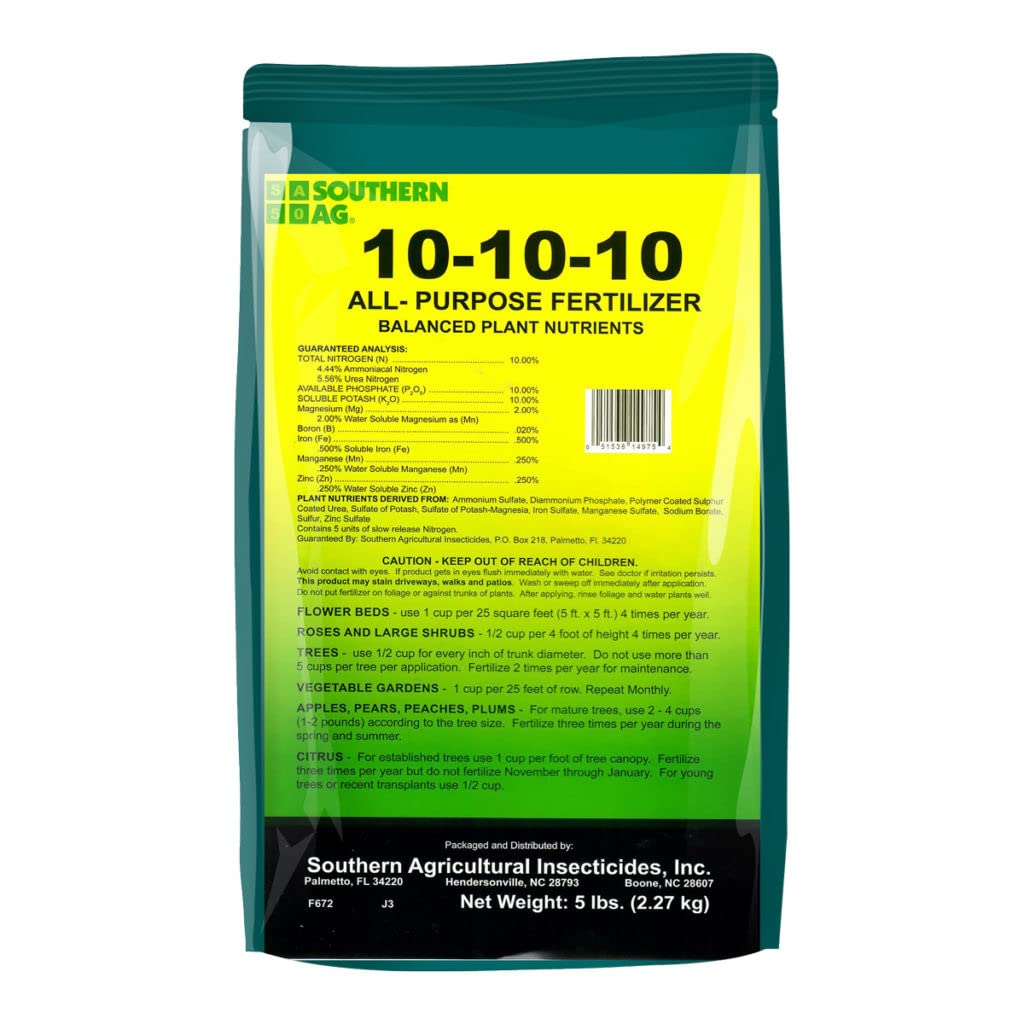
Southern Ag All Purpose Granular Fertilizer 10-10-10 (5 lb)
| Item Form | Granules |
|---|---|
| Specific Uses For Product | Citrus and Fruit Trees, Flowerbeds, Roses, and Large Shrubs, Vegetable Gardens |
| Application Method | Broadcast evenly over area and water in. |
| Mixing Ratio | 10:10:10 |
This 5 lb bag of Southern Ag 10-10-10 granular fertilizer is a straightforward, balanced all-purpose feed for vegetable beds, fruit trees, roses, and shrubs. You spread the granules uniformly over soil or beds and water them in; directions and recommended cup measurements are printed for common uses so dosing is easy. The formula supplies equal parts nitrogen, phosphorus, and potassium plus trace minerals like magnesium, iron, manganese, zinc, and boron, which supports steady vegetative growth and overall plant health. For asparagus specifically it can be used as a periodic maintenance feed during the growing season to support fern growth and energy storage in crowns. The product is simple to store and apply, and the small bag size is convenient for trialing on a single bed or patch. Limitations are that it is a general blend rather than a tailored asparagus formula, so heavy feeders or soils needing specific nutrient correction may require additional amendments, and granular broadcast feedings require careful placement to avoid contact with foliage or runoff risks described on the label.
Best for: Gardeners on a budget who want a simple, balanced fertilizer to maintain small asparagus patches and other mixed beds without buying specialty formulas.
Less Ideal for: Growers managing large asparagus plantings, or who need a targeted high-potassium or soil-specific amendment, should choose a crop-specific or soil-test-driven fertilizer.
- Balanced 10-10-10 N-P-K supports general growth and root development.
- Includes micronutrients (iron, manganese, zinc, boron) for broader plant nutrition.
- Clear application instructions and coverage rates for common garden uses.
- Small 5 lb size is convenient for testing on a single asparagus bed or small garden.
- Not formulated specifically for asparagus so may lack the higher potassium or phosphorus some heavy beds benefit from.
- Granular broadcast application can stain hard surfaces and requires watering after application to activate nutrients.
Verdict: A low-cost, easy-to-use balanced granular fertilizer that is a practical maintenance feed for small asparagus beds and mixed gardens.
Miracle-Gro Water Soluble All Purpose Plant Food, 12.5 lb

| Item Form | Powder |
|---|---|
| Specific Uses For Product | Plant Food |
| Coverage | general purpose, suitable for various plants |
| Mixing Ratio | 1 tablespoon per gallon of water |
Miracle‑Gro Water Soluble All Purpose is a powder fertilizer designed to dissolve in water and deliver fast nutrients to indoor and outdoor plants. Gardeners mix the recommended scoop with a watering can or use a compatible garden feeder to apply directly to the soil around roots; the product gives routine feedings every 7 to 14 days outdoors or every 2 weeks for houseplants. Notable features include an NPK of 24‑8‑16 for strong vegetative growth, a quoted coverage of about 5,000 sq ft from a 12.5 lb container, and an included scoop with separate measuring ends for indoor and outdoor rates. In practice this means quick uptake for leafy growth and an easy, repeatable dosing routine for reliability across container and in‑ground Clusia specimens. Limitations are that it is a general‑purpose formula rather than a Clusia‑specific mix and frequent applications are required during the growing season, so you will need to follow the label closely to avoid overfeeding.
Best for: Buyers who want a dependable, easy‑to‑measure fertilizer to keep Clusia healthy with consistent, repeatable feedings and straightforward application routines.
Less Ideal for: Growers seeking a slow‑release or custom‑formulated Clusia fertilizer or those who prefer lower‑frequency, hands‑off feeding strategies.
- Fast‑acting water‑soluble formula for near‑instant nutrient availability
- Simple mixing ratios and included scoop make dosing consistent
- Large 12.5 lb container covers a lot of garden area for routine feedings
- Suitable for both container and in‑ground use so it works with potted Clusia and landscape plantings
- General all‑purpose NPK may not match specialized nutrient needs of Clusia at every growth stage
- Requires regular applications during the season rather than a slow‑release schedule
Verdict: A reliable, easy‑to‑mix water‑soluble fertilizer that delivers fast, consistent feedings for Clusia in both pots and landscape settings.
Miracle-Gro Water Soluble All Purpose Plant Food, 1.5 lb

| Item Form | Powder |
|---|---|
| Application Method | Watering Can |
| Target Species | For all flowers, vegetables, trees, shrubs and houseplants |
| Mixing Ratio | 24-8-16 |
Miracle-Gro Water Soluble All Purpose Plant Food is a powder concentrate you mix with water to give a quick nutrient boost to flowers, vegetables, houseplants, shrubs and trees. It is typically dissolved in a watering can or used with a compatible garden feeder to soak soil at the base of plants, delivering nitrogen-heavy nutrition that shows effects faster than granular fertilizers. Notable features include an easy scooping method for indoor and outdoor dosing, compatibility with containers and in-ground planting, and clear directions for feeding every one to two weeks. In practice this makes the product a convenient option when you want visible growth and greener foliage quickly, and the 1.5 lb container covers roughly 600 sq. ft. Important limitations are that it is a fast-release, high-nitrogen formula best used as a regular quick feed rather than a long-term slow-release solution, and it requires careful measuring to avoid overfeeding. For routine maintenance combine with good watering and follow the label to avoid nutrient imbalance.
Best for: Buyers who prefer proven, easy-to-use feeding routines and want noticeable growth quickly for a variety of garden and houseplants, guided by established usage directions and broad user experience.
Less Ideal for: Gardeners seeking a single, long-term slow-release solution or those who prefer organic or low-nitrogen fertilizers for sensitive plantings should consider alternative products.
- Water-soluble powder starts working quickly at the roots when mixed and applied
- Clear, simple dosing for indoor and outdoor use with included scoop guidance
- Suitable for a wide range of plants including vegetables, flowers, shrubs and houseplants
- Covers a large area from a small container (about 600 sq. ft. per 1.5 lb)
- Fast-release formula means benefits are short-term compared with slow-release granular fertilizers
- Requires precise measuring and regular reapplication to avoid overfeeding
Verdict: A reliable, fast-acting water-soluble plant food for gardeners who want easy, repeatable feeding and quick visible results.
Choosing the Right Fertilizer for Summer Squash: Key Factors to Consider
Nutrient Ratio and Timing
Summer squash needs enough nitrogen early for strong leaf and stem growth, then steady phosphorus and potassium to support flowering and fruit development. A high-nitrogen feed applied too late can produce lots of foliage at the expense of fruit set. Look for products that specify N-P-K ratios and give guidance on when to shift feeding as plants move from vegetative growth into heavy production.
Timing also matters because squash grow quickly; feedings should align with rapid growth phases and heavy bloom. Many gardeners choose a balanced feed during establishment and switch to a bloom/fruit formula when flowers appear.
Release Profile and Frequency
Quick-release liquid or water-soluble fertilizers provide an immediate nutrient boost and are useful for correcting deficiencies or feeding during peak production. They require more frequent applications, typically every one to two weeks, but let you react fast to plant needs.
Slow-release granular or coated products reduce labor by delivering nutrients over weeks or months. They are convenient for larger beds or gardeners who prefer fewer interventions, but they can be slower to correct a sudden deficiency. Choose a release profile that matches how often you want to feed and how closely you monitor plants.
Application Method and Practicality
How you apply fertilizer affects both convenience and effectiveness. Broadcast granular applications work well in prepared beds and can be incorporated into the soil before planting. Side-dressing with granules is handy once plants are established and concentrates nutrients near roots. Liquid feeds and fertigation are well suited to container-grown squash or raised beds with drip irrigation.
Consider tools and time: hand-spraying and watering in liquid feeds is quick for a few plants, while broadcast spreaders or pre-mixed slow-release granules save time in larger plots.
Soil and Container Compatibility
Soil texture, organic matter, and container mixes influence how nutrients are held and made available. Sandy soils drain quickly and benefit from more frequent, lighter feedings to avoid leaching losses. Heavy or clay soils release nutrients more slowly and can tolerate less frequent feeding. For containers, use fertilizers formulated or tested for potting mixes since those mixes have limited nutrient-holding capacity and require regular feeding throughout the season.
Match the fertilizer to your planting medium to maintain consistent nutrient availability and avoid spikes that can stress roots.
Salt Load and Plant Safety
Some concentrated fertilizers carry a high soluble salt load that can damage young roots or stress plants in hot weather. Products with lower salt indices or those designed for regular feeding are safer for frequent applications. Always follow label rates and consider diluting concentrated liquids for young transplants.
Salt buildup is also a concern in containers and in beds with infrequent rainfall. Periodic flushing with water and following recommended rates prevents tip burn and leaf scorch.
Ease of Following Directions
Clear labeling and straightforward application rates reduce the risk of over- or under-feeding. Look for products that state rates for vegetables and give both per-plant and per-area dosing when possible. Instructions that address common scenarios such as containers, in-ground beds, and raised beds make it easier to apply the product correctly.
Products that list timing, frequency, and examples of common garden needs help gardeners feed confidently and avoid guesswork.
When To Start Feeding Summer Squash
Begin feeding after seedlings have developed a couple of true leaves or when transplants are established and actively growing. For beds amended with compost, a light initial feed may be enough since organic matter releases nutrients slowly.
Once squash sets blooms, increase attention to nutrient supply because fruit development draws heavily on potassium and phosphorus. Watch plants for signs of deficiency such as pale leaves or poor flowering and adjust feeding frequency accordingly.
- Seedlings: hold off on full-strength feeds until roots are established
- Early growth: use a balanced or slightly higher-nitrogen feed
- Flowering and fruiting: shift toward formulas that support bloom and fruit set
Liquid Vs Granular: Pros and Cons in Real Gardens
Liquid fertilizers deliver nutrients rapidly and let you target feedings at critical moments, such as when flowers are opening or fruit is swelling. They are easy to apply in containers and with a watering can or hose-end applicator but require more frequent applications.
Granular and slow-release options reduce the need for regular attention. Broadcast or side-dress granules are low-effort for garden beds, while coated slow-release granules can supply nutrients for several weeks. They are less flexible for quick corrections but are convenient for busy gardeners or larger plots.
- Liquid: fast correction, good for containers, needs frequent application
- Granular: low maintenance, good for beds, slower to change nutrient levels
- Slow-release: steady feeding over time, minimizes labor
Feeding in Containers and Small Spaces
Containers need consistent feeding because potting mixes have limited nutrient reserves. Use water-soluble fertilizers at regular intervals or choose a slow-release formulation labeled for container vegetables and supplement if signs of deficiency appear.
Because containers warm and dry more quickly, apply smaller, more frequent feeds rather than heavy single doses to avoid root stress. Always monitor drainage and flush pots occasionally to prevent salt buildup.
- Prefer water-soluble feeds for precise control
- Split applications prevent overconcentration
- Flush containers periodically to avoid salt accumulation
Organic Options and Soil Building
Organic fertilizers such as compost, aged manure, and fish emulsion add nutrients and improve soil structure over time. They release nutrients more slowly and also feed soil life, which benefits long-term fertility. For growers focused on soil health, combining organic matter with occasional supplemental feeds can produce steady yields.
Bear in mind that organic fertilizers can vary in nutrient concentration and release timing. Regular soil testing and observation of plant vigor help decide when to add an extra organic or mineral feed.
- Compost builds long-term fertility and soil structure
- Liquid organic feeds offer a gentler, quick boost
- Use organic amendments with periodic nutrient checks
Troubleshooting Common Nutrient Problems
Yellowing older leaves often point to nitrogen deficiency, while pale new growth can indicate iron or other micronutrient issues. Poor flowering and fruit drop are sometimes linked to insufficient phosphorus or potassium or inconsistent moisture combined with high temperatures.
Address symptoms by confirming soil moisture and following a conservative feeding correction. Overfeeding can cause salt stress and burn roots, so increase feeding gradually and reassess plant response before repeating treatments.
- Nitrogen deficiency: yellowing older leaves, slow growth
- Potassium or phosphorus shortage: reduced flowering and fruit quality
- Micronutrient signs: localized chlorosis or stunted tips
How We Chose the Best Fertilizer for Summer Squash
We selected fertilizers based on the factors that most affect summer squash performance in home gardens. First, nutrient balance was prioritized, with attention to appropriate ratios of nitrogen for leaf growth and phosphorus and potassium for flowering and fruit set. Application method was another key filter, since gardeners use granular broadcast, side-dress, or liquid feeds differently depending on bed type and scale. Release profile mattered too: quick-release feeds give an immediate boost while slow-release or controlled-release formulas reduce the need for frequent refeeding. Ease of use and clarity of labeling were included so home gardeners can follow rates and timing accurately. Safety and suitability for edibles were required; any product without clear guidance for food crops was excluded. Finally, compatibility with common soil types and container mixes was considered to ensure predictable results across gardens.
FAQ
How often should I feed summer squash?
Feeding frequency depends on the fertilizer type. Water-soluble feeds are often applied every one to two weeks during heavy production. Slow-release granular products can be applied at planting and then every six to eight weeks as needed.
Can I use a general vegetable fertilizer on summer squash?
Usually yes. General vegetable fertilizers typically provide balanced nutrients that support both leafy growth and fruiting. Check the label for recommended rates for vining crops and adjust timing so you emphasize bloom and fruiting phases.
Is foliar feeding useful for squash?
Foliar feeding can quickly correct certain micronutrient deficiencies and give a short-term boost, but it does not replace root feeding for macronutrients. Use foliar sprays as a supplement for specific issues rather than as the main feeding method.
Will compost alone supply enough nutrients?
Compost adds important organic matter and a steady nutrient release, but depending on your soil test and planting intensity, it may not meet all nutrient demands during peak fruiting. Many gardeners combine compost with periodic targeted fertilizer applications.
How do I avoid fertilizer burn on young plants?
Avoid applying concentrated feeds directly to seedling roots and use diluted solutions for young transplants. Follow label rates and incorporate granules into the soil rather than placing them in contact with stems or crowns.
Should I test my soil before feeding?
Soil testing is a useful baseline to understand pH and nutrient levels. It helps you choose a fertilizer that addresses actual deficiencies rather than guessing, which leads to more efficient feeding and healthier plants.
Final Verdict
Prioritize a fertilizer that matches how you garden: quick-release liquids give immediate control and are ideal for containers and corrective feeding, while granular and slow-release products reduce labor in larger beds. Match nutrient ratios to growth stage, avoid over-concentrating feeds, and monitor plants for visual cues. Balance convenience, the release profile, and compatibility with your soil or potting mix to get the most consistent yields from summer squash. With clear directions and regular observation, you can choose a feeding plan that keeps vines productive without extra guesswork.
