

Note: This article contains affiliate links. If you click on these links and make a purchase, I may earn a small commission at no extra cost to you. This helps support my research and content. Read my full affiliate disclosure here.
When tomatoes reach the flowering stage they need a shift in nutrition to support bloom retention and early fruit development. Choosing the right fertilizer for tomatoes during flowering affects how many blossoms set, how evenly fruit develops, and whether plants stay vigorous instead of stretching or dropping flowers. This guide shortlists seven fertilizers suited to flowering tomatoes, and evaluates them using practical criteria gardeners care about, such as nutrient ratio, solubility, and ease of application. Read on to understand which product traits matter for your garden and how to match a fertilizer to your watering and feeding routine.
Top Picks at a Glance
| Best Overall The best all-around choice for most situations | Miracle-Gro Water Soluble Bloom Booster Flower Food, 4 lb |  |
| Best Quality Built to a higher standard if you want something more solid | FoxFarm Big Bloom Liquid Plant Food, 16 fl oz |  |
| Best Value The sweet spot between price and what you get | Farmer's Secret Tomato Booster Liquid Fertilizer (8 oz) |  |
| Best Budget The cheapest option that still gets the job done reliably | Miracle-Gro Water Soluble Bloom Booster Flower Food, 10-52-10, 1 lb |  |
| Highest Rated A top-rated pick with lots of positive feedback | OFS Tomato Fertilizer 5-8-10 with Calcium & Sulfur, 3 lb Resealable Bag |  |
| Most Popular A crowd favorite that many people choose with confidence | Burpee Organic Tomato & Vegetable Granular Plant Food, 4 lb |  |
| Best Seller A high-volume bestseller chosen again and again | FoxFarm Tiger Bloom Liquid Plant Food (1 pint) |  |
Miracle-Gro Water Soluble Bloom Booster Flower Food, 4 lb

| Item Form | Powder |
|---|---|
| Application Method | Water Soluble |
| Target Species | flowers |
| Mixing Ratio | 1 tablespoon per gallon |
This Miracle‑Gro Bloom Booster is a water‑soluble powder designed to promote bigger, more colorful blooms on annuals and perennials. It mixes easily in a watering can (mixing ratio 1 tablespoon per gallon for outdoor use) and can also be used with a garden feeder to treat multiple containers and flower beds. The high phosphorus 10-52-10 formulation is the notable feature for encouraging bud set and more abundant flowers, and it delivers results quickly because nutrients dissolve and reach roots fast. Typical use is every 7 to 14 days during the growing season, which makes it convenient for regular maintenance of flowering groundcovers like creeping phlox or mixed container displays. Limitations include the frequent reapplication schedule compared with slow‑release granular fertilizers and the focused bloom‑boosting formula which is not balanced for leafy growth or nonflowering plants. It is best used as a periodic flowering supplement alongside a basic all‑purpose feed or when you specifically want to increase bloom production.
Best for: Gardeners who prioritize frequent, visible flowering results and want an easy soluble booster to use on spring and summer bloomers such as creeping phlox in beds and containers.
Less Ideal for: Those seeking a low‑maintenance, slow‑release fertilizer for foliage development or for primarily nonflowering perennials should consider an all‑purpose or slow‑release option instead.
- High phosphorus 10-52-10 formula to encourage bud formation and more blooms
- Water‑soluble powder that dissolves quickly for fast nutrient uptake
- Works with a watering can or Miracle‑Gro Garden Feeder for flexible application
- Clear mixing directions (1 tablespoon per gallon) make dosing straightforward
- Requires feeding every 7–14 days rather than long‑term slow release
- Specialized bloom formula may not support vigorous leafy growth for nonflowering periods
Verdict: Choose this bloom booster when you want a fast‑acting, water‑soluble fertilizer that reliably increases flower production in creeping phlox and other bloom‑focused plantings.
FoxFarm Big Bloom Liquid Plant Food, 16 fl oz

| Item Form | Liquid |
|---|---|
| Specific Uses For Product | Organic |
| Application Method | watering can, sprayer, or drip system |
| Liquid Volume | 16 fluid ounces |
| Mixing Ratio | 4 |
Big Bloom is a concentrated liquid bloom fertilizer aimed at boosting flowers and fruit by supplying readily available organic nutrients. It mixes into water (manufacturer recommends 4 tablespoons per gallon) and can be applied with a watering can, sprayer, hose-end siphon, or through drip systems, so you can feed potted plants, beds, or containers without changing your routine. Notable features are its OMRI listing for organic use and the inclusion of bat guano and earthworm castings, which provide phosphorus and organic matter to encourage blooms and seed set. Because it is liquid and fast-acting, you can expect visible perk-up within a short time after feeding, and it is suitable for regular use at watering times to extend flowering. Limitations to consider are the small 16 fl oz size for larger gardens and the presence of phosphorus, which may be restricted in some locales and requires careful application to avoid runoff.
Best for: Gardeners focused on maximizing blooms and fruit who want an organic, fast-acting feed they can add to routine watering for container and bed-grown flowering plants.
Less Ideal for: Large-scale landscapers or very large perennial beds who need bulk fertilizer solutions or want to avoid phosphorus-based products due to local regulations.
- OMRI-listed organic formula with natural inputs like bat guano and earthworm castings
- Liquid concentrate allows fast nutrient uptake and flexible application methods
- Works with watering cans, sprayers, hose-end siphons, and drip systems for easy integration
- Small 16 fl oz bottle may require frequent repurchasing for larger flower beds
- Contains phosphorus so local restrictions on phosphorus fertilizers may apply
Verdict: Choose Big Bloom when you want an OMRI-listed, easy-to-apply liquid fertilizer that delivers fast organic nutrients to boost flowering and fruiting.
Farmer's Secret Tomato Booster Liquid Fertilizer (8 oz)

| Item Form | Liquid |
|---|---|
| Specific Uses For Product | Tomato Plant Care |
| Target Species | Tomato |
| Mixing Ratio | 1:48 |
This concentrated tomato booster is designed to feed tomato plants throughout their life cycle with a formula developed by agronomists. It is supplied as an 8 oz liquid concentrate that you dilute (manufacturer directions: two teaspoons per gallon or mixing ratio 1:48) and apply weekly as a foliar spray or soil drench. The 3-8-7 N-P-K balance emphasizes phosphorus and potassium to support flowering and fruit development, and the label notes added humic acid, iron and calcium to help nutrient uptake and reduce common blossom-end issues. Because it is highly concentrated one small bottle produces many gallons of feed, which makes it convenient for someone managing a few seedlings up through established plants. Important limits: the product lists only primary ingredients without specific micronutrient concentrations, and safety guidance means you must measure carefully to avoid overfeeding sensitive seedlings. It is best used as part of a regular, measured feeding schedule rather than a one-time corrective treatment.
Best for: Gardeners who want an efficient, repeatable feeding plan for tomato seedlings and progressing plants and who prioritize measured, agronomist-developed formulations over ad hoc feeding.
Less Ideal for: Growers needing a complete guaranteed micronutrient analysis or those who prefer granular slow-release fertilizers for hands-off feeding.
- Super-concentrated formula yields many gallons from one 8 oz bottle
- N-P-K ratio (3-8-7) targets flowering and fruit set for tomatoes
- Includes humic acid plus iron and calcium to aid nutrient uptake and reduce common deficiencies
- Works as foliar spray or soil drench for flexible application
- No full breakdown of micronutrient concentrations is provided on the label
- Small bottle can lead to measurement errors if you do not use accurate measuring tools
Verdict: A small, super-concentrated liquid made to deliver targeted phosphorus and potassium support for tomatoes on a weekly feeding schedule.
Miracle-Gro Water Soluble Bloom Booster Flower Food, 10-52-10, 1 lb

| Item Form | Liquid |
|---|---|
| Application Method | Water Soluble |
| Coverage | 500 square feet |
| Target Species | all blooming plants |
| Mixing Ratio | 1 tablespoon/gallon (1.5 tsp for indoor plants) |
This Miracle-Gro bloom booster is a water-soluble plant food designed for flowering annuals and perennials, and it is typically mixed into a watering can or used with a garden feeder. The 10-52-10 formula supplies a high phosphorus dose aimed at increasing bud set and flower production, and it starts working quickly through root and foliar feeding when applied as directed. Practical features include a simple mixing ratio (1 tablespoon per gallon for outdoor use, reduced rate for indoor plants) and compatibility with the Miracle-Gro garden feeder for easy coverage up to about 500 square feet per refill. For gardeners focused on colorful displays, the concentrated phosphorus and repeat feeding schedule (every 7 to 14 days during bloom) deliver noticeably fuller flower shows. Limitations are that it is specifically a bloom booster rather than an all-purpose fertilizer and should be used only during bud set and bloom to avoid nutrient imbalance; following label rates is important to prevent overfeeding. For basic container or bedding displays, it is an easy-to-use option that targets bloom performance without complicated application steps.
Best for: Gardeners who want an affordable, straightforward booster to increase flower production on annuals and container displays and who plan to feed regularly during the bloom period.
Less Ideal for: Those seeking an all-in-one, season-long fertilizer or a slow-release product for hands-off maintenance should look elsewhere.
- High phosphorus 10-52-10 formula to promote more blooms and better bud set
- Water-soluble for quick uptake and easy mixing in a watering can or garden feeder
- Clear mixing instructions with lower indoor rate to reduce risk of burning when used as directed
- Covers a substantial area per feeder refill, useful for beds and multiple containers
- Focused on bloom boosting rather than providing a balanced, all-season nutrient program
Verdict: If you want an inexpensive, easy-to-use booster that reliably increases blooms on annuals and containers, this is a strong, no-frills choice.
OFS Tomato Fertilizer 5-8-10 with Calcium & Sulfur, 3 lb Resealable Bag

| Item Form | Granules |
|---|---|
| Target Species | Tomatoes |
| Specific Uses For Product | Vegetable garden feeding, raised beds, containers, in-ground gardens |
| Ingredients | Nitrogen, Phosphorus, Potassium, Calcium, Sulfur, Boron, Zinc |
This granular tomato fertilizer is formulated to support plants from transplant through flowering and fruit set using a 5-8-10 NPK balance with 15% calcium and 5% sulfur. Typical use is to apply at transplanting and reapply every 6 to 8 weeks to supply steady phosphorus for root and bloom development and potassium for fruit growth while the relatively moderate nitrogen avoids excessive leafy growth. The high calcium content helps strengthen cell walls and can reduce blossom-end rot risk when combined with consistent watering. Sulfur and micronutrients like boron and zinc in the blend aid nutrient availability and overall plant health. The product comes in a weather-tight resealable bag that keeps granules dry between applications. Limitations are that it is a general-purpose granular feed rather than a fast-acting soluble formulation, so immediate foliar boost is not provided and application rates must be followed to avoid overfeeding in small containers.
Best for: Gardeners who want a dependable, season-long granular fertilizer to support tomato flowering and fruit set in raised beds, containers, or in-ground plots and who prefer scheduled feedings over frequent liquid applications.
Less Ideal for: Growers needing fast corrective feeding or foliar supplements during acute deficiencies or those who prefer water-soluble feeds for daily or weekly dosing.
- Balanced 5-8-10 NPK geared toward flowering and fruit development
- High 15% calcium to help reduce blossom-end rot when watering is consistent
- Includes sulfur and micronutrients to improve nutrient uptake and soil health
- Resealable weather-tight 3 lb bag keeps granules dry between uses
- Granular formula is slower to act than soluble or foliar fertilizers
- Not suited for immediate corrective feeding during acute nutrient deficiencies
Verdict: A reliable, calcium-rich granular fertilizer that supports tomato flowering and fruit development with scheduled feedings throughout the season.
Burpee Organic Tomato & Vegetable Granular Plant Food, 4 lb

| Item Form | Granules |
|---|---|
| Specific Uses For Product | Gardening,Plant Growth,Root Development |
| Application Method | Sprinkle |
| Coverage | 160 Square Feet |
| Mixing Ratio | 3-6-4 |
This Burpee organic granular plant food is an all-purpose, OMRI-listed fertilizer designed for vegetable gardens, containers, and seed starting. You apply it by sprinkling the granules around the base of plants and watering in; the formula provides an initial boost of nutrients and a slow release that the manufacturer says lasts up to three months. The product lists a 3-6-4 mixing ratio and a coverage of about 160 square feet for the 4 lb bag, making it easy to estimate how much to use across beds or several containers. Practical benefits include simple dry application with no measuring or mixing required for spot feeding, organic certification for gardeners who prefer low-chemical inputs, and a nutrient blend that supports root development and steady growth through the season. Limitations are the fixed bag size and coverage, which may require multiple bags for larger plots, and the granular form means you must distribute it evenly and water thoroughly to activate nutrients. For cautious gardeners wanting organic, low-effort feeding for vegetables, this is a straightforward option.
Best for: Practical home gardeners who prioritize organic, low-chemical inputs and want a simple, no-fuss fertilizer to feed tomatoes and other vegetables through the season.
Less Ideal for: Gardeners managing large-scale vegetable beds who need higher-volume or custom nutrient programs should consider bulk or concentrated alternatives.
- OMRI-listed organic formula suitable for organic vegetable production
- Granular form is easy to apply by sprinkling around plants with no mixing
- Provides both immediate nutrients and slow release feeding for up to three months
- Clear application method and coverage guidance simplify use for new gardeners
- 4 lb bag covers a limited area and may not be economical for large vegetable plots
- Granules require even distribution and consistent watering to be effective
Verdict: A simple OMRI-listed granular fertilizer that gives organic gardeners an easy, season-long feed for tomatoes and vegetables.
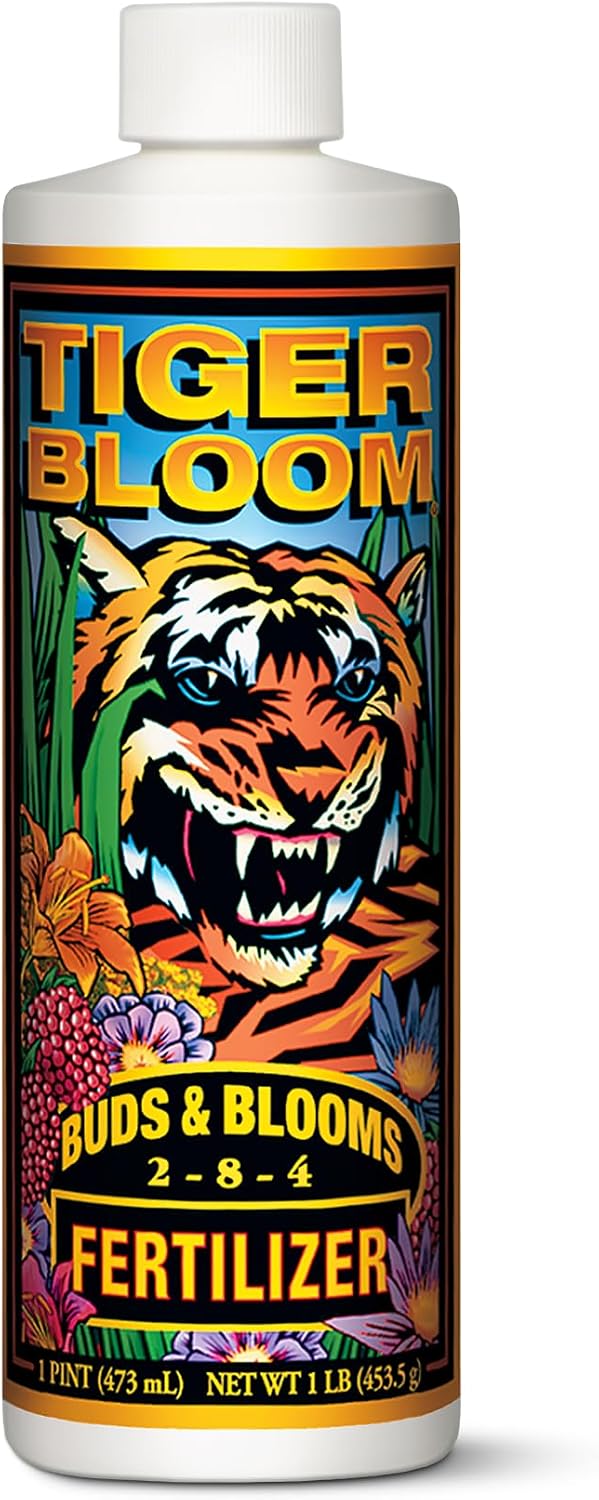
FoxFarm Tiger Bloom Liquid Plant Food (1 pint)
| Item Form | Liquid |
|---|---|
| Specific Uses For Product | Hydroponic |
| Application Method | Watering; Foliar spraying |
| Target Species | Flowering Plants |
| Mixing Ratio | 1:200 or 1:300 |
Tiger Bloom is a liquid, high-phosphorus fertilizer designed to push plants into a strong flowering and fruiting phase. You mix a small amount into the irrigation water or use it as a foliar spray and apply from first signs of flowering through harvest. The 2-8-4 formula and included micronutrients support bud set and larger blooms, and the concentrate mixes at 1:200 to 1:300 for routine feeding or 2 to 4 teaspoons per gallon for heavier feeding. It works in both soil and hydroponic setups and is formulated for quick nutrient uptake and stable micronutrient availability during storage. Practical benefits include flexible application methods, suitability for intensive flowering cycles, and a small bottle that lasts when used at recommended dilutions. Important limitations are that it is bloom-focused rather than an all-purpose feed so it may not meet vegetative needs, and the phosphorus content means users near waterways should follow local regulations to avoid runoff issues.
Best for: Serious growers who prioritize maximizing flower and bloom performance and want a concentrated, fast-acting bloom booster for soil or hydroponic environments.
Less Ideal for: Casual gardeners seeking a single all-purpose fertilizer for every growth stage or those managing turf or non-flowering lawns where phosphorus restrictions apply.
- High phosphorus NPK (2-8-4) concentrated for stronger bud development
- Works in soil and hydroponic systems for versatile use
- Liquid concentrate mixes easily for foliar or watering applications
- Formulated for quick nutrient uptake and stable micronutrient availability
- Focused on flowering so it is not a balanced all-stage fertilizer
- Contains phosphorus which may be restricted near waterways
Verdict: Choose Tiger Bloom when you need a concentrated, fast-acting bloom booster to maximize flower and fruit production.
Choosing the Right Fertilizer for Tomatoes During Flowering: Key Factors to Consider
Nutrient Ratio Focused on Bloom and Fruit Set
Tomato flowers need a different nutrient emphasis than leafy growth. During flowering, a fertilizer with a higher middle number relative to nitrogen helps support blossom development and fruit set. Excessive nitrogen at this stage often causes plants to push foliage at the expense of flowers, while too little phosphorus and potassium can reduce flower retention and early fruit size.
Look at the listed N-P-K and consider products where phosphorus and potassium are not overshadowed by nitrogen. Also check for soluble forms that are plant-available quickly during the short flowering window.
Solubility and Mixing Ease
How easily a fertilizer dissolves affects dosing accuracy and how quickly nutrients are available after application. Water-soluble powders and clear liquid concentrates mix uniformly for foliar sprays or soil drenches, giving predictable uptake during bloom.
Granular slow-release options can also work but require careful timing. If you need a foliar feed during hot or rainy periods, choose a formula that dissolves without residue and includes mixing instructions for different application methods.
Calcium and Secondary Nutrient Content
Calcium helps prevent blossom-end rot, a common disorder during fruit set, and magnesium and trace elements support pollen viability and fruit development. Fertilizers that either include these secondary nutrients or are compatible with a separate calcium supplement give you a practical way to reduce common flowering problems.
Check labels for calcium sources and for micronutrients like boron and magnesium. If the fertilizer lacks calcium, plan to apply a compatible calcium treatment during early fruit development.
Application Flexibility for Garden Setups
Gardeners use varied systems: in-ground beds, raised beds, containers, or greenhouse benches. The best flowering-stage fertilizers offer flexible application options such as foliar spray, soil drench, or compatibility with drip/injector systems.
Consider how frequently you water and whether you want to foliar feed during pollination. Products with clear dilution rates for multiple delivery methods make it easier to integrate feeding into your existing routine.
Timing, Frequency, and Residual Action
Flowering is a transient stage, so the duration of nutrient release matters. Fast-acting soluble feeds provide quick uptake for immediate bloom support, while slow-release formulations offer longer-term supply but may be less responsive to short-term deficits.
Decide whether you need quick correction of deficiencies during a critical pollination window or steady nutrition over several weeks. Labels that state recommended intervals help you plan reapplication without overfeeding.
Label Clarity, Safety, and Turf Compatibility
Clear instructions reduce the risk of burn or misapplication during the sensitive flowering phase. Look for explicit dilution rates, temperature and humidity cautions for foliar use, and mixing compatibility with other garden inputs. Safety directions for skin and eye protection matter because foliar sprays contact foliage and blossoms.
If you rotate other treatments, make sure the fertilizer is compatible with common insecticides, fungicides, or biologicals you might apply during bloom to avoid adverse interactions.
When to Start Flowering-Stage Feeding
Begin switching to a flowering-focused feed once the first clusters of blossoms open and pollinators are active. That timing ensures nutrients target blossom retention and the earliest phases of fruit set rather than vegetative growth.
If plants are under stress from heat, drought, or nutrient deficiency, correct growing conditions first before applying concentrated bloom feeds, since healthy plants are better able to convert applied nutrients into fruit.
- Confirm multiple open flower clusters before starting bloom-targeted feeding
- Address irrigation and pest stress before intensive feeding
- Use lighter foliar applications on hot, sunny days to avoid leaf scorch
Foliar Spray Versus Soil Drench
Foliar sprays deliver nutrients directly to leaves and young flowers for quick uptake and can be useful for correcting short-term deficiencies during pollination. They are most effective when used in the early morning or late afternoon to reduce evaporation and avoid sunburn.
Soil drenches feed the root system and provide a steadier nutrient supply, which supports sustained fruit development. For heavy feeders like tomato plants, alternating foliar boosts with routine soil applications often gives balanced results.
- Use foliar sprays for quick corrections and to support pollen viability
- Use soil drenches for ongoing potassium and calcium supply
- Avoid heavy foliar applications during peak sun or high humidity
Addressing Blossom-End Rot Risk
Blossom-end rot is linked to calcium availability and inconsistent soil moisture. Selecting a fertilizer that includes calcium or using a separate calcium supplement during early fruit growth reduces risk.
Maintain even soil moisture and consider mulching to stabilize roots. Rapid swings from dry to saturated conditions limit calcium movement into developing fruits even when overall soil calcium is adequate.
- Check for adequate calcium in the fertilizer or plan a compatible supplement
- Keep soil moisture consistent with regular, deep waterings
- Mulch to reduce surface evaporation and temperature swings
Adjusting Feedings for Containers and Raised Beds
Containers and raised beds warm and dry faster than in-ground soil, so nutrient concentrations and feeding frequency should be adjusted accordingly. They often require more frequent, lighter applications because nutrients leach with frequent watering.
Choose soluble or liquid concentrates that are easy to dose for smaller volumes of medium. Monitor plants for signs of overfeeding such as leaf tip burn or reduced flowering, and flush media if salts accumulate.
- Use lower concentration but higher frequency for containers
- Flush potting mix occasionally to prevent salt buildup
- Match fertilizer form to your container watering routine
Practical Mixing and Application Tips
Always follow label dilution rates and mix in a clean container to avoid residue that can clog sprayers. Start with the lower end of recommended strength if plants are stressed or if you are using foliar application.
Label directions often include temperature or humidity cautions for foliar sprays. Apply in calm conditions and avoid combining multiple products unless compatibility is explicitly stated.
- Use a garden notebook to track application dates and concentrations
- Rinse equipment after use to prevent residue buildup
- Test a small area or single plant when trying a new feed or higher concentration
How We Chose the Best Fertilizer for Tomatoes During Flowering
We focused on fertilizers that are appropriate for the specific needs of tomatoes while they are in bloom, not general all-season feeds. Our editorial filters prioritized nutrient formulas that support bloom retention and early fruit growth, reliable nitrogen-to-phosphorus-to-potassium ratios for flowering, and product formats that suit common garden application methods. We evaluated clarity of labeling for macronutrient percentages and presence of calcium and magnesium, since blossom-end rot and poor fruit formation are common problems during fruit set. Solubility and mixing guidance were assessed to ensure gardeners can apply feeds accurately at the required concentration. Ease of application and compatibility with common watering setups were included so that foliar sprays, soil drenches, and injector systems are all considered. We excluded feeds formulated exclusively for pre-plant soil building, starter soils, or products intended only for houseplants. The resulting selections balance bloom-focused nutrition, user-friendly application, and clear labeling to help gardeners get predictable results during the flowering window.
FAQ
Can I use the same fertilizer I used during vegetative growth?
Often you can continue a general-purpose feed, but many vegetative formulas are higher in nitrogen and can discourage flowering. Switching to a bloom-oriented formula or adjusting the ratio to lower nitrogen and increase phosphorus and potassium usually helps during flowering.
How often should I feed tomatoes while they are flowering?
Frequency depends on the product form. Water-soluble feeds are commonly applied every 7 to 14 days, while slow-release forms may only need one application per month. Adjust based on plant vigor and label recommendations.
Is foliar feeding safe for blooms and pollinators?
Foliar feeding can be safe if applied early or late in the day and if you avoid spraying open pollinators. Do not spray directly onto bee activity. Use low concentrations and follow label safety guidance to minimize exposure.
Will adding calcium to the feed prevent blossom-end rot?
Supplying calcium during fruit set reduces the risk of blossom-end rot, but consistent soil moisture and root health are equally important because calcium moves with water to the fruit. Use a calcium-inclusive feed or a compatible calcium supplement when needed.
Can I mix flowering fertilizer with other garden treatments?
Mixing is sometimes possible but depends on compatibility. Check labels for mixing guidance and avoid combining feeds with untested pesticides or biologicals. When in doubt, perform a jar test or apply treatments separately.
Final Verdict
For tomatoes in bloom, prioritize a fertilizer that shifts nutrition away from excessive nitrogen toward phosphorus and potassium while supplying calcium and secondary nutrients as needed. Match the product form to your garden setup and choose an application method that provides quick correction when necessary without disrupting pollination. By balancing nutrient ratios, application frequency, and moisture management you can improve blossom retention and early fruit development and make an informed choice based on your watering habits and planting system.
