

Note: This article contains affiliate links. If you click on these links and make a purchase, I may earn a small commission at no extra cost to you. This helps support my research and content. Read my full affiliate disclosure here.
Finding the right fertilizer for your ZZ plant makes a big difference in leaf sheen, steady growth, and long-term resilience. ZZ plants are slow growers that prefer light, regular feeding rather than heavy doses. The wrong product can cause salt buildup, brown tips, or a flush of weak growth that later stalls. This guide covers the top shortlisted fertilizers suitable for ZZ plant care, with practical notes on nutrient balance, application frequency, and forms that work best in typical indoor conditions. We evaluate each option for how it performs in real pots and low-light spots so you can pick the best fit for your plant and routine.
Top Picks at a Glance
| Best Overall The best all-around choice for most situations | TPS Nutrients ZZ Plant Liquid Fertilizer, 32 oz | 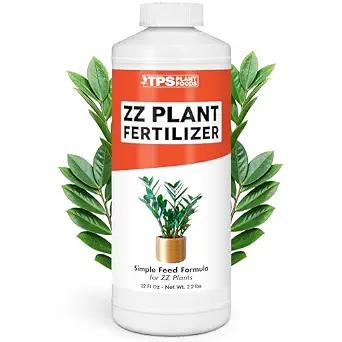 |
| Best Quality Built to a higher standard if you want something more solid | Exotica Tropicals Professional Nursery ZZ Plant Fertilizer, 4 lb Slow-Release Granules |  |
| Best Value The sweet spot between price and what you get | HiThrive ZZ Plant Liquid Fertilizer, 16 oz |  |
| Best Budget The cheapest option that still gets the job done reliably | Gardenera Organic Liquid Kelp Spray for ZZ Plants, 8 oz Ready-to-Use |  |
| Highest Rated A top-rated pick with lots of positive feedback | Gardenera Liquid Silica Plant Supplement 8 oz for Zamioculcas (Makes 45 Gallons) |  |
| Most Popular A crowd favorite that many people choose with confidence | TPS Nutrients ZZ Plant Liquid Fertilizer, 8 fl oz |  |
TPS Nutrients ZZ Plant Liquid Fertilizer, 32 oz

| Item Form | Liquid |
|---|---|
| Target Species | ZZ Plants |
| Unit Count | 32 Fluid Ounces |
| Mixing Ratio | 1:100 |
This TPS Nutrients liquid fertilizer is formulated specifically for ZZ plants and is used by diluting at the provided 1:100 mixing ratio and applying during regular watering. It supplies a gentle feeding blend with added calcium and magnesium to encourage new growth, deepen leaf color, and improve leaf gloss without overwhelming low-light specimens. Because it is a ready-mix liquid, nutrients are fast-absorbing and easy to distribute evenly through the potting mix, which helps maintain steady stem and rhizome development for a fuller-looking plant. The product is aimed at routine maintenance rather than corrective treatment, so expect incremental improvement in vigor and appearance over several feedings. The practical limits are that it is a single-target formula for ZZ plants and it requires correct dilution to avoid overfeeding; it does not replace a soil refresh or root care when those are the underlying issues. For growers wanting a simple, plant-specific liquid feed to keep ZZ plants healthy and glossy, this is a convenient option.
Best for: Buyers who want an easy, plant-specific maintenance feed to keep ZZ plants glossy and steadily growing; good for owners who prefer simple liquid applications during routine watering.
Less Ideal for: People needing a broad-spectrum fertilizer for many different houseplants or those looking for a corrective treatment for severely nutrient-deficient or root-diseased plants.
- Formulated specifically for ZZ plants to target their typical needs
- Liquid form with 1:100 mixing ratio for fast absorption and even application
- Includes calcium and magnesium to support leaf color and structural strength
- Gentle feeding formula suitable for low-light indoor conditions
- Designed for regular maintenance so it will not correct severe nutrient deficiencies quickly
- Single-species targeting limits versatility for mixed houseplant collections
Verdict: A convenient, ZZ-specific liquid feed that keeps leaves glossy and supports steady, low-maintenance growth.
Exotica Tropicals Professional Nursery ZZ Plant Fertilizer, 4 lb Slow-Release Granules

| Item Form | Granules |
|---|---|
| Specific Uses For Product | zz plant fertilization |
| Application Method | Apply directly to soil or mix with water |
| Coverage | 5 to 6 months |
| Mixing Ratio | 1:16 (tablespoon:gallon) |
This Exotica Tropicals fertilizer is a professional nursery formula made for Zamioculcas zamiifolia, delivered as granules that can be applied directly to soil or mixed with water. It combines 18-5-12 NPK with minor elements such as magnesium, iron, manganese and zinc and includes slow-release pellets that provide nutrient release for about five to six months plus a small instant-feed fraction for an early green-up. Typical use is a single application to potting mix at planting or as a top-dress on established plants, following the listed mixing ratio when diluting. The practical benefits are steady, low-maintenance feeding that reduces the need for frequent dosing and covers both macronutrients and trace elements ZZs need. Because it is a concentrated nursery-grade product, a little goes a long way and it is well suited to growers who want reliable, long-lasting performance. Limitations are that it is a single formula with no seasonal variations and application rates must be followed carefully to avoid overfeeding sensitive houseplants.
Best for: Growers who prioritize strong, consistent performance and low-maintenance feeding for ZZ plants, including hobbyists and small-scale growers who want a nursery-grade product used in professional production.
Less Ideal for: Beginners who prefer pre-diluted liquid feeds or growers who want granular formulas tuned for seedlings or seasonal variations.
- Formulated specifically for ZZ plants with a focused NPK ratio (18-5-12)
- Slow-release pellets provide 5 to 6 months of steady feeding
- Includes essential micronutrients like magnesium, iron, manganese and zinc
- Can be applied directly to soil or mixed with water using a clear mixing ratio
- Single-strength nursery formula may require careful measuring to avoid overfertilizing
- No separate seasonal or low-strength option for fragile or young plants
Verdict: Choose this if you want a professional, low-maintenance slow-release fertilizer that delivers reliable, long-lasting nutrition tailored for ZZ plants.
HiThrive ZZ Plant Liquid Fertilizer, 16 oz

| Unit Count | 16 Fluid Ounces |
|---|---|
| Item Form | Liquid |
| Target Species | ZZ plants |
| Mixing Ratio | 1/4 teaspoon per quart of water |
This HiThrive liquid fertilizer is designed specifically for ZZ plants and arrives as a concentrated 16 oz bottle that mixes into a large volume of feed solution. The formula uses a balanced 2-2-2 NPK plus micronutrients such as calcium, magnesium, iron, and zinc to support leaf gloss, steady growth, and stronger roots. You mix a quarter teaspoon per quart (or the cap guidance) and apply to the soil once or twice during the active growing season, which makes it easy to dose and stretch the bottle into many applications. Practical benefits include targeted feeding for common ZZ issues like yellowing foliage and a low-strength mix that reduces the risk of burn when used as directed. Limitations are that it is a general-purpose NPK rather than a specialty formula for variegated types or slow-release convenience, and you must measure carefully to avoid overfeeding. For growers who want a straightforward, nutrient-rich liquid for routine maintenance, this is a convenient option that keeps ZZ plants healthy without complex steps.
Best for: Buyers who want a no-nonsense, economical liquid fertilizer to maintain healthy ZZ plants and prevent common nutrient problems with straightforward mixing and application.
Less Ideal for: Growers seeking a one-time slow-release solution or a highly specialized formula for sensitive or specialist ZZ cultivars should consider alternatives.
- Concentrated formula mixes to a large volume so one bottle covers many feedings
- Balanced 2-2-2 NPK with added micronutrients for leaf shine and root health
- Simple, low-strength mixing ratio that is forgiving for routine use
- Clear directions for soil application once or twice during the growing season
- Liquid feed requires regular dosing rather than a single slow-release application
- Not tailored to specialty ZZ cultivars that may need different nutrient emphasis
Verdict: A concentrated, easy-to-mix liquid fertilizer that delivers balanced nutrients and good coverage for routine ZZ plant care.
Gardenera Organic Liquid Kelp Spray for ZZ Plants, 8 oz Ready-to-Use

| Item Form | Liquid |
|---|---|
| Application Method | Spray |
| Coverage | Low |
| Target Species | ZZ Plant |
| Liquid Volume | 8 fluid ounces |
This ready-to-use Gardenera kelp spray is a foliar and light soil mist designed specifically for ZZ plants. Made from Ascophyllum nodosum, it supplies micronutrients, natural growth hormones, and amino acids that help improve leaf shine, reduce yellowing, and encourage stronger rhizomes and roots. Typical use is simple: shake, mist leaves and the soil surface every 2 to 3 weeks during the growing season, which makes it convenient for busy or casual plant owners. Because it is pre-diluted there is no mixing or measuring, lowering the chance of overfeeding. Practical benefits include better leaf color in low-light indoor settings and improved resilience to irregular watering. Limitations are that coverage is listed as low so a single 8 oz bottle will treat only a modest number of plants, and this product is a plant superfood rather than a complete NPK fertilizer so it will not replace occasional complete feeds if plants need macronutrient correction.
Best for: Buyers who want a simple, low-effort supplement to keep indoor ZZ plants looking glossy and resilient without mixing fertilizers; suitable for casual plant owners and office plants.
Less Ideal for: Growers who manage large collections or those needing a balanced NPK feed for nutrient-deficient plants should consider broader-spectrum fertilizers instead.
- Formulated specifically for ZZ plants to improve leaf gloss and color
- Ready-to-use spray requires no mixing or dilution
- Seaweed-based (Ascophyllum nodosum) provides micronutrients and natural growth hormones
- Gentle foliar application supports root and rhizome strength and stress tolerance
- Coverage described as low so the 8 oz bottle treats only a few plants
- Not a complete NPK fertilizer so it may not correct macronutrient deficiencies
Verdict: A convenient, ready-to-use kelp foliar spray that makes it easy to boost leaf shine and root health in a few indoor ZZ plants.
Gardenera Liquid Silica Plant Supplement 8 oz for Zamioculcas (Makes 45 Gallons)

| Item Form | Liquid |
|---|---|
| Application Method | Watering Can, Hose End Sprayer, Foliar Spray |
| Coverage | Makes 45 Gallons |
| Target Species | ZAMIOCULCAS plants |
| Mixing Ratio | 1-1.5:1 (grow), 1:1 (bloom) |
This 8 oz liquid silica concentrate is designed specifically for zamioculcas and mixes into water for regular feedings or foliar sprays. It is used by adding small measured amounts to each watering in soil, coco, or peat media, by diluting for hose-end application for larger areas, or by applying as a weekly foliar spray for quicker uptake. Key features include an organic acid chelated silica formula intended to remain bioavailable in the root zone, simple mixing ratios for grow and bloom phases, and compatibility with hydroponic nutrient systems. In practice it helps thicken stalks, reduce leaf browning, and improve resistance to heat and drought when used consistently. The small bottle covers many gallons, so it suits long-term maintenance. Limitations are that it is a single-ingredient silica supplement so it does not replace complete fertilizers and benefits require regular use over time rather than instant results.
Best for: Buyers who prioritize consistent, reliable support for zamioculcas health and want a product they can add to routine waterings to strengthen stems and protect foliage.
Less Ideal for: Gardeners seeking an all-in-one fertilizer or immediate, dramatic growth responses should consider a full NPK feed or targeted growth stimulant instead.
- Chelated liquid silica stays bioavailable in soil for faster plant uptake
- Clear mixing instructions for watering can, hose-end sprayer, and foliar spray
- Small concentrate makes up to 45 gallons, so a little goes a long way
- Specifically formulated and labeled for zamioculcas plants
- Not a complete fertilizer so it must be used alongside balanced nutrients
Verdict: Use this concentrated liquid silica as a dependable, ongoing supplement to strengthen zamioculcas stems and reduce leaf browning when added to routine waterings.
TPS Nutrients ZZ Plant Liquid Fertilizer, 8 fl oz

| Item Form | Liquid |
|---|---|
| Application Method | Liquid |
| Target Species | ZZ Plants |
| Mixing Ratio | 1 teaspoon per quart of water |
| Unit Count | 8 Fluid Ounces |
This liquid fertilizer is designed specifically for ZZ plants and is meant to be mixed at a mild rate of 1 teaspoon per quart of water for regular feedings. It delivers readily available nutrients in a fast-absorbing liquid form to improve leaf color and shine while supporting root and rhizome health for steadier, fuller growth. The formula highlights added calcium and magnesium and is pitched as gentle for low-light settings, which makes it easy to use on the common, slow-growing ZZ without risking nutrient burn when applied as directed. The 8 ounce bottle is convenient for hobby growers and allows several feedings for a few plants. Limitations include the small bottle size if you care for many plants and the single mixing ratio provided, so users who want concentrated or multi-plant programs may need to plan purchases accordingly. For someone seeking a targeted, easy-to-apply feed to maintain attractive foliage, this product is straightforward and practical.
Best for: Plant owners who want a low-risk, easy-to-use fertilizer to maintain glossy foliage on ZZ plants and prefer a product tailored to that species.
Less Ideal for: Large collections or growers wanting a concentrated, multi-use fertilizer program should consider larger or more versatile formulations.
- Formulated specifically for ZZ plants to enhance leaf gloss and color
- Liquid form mixes easily and is fast-absorbing for quicker nutrient delivery
- Contains added calcium and magnesium to support stems and overall plant vigor
- Gentle mixing ratio suitable for low-light and slower-growing plants
- Only an 8 fl oz bottle which may be insufficient for multiple plants or long-term use
- Limited dosing guidance beyond a single mixing ratio
Verdict: A simple, species-focused liquid feed that makes it easy to keep ZZ plants glossy and healthy with minimal fuss.
Choosing the Right Fertilizer for Zz Plant: Key Factors to Consider
Nutrient Ratio and Concentration
ZZ plants prefer a gentle, balanced nutrient supply rather than high-nitrogen formulas designed for rapid growers. Look for modest NPK ratios that supply steady nitrogen for leaf color plus adequate phosphorus and potassium for root and tissue health.
Concentration matters because indoor potted plants are sensitive to salts. A concentrated fertilizer used at full strength can quickly lead to leaf tip burn and accumulated soluble salts in the potting mix. Choosing a lower concentration or diluting to half-strength is a common practice to match the ZZ plant's slow uptake.
Application Form and Frequency
Fertilizer comes in liquids, water-soluble powders, spikes, and slow-release granules, and each form interacts differently with typical indoor watering patterns. Liquids and water-soluble formulas provide quick availability but require more frequent dosing. Slow-release granules or spikes reduce dosing frequency and are helpful if you prefer low-maintenance care.
Consider how often you water and whether you repot regularly. If you water infrequently, a slow-release option that delivers nutrients gradually can prevent localized salt pockets. If you like precise control, a mild liquid applied during the growing season lets you adjust feeding intensity.
Salt Content and Build-Up Risk
Houseplant fertilizers can add soluble salts to potting mixes, and ZZ plants are sensitive to salt accumulation showing symptoms as brown leaf tips or slowed growth. A fertilizer with lower salt index or one designed for indoor use will reduce the chance of buildup.
Regular flushing of the pot with clear water during repotting or occasional heavy watering can mitigate salt accumulation. Still, choosing a product formulated for low-salt delivery means less maintenance and fewer corrective flushings over time.
Compatibility With Potting Mix and Watering Style
How a fertilizer behaves depends on your potting medium and watering habits. Coir or peat mixes drain differently than chunky, bark-based mixes, affecting how nutrients move and where salts concentrate. If you use a dense mix, soluble fertilizers can linger and concentrate near roots.
Match fertilizer type to your culture: slow-release granules are more forgiving in well-draining mixes, while dilute liquid feeds work well if you routinely leach the pot. Also consider water quality; hard water adds minerals that can interact with fertilizer salts.
Safety, Odor, and Indoor Use
Indoor-friendly fertilizers should have minimal odor and be safe to handle around pets and household members. Strong-smelling formulations or those requiring frequent handling may be less desirable in living spaces.
Check ingredient lists for strong volatile compounds and follow label safety guidelines. Solid, low-odor options or well-diluted liquids are typically the easiest to use without disrupting indoor comfort.
Feeding Longevity and Cost Efficiency
Consider how long an application lasts relative to how often you want to fertilize. Slow-release products can feed for several months and reduce the labor of frequent applications. Liquids may be cheaper per bottle but require repeated doses through the growing season.
Think ahead about repotting intervals and how often you want to handle fertilizer. A product that matches your schedule reduces waste and the chance of overfeeding from forgotten or irregular applications.
When To Feed A ZZ Plant
ZZ plants have a distinct seasonal rhythm and generally do best with reduced feeding in lower light or winter months. Most indoor growers feed lightly in spring and summer when growth is active, and pause or cut back in fall and winter when new growth slows.
If your plant is actively producing new leaves, a light monthly feeding with a mild formula is often sufficient. If growth is very slow or absent, hold off on adding nutrients until conditions improve, because forcing growth with fertilizer can produce leggy or weak shoots.
- Feed lightly during active growth months only
- Skip fertilizing in periods of dormancy or low light
- Watch new growth rate before increasing dose
How To Apply Different Fertilizer Forms
Liquid and water-soluble fertilizers are mixed with water and applied at each watering or on a regular schedule. For ZZ plants, dilute to half or quarter strength compared with label rates for fast growers to avoid overfeeding.
Slow-release granules or spikes are placed into the potting mix and provide a steady low dose for weeks or months. Place them away from the stem base and follow recommended load based on pot size. These are convenient for low-maintenance care but still require occasional leaching to avoid salt concentration.
- Dilute liquids for slow growers
- Place slow-release products evenly, not piled near roots
- Flush pots occasionally to prevent salt buildup
Signs Your ZZ Plant Needs Fertilizer
Paler new leaves, slowed new shoot emergence, or a gradual decline in leaf luster often indicate a need for nutrients. However, distinguish these signs from light stress or overwatering, which can present similarly.
If you recently repotted into fresh potting mix, hold off on fertilizing for several weeks because many mixes include starter nutrients. Use fertilization as a corrective for nutrient deficiency rather than compensating for poor light or watering practices.
- Look for pale new growth rather than older leaf decline
- Confirm cultural conditions before feeding
- Avoid feeding immediately after repotting into amended mix
Mixing And Dilution Tips For Indoor Use
Measure carefully and err on the side of weaker solutions. A common approach is to apply at one-quarter to one-half of the full recommended strength for general houseplants. Keep records of concentration and frequency so you can track plant response.
Always dissolve soluble products fully before applying and avoid applying on very dry or very wet soil to reduce root stress. After several feedings, flush the pot with clear water to prevent salts from building up near the root zone.
- Start with low concentrations and increase slowly if needed
- Record applications to spot trends
- Flush pots periodically to remove excess salts
Adjusting Feeding For Pot Size And Age
Smaller pots require less fertilizer because there is less soil to hold nutrients. Overdosing a small container is a common source of root damage. Adjust quantity based on container volume rather than treating all pots the same.
Younger, actively growing plants may accept slightly more frequent light feedings, while mature, established plants often need only occasional supplements. When repotting into fresh soil, reduce or skip fertilizer for the first month.
- Scale dose to pot volume, not just plant size
- Reduce feeding right after repotting
- Older plants usually need less frequent feeding
How We Chose the Best Fertilizer for Zz Plant
We focused on fertilizers that match the ZZ plant's low-water, low-light habits and slow growth rate. Key evaluation criteria were nutrient balance and concentration to avoid overfeeding, form and ease of application for indoor use, salt content and risk of buildup in potting mixes, and compatibility with common indoor soil and watering schedules. We also considered longevity of feeding per application, such as slow-release versus liquid frequency, and the practical safety for living spaces. Submissions that relied on excessive nitrogen concentrations, specialty blends intended for fast-growing houseplants, or unclear application guidance were excluded. We prioritized products with clear NPK profiles, straightforward dosing instructions, and options that minimize salt accumulation. The final picks represent a range of application styles so gardeners can choose based on how often they like to feed and how much maintenance they want.
FAQ
How often should I fertilize a ZZ plant?
Usually feed once a month during spring and summer with a diluted solution. In fall and winter, reduce frequency or pause feeding because growth slows and the plant uses fewer nutrients.
Can I use a standard houseplant fertilizer on a ZZ plant?
Often yes if you dilute the product. Use a mild concentration because ZZ plants are slow growers and sensitive to salt buildup. Avoid high-strength or fast-growth formulas without adjusting dose.
Are slow-release fertilizers better for ZZ plants?
They can be advantageous for low-maintenance care because they reduce dosing frequency and provide steady nutrients. However, they still require occasional leaching to prevent localized salt accumulation.
What are signs of overfertilizing a ZZ plant?
Look for brown leaf tips, sudden leaf drop, or white crust on the soil surface. These indicate excess salts and may respond to thorough flushing and a pause in feeding.
Should I fertilize right after repotting a ZZ plant?
No. Fresh potting mixes often contain starter nutrients, so wait several weeks before adding fertilizer. Starting too soon can lead to nutrient excess and root damage.
Final Verdict
Choose a fertilizer option that matches how often you want to interact with the plant and how much control you need over dosing. For most ZZ plant owners, low-concentration liquids applied during the active season or a gentle slow-release product that minimizes handling are both reasonable approaches. Prioritize modest nutrient ratios, low salt risk, and application styles that suit your watering rhythm. With conservative feeding and occasional flushing, you can keep leaves glossy and growth steady without overtaxing the plant.
