

Note: This article contains affiliate links. If you click on these links and make a purchase, I may earn a small commission at no extra cost to you. This helps support my research and content. Read my full affiliate disclosure here.
Choosing the right fertilizer for raspberries and blackberries makes a tangible difference in cane vigor, fruit yield, and disease resistance. These bramble crops have specific nutrient needs across bud development, flowering, and fruiting stages, and the wrong feeding schedule or formula can leave plants weak or produce sparse harvests. This guide pulls together seven top options suited for raspberry and blackberry plantings, all shortlisted for real-world garden performance. We focus on nutrient balance, application method, and seasonal timing so you can pick a fertilizer that fits your planting style, whether you work raised beds, a backyard row, or containers. Read on for the evaluation criteria and practical guidance to match a product to your growing situation.
Top Picks at a Glance
| Best Overall The best all-around choice for most situations | Down To Earth Acid Mix Organic Fertilizer 4-3-6, 25 lb |  |
| Best Quality Built to a higher standard if you want something more solid | Greenway Biotech Strawberry Fertilizer 8-12-32 Powder, 1 lb |  |
| Best Value The sweet spot between price and what you get | Espoma Berry-tone Organic Fertilizer for Berries, 4 lb |  |
| Best Budget The cheapest option that still gets the job done reliably | Down To Earth Acid Mix Organic Fertilizer 4-3-6, 1 lb |  |
| Highest Rated A top-rated pick with lots of positive feedback | HOSS Berry Blend Fertilizer 8-12-12, 5 lb granular |  |
| Most Popular A crowd favorite that many people choose with confidence | Espoma Berry-Tone Organic Fertilizer for Berries, 4 lb (2-pack) |  |
| Best Seller A high-volume bestseller chosen again and again | Espoma Berry-tone Organic Fertilizer, 4-3-4, 4 lb (2-pack) |  |
Down To Earth Acid Mix Organic Fertilizer 4-3-6, 25 lb
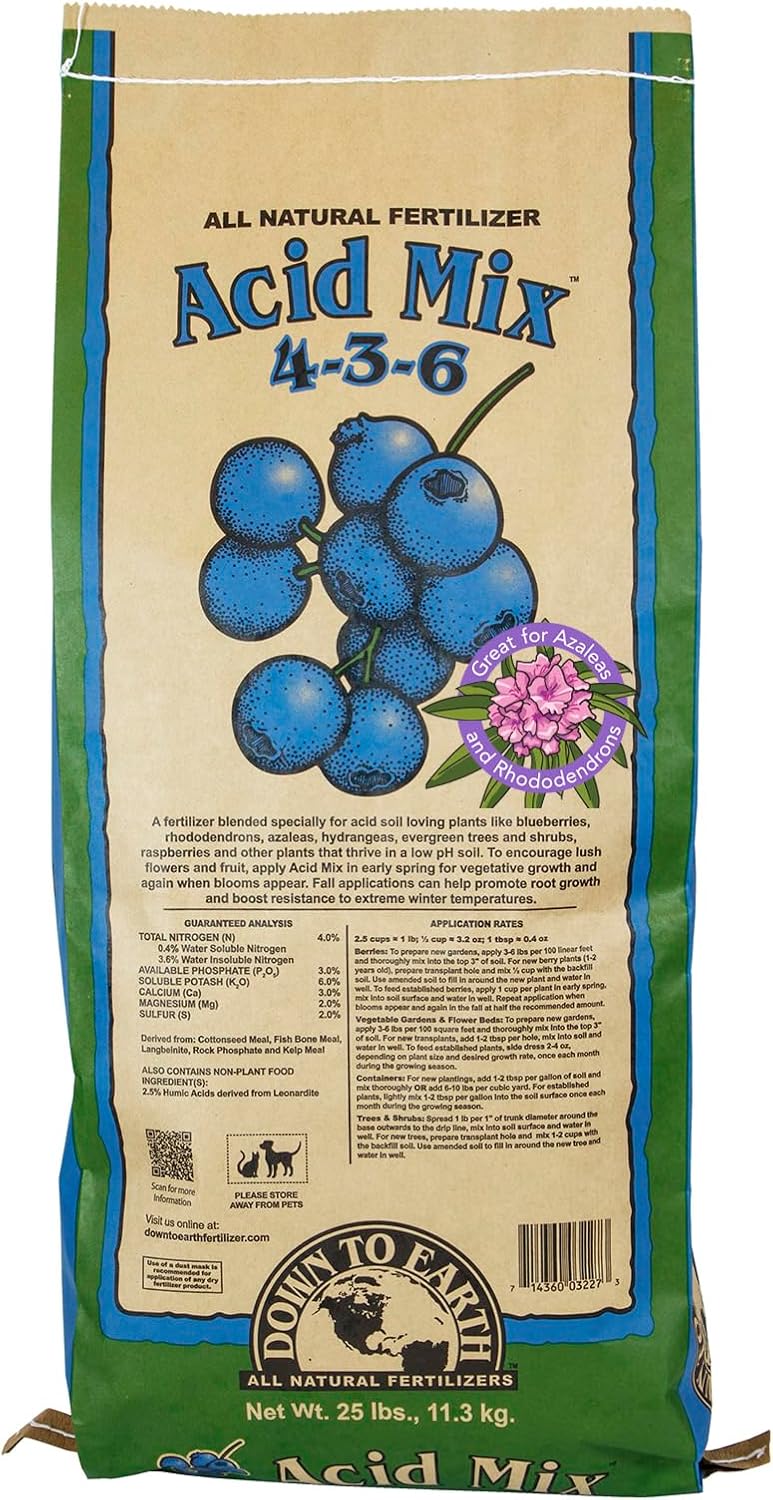
| Item Form | Granules |
|---|---|
| Target Species | Acid-Loving Plants |
| Mixing Ratio | 4-3-6 |
| Unit Count | 400 Ounce |
Down To Earth Acid Mix is a granular, all‑natural fertilizer blended for acid‑loving plants such as raspberries, blueberries, azaleas and rhododendrons. It supplies a balanced 4‑3‑6 N‑P‑K mix from organic sources like cottonseed meal, fish bone meal, rock phosphate, humates and kelp meal. You apply it to the soil surface or mix it into planting holes and water in; the brand recommends spring and bloom‑time applications and a fall application to support roots before winter. Because it is OMRI‑style natural feed material, it fits into organic gardening workflows and will release nutrients steadily rather than forcing rapid growth, which suits cautious gardeners. Important limitations are that it will not alter soil pH and contains phosphorus so local runoff rules may apply; if you need to lower pH or correct acidity you must use a separate sulfur product. The 25 lb bag gives good coverage for multiple plants or a small patch of raspberries, but handling and storage considerations apply for that size.
Best for: Gardeners who prefer organic, slow‑release nutrition for acid‑loving fruiting plants and want a predictable, steady feeding plan for raspberry patches rather than quick synthetic boosts.
Less Ideal for: Growers who need to quickly correct soil pH or want an instant soluble feed for foliar feeding should choose a pH amendment or a water‑soluble fertilizer instead.
- Formulated specifically for acid‑loving plants including raspberries and blueberries
- Made from recognizable organic ingredients such as fish bone meal, kelp and rock phosphate
- Granular form can be top‑dressed or incorporated at planting and waters in easily
- Stable, shelf‑stable formula suitable for organic gardening practices
- Does not change soil pH so you must test soil and add sulfur or lime separately if pH adjustment is needed
- Contains phosphorus which may be restricted in some areas due to runoff regulations
Verdict: A dependable organic granular fertilizer tailored to acid‑loving plants that provides steady, plant‑friendly nutrition for raspberry patches.
Greenway Biotech Strawberry Fertilizer 8-12-32 Powder, 1 lb

| Item Form | Powder |
|---|---|
| Specific Uses For Product | Hydroponics |
| Target Species | strawberries |
| Mixing Ratio | 1:1 (fertilizer to soil) for individual plants; variable for hydroponic use |
| Unit Count | 16 Ounce |
This 8-12-32 powder from Greenway Biotech is a targeted fertilizer for strawberry and other berry production that emphasizes fruit sweetness and yield. It is fully water soluble so you can use it as a soil drench, foliar spray, or in hydroponic systems including vertical towers, NFT, DWC, and drip lines without clogging. The high potassium level promotes sugar transport to developing fruit while moderate nitrogen supports foliage without excessive vegetative growth. Chelated iron, manganese, zinc, and copper plus boron and molybdenum help prevent micronutrient lockout across a broad pH range, which is useful in both garden beds and water-based setups. Directions include small per-plant applications for soil and a specified concentration for hydroponics, making it adaptable for hobbyists and small commercial plots. It does not contain calcium, so growers seeking firmer fruit or longer shelf life should plan a calcium supplement. Pack size is modest, so larger patches will require frequent re-supply or bulk purchasing.
Best for: Gardeners who want a berry-focused fertilizer that increases sweetness and yield and who grow in raised beds, containers, or small to medium hydroponic setups and value easy-to-dissolve formulations.
Less Ideal for: Large-acreage commercial growers seeking bulk fertilizer solutions or growers who need a complete single-product program that includes calcium for fruit firmness.
- High potassium formula designed to increase sugar content and fruit size
- EDTA-chelated micronutrients help prevent nutrient lockout over a wide pH range
- Fully water soluble and safe for hydroponic systems and drip lines
- Moderate nitrogen level supports foliage without delaying fruiting
- Does not include calcium, which may be needed for improved fruit firmness
- Small 1 lb unit may not be economical for large-scale plantings
Verdict: Choose this if you want a soluble, berry-focused fertilizer that boosts sweetness and yield while working across soil and hydroponic systems.
Espoma Berry-tone Organic Fertilizer for Berries, 4 lb

| Item Form | Granules |
|---|---|
| Application Method | Sprinkle |
| Coverage | 40 square feet |
| Target Species | berries |
| Mixing Ratio | 10:100 (new beds), 5:100 (established beds) |
Espoma Berry-tone is an organic granular fertilizer made for blueberries, strawberries, raspberries, and blackberries. It is applied by sprinkling around plants at planting or for maintenance, and the product is ready to use with mixing ratios provided for new and established beds. The 4-3-4 N-P-K analysis with added sulfur and Espoma’s Bio-tone formula supplies balanced nutrients and soil conditioning that favor acid-loving berries. Practical benefits include straightforward application, organic certification for use in organic gardens, and coverage suitable for small beds or several plants. Because it is a granular, slow-release style product, it reduces the need for frequent feeding but will not correct severe pH issues or replace specialized micronutrient blends if soil tests show deficiencies. Also the bag lists coverage in square feet rather than plant counts, so planning quantity for larger patches requires conversion. For gardeners focused on steady, organic nutrition for blueberry plants, it is an easy-to-use option that fits routine spring and late-spring feedings.
Best for: Home gardeners growing blueberry plants who want an easy, organic feeding schedule and prefer ready-to-use granular products for periodic spring applications.
Less Ideal for: Growers dealing with severe soil pH problems, large commercial plantings, or those who need precise micronutrient blends should consider soil testing and more targeted amendments instead.
- Formulated specifically for berries including blueberries
- Organic certified and suitable for organic gardening
- Granular, ready-to-use formula with simple sprinkle application
- Balanced 4-3-4 N-P-K with added sulfur to support acid-loving plants
- Does not include a full micronutrient panel or specific ingredient breakdown on the label
- Coverage given in square feet rather than number of plants which can complicate planning for larger plantings
Verdict: A simple, organic granular fertilizer tailored for berry plants that makes seasonal feeding for blueberry gardeners quick and reliable.
Down To Earth Acid Mix Organic Fertilizer 4-3-6, 1 lb
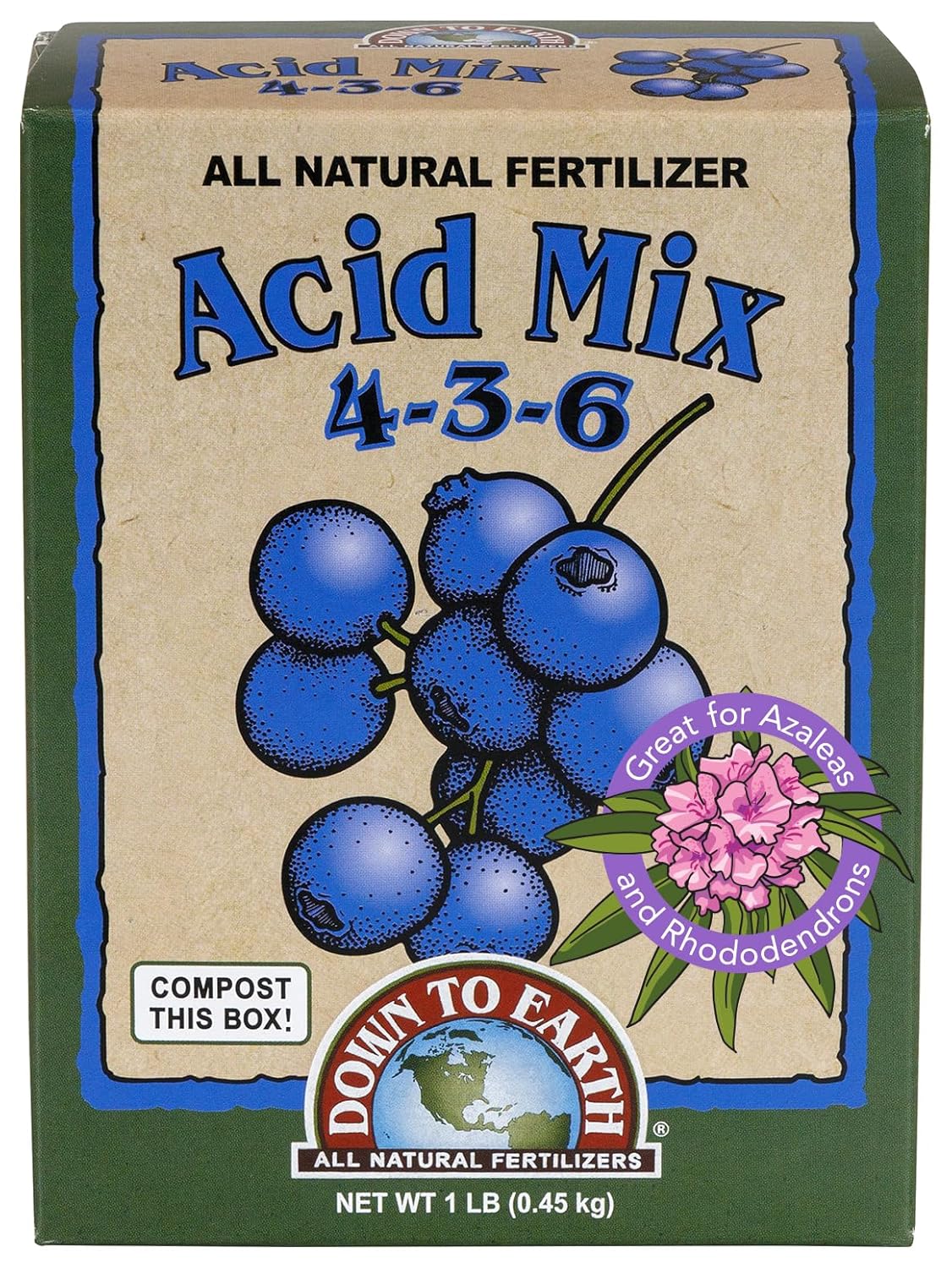
| Item Form | Granules |
|---|---|
| Specific Uses For Product | Acid-loving plants |
| Target Species | rhododendrons, azaleas, hydrangeas, evergreen trees and shrubs, blueberries, raspberries |
| Mixing Ratio | 4:3:6 |
Down To Earth Acid Mix is an organic granular fertilizer designed to feed acid-loving plants such as blueberries, azaleas, rhododendrons and other shrubs. You can broadcast it on the soil surface or mix it into planting holes, then water it in; the manufacturer recommends applications in early spring, at bloom and again in fall to support vegetative growth, flowering and root development. The 4-3-6 formula delivers a higher potassium ratio to help fruiting and overall plant vigor, while slow-release materials like feather meal, fish bone meal and kelp provide longer-lasting nutrition so you do not need to feed frequently. It is shelf stable and OMRI-listed ingredients support organic gardening practices. Limitations to note are the small 1 lb unit size, which means frequent repurchase for larger beds, and that this product is a fertilizer rather than a soil pH fixer so you will still need sulfur or lime to significantly change soil acidity. For gardeners feeding a few blueberry plants or refreshening planting holes, it is an effective, low-fuss organic option.
Best for: Gardeners with a few blueberry plants or small acid-loving beds who want an easy-to-use organic fertilizer and prefer low-maintenance, sustained feeding.
Less Ideal for: Large-scale blueberry plantings or growers who need to change soil pH significantly without using separate amendments.
- Formulated specifically for acid-loving plants including blueberries and azaleas
- Slow-release organic ingredients provide sustained feeding and reduce application frequency
- Can be applied on the soil surface or mixed into planting holes for flexible use
- OMRI-friendly ingredient sources support organic gardening practices
- Small 1 lb package limits coverage for larger beds or multiple bushes
Verdict: A compact, slow-release organic fertilizer tailored for small blueberry plantings and other acid-loving plants to provide steady, low-maintenance nutrition.
HOSS Berry Blend Fertilizer 8-12-12, 5 lb granular

| Item Form | Granules |
|---|---|
| Specific Uses For Product | Berry Plants, Blackberries, Raspberries, Strawberries |
| Unit Count | 80 Ounce |
| Item Weight | 5 pounds |
HOSS Berry Blend is a purpose-built granular fertilizer for blackberries, raspberries, strawberries and other berry plants. It supplies an 8-12-12 N-P-K balance with a mix of fast-acting and slow-release nitrogen so plants get both immediate feeding and longer-term nutrition. The formula includes a full micronutrient package plus soil-supporting additives such as biochar, humates and mycorrhizal fungi, which can improve nutrient uptake and overall soil biology in beds and raised planters. In practice you would apply it at planting and as a seasonal feed to encourage vigorous foliage, strong root development and better fruit set and quality. The main limitations are that it is a general berry blend rather than a crop- or soil-test‑specific recipe and granular form requires correct timing and incorporation for best results. For gardeners who prefer predictable, season-long nutrition without daily intervention, this fertilizer is a reliable choice for maintaining productive blackberry bushes.
Best for: Gardeners who want a dependable, season-long fertilizer to maintain healthy, productive blackberry bushes with minimal fuss.
Less Ideal for: Growers needing a fertilizer customized to lab soil test results or those who prefer liquid feeds for rapid correction of nutrient issues.
- Balanced 8-12-12 ratio tailored for berry plants to support foliage, roots, and fruit set
- Combination of fast-acting and slow-release nitrogen for both immediate and sustained feeding
- Includes a broad micronutrient mix to prevent common deficiencies
- Contains soil-supporting ingredients (biochar, humates, mycorrhizae) to aid nutrient uptake and soil health
- Granular form requires correct application timing and incorporation for consistent results
- Not customized to specific soil tests or extreme nutrient imbalances
Verdict: Choose this fertilizer when you want a single, reliable granular blend that delivers balanced N-P-K, micronutrients, and soil-supporting ingredients for consistently healthy blackberry plants.
Espoma Berry-Tone Organic Fertilizer for Berries, 4 lb (2-pack)

| Item Form | Granules |
|---|---|
| Specific Uses For Product | Gardening |
| Coverage | Medium |
| Target Species | Berries |
| Mixing Ratio | 4:3:4 |
Espoma Berry-Tone is an organic granular fertilizer designed for blueberries, strawberries, raspberries and blackberries. It supplies a balanced 4-3-4 N-P-K blend with added sulfur and Espoma’s Bio-tone formula to support root establishment and steady growth. Typical use is mixing a cup into amended planting holes at transplanting and applying twice yearly to established plants in early and late spring. The granules are ready-to-use and labeled for organic production, so it fits into certified organic gardening and home berry patches. Practical benefits include gentle nutrient release that lowers burn risk, added sulfur which helps acid-loving berries, and straightforward directions for planting and feeding. Limitations are that the analysis is low compared with synthetic feeds so you may need supplemental applications for heavy feeders, and the product is sold in modest 4 lb bags so larger plantings will require multiple bags.
Best for: Home gardeners who grow a small to medium patch of blackberries or raspberries and prioritize organic, low-risk feeding and straightforward application.
Less Ideal for: Growers with large commercial beds or those who need high-concentration quick fixes for nutrient-deficient soils should consider higher-analysis or bulk options.
- Formulated specifically for berries with a balanced 4-3-4 N-P-K ratio
- Organic ingredients and approved for organic gardening
- Includes sulfur and Bio-tone to support root health and soil microbes
- Granular, ready-to-use formula with clear planting and feeding directions
- Lower nutrient concentration than many synthetic fertilizers so larger or high-yield patches may need more frequent feeding
- Bag size is small for extensive plantings requiring multiple purchases
Verdict: Choose this product when you want an organic, berry-specific fertilizer that supports root development and steady seasonal feeding.
Espoma Berry-tone Organic Fertilizer, 4-3-4, 4 lb (2-pack)

| Item Form | Granules |
|---|---|
| Specific Uses For Product | Gardening,Organic,Plant Food |
| Coverage | Medium |
| Target Species | Blueberries, Strawberries, Raspberries, Blackberries |
Espoma Berry-tone is an organic granular fertilizer made specifically for blueberries, strawberries, raspberries, and blackberries. It supplies a balanced 4-3-4 N-P-K plus sulfur and organic matter that you sprinkle around the drip line of plants or incorporate into beds when planting. Typical use is twice yearly feeding for established beds in early and late spring or as a soil amendment at planting using the package rates. Notable features include ready-to-use granules, an organic certification suitable for certified organic production, and a Bio-tone formula intended to support root development. Practical benefits are easier application compared with liquid concentrates, a formulation tailored to acid-loving berries, and clear directions for both beds and individual plants. Limitations are that its nutrient analysis is moderate so heavy-feeding situations may need supplemental inputs, and the granular form requires watering in and occasional reapplication rather than providing instant foliar uptake.
Best for: Buyers who prioritize a dependable, organic fertilizer for acid-loving berry plants and want a straightforward granular product with clear application guidance.
Less Ideal for: Growers needing rapid foliar correction or high immediate nutrient boosts for very large or nutrient-poor plantings should consider concentrated liquids or targeted supplements instead.
- Formulated specifically for berry crops including blueberries and strawberries
- Ready-to-use granules require no mixing and are simple to apply
- Organic certified ingredients suitable for organic gardening and certified production
- Includes sulfur and Bio-tone components to support acid-loving berries and root health
- Moderate N-P-K (4-3-4) may be insufficient alone for heavy-producing or nutrient-depleted soils
Verdict: A reliable, ready-to-use organic granular fertilizer tailored to berry plants for gardeners who want simple, certified organic feeding.
Choosing the Right Fertilizer for Raspberries and Blackberries: Key Factors to Consider
Nutrient Balance and Timing
Raspberries and blackberries need different nutrient emphasis as they move from cane growth to flowering and fruiting. Early in the season, a moderate amount of nitrogen encourages healthy cane development and leaf area without promoting excessive leafy growth at the expense of buds. As flowering approaches, phosphorus and potassium become more important to support flower set and fruit development.
Look for fertilizers that specify N-P-K ratios appropriate for berry-bearing cane shrubs, and pay attention to manufacturer guidance on timing. Applying too much nitrogen late in the season can delay fruiting and increase disease susceptibility, while insufficient potassium can reduce fruit size and shelf life. Timing and balance determine whether plants put energy into roots, canes, flowers, or fruit.
Application Method and Practicality
How a fertilizer is applied affects whether you will use it consistently and correctly. Granular fertilizers are easy to broadcast and work well for established rows and beds, but they require incorporation or watering in. Liquid feeds allow precise, quick feeding during key growth stages and are useful for containers or foliar feeding, though they require dilution and more frequent applications.
Slow-release or controlled-release formulations reduce application frequency, which is convenient for larger plantings or gardeners who prefer low-maintenance care. Consider how much time you have, whether you grow in containers or beds, and whether you need a formulation that can be applied with a spreader, watering can, or sprayer.
Release Profile and Frequency
Release profile defines how quickly nutrients become available to plants and how often you must reapply. Fast-release fertilizers deliver nutrients immediately and are helpful for correcting deficiencies or giving a quick boost before flowering, but they can require multiple applications and risk leaching if overused. Slow-release or polymer-coated granules provide steady nutrition over weeks to months, smoothing out growth and reducing labor.
For raspberries and blackberries, steady feeding from bud break through early fruit development often produces the most consistent yields. Match the release profile to your feeding plan and to seasonal rainfall patterns to avoid nutrient loss.
Soil Health and Salt Accumulation
Repeated fertilizer use can change soil chemistry. High-salt synthetic fertilizers can build up soluble salts and harm feeder roots, especially in containers or poorly drained soils. Organic amendments and fertilizers that add organic matter help retain moisture and feed soil microbes, supporting long-term bramble health.
Consider whether a product lists salt index or soluble salt data, and adjust rates or leaching practices accordingly. Rotating with compost or using fertilizers that support microbial life will preserve soil structure and nutrient cycling over multiple seasons.
Concentration and Coverage
Concentration affects how much product you need per planting area. Highly concentrated formulations treat a lot of area with small amounts, which can be economical but require careful measurement. Lower concentration, bulk products are easier to spread evenly but may need larger volumes and storage space.
Estimate the square footage of your raspberry or blackberry patch and choose a fertilizer that offers practical coverage per unit. Packaging that lists application rates per plant or per 100 square feet helps plan purchases and avoid under- or over-application.
Compatibility with Pest and Disease Programs
Fertilizer choice can interact with pest and disease management. Nitrogen surges can encourage lush, tender growth that may be more attractive to pests or more prone to fungal issues. Conversely, balanced feeding strengthens plant resilience and can reduce stress-related susceptibility.
Check whether a fertilizer is safe to use alongside common fungicide or insecticide sprays, and whether foliar feeding might increase risk of scorch when combined with certain products. Align fertilization timing with pruning and spray schedules to minimize stress and vulnerability.
When to Feed Brambles During the Year
Timing feeding around the growth cycle gets the most benefit from each application. Apply the first feed at bud break to support new cane growth, then provide a midseason boost as flowering begins to support fruit set. Avoid high-nitrogen applications late in the season after harvest, since plants need to harden off and store carbohydrates for the following year.
For summer-fruiting types, two well-timed applications usually suffice: one at early spring cane growth and one at early bloom. For everbearing or primocane producers, split applications keyed to the primocane growth and again at fruit development help maintain steady nutrition.
- Feed at bud break for cane vigor
- Apply a bloom-time feed to support flower set
- Limit late-season nitrogen to encourage winter hardening
Soil Testing and Adjusting Applications
A soil test is the clearest way to tailor fertilizer choice and rates. Tests identify pH, available phosphorus, potassium, and baseline nitrogen trends. Brambles prefer slightly acidic to neutral soils; if pH is off, certain nutrients will be less available regardless of fertilizer choice.
Use test results to modify application rates and to decide whether a base application of lime or sulfur is needed. Retest every two to three years to monitor changes, especially if you are using synthetic fertilizers or making significant organic amendments.
- Test pH and nutrient levels before major fertilizer changes
- Adjust rates based on soil nutrient availability
- Retest periodically to track long-term effects
Feeding in Containers Versus In-Ground
Container-grown raspberries and blackberries need more frequent feeding because roots are confined and nutrients flush out with watering. Use diluted liquid feed weekly to every two weeks during active growth, or a slow-release granule designed for containers to reduce maintenance.
In-ground plants benefit from deeper root zones and organic matter that buffer nutrient swings. For beds and rows, a granular or slow-release product applied to the soil surface and watered in is usually effective and reduces the need for frequent reapplication.
- Containers: prefer frequent, low-dose liquid feeding
- In-ground: slow-release or granular applications work well
- Monitor container soils for salt buildup and flush with water if necessary
Organic Versus Synthetic Options
Organic fertilizers release nutrients as microbial activity breaks down material, which improves soil structure over time and supports beneficial organisms. They are less likely to cause salt buildup but may release nutrients more slowly and require a larger volume to match synthetic nutrient concentrations.
Synthetic fertilizers provide predictable nutrient ratios and faster availability, which helps correct deficiencies quickly. If you choose synthetic options, follow label rates carefully to avoid overfeeding and consider integrating organic matter to sustain soil health long term.
- Organics build soil life and structure
- Synthetics give fast, measured nutrient delivery
- Combine approaches if you want both rapid correction and long-term soil improvement
Practical Tips for Application
Measure carefully and follow recommended rates to avoid burning roots or encouraging excessive vegetative growth. Apply granular fertilizers evenly around the dripline rather than piling at the crown, and water in after application so nutrients reach feeder roots.
When using liquids, mix at recommended dilution to avoid foliar scorch, and apply during cooler parts of the day. For slow-release products, space applications according to label duration so nutrients are available during key growth stages.
- Spread granules evenly around the dripline
- Water in granular applications
- Apply liquids in cooler weather to prevent burn
How We Chose the Best Fertilizer for Raspberries and Blackberries
We selected fertilizers based on criteria that matter for bramble production and gardener workflow. Primary factors included nutrient balance and timing, meaning whether a fertilizer supplies the right ratios of nitrogen, phosphorus, and potassium for cane growth, flower development, and fruit set, and whether it supports feeding schedules across seasons. Application method and ease were considered next, evaluating granular versus liquid or slow-release formats and how practical each is for beds, rows, or containers. Release profile and longevity were important to identify products that provide steady nutrients without frequent reapplication or risk of foliar burn. Safety and soil health were reviewed, favoring options with minimal salt buildup, organic matter contributions, or compatibility with soil life. Coverage and concentration mattered to estimate how much area a bag or bottle treats and whether rates are adjustable for young versus established canes. We excluded products that are formulated only for lawns or general garden use without clear guidance for brambles, and we filtered out fertilizers with unclear nutrient labeling or that rely on nonstandard application methods for home gardeners. The result is a shortlist of options that scored well across nutrient suitability, application practicality, release control, soil safety, and coverage.
FAQ
How much nitrogen do raspberries and blackberries need each season?
They usually need moderate nitrogen early in the season to support cane growth, with reduced nitrogen late in the season to promote fruiting and winter hardening. Exact rates depend on soil tests and plant age, but avoid repeated high-nitrogen applications after midseason.
Can I use a general-purpose vegetable fertilizer on brambles?
Often you can, but check the N-P-K ratio and release profile. General-purpose formulas designed for fruiting crops that emphasize balanced phosphorus and potassium at bloom will perform better than lawn-focused feeds that prioritize nitrogen.
Are organic fertilizers effective for raspberries and blackberries?
Yes. Organic options build soil structure and microbial health and reduce salt accumulation. They tend to release nutrients more slowly, so you may need to plan earlier or apply larger amounts to meet peak demand periods.
When should I stop feeding raspberries and blackberries for the season?
Stop heavy nitrogen feeding after harvest or by late summer to allow canes to mature and store energy for winter. A light, low-nitrogen maintenance feed may be applied in early fall only if soil tests indicate deficiency.
How can I avoid fertilizer burn in containers?
Use diluted liquid feeds or slow-release formulas labeled for containers, apply at recommended rates, and flush pots occasionally with plain water to prevent salt buildup. Fresh potting mix with added organic matter also helps buffer roots.
Final Verdict
Prioritize a fertilizer that matches the seasonal needs of raspberries and blackberries, balancing early nitrogen for cane growth with phosphorus and potassium for flowering and fruit development. Choose an application method that fits your planting style, whether frequent liquid feeds for containers or slow-release granules for in-ground beds. Weigh tradeoffs between fast-acting synthetics and soil-building organic options, and use soil tests to fine-tune rates. With attention to timing, release profile, and soil health, you can select a feeding plan that increases yields while protecting long-term plant vigor.
