

Note: This article contains affiliate links. If you click on these links and make a purchase, I may earn a small commission at no extra cost to you. This helps support my research and content. Read my full affiliate disclosure here.
Dealing with fleas on a cat is stressful and, if not handled quickly, can become a persistent household problem. The right flea spray for cats not only kills adult fleas fast but also targets eggs and larvae while keeping your pet safe and comfortable. This guide covers our shortlisted top picks for routine treatment, home infestations, and prevention for indoor and limited-outdoor cats. We evaluated each option on safety for cats, speed of action, and how well it integrates into regular pet care. Read on to understand the tradeoffs and which features matter most before you choose.
Top Picks at a Glance
| Best Overall The best all-around choice for most situations | Vet's Best Flea & Tick Home Spray for Cats, Cotton Spice, 32 oz |  |
| Best Quality Built to a higher standard if you want something more solid | Wondercide Flea, Tick & Mosquito Spray for Pets & Home, Rosemary, 16 fl oz |  |
| Best Value The sweet spot between price and what you get | ADAMS Plus Flea & Tick Spray for Dogs & Cats, 32 oz |  |
| Best Budget The cheapest option that still gets the job done reliably | Hartz UltraGuard Plus Cat Flea & Tick Spray, 8 oz |  |
| Highest Rated A top-rated pick with lots of positive feedback | ADAMS Plus Flea & Tick Spray for Dogs & Cats, 16 fl oz |  |
| Best Seller A high-volume bestseller chosen again and again | PetArmor Home & Carpet Spray, 16 oz — 7-Month Flea and Tick Protection |  |
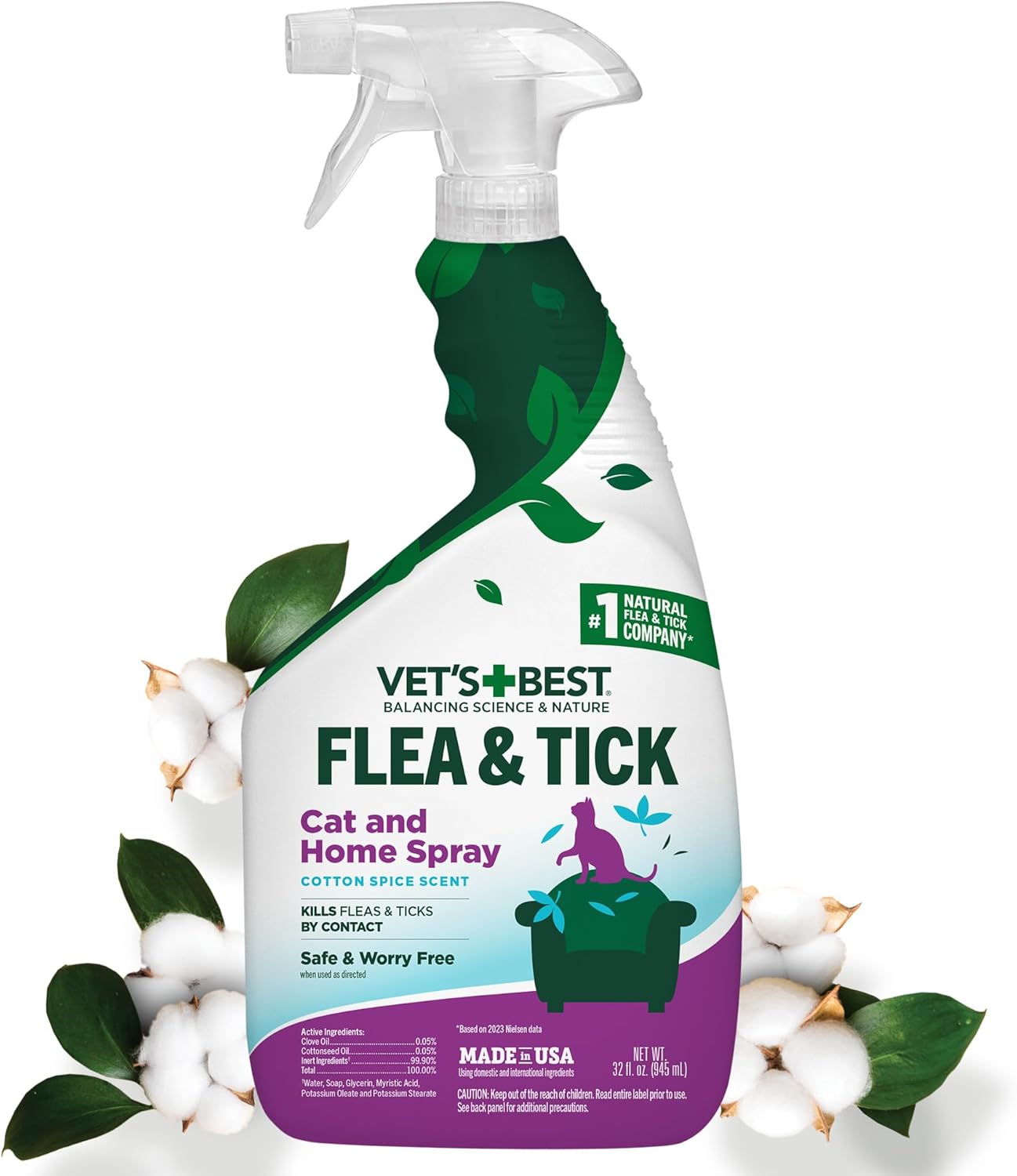
Vet's Best Flea & Tick Home Spray for Cats, Cotton Spice, 32 oz
| Unit Count | 32 Fluid Ounces |
|---|---|
| Item Form | Spray |
| Scent Name | Cotton Spice |
| Target Species | Cat |
| Active Ingredients | Clove Oil 0.05% · Cottonseed Oil 0.05% |
Vet's Best Flea & Tick Home Spray is a 32‑ounce, plant‑based spray designed to treat cats 12 weeks and older and their indoor environments. You can use it directly on a small test area of a cat’s coat (then lightly brush in) or spray bedding, carpets, rugs, and upholstery to reduce adult fleas, eggs, and ticks; the label recommends twice‑weekly application for active infestations and weekly for maintenance. The formula lists cottonseed and clove oils as active ingredients and leaves a mild cotton spice scent rather than a medicinal odor. Practical benefits include a non‑chemical option for multi‑cat homes, easy pump‑spray application, and versatility for treating both pets and their surroundings. Important limitations are that it is intended for cats only (and not for kittens under 12 weeks), it can cause sensitivity in some animals or people so monitoring and caution are advised, and it is not a systemic product so it will not provide long‑term internal protection like oral or topical prescription treatments. For moderate to severe infestations combine use with veterinary guidance and other control methods.
Best for: Buyers who want a gentle, plant‑based indoor flea solution for cats and prefer treating both pet and home with the same product; particularly useful for owners of indoor or multi‑cat households seeking an alternative to chemical insecticides.
Less Ideal for: Owners dealing with a severe, established infestation that needs fast, long‑lasting systemic control or those who prefer prescription oral/topical preventives as a primary strategy.
- Plant‑based formula that targets fleas, flea eggs, ticks, and mosquitoes on contact
- Can be used on cats (12 weeks and older) and on bedding, carpets, and furniture for whole‑home control
- 32 fl oz spray bottle offers convenient, non‑messy application for routine maintenance
- Pleasant cotton spice scent that is milder than many chemical sprays
- Not suitable for kittens younger than 12 weeks or species not listed on the label
- May cause skin, eye, or respiratory sensitivity in some pets or people and requires a patch test
- Not systemic so it does not prevent re‑infestation from new exposures without repeated applications
Verdict: A practical plant‑based spray for owners who want a gentle, home‑safe way to reduce fleas and treat bedding and furniture while using the same product on adult cats.
Wondercide Flea, Tick & Mosquito Spray for Pets & Home, Rosemary, 16 fl oz

| Unit Count | 16 Fluid Ounces |
|---|---|
| Age Range Description | All Life Stages |
| Item Form | Spray |
| Scent Name | Rosemary |
| Active Ingredients | 4.2% Cedar Oil, 2.2% Sodium Lauryl Sulfate, 1.5% Rosemary Oil, 0.1% Sesame Oil |
Wondercide Flea, Tick & Mosquito Spray is a rosemary-scented, plant-powered spray intended to kill pests on contact and repel them from pets and indoor areas. You apply it by misting the pet's coat and rubbing it in against the fur, or by spraying bedding, furniture, and play areas from 8 to 12 inches away; the label also gives simple face-and-ear application guidance using a hand or cloth. The formula lists cedar oil, rosemary oil, sesame oil, and sodium lauryl sulfate as the active ingredients with water and gentle surfactants as the inert base, which makes it non-harsh and suitable for frequent use when directions are followed. In lab testing the brand reports high kill and repellent rates and the product breaks the flea life cycle by addressing eggs and larvae as well as adults. Practical benefits include a multiuse product for both cats and the home, a calming rosemary scent, and a gentler alternative to chemical spot-on or oral treatments. Limitations are that it is not an EPA-registered pesticide and users should patch-test for sensitivity and avoid use on birds, reptiles, aquatic environments, or pets with compromised health.
Best for: Cat owners who prioritize an effective, performance-focused natural alternative to chemical spot-on or oral treatments and who want one product that treats both pets and home environments.
Less Ideal for: Owners needing an EPA-registered insecticide, immediate systemic protection, or veterinary-prescribed treatments for severe infestations should look at clinical options instead.
- Plant-based active ingredients (cedar oil, rosemary oil) offer a gentler alternative to synthetic pesticides
- Designed for dual use on pets and around the home to treat both animals and environments
- Clear application directions for coat, face, and household surfaces reduce misuse risk
- Lab-reported efficacy against eggs, larvae, and adults helps interrupt the flea life cycle
- Not registered with the EPA so it is classified differently than conventional insecticides
- May cause sensitivity in some animals so a patch test is required before full use
Verdict: If you want a performance-oriented, plant-based spray that treats fleas, ticks, and mosquitoes on cats and in the home, this Wondercide formula delivers a gentler, multiuse alternative to conventional chemical options.
ADAMS Plus Flea & Tick Spray for Dogs & Cats, 32 oz

| Unit Count | 32 Fluid Ounces |
|---|---|
| Item Form | Liquid |
| Scent Name | Unscented |
| Active Ingredients | Etofenprox, (S)-Methoprene |
ADAMS Plus Flea & Tick Spray is a liquid trigger-spray designed to treat dogs and cats for fleas, ticks, and to repel mosquitoes. You apply it by spraying a light, even coverage until the coat is damp, ruffling the hair to reach the skin and repeating monthly for ongoing control; dogs can be treated up to twice monthly and cats once monthly per directions. The formula contains etofenprox and (S)-methoprene so it kills adults on contact and interrupts the flea life cycle by targeting eggs and larvae, which helps reduce reinfestation in the home. It is unscented and fast-drying, and the 32 oz bottle is convenient for multi-pet households or spot and whole-body applications. Important limitations are that dosing is weight-based and requires care with application around eyes and surfaces, and younger puppies and kittens under the labeled ages must not be treated. For owners who want a straightforward spray solution to supplement home control, this is a practical, workhorse option.
Best for: Pet owners who want a no-nonsense, spray-on treatment to reduce fleas and ticks across multiple cats or a mixed cat and dog household and who plan to use monthly maintenance alongside home control measures.
Less Ideal for: Families seeking a once-and-done long-term prescription treatment or pet owners of very young animals or those who prefer oral or spot-on preventive medications.
- Kills adult fleas and ticks on contact and targets flea eggs and larvae to break the flea life cycle
- Unscented and fast-drying trigger spray for easy, direct application to pets
- Large 32 oz bottle is convenient for households with multiple pets or frequent treatments
- Repels mosquitoes for short-term protection in addition to flea and tick control
- Requires weight-based dosing and careful application to avoid eyes and finished surfaces
- Not suitable for puppies under 10 weeks or kittens under 12 weeks
Verdict: A practical, easy-to-use unscented spray that kills fleas and ticks while disrupting the flea life cycle, making it a sensible fit for multi-pet homes needing regular maintenance.
Hartz UltraGuard Plus Cat Flea & Tick Spray, 8 oz

| Unit Count | 8 Fluid Ounces |
|---|---|
| Item Form | Spray |
| Scent Name | Fresh |
| Target Species | Fleas, Ticks, Flea Eggs |
| Active Ingredients | Tetrachlorvinphos 1.08%, S-Methoprene 0.07% |
Hartz UltraGuard Plus Cat Flea & Tick Spray is a budget-friendly aerosol product designed to kill adult fleas and ticks and to interrupt the flea life cycle by targeting eggs and larvae. You use it by spraying lightly onto a cat's coat from about six inches away, rubbing it in, and towel-drying after ten minutes; the manufacturer also recommends lightly spraying bedding and upholstery to tackle environmental stages. Notable features include a broad-contact active ingredient mix (tetrachlorvinphos and S-methoprene), a fresh scent, and a convenient weekly-use spray bottle that starts killing fleas within ten minutes. In real-world use it is simple to apply for quick spot treatments and supplemental environmental control, making it useful during peak flea season or as a low-cost follow-up to other prevention methods. Important limitations are that it is a topical spray rather than a systemic treatment so it offers short-term protection and needs repeat applications for ongoing control, and some owners prefer prescription options for heavy infestations or long-lasting coverage.
Best for: Cat owners looking for an inexpensive, easy-to-use spray to handle occasional flea or tick problems and to treat bedding and upholstery alongside routine prevention.
Less Ideal for: Owners dealing with severe, ongoing infestations who need long-lasting systemic protection or who prefer veterinarian-prescribed products.
- Kills adult fleas and ticks plus targets flea eggs and larvae for broader control
- Starts killing fleas within about ten minutes after application
- Spray bottle format makes spot treatment and bedding/application to environment straightforward
- Affordable 8-ounce size suited to occasional or weekly use
- Provides short-term topical protection and requires repeated applications for ongoing control
- Not a systemic or long-duration prescription product for heavy infestations
Verdict: A no-frills, low-cost flea and tick spray that quickly treats cats and their bedding for short-term control of fleas, ticks, and immature stages.
ADAMS Plus Flea & Tick Spray for Dogs & Cats, 16 fl oz

| Unit Count | 16 Fluid Ounces |
|---|---|
| Item Form | Liquid |
| Scent Name | Unscented |
| Active Ingredients | Etofenprox; (S)-Methoprene; Piperonyl Butoxide |
ADAMS Plus Flea & Tick Spray is a trigger-bottle, at-home treatment designed to kill adult fleas and ticks on contact while also targeting flea eggs and larvae to interrupt the life cycle. It is unscented and formulated for both dogs and cats old enough for treatment, making it convenient for multi-pet households. Typical use is a light, even spray applied until the coat is damp, taking care around the face and sensitive areas; dogs can be treated up to twice a month and cats once monthly per the label. Notable features include a fast-dry formula, a combination of active ingredients (etofenprox and (S)-methoprene) that provide immediate knockdown plus residual control, and mosquito repellency for added protection. In practice this spray is easy to apply, gives quick relief from biting pests, and helps reduce reinfestation by treating eggs that drop into the environment. Important limitations are the need to follow weight-based dosing, avoid over-application, and be cautious with young animals and sensitive surfaces that might be damaged by wet spray.
Best for: Pet owners who prioritize dependable, broad flea control across multiple animals and want a straightforward, at-home spray to quickly reduce biting pests and interrupt reinfestation.
Less Ideal for: Owners seeking monthly systemic protection without topical application steps or those who prefer chewable or prescription products should consider alternative treatment types.
- Dual-action formula kills adult fleas and targets eggs and larvae to break the flea life cycle
- Unscented, fast-drying spray that is suitable for both dogs and cats in multi-pet homes
- Trigger bottle makes application quick and easy for spot and whole-body treatments
- Provides additional mosquito repellency for a limited period after application
- Requires careful, weight-based dosing and application technique to avoid over-wetting or exposure
- Not suitable for very young puppies or kittens under the labeled ages
Verdict: A reliable, easy-to-use unscented spray that kills fleas and ticks on contact while treating eggs to help stop reinfestations in multi-pet homes.
PetArmor Home & Carpet Spray, 16 oz — 7-Month Flea and Tick Protection

| Unit Count | 16 Ounce |
|---|---|
| Item Form | Spray |
| Scent Name | Fresh |
| Target Species | Cat |
| Active Ingredients | Pyrethroid mix and pyriproxyfen (0.40%/1.60%/0.10%) |
PetArmor Home & Carpet Spray is a ready-to-use treatment designed to reduce and prevent indoor flea and tick problems around cats and dogs. You spray carpets, rugs, drapes, furniture and pet bedding after thoroughly vacuuming; the formula penetrates fabrics, kills adult fleas plus eggs and larvae, and leaves a residual barrier that the manufacturer says lasts up to seven months and covers about 500 sq ft. Notable features include a multi-target active ingredient mix and a fresh scent with no heavy residue reported. Practical benefits for a cautious pet owner are that it treats hiding spots where fleas complete their life cycle and includes ingredients that interrupt development of new adults. Important limitations are standard for household insecticides: you must follow the directions closely, ventilate and keep pets and people away until treated areas dry, and repeat treatments or combine with on-pet parasite control for full infestation control. It is a sensible option for someone wanting a single, long‑lasting spray for indoor surfaces as part of an integrated flea control plan.
Best for: Pet owners who prioritize a conservative, all-around indoor flea management approach and want a single spray to treat household fabrics and hiding spots as part of a cautious prevention plan.
Less Ideal for: People needing an immediate one-time knockdown for a severe, heavy infestation without follow-up treatments or those who prefer non-chemical control methods only.
- Kills adult fleas, flea eggs and larvae plus ticks, bedbugs, lice and dust mites
- Provides residual protection up to seven months and treats up to 500 square feet
- Penetrates carpets, upholstery, drapes and pet bedding for targeted indoor treatment
- Includes a fresh scent and is formulated to leave no heavy residue when used as directed
- Requires careful vacuuming and following label directions before and after application
- Should be used alongside on-pet flea treatments for complete control of infestations
Verdict: A long‑lasting, ready-to-use indoor spray that treats carpets and upholstery to interrupt the flea life cycle and reduce household flea and tick presence for cautious pet owners.
Choosing the Right Flea Spray for Cats: Key Factors to Consider
Safety and Toxicity for Cats
Cats metabolize some insecticides differently than dogs, so ingredient choice matters. Look for sprays formulated specifically for cats or with clear cat-use guidance to reduce the risk of adverse reactions.
Pay attention to active and inactive ingredients. Avoid sprays that contain permethrin or other dog-focused chemicals that can be highly toxic to cats. Also consider the health status of your cat – kittens, elderly cats, pregnant or nursing cats, and cats with existing medical conditions may need gentler options or a veterinarian's OK before use.
Speed of Action on Adult Fleas
Flea bites cause immediate discomfort, so products that offer fast adult flea knockdown provide quicker relief for your cat and reduce the chance of continued biting. A fast-acting spray helps break the cycle of new bites while you work on the environment.
However, rapid knockdown alone is not sufficient. Fast-acting sprays should be paired with treatments targeting eggs and larvae to prevent re-infestation.
Residual Activity Against Eggs and Larvae
Flea control in a home requires addressing immature life stages. Sprays that include an insect growth regulator or other residual ingredients extend protection by interrupting egg development and preventing larvae from maturing into biting adults.
Residual activity can reduce the frequency of repeat applications and make environmental treatment more effective, particularly in carpets, pet bedding, and furniture where eggs and larvae hide.
Application Method and Ease
Sprays come in trigger bottles, aerosols, and foaming options. Ease of use affects how thoroughly you can treat bedding, baseboards, and upholstery. A well-designed applicator helps target problem areas without oversaturating surfaces.
Consider whether the spray has a strong odor, requires room ventilation, or needs bedding removal. Ease of measuring and applying the product will influence how consistently you follow treatment schedules.
Compatibility with Home Surfaces
Sprays contact fabrics, carpets, and sometimes wooden floors. Some formulations can stain, leave residues, or affect delicate materials. Check product guidance for surface compatibility and whether fabrics should be laundered after treatment.
If you have many fabric surfaces or hardwood floors, choose a formulation labeled safe for those materials or plan for spot testing to avoid damage.
Interaction with Other Pet Treatments
Many cats are on topical preventives or oral medications. Some active ingredients do not mix well with other treatments and could reduce effectiveness or increase risk. Always verify whether a spray is compatible with common spot-on products and oral preventives.
When in doubt, consult a veterinarian, especially if your cat is on multiple medications. Compatibility information helps you combine fast environmental control with longer-term protective strategies.
When to Use a Spray Versus Other Options
Sprays are best when you need targeted, immediate treatment of a flea problem in the environment or on bedding and furniture. They let you reach cracks, baseboards, and upholstery where fleas and eggs hide.
For routine prevention, sprays can supplement a veterinarian-recommended topical or oral preventive, especially in multi-pet homes or after a known exposure. Sprays are not always the sole long-term solution, but they are useful for quick knockdown and environmental cleanup.
- Use sprays for localized infestations or after finding fleas on the cat.
- Combine environmental sprays with direct-on-pet treatments where appropriate.
- Reserve professional or prescription options for severe or persistent infestations.
Preparing Your Home for Treatment
Before you spray, vacuum carpets, rugs, and furniture to remove many adult fleas, eggs, and larvae. Empty vacuum bags or canisters outside to prevent re-infestation. Remove or launder bedding and washable textiles that contact the cat.
Clear clutter and check hiding spots like under furniture and along baseboards. Follow label instructions about room ventilation and whether people or pets should leave treated areas during application and drying.
- Vacuum thoroughly and dispose of debris away from the home.
- Launder pet bedding on the hottest safe setting.
- Spot-test sprays on a hidden fabric patch if surface effects are a concern.
Application Techniques for Better Results
Apply sprays in short, overlapping passes on carpets, baseboards, and furniture seams. Avoid saturating surfaces; many products work at light to moderate coverage levels. For bedding and cat-frequented spots, allow treated items to dry fully before allowing the cat access again.
Treat areas where eggs are likely to fall, such as resting spots and under furniture. Repeat applications may be necessary according to the product's recommended schedule to catch newly hatched fleas.
- Target edges, crevices, and fabric seams where fleas congregate.
- Follow labeled reapplication intervals instead of guessing frequency.
- Use a flea comb and spot treat the cat if fleas are visible on the animal.
Managing Sensitive Cats and Multi-Pet Households
If you have a nervous, elderly, or medically sensitive cat, choose low-odor formulas and limit direct spray contact with the animal. Remove other pets from treated rooms until the product has dried and ventilation is complete.
In homes with multiple species, be extra cautious about products labeled only for cats versus dog-only formulations. Coordinate treatments across all pets to prevent reinfestation and ensure compatibility between products used on different animals.
- Create a safe recovery space for treated cats if needed.
- Inform household members about ventilation and re-entry times.
- Check each pet's treatment regimen with a veterinarian when in doubt.
Environmental and Preventive Practices
Long-term control combines treatment with preventive home habits. Regular vacuuming, washing bedding, and minimizing areas where your cat rests on untreated fabrics reduce flea habitat and lower the need for frequent sprays.
Yard maintenance also matters for outdoor-exposed cats – keep grass trimmed and reduce damp, shaded areas where fleas thrive. For indoor-only cats, focus on cleaning routines and monitoring for reappearance.
- Establish a regular cleaning schedule targeting pet areas.
- Monitor your cat with visual checks and flea combing.
- Consider seasonal increases in vigilance during warm months.
How We Chose the Best Flea Spray for Cats
We focused on practical, cat-centered criteria that reflect everyday use in homes and apartments. Key evaluation criteria included ingredient safety for cats and household members, documented speed of adult flea knockdown, residual activity against eggs and larvae, ease and accuracy of application, and compatibility with routine pet care such as flea-comb use or concurrent topical treatments. We also checked how well formulations tolerate indoor surfaces and fabrics since sprays are often used on bedding, carpets, and upholstery. Excluded from consideration were products intended only for dogs, flea collars as the sole intervention, and treatments that require veterinary prescription only. We prioritized formulations that specify cat-safe labeling or have clear guidance for use around cats. The final list balances immediate control with prevention features and practical handling in a typical home setting.
FAQ
Are flea sprays safe to use directly on cats?
Some sprays are formulated for direct use on cats, while others are for environmental use only. Always read the label to confirm whether a product is intended for on-animal application and follow dosage and age restrictions.
How often should I reapply a flea spray for effective control?
Reapplication frequency depends on the formulation and whether it includes an insect growth regulator. Many environmental sprays recommend reapplication every few weeks until the infestation is controlled, but follow the product label for exact timing.
Can I use a flea spray if my cat is on a topical preventive?
Often yes, but compatibility varies by active ingredients. Check both product labels and, when uncertain, consult your veterinarian to avoid interactions that could reduce effectiveness or increase risk.
What should I do if my cat shows signs of a reaction after spraying?
If your cat shows excessive drooling, vomiting, tremors, or unusual lethargy after exposure, remove the cat from the treated area, wash any residue from fur if the label recommends, and contact a veterinarian promptly.
Do flea sprays eliminate eggs and larvae or just adult fleas?
Some sprays target only adult fleas, while others include ingredients that disrupt egg and larval development. Look for products that list residual activity or insect growth regulators if you want broader lifecycle control.
Is it necessary to treat the whole house or just areas where the cat rests?
Treating primary resting areas and high-traffic pet zones can address most infestations, but severe cases may require whole-house attention. Vacuuming and laundering are important complements to spot treatments.
Final Verdict
Choose a flea spray for cats based on the balance between rapid adult knockdown and environmental residual control, while prioritizing formulations labeled safe for cats. Consider application ease and how the spray will interact with fabrics and other pet treatments in your home. For sensitive cats or complex infestations, pair environmental sprays with veterinarian guidance to ensure effective and safe control.
