

Note: This article contains affiliate links. If you click on these links and make a purchase, I may earn a small commission at no extra cost to you. This helps support my research and content. Read my full affiliate disclosure here.
A well-chosen edge transforms a flower bed from a fuzzy border into a clearly defined landscape element that keeps mulch and soil in place. Whether you manage mixed perennial beds, seasonal annuals, or a small cottage plot, the right flower garden edging reduces maintenance, prevents grass creep, and gives plantings a cleaner silhouette. This guide looks at seven shortlisted edging options that are practical for real gardens, yards, and patios. We evaluate each choice for durability, ease of installation, and how it performs around plants and curves. Read on to find the edging style that fits your site, soil, and maintenance preferences.
Top Picks at a Glance
| Best Overall The best all-around choice for most situations | EasyFlex No‑Dig Landscape Edging Kit, 100 ft |  |
| Best Quality Built to a higher standard if you want something more solid | Jorvila No-Dig Flexible Plastic Garden Edging Kit, 1.5" x 100' |  |
| Best Value The sweet spot between price and what you get | MIXC 100 ft Flexible Rubber Garden Edging with 150 Stakes |  |
| Best Budget The cheapest option that still gets the job done reliably | gardmate Corrugated Metal Garden Edging (40 ft x 6 in) |  |
| Highest Rated A top-rated pick with lots of positive feedback | Hemikaki 6 in. x 40 ft Galvanized Corrugated Metal Garden Edging |  |
| Most Popular A crowd favorite that many people choose with confidence | Amazon Basics Flexible Landscape Edging Coil, 5 in x 40 ft with 10 Stakes |  |
| Best Seller A high-volume bestseller chosen again and again | STIRLINGEAR 33 ft Powder-Coated Galvanized Steel Landscape Edging (10-Pack) |  |
EasyFlex No‑Dig Landscape Edging Kit, 100 ft

| Unit Count | 100 Feet |
|---|---|
| Included Components | (1) 100' coil of edging, (5) connectors, (30) spiral anchoring spikes |
| Material Type | Plastic |
| Item Type Name | No-Dig Landscape Edging |
The EasyFlex No‑Dig Landscape Edging Kit is designed to define flower beds, tree rings, and pathways without trenching. The 100 ft coil bends easily for both curved and straight designs and is installed by scoring the ground, laying the edging with tabs toward the bed, and securing it with included spiral anchoring spikes; connectors let you join lengths for longer runs. Made from recycled plastic, it resists typical soil conditions and stays in place once anchored and backfilled with mulch. Practical benefits include faster installation than digging in rigid edging, the ability to create smooth scallops or a traditional straight face, and low maintenance over time. Limitations are that it is relatively low-profile at 1.5 inches tall so it provides a subtle border rather than a high barrier to grass or heavy runoff, and very rocky or compacted soils can make driving the spikes harder. The kit is best for homeowners wanting a tidy, flexible edge for flower gardens and mulch beds who value easy DIY installation over a heavy-duty, permanent barrier.
Best for: Gardeners who want a quick, low-effort way to create neat flower bed and pathway borders and prefer a subtle, low-profile edge that is easy to shape and maintain.
Less Ideal for: People who need a tall, heavy-duty barrier to contain soil or prevent grass invasion or who plan permanent hardscape edging installations.
- No-dig installation speeds up edging work and reduces soil disturbance
- Flexible coil forms smooth curves and straight borders for varied garden shapes
- Includes anchors and connectors so the kit is ready to install out of the box
- Made from recycled plastic for weather resistance and low maintenance
- Only 1.5 inch height provides a shallow edge that may not stop spreading grass or heavy mulch movement
- Anchoring spikes can be difficult to install in very rocky or compacted soil
Verdict: Choose this kit when you want a fast, flexible no-dig solution to neatly define flower beds and curved garden borders.
Jorvila No-Dig Flexible Plastic Garden Edging Kit, 1.5" x 100'

| Material Type | Plastic |
|---|---|
| Number of Packs | 3 |
| Item Highlight | 120 Pcs Metal Spikes |
This Jorvila edging kit is a performance-focused no-dig solution for defining flower beds, tree rings, and lawn borders. It arrives as long continuous rolls of flexible plastic that you unroll, shape to the curve you want, and secure with the supplied U-shaped metal spikes; the manufacturer recommends staking every 2 to 3 holes for a firm hold. The plastic is pliable enough to create smooth curves and can be cut to length for custom runs, while the large pack of metal spikes reduces the chance of sections loosening over time. Installation is quick compared with buried edging because you do not need to trench, and the ability to warm the roll in sun before fitting minimizes waviness. Expect the edging to work best on typical garden soils; very hard or rocky ground may require pre-drilling to avoid damaging spikes. The material is durable for above-ground use but will not perform like heavy-duty steel edging where a rigid, permanent edge is required.
Best for: Gardeners who prioritize fast, tidy flower-bed edges and want a tool-free, adjustable solution to shape curves and borders without digging.
Less Ideal for: Homeowners seeking a heavy-duty, permanent edging solution for high-traffic or commercial landscapes should consider rigid metal or concrete options instead.
- No-dig installation speeds up setup and avoids trenching
- Flexible plastic roll can be bent and cut to create smooth curves and custom lengths
- Comes with a large number of U-shaped metal spikes for secure anchoring
- Instructions recommend sun-warming to reduce waviness for a neater finish
- Plastic edging is less rigid and less permanent than steel or concrete alternatives
- Spikes can be difficult to drive in very hard or rocky soil without pre-drilling
Verdict: Choose this kit when you want a fast, no-dig way to create smooth, customizable flower-bed edges with plenty of spikes for a secure hold.
MIXC 100 ft Flexible Rubber Garden Edging with 150 Stakes

| Material Type | Rubber |
|---|---|
| Unit Count | 151 Count |
| Number of Items | 151 |
| Model Number | GE-002 |
This MIXC garden edging kit provides a long, flexible rubber strip and a large supply of spiral plastic stakes for creating clean borders around flower beds, paths, and lawn perimeters. The rubber material bends easily for curves and circles yet is sturdy enough to hold shape against mowers and wind. It ships as a continuous 100 foot length that can be trimmed to fit; installation is mostly tool-free — uncoil, warm in the sun for extra flexibility, position, and tap the included 6 inch stakes into the ground. The high stake count makes it practical for uneven soil where closer spacing is needed to prevent shifting. Because the edging and stakes are plastic and rubber, they resist rust and stand up to rain, snow, and sun, but very compacted or rocky ground may still require pre-drilling or softened soil for stake insertion. The result is a low-maintenance, tidy edge that separates mulch, gravel, and turf without heavy digging or permanent concrete work.
Best for: Gardeners who want a practical, low-effort way to create tidy flower bed and lawn edges across medium to large yards and who prioritize ease of installation and long runs from a single roll.
Less Ideal for: People needing a tall, rigid barrier to stop invasive roots or heavy edging in very rocky or compacted soils should consider metal or deeper-profile edging options.
- Long 100 ft length covers large perimeters without multiple joins
- Flexible rubber material bends for straight and curved layouts
- Includes 150 stakes so you can secure edging on uneven ground
- Tool-free installation—no trenching required when soil is workable
- Weather-resistant materials that tolerate sun, rain, and snow
- Stakes are plastic and can be hard to drive in compacted or rocky soil without softening the ground first
- At 2 inch height it provides a low visual barrier and may not stop heavier runners or invasive roots
Verdict: Buy this if you need an easy to install, weather-resistant 100 ft edging kit that quickly creates neat garden borders with a large number of stakes for secure placement.
gardmate Corrugated Metal Garden Edging (40 ft x 6 in)
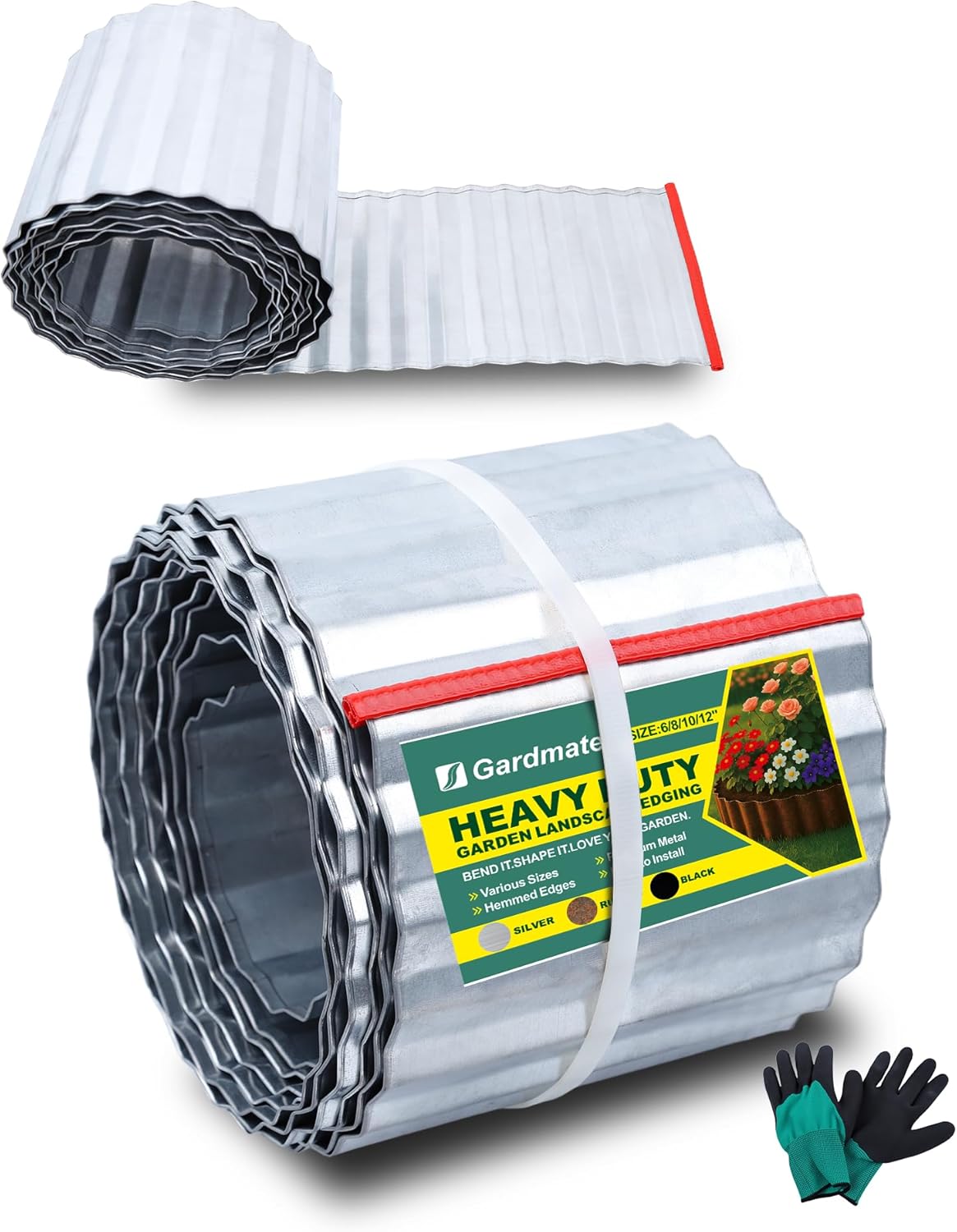
| Material Type | Metal |
|---|---|
| Number of Packs | 1 |
| Product Style | Modern |
This corrugated metal garden edging is a durable, low-profile border intended to define flower beds, pathways, tree rings, and small landscape areas. Made from metal with a corrugated profile and rolled hemmed edges, it resists impact from lawn equipment and weather better than plastic or wood and keeps mulch and grass from migrating into planting areas. Installation is straightforward: in soft soil you can moisten and tap it in with a rubber mallet, or cut a shallow trench and backfill in firmer ground. The product is flexible enough to form gentle curves yet stiff enough to hold straight lines once set. Practical benefits include long-term stability, a clean modern look, and reduced edging maintenance. Limitations are that it requires some physical effort to install in compacted soil and may need basic tools to make clean cuts to shape corners; it also has a visible industrial look that may not suit very formal or ornate garden styles.
Best for: Gardeners who want a durable, long-lasting border that keeps flower beds tidy without frequent replacement and who are willing to do a bit of DIY installation.
Less Ideal for: Those seeking a decorative, highly ornate edging or anyone who needs a completely tool-free, temporary solution.
- Corrugated metal construction offers superior durability compared with plastic or wood
- Rolled hemmed edges reduce the risk of cuts for family and pets
- Flexible enough to form curves but stiff enough to hold straight lines
- Acts as an effective barrier to keep mulch, soil, and grass in place
- Requires physical effort or a shallow trench for installation in compacted or rocky soil
- Industrial silver finish may not match very formal garden aesthetics
Verdict: A sturdy, low-maintenance metal edging that delivers a durable, tidy border for flower beds and lawns at a budget-friendly level of effort.
Hemikaki 6 in. x 40 ft Galvanized Corrugated Metal Garden Edging

| Material | Galvanized steel |
|---|---|
| Height | 6INCN |
| Length | 40FT |
| Number of Items | 40 |
This 6-inch by 40-foot corrugated metal edging is designed to create a clean, long-lasting border around flower beds and walkways. Made from galvanized steel with hemmed top and bottom edges, it resists corrosion and reduces sharp edges during installation. The corrugated profile adds stiffness while remaining flexible enough to form curves, S-shapes, or circles so you can follow planting lines rather than rigid straight runs. Typical installation is pushing into soft soil or tapping with a rubber mallet, or cutting a narrow trench for tougher ground; the panels can be cut with metal shears to fit odd lengths. Practically, it keeps mulch contained and separates lawn from planting areas, and its modern corrugated look suits contemporary beds. Limitations are that installation into very rocky ground requires digging and that the product does not include stakes, fasteners, or protective gloves for cutting. For gardeners who prioritize a sturdy, permanent edge, this is a reliable metal option, but it needs basic tools and some effort to install in difficult soil.
Best for: Buyers who want a durable, low-maintenance permanent edge for flower beds and pathways and who value longevity and a neat, modern look over quick temporary solutions.
Less Ideal for: If you need a temporary, tool-free edging or plan frequent reconfiguration of beds, a lightweight plastic or modular system would be a better fit.
- Galvanized steel construction resists corrosion for outdoor longevity
- Corrugated profile balances rigidity with flexibility for curved and straight runs
- Hemmed edges reduce sharpness for safer handling and in-ground use
- Long 40 ft length covers substantial runs without many joins
- No included stakes or mounting hardware for anchoring the edging
- May require trenching or extra effort to install in rocky or compacted soil
- Cutting the metal requires tools and protective gloves which are not supplied
Verdict: A robust, corrosion-resistant corrugated metal edging that delivers a long-lasting, professional-looking border for flower beds and landscape beds.
Amazon Basics Flexible Landscape Edging Coil, 5 in x 40 ft with 10 Stakes

| Item Type Name | Edging Coil |
|---|---|
| Unit Count | 1 Count |
| Material Type | All-new material |
| Color | Brown |
This flexible landscape edging coil is a simple way to define flower beds, lawns, and pathways without heavy tools or hardscaping. Made from recycled plastic with a faux woodgrain surface, the coil bends to form curves or straight runs and comes with ten matching stakes to hold it in place. Installation is straightforward: unroll the coil, shape it to the bed edge, and drive the stakes through the edging into the soil. The material resists rotting and creates a low-profile, natural-looking border that keeps grass from creeping into planting areas and makes mowing edges easier. Because it is lightweight and flexible, it is best for soft soils and moderate climates rather than locations with frequent heavy freeze-thaw cycles or where heavy impact occurs. Expect some visible joins where the coil meets and limited vertical rigidity compared with metal or poured edges, so very high-traffic or highly decorative formal beds may need a sturdier solution.
Best for: Gardeners who want an affordable, low-effort way to create neat flower-bed borders and natural-looking curves without permanent hardscaping.
Less Ideal for: Homeowners seeking a heavy-duty, permanent edging solution for high-traffic paths or areas subject to frequent freeze-thaw movement should consider metal or concrete alternatives.
- Flexible coil that easily forms curves and straight runs
- Made from recycled plastic with faux woodgrain for a natural look
- Includes ten stakes for straightforward installation and seasonal hold
- Low-profile edge that helps keep grass and mulch contained
- Lightweight material is easy to handle and reposition
- Less rigid than metal or concrete edging so not ideal for heavy-impact areas
- Only ten stakes included for the full 40 ft run may require additional anchors in soft soil
Verdict: Use this recycled-plastic flexible coil when you want an inexpensive, easy-to-install edging that creates natural-looking flower-bed borders quickly.
STIRLINGEAR 33 ft Powder-Coated Galvanized Steel Landscape Edging (10-Pack)

| Total length | 33 ft (10-pack) |
|---|---|
| Material Type | Powder-Coated Galvanized Steel |
| Stake count | 11 stakes included |
| Finish | Black powder coat |
This 10-pack landscape edging kit provides a durable, low-profile solution for defining flower beds, paths, and lawn borders. Each 40-inch panel is made from powder-coated galvanized steel and installs with hammer-in stakes, so you can create a neat edge quickly without excavating long trenches. The kit includes 11 stakes for anchoring and a black finish that blends into planting beds. In practice the metal is stiff enough to hold a clean line against turf and light soil movement yet flexible enough to be cut and eased around gentle curves. The powder coating and galvanization help resist rust in typical garden conditions, making this a good long-term option for a risk-averse gardener who wants minimal maintenance. Keep in mind the panels are low profile, so they do not provide a tall barrier against creeping roots or heavy mulch; very thick turf or aggressive runners may still cross the line. Installation requires a hammer and occasional trimming at corners, but no special tools are needed.
Best for: Home gardeners who want a low-maintenance, long-lasting edging solution that installs quickly and keeps flower beds tidy with minimal ongoing fuss.
Less Ideal for: Gardeners needing a high barrier against invasive roots or a tall edging for steep grade changes should consider taller or buried edging systems instead.
- Durable galvanized steel with powder coating for rust resistance
- Hammer-in stake design enables fast installation without deep digging
- Low-profile panels create a neat, professional-looking border
- Flexible enough to cut and shape around gentle curves
- Includes stakes so kit is ready to anchor after layout
- Low profile does not block aggressive runners or heavy mulch movement
- May require trimming and shaping for tight corners or complex curves
Verdict: A fuss-free, rust-resistant steel edging kit that gives risk-averse gardeners a quick, durable way to create clean flower-bed borders.
Choosing the Right Flower Garden Edging: Key Factors to Consider
Material and Longevity
The material of your garden edging determines how long it will stand up to weather, soil contact, mower bumps, and seasonal wetting and drying. Hard metals resist denting and often provide the longest service life but can corrode if not treated or if installed in damp soil. Plastic and composite options will not rust and can flex around curves, but cheaper plastics can become brittle in sun and crack over a few seasons. Natural stone and concrete are extremely durable and give a permanent look, yet they require more effort to install and may shift if soil settles.
Think about your climate, exposure to direct sun, and whether the edging will be in constant contact with damp mulch. Long-lived materials reduce replacement work but may cost more up front or need heavier installation work.
Installation Complexity and Tools
Installation effort ranges from simple push-in strips to digging and setting stone or concrete. Lightweight, stake-backed edging usually requires minimal tools and can be repositioned, which is useful for renters or seasonal bed reshaping. Heavier options like poured concrete or set stone need digging, leveling, and possibly a helper for placement. Consider whether you want a one-person weekend job or a long-term fixed border that requires deeper groundwork.
Also weigh the tools you already own. Some edging systems click together or use simple stakes, while others require a mallet, shovel, and a compacting tool. Installation time and physical effort are common reasons gardeners pick a different material than initially planned.
Ability to Hold Soil and Mulch
A primary job of flower garden edging is keeping soil and mulch inside the bed and preventing grass and roots from creeping in. Some edging sits flush with the lawn and creates a subtle trench that acts as a hard barrier. Others present a taller lip that physically blocks material movement and helps retain a steeper planting slope. Low-profile edging gives a softer look but might need periodic re-bedding of mulch; taller edging gives stronger containment but can interrupt mowing.
Assess how much containment you need based on bed slope, mulch depth, and neighboring lawn traffic. Strong containment reduces frequent touch-ups and keeps beds tidier during heavy rains.
Flexibility for Bed Shapes
If your flower beds have sweeping curves, tight bends, or irregular outlines, choose edging that adapts without breaking the visual flow. Flexible strip edging and some metal systems can follow gentle or moderate curves and are faster to install along serpentine shapes. Rigid materials like stone or concrete pavers work best for straight lines or broad arcs and produce a formal look when carefully set.
Flexibility also affects how easy it is to change bed shapes later. Systems that can be removed and repositioned let you experiment with layout without committing to heavy construction.
Maintenance and Repair
Different edging types demand different upkeep. Metal may need occasional rust treatment or paint touch-ups. Plastic rarely needs treatment but can crack and might be harder to repair invisibly. Stone and concrete need little routine care but can settle or shift with freeze-thaw cycles, requiring occasional reset.
Think about seasonal tasks like mowing and edging with a string trimmer. Some edging tolerates light contact, while shallow or delicate pieces can be damaged by routine maintenance. Choose an option that matches how often you perform lawn and bed maintenance and how willing you are to do periodic repairs.
Aesthetics and Garden Style
Edging is both functional and visual. The right profile enhances your garden style, from informal cottage beds to formal, geometric layouts. Natural stone, brick, and concrete work well for classic or structured gardens, while slim metal profiles and hidden plastic strips suit modern or minimalist landscapes. Color, texture, and height should all harmonize with plants and hardscape elements.
Consider how visible the edging will be from walkways and windows. A subtle edge that recedes into planting can be ideal for naturalistic beds, while a bold border can frame focal displays and pathways effectively.
Comparing Permanent Versus Temporary Borders
Permanent borders like stone, concrete, or set brick create a stable, long-lasting edge that anchors beds and complements built landscape elements. They require more initial work but give a finished look and usually need minimal upkeep beyond occasional resetting.
Temporary or semi-permanent options are ideal if you like to redesign beds or rent your property. They are easier to install and remove, though they may need replacement sooner than permanent solutions.
- Permanent: high upfront labor, low ongoing fuss
- Temporary: flexible layout, easier seasonal changes
How Edge Profile Affects Mowing and Trimming
The profile and height of edging influence how you mow and trim. Low-profile edges make it simpler to run the mower close to beds, while taller or exposed profiles might require hand trimming or careful mower positioning to avoid scuffs. If you regularly use a string trimmer, choose edging that can withstand light impacts or that provides a clear lip to guide trimming.
- Low edges reduce trip hazards and allow mower wheels to pass
- Taller lips improve containment but may need more trimming work
Working With Sloped Beds and Drainage
Sloped beds present challenges for edging because materials can slide or soil can wash out during heavy rain. For slopes, you want an edging that can be anchored securely and, if needed, stepped to follow grade changes. Permeable edging that does not impede water movement helps prevent pooling and reduces the risk of erosion at the bed edge.
When drainage paths are part of a bed, plan for breaks or gaps in continuous edging to allow water to flow rather than accumulate.
- Anchor points reduce shifting on slopes
- Provide breaks for drainage to avoid water buildup
Matching Edging to Planting Scale
Scale matters. Delicate border plants and low groundcovers pair well with subtle edging that does not overpower the planting. Large shrubs, tall perennials, or beds with structural elements can handle more substantial materials that read at the same scale. Choose a height and thickness that complements plant size rather than competing with it.
Also consider planting distance from the edge. Some edging systems reduce the workable soil width at the bed margin, which can influence where you place smaller plants.
- Small plants suit slim, low-profile edging
- Larger plantings can balance heavier, taller borders
Tools and Supplies for a Successful Installation
Common tools for edging installation include a spade or half-moon edger, mallet, level, and wheelbarrow for moving material. For heavier permanent edges, you may need a compacting tool, gravel base material, and a helper for placement. Buying the correct fasteners or stakes for the system you choose prevents failures later.
Gathering proper tools ahead of time speeds installation and reduces mistakes that lead to shifting or poor containment. A trial run on a short section can help you judge time and labor needs.
- Light installations: mallet, stakes, trimming tools
- Heavy installations: shovel, compacting tool, level, helper
How We Chose the Best Flower Garden Edging
We focused on features that matter in everyday garden use and excluded items that function more as decorative accents than practical borders. Selection prioritized materials and designs that reliably hold back soil and mulch, tolerate regular contact with lawn equipment, and resist rot or corrosion in common garden conditions. We evaluated installation complexity and whether the edging allows easy access for perennial work and seasonal planting. Flexibility through curves, ability to create crisp straight lines, and compatibility with common soil types were key filters. Long-term maintenance needs such as repainting, resealing, or replacement frequency were also weighed. We excluded fragile purely ornamental pieces and temporary markers meant for single-season use. The remaining criteria drove the short list: material longevity, installation effort, edge holding and containment, adaptability to bed shapes, and maintenance requirements.
FAQ
How deep should I set my flower garden edging?
Depth depends on material and function. For stable containment, set edging so that at least a third of its height is below grade to resist soil pressure and mower nudges. Lighter, removable edging can be shallower but may shift more easily.
Can I install edging myself or do I need a professional?
Many edging systems are DIY-friendly and can be installed with common yard tools. Heavy stone or poured concrete benefits from professional help or at least an extra pair of hands, especially on uneven ground or steep slopes.
Will edging stop grass from growing into my flower beds?
Edging reduces grass creep but does not eliminate it. A properly installed barrier combined with a shallow trench and periodic spot weeding is the most reliable approach to keep grass out of beds.
What edging works best for curved flower beds?
Flexible strip edging or thin metal profiles are easiest to bend around curves without gaps. Rigid materials require cutting and careful setting to produce smooth arcs and may be better for broad, gentle curves.
How do I maintain the appearance of my edging over time?
Maintenance varies by material. Clean and repaint or treat metal edges if rust appears. Replace cracked plastic segments, and reset stones or pavers that have shifted. Regularly check anchor stakes and refill any settled soil or mulch along the border.
Final Verdict
Choose edging for the way you garden rather than just how it looks. Prioritize a material and profile that balance containment, ease of mowing, and the amount of installation work you are willing to do. Flexible, low-maintenance options are best if you reconfigure beds often, while permanent stone or concrete edges pay off if you want a long-term, low-upkeep border. Focus on durability, installation effort, and how the edge interacts with your specific bed shapes and maintenance routines to make a confident selection.
