

Note: This article contains affiliate links. If you click on these links and make a purchase, I may earn a small commission at no extra cost to you. This helps support my research and content. Read my full affiliate disclosure here.
Getting the right flowering fertilizer for tomatoes changes how your plants set blooms and develop fruit. When you choose a formula tailored to flowering and fruiting, you support stronger bloom production, better pollination results, and more consistent ripening across the crop. This guide covers the seven best options shortlisted for tomato growers, from container gardeners to small backyard plots. We evaluate each pick on nutrient balance, ease of application, and how it behaves in real garden conditions. Read on to see which fertilizer traits matter most for your tomato patch and how they affect bloom set and harvest timing.
Top Picks at a Glance
| Best Overall The best all-around choice for most situations | Espoma Organic Tomato-Tone 3-4-6 Organic Tomato Fertilizer, 4 lb (Pack of 2) |  |
| Best Quality Built to a higher standard if you want something more solid | Osmocote Smart-Release Plant Food for Flowers & Vegetables, 8 lb |  |
| Best Value The sweet spot between price and what you get | Farmer's Secret Fruit & Bloom Booster Liquid Fertilizer (8 fl oz) |  |
| Best Budget The cheapest option that still gets the job done reliably | Jobe's Tomato Fertilizer Spikes, 18-Count |  |
| Highest Rated A top-rated pick with lots of positive feedback | FoxFarm Tiger Bloom Liquid Plant Food (16 fl oz) |  |
| Most Popular A crowd favorite that many people choose with confidence | Miracle-Gro Water Soluble Tomato Plant Food, 1.5 lb |  |
| Best Seller A high-volume bestseller chosen again and again | Miracle-Gro Shake 'N Feed Tomato, Fruit & Vegetable Plant Food, 4.5 lb |  |
Espoma Organic Tomato-Tone 3-4-6 Organic Tomato Fertilizer, 4 lb (Pack of 2)

| Item Form | Powder |
|---|---|
| Specific Uses For Product | Gardening,Organic |
| Target Species | Tomatoes |
| Mixing Ratio | 1:0 |
Espoma Tomato-Tone is a low-analysis organic fertilizer designed to encourage flower and fruit set on tomatoes while supplying extra calcium to reduce blossom end rot. It is applied around the plant drip line and watered in; the manufacturer recommends feeding every two weeks during the growing season. The powder/granular form is ready to use so there is no complicated mixing, and its Bio-tone blend relies on natural ingredients suited to organic garden beds. Practical benefits include steady bloom and fruit development rather than excessive leafy growth, and suitability for both heirloom and hybrid varieties. Because it is a mild 3-4-6 formula it supports balanced nutrition over time rather than delivering a rapid synthetic nitrogen spike, so results are gradual and cumulative. Gardeners should expect slower visible changes than with high-analysis synthetic feeds and may need more frequent applications if soil tests show large nutrient deficits. Overall it is a reliable, organic choice for gardeners prioritizing fruit production and plant health in home tomato plots.
Best for: Home gardeners who want an organic, steady-release feed to boost flowering and fruiting on tomato plants and prefer an easy, soil-applied product for regular use.
Less Ideal for: Growers needing fast corrective feeding, foliar application, or concentrated nutrient boosts for commercial-scale production should consider stronger or soluble options instead.
- Organic formulation approved for organic gardening and made from natural ingredients
- Includes 8% calcium to help prevent blossom end rot in tomatoes
- Ready-to-use granular powder that requires no mixing
- Balanced 3-4-6 N-P-K targets flower and fruit production rather than excessive foliage
- Lower nutrient concentrations produce gradual results compared with high-analysis synthetic fertilizers
- Pack is not formulated for quick foliar feeding or immediate correction of severe deficiencies
Verdict: Choose this organic Tomato-Tone if you want an easy, soil-applied fertilizer that promotes blooms and fruits while supplying calcium to reduce blossom end rot.
Osmocote Smart-Release Plant Food for Flowers & Vegetables, 8 lb

| Item Form | Granules |
|---|---|
| Mixing Ratio | 1:22 (1 lb.:1 cubic foot) |
| Unit Count | 128 Ounce |
| Specific Uses For Product | Root Development |
| Coverage | Full |
Osmocote Smart-Release Flower & Vegetable is a granular, slow-release fertilizer with a balanced 14-14-14 NPK designed to support both root development and vigorous above-ground growth. It is applied by mixing the measured scoop into the top 1 to 3 inches of soil or incorporating into raised beds and mulched areas, where soil temperature controls nutrient release so feeding matches plant demand. The product feeds up to four months, which reduces the need for frequent applications during the growing season and helps maintain steady bloom and fruit set in tomatoes and other flowering vegetables. The included applicator and clear coverage guidance make it straightforward to dose across a garden space. Limitations: it is a general-purpose formula rather than a tomato-specific bloom booster, so growers seeking higher phosphorus bloom stimulation or quick corrective feeds may still need targeted fertilizers or foliar feeds at blossom time.
Best for: Gardeners who prioritize steady, predictable performance across entire growing seasons and want a reliable, low-maintenance fertilizer to support healthy tomato growth and flowering.
Less Ideal for: Growers who need an aggressive, bloom-targeted regimen or quick corrective feeding during peak bloom should consider a specialized bloom booster or supplementary foliar feed.
- Balanced 14-14-14 NPK supports both root growth and above-ground vigor
- Smart-release granules feed continuously for up to four months, reducing reapplication
- Included scoop and clear application rates simplify dosing and coverage
- Formulation is labeled as low-risk for burning even if mildly over-applied
- Not a tomato-specific high-phosphorus bloom formula, so it may not maximize blossom set alone
Verdict: Choose this product when you want a dependable, low-maintenance slow-release fertilizer that keeps tomatoes fed and flowering throughout the season.
Farmer's Secret Fruit & Bloom Booster Liquid Fertilizer (8 fl oz)

| Item Form | Liquid |
|---|---|
| Application Method | dilute with water and pour or spray |
| Coverage | general garden use |
| Mixing Ratio | 1 teaspoon : 2 gallons |
| Liquid Volume | 8 fluid ounces |
Farmer's Secret Fruit & Bloom Booster is a super‑concentrated liquid feed designed for the mid to late growth cycle to increase blooms and fruit set. You dilute 1 teaspoon per 2 gallons of water and apply every 1–2 weeks by watering at the roots or light foliar spray, which makes it easy to fit into a regular tomato feeding routine. The formula emphasizes phosphorus and potassium with added nitrogen and micronutrients to support root development, flowering and overall plant vigor. Practical benefits for tomato growers include rapid uptake because it is liquid, compatibility with watering cans, sprayers and irrigation, and a long shelf life so a small bottle lasts many seasons. Limitations are that the 8 fl oz bottle is small for larger gardens, so frequent mixing or multiple bottles may be needed for many plants, and the label gives general timing but not tomato‑specific feeding schedules for different growth stages. For users who prefer granular slow‑release feeds or need large‑volume coverage without mixing, this concentrate may be less convenient.
Best for: A practical home gardener who wants a concentrated, easy‑to‑apply bloom booster to increase flowering and fruit set on tomatoes without complicated programs. Ideal for growers who prefer fast‑acting liquid feeds and who will feed individual plants or small beds.
Less Ideal for: Not a great fit for large market gardens or growers who want granular slow‑release fertilizers to avoid repeated mixing and applications.
- High phosphorus and potassium emphasis to promote flowering and fruit set
- Liquid concentrate for fast availability and easy foliar or soil application
- Compatible with watering cans, sprayers and irrigation systems for flexible use
- Contains micronutrients (zinc, iron, calcium) to support overall plant health
- Long shelf life so an unopened bottle stores well between seasons
- Small 8 fl oz bottle size requires frequent mixing or multiple bottles for larger tomato plots
- No explicit tomato‑specific feeding schedule beyond general mid‑late cycle guidance
Verdict: A compact, fast‑acting liquid bloom booster that makes it easy to push flowering and fruit production on tomatoes with minimal fuss.
Jobe's Tomato Fertilizer Spikes, 18-Count

| Unit Count | 18 Count |
|---|---|
| NPK | 6-18-6 |
| Application Method | Insert spikes around the plants |
| Target Species | Tomato |
Jobe's Tomato Fertilizer Spikes are compact, pre-measured sticks designed to be pushed into the soil around tomato plants to deliver nutrients directly to the root zone. Each spike contains a 6-18-6 NPK mix intended to promote flowering and fruit development, and the slow-release formulation supplies nutrition for up to eight weeks so you do not need frequent applications. Use them at planting or early in the season by spacing spikes around each plant according to package directions. The main practical benefits are ease of use, minimal mess, and reduced risk of surface runoff compared with broadcast granular fertilizers. Because the spikes are pre-measured they help avoid over-application and are convenient for container-grown tomatoes as well as garden beds. Limitations are that one 18-count package covers only a few plants through a single feeding cycle and they contain phosphorus so local restrictions on phosphorus use may apply. For gardeners looking to feed many plants or manage a full-season program, you will need multiple packs or an alternate product for ongoing maintenance.
Best for: Value-minded home gardeners who want a simple, low-effort way to boost tomato flowering and fruiting without measuring or mixing fertilizers.
Less Ideal for: Large-scale growers, those managing many plants, or gardeners who prefer granular or liquid schedules for frequent, adjustable feeding.
- Pre-measured spikes deliver nutrients directly to roots for targeted feeding
- Slow-release formula feeds plants for up to eight weeks, reducing application frequency
- Easy and clean to apply with no mixing or measuring
- High phosphorus ratio (6-18-6) supports flowering and fruit set
- 18-count pack provides only one or a few feedings for multiple plants so recurring purchases may be needed
- Contains phosphorus which may be restricted by local regulations in some areas
Verdict: A convenient, low-effort spike fertilizer that delivers a phosphorus-forward boost to flowering tomatoes for gardeners on a budget.
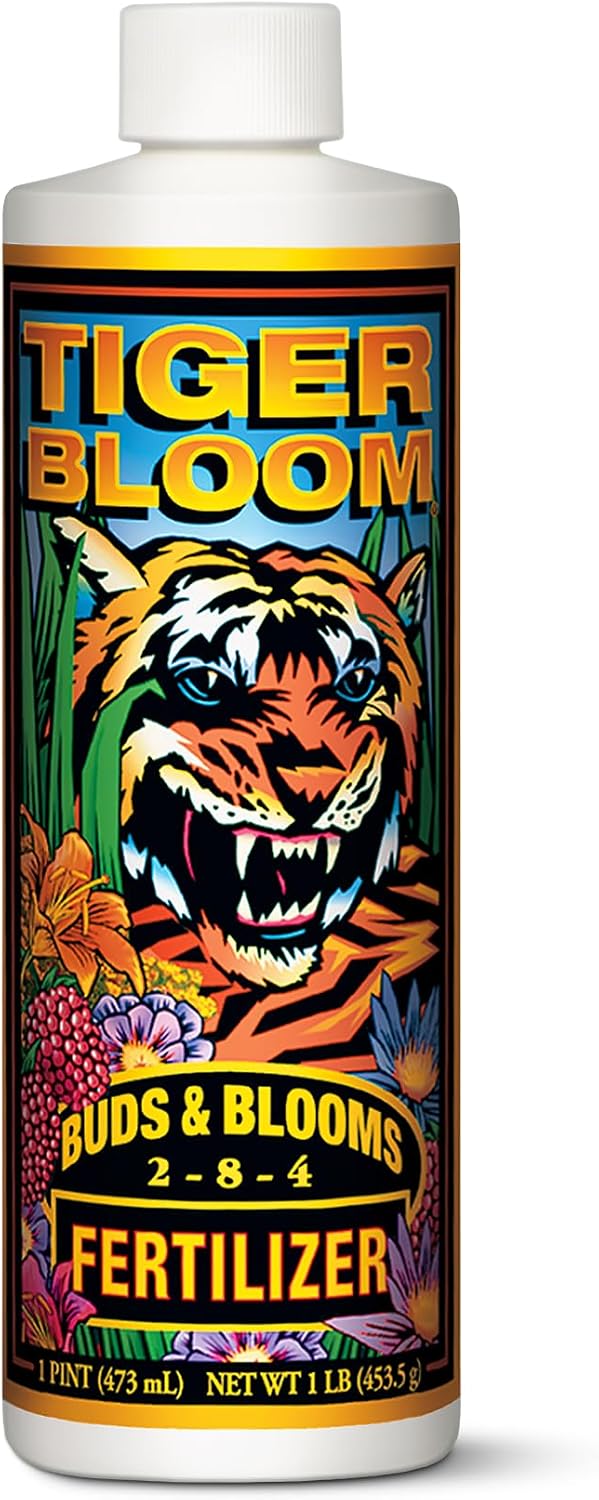
FoxFarm Tiger Bloom Liquid Plant Food (16 fl oz)
| Unit Count | 16 Fluid Ounces |
|---|---|
| Item Form | Liquid |
| Specific Uses For Product | Hydroponic |
| Application Method | Watering; Foliar spraying |
| Mixing Ratio | 1:200 or 1:300 (1 part fertilizer to 200 or 300 parts water) |
Tiger Bloom is a concentrated liquid fertilizer focused on boosting flowering and fruit set with a 2-8-4 N-P-K profile and added micronutrients. You use it diluted in water (2–3 teaspoons per gallon for regular feeding, up to 4 teaspoons per gallon for heavy use) either as a soil drench or as a foliar spray every other watering once flowering begins. Its quick-absorption liquid formula and low pH help nutrients stay available and work fast, which is useful when tomatoes need extra phosphorus during blossom set and early fruit development. The bottle size (16 fl oz) is easy to handle for small to medium vegetable gardens and home greenhouse setups and it is labeled for both hydroponic and soil use. Important limitations are that it is a bloom booster rather than a complete all-season feed so you should pair it with a balanced fertilizer during vegetative growth, and phosphorus-based products may be restricted in some areas because of runoff rules, so check local guidance before applying to lawns or large outdoor turf areas.
Best for: Gardeners who prioritize consistent flowering and reliable fruit set for tomatoes and other flowering crops and want a straightforward liquid booster to add once plants begin to bloom.
Less Ideal for: People looking for a single-season, start-to-finish fertilizer or those managing very large turf areas where phosphorus restrictions apply.
- High-phosphorus 2-8-4 formula targeted to improve blooms and fruit set
- Works in both soil and hydroponic systems for flexible use
- Liquid concentrate mixes quickly for fast nutrient uptake
- Clear mixing directions for regular and heavy feeding
- Not formulated as an all-purpose vegetative fertilizer so a separate grow feed is needed before flowering
- Contains phosphorus which may be restricted in some localities due to runoff concerns
Verdict: Choose Tiger Bloom when you need a dependable, fast-acting phosphorus-rich liquid to boost flowering and fruit set on tomatoes.
Miracle-Gro Water Soluble Tomato Plant Food, 1.5 lb

| Item Form | Liquid |
|---|---|
| Application Method | Water Soluble |
| Target Species | Tomatoes and vegetables |
| Mixing Ratio | 18-18-21 |
Miracle-Gro Water Soluble Tomato Plant Food is a water-soluble liquid fertilizer designed specifically for tomatoes and other vegetables. You mix it with water (1 tablespoon per gallon for outdoor use) and apply with a watering can or the Miracle-Gro Garden Feeder every one to two weeks during the growing season. The listed NPK of 18-18-21 and water-soluble form mean nutrients are immediately available, which helps produce rapid growth and fuller fruit set compared with unfed plants. It is convenient for container and in-ground tomato plants, and the feeder compatibility makes it easy to treat multiple plants quickly. Practical limitations are that frequent applications are required to maintain results and liquid feeding can be less convenient than slow-release granular options for gardeners who prefer lower-maintenance schedules. Also, the concentrated nutrients mean you should follow mixing instructions closely to avoid overfeeding sensitive seedlings. For gardeners who value visible results and repeatable application, this is a straightforward, widely used choice.
Best for: Gardeners who want reliable, quick results for tomato and vegetable production and who prefer a product with broad user acceptance and clear application instructions.
Less Ideal for: People seeking a low-maintenance, once-applied fertilizer or gardeners who prefer organic or slow-release feeding methods.
- High NPK formula (18-18-21) provides balanced nutrients for blooms and fruit development
- Water-soluble form delivers nutrients immediately for faster visible results
- Works with watering can or Miracle-Gro Garden Feeder for quick application across beds or containers
- Requires feeding every 7–14 days which is more hands-on than slow-release fertilizers
- Concentrated formula risks overfeeding if label mixing directions are not followed
Verdict: Use this water-soluble tomato food when you want fast, repeatable feeding that promotes bigger, more bountiful tomatoes.
Miracle-Gro Shake 'N Feed Tomato, Fruit & Vegetable Plant Food, 4.5 lb

| Item Form | Granules |
|---|---|
| Specific Uses For Product | Growing tomatoes, fruits, and vegetables |
| Application Method | Dry application |
| Mixing Ratio | 10:5:15 |
Miracle-Gro Shake 'N Feed Tomato, Fruit & Vegetable is a granular, slow-release fertilizer designed to be shaken or worked into the top of the soil around in-ground or container vegetable plants. You apply it dry to the soil surface and water to activate feeding; a single application is intended to feed plants for up to three months. The 10-5-15 N-P-K ratio supplies steady nitrogen for leafy growth and higher potassium to support fruit development while added calcium helps reduce common calcium-related disorders in edible crops. Practical benefits include easy application with the jug spout, compatibility with both beds and pots, and a long feeding interval so you do fewer feedings during the season. Limitations are that it is a granular, surface-applied product so it must be watered in for uptake and it is not a quick foliar fix for acute deficiencies. Also it is formulated specifically for fruiting vegetables so it is not a universal all-purpose fertilizer for every garden need.
Best for: Gardeners who prefer low-maintenance, scheduled feeding for tomatoes and other fruiting vegetables and want a simple dry product that supports consistent fruit set and quality.
Less Ideal for: Growers who need rapid corrective feeding or who prefer liquid foliar feeds or a single fertilizer to cover both flowering ornamentals and non-fruiting plants.
- Feeds up to three months per application reducing frequency of refeeding
- Contains calcium to help prevent blossom end rot and strengthen fruit quality
- Granular form and applicator jug make dry application simple for beds and containers
- N-P-K 10-5-15 ratio favors fruit development rather than just leafy growth
- Requires watering in after application since nutrients are soil-activated rather than immediately foliar
- Not formulated as a quick corrective treatment for acute nutrient deficiencies
Verdict: Choose this product if you want a simple, long-lasting granular feed that supports healthier, better-quality tomatoes and other fruiting vegetables with minimal reapplication.
Choosing the Right Flowering Fertilizer for Tomatoes: Key Factors to Consider
Nutrient Ratio Focused on Bloom and Fruit
Tomatoes need a feeding approach that shifts from leafy growth to reproductive development once flowering starts. A fertilizer with a higher middle and last number in the N-P-K ratio often supports bloom set and fruit development better than an all-purpose feed. Look for formulas that provide available forms of phosphorus and potassium and also include secondary nutrients that tomatoes use during fruit fill.
The right ratio reduces wasted growth and helps the plant direct energy into flowers and developing fruit. Too much nitrogen at flowering can produce abundant foliage but poor fruiting, while too little potassium can limit sugar transport and flavor. Consider slow-release or controlled soluble forms if you want steadier nutrient availability over several weeks.
Application Method and Frequency
How you apply the fertilizer affects uptake and risk of leaf burn. Water-soluble feeds allow quick correction and are convenient for frequent, light feedings, which many growers prefer during peak bloom. Granular slow-release options give a steadier supply and can be easier for low-maintenance plots.
Think about whether you want a foliar feed for rapid bloom support or a root-applied formula for sustained fruiting. Your watering schedule and irrigation type will determine how often a soluble feed is practical, and container-grown tomatoes often need more frequent, lighter applications than in-ground plants.
Compatibility with Soil, Compost, and Microbes
Tomatoes perform differently in rich compost-amended beds versus sandy or clay soils. A fertilizer should complement your existing soil biology and pH rather than destabilize it. Some formulations include beneficial microbes or humic substances that enhance nutrient uptake; others are pure mineral salts that work best when used alongside organic matter.
Consider whether the product plays well with your regular soil amendments. Excessive soluble salts can build up in tight containers, while low-salt organic feeds may require more frequent applications in poor soils. Match the fertilizer to your soil type and management style to avoid nutrient lockup or stress.
Salt Index and Risk of Foliar or Root Burn
Concentrated soluble fertilizers can create a high salt environment when applied too strongly or without sufficient water. That raises the risk of root dehydration and leaf-edge scorch, especially in containers and during hot weather. Grainy or crystalline residues on potting mix surfaces also indicate salt accumulation.
Choose a product with a lower salt index for sensitive planting situations or plan a leaching routine to flush salts periodically. If you prefer frequent feeding, dilute solutions and frequent light waterings reduce burn risk while keeping nutrients available.
Micro- and Secondary Nutrient Content
Beyond N-P-K, tomatoes benefit from calcium, magnesium, and trace elements like iron and manganese. Calcium in particular helps prevent blossom end rot, while magnesium supports photosynthesis and flavor development. A flowering fertilizer that lacks these may still work if your soil is rich, but in marginal soils a more complete formula can prevent common disorders.
Review the label for guaranteed amounts or consider pairing a flowering-specific feed with targeted supplements like calcium sprays or foliar magnesium if deficiencies appear during the season. Balanced micronutrients often mean fewer mid-season corrections.
Environmental and Practical Considerations
How the fertilizer behaves in your garden affects not just yields but also labor and environmental impact. Water-soluble feeds can be washed into runoff during heavy rain if overapplied, while slow-release granules reduce application frequency and runoff risk but can be more persistent in the soil.
Also consider packaging, storage stability, and whether the product requires special handling. Choose options that fit your seasonal rhythm and reduce spill or waste risks, especially if you garden near water features or in areas prone to heavy rain.
When to Shift From Vegetative Feeding to Flowering Feed
Tomato plants typically need a change in feeding strategy once they begin to set their first true flowers. That transition usually coincides with a reduction in nitrogen emphasis and an increase in phosphorus and potassium to support bloom development and fruit set. Timing that shift correctly helps prevent excessive leafy growth and encourages a higher percentage of flowers to mature into fruit.
Watch plants rather than dates. If blossoms are forming but falling without setting, or if fruit development seems weak, it may be time to start a flowering-focused regimen. For containers, make the switch slightly earlier because soil volume limits nutrient reserves.
- Begin flowering feed at first consistent bloom clusters
- For containers, start one to two weeks earlier than in-ground
- Reduce high-nitrogen feeds once flowers appear
Foliar Feeding Versus Root Applications
Foliar feeding delivers nutrients quickly and can be useful for correcting short-term deficiencies or boosting bloom vigour during critical pollination windows. It is most effective for micronutrients and low-dose phosphorus or potassium sprays.
Root applications give more sustained support and are preferred for steady fruit development. Combine the two methods cautiously; foliar feeds should be used as a supplement rather than the sole source of flowering nutrients for tomato plants.
- Use foliar sprays in the cooler part of the day to reduce leaf scorch
- Avoid foliar spray during heavy bloom drop or rain events
- Always follow dilution guidance to prevent burn
Adjusting Feeding for Containers and Small Spaces
Containers concentrate salts and dry out faster, so flowering fertilizers for potted tomatoes need gentler dosing and more frequent applications. Lightweight potting mixes also hold fewer nutrients, so soluble feeds at reduced strength given more often keep plants in balance without overwhelming the root zone.
Employ regular flushing of the potting media every few weeks to prevent salt buildup and monitor plant leaves for tip burn or yellowing, which are signs you may need to cut back or flush.
- Use weaker, more frequent feeds for containers
- Leach pots monthly if using soluble concentrated formulas
- Choose feeds labeled safe for container use when available
Managing Common Nutrient-Related Problems
Blossom end rot, poor fruit set, and delayed ripening often trace back to nutrient imbalances or uneven water. Blossom end rot is commonly linked to calcium deficiencies or inconsistent soil moisture rather than a lack of overall fertilizer. Ensuring steady irrigation and adequate calcium supply helps prevent that disorder.
Poor fruit set can result from excessive nitrogen, lack of phosphorus, or environmental stress such as high temperatures. Address the likely cause by adjusting the fertilizer balance and improving pollination conditions, for example by encouraging pollinators or gently shaking indeterminate plants to aid pollen transfer.
- Address blossom end rot with consistent moisture and calcium sources
- Reduce nitrogen if foliage is lush but fruiting is poor
- Match feeding intensity to weather and growth stage
Seasonal Feeding Calendar for Flowering Tomatoes
Establish a simple calendar that ties feeding intensity to plant stage rather than fixed calendar dates. Early season is for establishment with balanced feeds, then shift to flowering-focused nutrients when buds appear, and reduce overall feeding as plants finish fruiting or go into the final ripening flush. This approach keeps labor predictable and avoids over-application late in the season.
Adjust frequency for your climate. In cool regions, slower uptake means less frequent feeding, while hot, fast-growing conditions often require more frequent, lighter applications to sustain blooms and fruit set.
- Seedling and transplant stage: balanced, lower-rate feeds
- First flowers onward: increase phosphorus and potassium emphasis
- Late season: taper feeds as harvest winds down
How We Chose the Best Flowering Fertilizer for Tomatoes
We selected products that specifically target flowering and fruit development in tomato plants and then applied a consistent editorial filter focused on practical garden performance. Key evaluation criteria included nutrient ratio and bioavailability to ensure adequate phosphorus and potassium for bloom and fruit set, application method and ease to match container and in-ground systems, compatibility with common soil types and compost amendments, and consistency of results reported by growers in varied climates. We also considered solubility and residue behavior to avoid buildup and reduce leaf scorch risk, plus formulation clarity so gardeners can follow feeding schedules without guesswork. We excluded general-purpose feeds that do not emphasize flowering or fruiting and any products lacking clear nutrient labeling. Products that require specialized equipment or conditions outside typical home garden practice were not considered. The final shortlist favors formulations that work across common tomato varieties and for both patio containers and backyard beds, aligning with the scoring metrics used in the review.
FAQ
How often should I feed tomatoes with a flowering fertilizer?
Frequency depends on formulation and growing conditions. Water-soluble feeds are often applied every 7 to 14 days at reduced strength, while slow-release granules can be applied every 6 to 8 weeks. Monitor plant vigor and soil moisture and adjust accordingly.
Can too much flowering fertilizer harm tomato plants?
Yes. Overapplication, especially of soluble salts, can cause root damage and leaf scorch. Symptoms include brown leaf edges, stalled growth, or poor fruit set. If you suspect overfeeding, flush the soil with water and reduce concentration or frequency.
Do container tomatoes need a different flowering fertilizer than in-ground plants?
Containers usually need gentler, more frequent feeding because potting mixes hold fewer nutrients and salts build up faster. Choose a fertilizer labeled safe for containers or dilute soluble feeds and increase feeding frequency at lower rates.
Will a flowering fertilizer prevent blossom end rot?
A flowering fertilizer that includes calcium helps, but blossom end rot is often caused by inconsistent moisture and calcium uptake rather than a simple lack of fertilizer. Maintain steady watering and ensure calcium is available in the soil or via targeted supplements.
Should I use foliar sprays for better bloom set?
Foliar sprays can quickly supply micronutrients and give a short-term boost during critical pollination windows. They work best as a supplement to root feeding and should be applied in cooler parts of the day at recommended dilutions.
Is organic flowering fertilizer as effective as synthetic options?
Organic and synthetic fertilizers work differently. Organics release nutrients more slowly and improve soil biology over time, while synthetics can correct deficiencies faster. Effectiveness depends on soil condition and grower preferences; many gardeners use a combination.
Final Verdict
Choosing the right flowering fertilizer for tomatoes means balancing nutrient ratios, application method, and how the product interacts with your soil and irrigation. Prioritize phosphorus and potassium for bloom and fruit set, watch salt levels in containers, and ensure calcium and key micronutrients are available to prevent common disorders. Match the feed schedule to plant stage and local conditions to avoid overfeeding and to maximize bloom-to-fruit conversion. Focus on the specific tradeoffs that matter for your situation: ease of use and steady release for low-maintenance plots, or quick-soluble formulas for targeted corrections. With a clear feeding plan and attention to watering and soil health, you can confidently choose a flowering fertilizer that improves bloom set and fruiting on your tomato plants.
