

Note: This article contains affiliate links. If you click on these links and make a purchase, I may earn a small commission at no extra cost to you. This helps support my research and content. Read my full affiliate disclosure here.
If your porch, patio, or balcony gets limited sun, the right container flowers can still deliver steady color and texture. Choosing flowers suited specifically for shade containers matters because plants that tolerate low light behave differently: they need different watering routines, slower-draining mixes, and companion choices that avoid crowding. This guide covers six shortlisted options that perform well in shade container conditions and explains the practical tradeoffs gardeners face. We evaluated shade tolerance, bloom length, maintenance needs, and container-friendly growth habits to help you pick the best fits for your space.
Top Picks at a Glance
| Best Overall The best all-around choice for most situations | Outsidepride Balsam (Impatiens) Flower Seeds — 500 Count Mixed Colors |  |
| Best Quality Built to a higher standard if you want something more solid | Touch Of ECO Hosta Bare Roots 6-Pack (Mixed Heart-Shaped) |  |
| Best Value The sweet spot between price and what you get | SWEET YARDS Wildflower Seeds Partial Shade Mix (1 oz) |  |
| Best Budget The cheapest option that still gets the job done reliably | Carpet Creeping Giant Hosta Flower Seed Mix (340+ Seeds) – Heirloom, Non-GMO |  |
| Highest Rated A top-rated pick with lots of positive feedback | Paper Street Perennials Throw in Shade™ 16‑Species Shade‑Tolerant Wildflower Seed Mix, 2 oz |  |
| Best Seller A high-volume bestseller chosen again and again | HOME GROWN Rainbow Mix Coleus Seeds (approx. 400) |  |
Outsidepride Balsam (Impatiens) Flower Seeds — 500 Count Mixed Colors

| Unit Count | 500 Count |
|---|---|
| Expected Blooming Period | Spring to Fall |
| Sunlight Exposure | Partial Shade |
| USDA Hardiness Zone | 3 |
| Moisture Needs | Moderate Watering |
These Outsidepride Balsam seeds are an easy way to add continuous color to shady containers, window boxes, and garden borders. The mix of rose, salmon, white, scarlet, and violet blooms comes from plants that grow to roughly 12–18 inches and tolerate partial shade, so they work well where full sun plants struggle. You can sow directly after frost or start indoors 6–8 weeks early; seeds germinate quickly and the plants need consistently moist, well-drained loam and moderate watering to do their best. Practical benefits include low maintenance, compact habit that suits small pots, and pollinator appeal for hummingbirds and butterflies. The packet is GMO free and contains enough seed for many pots or a generous border. Expect some self-seeding and variable germination like most bulk seed packs, so thinning or spot-sowing may be necessary to get even spacing. Also these are annuals, so they provide season-long color but will not overwinter in cold climates.
Best for: Gardeners who want low-effort, reliable color in shaded containers or small borders and prefer starting plants from seed rather than buying transplants.
Less Ideal for: People seeking permanent, long-lived plantings or those who want guaranteed uniformity without thinning should consider nursery-grown plants or perennial shade options instead.
- Shade-tolerant blooms that perform well in partial shade and containers
- Compact growth habit (12–18 inches) suited to small pots and borders
- Long bloom period from spring through fall for season-long color
- Large 500-count packet provides seed for multiple containers or beds
- GMO free seeds that attract pollinators such as hummingbirds
- Annuals only, so plants need replanting each year
- Bulk seed packets can give uneven germination and may require thinning
Verdict: A cost-effective seed packet for dependable, season-long color in shady containers and small borders.
Touch Of ECO Hosta Bare Roots 6-Pack (Mixed Heart-Shaped)

| Unit Count | 6 Count |
|---|---|
| Indoor Outdoor Usage | Outdoor |
| USDA Hardiness Zone | 3-9 |
| Moisture Needs | Regular Watering |
These Touch Of ECO hosta bare roots arrive dormant and are intended to be planted in fall or early spring for reliable, low-maintenance shade interest. Each pack contains six mixed heart-shaped hosta crowns that produce rich green foliage and fragrant white or purple flowers on tall stems from spring through fall. Hostas are typically used in shady borders, under trees, or in large planters where regular watering and indirect light suit them best. The listing notes hardiness to zones 3 through 9, so they will return year after year in a wide range of climates, and the plants attract pollinators while being resistant to deer. Practical gardeners will appreciate that the plants ship as bare roots for easy planting and faster establishment when placed with the crown at soil level and watered in. Limitations are that these are not container-ready potted plants and need initial attention to planting depth and moisture; smaller or shallow planters may not give the crowns enough room to spread.
Best for: Gardeners who want reliable, low-maintenance shade plants to establish in planters or beds and prefer economical bare-root stock they can plant themselves.
Less Ideal for: Buyers who want instant, display-ready potted plants or who need specimens sized for very small decorative containers.
- Six bare-root crowns per pack provide quick value for filling multiple planters or a shady border
- Hardy across USDA zones 3–9 so they are suitable for most climates
- Attractive heart-shaped foliage with seasonal fragrant blooms adds texture and pollinator value
- Ships dormant for easy handling and planting in fall or early spring
- Arrives as bare roots rather than established potted plants, so initial planting care is required
- Not suitable for very small or shallow containers where crowns cannot spread
Verdict: A cost-effective way to fill shady planters or beds with hardy, low-maintenance hostas if you are comfortable planting bare-root stock.
SWEET YARDS Wildflower Seeds Partial Shade Mix (1 oz)

| Expected Blooming Period | Spring to Fall |
|---|---|
| Sunlight Exposure | Partial Shade |
| Expected Plant Height | 4 feet |
| Moisture Needs | Moderate Watering |
| Unit Count | 1 Ounce |
This Sweet Yards Partial Shade wildflower mix is a one-ounce packet of open-pollinated seeds intended to establish a multi-species flower patch in locations that receive dappled sun or morning light. It contains roughly 7,500+ seeds of annuals and perennials such as columbine, foxglove, baby blue eyes, and poppy, and is packaged with planting instructions and a reusable zipper bag. Typical use is sowing directly into prepared container soil or small garden beds that stay out of hot afternoon sun; seeded at the suggested rate it will provide color from spring through fall and attract pollinators. Notable benefits are the broad species mix for staggered bloom times and seed freshness aimed at good germination rates. Limitations: one ounce covers about 100 sq ft so the packet is best for a few containers or a small bed rather than many large planters, and because it mixes many species you will not get uniform height or a single repeatable look. Expect some variation in establishment depending on local shade intensity and moisture management.
Best for: Ideal for gardeners who want an easy, low-effort way to add seasonal color and pollinator habitat to shade-tolerant containers or small shady beds while optimizing seed use and germination.
Less Ideal for: Not the best choice for designers seeking a uniform, repeatable container scheme or for those who need large quantities for many big planters.
- Formulated for partial shade with a mix of annuals and perennials for extended bloom season
- Large seed count in the packet (over 7,500 seeds) gives good coverage for small areas
- Open-pollinated seeds increase diversity and support pollinators
- Premium reusable packaging with planting instructions helps storage and repeat plantings
- One-ounce packet covers about 100 sq ft so may be insufficient for multiple large containers
- Mixed species yield varied heights and a less uniform look than single-species packs
Verdict: A compact, high-seed-count wildflower mix designed to give reliable, pollinator-friendly color in partial-shade containers and small beds.
Carpet Creeping Giant Hosta Flower Seed Mix (340+ Seeds) – Heirloom, Non-GMO

| Seed count | 340+ |
|---|---|
| Type | Heirloom non-GMO hosta seeds |
| Hardiness zones | Zones 3–9 |
This packet supplies over 340 giant hosta flower seeds intended for shady outdoor spots and containers. Hostas are grown primarily for their lush foliage and the included seeds are described as hardy across USDA zones 3 to 9, so they suit a wide range of climates. Typical use is sowing in well-drained, humus-rich soil with consistent moisture; plants are low-maintenance once established and tolerate drought better than many shade perennials. The mix emphasizes attractive summer flower spikes in addition to foliage, making it useful for adding texture to borders, woodland-style beds, or shade containers. Because these are seeds rather than mature plants, expect a season or more before you get the full large-leaf effect and flowering; germination and uniformity can vary with seed mixes. For gardeners on a budget the seed quantity is generous, but growing from seed requires patience and some seed-starting care compared with buying established hostas.
Best for: Budget-minded gardeners who want to populate several shade containers or beds with hostas and are willing to start plants from seed and wait for them to mature.
Less Ideal for: Those who need instant results, uniform cultivar characteristics, or ready-to-plant mature hostas for immediate container display.
- Very large seed count suitable for filling multiple containers or beds
- Heirloom non-GMO seeds appropriate for traditional garden planting
- Hardy across zones 3–9, broad climate suitability
- Low-maintenance once established and suitable for shade locations
- Seeds require time and care to germinate and grow before mature foliage appears
- Seed mixes can produce variable plant size and appearance compared with labeled cultivars
Verdict: If you want an inexpensive way to establish many shade containers or beds with hardy hostas and can wait for plants to grow from seed, this pack delivers strong value.
Paper Street Perennials Throw in Shade™ 16‑Species Shade‑Tolerant Wildflower Seed Mix, 2 oz

| Sunlight Exposure | Shade to Partial Shade |
|---|---|
| Expected Blooming Period | Spring, Summer, and Fall |
| Expected Planting Period | Spring, Fall |
| USDA Hardiness Zone | Zones 3-9 |
| Moisture Needs | Moderate Watering |
This seed mix is designed for locations with limited direct sun such as under trees, at woodland edges, and in partially shaded container groups. The 2 oz packet contains a curated blend of annuals and perennials including species like columbine, coneflower, forget‑me‑nots, and shasta daisy chosen for shade tolerance. Use it for spring or fall sowing in well‑drained loam or sandy loam and keep soil moderately moist during establishment. The pure seed blend contains no fillers or grass seed so germination reflects actual seed content and species composition, and the mix is framed to provide continuous nectar and pollen for pollinators through spring, summer, and fall. Because it mixes annuals with perennials you should expect some plants to return while others bloom the first season, which gives quick color but requires normal reseeding or spot replenishment over time. For container use, sowing into a shallow broadcast layer over potting medium or mixing seed into the top inch of soil works, but success in containers depends on using a larger pot and regularly monitoring moisture since shaded containers can dry differently than beds.
Best for: Gardeners who need a dependable seed mix for shaded beds or larger shade containers and who prioritize predictable, pollinator‑friendly blooms over time.
Less Ideal for: People wanting an instant, maintenance‑free container display or those seeking only long‑lived perennials without any annuals should consider plug plants or pure perennial mixes instead.
- Formulated specifically for shade to partial shade locations where sun‑loving mixes fail
- Includes a mix of annual and perennial species for both immediate blooms and longer‑term presence
- Pure seed blend with no grass seed or fillers means planted seed equals expected flowers
- Supports pollinators with diverse nectar and pollen sources across seasons
- Contains annuals alongside perennials so some areas will need reseeding to maintain continuous cover
Verdict: Choose this mix when you need a reliable, pollinator‑friendly seed blend that establishes blooms in shade and partial shade areas.
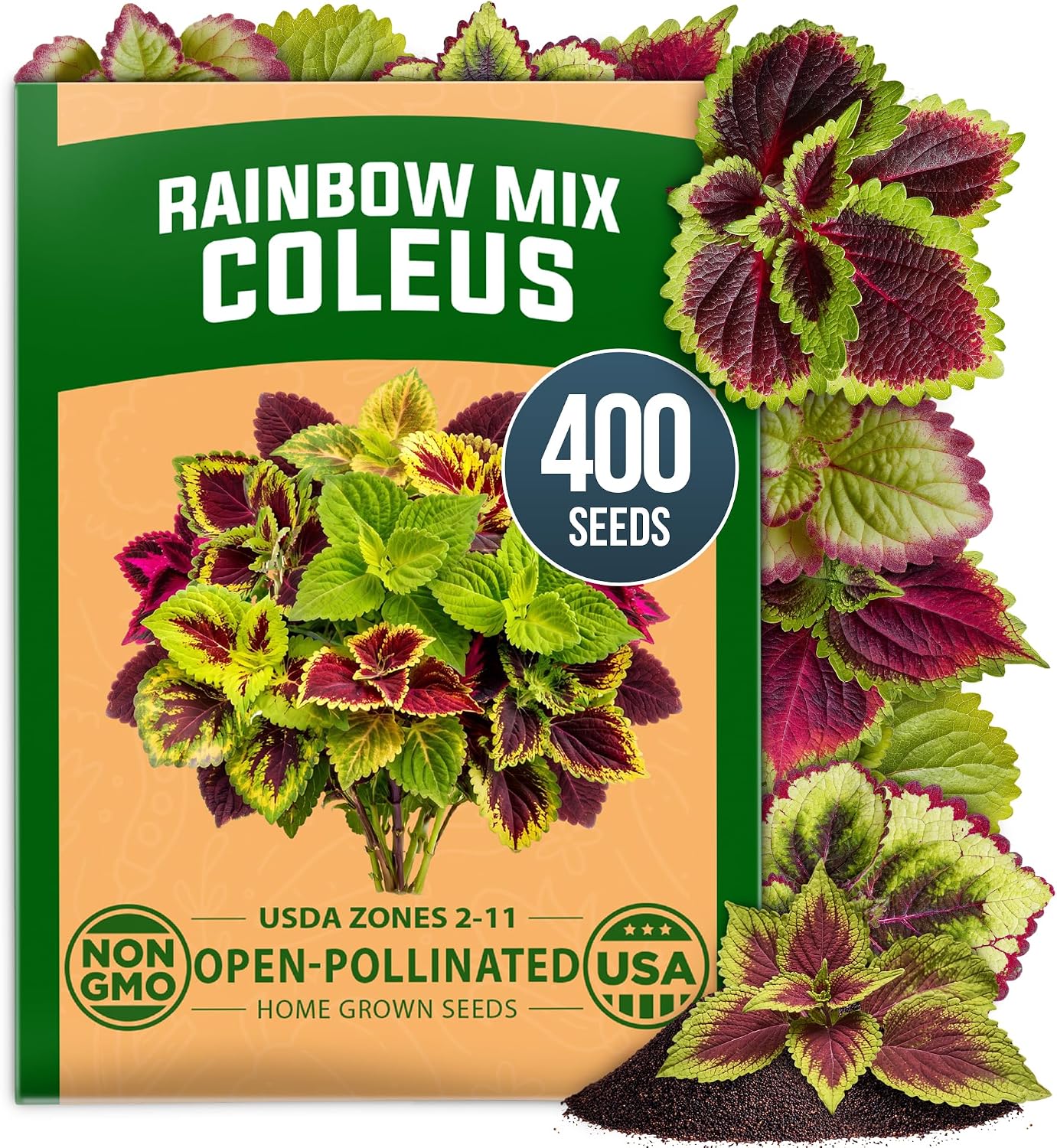
HOME GROWN Rainbow Mix Coleus Seeds (approx. 400)
| Sunlight Exposure | Part Shade to Shade |
|---|---|
| USDA Hardiness Zone | 2-11 |
| Expected Blooming Period | Spring through Frost |
| Material Features | GMO Free, Heirloom |
| Unit Count | 1 Count |
These Rainbow Mix coleus seeds produce compact, colorful foliage plants that are well suited to containers and shaded patio spots. Surface-sow the tiny seeds (do not cover), keep the medium warm and consistently moist, and seedlings typically appear in 10–14 days; pinch growing tips to encourage bushy, mounded plants. The mix is valued for season-long leaf color in shades of rose, green, bronze, cream, and scarlet, so you get visual impact without relying on flowers. Coleus grows indoors near bright north or east windows and outdoors in part shade to shade, making it a flexible choice for window boxes, mixed planters, and small pots. Important limitations are that coleus is a tender annual in most regions and needs protection from frost and prolonged drought, and it prefers warm temperatures for best germination and growth. For container gardeners who want low-maintenance, high-impact foliage, this seed mix is an easy way to produce many plants from one packet.
Best for: Gardeners who want easy-to-grow, high-impact foliage for containers and shaded patios and prefer predictable, low-fuss plants they can start from seed.
Less Ideal for: People seeking long-lived perennial landscaping or plants that tolerate full sun and drought without extra care.
- High seed count (about 400) gives many starts for containers or massing
- Open-pollinated non-GMO seeds from a mix that yields varied, colorful foliage
- Specifically suited to part shade and shade where many flowering plants struggle
- Compact, mounded habit that performs well in pots, window boxes, and mixed planters
- Tender annual in most zones and requires frost protection or indoor overwintering
- Requires consistent moisture and will suffer if soil dries out or remains waterlogged
Verdict: A high-count, non-GMO coleus seed mix that reliably produces compact, colorful foliage perfect for containers and shaded patios.
Choosing the Right Flowers for Shade Containers: Key Factors to Consider
Light Level and Shade Type
Shade comes in degrees and each affects flowering differently. Deep shade under evergreen trees offers very little direct light and favors foliage-forward plants with occasional flowers, while dappled shade or areas with strong morning sun allow more sustained blooms. Before choosing flowers for a container, spend a day tracking light patterns at planting height. That will determine whether you need true low-light bloomers or plants that cope with several hours of filtered sun.
Matching a flower's listed shade tolerance to your measured conditions reduces disappointment and limits waste from repeated replanting. Containers on walls or patios often reflect heat and increase light slightly, so consider microclimates when interpreting plant tags.
Container Size and Root Space
Container depth and volume influence which flowers will thrive. Shallow pots limit root growth, leading to faster drying and reduced nutrient reserves, which in turn shortens bloom periods. Choose flowers whose root habits match your container: compact and fibrous roots for small pots, and more vigorous but contained root systems for larger planters.
Also factor in companion planting. Crowding multiple plants can force competition for light and water in shade, so plan spacing that lets each flower reach its mature spread without excessive pruning.
Soil Mix and Drainage
Shade containers often hold moisture longer because of lower evaporation, yet many flowering plants still need well-draining mixes to avoid root rot. Use a potting blend that balances water retention and drainage: organic matter for nutrients and moisture-holding, plus perlite or coarse sand to maintain aeration. Adjust the mix if your site stays soggy from runoff or irrigation.
A consistent, appropriate soil mix simplifies watering and helps blooms set reliably. Consider adding slow-release fertilizer to support long flowering in nutrient-limited container volumes.
Watering Frequency and Moisture Sensitivity
Flowers grown in shade can be either moisture-loving or drought-tolerant, and that affects maintenance demands. Containers dry out faster when they are small or placed near vents or reflective surfaces. For shade situations, many popular flowering choices prefer evenly moist but not waterlogged soil; others can handle occasional dry spells.
Plan a watering routine based on container size, potting mix, and plant moisture needs. Using saucers, self-watering inserts, or mulch on the soil surface can help stabilize moisture in shaded spots where evaporation is lower but irregular.
Bloom Timing and Seasonal Interest
How long and when a flower blooms matters for maintaining color through the season. Some shade-tolerant flowers bloom in a concentrated spring flush, while others provide repeat blooms into late summer or fall. In containers you can combine early, mid, and late bloomers to extend visual interest.
Also consider foliage texture and seasonal changes. In deep shade, foliage contrast often matters more than continuous flowers, so include plants whose leaves offer seasonal color or structure when blooms are scarce.
Pest and Disease Resistance
Shaded, damp microclimates encourage some fungal diseases and certain pests. Choose flower varieties known to resist common container issues like powdery mildew, botrytis, and foliar pests. Good air circulation around containers, regular deadheading of spent blooms, and avoiding overhead watering reduce disease pressure.
Selecting robust flowers limits the time you spend treating problems and reduces losses that force replanting. When disease is common in your location, prioritize resistant cultivars and maintain proper sanitation of containers between seasons.
Designing a Shade Container Color Scheme
Start with a focal color and pick two supporting tones to keep the display cohesive. In low light, brighter flower colors and variegated foliage read better than subtle pastels, so choose blooms that contrast with deep greens.
Layer height by placing taller filler plants at the back, mid-height bloomers in the center, and trailing or spilling flowers at the edge. This creates depth and maximizes the limited visual space on a shaded patio or balcony.
- Use one dominant flower color and a contrasting accent for visual pop
- Include foliage plants to extend interest when blooms are sparse
- Place trailing plants so they hide the pot rim and soften the container
Maintenance Tips for Shade Containers
In shaded locations, routine maintenance focuses on moisture control and cleanliness. Check soil moisture by feel rather than schedule, and avoid keeping the mix soggy. Remove spent blooms to encourage new flowers and prevent disease.
Fertilize lightly with a balanced, water-soluble feed every few weeks during the bloom season or use a slow-release formula at planting. Refresh the top inch of potting mix midseason and replace soil annually for long-term health.
- Deadhead regularly to extend bloom duration
- Prune leggy growth to maintain shape in low light
- Refresh potting mix each year to prevent nutrient decline
Combining Annuals and Perennials in Containers
Mixing hardy perennials with colorful annuals can give containers both structure and seasonal color. Use perennials for reliable foliage and anchors that return year after year; add annuals to fill gaps and supply saturated color during peak months.
Remember that many perennials need a period of dormancy; in containers this may require moving pots to protected spots or providing winter insulation to protect roots in cold climates.
- Perennials provide backbone and reduce replanting workload
- Annuals offer flexible color choices and quick seasonal impact
- Plan for overwintering or moving containers if perennials need protection
Preventing Common Shade Problems
Shade containers are prone to leggy growth as plants stretch for light. Prevent legginess by rotating containers, providing supplemental light if possible, and choosing naturally compact varieties.
Watch for increased humidity-related diseases and take steps to improve airflow. Space containers, avoid dense groupings in very stagnant corners, and remove any diseased foliage promptly to limit spread.
- Rotate pots to even out light exposure
- Use fans or create gaps to improve airflow on enclosed patios
- Sanitize tools and replace contaminated soil when disease recurs
Seasonal Transitions and Replanting
Plan your containers for seamless seasonal transitions. Swap out spent summer annuals for cool-season bloomers in the fall, and protect overwintering perennials with mulch or moved shelter when needed. Keep a planting calendar noting bloom times so you can schedule refreshes without gaps.
When replanting, inspect roots and divide overcrowded plants. A fresh potting mix reduces disease risk and restores nutrients depleted by container growth.
- Schedule midseason refreshes for long-season displays
- Divide and repot perennials before replanting to maintain vigor
- Store dormant containers upright and insulated in cold climates
How We Chose the Best Flowers for Shade Containers
We shortlisted flowers that consistently perform in shaded containers based on measurable, gardener-facing criteria. Primary evaluation centered on shade tolerance and bloom duration because these determine whether a container will look lively through the season. We also assessed moisture needs and root behavior, since container soils dry and retain water differently than beds. Size and habit were important to ensure plants fit typical container depths and do not need aggressive pruning. Disease resistance and ease of maintenance rounded out the criteria to favor choices that deliver color without frequent intervention. We excluded plants that require full sun, exceptionally deep soil, or specialized greenhouse conditions. Varieties that are strictly annuals in most climates were considered only if they reliably flower all season in containers. The final list favors species and cultivars that are versatile across common shaded settings: morning sun with afternoon shade, dappled light under trees, and deep shade on north-facing balconies.
FAQ
Can flowers bloom well in deep shade containers?
Some species will bloom in deep shade but overall flowering is often reduced. Choose plants specifically rated for low light and expect more emphasis on foliage texture than nonstop blooms.
How often should I water shade containers compared with sunny ones?
Shade containers usually dry more slowly so water less frequently, but frequency depends on container size, soil mix, and local humidity. Check moisture by touch and avoid keeping soil constantly waterlogged.
Will container size change what flowers I can grow in shade?
Yes. Larger containers hold more moisture and nutrients, supporting bigger or more vigorous flowers. Small pots suit compact varieties, while deep planters allow roots to develop and sustain longer bloom periods.
Are there low-maintenance flowering options for shaded patios?
There are low-maintenance choices that offer steady color with minimal deadheading or feeding. Look for plants with good disease resistance and consistent bloom habits to cut down on upkeep.
Should I fertilize shade containers differently than sunlit ones?
Fertilizer needs are similar but often lighter for shade containers because growth rates can be slower. Use a balanced feed at reduced frequency or a slow-release formula to avoid overstimulating foliage at the expense of flowers.
Final Verdict
When choosing flowers for shade containers, prioritize true shade tolerance and a habit suited to the pot size you plan to use. Balance moisture needs and bloom timing to create displays that stay lively without constant intervention. Expect tradeoffs: deeper shade often means less continuous flowering but better opportunities for interesting foliage and color contrast. Focus on plants with resilient habits and disease resistance, and design containers with layered height and watering strategies that match the site. With the right combinations and routine maintenance, shaded outdoor spaces can be colorful and low-maintenance throughout the season.
