

Note: This article contains affiliate links. If you click on these links and make a purchase, I may earn a small commission at no extra cost to you. This helps support my research and content. Read my full affiliate disclosure here.
If you have a sunny bed, border, or container that bakes in afternoon heat, choosing flowers that tolerate full sun changes everything. The right sun-tolerant flowers keep color and structure through hot spells, use water efficiently, and reduce deadheading and replacement work. This guide covers seven top picks suited to blazing sun and warm microclimates. Each shortlisted option was evaluated for how it performs in hot, dry conditions and how long it blooms, so you can pick plants that fit your maintenance level and seasonal goals. Read on for practical notes gardeners need when planting and caring for sun-loving flowers.
Top Picks at a Glance
| Best Overall The best all-around choice for most situations | Costa Farms Ruellia (Mexican Petunia) Live Outdoor Plant, Purple Flowers |  |
| Best Quality Built to a higher standard if you want something more solid | Proven Winners Purple Pillar Rose of Sharon Hibiscus 2 Gal Shrub |  |
| Best Value The sweet spot between price and what you get | SURVIVAL GARDEN SEEDS Chocolate Cherry Sunflower Seeds (1 Pack) |  |
| Best Budget The cheapest option that still gets the job done reliably | Sow Right Seeds Mexican Sunflower (Tithonia diversifolia) Seeds |  |
| Highest Rated A top-rated pick with lots of positive feedback | BuggyBeds Cosmos Flower Seeds, 1000 Count (Long Bloom Season) |  |
| Most Popular A crowd favorite that many people choose with confidence | NatureZ Edge Black Eyed Susan Seeds (5000, Non-GMO Heirloom) |  |
| Best Seller A high-volume bestseller chosen again and again | CZ Grain Gladiolus Bulbs (10 Count) — Mixed Colors Sword Lily |  |
Costa Farms Ruellia (Mexican Petunia) Live Outdoor Plant, Purple Flowers

| Indoor Outdoor Usage | Outdoor |
|---|---|
| Sunlight Exposure | Full Sun |
| Expected Plant Height | 36 inches |
| Container Material | Plastic |
This Costa Farms Ruellia (Mexican petunia) is a vigorous, easy-care flowering plant that delivers continuous purple trumpet-shaped blooms and quick vertical growth. For pots on a sunny patio it establishes fast and reaches about 2 to 3 feet tall, making it a dependable thriller or focal plant in large containers. The plant performs best in full sun but tolerates partial shade and a wide range of soils as long as drainage is reasonable. Its drought tolerance and heat resilience mean lower watering needs once established, and its nectar-rich flowers attract pollinators such as hummingbirds and butterflies. Practical limitations include its rapid growth habit, which can require regular pruning or dividing in confined pots to prevent crowding, and the plastic nursery container that may need upgrading for long-term container culture. For gardeners seeking a low-effort, high-impact annual or summer perennial look in warm climates, this is an efficient choice for sunny pots and mixed container arrangements.
Best for: Buyers who want a high-performing, low-maintenance flowering plant to create bold color and height in full-sun pots and mixed container designs.
Less Ideal for: Gardeners seeking a very compact, slow-growing filler for small pots or those who do not want to perform occasional pruning or repotting should consider other compact annuals.
- Produces prolific, continuous purple blooms for strong visual impact
- Fast growth that quickly fills large pots or provides vertical interest
- Heat and drought tolerant once established, reducing watering frequency
- Attracts pollinators, adding wildlife and movement to containers
- Can outgrow containers quickly and needs regular pruning or dividing in pots
- Supplied in a basic plastic nursery container that may require repotting for long-term use
Verdict: Choose this Ruellia when you need a fast-growing, heat-tolerant plant that reliably delivers nonstop purple blooms and strong container presence in full sun.
Proven Winners Purple Pillar Rose of Sharon Hibiscus 2 Gal Shrub

| Sunlight Exposure | Full sun to partial shade |
|---|---|
| USDA Hardiness Zone | 5, 6, 7, 8, 9 |
| Expected Blooming Period | Spring to Fall |
| Moisture Needs | Regular Watering |
| Plant or Animal Product Type | Shrub & Hedge |
The Proven Winners Purple Pillar is a columnar Rose of Sharon hibiscus marketed as a space-saving flowering shrub for outdoor containers and landscapes. It produces purple blooms along upright stems from spring through fall and is intended for full sun to partial shade in USDA zones 5 through 9. Its narrow, vertical habit makes it well suited to tight spots such as flanking an entryway, a patio container, or a narrow border where a tall accent or privacy element is needed. Care is straightforward: plant in well-draining sandy soil, water regularly during establishment, mulch, and fertilize in early spring. The plant ships dormant in winter to early spring and arrives trimmed to encourage healthy growth. Limits to consider are its tall mature height, which requires planning for overhead space, and the need for consistent moisture in hotter sites. For use in pots, regular watering and an appropriately large container are necessary to support its vertical habit and extended bloom period.
Best for: Gardeners who need a high-impact flowering plant for narrow spaces, patios, or containers and prioritize season-long blooms and vertical structure over wide spread.
Less Ideal for: Those seeking a compact, low-height shrub for small-scale groundcover or people who prefer plants that tolerate prolonged drought without extra watering.
- Columnar growth habit saves horizontal space while providing tall floral impact
- Long bloom period from spring through fall for extended seasonal color
- Suitable for full sun to partial shade and USDA zones 5–9 for broad climate adaptability
- Low maintenance cultural needs with simple planting and seasonal fertilizing
- Very tall mature height requires planning for overhead clearance
- Needs consistent watering when grown in containers or hot sites
Verdict: Choose this narrow, tall hibiscus when you want a container-friendly, space-saving plant that delivers long-lasting purple blooms in full sun.
SURVIVAL GARDEN SEEDS Chocolate Cherry Sunflower Seeds (1 Pack)

| Sunlight Exposure | Full Sun |
|---|---|
| USDA Hardiness Zone | 2-11 |
| Seed Treatment Method | Untreated |
| Material Features | GMO Free, Heirloom |
| Expected Blooming Period | Summer to Fall |
These Chocolate Cherry sunflower seeds grow into 6–7 foot branching annuals that produce 5–8 inch burgundy-black flowers with dark centers, making them a dramatic choice for full-sun borders, beds, and cut-flower mixes. Sow seeds outdoors after the last frost in well-drained loam, keep the seedbed evenly moist until germination, then thin to the recommended spacing so plants develop strong stems for flowering. Notable features include heirloom open-pollinated genetics, untreated non-GMO seed suitable for saving, and attributes gardeners appreciate such as high germination rate, drought tolerance, and pollinator friendliness. In practice these plants provide long summer-to-fall blooms and work well as focal plants or background height in mixed plantings; they also make reliable cut flowers. Limitations are typical of tall sunflowers: they need full sun and room to reach their height and will require thinning or staking in windy sites, and a single small packet contains limited seed count so larger displays require multiple packets.
Best for: Gardeners who need a reliable full-sun annual to add vertical height and dramatic color to beds or for cut flowers and who prefer non-GMO, seed-saving varieties.
Less Ideal for: People with very small or shaded gardens where tall, sun-loving plants cannot be accommodated or those wanting instant bloom without waiting the 80–100 day season.
- Heirloom, open-pollinated non-GMO seeds suitable for seed saving
- Attracts pollinators while producing large, showy burgundy blooms
- Drought tolerant and low maintenance once established
- High germination rate with clear planting instructions included
- Packet contains a small quantity of seed, so multiple packets are needed for large plantings
- Plants reach 6–7 feet tall and may need staking or space away from walkways
Verdict: Choose these heirloom Chocolate Cherry sunflowers when you want tall, pollinator-friendly, full-sun annuals that deliver dramatic burgundy blooms and seed-saving potential.
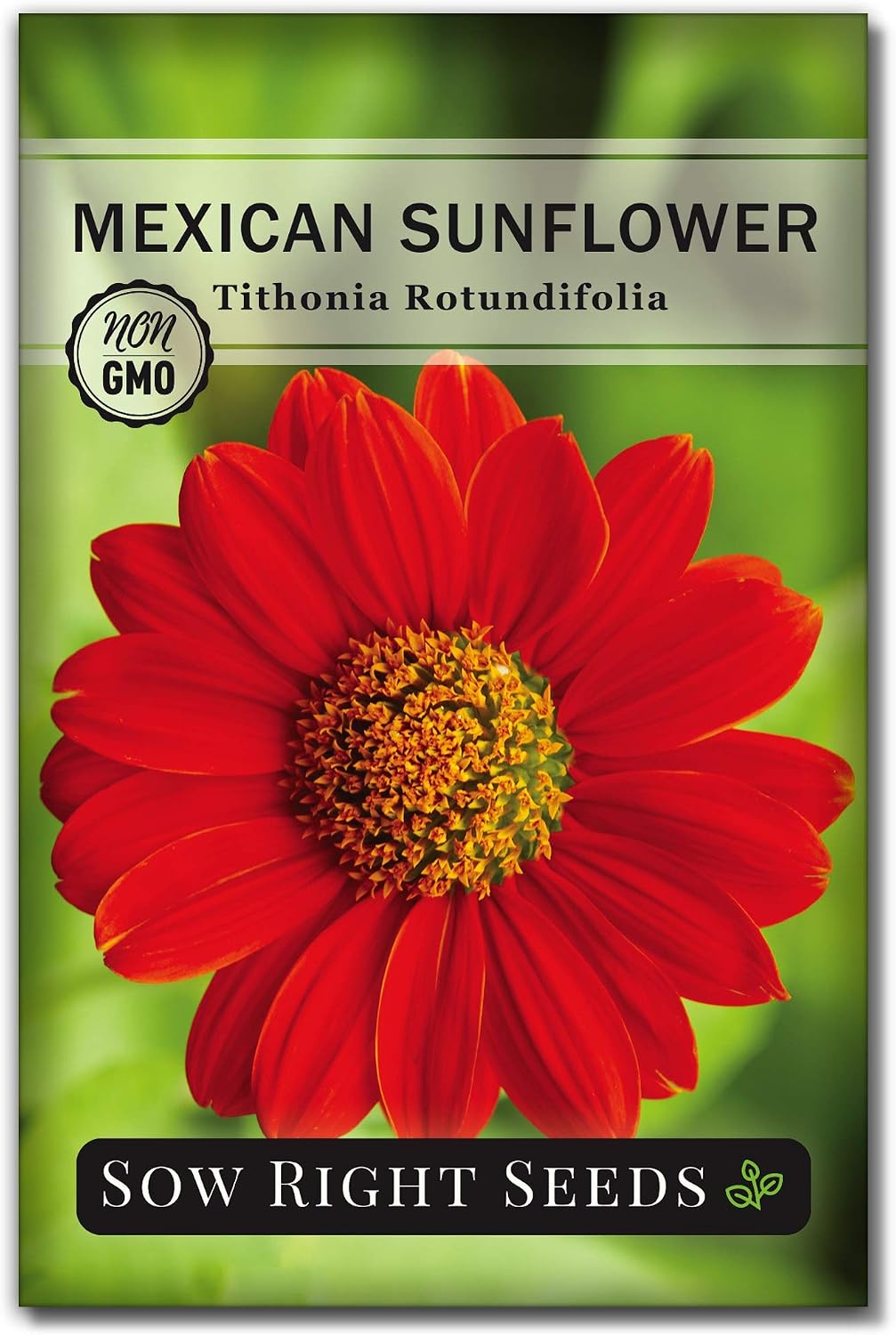
Sow Right Seeds Mexican Sunflower (Tithonia diversifolia) Seeds
| Plant or Animal Product Type | Tithonia diversifolia |
|---|---|
| Indoor Outdoor Usage | Indoor, Outdoor |
| Sunlight Exposure | Full Sun |
| Other Special Features of the Product | Attracts Pollinators, Fragrant, High Germination Rate |
| Material Features | GMO Free, Heirloom |
These Sow Right Seeds Mexican Sunflower seeds provide an affordable way to add large, orange pollinator-attracting blooms to a sunny garden. The packet contains at least 1 gram (about 110 seeds) of Tithonia diversifolia, an easy-to-grow annual that germinates in 10 to 14 days when soil temperatures are warm. Plant in full sun with regular watering and thin to the recommended spacing; the flowers develop in roughly 80 to 90 days and draw bees and late-season birds. Key practical benefits are the high germination rate noted by the brand and clear planting instructions included on the packet, making these seeds beginner-friendly and low-maintenance once established. Because they are non-GMO heirloom seeds from a solar-powered operation, they suit gardeners who prefer sustainable seed sources. Limitations are that this variety is recommended for USDA zones 8 to 11, so gardeners in cooler climates will need to start indoors or treat them as annuals; plants also need warm soil to germinate and adequate spacing since they spread more than they grow tall. For budget plantings in full sun, these seeds give a reliable, pollinator-focused display.
Best for: Gardeners looking for an inexpensive, low-effort way to add full-sun, pollinator-friendly color to beds or borders and who prioritize sustainable heirloom seeds.
Less Ideal for: Homeowners in cool-climate gardens who want perennial blooms without starting seeds indoors or using transplanting methods.
- Large packet size with about 1 gram (~110 seeds) suitable for multiple plantings
- Non-GMO heirloom seed sourcing adds sustainability and seed-saving potential
- High germination rate and clear packet instructions make them beginner-friendly
- Flowers attract bees and birds, supporting pollinators and wildlife
- Recommended for USDA zones 8–11 so not ideal as a perennial in cooler climates
- Requires warm soil (around 70°F) to germinate reliably
Verdict: A budget-friendly seed packet that reliably produces bold, pollinator-attracting flowers for sunny gardens.
BuggyBeds Cosmos Flower Seeds, 1000 Count (Long Bloom Season)

| Indoor Outdoor Usage | Outdoor |
|---|---|
| Other Special Features of the Product | Non-GMO |
| Unit Count | 1000 Count |
| Style Name | Long Bloom Season |
These BuggyBeds cosmos seeds provide 1000 non-GMO seeds intended for easy, low-maintenance planting in full sun containers or beds. Cosmos are annuals known for producing abundant, daisy-like flowers from summer into fall, and this packet is aimed at repeat or wide coverage plantings and succession sowing. The seeds are sold in a high-count, long-bloom-season style which makes them useful for filling multiple containers or creating continuous color without frequent replanting. Practical benefits include strong attractiveness to pollinators, simple sow-and-go culture, and versatility for cutting flower use or informal meadows. Limitations are inherent to cosmos as annuals: plants will not overwinter and may need thinning or staking in windy exposed container locations; bloom timing still depends on planting date and local climate. For container growers wanting reliable summer-through-fall color with minimal fuss, these seeds deliver a cost-effective supply to plan out several plantings or larger displays.
Best for: Gardeners who prioritize dependable, low-effort summer and fall color in full-sun containers and prefer buying seed in bulk to plan multiple plantings or larger displays.
Less Ideal for: People wanting winter‑persistent or perennial container plants or those who prefer single large specimen plants rather than masses of annual blooms.
- Very large 1000-count supply suitable for multiple containers or successive sowings
- Non-GMO seed stock for straightforward sow-and-grow culture
- Described long-bloom selection extends flowering from summer into fall
- Attractive to pollinators which helps container displays feel lively and productive
- As annuals, cosmos do not persist past the season and require replanting next year
- Plants can become leggy or flop in windy or exposed container sites without support
Verdict: A reliable, high-count pack of non-GMO cosmos seed for steady, low-maintenance full-sun container color across the season.
NatureZ Edge Black Eyed Susan Seeds (5000, Non-GMO Heirloom)

| Number of Pieces | 5000 |
|---|---|
| Sunlight Exposure | Full Sun |
| Expected Blooming Period | Summer to Fall |
| USDA Hardiness Zone | 3-9 |
| Material Features | GMO Free, Heirloom |
These NatureZ Edge Black Eyed Susan seeds offer a large quantity (5000) of non-GMO, heirloom Rudbeckia seed suitable for planting in beds, borders, or containers. They are marketed for both indoor starting and outdoor planting with a high germination rate and a bloom window from summer into fall, so you can expect continuous color through warm months. Black Eyed Susans prefer full sun and moderate watering and perform well in sandy, well-drained soil; planted in pots they produce compact plants that work as long-season, low-maintenance container flowers. Practical benefits include attracting pollinators, being hardy across zones 3 to 9, and the cost efficiency of a large seed count for filling multiple pots or replacing plants year to year. Limitations are that seeds require time and some care to establish compared with buying transplants, and bulk seed means you will need to thin seedlings or sow carefully to avoid overcrowding in small pots. For growers in small spaces, starting seed indoors then transplanting can give the best controlled results.
Best for: Gardeners who want an economical way to populate multiple pots or refill containers seasonally and who are comfortable starting flowers from seed to control spacing and timing.
Less Ideal for: Busy gardeners who need immediate container-ready plants or those who prefer zero-seedling maintenance should choose nursery transplants instead.
- Very large seed count (5000) provides enough seed for multiple pots or repeat plantings
- Non-GMO heirloom seeds with a stated high germination rate
- Attractive summer-to-fall blooms that draw bees and butterflies
- Adaptable to USDA zones 3–9 for wide climate suitability
- Bulk seeds require thinning or careful sowing to avoid overcrowding in containers
- Growing from seed takes longer and needs more early care than buying established plants
Verdict: Choose these seeds if you want an inexpensive, pollinator-friendly way to fill multiple pots with long-lasting summer-to-fall blooms by starting plants from seed.
CZ Grain Gladiolus Bulbs (10 Count) — Mixed Colors Sword Lily

| Sunlight Exposure | Full Sun |
|---|---|
| Expected Blooming Period | Summer |
| USDA Hardiness Zone | 7–10 |
| Moisture Needs | Moderate Watering |
| Unit Count | 10 Count |
These CZ Grain gladiolus corms give reliable, showy summer blooms that work well in pots or garden borders. Planted after frost, the corms grow into tall sword-like spikes with multiple large flowers ideal for cut arrangements or adding vertical interest to a container. The pack contains ten corms in a range of colors and the listing notes they prefer full sun, sandy well-drained soil and moderate watering. For container use on a patio pick deep pots and good potting mix so the roots have room and the soil drains; staggered planting will extend bloom time. They are listed for USDA zones 7–10 and described as perennial, so in suitable climates they will return when lifted and stored properly or left in frost-free sites. Limitations are climate sensitivity outside the stated zones and the need for staking or a sheltered spot in windy locations because the flower spikes can reach substantial height.
Best for: Gardeners who want reliable, dramatic summer blooms in pots or borders and prefer easy-to-follow planting for predictable results.
Less Ideal for: People gardening in cold climates outside USDA zones 7–10 or those who cannot provide full sun and well-drained soil should consider hardier or lower-light perennials instead.
- Produces tall, showy summer flower spikes that work well as cut flowers
- Suitable for containers when given deep pots and well-drained mix
- Mixed colors offer instant variety without buying multiple varieties
- Best suited to USDA zones 7–10 and may not survive harsh winters without lifting
- Needs full sun and sandy, well-drained soil to perform at its best
Verdict: A simple way to add tall, colorful summer spikes to pots or beds for gardeners in zones 7–10 who want reliable seasonal impact.
Choosing the Right Flowers That Can Stand Full Sun: Key Factors to Consider
Drought Tolerance and Water Needs
How a flower manages water makes a big difference in full-sun plantings. Species that evolved in dry, sunny sites often have deeper root systems, thicker leaves, or waxy coatings that reduce water loss. That means they survive longer between waterings and are less likely to scorch when heat spikes occur.
Consider whether you want true xeric plants that need minimal irrigation once established or floriferous plants that still require regular watering to sustain heavy blooms. Matching water needs to your irrigation habits or rainfall pattern prevents wasted time and lost plants.
Bloom Duration and Reblooming
Long bloom windows extend color across the season and reduce the need for frequent replanting. Some sun-loving flowers produce a single flush and then need deadheading to encourage more blooms, while others rebloom continuously with light pruning.
Think about whether you prefer continuous color with occasional trimming or a short, spectacular display that you will replace. Bloom length also interacts with fertilizer and soil fertility, so expect longer-flowering plants to need modest feeding in poor soils.
Heat Stress and Sun Scorch Resistance
Full sun exposes foliage and flowers to high light intensity and elevated leaf temperatures. Plants that resist heat stress maintain leaf turgor, keep stomata functioning, and avoid rapid tissue browning. These features show up as less wilting during midday heat and quicker recovery after extreme days.
Look for species that are documented to tolerate reflected heat from paving, walls, or gravel. Heat-hardy plants make better candidates for south- or west-facing exposures where afternoon sun is most intense.
Soil Type and Drainage Requirements
Soil texture and drainage strongly affect a sun-lover's success. Many full-sun flowers prefer well-drained soils to prevent root rot, but some tolerate heavier loam if drainage is adequate. Sandy soils warm quickly and suit many heat-tolerant species, while clay holds moisture and can stress plants during hot spells.
Assess your garden bed for drainage and amend accordingly. Choosing flowers adapted to your soil type reduces transplant shock and ongoing maintenance.
Hardiness and Seasonal Longevity
How long a flower persists in your garden depends on winter hardiness and whether it is an annual, perennial, or tender perennial. Perennials that handle both summer heat and winter cold give long-term structure to sunny beds, while annuals can provide flexible seasonal color but may need yearly replacement.
Consider your USDA hardiness zone or local microclimate and choose plants with an appropriate cold tolerance. Also weigh whether you prefer a stable perennial border or the seasonal reset that annuals provide.
Maintenance: Pruning, Deadheading, and Division
Maintenance needs affect how much time you spend caring for a sunny planting. Some sun-friendly flowers require routine deadheading to sustain bloom, periodic division to rejuvenate clumps, or winter cutback for tidy spring regrowth. Others are low-maintenance and need only minimal trimming.
Estimate weekly or seasonal maintenance when planning beds. Low-effort plants reduce labor but may offer less dramatic bloom; more hands-on species reward gardeners willing to prune and deadhead for extended color.
Planting and Site Preparation for Full-Sun Beds
Prepare sunny sites by improving surface soil structure and drainage before planting. Work in organic matter where soil is compacted or heavy, but avoid creating a dense, moisture-retentive layer that can hold water at roots during storms.
Lay out taller plants to the rear of beds or center of islands so lower plants are not shaded during peak sun. Consider reflective heat from walls, driveways, or patios when placing the most sensitive varieties; leave slightly more space for airflow where heat will be concentrated.
- Test drainage by digging a hole and timing how quickly water percolates.
- Adjust soil pH only if a chosen species is sensitive to acidity or alkalinity.
- Mulch with a light layer to reduce surface drying but avoid smothering crowns.
Watering Strategies for Hot, Sunny Conditions
Water deeply and infrequently to encourage root depth rather than frequent shallow irrigation. Deep watering supports drought-tolerant plants and improves resilience to heat. Early morning watering reduces evaporative loss and gives foliage time to dry before night.
Group plants with similar water needs together so you can irrigate effectively without overwatering drought-adapted species. Use drip irrigation or soaker hoses to deliver water directly to root zones and keep leaves drier to reduce disease risk.
- Start with twice-weekly deep watering during establishment, then taper based on rainfall and plant response.
- Monitor plants for signs of stress rather than following a rigid schedule.
Seasonal Care: Deadheading, Feeding, and Division
Keep long-flowering beds healthy with routine deadheading and light fertilizer applications during the active growing season. Deadheading concentrates energy into new blooms instead of seed production, extending the bloom window for many sun-loving flowers.
For perennial clump-formers, plan to divide crowded plants every few years in spring or fall. Division rejuvenates flowering and reduces competition for water and nutrients in full-sun exposures.
- Use a balanced, slow-release fertilizer in spring for perennials, and a lighter feed for annuals during bloom.
- Save seed only from plants you want to self-sow; many sun-loving species can reseed vigorously if allowed.
Design Ideas for Constant Color in Sunny Areas
Blend plants with staggered bloom times to maintain steady color from late spring through fall. Combine early-blooming, peak-summer, and late-season species so beds never look empty during heat waves.
Use foliage contrast and varying heights to keep sun-exposed beds visually interesting even when a particular species is between flushes. Textural leaves and silver or gray foliage are especially effective in strong light because they reflect heat and retain visual presence.
- Plant lower-growing spreaders at the front and taller spikes or mounds toward the back.
- Include drought-tolerant fillers to mask bare soil and reduce evaporation.
Managing Pests and Diseases in Sunny Plantings
Full sun reduces some fungal problems that thrive in shade, but hot conditions can favor pests that thrive on stressed plants. Regular scouting helps catch issues early: inspect undersides of leaves and new growth for insects and eggs.
Encourage beneficial insects with nearby nectar sources and avoid broad-spectrum pesticides when possible. Healthy, well-watered plants are better able to tolerate occasional pest pressure.
- Remove heavily damaged foliage promptly to limit spread.
- Rotate annual plantings and clean up debris to reduce overwintering pests and disease.
How We Chose the Best Flowers That Can Stand Full Sun
We selected these sun-tolerant flowers by focusing on traits that matter for sustained color and survival in full-sun exposures. Our evaluation prioritized drought tolerance, bloom season length, heat stress resistance, landscape reliability and ease of maintenance. We also considered soil adaptability and cold-hardiness ranges so plants will survive local winters after summer performance. Varieties with consistent flowering under reflected heat or in poor soils scored higher, as did those with straightforward pruning, deadheading, or division routines. We excluded plants that only tolerate brief sun or that require excessive irrigation to look their best. We did not include species that depend on shade for part of the day or those that are strictly annuals with negligible re-bloom potential in warm climates. The final list reflects garden-tested traits: survival under prolonged sun, measurable bloom duration, visible heat damage resistance, and low-to-moderate maintenance needs.
FAQ
Can sun-loving flowers survive with no supplemental water?
It depends. Many sun-tolerant species can survive extended dry spells once established, but most benefit from occasional deep watering during prolonged heat. True drought-tolerant plants need far less supplemental water than floriferous varieties that produce heavy blooms.
Will full sun cause flowers to fade or burn faster?
High light and reflected heat can cause some blooms and foliage to fade or scorch, especially in afternoons with extreme temperatures. Choosing plants known for heat resistance and providing adequate root moisture reduces fading and sun scorch.
How do I keep color through late summer when temperatures peak?
Stagger planting and include reblooming varieties that respond well to deadheading. Keep plants mulched and water deeply at the root zone to sustain bloom production during heat waves.
Are there soil amendments that help sun-loving flowers perform better?
Adding organic matter to improve structure and water-holding capacity in sandy soils helps establishment. For heavy clay, incorporate grit or compost to improve drainage. Avoid creating a dense layer that holds water at the crown of the plant.
Should I worry about reflected heat from walls and driveways?
Yes. Reflected heat can increase leaf temperatures and stress plants more than open-air sun. Choose the most heat-hardy species for those spots or provide additional soil moisture and airflow to help plants cope.
Final Verdict
Prioritize drought tolerance, heat resistance, and bloom length when choosing flowers for full-sun exposures. Match species to your soil, irrigation habits, and maintenance preferences so plants will perform reliably through hot summers. Balance long-blooming perennials for structure with lower-maintenance fillers or annuals for seasonal bursts of color. Focusing on those tradeoffs helps you build sunny beds that stay vibrant with reasonable care. Choose plants with the right water needs and bloom habits for your schedule, and you will have a more resilient, colorful garden that stands up to full sun.
