

Note: This article contains affiliate links. If you click on these links and make a purchase, I may earn a small commission at no extra cost to you. This helps support my research and content. Read my full affiliate disclosure here.
If flies are swarming patios, compost areas, or animal pens, the right fly spray for yards can restore comfort and reduce disease risk. You want a product that delivers quick knockdown but also behaves predictably outdoors where wind, plants, and pets matter. This guide covers six shortlisted options chosen for yard use and explains how they perform on effectiveness, longevity, and safety around people, pets, and pollinators. Below we summarize why each option made the list and the practical tradeoffs to consider, then walk through yard-specific application tips and safety guidance to help you pick the best fit for your outdoor space.
Top Picks at a Glance
| Best Overall The best all-around choice for most situations | Wondercide Flea & Tick Yard Spray (Ready-to-Use, 32 oz) |  |
| Best Quality Built to a higher standard if you want something more solid | Absorbine UltraShield EX Insecticide & Repellent, 1 Gallon |  |
| Best Value The sweet spot between price and what you get | ADAMS Plus Flea & Tick Yard Spray, 32 oz (Hose-End) |  |
| Best Budget The cheapest option that still gets the job done reliably | Spectracide Triazicide Insect Killer for Lawns & Landscapes, 32 oz |  |
| Most Popular A crowd favorite that many people choose with confidence | Cutter Backyard Bug Control Spray Concentrate, 32 oz (2 pack) |  |
| Best Seller A high-volume bestseller chosen again and again | Absorbine UltraShield EX Insecticide & Repellent, 32 fl oz Sprayer |  |
Wondercide Flea & Tick Yard Spray (Ready-to-Use, 32 oz)

| Liquid Volume | 946 ml |
|---|---|
| Item Form | Spray |
| Active ingredient | 12.63% Cedarwood Oil |
| Coverage (fleas/mosquitoes) | Up to 5,000 sq ft |
| Coverage (ticks/mosquito repel) | Up to 2,500 sq ft |
Wondercide Flea & Tick Yard Spray is a ready-to-use hose-end treatment that uses cedarwood and other plant-derived ingredients to kill and repel fleas, ticks, and mosquitoes in the yard. You attach the bottle to a garden hose, turn the sprayer on, and walk steady sweeping passes to treat up to 5,000 sq ft for fleas and mosquitoes or 2,500 sq ft for ticks and mosquito repellency. Notable features include a pre-mixed formula for quick application, a hose-powered sprayer for even coverage, and an ingredient list centered on cedarwood oil that the brand says is safe for pollinators when used as directed. In practice it is convenient for routine maintenance and for reducing pest pressure around foundations, patios, and pet areas without waiting for drying or reentry. Important limitations are sensitivity to high heat or direct sun which can cause plant foliage browning if applied above 90°F and reduced residual effect after heavy rain, which may require reapplication. The product is exempt from EPA registration under FIFRA and carries typical safety instructions to avoid eye contact and keep out of reach of children.
Best for: Buyers who want a convenient, natural-first yard repellent that treats broad outdoor areas and lowers pest pressure around pets and play spaces with minimal setup.
Less Ideal for: Those who need a product that holds up through heavy storms or who require a chemically registered pesticide for regulatory or commercial settings should consider other options.
- Pre-mixed hose-end bottle makes whole-yard treatment fast and easy
- Plant-based active (cedarwood oil) targets fleas, ticks, and mosquitoes
- Covers a large area per bottle (up to 5,000 sq ft for fleas and mosquitoes)
- Formulated to be safe for people, pets, and pollinators when used as directed
- Can cause phytotoxic browning if applied in direct sun or when temperatures exceed 90°F
- Heavy rain or intense irrigation can wash away residue and may require reapplication
Verdict: If you want an easy, plant-powered yard spray to reduce mosquitoes, fleas, and ticks over large lawns while prioritizing pet and pollinator safety, this ready-to-use option delivers fast, low-fuss coverage.
Absorbine UltraShield EX Insecticide & Repellent, 1 Gallon

| Unit Count | 128 Ounce |
|---|---|
| Item Form | Liquid |
| Scent Name | Unscented |
| Recommended Uses For Product | Fly Control |
| Active Ingredients | Pyrethrins |
Absorbine UltraShield EX is a water-based, ready-to-use fly spray formulated to kill and repel more than 70 insect species while conditioning the coat and offering sun protection. It is typically applied directly to animal coats and around barns or doorways as a premise spray; the label gives guidance on application rate and safety. Notable features include UltraBond Technology for weatherproof protection up to 17 days, active ingredients that include pyrethrins and permethrin, and conditioning additives such as aloe and sunscreens. In practice that means fewer reapplications in dry or variable conditions and a non-greasy finish that leaves hair damp rather than oily. Because it is labeled for both horses and dogs (EX is approved for dogs), it covers multiple animals on a small farm or property. Important limitations are that it contains pyrethrins/permethrin so users must follow label precautions for people, animals, and environment, and some formulas in the UltraShield line differ in species approvals and reapplication intervals so check the bottle for the right use. For someone focused on dependable tick and fly control, this is a practical, long-lasting option when used as directed.
Best for: Buyers who prioritize reliable, low-effort pest control for horses and dogs and want a product with proven, longer-lasting protection that reduces application frequency.
Less Ideal for: People seeking completely natural, pesticide-free repellents or those who prefer daily, mild treatments for very young or chemically sensitive animals should consider alternative products.
- Ready-to-use water-based formula requires no mixing and leaves no greasy residue
- Weatherproof UltraBond Technology can provide protection up to 17 days between applications
- Kills and repels a broad spectrum of pests including flies and ticks as listed on the label
- Includes coat conditioners and sunscreens to protect and improve animal coat appearance
- Contains insecticidal actives (pyrethrins and permethrin) that require careful adherence to label safety instructions
Verdict: Choose UltraShield EX when you want a ready-to-use, weatherproof spray that reliably kills and repels ticks and flies with fewer reapplications.
ADAMS Plus Flea & Tick Yard Spray, 32 oz (Hose-End)

| Unit Count | 32 Fluid Ounces |
|---|---|
| Liquid Volume | 32 fluid ounces |
| Active Ingredients | Permethrin |
| Item Form | Liquid |
| Target Species | Dog |
ADAMS Plus Yard Spray is a water-based, hose-end treatment formulated with permethrin to treat lawns, shrubs, patios, foundations, and other outdoor areas for fleas, ticks, mosquitoes and many common yard pests. You attach the included hose-end sprayer, turn on the water, and apply across up to 5,000 sq ft for broad coverage; the active ingredient provides contact and residual control for about four weeks. The product is useful for seasonal mosquito control around play and pet areas and for knocking down tick pressure in yards where pets spend time. Practical benefits include simple application without measuring concentrates, a single treatment that covers large areas, and a long-lasting ingredient that reduces the need for frequent reapplications. Important limitations are that it contains permethrin, so it should be used according to safety directions and kept away from children and aquatic areas, and it is a surface treatment rather than a complete pest-management solution for heavy infestations.
Best for: Buyers who want a straightforward, low-effort way to reduce mosquitoes and ticks across a whole yard and prioritize treatments that cover large areas with infrequent reapplication.
Less Ideal for: People who need an organic or non-synthetic mosquito solution or who require treatments safe for use near fish ponds or aquatic environments should consider alternative products.
- Hose-end applicator for easy, no-mixing application across large yards
- Provides up to four weeks of residual control after application
- Effective against fleas, ticks, mosquitoes and over 50 listed insects
- Covers up to 5,000 square feet per application
- Contains permethrin so it requires careful handling and avoidance of water bodies
Verdict: A simple, hose-end permethrin spray that delivers broad, up-to-four-week mosquito and tick control for large yards with minimal fuss.
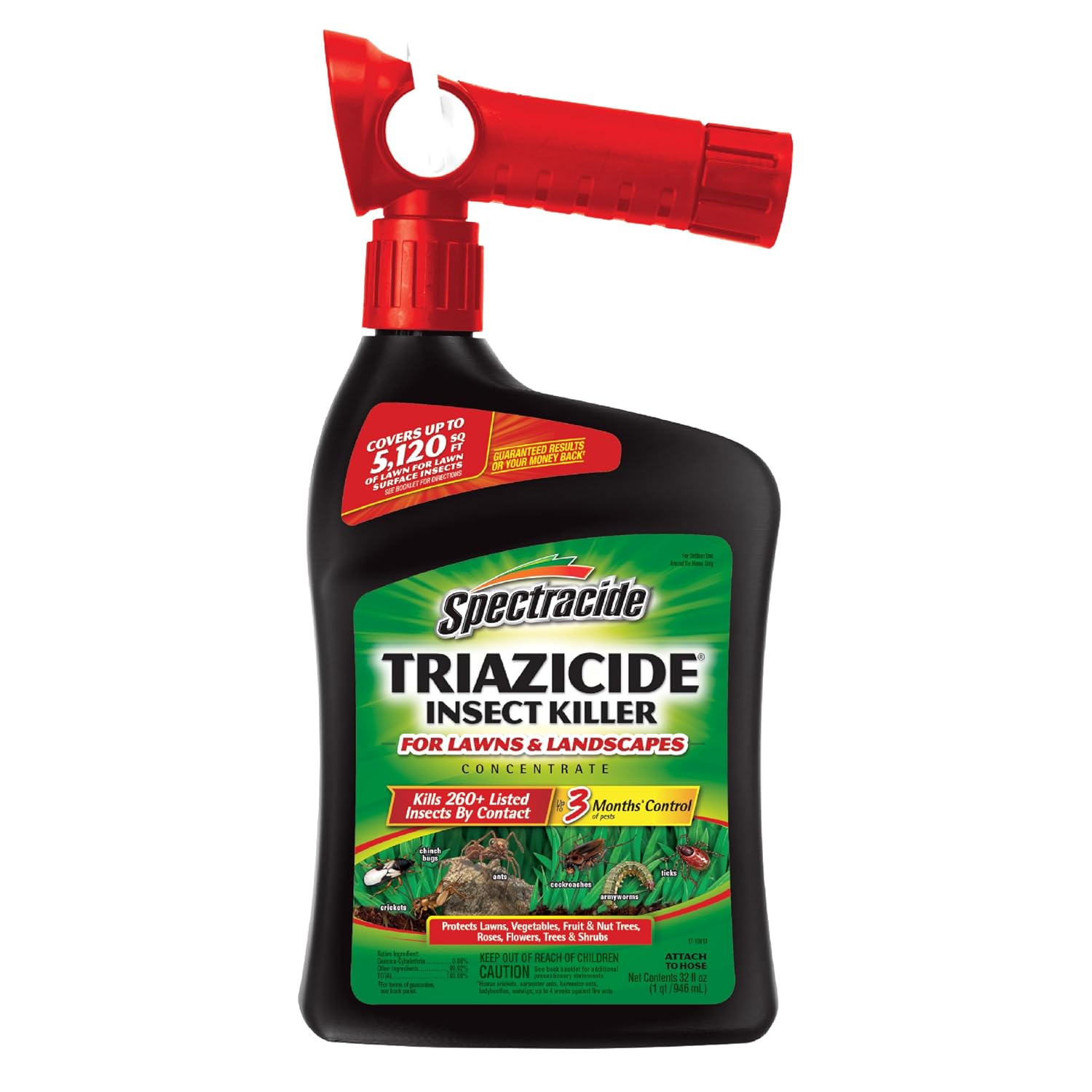
Spectracide Triazicide Insect Killer for Lawns & Landscapes, 32 oz
| Unit Count | 32 Ounce |
|---|---|
| Item Form | Spray |
| Target Species | Insects |
| Active Ingredients | Gamma-Cyhalothrin (0.08%) |
Spectracide Triazicide is a 32-ounce concentrate formulated to control more than 260 listed insects on lawns, flower beds, trees, shrubs and around vegetables. You mix the concentrate with water and apply it with a tank or hose-end sprayer; the ready-to-spray variant can attach to a garden hose for quicker application. The active ingredient, gamma-cyhalothrin, delivers fast contact kill for pests such as fleas, ticks, Japanese beetles and many surface insects, and the label claims protection for up to three months in some uses. It is non-staining when used as directed and can treat large areas, making it practical for whole-yard applications and targeted mound treatments like fire ants. Important limitations include toxicity to fish and bees, so it must not be applied near water or blooming plants, and the product requires careful handling and adherence to safety directions. Follow mixing rates and timing recommendations for best results and to minimize environmental risk.
Best for: Buyers who need an affordable, large-area solution to knock down common lawn and landscape pests and prefer a concentrate that stretches coverage when mixed.
Less Ideal for: People with small ornamental gardens near ponds, homeowners who prioritize pollinator-safe products, or those unwilling to follow pesticide safety precautions should consider gentler or targeted alternatives.
- Concentrate covers large areas so a single bottle treats many square feet when mixed correctly
- Fast-acting contact kill for a wide range of listed insects including fleas, ticks and Japanese beetles
- Versatile use on lawns, flower beds, trees, shrubs and around vegetables
- Non-staining when used as directed and available in hose-end ready-to-spray format for easier application
- Highly toxic to aquatic life and bees so it cannot be used near water or blooming plants
- Requires careful mixing and protective handling due to chemical toxicity
Verdict: A cost-effective, fast-acting concentrate for treating broad lawn and landscape pest problems when used with care and proper precautions.
Cutter Backyard Bug Control Spray Concentrate, 32 oz (2 pack)

| Unit Count | 64 Fluid Ounces |
|---|---|
| Item Form | Spray |
| Target Species | Insects |
| Active Ingredients | Lambda Cyhalothrin |
This Cutter Backyard Bug Control Spray Concentrate is a hose‑end applicator concentrate designed to treat lawns, shrubs and other outdoor surfaces to reduce mosquitoes and a range of listed insects. You attach the QuickFlip hose‑end sprayer, walk the area and apply as a cover spray; the ready‑to‑mix nozzle meters water automatically so you do not need separate measuring. The formula lists lambda‑cyhalothrin as an active ingredient and claims up to 12 weeks of control and coverage for up to 5,000 sq ft per bottle, which makes it suitable for seasonal perimeter treatments and spot landscape applications. Practical benefits include easy application with the flip‑on nozzle, thorough foliar coverage when used as directed, and long residual control that reduces repeat treatments. Important limitations are that it is a pesticide so you must keep children and pets out of treated areas until dry, follow label restrictions for vegetables and sensitive areas, and avoid applications before rain or near drains or water bodies.
Best for: Buyers who want a simple, ready‑to‑use perimeter treatment to reduce mosquitoes and common yard insects across lawns and landscaped beds without frequent reapplication.
Less Ideal for: People who need an organic, pet‑safe, or water‑safe option for insect control or those who require frequent spot treatments in small container gardens.
- Hose‑end QuickFlip sprayer for fast, no‑mix application over large areas
- Claims up to 12 weeks of residual control, reducing the need for frequent reapplications
- Covers up to 5,000 sq ft per bottle for single‑treatment perimeter protection
- Works on lawns, shrubs and outdoor surfaces for flexible use around the yard
- Contains a synthetic pesticide ingredient and requires strict adherence to safety and label restrictions
- Not intended for use where runoff could reach water bodies or drains
Verdict: A convenient hose‑end concentrate that delivers broad yard coverage and long‑lasting mosquito and insect control with minimal setup.
Absorbine UltraShield EX Insecticide & Repellent, 32 fl oz Sprayer

| Unit Count | 32 Fluid Ounces |
|---|---|
| Item Form | Liquid |
| Scent Name | Unscented |
| Active Ingredients | Pyrethrins |
| Recommended Uses For Product | Fly Control |
Absorbine UltraShield EX is a 32-ounce, ready-to-use spray designed for broad insect control around horses, barns, and outdoor areas. The water-based formula combines pyrethrins, piperonyl butoxide, and permethrin to kill and repel more than 70 species of pests while leaving no greasy residue. It is applied directly to animal coats or used as a premise spray and is intended to stick to hair and surfaces when applied to a clean coat. Notable features include weatherproof UltraBond Technology that can extend protection up to 17 days in some conditions and added sunscreens and coat conditioners for UV and coat care. Practical benefits are straightforward: no mixing, multi-species control including ticks, and suitability for spot-treating stalls, doorways, and tack areas as well as animals. Important limitations are that the product label emphasizes use on horses and premises and that some ingredients are insecticides requiring careful adherence to safety directions; it is not universally approved for all species and users should follow label precautions for application frequency and treated animals.
Best for: Buyers who prioritize robust, long-lasting insect control for horses, stalls, and outdoor areas and want a ready-to-use spray that reduces reapplication frequency.
Less Ideal for: Owners exclusively seeking a dog-specific repellent or those who prefer natural, non-pyrethroid formulations should consider alternatives tailored to dogs or gentler ingredient lists.
- Ready-to-use water-based formula requires no mixing and leaves little to no greasy residue
- EPA-approved actives that kill and repel over 70 insect species including ticks
- UltraBond Technology offers weatherproof protection that can last up to 17 days in some conditions
- Contains sunscreens and coat conditioners to help protect and maintain animal coats
- Label and ingredient profile require careful reading and safety precautions during application
- Primary registration and marketing focus is on horses and premises which limits direct claims for other pets
Verdict: Choose UltraShield EX if you need a ready-to-use, performance-oriented spray that kills and repels a wide range of pests and provides long-lasting protection for horses and outdoor areas.
Choosing the Right Fly Spray for Yards: Key Factors to Consider
Knockdown Speed and Initial Control
How quickly a spray incapacitates and reduces visible fly numbers matters because fast control reduces nuisance and the chance flies spread pathogens. Immediate knockdown is especially important around seating areas, outdoor dining, and animal handling zones where human exposure is likely.
Products with faster initial action let you reclaim a space quickly, but extremely short-term knockdown without residual activity can mean frequent reapplication. Balance immediate performance with how long the effect lasts to match how you use the yard.
Residual Activity and Frequency of Reapplication
Residual activity describes how long treated surfaces remain hostile to new flies. A spray with longer residual control reduces the need for frequent retreatment and is useful in high-traffic yards or near animal areas. Residual duration is influenced by formulation, UV stability, and where the product is applied.
Consider the typical weather in your area because sun, rain, and irrigation will shorten residual life. If you prefer fewer applications, choose a product and an application spot where the label supports longer persistence, such as shaded eaves or under benches, rather than exposed plant foliage.
Safety Around People, Pets, and Pollinators
Yard sprays interact with family, pets, and beneficial insects. Look for formulations with clear precautions and labeled re-entry intervals for children and pets. Products vary in toxicity to bees and other pollinators, so it is important to avoid spraying flowering plants and to follow timing guidance, such as treating in the evening when pollinator activity is lower.
Also evaluate readiness for use in yards with livestock or poultry. Labels that include instructions for use around animal housing and manure areas help prevent accidental exposure and ensure safe application near animals.
Application Method and Practicality
How you apply the spray affects coverage, drift risk, and convenience. Aerosols and trigger sprays are handy for spot treatments around doors and seating, while hose-end applicators and pump sprayers are better for larger perimeter treatments. Consider how easy it is to achieve even coverage on rough surfaces like wood, masonry, and compost bins.
Application practicality also includes storage, mixing steps, and whether the product requires personal protective equipment for routine use. If you prefer quick spot jobs, choose a ready-to-use trigger or aerosol. For broad perimeter control, pick a product compatible with a garden sprayer.
Label Restrictions and Environmental Limitations
Labels legally define where and how a product can be used outdoors. Some sprays forbid application directly to edible crops, while others prohibit use in certain animal housing or near water. Read the label for setbacks from water and instructions for disposing of wash water.
Understanding label limits helps you avoid using products in inappropriate parts of the yard and prevents unintended harm to aquatic life, pets, or beneficial insects. Always choose products whose labeled uses match the areas you need to treat.
Longevity of Supply and Resistance Management
Repeatedly using sprays with the same active ingredient can select for resistant fly populations. Gardeners should consider rotating products with different modes of action and integrating non-chemical measures like sanitation and physical barriers.
Also think about how often you can reapply within a season according to the label. Some formulations are intended for regular use while others are meant for occasional spot control. Planning a multi-pronged approach extends effectiveness and reduces reliance on any single product.
Where Flies Thrive in Yards
Flies concentrate where food, moisture, and shelter come together. Common yard hotspots include compost piles, garbage storage, animal pens, and fruit trees with dropped fruit. Identifying these microhabitats lets you target treatments instead of spraying indiscriminately.
Treating surrounding landing spots such as eaves, fences, and seating areas is usually more effective than saturating flowering plants. Removing attractants and improving drainage can drastically reduce how much chemical control is required.
- Inspect compost and waste bins weekly during warm months.
- Remove fallen fruit and clean up pet waste promptly.
- Use physical covers on trash and compost to limit breeding.
Application Timing and Weather Considerations
Timing applications for calm conditions and low pollinator activity reduces drift and risk to beneficial insects. Early morning or late evening applications avoid peak bee foraging times and often coincide with lower wind.
Avoid spraying before rain or irrigation that will wash product off treated surfaces. On hot, sunny days UV exposure can degrade certain active ingredients, shortening effective lifespan.
- Choose still, cool periods to minimize drift.
- Allow treated surfaces to dry before people or pets re-enter high-contact areas per label directions.
Integrating Nonchemical Controls
Chemical sprays work best when combined with sanitation and physical measures. Removing breeding material, installing tight-fitting lids on bins, and using screens on windows and doors cut pressure on any spray regimen.
Mechanical traps and sticky barriers can reduce adult numbers locally and are useful near animal housing where repeated sprays are impractical. Regularly cleaning areas where flies rest will also improve long-term results.
- Use traps as a complement, not a substitute, for targeted spraying.
- Keep manure and compost aerated and covered to disrupt breeding.
Safe Storage and Handling in the Yard Context
Store yard sprays in a locked, dry location away from children and pets and separate from garden seed and feed. Follow label instructions for mixing, personal protective equipment, and disposal of rinse water to prevent accidental exposure.
When transporting mixed material in a sprayer, secure the container to avoid spills and never leave a filled applicator in direct sun or where curious animals can access it.
- Rinse and store sprayers upright and clean to avoid residue buildup.
- Keep product containers in the original labeled packaging for clear instructions.
Using Sprays Near Edible Plants and Animal Areas
If you need to treat near vegetable beds, fruit trees, or animal housing, read the label for allowed use and pre-harvest intervals. Many yard sprays are not labeled for direct application to edible crops, so focus on perimeter surfaces and nonflowering structures when possible.
For areas with animals, apply to resting surfaces and shady overhangs rather than bedding or feed. Allow sufficient drying time and follow any re-entry or animal handling guidance on the label.
- Avoid spraying blossoms and key pollinator resources.
- Apply where animals do not directly contact treated surfaces until the product dries.
How We Chose the Best Fly Spray for Yards
We focused on products designed specifically for outdoor use and judged them by criteria gardeners and homeowners care about when controlling flies in yards. Key evaluation dimensions included speed of knockdown, residual activity on treated surfaces, label directions and restrictions for outdoor application, and relative safety for non-targets such as pets, children, and beneficial insects. We also weighed formulation type and delivery method because sprays, aerosols, and ready-to-use hose-end products behave differently in wind and on porous surfaces. Products that required indoor-only application or lacked clear outdoor labeling were excluded, as were formulations that rely on attractant baits unsuitable for shared family yards. We prioritized options with clear re-entry intervals, guidance for use near edible plants or animal housing, and tested modes of action that reduce the chance of rapid resistance. The final shortlist reflects a balance of rapid control, practical persistence between applications, and instructions that support safe, effective yard use.
FAQ
How often should I reapply fly spray in a yard?
Reapplication frequency depends on the product's residual label guidance and local conditions such as rain and sun exposure. Many yard formulations require reapplication every few days to a few weeks. Use sanitation and spot treatment to reduce how often broad applications are needed.
Can I spray near vegetable gardens or fruit trees?
Some sprays are not labeled for use on edible crops, so avoid spraying blossoms and produce unless the label explicitly permits it. When treating nearby structures, apply to nonflowering surfaces and follow any pre-harvest intervals listed on the product.
Are yard fly sprays safe around pets?
Safety varies by formulation and label instructions. Many products require pets to be kept away until treated surfaces are dry. Read the label for specific re-entry times and any restrictions for homes with livestock or poultry.
Will spraying reduce fly breeding long term?
Sprays reduce adult populations but do not eliminate breeding sites. Long-term reduction requires removing or managing sources like exposed manure, decaying organic matter, and uncovered compost. Combining sanitation with targeted applications yields the best results.
What can I do to protect bees when using yard sprays?
Avoid spraying flowering plants and treat in the early morning or late evening when bees are less active. Use targeted applications to non-flowering structures and follow label precautions about pollinator safety.
Is a hose-end applicator better than a trigger spray for yards?
Hose-end applicators are efficient for treating larger perimeters but can increase drift risk if not used carefully. Trigger sprays or aerosols provide more control for spot treatments near seating areas. Choose the method that matches the treatment area size and your comfort with equipment.
Final Verdict
When choosing a fly spray for yards, prioritize products that offer a balance between fast knockdown and a clear, yard-appropriate safety profile. Match the application method and residual expectations to the size of the area you need to protect and the presence of children, pets, or pollinators. Combine sprays with sanitation, exclusion, and occasional mechanical traps to reduce reliance on chemicals. That approach delivers the most reliable, long-term reduction in flies while minimizing risks in family and garden spaces.
